REVIEW · TOKYO
Tokyo: Mt. Fuji Cruise & Hakone Ropeway Day Trip by Bus
Book on Viator →Operated by Local Guide Stars · Bookable on Viator
Mt. Fuji looks better when you’re not rushing. This one-day bus tour strings together Lake Ashi drama, a floating torii gate photo moment, and a volcanic valley stop so your day feels full instead of scattered.
I like the mix of big set-piece sights and calmer viewpoints. You get time at Moto-Hakone Port for lunch, a relaxed cruise on a sightseeing ship shaped like a pirate fairytale, and then a stop that locals know for clear, less-crowded Mt. Fuji angles.
One thing to plan for: it’s a long day (about 10 hours), and traffic can slow you down. That’s not anyone’s fault, but it can affect how quickly you move through each photo stop.
In This Review
- Key Highlights You’ll Actually Feel
- A Premium Shinjuku Departure That Sets the Pace
- Lake Ashinoko Cruise: The Pirate Ship and the Fuji-Water Effect
- Lunch timing that keeps you from feeling trapped
- Owakudani and the Volcanic Valley Story You Can Smell
- Ropeway over volcanic terrain: why it’s worth including
- Hakone Jinja and the Peace Torii: The Photo That Feels Like a Symbol
- Kuzuryu Shrine: a spiritual stop with a personal angle
- Fuji Shibasari Peace Park: The Mt. Fuji View That Doesn’t Hog the Stage
- How the 10-Hour Flow Works (and How You Can Help It)
- Bring your expectations in line with the format
- Weather matters more than people think
- Price and Value: Is $92.50 a Good Deal?
- Tour Guides and Real-World Comfort: What to Expect
- Who Should Book This (and Who Might Not)
- Should You Book This Mt. Fuji Cruise & Hakone Day Trip?
- FAQ
- What time does the tour start, and where?
- How long is the day trip?
- Is the Lake Ashi cruise included?
- Do the stops require paid admission?
- Does the tour use a mobile ticket?
- Where do I end the tour?
- What’s the cancellation policy for a full refund?
Key Highlights You’ll Actually Feel
- Premium bus seating from Shinjuku so the long ride doesn’t wear you out early.
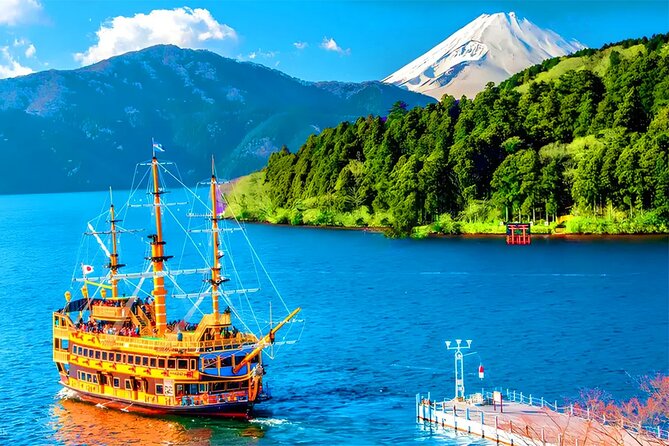
- Pirate-ship cruise on Lake Ashi with Lake Ashinoko water-and-Mt.-Fuji views that feel like a scene.
- Floating Peace Torii at Hakone Jinja for that iconic “standing in the water” moment.
- Owakudani volcanic valley + ropeway experience that makes the earth feel very real (sulfur smell included).
- Fuji Shibasari Peace Park viewpoint designed for a calmer Mt. Fuji look, away from the heaviest crowds.
A Premium Shinjuku Departure That Sets the Pace
You start in Shinjuku at the Keio Plaza Hotel area, with an 8:00 am departure. Getting out of the city early matters here. It buys you more daylight for photos and keeps the day from turning into an all-night scramble once you’re out in Hakone.
The bus ride is part of the value. The tour notes comfortable, premium seats, and that’s a big deal for a 10-hour loop. You’re not just paying for transport; you’re paying for someone else to handle the timing and route so you can spend your brainpower on seeing things, not navigating them.
This tour caps at a maximum of 49 travelers. That’s large enough to be efficient, but not so huge that you’ll constantly lose the group. You’ll still want to show up on time at the meeting point so you get placed smoothly.
Finally, the end of the day returns you to the Shinjuku area in the evening (including MODE Gakuen as a finish point). That matters because a lot of Hakone-day setups turn into a complicated “find your own way back” puzzle. Here, you avoid that stress.
You can also read our reviews of more boat tours in Tokyo


Lake Ashinoko Cruise: The Pirate Ship and the Fuji-Water Effect
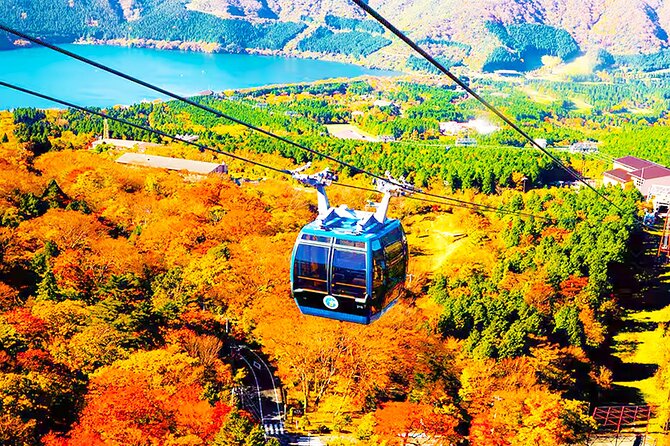
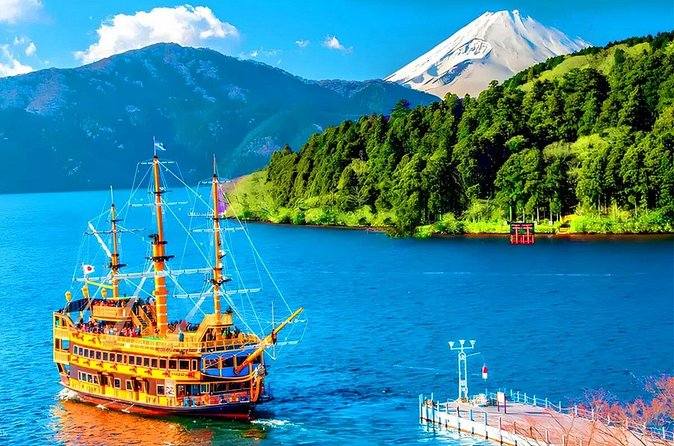
The first big visual pay-off happens on Lake Ashinoko. After your morning movement, you get around an hour on a sightseeing ship. The ship is described as a pirate-style boat designed like a fairytale. That’s not just marketing fluff. When you’re on the water, the boat shape helps the whole scene feel fun and light—perfect for photos and for getting people into “holiday mode.”
This is also where Mt. Fuji often shows up most dramatically. Lake Ashi acts like a natural mirror when conditions are right, and the cruise gives you that layered view: distant mountain, water in the foreground, and changing angles as the boat moves.
Lunch timing that keeps you from feeling trapped
Before or around the cruise time window, there’s time for lunch at Moto-Hakone Port along the lakeshore. Even if you don’t choose Japanese every meal, this area gives you plenty of options. The main advantage is timing: you’re not stuck eating an unsatisfying convenience meal on the bus. You have a real lakeside break.
Practical tip: if you care about photos, grab your cruise-facing spot early. Once you’re underway, you’ll want to be ready rather than spending the best views hunting for the “perfect” angle.
Owakudani and the Volcanic Valley Story You Can Smell
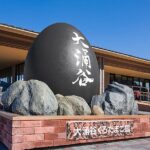
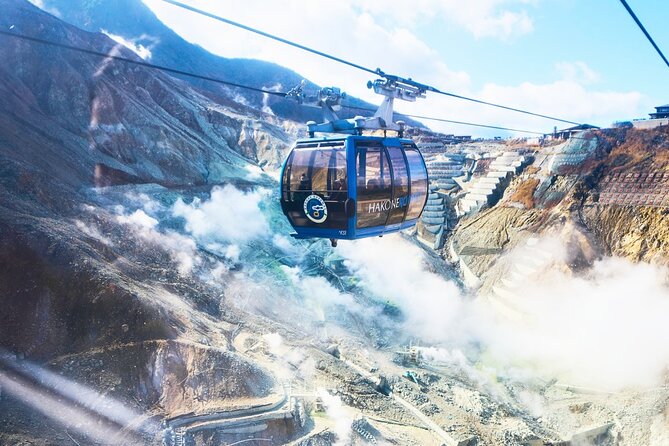
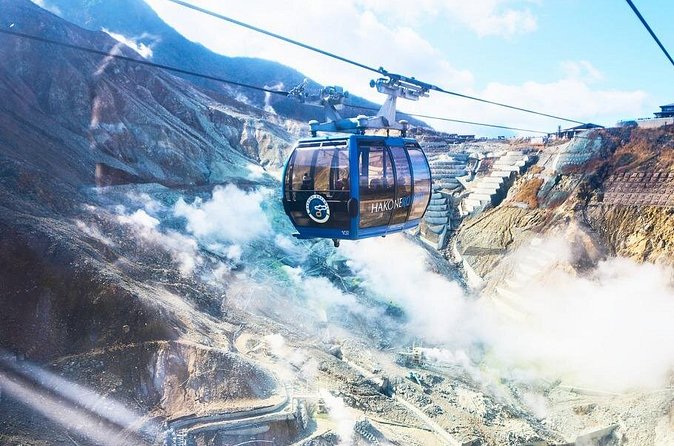
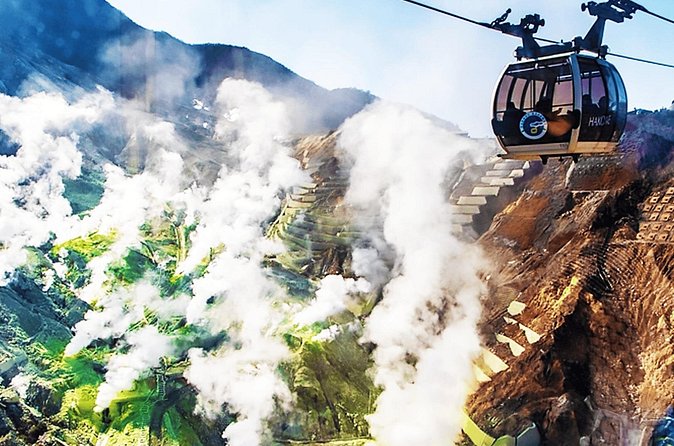
Next comes the volcanic part: Owaku-dani Valley. This is where you stop seeing Hakone as a postcard and start experiencing it like a living landscape. The description includes sulfur in the air and white steam rising from rugged ground. That sensory detail is the point.
Even if you know Mt. Fuji is a volcano, it hits differently when you’re standing near active geothermal signs. This stop helps you understand why the whole Hakone area is famous for steaming springs, strange rocks, and that hot-earth atmosphere.
Ropeway over volcanic terrain: why it’s worth including
The tour is also framed around a ropeway over volcanic terrain. Even if you only get a portion of the ride time, the goal is consistent: give you an aerial perspective over the volcanic valley, where the scale becomes clearer than from a walking viewpoint.
You’ll usually appreciate this more if you like structure in your sightseeing. Owakudani plus ropeway gives you both ground-level “it’s real” and an above-it view that’s easier to photograph.
Consideration: sulfur smell can be strong. If you’re sensitive to odors, plan to keep some distance when the wind shifts. The best strategy is to breathe normally, don’t linger in the thickest areas, and focus on the visual cues.
You can also read our reviews of more tours and experiences in Tokyo



Hakone Jinja and the Peace Torii: The Photo That Feels Like a Symbol
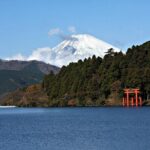
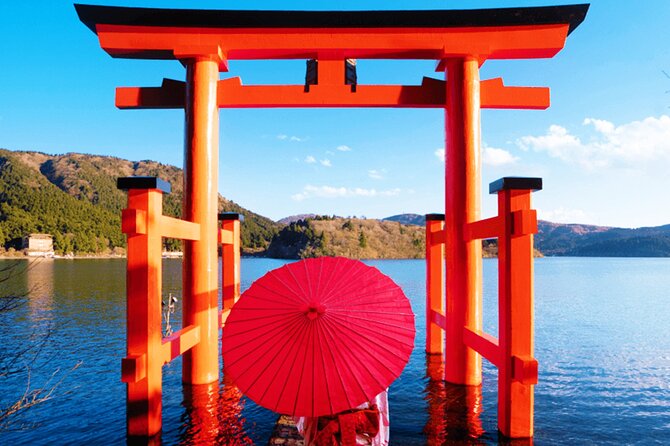
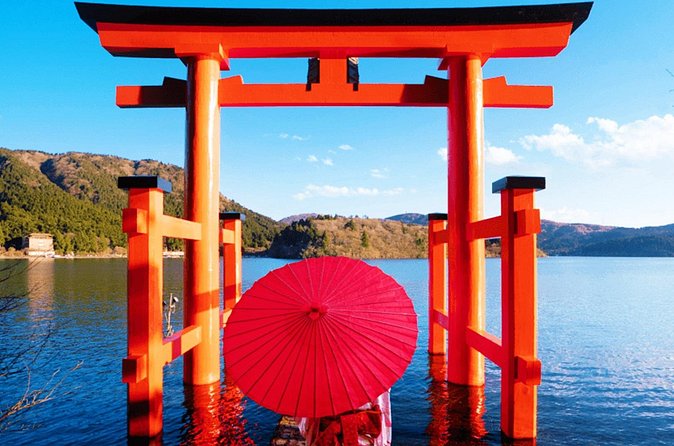
After the volcanic valley, you’ll head to Hakone Jinja. This is one of those places where the architecture and the setting work together. The tour specifically calls out the view of the Peace Torii floating on Lake Ashi.
That floating gate photo isn’t just pretty. It’s meaningful because it frames the mountain-and-water relationship in a way you can’t really recreate anywhere else. The torii looks like it’s part of the lake rather than sitting above it, and that makes it one of the easiest moments to remember long after the trip.
Kuzuryu Shrine: a spiritual stop with a personal angle
You also get time at Kuzuryu Shrine, noted for bringing love and good relationships. Whether you’re into shrine rituals or just curious, it’s a nice change from pure viewing. You’re allowed to slow down a bit, look around, and take part in a quieter side of Hakone rather than only chasing the biggest photo.
Practical tip: go in with a small mindset shift. At shrines, the best experience often comes from moving slowly enough to notice details. The torii is the headline, but the smaller moments are what make the place feel human.
Fuji Shibasari Peace Park: The Mt. Fuji View That Doesn’t Hog the Stage
Then you reach Fuji Shibasari Peace Park, described as a viewpoint mostly known to locals. That detail is important. The park’s hilltop location gives you room to see Mt. Fuji without competing with the biggest crowds.
The tour highlights the chance to enjoy one of the clearest Mt. Fuji views, plus a white stupa that adds a calm, structured focal point. If you’re the type who likes “one last look” photos, this stop works. It also gives your day a satisfying rhythm: big cruise visuals, volcanic contrast, shrine symbolism, and then a quieter final Mt. Fuji moment.
I like how this stop feels different from the more famous Hakone “musts.” Even without a guide shouting it as special, the description suggests why it’s loved: space, clarity, and a calmer atmosphere.
How the 10-Hour Flow Works (and How You Can Help It)
A 10-hour day trip can either feel smooth or exhausting, depending on pacing. Here, the timing is built around short enough sightseeing blocks that you can actually reset between them.
You get about:
- 1 hour 20 minutes at Lake Ashinoko area for lunch and time around the port
- 1 hour for the sightseeing cruise
- 50 minutes at Owakudani
- 50 minutes at Hakone Jinja
- 30 minutes at Fuji Shibasari Peace Park
That structure matters. The stops aren’t so long that you lose interest. And they’re not so short that you feel robbed of the view.
Bring your expectations in line with the format
This is a bus day trip with multiple photo-heavy stops. You’re not going to wander for hours on your own. You’re going to follow a plan and get a lot of highlights packed into one day.
That’s why it works well for people who want a “greatest hits” day without doing complicated transport juggling in Japanese.
Weather matters more than people think
No tour can control clouds. If you’re hoping for the best Mt. Fuji views, keep your eyes flexible. The tour is designed around view moments at several points so you have more than one chance.
Price and Value: Is $92.50 a Good Deal?
At $92.50 per person, you’re paying for more than transportation. You’re also paying for guided coordination, the premium bus ride, and at least one major included activity: the Lake Ashinoko cruise (the sightseeing ship is explicitly included).
Most of the other listed stops are marked as free admission in this plan, which helps the price feel fair. You’re not paying an entry fee at every stop on top of the day-trip cost.
So where does the value really come from? From reducing friction:
- getting from Shinjuku to Hakone without planning
- keeping a schedule that hits the cruise and shrine windows
- having a guide for context so the places feel connected, not random
The reviews praise the guides strongly, including Ayaka and Mia, who are described as multilingual and helpful in making the day easy to manage. That kind of support is part of what you’re buying: you’ll spend less time figuring out what to do next and more time looking at the sights.
Tour Guides and Real-World Comfort: What to Expect
This tour runs with a real guide experience, not just a recorded script. Names like Ayaka and Mia show up for their ability to explain culture and history in multiple languages. That matters because Hakone’s volcanic roots and shrine traditions aren’t just scenery—they’re part of why the area feels distinct from the rest of Japan.
Also, a smooth day depends on the bus driver and timing. One note to keep in mind: traffic can be rough, and that can affect the pace of transitions. If you tend to get stressed when you’re running behind schedule, try to go in with a calm mindset. You’re dealing with real roads and real timing, not a theme park clock.
Who Should Book This (and Who Might Not)
This is a strong fit if you:
- want a one-day Mt. Fuji and Hakone sampler
- like guided context, especially around shrine and volcanic meaning
- prefer staying together with the group rather than planning transfers
It might feel less right if you:
- hate long days or bus travel
- want lots of unstructured time to wander at each stop
- are chasing only the absolute best view and nothing else (because the schedule is built around multiple experiences, not one long stay)
Should You Book This Mt. Fuji Cruise & Hakone Day Trip?
If you’re looking for a well-paced day trip that links Lake Ashi cruising, volcanic valley contrast, and the Peace Torii photo, this one is easy to recommend. The included cruise is a solid anchor, and the last stop at Fuji Shibasari Peace Park adds a calmer Mt. Fuji angle that breaks up the rush.
My deciding advice: book it if you want convenience plus a full Hakone feeling in one day. Skip it if you’d rather spend more time in fewer places or if you’re extremely sensitive to schedule changes due to traffic.
FAQ
What time does the tour start, and where?
It starts at 8:00 am from the Keio Plaza Hotel (1 Chome-24 Nishishinjuku, Shinjuku City).
How long is the day trip?
The duration is about 10 hours.
Is the Lake Ashi cruise included?
Yes. The sightseeing ship cruise on Lake Ashinoko is listed as included.
Do the stops require paid admission?
In the plan, admissions for Lake Ashinoko (Moto-Hakone Port time), Owaku-dani Valley, Hakone Jinja, and Fuji Shibasari Peace Park are marked as free.
Does the tour use a mobile ticket?
Yes. The tour notes mobile ticket.
Where do I end the tour?
It ends back at the meeting point in Shinjuku, and the overview notes the evening finish at MODE Gakuen in Shinjuku.
What’s the cancellation policy for a full refund?
You can cancel for a full refund if you cancel at least 24 hours in advance of the experience start time. Cancellations within 24 hours aren’t refunded.