REVIEW · TOKYO
Tokyo: Kintsugi Art Repair Workshop
Book on GetYourGuide →Operated by H.I.S. Co Ltd(TIC) · Bookable on GetYourGuide
Kintsugi turns breakage into art. In a calm studio setting in downtown Tokyo, you learn how cracked ceramic becomes something beautiful, using classic lacquer-and-gold repair methods in just 90 minutes.
I like that all materials are provided, so you do not have to bring tools or supplies. I also like the small group size (up to 5) and the English support, which makes it easier to follow the steps without feeling rushed.
One thing to consider: your finished piece may be mainly for decoration. It can hold dry food items, but it is not meant for heavy-duty kitchen life, and there are limits on what kinds of ceramics can be repaired in the time given.
In This Review
- Key things that make this workshop worth your time
- Kintsugi in 90 Minutes: What You’re Actually Learning
- Nihonbashi Meeting Point and Why This Location Is Convenient
- Step-by-Step: From Cracked Ceramic to Gold-Toned Repair
- 1) Preparing the broken pieces
- 2) Adhering and rebuilding the form
- 3) Filling chips and gaps
- 4) Sanding for a finished surface
- 5) Lining the seams with metal-toned finish
- A quick note on time
- What You Can Repair (and What You Shouldn’t Bring)
- English Support, a Small Group, and the Feel of the Studio
- What You Take Home: A Unique Souvenir You Made
- Tenugui, Studio Shopping, and Turning Craft Time into Real Tokyo Time
- Price and Value: Is $125 Worth It in Tokyo?
- Who Should Book This Kintsugi Workshop (and Who Might Skip)
- Quick Practical Tips Before You Go
- Should You Book This Workshop? A Simple Decision Guide
- FAQ
- FAQ
- How long is the Tokyo Kintsugi workshop?
- Where is the meeting point?
- Is the workshop offered in English?
- Do I need to bring materials or tools?
- What should I wear?
- Is it suitable for kids?
- Can I repair my own ceramic item?
- Are cracked or chipped mug handles repairable?
- What size limits apply for items you bring?
- Is the repaired item safe to use for food?
- Is there free cancellation?
Key things that make this workshop worth your time
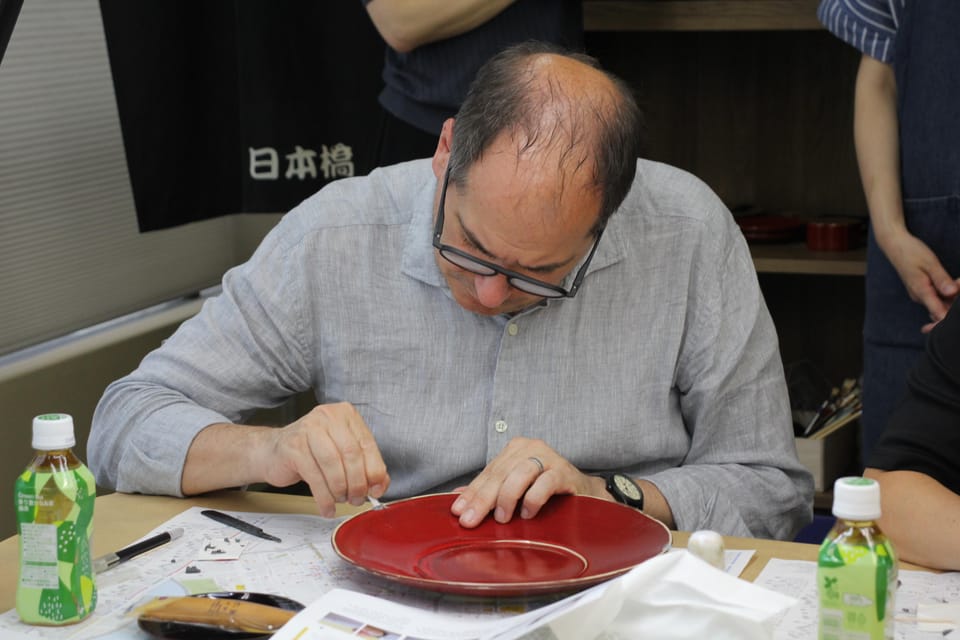
- Materials handled for you: you get what you need, including the repair supplies
- English instruction with hands-on guidance in a small group setting
- You take home your repaired ceramic as a one-of-a-kind souvenir
- The steps are practical, including gap filling, sanding, and finishing seams
- Fast timing for Tokyo: plan for about 1 to 1.5 hours
Kintsugi in 90 Minutes: What You’re Actually Learning
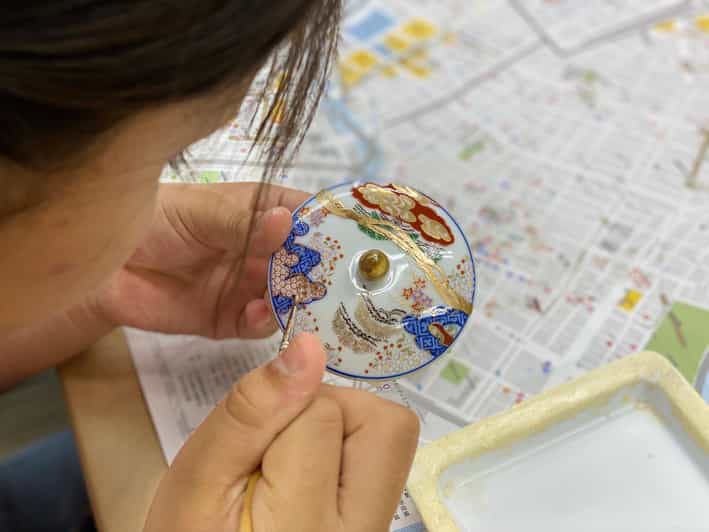
Kintsugi is the Japanese art of repairing broken pottery so the damage becomes part of the design. Instead of hiding cracks, you trace them with lacquer and metal—often gold-toned—to turn a flaw into a visual line. It is both craft and philosophy: breakage does not erase what came before.
In this workshop, you focus on the core skills rather than long theory sessions. You work directly on your piece through the main stages: aligning broken parts, adhering them, filling missing areas, smoothing the surface, and finishing the repair so it looks intentional. If you are doing this for the first time, that practical sequence is exactly what you want.
Also, do not expect a “just watch and leave” activity. The best part is that the method is taught while you are doing it, with patient guidance and step-by-step directions. People also mention that it can feel relaxing—more hands-on calm than hurried tourism.
You can also read our reviews of more tours and experiences in Tokyo



Nihonbashi Meeting Point and Why This Location Is Convenient
You meet at Nihonbashi Mutoh Main Store, in the Nihonbashihoncho area (日本橋滄浪閣 Bldg.), at 〒1030023 JP Tokyo 1-8-13 Nihonbashihoncho, Chuo City. From a visitor’s point of view, the location is practical: it is in central Tokyo, not out in the far suburbs.
The workshop is described as about 15 minutes by subway from Asakusa, which matters because you can fit this into a busy day. You are not forced to start super early, and you can pair it with classic nearby Tokyo time before or after.
Plan to arrive at least 5 minutes early. The experience begins promptly, and you will not get extra time if you run behind.
Step-by-Step: From Cracked Ceramic to Gold-Toned Repair
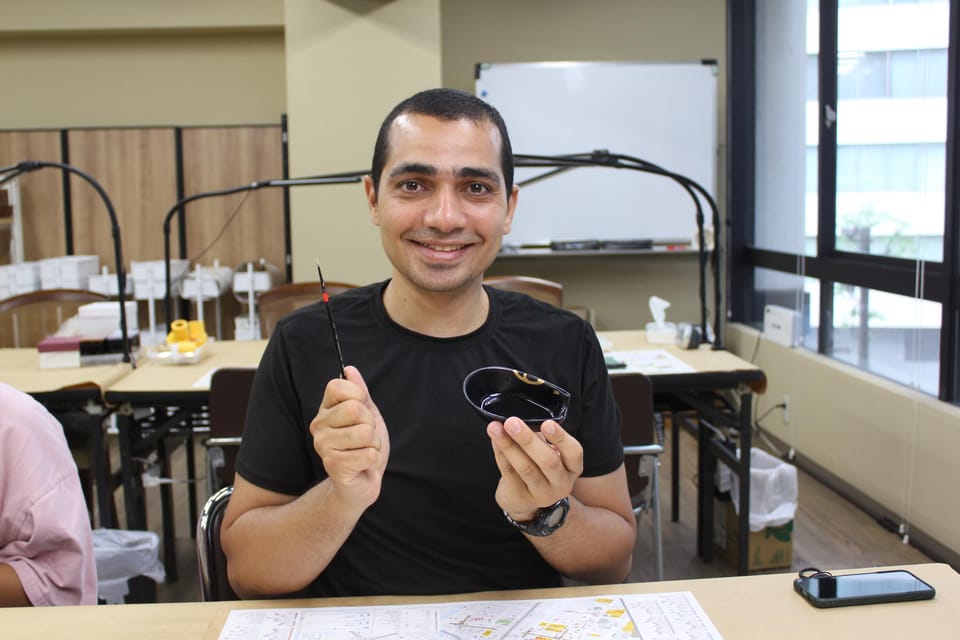
Here is the flow of what you’ll be doing in the session, based on what the workshop teaches and how the process is described by past participants.
1) Preparing the broken pieces
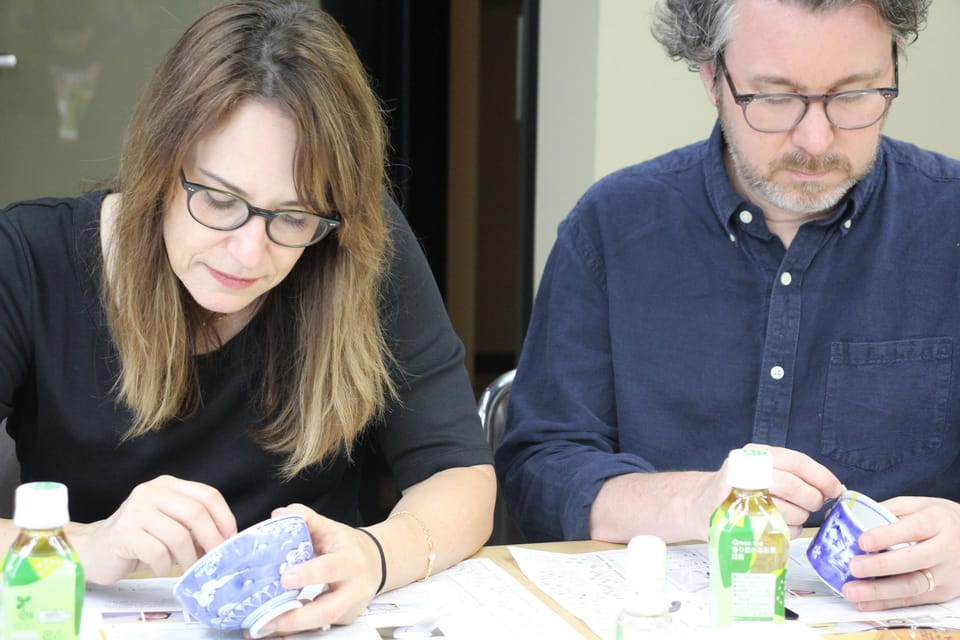
You start with the “before” stage: assessing the break and deciding how it will be repaired. If you bring a ceramic object, you may do an initial alignment similar to putting the puzzle back together. In one account, participants described taping broken pieces back into place before cementing.
2) Adhering and rebuilding the form
Next comes joining the fragments. The instructor guides you through using the right adhesives for ceramic repair. The idea is to make the original shape stable first, before you decorate the cracks.






3) Filling chips and gaps
If there are missing sections or chips, the method may include filling with putty and, for larger gaps, adding clay. You then shape and smooth so the repaired area feels clean under your fingers and looks deliberate rather than messy.
4) Sanding for a finished surface
Sanding appears in the process as a key step—especially when you are working with edges around cracks or chips. This is one of those unglamorous but important details. Without it, the final line work can look uneven.
5) Lining the seams with metal-toned finish
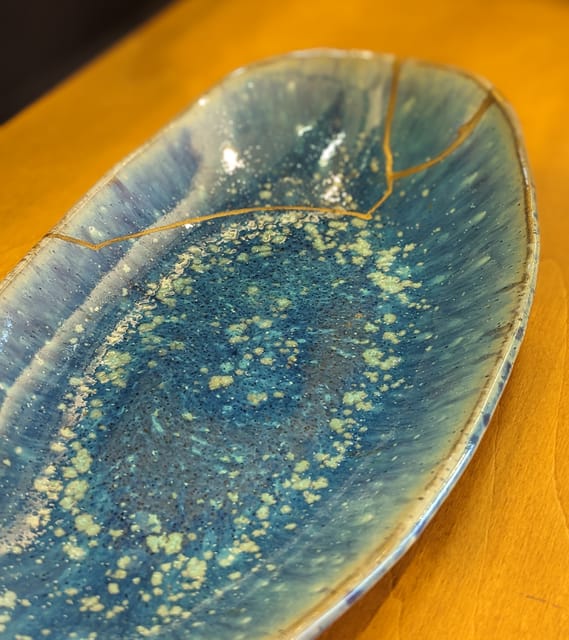
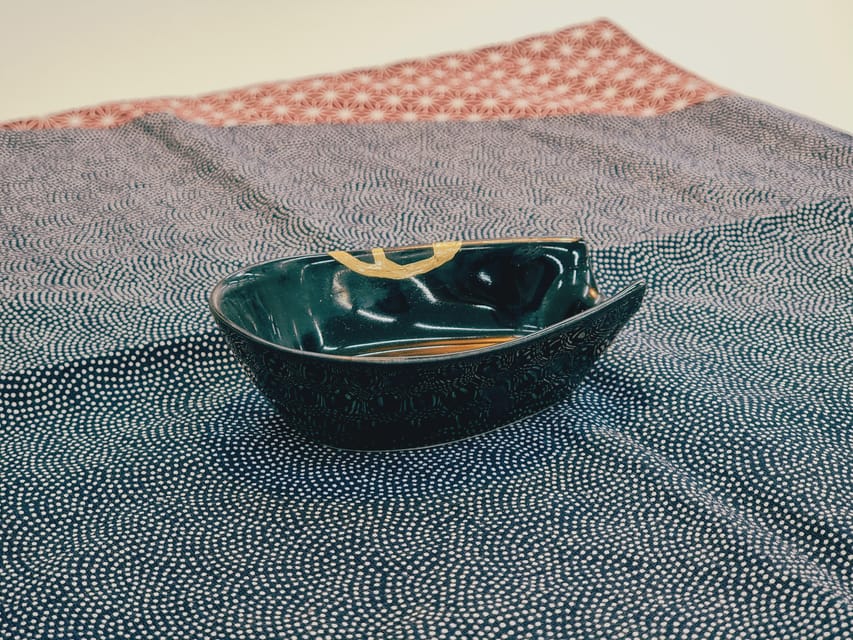
Finally, you complete the repair with a metallic finish along the repaired seams. Some descriptions refer to gold-toned lacquer work, while others describe applying metallic paint for the seams. Either way, your goal is the same: make the crack line look like design, not damage.
A quick note on time
The workshop is 90 minutes, but the finish time depends on what you start with. If your crack or chip is complex, it might not be fully completed in the session for bring-your-own objects. Also, chipped or cracked mug handles are not repairable here, and repairs are limited to specific crack counts.
What You Can Repair (and What You Shouldn’t Bring)
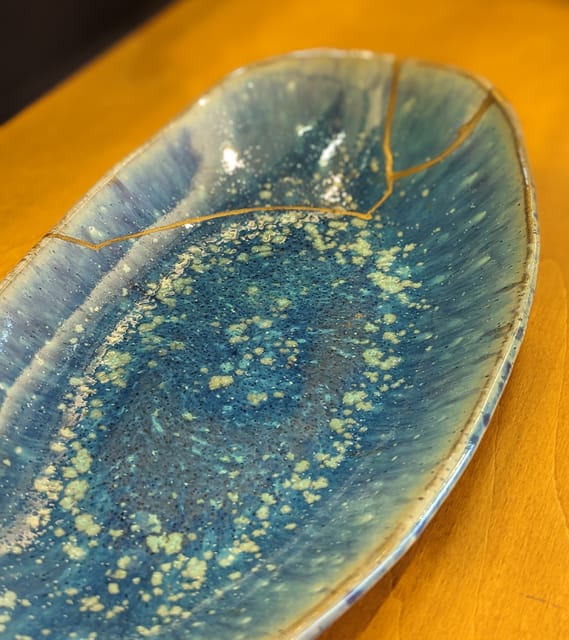
You have two paths:
- Use the workshop’s souvenir ceramic to repair, then take it home.
- Or bring a ceramic object to be repaired (with limits).
The repair options are specifically for ceramic vessels. That means it’s not for non-ceramic items, and it is not for things like mug handles. Also, the workshop’s rules tighten the “how big and how broken” part:
- Up to 15 cm diameter (φ15cm)
- Up to 15 cm height
- 1–2 cracks
- Chipped and cracked mug handles are not repairable
- The object should be a ceramic vessel, and it’s not meant for repairs outside that scope
So if you are thinking about bringing a special mug, do a quick reality check first. If the damage is in a handle, you will probably be turned away from repairing that particular piece.
One practical plus: if you are not sure what you can bring, you can still do the class using a provided piece. That way you stay within the design constraints and spend your energy on learning the technique.
English Support, a Small Group, and the Feel of the Studio
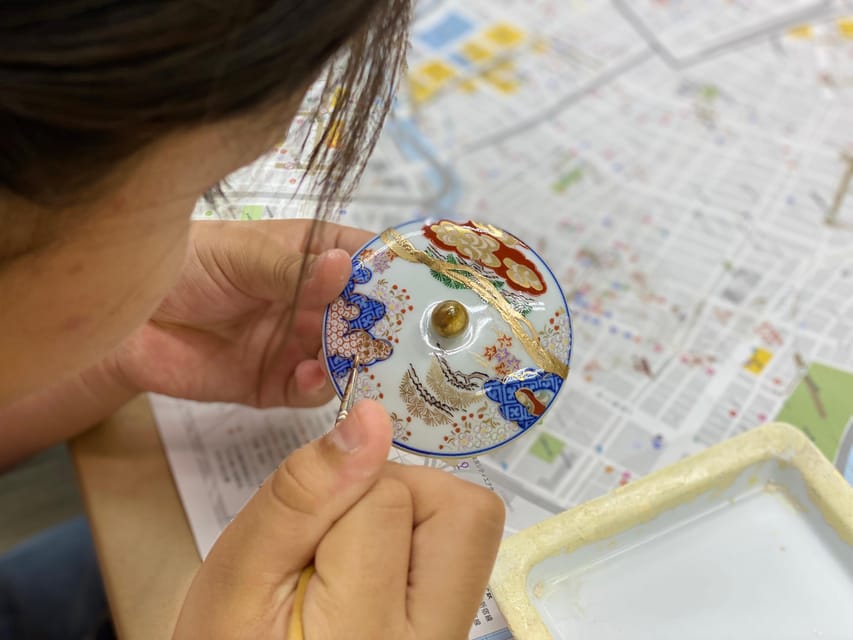
This is a small group workshop, limited to up to 5 participants. That size matters more than most people realize. Kintsugi is precise. When you’re working on fine seams and fragile ceramic, having an instructor close by is what keeps you from feeling stuck.
The class is taught with English interpretation. The experience is described as having an English-speaking instructor plus an interpreter at the table. If you’ve ever tried craft workshops through a phrasebook, you know how valuable that is. You get to understand not only what to do, but why each step matters.
You may even hear specific instructor names used by participants. One instructor mentioned is Hijiri, noted as patient, helpful, and actively guiding during the process. Another comment highlights instructors working closely while a translator supports the whole group.
The studio atmosphere is also part of the appeal. Multiple participants describe it as quiet and peaceful. That is a big deal if your Tokyo days are loud and full. This gives you a slower, craft-centered break.
What You Take Home: A Unique Souvenir You Made
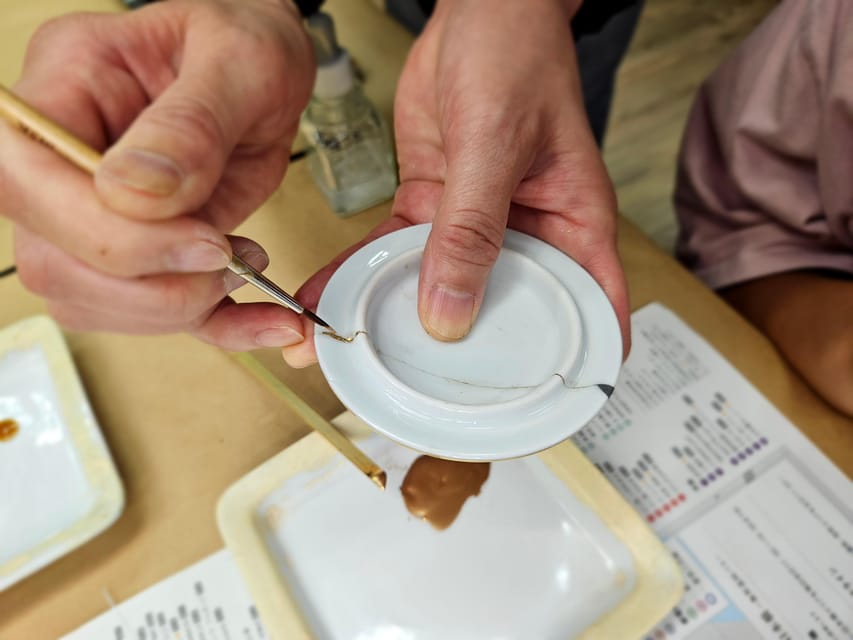
Your take-home item is one of the best parts of the experience. You leave with a repaired ceramic piece that reflects your work and the method you learned. It is not a factory product. It’s personal.
That said, understand how the repaired piece is intended to be used. The repaired ceramic can hold dry food items, but it is primarily for decorative use. Treat it like an art object, not a daily kitchen tool. The goal is to preserve the repair line and finish.
If you bring your own vessel, you may also be asked to let it cure after the class. One participant described packaging for curing and a week-long curing period for their repair. The workshop is short, but repair materials sometimes need extra time to set properly.
Also, keep your expectations realistic around complexity. A simpler crack line can finish in session. A bigger chip may require more steps and may not be fully completed during the 90 minutes.
Tenugui, Studio Shopping, and Turning Craft Time into Real Tokyo Time
The workshop happens inside a shop environment, and you may have a chance to browse while you are there. Participants mention the store has a variety of items for sale, including lacquerware and ceramic pieces. One person also bought tenugui with seasonal fall designs.
This matters for value. Even if you are only planning to do the workshop, the shop setting lets you make it a complete cultural stop. You can pick up small gifts that fit in luggage without stressing about fragile shipping.
And if you’re the type who likes to go home with a story, this is ideal. Your souvenir is not just bought; it’s tied to a hands-on skill you practiced.
Price and Value: Is $125 Worth It in Tokyo?
At $125 per person for about 90 minutes, this workshop is not the cheapest thing on a Tokyo itinerary. But it’s also not charging you like you’re buying a museum ticket plus a nice photo.
Here’s the value logic that makes sense:
- Instruction and experience fees are included
- Souvenir is included (you take home a completed repair piece)
- Materials are provided, so you are not paying extra for supplies
- You get a small-group setting, not a huge class where you barely touch the craft
- You walk away with a functional art item (with a gentle use expectation)
Compare it to buying a ready-made kintsugi-style item in a shop. Even if the shop pieces are beautiful, buying one does not teach the process. This workshop gives you the technique steps you can apply in the future, or at least appreciate when you see kintsugi repairs in Japan.
One more value point: the time is Tokyo-friendly. When you only have a day or two, a 1 to 1.5 hour craft stop can fit without stealing your whole morning.
With a 4.7 rating from 60 reviews, the demand seems strong for a reason: it’s a hands-on, take-home experience that people consistently describe as relaxing and well taught.
Who Should Book This Kintsugi Workshop (and Who Might Skip)
Book this workshop if you want:
- a hands-on cultural activity that is short enough to schedule easily
- a souvenir that feels meaningful because you made it
- English support and a small group so you can actually follow along
- a craft experience that can feel calm, not chaotic
It may be less ideal if:
- you’re hoping for a deep, long lecture about the full history of kintsugi
- one comment suggests it’s more about doing the craft than spending the time on theory
- you want to repair items with handle damage (not repairable here)
- your ceramic object is larger than allowed or has more complex cracking than the rules cover
- you expect a daily dish that will go straight into heavy-use kitchen routines (this is primarily decorative)
Age is also a factor. The workshop is recommended for ages 13 and up, and minors must be accompanied by a guardian.
Quick Practical Tips Before You Go
You only need comfortable clothes. No special gear is required per the info shared.
If you want to feel extra prepared, read a bit about what kintsugi looks like and the idea of gold-lined repairs before your class. One participant specifically suggested that doing light prep helps you get more from the hands-on time, since the focus is on the craft steps.
Finally, treat punctuality as part of the success plan. The session begins promptly, and they cannot extend the end time for anyone who has not finished.
Should You Book This Workshop? A Simple Decision Guide
If you want a Tokyo activity that feels authentic and practical, I’d strongly consider booking this one. The combination of English interpretation, small group size, and materials provided means you can concentrate on learning and finishing something you’ll still care about after the trip.
You should book if:
- you like hands-on art or craft
- you want a take-home souvenir with meaning
- you have limited time and need something that fits in about 90 minutes
You might pass if:
- you’re only interested in history lectures
- you’re bringing a ceramic item with handle damage or cracks that are outside the limits
- you want a fully functional everyday dish for heavy use
FAQ
FAQ
How long is the Tokyo Kintsugi workshop?
The workshop runs for 90 minutes.
Where is the meeting point?
You meet at Nihonbashi Mutoh Main Store (日本橋滄浪閣 Bldg.), 〒1030023 JP Tokyo 1-8-13 Nihonbashihoncho, Chuo City.
Is the workshop offered in English?
Yes. The instruction is in English with English interpretation included.
Do I need to bring materials or tools?
No. All materials are provided, and you do not need to bring anything besides comfortable clothing.
What should I wear?
Wear comfortable clothes so you can work comfortably during the repair steps.
Is it suitable for kids?
The experience is for ages 13 and up. Minors must be accompanied by a guardian.
Can I repair my own ceramic item?
Yes, you can bring a ceramic vessel to repair, but it must meet the workshop limits (size and crack rules apply).
Are cracked or chipped mug handles repairable?
No. Chipped and cracked mug handles are not repairable.
What size limits apply for items you bring?
The item should be up to 15 cm diameter (φ15cm) and up to 15 cm height, and it should have 1–2 cracks.
Is the repaired item safe to use for food?
The finished piece can be used to hold dry food items, but it is primarily intended for decorative purposes.
Is there free cancellation?
Yes. You can cancel up to 3 days in advance for a full refund.
If you want, tell me your travel dates and whether you plan to bring a personal ceramic or use the souvenir piece. I can help you decide what makes the most sense for your schedule and what to watch out for.

![[Self-Drive] Tokyo & Daikoku Custom Car Driving Tour - Shibuya Crossing: Scramble Chaos, With You in Control](https://e.thetokyoexplorer.com/wp-content/uploads/self-drive-tokyo-daikoku-custom-car-driving-tour-400x400.jpg)