REVIEW · TOKYO
Tokyo: KABUKI Show at Kabukiza Theatre Admission Ticket
Book on GetYourGuide →Operated by Shochiku Co., Ltd. Kabukiza Theatre Japan · Bookable on GetYourGuide
Kabuki sounds wild until you see it live. At Kabukiza Theatre in Ginza, you’re stepping into the only theater in the world dedicated exclusively to kabuki, with a caption service that helps you follow along. I love that the ticket includes English or simplified Chinese captions, so the story does not depend on knowing Japanese.
I also love the performance format in a historic room, with live music supporting the drama from start to finish. One possible drawback: it’s a long sit (around four hours), and the seating can feel tight, so plan to protect your comfort.
In This Review
- Key things to know before you book Kabukiza in Ginza
- Kabukiza Theatre: why this is the easiest first Kabuki night
- Price and value: what $106 buys you at Kabukiza
- Choosing the right month: programs change, so check Kabuki Web
- Logistics in Ginza: ticket pickup, timing, and getting inside
- Before the curtain: the exhibition and basement souvenir shopping
- In your seat: how the captioning actually helps
- What Kabuki feels like inside this historic theatre
- Intermission comfort: snacks, alcohol, and your best break
- Seats and comfort: small upgrades make a big difference
- Souvenirs in the Kabukiza shopping center: plan your timing
- Who Kabukiza is perfect for
- Should you book Kabukiza: my practical take
- FAQ
- How long is the Kabukiza Kabuki show?
- Does the ticket include English or Chinese captions?
- Where do I pick up my tickets?
- What time is the box office open?
- Can I enter the theater using the GYG Voucher?
- Can I choose my seats for this reservation?
- Do the performances run the same program every time?
- Is there an intermission, and can I eat or drink?
- Is this suitable for young children?
Key things to know before you book Kabukiza in Ginza
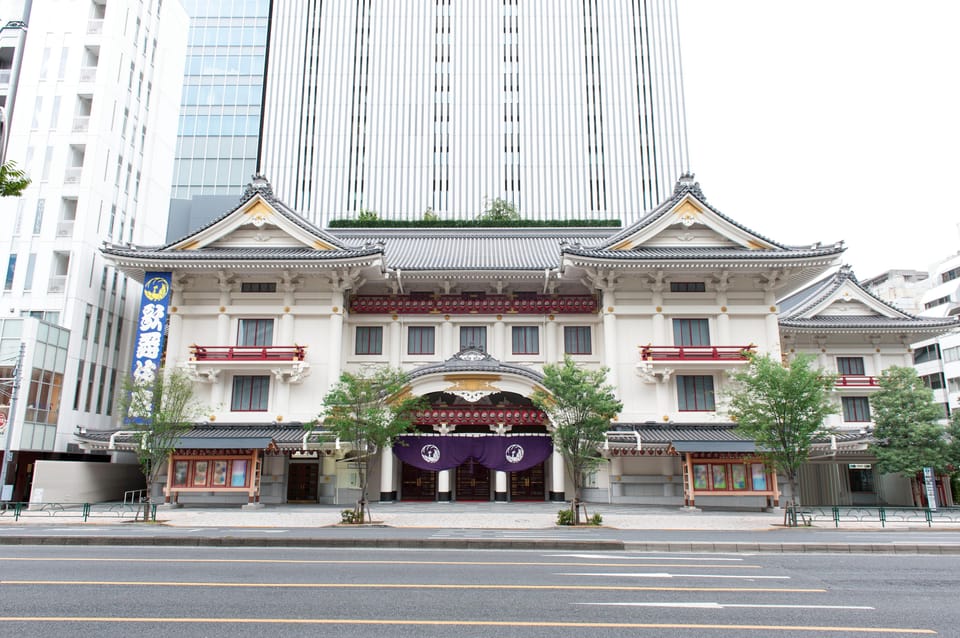
- Kabukiza is kabuki-only: this is the dedicated home for the art form, right in Ginza.
- Captions are included: English or simplified Chinese (简体中文) captioning comes with your ticket.
- Shows change monthly: each month has a new program, so check Kabuki Web for the dates and titles.
- You arrive early, then settle in: doors open 30 minutes before the performance time.
- Ticket pickup is on Basement Level 2: you exchange your voucher for the real tickets at the BOX OFFICE.
- Expect a real pause in the middle: there is an intermission, and snacks/alcohol are available for purchase.
Kabukiza Theatre: why this is the easiest first Kabuki night
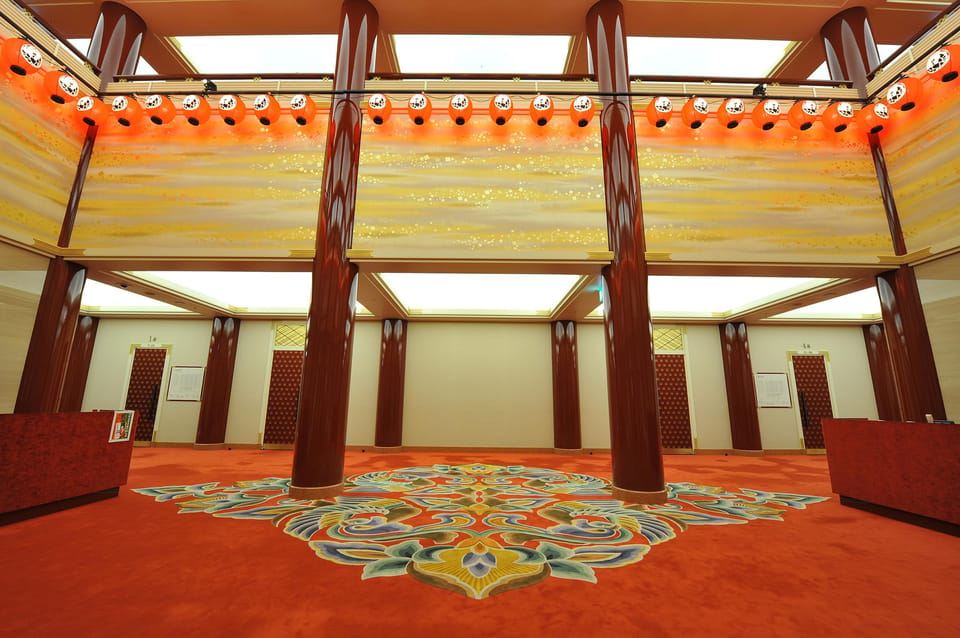
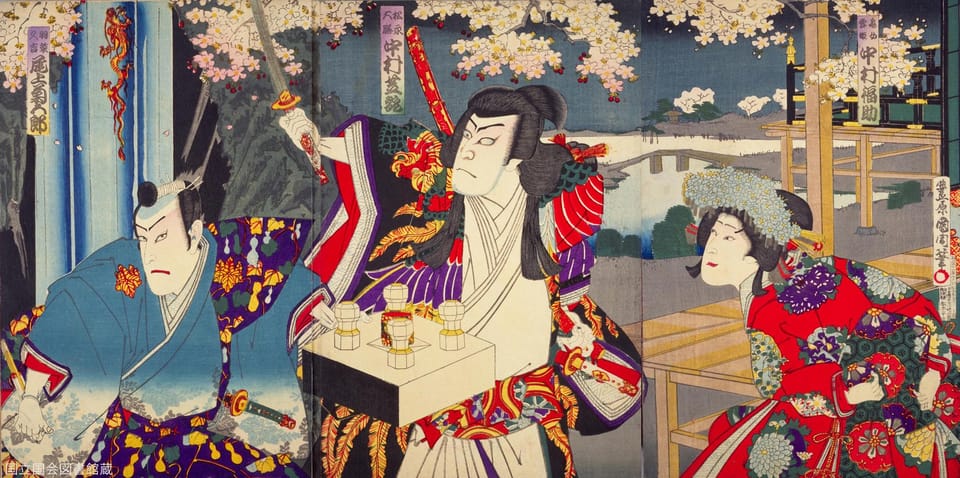
If you’re new to Kabuki, Kabukiza is the smart starting point. This theater has one job: host Kabuki. That focus matters. You’re not in a mixed-use venue where performances feel like an event that temporarily takes over a space. Here, the building itself is built around the rhythm of Kabuki staging, live accompaniment, and that theatrical back-and-forth between actors and audience.
I also like that the experience is structured to help you follow the show. Your ticket includes English or simplified Chinese captioning, and the theater provides support for non-Japanese speakers to keep pace with dialogue and plot turns. For many first-timers, this is the difference between watching costumes and actually understanding what’s happening.
Finally, the monthly program keeps the night from feeling repetitive. Kabuki is not a single fixed story. Depending on the month, you might see a mix of dance, historical plays, domestic plays, and modern Kabuki styles in one ticket.
You can also read our reviews of more tours and experiences in Tokyo


Price and value: what $106 buys you at Kabukiza
At about $106 per person for a roughly four-hour outing, Kabukiza is not the cheapest evening activity in Tokyo. But the value is stronger than it looks on paper.
Here’s why. Your ticket bundles several things that cost extra elsewhere:
- The show itself at Kabukiza Theatre (the dedicated Kabuki venue).
- The captioning device/service in English or simplified Chinese.
- A full program with multiple pieces presented in one sitting, plus intermission time.
Also, Kabuki is a professional performing art with serious training and tradition behind it. You’re buying access to that craft in the theater where it’s meant to be performed.
The main thing to keep in mind is matching the time commitment to your own travel style. If you prefer quick hits, four hours can feel long. If you like culture that takes time, this is a good use of an evening.
Choosing the right month: programs change, so check Kabuki Web
Kabukiza doesn’t run one standard set every time. Each month has a new program, and the show times and pieces vary.
For example, the February program includes a matinee from 11:00AM to about 3:21PM and an evening show from 4:30PM to about 9:02PM. The lineup can mix modern Kabuki, dance segments, historical plays, and domestic plays. March’s program also has both matinee and evening options, with different plays and dance titles.
What this means for you: before you book, look up the month’s details on the official Kabuki Web site and pick the showtime that fits your energy level. A matinee can be a great choice if you like being done early. An evening show can be better if you want a full Tokyo night with Ginza lights after.
Logistics in Ginza: ticket pickup, timing, and getting inside
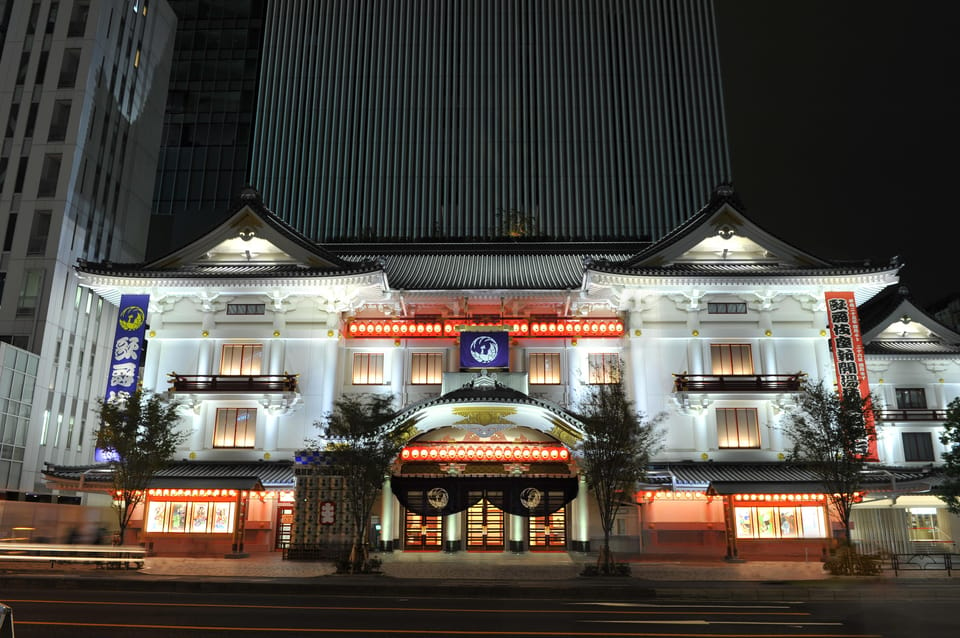
Kabukiza Theatre sits in the Ginza area. The address is Ginza 4-12-15, Chuo-ku, Tokyo, Japan.
Plan around the ticket pickup process. You pick up your tickets at the venue BOX OFFICE on the day of the performance, and you must exchange your PDF or mobile GYG Voucher for the real ticket(s). You cannot enter the theater using the GYG Voucher itself.
Where to do the exchange:
- The box office is on Basement Level 2
- Hours are 10:00AM to 6:00PM
If you arrive after 6:00PM, go directly to the theater entrance.
Also note two practical limits:
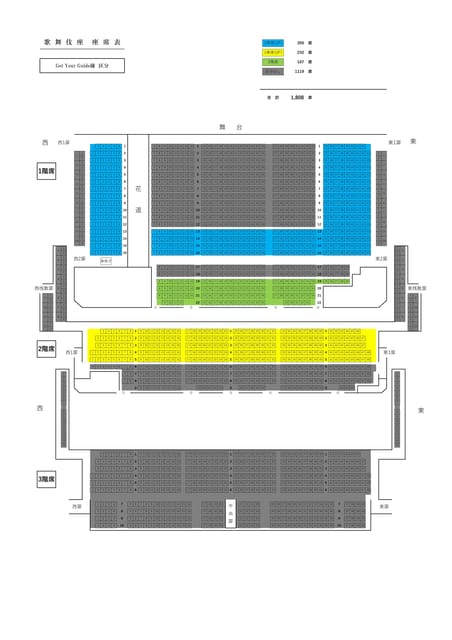
- You cannot specify your seats with this reservation.
- The theater doors open 30 minutes before the show starts, so aim to arrive early enough to get settled.
This is one of those experiences where being on time truly helps. The building is central and busy, and you’ll feel calmer if you use the half-hour door-open window to get oriented.
Before the curtain: the exhibition and basement souvenir shopping
Kabukiza does more than just seat you and shut the lights. There’s a permanent interactive exhibition that helps you understand Kabuki’s background and its key tricks. If you want to make the performance easier to follow, this is where you spend 20–30 minutes getting the basics down before the show begins.
Then there’s the shopping center. It’s located on the second basement floor, and it’s a good place to browse Kabuki-related gifts and souvenirs before or after your performance.
A practical tip based on what people have pointed out: not every shop window matches your exit time. If you’re hoping for last-minute browsing, give yourself enough time and don’t count on the shop being open the exact moment you walk out.
You can also read our reviews of more tours and experiences in Tokyo




In your seat: how the captioning actually helps

The most important support for non-Japanese speakers is the captioning. Your ticket includes English or simplified Chinese (简体中文) caption service, and it’s designed to help you track the performance as it unfolds.
A useful consideration from real-world feedback: sometimes the timing of subtitle changes can be harder to track than you expect. You might find yourself looking down to read instead of watching faces onstage. The solution is simple: keep your eyes moving between the stage and the caption screen so you don’t miss the moment an actor’s expression shifts.
One detail I’m glad you don’t have to figure out alone: you don’t need to interpret everything perfectly to enjoy the art form. Even when plot details are tricky, the combination of staging, movement, and live music still lands. The captioning just makes it much easier to connect the dots.
Also, there’s an intermission, which helps you reset before the second half.
What Kabuki feels like inside this historic theatre
Kabuki is theatrical storytelling with strict style rules. That might sound intimidating, but Kabukiza makes it feel accessible.
A few reasons why:
- The theater uses live music as part of the performance, not just background noise.
- The staging is designed to project emotion through movement, posture, and costume.
- The show format can include multiple pieces (dance, historical stories, domestic scenes, and modern Kabuki), so the evening feels like a sequence of different moments rather than one long monologue.
If you’re sensitive to details, one thing to plan for is that Kabuki places weight on facial expressions. From seat to seat, it can be easier or harder to catch those micro-moments. Since you can’t select seats, you’ll want to decide whether you prioritize closeness or a broader view.
Intermission comfort: snacks, alcohol, and your best break
Kabuki at Kabukiza includes an intermission. The show runs around four hours, and the breaks matter.
Here’s how to make intermission work for you:
- If you bring something to eat or drink, it can make the break more comfortable.
- Snacks and alcohol are also available for purchase inside the theater.
I like this arrangement because it turns the long sitting into something more manageable. You get a real pause, and you don’t have to worry about finding food nearby in the middle of a show that stays at full pace.
Seats and comfort: small upgrades make a big difference
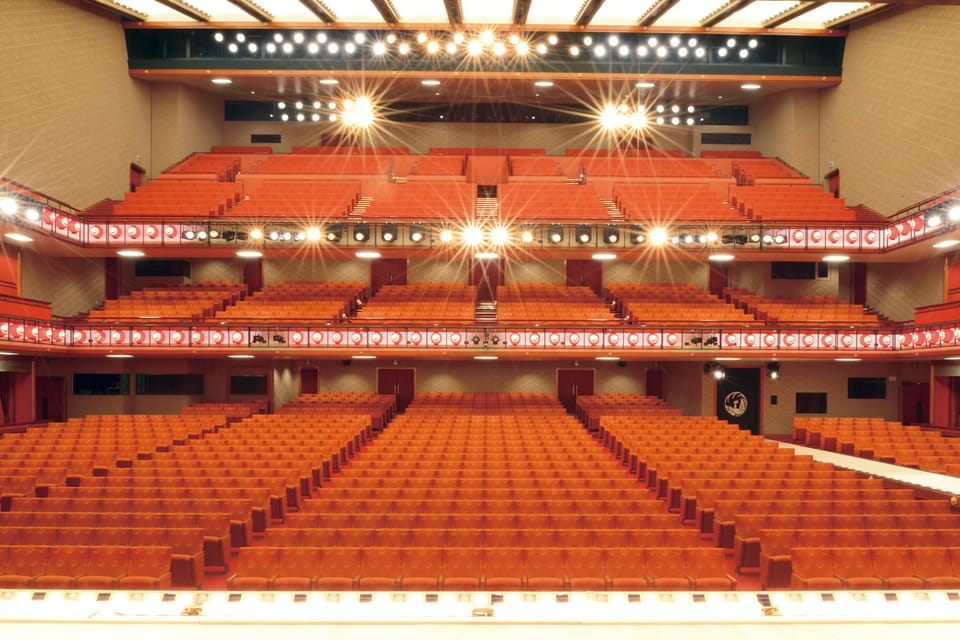
No sugarcoating: you’re sitting for a long time. Even with intermission, the performance can last about four hours, and the chairs may feel uncomfortable for some people.
If you’re the type who notices seat pressure quickly, bring a small cushion if you can. It can turn a challenging sit into something you barely think about once the show starts.
Also consider your personal tolerance for tight seating. One common theme from experience is that being more comfortable lets you focus on faces, gestures, and caption text without distraction.
Souvenirs in the Kabukiza shopping center: plan your timing
The shopping center is part of the Kabukiza experience. It’s on the second basement floor, and it’s there for you to browse Kabuki-related gifts and souvenirs.
If you want the best selection, don’t treat shopping as a casual afterthought. Give yourself time either before you settle in or during your visit window around the show.
If you are the type who waits until right after the performance, just keep in mind that store hours may not line up with your exact exit time.
Who Kabukiza is perfect for
Kabukiza works well if:
- You want a first Kabuki show in the right setting (the dedicated Kabuki theater).
- You value story clarity and need English or simplified Chinese captions.
- You like performances with live music and strong stagecraft.
- You don’t mind a longer sitting time in exchange for a full cultural experience.
It may not be your best match if you prefer short events, or if you’re very sensitive to uncomfortable seating for long periods.
Age note: the experience is not suitable for children under 4 years.
Should you book Kabukiza: my practical take
I think you should book Kabukiza if Kabuki is on your Tokyo wishlist and you want the most straightforward way to understand it without Japanese fluency.
Here’s the quick decision guide:
- Book it if you’re excited by traditional performing arts and want caption support built into the ticket.
- If $106 feels steep, treat it as paying for the right place (the only kabuki-dedicated theater), pro-level production, and the fact you get a full program rather than a short sampler.
- If you’re worried about comfort, plan for a cushion and arrive early so the half-hour before showtime doesn’t turn stressful.
If you want one cultural night in Tokyo that feels unmistakably Japan, this is a strong pick.
FAQ
How long is the Kabukiza Kabuki show?
The duration listed for this experience is about 4 hours, with an intermission during the performance.
Does the ticket include English or Chinese captions?
Yes. The ticket includes an English or simplified Chinese (简体中文) captioning service.
Where do I pick up my tickets?
You exchange your voucher at the venue BOX OFFICE on Basement Level 2.
What time is the box office open?
The box office hours are 10:00AM to 6:00PM.
Can I enter the theater using the GYG Voucher?
No. You cannot enter the theater with a GYG Voucher. You must exchange it for the actual ticket(s) at the BOX OFFICE.
Can I choose my seats for this reservation?
No. You cannot specify your seats for GYG reservation.
Do the performances run the same program every time?
No. Programs change monthly, so you should check the official Kabuki Web site for the latest program details.
Is there an intermission, and can I eat or drink?
There is an intermission. If you bring something to eat or drink, you may be more comfortable, and snacks and alcohol are available for purchase in the theater.
Is this suitable for young children?
No. It is not suitable for children under 4 years.
If you tell me your travel dates (and whether you prefer a matinee or evening show), I can help you pick the best month and time based on the program format.