REVIEW · TOKYO
Tokyo: Imperial Palace East Gardens Walking Tour
Book on GetYourGuide →Operated by Localized Walking & Food Tours · Bookable on GetYourGuide
Imperial gardens, minus the palace entry headache. This walking tour is a smart way to see Tokyo’s East Gardens and get the story behind them, from Tokugawa shoguns to what Edo Castle used to protect. I like that it also lines up with seasonal beauty, from spring cherry blossoms to autumn color.
My favorite part is how the guide connects tiny details to big history. You’ll pass stone walls, guard houses, watch towers, and the shaped calm of the Ninomaru Garden, where traditional design takes center stage.
One consideration: you don’t go inside the Imperial Palace itself. So if your dream is palace buildings and interiors, this won’t fully scratch that itch.
In This Review
- Key things I’d watch for on this Tokyo palace-gardens walk
- East Gardens: a calm pocket of Tokyo with Edo roots
- Meeting at Starbucks near Kokyo Gaien: start easy, find it fast
- Honmaru remnants: where you read the castle’s defenses
- Ninomaru Garden: quiet beauty with traditional design rules
- Old Tokyo vs New Tokyo: shogun stories that make sense today
- What you’ll actually walk through during the 2.5 hours
- Seasonal magic: cherry blossoms and fall color on the same route
- Guides: English, friendly energy, and extra help with explanations
- Accessibility and pace: good for many mobility levels, still a walk
- Price and value: why $19 can be a smart Tokyo move
- Who should book this walking tour (and who might skip it)
- Photo and comfort tips that make the garden easier
- Should you book the Imperial Palace East Gardens walking tour?
- FAQ
- Is entry to the Imperial Palace included?
- How long is the Imperial Palace East Gardens walking tour?
- Where do I meet the guide?
- Is the tour guide speaking English?
- Is the tour wheelchair accessible?
- What seasonal sights can I expect?
- Will I see the Honmaru and Ninomaru areas?
- What’s included in the price?
- Can I get a full refund if my plans change?
Key things I’d watch for on this Tokyo palace-gardens walk
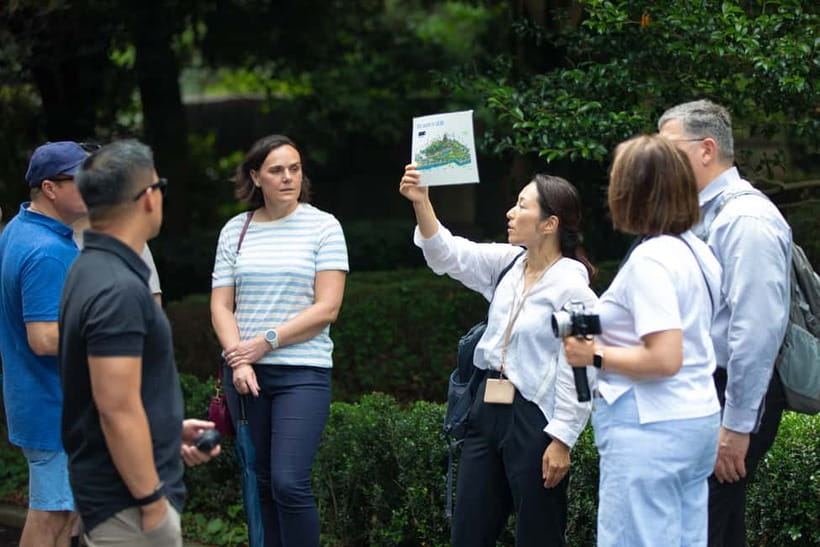
- Edo Castle on foot: see Honmaru area remnants where the castle’s main compound once stood
- Ninomaru Garden design: notice the carefully arranged trees, shrubs, and stone lanterns
- Defensive architecture clues: stone walls, guard houses, and watch towers you can actually view
- Seasonal photo timing: cherry blossoms in spring and colorful foliage in fall
- Story-driven guiding: shogun-era context that makes the grounds easier to read
- Good value for time: about 2.5 hours with a live English guide for $19
East Gardens: a calm pocket of Tokyo with Edo roots
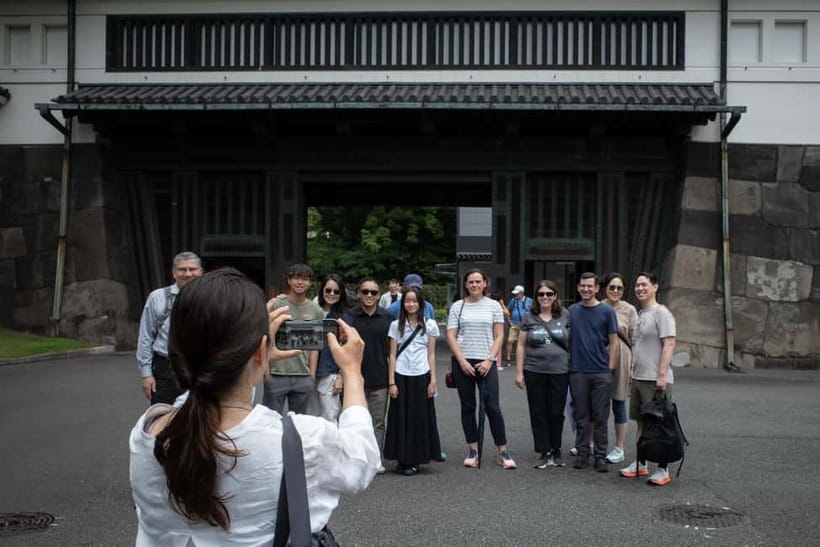
Tokyo can feel loud even in the parks. Then you step into the Imperial Palace East Gardens and the pace shifts. It’s a green, well-kept space that still carries the DNA of the old Edo Castle grounds, not just modern landscaping.
What makes this tour work is the way it frames what you’re seeing. You’re not only walking through paths and ponds. You’re learning how Tokugawa shoguns once used this space during the Edo period, and why the layout mattered. That context turns “nice gardens” into something you can actually understand.
I also like how the garden features are practical for sightlines. You’ll encounter greenery, tranquil ponds, graceful bridges, and pruned bonsai. It’s a tour that helps you slow down without feeling like you’re stuck in one spot.
You can also read our reviews of more walking tours in Tokyo



Meeting at Starbucks near Kokyo Gaien: start easy, find it fast

The meeting point is Starbucks Coffee at Kokyo Gaien Wadakura Fountain Park. That’s a helpful choice. It gives you a recognizable landmark right by the East Gardens area, so you can get oriented quickly.
You’ll want to arrive a few minutes early. Even with a simple starting place, Tokyo walks can be busy around transit and popular park zones. If you’re trying to time the tour around other palace-area stops, build in a small buffer so you don’t start stressed.
The tour is 150 minutes total, and it’s a walking experience. So your start time matters. Comfortable shoes matter more than you think, especially if you’re traveling with a backpack and plan to take photos.
Honmaru remnants: where you read the castle’s defenses
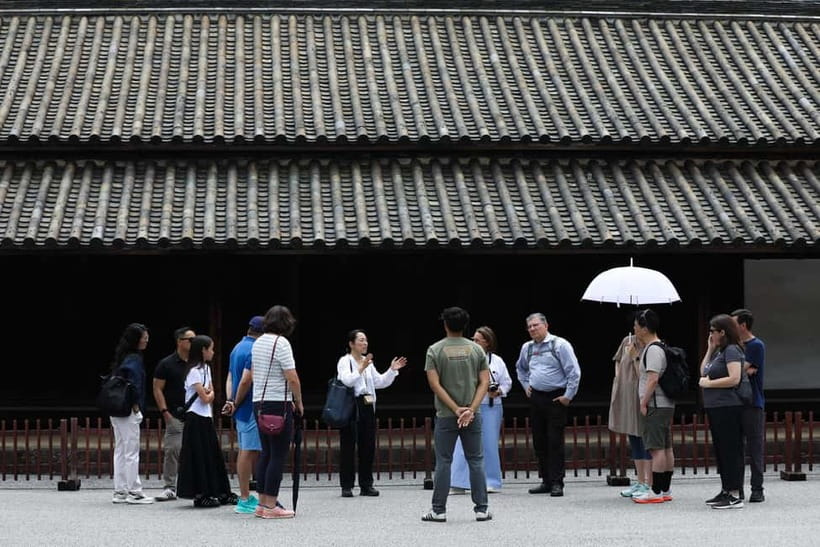
The tour’s best “history you can see” section is the Honmaru area remnants. This was the main compound area of Edo Castle. Today, you’re looking at ruins of foundations, gates, and defensive structures, which can feel abstract if you show up cold.
With a guide, it clicks. You can start noticing how castle design focused on protection and control—how spaces were meant to direct movement and limit risk. You’re essentially tracing the castle’s layout with your feet.
One honest note: because it’s a gardens today, not every corner will look like a full castle complex. Still, the remnants are the point. If you like architecture and defensive design, this stop is the most satisfying payoff on the route.
Ninomaru Garden: quiet beauty with traditional design rules
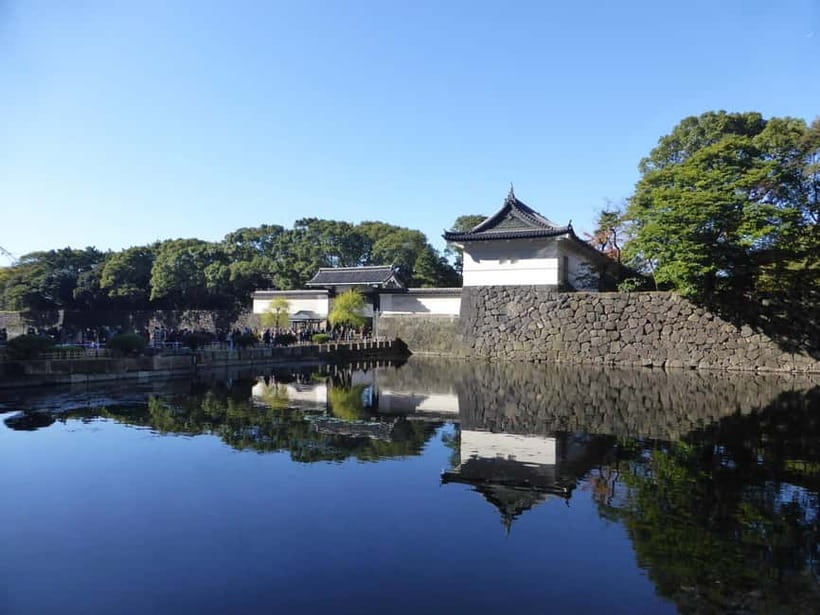
After the Honmaru area, you shift from “defense logic” to “aesthetic order.” The Ninomaru Garden is known for its scenic beauty and traditional Japanese design. This is where the tour becomes more meditative.
Expect meticulously arranged trees and shrubs, stone lanterns, and a setting that encourages contemplation. You’ll also see the garden’s structure through bridges and pond views. It’s the kind of place where a guide’s explanation makes the scene feel intentional, not random.
For me, this is the part that helps non-garden people enjoy gardens. If you tend to breeze past parks, the tour nudges you to look for patterns: the placement, the sightlines, and the way the garden guides your walking route.
And yes, it’s a good photo stop. More importantly, it’s a good stop for your brain. You get a chance to slow down in the middle of a city that rarely asks you to.
Old Tokyo vs New Tokyo: shogun stories that make sense today
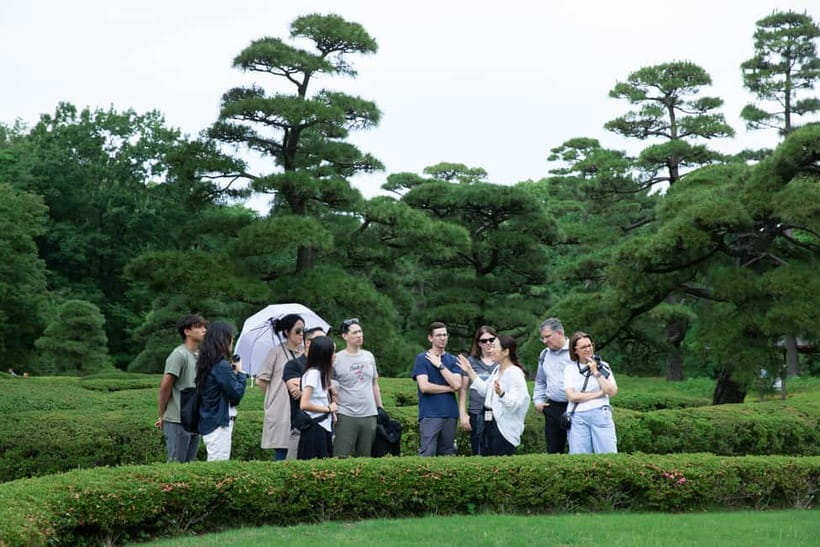
The Imperial Palace area sits right next to modern Tokyo. That contrast is a big part of why this tour feels fun, not museum-like. You’ll hear stories about shogun-era power—and how those layers of authority shaped what came later.
The guide focus on the Tokugawa era gives you a clearer picture of who held control and how the system worked. And because the Imperial Palace sits at the center of modern national identity, you end up connecting old governance to today’s national storyline.
Some guides lean into humor and light gossip about the modern royal family context. If you get a guide with that style, it keeps the tour from turning into a lecture. I’d treat that as a plus, not a distraction—the laughs are usually tied to helping you remember the bigger points.
If you’re a first-time visitor to Tokyo who wants more than “see the famous place,” this story layer is the difference-maker.






What you’ll actually walk through during the 2.5 hours

This is a guided walking tour of the Imperial Palace East Gardens. The tour time is about 2.5 hours, so it’s enough to cover key sections without turning into an all-day hike.
Here’s the flow you can expect:
- You start at the Starbucks meeting point at Kokyo Gaien Wadakura Fountain Park, then head into the East Gardens.
- You spend time in the garden paths and viewpoints, including features like ponds and bridges.
- You move into the Honmaru area remnants to see foundations, gates, and defensive traces.
- You end with the Ninomaru Garden’s traditional design elements.
Because it doesn’t include entering the Imperial Palace, the “inside-the-building” time is replaced with “outside observation.” That can be great. You get more time where you can actually see the terrain, the stones, and the layout.
In real-world terms, this makes the tour a good choice when you’re trying to balance sightseeing with energy. Two hours of walking beats a day full of transit and line-ups.
Seasonal magic: cherry blossoms and fall color on the same route
One of the strongest selling points here is seasonal timing. In spring, you can enjoy cherry blossoms. In fall, you can see colorful foliage.
Even if you’re not a hardcore seasonal traveler, this matters. Flowers and leaves make the gardens look different enough that the tour feels like a different experience each trip. The same stone walls and garden bridges still exist, but your mood changes based on the season.
If you’re choosing dates, I’d pick the season that matches your other Tokyo plans. If you’re doing other temple and shrine walks that are also seasonal, this tour becomes a natural complement. It’s not just pretty—it’s tied to how the grounds are used and remembered.
Guides: English, friendly energy, and extra help with explanations
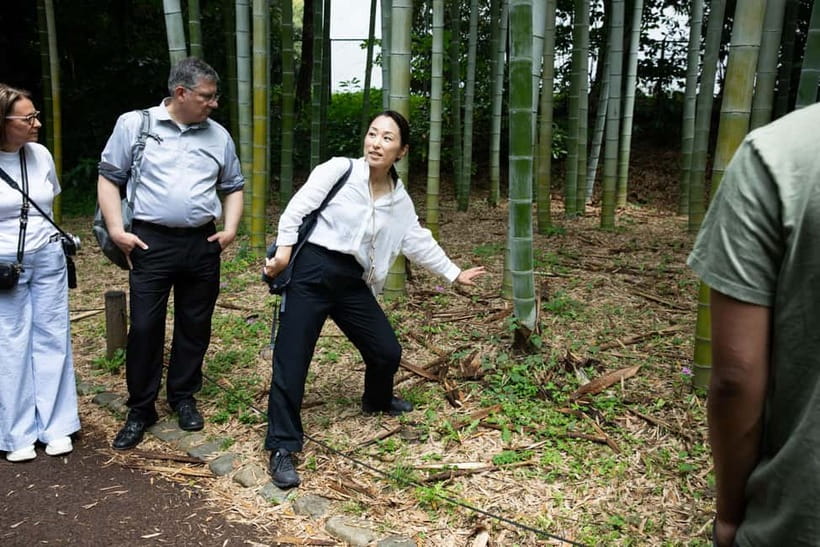
This tour is run with a live English guide. That’s a big deal here because gardens are visual, but the meaning often lives in the explanation.
From the guide styles associated with this experience, a few themes show up again and again: guides like Mei, Kei, Laura, Wakana, Midori, Laura, Loc, and Gerard are repeatedly described as warm and question-friendly. Some also help with photo opportunities—either by suggesting good angles or actively helping people get the shot.
One useful detail: some guides use visual aids like maps and photos to explain the castle layout. That’s exactly what you want for Honmaru remnants, since the ruins can feel hard to interpret without a reference.
If you’re the kind of traveler who asks questions on tours, bring that energy. This is the type of walking tour where answers can actually improve how you read the scene.
Accessibility and pace: good for many mobility levels, still a walk
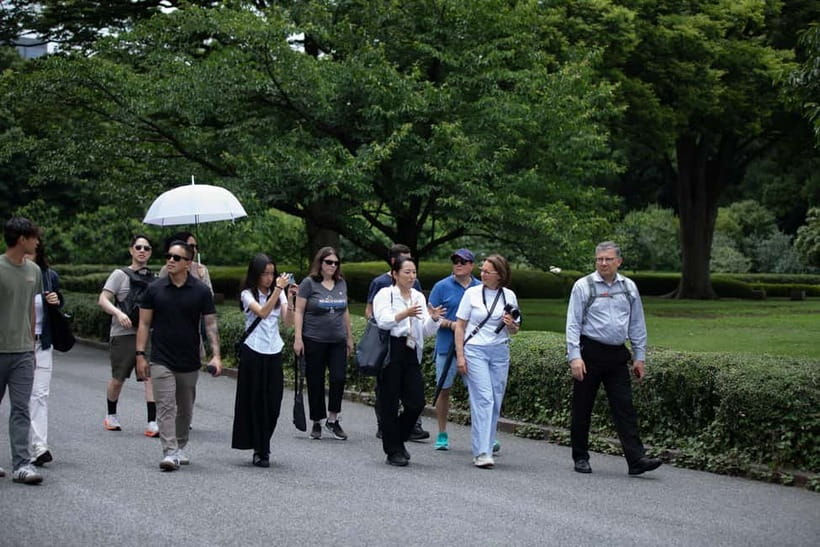
The tour is listed as wheelchair accessible. That’s important in a city where many outdoor spaces can be uneven.
Still, it’s a walking tour. So even with wheelchair access, you should plan for moving along garden paths for about 2.5 hours. If you use a mobility aid, arrive with a plan for breaks and take your time with photos—don’t rush the garden views.
As always, wear shoes you can trust. Tokyo sidewalks and garden paths can be a mix of smooth stone and uneven edges. Your comfort will affect how much you enjoy the explanations.
Price and value: why $19 can be a smart Tokyo move
At about $19 per person for a 150-minute guided walk, this is budget-friendly for Tokyo. The big value piece isn’t just the price—it’s what you get for it: a guide to interpret Honmaru remnants and Ninomaru Garden design.
Also, note what’s not included: entry to the Imperial Palace. If you want palace interiors, you’ll need a separate plan. But for travelers who mainly want the setting, the artifacts, and the garden layout, the tour is a strong deal.
I’d call this a good “first Tokyo history tour” option. It’s not too long. It’s not too expensive. And it connects to broader themes—shoguns, governance, and how Japan organized space for power.
Who should book this walking tour (and who might skip it)
This tour is ideal if you:
- Want Edo Castle context without committing to a full-day palace itinerary
- Like architecture clues like stone walls and gates, not just scenic photos
- Care about seasonal blooms—cherry blossoms in spring or foliage in fall
- Prefer guided pacing so the garden doesn’t feel like a random stroll
You might skip it if:
- Your top goal is entering the Imperial Palace buildings (this tour does not go inside)
- You hate walking for 2.5 hours, even at a relaxed guided pace
If you’re somewhere in the middle, you’ll probably enjoy it. The experience is built around the gardens and the ruins you can see, not around indoor access.
Photo and comfort tips that make the garden easier
This is a garden walk with water views, bridges, and shaped trees. That means your best photos come when you pause. So build in small “stop moments” even when the guide is moving the group.
Bring:
- Comfortable walking shoes for garden paths
- A light layer for shade and cooler pond-side air
- A small umbrella if you’re visiting in weather that can turn
Also, if the guide offers picture tips or helps with angles, take them. A good reference point can turn a typical photo into one that shows why the garden design is special.
Should you book the Imperial Palace East Gardens walking tour?
I’d book it if you want a low-stress way to understand the Imperial Palace East Gardens as former Edo Castle grounds. At $19 for a 2.5-hour English-guided walk, the value is strong, especially if you’re the type who likes your sightseeing explained.
But don’t book it expecting Imperial Palace interiors. This is about what’s outdoors: the garden features, the Honmaru remnants, and the Ninomaru Garden design that invites you to look closely.
If you’re deciding between self-wandering and a guided walk, choose guided. The difference is how quickly you start recognizing what you’re seeing and why it matters.
FAQ
Is entry to the Imperial Palace included?
No. This tour does not go inside the Imperial Palace, and entry to the Imperial Palace is not included.
How long is the Imperial Palace East Gardens walking tour?
The duration is about 150 minutes.
Where do I meet the guide?
Meet at Starbucks Coffee – Kokyo Gaien Wadakura Fountain Park, near the guide. The coordinates are 35.68299330000001, 139.7611971.
Is the tour guide speaking English?
Yes. The tour is listed as having a live English guide.
Is the tour wheelchair accessible?
Yes, it’s listed as wheelchair accessible.
What seasonal sights can I expect?
You can enjoy cherry blossoms in spring and colorful foliage in fall.
Will I see the Honmaru and Ninomaru areas?
Yes. The tour includes the remnants of the Honmaru area and the Ninomaru Garden.
What’s included in the price?
The included items are the walking tour and the guide.
Can I get a full refund if my plans change?
Yes. Free cancellation is available up to 24 hours in advance for a full refund.