REVIEW · TOKYO
Tokyo Imperial Palace and Heritage of Edo Castle Private Tour
Book on Viator →Operated by 888tour · Bookable on Viator
Tokyo history, minus the herd. This private walking tour links Tokyo Station with the Imperial Palace area, then carries you into what was once Edo Castle—so you see how today’s Tokyo grew out of the old power centers. I like that you can set your pace, ask questions freely, and get straight answers from a guide who knows how the details connect. The focus on Edo Castle storytelling and the 400-year-old Nihonbashi district also makes the walk feel bigger than a basic “see the sights” loop.
One consideration: this is not a door-to-door tour. There’s no hotel pickup or drop-off, and you’ll need to handle getting yourself to the meeting point at the Tokyo Station police box.
In This Review
- Key things to know before you go
- Tokyo Station: the smart place to start
- Imperial Palace grounds: free entry with big meaning
- East Gardens and Edo Castle ruins: where the story turns walkable
- Nihonbashi: a 400-year-old district you’ll understand better after the Palace
- The real value: a private guide you can question (a lot)
- What the $83.24 price really buys you
- Timing and walking: how to plan your half-day
- Logistics that matter: meeting point, languages, and weather
- Who this tour suits best
- Should you book this private Imperial Palace and Edo Castle tour?
- FAQ
- How long is the Tokyo Imperial Palace and Heritage of Edo Castle Private Tour?
- What’s the price per person?
- Is this tour private?
- Where do I meet the guide?
- Where does the tour end?
- Are admissions included?
- What’s included in the tour price?
- What’s not included?
- Is confirmation guaranteed after booking?
- Is the tour dependent on weather?
Key things to know before you go
- Private group pacing so you’re not stuck in a slow-moving crowd line
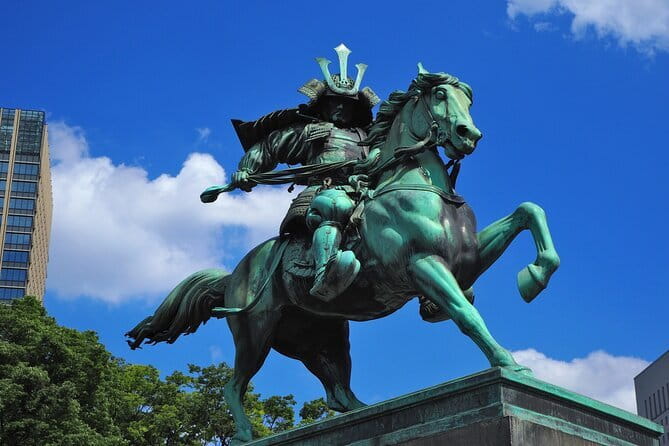
- Edo Castle context that turns the Imperial Palace grounds into a story you can follow
- Multi-language guide support (English/Chinese/Korean/Japanese)
- Tokyo Station included as a historic start point, not just a transit stop
- Nihonbashi time tied to a district with roots about 400 years back
- Free admissions noted for the Imperial Palace and key areas on the route
Tokyo Station: the smart place to start
Most tours skip the beginning, then you wonder why you feel lost. Here, the tour starts at Tokyo Central Railway Station (Tokyo Station) in the Marunouchi area, a landmark built in 1914 with its famous red brick look. It’s also a major transport hub, so it’s practical: you’re already in the right neighborhood for the rest of the day.
This first stop also does a good job of setting the tone. You don’t just arrive at the station and move on—you get the “why this place matters” angle before you head into imperial and castle territory. That context helps later when you notice how Tokyo’s modern layout still reflects older routes and districts.
If you’re the type who likes to understand what you’re looking at, you’ll appreciate this. It’s not just photos; it’s orientation plus history.
You can also read our reviews of more private tours in Tokyo



Imperial Palace grounds: free entry with big meaning
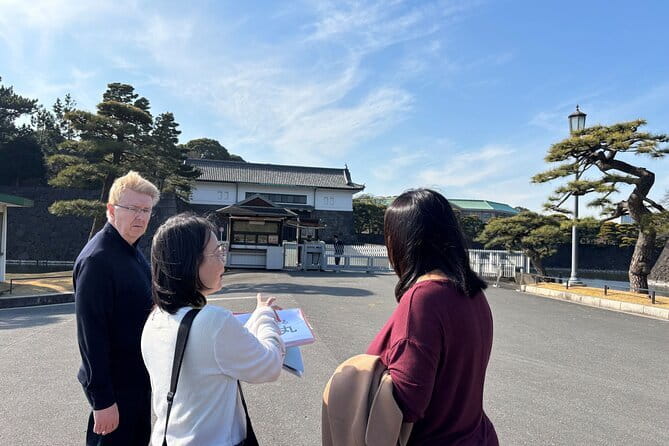
The heart of the tour is the Imperial Palace, the current home of the Japanese Emperor. Historically, this same area ties back to Edo Castle, the seat of power for the Tokugawa shoguns. That link matters because the Palace isn’t just a pretty landmark—it’s where politics, ritual, and city planning all converged.
One of the best parts of going with a guide is that the Imperial Palace can feel oddly “quiet” from the outside. Without context, it’s easy to treat it like scenery. With guidance, you learn what the spaces were for and why the layout and ceremonial elements are more important than they first appear.
Admission is free for this stop, which is a nice value boost. More importantly, you’re spending paid guide time on the meaning, not the ticket line. For people who want to see a lot in a short window, that’s a smart trade.
East Gardens and Edo Castle ruins: where the story turns walkable
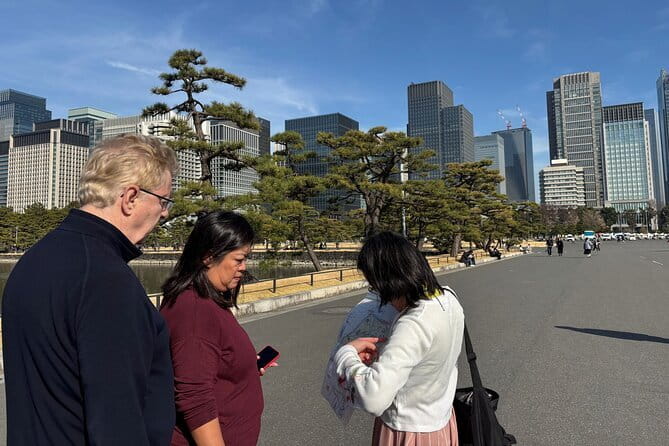
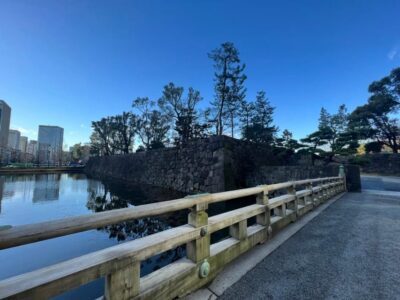
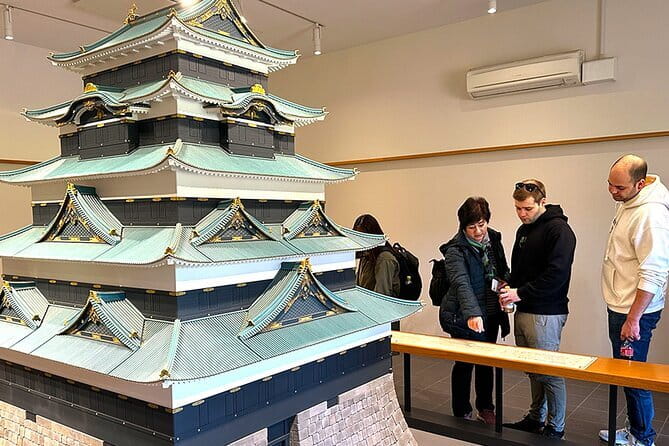
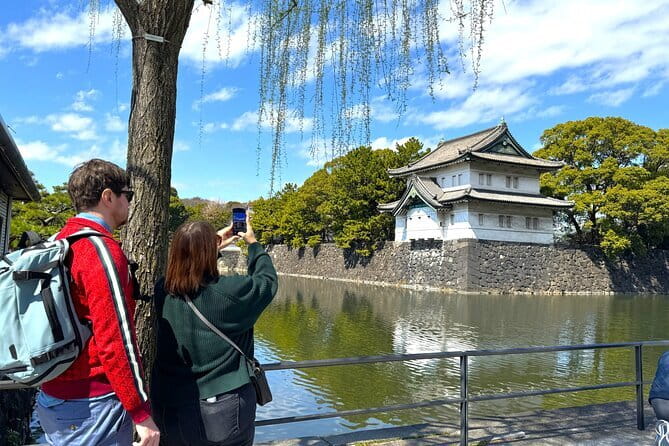
After the main Palace area, the tour moves to the East Gardens of the Imperial Palace, which include the Edo Castle ruin zone. This is where Tokyo slows down. The gardens give you that break from city noise, but you’re not just strolling through greenery—you’re reading history in the shapes of what remains.
The appeal here is practical and visual. Gardens give you natural pauses for photos and for questions. Ruin areas add “how did this work?” moments—how a fortress-era site transitioned into a maintained imperial landscape. If you like connecting past and present, this section is where it clicks.
Timing is generous on this part (about 1 hour 30 minutes), so you won’t feel rushed. That matters because questions often come up when you can actually stand in the right spot and look around.
Nihonbashi: a 400-year-old district you’ll understand better after the Palace
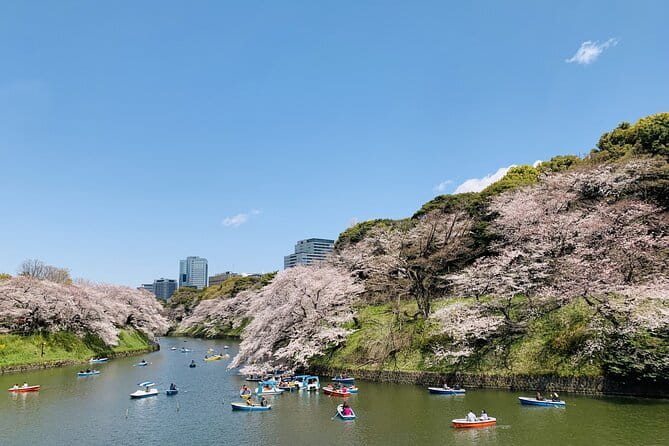
Tokyo can be confusing because so many layers sit on top of each other. This tour uses that idea on purpose. Besides the Imperial Palace area, it also includes time in Nihonbashi, known as a district with roots going back roughly 400 years.
Why that matters: Nihonbashi is the kind of place where you can walk around and only partially “get it” if you don’t know what it used to represent. When you pair it with Edo Castle and Tokugawa-era context, the commercial and civic side of the city starts making sense. You stop thinking only about rulers and palaces, and you start seeing how the city functioned day-to-day—markets, movement, and the practical infrastructure that supported the capital.
I like that this isn’t treated as an extra checkbox. It works as a balance to the imperial stops, giving your brain a second storyline to hold at the same time.
The real value: a private guide you can question (a lot)
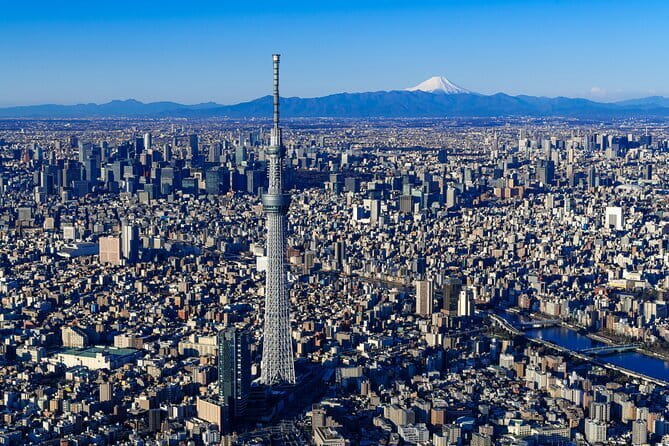
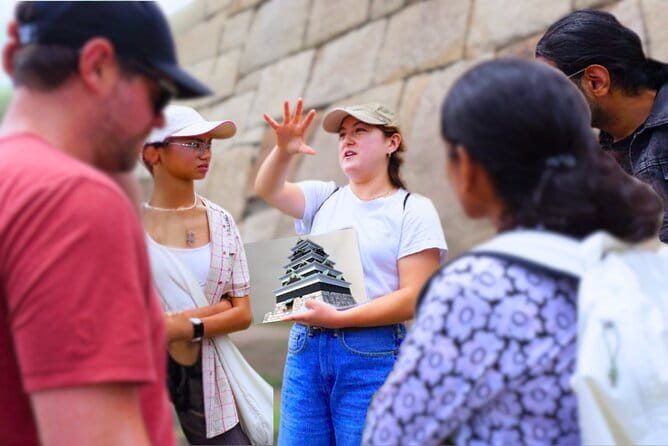
You’ll see the difference quickly when the group pressure disappears. This is a private tour, so it’s only your group. That means your pace stays yours, and you can ask as many questions as you want while you’re walking.
The guide quality is a big highlight. One guide named Sakamoto gets called out for being extremely knowledgeable and very pleasant, with patience for questions even with a granddaughter in the group. Another guide is praised for strong Edo Castle history explanations and for being helpful in a way that feels like a conversation, not a lecture.
If you’re traveling with kids, a private format is especially useful. Adults can ask historical questions, while younger travelers can steer the pace toward what interests them. It becomes less about keeping up and more about keeping curious.
You can also read our reviews of more historical tours in Tokyo





What the $83.24 price really buys you
At $83.24 per person for about 3 hours, you’re paying for three things that often cost you extra time (and sometimes money) when you travel on your own:
- A route that connects Tokyo Station → Imperial Palace → East Gardens → Nihonbashi in a logical way
- A guide who can explain what you’re seeing and answer follow-ups
- Private pacing so you’re not waiting on crowds or splitting attention between too many strangers
Also, the tour notes free admissions for the stops listed, which helps keep the “all-in” cost under control. And with a mobile ticket, you’re not scrambling to print or hunt for paperwork.
Is it the cheapest way to see these areas? No. But if you care about understanding the why behind the what, this format can feel like a bargain.
Timing and walking: how to plan your half-day
This tour runs about 3 hours. That’s enough time to cover several major areas without turning it into an all-day grind. Still, it’s a walking-focused experience, and Tokyo is a city where your feet do the work.
A few practical notes based on what’s provided:
- You’ll use public transportation to get yourself there (no transport is included).
- You start at Marunouchi Police Department Tokyo Station Police Box (1-chōme-9-1 Marunouchi).
- The tour ends at Imperial Palace East National Gardens (1-1 Chiyoda, Chiyoda City).
The ending point is convenient if you’re continuing elsewhere around the palace/Chiyoda area. If your next stop is Tokyo Station again, the operator also says they can escort you to Tokyo Station depending on timing and your plans—so it’s worth mentioning your route when you meet.
Logistics that matter: meeting point, languages, and weather
This is the kind of tour where the meeting point detail matters. Show up a bit early at the Tokyo Station police box location in Marunouchi. It’s a clear anchor, but only if you arrive on time and can find it without stress.
Guide languages are clearly supported: English, Chinese, Korean, and Japanese. If you’re choosing between options in Tokyo, language comfort is a big deal—especially when you want to ask questions.
One more thing: the experience requires good weather. If conditions are poor, you may be offered a different date or a full refund. That’s important for this particular area because you’ll likely want to enjoy the gardens rather than rush through them.
Who this tour suits best
This is a great pick if you:
- Want a tight, meaningful route through major Edo-to-imperial sites
- Like asking questions and getting specific answers
- Prefer a private format over group touring
- Want a mix of power history (Palace/Edo) and everyday city life (Nihonbashi)
It may be less ideal if you mainly want free roaming with no guidance, or if you hate walking for a few hours in a row. In that case, a self-guided approach could be more your style.
Should you book this private Imperial Palace and Edo Castle tour?
If your goal is to understand how Tokyo’s most symbolic area connects to Edo Castle and how that story extends into Nihonbashi, I think this tour is worth booking. The $83.24 price is reasonable for the time saved and the context gained—especially since key admissions are noted as free for the listed stops.
I’d book it when you have a short window and you don’t want to guess your way through the Palace grounds. You’ll also get the practical benefit of a guide who handles questions calmly (including a guide named Sakamoto noted for patience), which makes the whole experience feel more personal than a standard group walk.
FAQ
How long is the Tokyo Imperial Palace and Heritage of Edo Castle Private Tour?
It’s about 3 hours.
What’s the price per person?
The price is $83.24 per person.
Is this tour private?
Yes. It’s a private tour/activity, and only your group participates.
Where do I meet the guide?
The start meeting point is Marunouchi Police Department Tokyo Station Police Box (1-chōme-9-1 Marunouchi, Chiyoda City).
Where does the tour end?
The tour ends at Imperial Palace East National Gardens (1-1 Chiyoda, Chiyoda City).
Are admissions included?
The listed admissions for the Tokyo Station stop, Imperial Palace, and East Gardens are free based on the tour information.
What’s included in the tour price?
The tour includes an English/Chinese/Korean/Japanese-speaking guide.
What’s not included?
Hotel pickup/drop-off and transport are not included.
Is confirmation guaranteed after booking?
You receive confirmation within 48 hours of booking, subject to availability.
Is the tour dependent on weather?
Yes. It requires good weather. If it’s canceled due to poor weather, you’ll be offered a different date or a full refund.