REVIEW · TOKYO
Tokyo walking tour around Imperial Palace and Tokyo Station
Book on GetYourGuide →Operated by gotcha Corporation · Bookable on GetYourGuide
Tokyo station meets palace gates in two hours.
What makes this tour click is the route: you connect the Imperial Palace Outer Garden area with the big-station world of Marunouchi and Tokyo Station in just 2 hours. I love how the stops are built around real viewing angles, especially the Tokyo Station sightlines from the KITTE area. I also love the small-group pace, with guides who adjust to what you care about, whether that means extra time for photos or more time for Q&A.
One possible drawback: it is a concentrated walk. If you want a super-slow stroll with lots of long sit-down breaks, you’ll need to manage your expectations for a tight, city-focused itinerary.
In This Review
- Key Things That Make This Imperial Palace + Tokyo Station Walk Worth It
- Why This 2-Hour Route Feels Efficient (and Not Rushed)
- Getting Oriented: Meeting at the Tokyo Station Police Box
- Tokyo Station and the Marunouchi Core: A Crash Course in Layout
- Japan Post, KITTE, and the Photo-Ready View Logic
- Meiji Seimei Kan (Meiji Life): Office Architecture With Personality
- Imperial Palace Outer Garden Edges: The Calm That Changes Your Pace
- Nijubashi Bridge: The Front Gate Moment You’ll Remember
- Sakuradamon Gate: Finishing the Palace Side
- The Best Part: Guides Who Actually Adjust to You
- Price and Value: Is $49 a Good Deal?
- Who This Tour Suits Best
- Should You Book This Tokyo Station + Imperial Palace Walking Tour?
- FAQ
- How long is the tour?
- What is the price per person?
- What group size should I expect?
- Where do I meet the guide?
- Where does the tour end?
- Which languages are available?
- Which major areas and landmarks are included?
- What buildings or stops are part of the route?
- Is there free cancellation?
- Is reserve now & pay later available?
Key Things That Make This Imperial Palace + Tokyo Station Walk Worth It
- Max 4 people means the guide can actually talk to you, not just recite facts.
- KITTE views give you a clean angle on Tokyo Station architecture without needing to hunt for viewpoints.
- Nijubashi Bridge + Sakuradamon Gate are the big “wow” moments that anchor the whole route.
- Marunouchi buildings like Marunouchi Building and Meiji Seimei Kan (Meiji Life) add contrast to the palace-side scenery.
- Japan Post / Tokyo Station area stops help you understand why this part of Tokyo is so central and convenient.
Why This 2-Hour Route Feels Efficient (and Not Rushed)
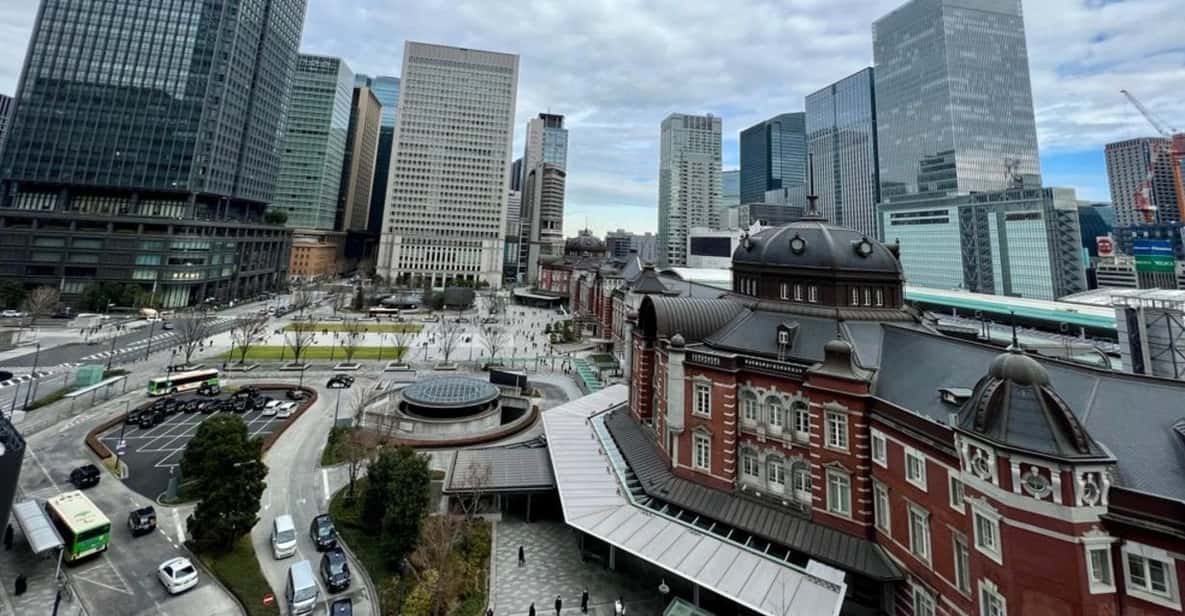
This tour is designed like a highlight reel with enough context to feel meaningful. You start on the Marunouchi side of Tokyo Station, then work your way toward the Imperial Palace outer grounds, finishing near Kasumigaseki Station. That flow matters because it keeps you moving through Tokyo’s most photo-friendly zones without wasting time backtracking.
The value here is not just that you see famous places. You also get help turning them into a map in your head. By the end, you’re not only aware of the landmarks—you can picture where everything sits relative to the station, the palace gates, and the Marunouchi office-and-shopping core. That’s the kind of practical orientation that makes the rest of your Tokyo days easier.
And yes, the tour price is $49 per person for 2 hours. For Tokyo, that’s a fair deal when you factor in a live guide, a small group of up to 4, and multiple major stops packed into a single walk. It’s the sort of tour you take early in your trip to save time later.
You can also read our reviews of more walking tours in Tokyo


Getting Oriented: Meeting at the Tokyo Station Police Box
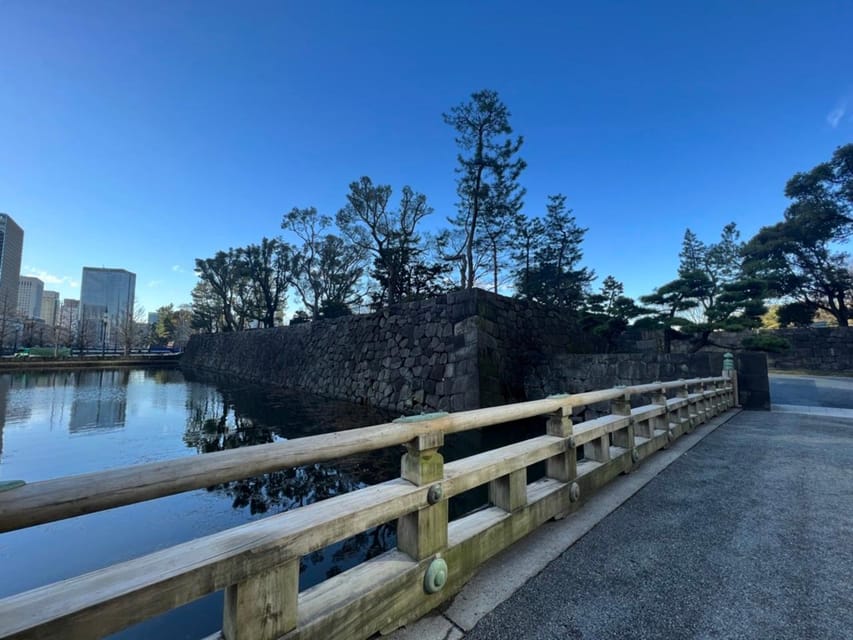
Your meeting point is in front of the POLICE BOX near the Tokyo Station Marunouchi South Exit, at 1-9-1 Marunouchi, Chiyoda-ku. This is a smart setup because Tokyo Station can feel like a maze on day one. Having a very specific landmark near the south exit reduces stress, especially if you’re arriving from another part of Tokyo right before the tour.
From there, you begin right in the action. You’re not being shuttled to some distant starting point. You’re learning the area where you’ll likely spend time anyway—transit hubs, office blocks, and the gateways that connect Tokyo Station to the Imperial Palace area.
If you like tours that help you get bearings fast, this one fits that style.
Tokyo Station and the Marunouchi Core: A Crash Course in Layout
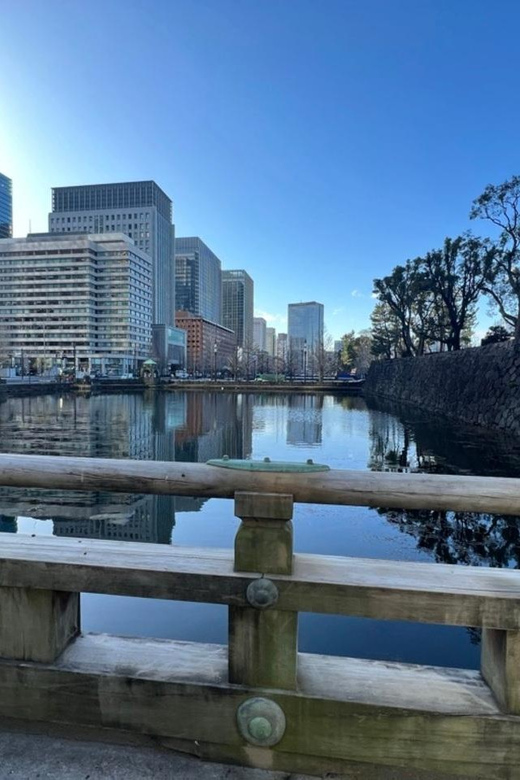
The tour includes a guided segment around Tokyo Station and then the nearby Marunouchi Building area (with guided time at both). Even if you’ve walked past Tokyo Station before, this kind of structured walk helps you notice things most people miss when they’re just trying to catch a train.
Here’s what I think you’ll appreciate: Tokyo Station is not just a building—it’s a whole “center of gravity.” The area connects to major shopping zones, passageways, and the paths that lead toward the Imperial Palace gates. A guide can point out the direction of movement and why certain pedestrian areas feel like they were built for flow, not wandering.
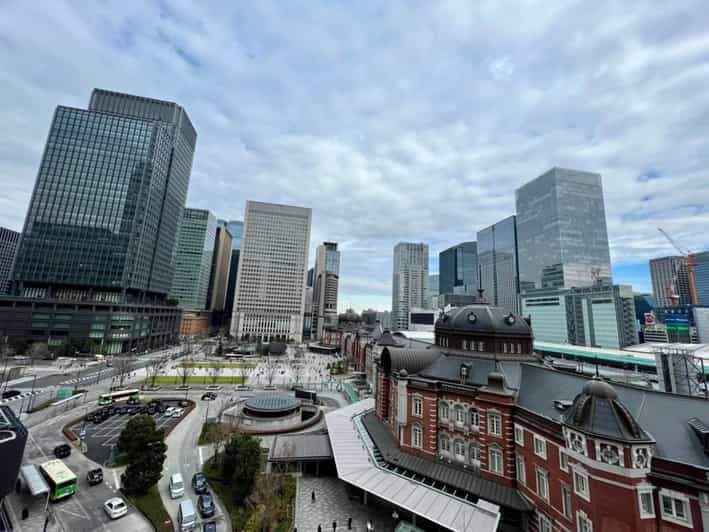
Then comes a key architectural-photo moment: you’ll spend time around KITTE Marunouchi. The highlights specifically call out a view of Tokyo Station from the JP building (KITTE). In plain terms, it means you get a different angle than the one you see from street level. It’s one of those moments where your phone camera actually helps you understand the city.
Japan Post, KITTE, and the Photo-Ready View Logic
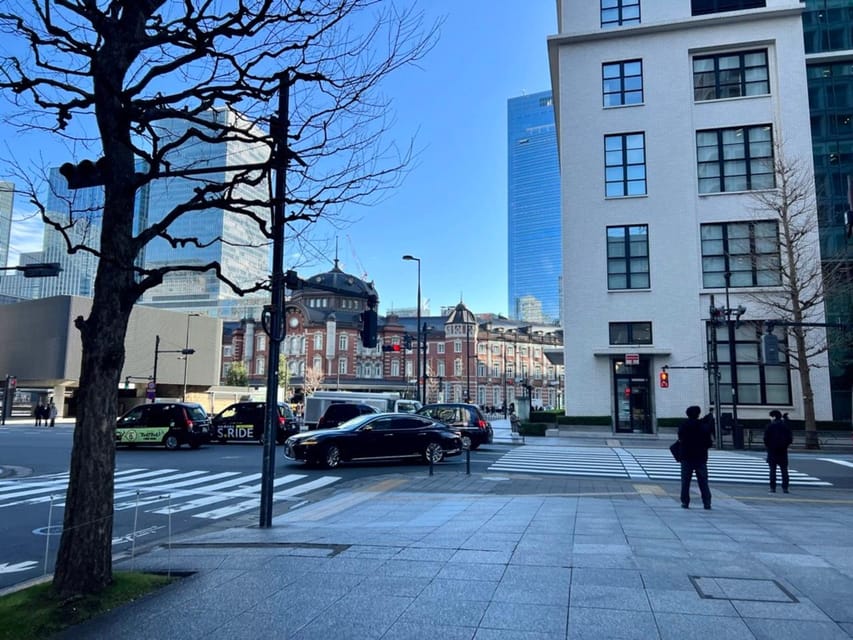
The tour’s Japan Post building stop is there for a reason. This is the part of Tokyo where you get a blend of transit convenience and modern retail space, all grouped around major landmarks. If you’re the kind of person who likes to understand how Tokyo spaces work, you’ll probably enjoy how the guide ties together building functions and street flow.
At KITTE Marunouchi, you’re treated to the view of Tokyo Station from the JP building. For visitors, that matters because Tokyo Station can be so big that it’s hard to frame. Getting a shot from an elevated or interior perspective helps you “compress” the station into something you can remember.
Practical tip: if you want your best photos, wear shoes you trust for short, frequent stops. This tour’s structure gives you those stops, but you’ll still be on foot the whole time.
Meiji Seimei Kan (Meiji Life): Office Architecture With Personality
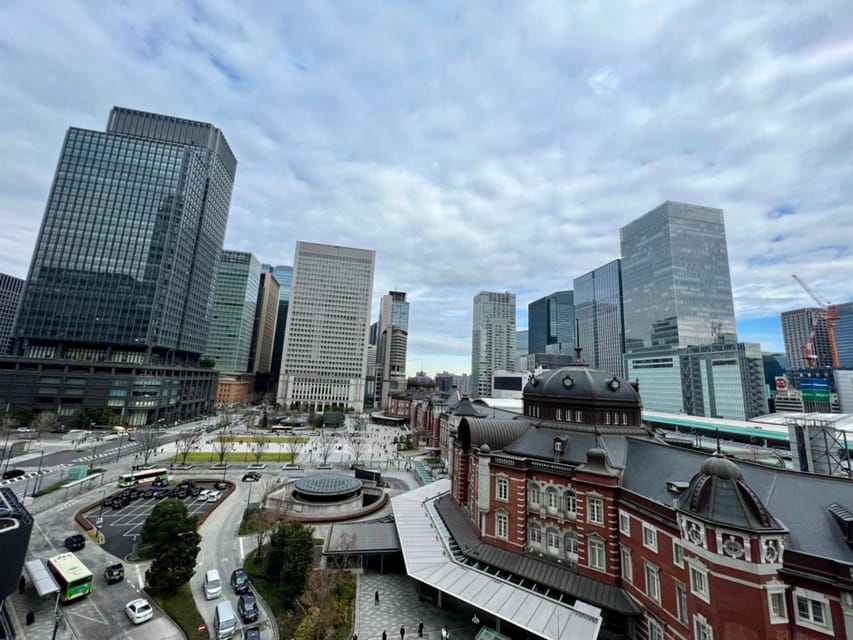
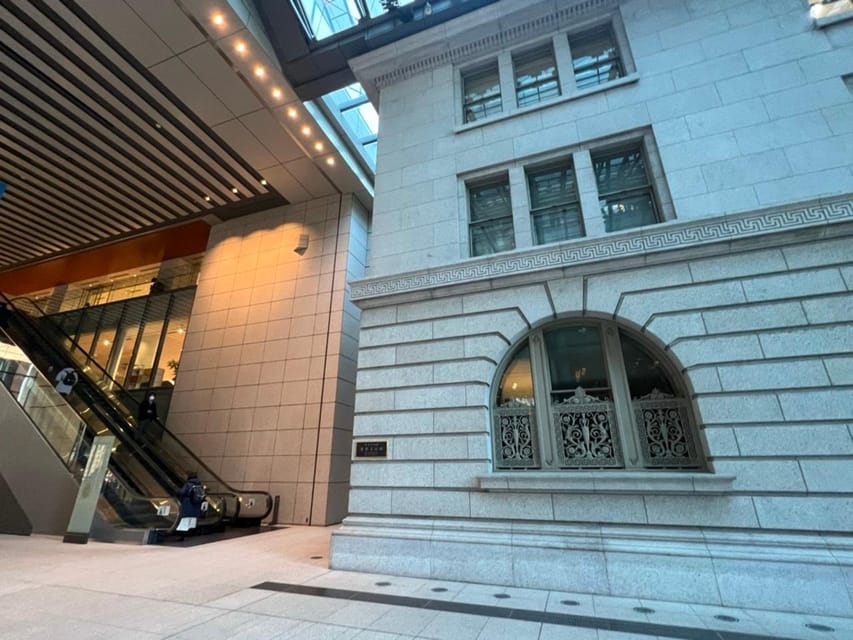
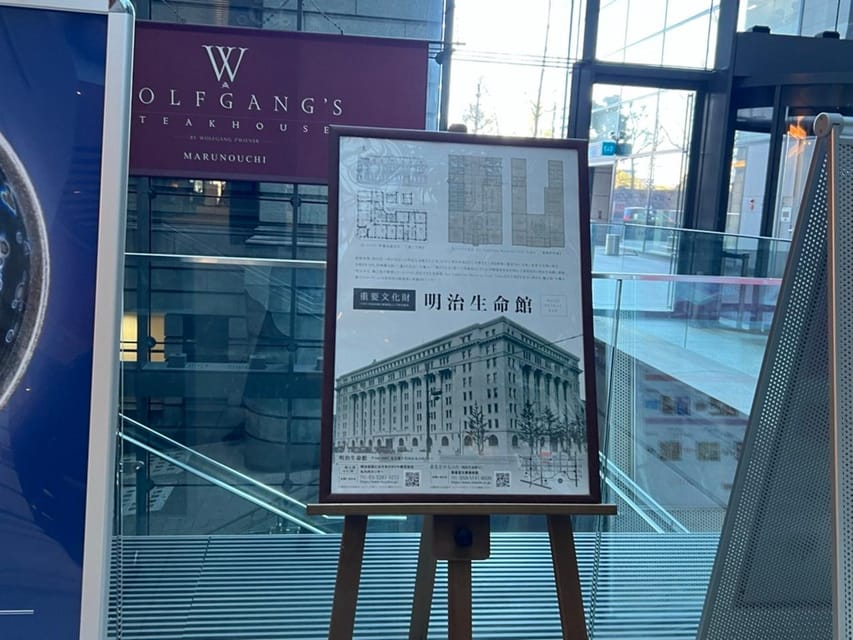
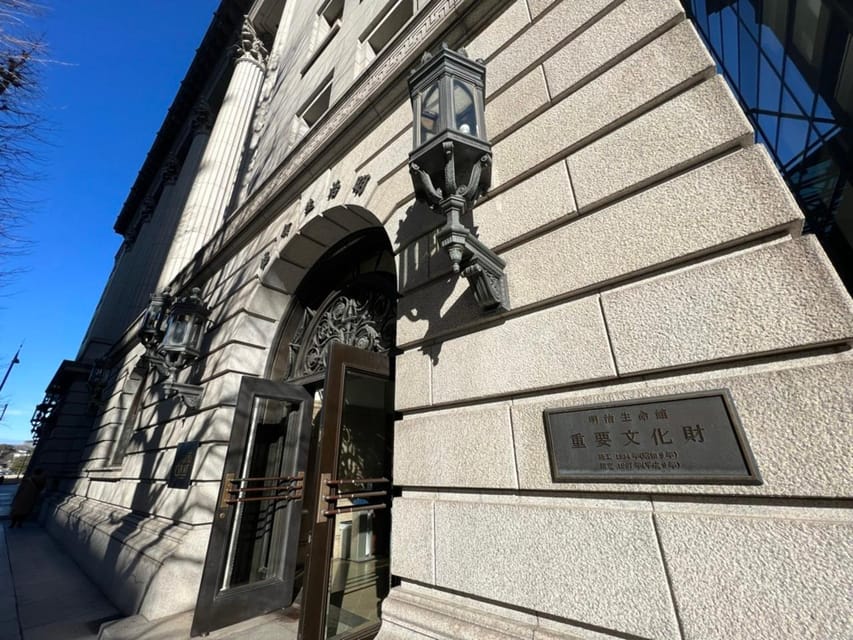
One of the itinerary blocks is Meiji Seimei Kan, which is tied to the Meiji Life Insurance Company building. The highlight list flags it as an elegant stop in the same area as the big station-and-shopping zone.
This is where the tour gives you contrast. The Imperial Palace side gives you stone gates and formal entrances. The Marunouchi side gives you tall corporate architecture and refined urban planning. Seeing both in one walking loop helps you understand how Tokyo layers styles across short distances.
You also get time for guided context, including why this building area matters in the broader story of the neighborhood. And a nice detail from the tour description: the area was purchased and developed by Mitsubishi Corp since 1890. So even when you’re walking through modern commercial streets, you’re moving through ground with long development roots.
If you like architecture you can feel—buildings that shape how you walk and where you turn—this stop is a good one.




Imperial Palace Outer Garden Edges: The Calm That Changes Your Pace
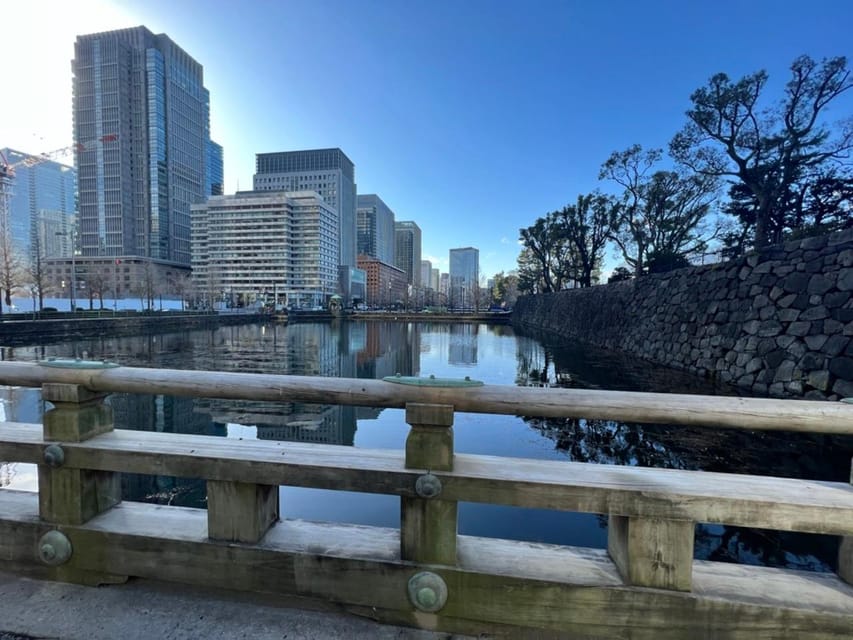
After you’ve taken in the station district architecture, the tour shifts toward the Imperial Palace outer garden area. The highlight list calls out an Imperial Palace Outer Garden segment, and the idea is simple: you go from the high-density Marunouchi environment into a more formal palace-edge space.
I like this contrast because it breaks the mental overload. Tokyo Station and Marunouchi can make your day feel like a full-on sprint of trains and crowds. Moving toward the palace gates gives your eyes a different kind of “signal.” Even without turning this into a long museum day, you still feel the change.
You’ll also be headed toward the tour’s top ceremonial landmarks, so this part works as a lead-in. It helps you arrive at Nijubashi in the right mindset: less rush, more attention to form and placement.
Nijubashi Bridge: The Front Gate Moment You’ll Remember
The itinerary includes a guided stop at Nijubashi Bridge for 30 minutes, framed in the highlights as the front gate of the Imperial Palace. This is one of the most important visual points of the walk. Stone and iron bridge structures have a strong presence, and the guide’s job here is to connect what you’re seeing with what it means historically and architecturally.
The description specifically says the guide shares the bridge’s storied history and offers insight into Japanese architectural marvels and historical traditions. I can’t promise every guide will emphasize the same details, but the intent is clear: this isn’t just a photo stop. It’s meant to help you look smarter at the bridge.
Why it’s valuable for you: if you’ve never stood here before, it can be hard to understand what makes the location ceremonial. A guide helps you read the space—where the bridge sits relative to the palace, what the approach suggests, and how the design directs the eye.
Sakuradamon Gate: Finishing the Palace Side
Next you reach Sakuradamon Gate, with guided time of 25 minutes. It’s another anchor landmark in the Imperial Palace complex, and it’s listed alongside Nijubashi as a core feature of the tour.
This is a “finish the story” kind of stop. Nijubashi sets the tone. Sakuradamon is the next step in the same visual and ceremonial sequence. By the time you’re here, you’ll likely feel your mental map clicking into place.
Also, because the tour is small and the guides are willing to talk, you can usually ask practical questions while you’re standing there—things like what you should notice next, or how to plan your future walks from this area.
The Best Part: Guides Who Actually Adjust to You
The reviews put a spotlight on the human side: guides who flex based on your group and questions.
- Mikio is mentioned as very knowledgeable and flexible with the tour plan, giving teens a fun learning experience. That’s a big deal if you’re traveling with kids or teens who get bored during lectures.
- Masahito is praised for asking about preferences at the start and adjusting the route to match expectations. He also comes across as open to discussion and interested in answering questions, which is exactly how you want a guide to behave if you like conversation as much as photos.
- Miho is highlighted as excellent and very informative about the area, especially as an introduction to being in Tokyo near the Imperial Palace.
Even if you don’t have teens, this “adjusts to you” approach matters. It means the tour can respond to real-life needs—what you want to see, what you don’t care about, and how much time you want to spend on each landmark.
Small-group tours only work when the guide treats your group as people, not a timetable. This one is built around that idea.
Price and Value: Is $49 a Good Deal?
At $49 per person for a 2-hour walk, you’re paying for three things: a live guide, multiple major landmarks, and a compact route you can’t easily recreate as easily on your first day.
Here’s how I’d judge the value for you:
- If you want a fast orientation around Tokyo Station and the Imperial Palace gates, a guided loop is worth it. The area is complex enough that someone pointing out the best angles saves time.
- If you hate spending money on “just walking,” you might decide to do this portion on your own. But the key difference here is the guided historical and architectural context around Nijubashi and the way the guide helps you understand the Marunouchi-to-palace connection.
- If you’re camera-focused, KITTE’s view of Tokyo Station from the JP building is the kind of stop that’s hard to plan without a local perspective.
Bottom line: for a small group of up to 4 people, $49 feels reasonable when you treat it as a morning or early-afternoon orientation tour that makes the rest of your Tokyo plan smoother.
Who This Tour Suits Best
This is a good fit if you:
- Are staying near Tokyo Station, Marunouchi, the Imperial Palace area, or Kasumigaseki
- Want a practical walking plan instead of wandering without a structure
- Like architecture, city layout, and photo angles
- Have a group with mixed ages (the guides have been noted for engaging teenagers)
It’s also a solid choice if you want a “great hits” route without committing to a longer full-day program.
Should You Book This Tokyo Station + Imperial Palace Walking Tour?
Yes—if your goal is orientation and a high-quality highlight route in a short time. The combination of Tokyo Station area landmarks, KITTE’s view angle, and the ceremonial sequence of Nijubashi Bridge and Sakurada-mon Gate makes this more than sightseeing. It helps you understand where things sit and why they matter, with guides who can adjust to your preferences.
Skip it only if you specifically want a slow, relaxed walk with lots of downtime. This is a concentrated 2-hour loop designed to move you from one iconic zone to the next.
FAQ
How long is the tour?
It lasts 2 hours.
What is the price per person?
The price is $49 per person.
What group size should I expect?
The tour is a small group limited to 4 participants.
Where do I meet the guide?
Meet in front of the POLICE BOX near the Tokyo Station Marunouchi South Exit, at 1-9-1 Marunouchi, Chiyoda-ku, Tokyo 100-0005.
Where does the tour end?
The tour finishes at 霞が関駅 (Kasumigaseki Station).
Which languages are available?
The live tour guide offers Japanese and English.
Which major areas and landmarks are included?
You’ll walk through the Marunouchi district and visit the Imperial Palace Outer Garden area, including Nijubashi (Front Gate) and Sakuradamon Gate, plus key Tokyo Station and Marunouchi landmarks.
What buildings or stops are part of the route?
The tour includes Tokyo Station, the Japan Post building, Marunouchi Building, KITTE Marunouchi, and Meiji Seimei Kan (Meiji Life).
Is there free cancellation?
Yes. You can cancel up to 24 hours in advance for a full refund.
Is reserve now & pay later available?
Yes, you can reserve now & pay later.