REVIEW · TOKYO
Tokyo: Edo Castle and Imperial Palace Guided Walking Tour
Book on GetYourGuide →Operated by Happy Plus Corporation · Bookable on GetYourGuide
Tokyo’s castle grounds feel different when someone explains them.
This guided walking tour stitches together Edo Castle and the Imperial Palace into one clear story you can actually walk through. I especially liked how you’re not just looking at structures; you’re learning why they mattered to the people living under the Tokugawa system for centuries.
Two things I really loved: the way the guide brings the sites to life with Edo-era context, and the focus on the castle’s stonework and defenses, including the moats and stone walls that shape what you see and how you understand it. One possible drawback is that this is real walking outdoors around gates and walls, so you’ll want to keep your shoes comfy and expect some chilly standing in cooler months.
In This Review
- Key highlights at a glance
- Edo Castle and Imperial Palace in 150 minutes: what you’ll walk through
- Finding the start at Tokyo Station’s Marunouchi South Exit dome
- The 1650s Edo map method: how the guide turns space into a story
- Sakurada-mon, Kikyo-mon, and the language of gates
- Stone walls and moats: the defensive design you can actually see
- Learning Edo politics through Ooku and power behind the walls
- The castle’s inner heart: Honmaru (Main Hall) site
- Ote-Mon, Ote-San’no Gate Ruins, and the meaning of what’s left
- Guardhouse stop: Hyakunin Bansho and the checkpoint mindset
- Bridges and final gates: getting your bearings in Tokyo’s palace edge
- Price and value: $3.22 for a guided 150-minute walk
- Who this tour suits best (and who might want something else)
- What to wear and expect while walking the palace grounds
- Should you book the Tokyo: Edo Castle and Imperial Palace guided walking tour?
- FAQ
- Where is the meeting point for the tour?
- How long is the guided walking tour?
- Is the tour in English?
- What’s included in the price?
- Is transportation or meals included?
- Is the tour wheelchair accessible?
Key highlights at a glance
- Small group (up to 8) means you can ask questions and keep the pace human
- English-speaking guide ties the geography to the bigger story: Tokugawa Shogunate to Meiji Restoration
- Imperial Palace grounds as the center of former Edo helps you grasp how power changed hands
- Gates, guardhouses, and ruins give you “readable” stops instead of a single long sightseeing block
- Stone walls and moats offer a concrete way to understand Edo’s defensive thinking
- 150 minutes on foot hits a lot of key points without turning into an all-day slog
Edo Castle and Imperial Palace in 150 minutes: what you’ll walk through
This tour is built around one simple idea: Tokyo’s most important political sites didn’t just change names over time. They changed roles. You start where Edo Castle once stood and end still on the Imperial Palace grounds, so you can feel the continuity in the geography even as the purpose shifts.
The big time jump you’ll hear about is the long Tokugawa era—260 years of the shogunate centered here—followed by the Meiji Restoration, when the castle area became the Emperor’s residence. That’s the backbone of the walk: the guide uses what you’re standing in front of to explain how governance, ceremony, and even everyday life were shaped by this space.
You can also read our reviews of more walking tours in Tokyo


Finding the start at Tokyo Station’s Marunouchi South Exit dome
The meeting point is Tokyo Station at the Marunouchi South Exit, on the ground floor of the South Exit area. You’ll recognize the spot by a western-style historic yellow dome.
This matters more than it sounds. Tokyo Station is huge, and the difference between arriving “nearby” and arriving at the exact gate can cost you precious minutes. If you’re coming by train, I’d give yourself extra buffer time so you can calmly get oriented and be ready to start when your group is assembled.
The tour is also set up for a small group (limited to 8), so you’ll likely want to be on time—not because someone will rush you, but because the pacing depends on everyone arriving together.
The 1650s Edo map method: how the guide turns space into a story
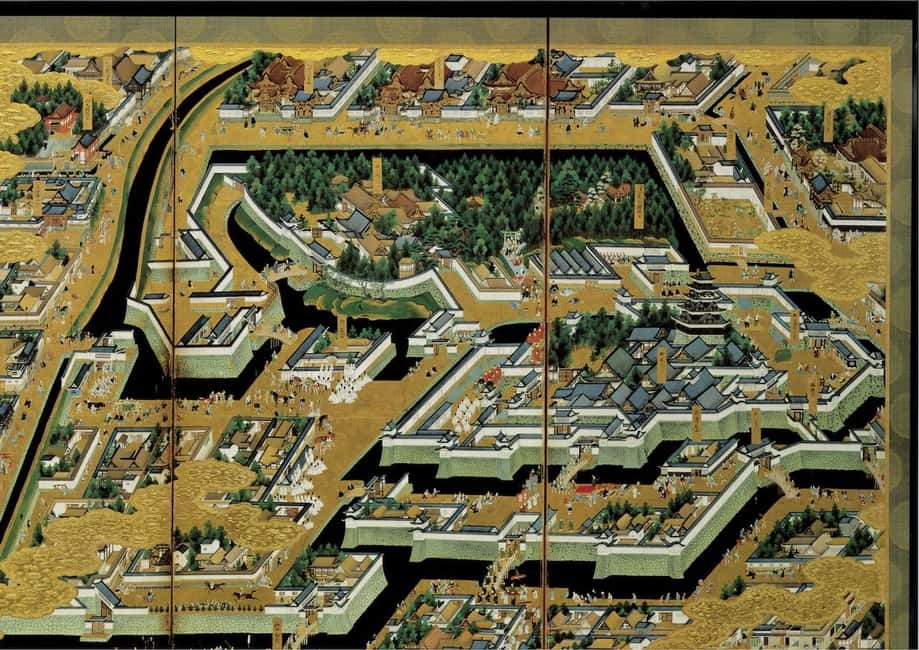
Right away, the tour uses a mental technique that works well in big, confusing places: you hold onto a map view of Edo from the 1650s and let it guide what you notice on the ground.
That’s not just a nice extra. It changes how you interpret the walk. Instead of seeing a sequence of gates and bridges, you start reading them as parts of one system—routes, boundaries, and checkpoints—built to control movement and protect the center of power.
What I like most about this approach is that it avoids turning Edo Castle into a museum display behind glass. You’re learning to see how Edo’s layout shaped real life, from officials and guards to the political culture that developed around the shogun’s residence.
Sakurada-mon, Kikyo-mon, and the language of gates
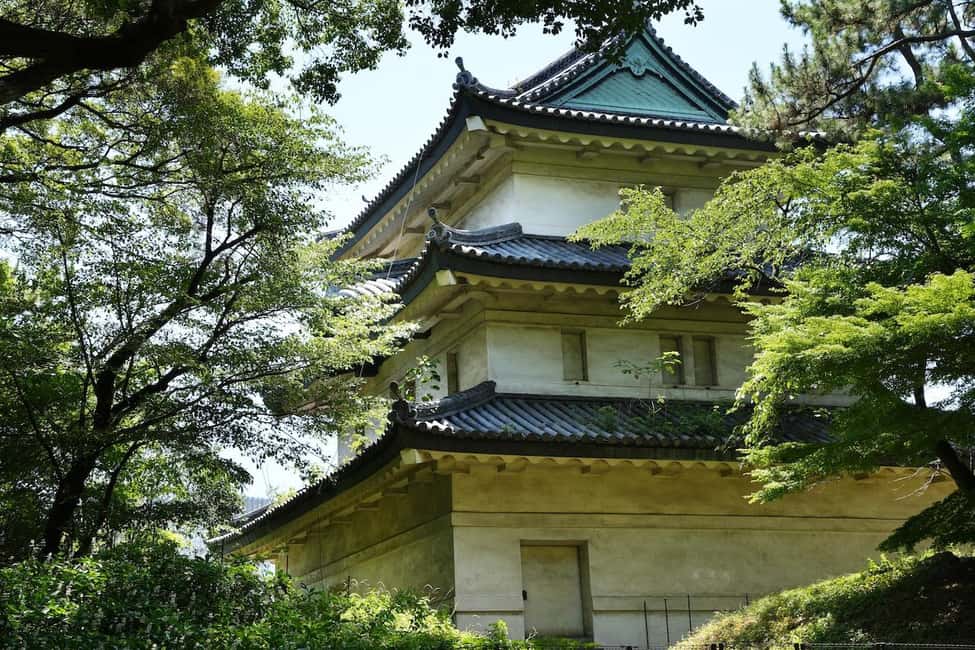
A huge portion of the experience happens at gates. You’ll pass Sakurada-mon Gate, then later see Kikyo-mon Gate and multiple other access points around the Imperial Palace/Edo Castle grounds.
Gates sound simple until you realize what they represent. In a castle city, a gate is not only a doorway. It’s a permission point. It’s where authority shows itself. By the time you reach the later stops, the guide’s explanations make the gates feel less like photo ops and more like “functioning parts” of a security-and-ceremony network.
You’ll also get short guided talks at several points as you move along—long enough to anchor the meaning, short enough that you’re still walking, not stuck in one lecture spot.
Stone walls and moats: the defensive design you can actually see
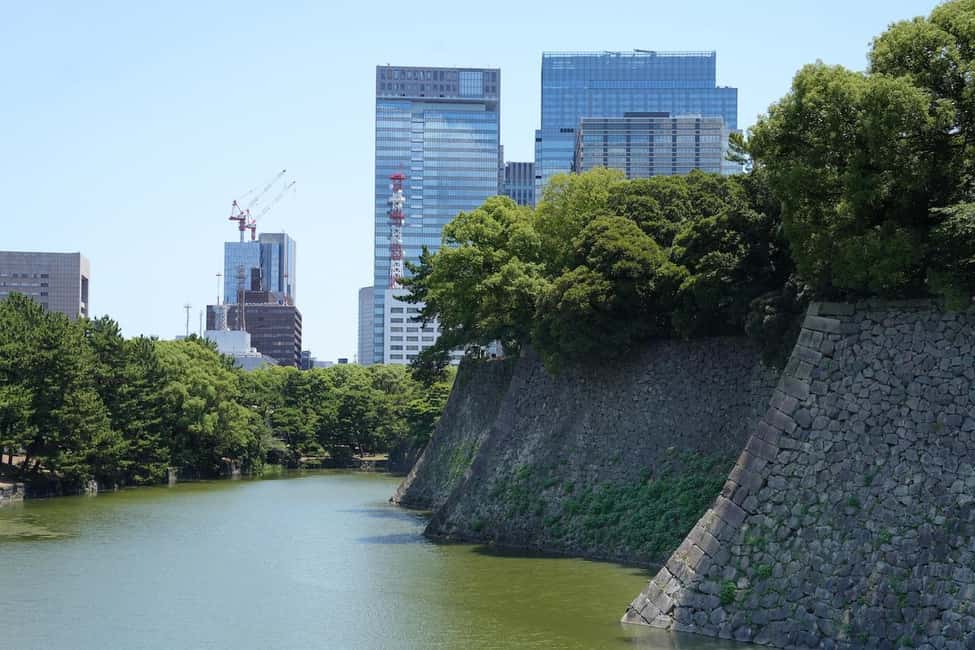
One of the most memorable parts is the time spent on the stone walls and moats. This is where the tour becomes very tangible.
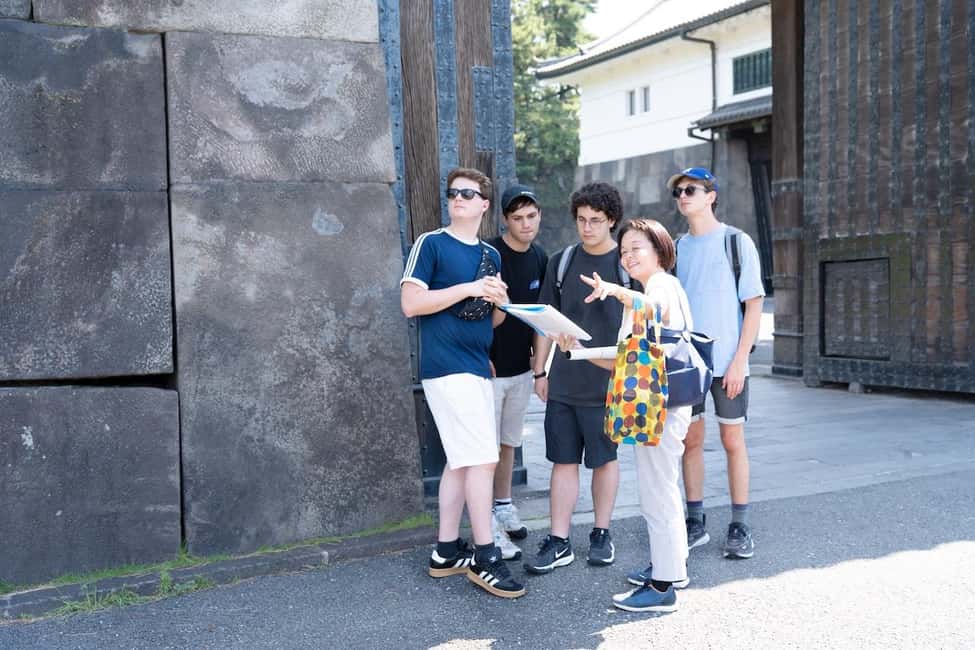
In castle towns, defense isn’t only about height. It’s about materials, angles, and the way the whole system channels people where you want them. When your guide points out details in the stonework, you start to notice how the engineering choices connect to authority and control.
One especially interesting theme you’ll hear is that Edo Castle construction didn’t use one single style everywhere. You can see that different lords (daimyo) contributed with slightly different stonework approaches, so the walls carry variety rather than looking like one uniform facade. That’s a great reminder that huge national projects were made from many hands, even when the outcome served one central power.
You can also read our reviews of more guided tours in Tokyo





Learning Edo politics through Ooku and power behind the walls
The tour doesn’t stop at rocks and architecture. You’ll also get political and social context, including stories tied to the Ōoku—the inner quarters—and how it had its own political weight.
This is valuable because it helps you understand that Edo Castle was not just a military stronghold. It was an institution. The people inside the system had roles, and roles created influence. The guide connects those ideas to what you’re looking at, so the “why” follows the “where.”
A related story you may hear involves the aftermath of the Great Fire of Meireki (明暦の大火). One account explained how plans included building up to the tenshu base, but rebuilding choices prioritized the recovery and rebuilding of the city over reconstructing the keep. Even if you’ve read general history elsewhere, it’s different when you’re standing in the place where those decisions shaped what survived.
The castle’s inner heart: Honmaru (Main Hall) site
The emotional center of the walk is the site of Edo Castle Honmaru (Main Hall), where your guided time expands to about 30 minutes.
This is where the tour earns its title: you’re not only passing points on a map. You’re concentrating on the core administrative and symbolic space of the shogunate.
Even if the main hall itself isn’t presented as something you can walk into, the guide’s storytelling helps the location feel legible. You can connect the earlier gate stops to the sense that this was where decisions concentrated, and where access and movement would have mattered. When you get to Honmaru, you stop thinking in individual attractions and start thinking in how the system functioned.
Ote-Mon, Ote-San’no Gate Ruins, and the meaning of what’s left
As you continue, you’ll encounter Ote-Mon Gate and the Ote-San’no Gate Ruins. Ruins are sometimes treated like filler on tours, but here they play a real role.
Ruins force you to think like a historian for a moment: you’re seeing the shape of what existed, even if much of the original structure is gone. With a guide explaining the connections, these stops become part of the same security-and-process story as the intact gates. The message is that Edo Castle’s story isn’t only in what remains standing—it’s also in what was lost and how the space evolved afterward.
Guardhouse stop: Hyakunin Bansho and the checkpoint mindset
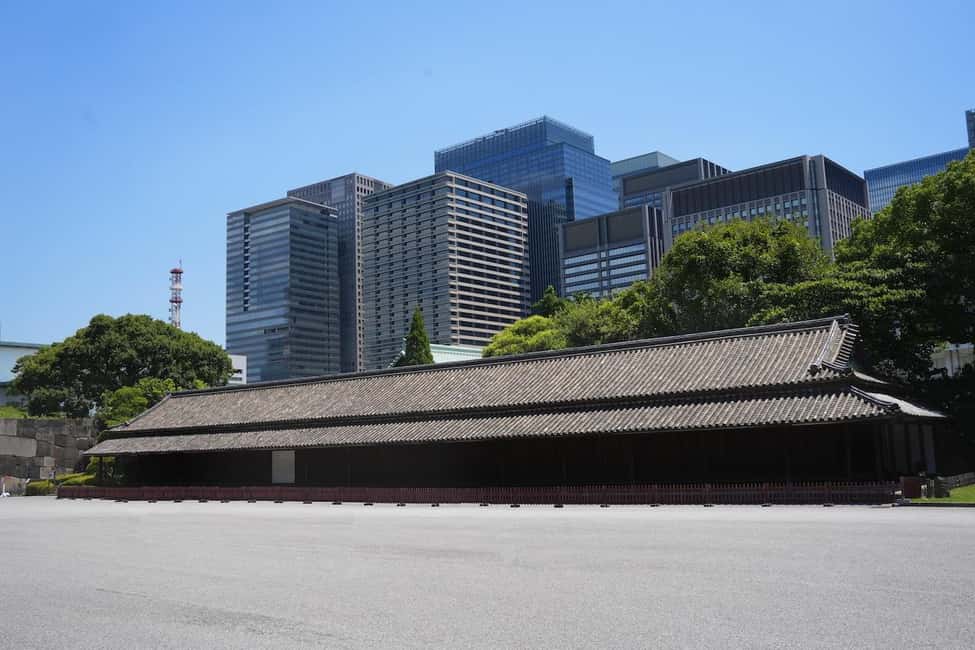
You’ll also visit the Hyakunin Bansho Guardhouse. This kind of stop can be surprisingly effective, because guardhouses are about routines: who checks, who monitors, who controls access.
It’s a good counterbalance to the more ceremonial-sounding parts of the Imperial Palace narrative. You get the sense of day-to-day order, not just high drama.
And because the tour keeps moving with guided breaks, you’re not overwhelmed with details. The guide is using each stop like a chapter break, so the checkpoint mindset keeps building.
Bridges and final gates: getting your bearings in Tokyo’s palace edge
As the walk nears the end, you’ll pass through Kita-Hanebashi Gate, cross the area around Takebashi (竹橋), and reach Hirakawa Bridge. The route finishes at 平川門 (Hirakawa-mon).
Bridges and crossing points are great for orientation. They help you mentally map where you are relative to the larger grounds and explain how movement through the area would have worked. Even if you’re not a structural history buff, these stops make the route feel like a coherent walk with a logic behind it.
Price and value: $3.22 for a guided 150-minute walk
At $3.22 per person, the value is hard to ignore—especially because the tour includes an English-speaking guide and a small gift. For a 150-minute guided experience with a small group cap, that price lands in the category of bargain shopping for history.
That said, “cheap” can sometimes mean lots of crowds or a rushed feel. Here, the small group size (up to 8) helps protect the experience from becoming mass tourism. You’re getting a format that supports explanation, questions, and a slower pace than you’d expect from many walking tours.
Meals and drinks are not included, so plan to bring water or be ready to buy something after you finish.
Who this tour suits best (and who might want something else)
This one is a great match if you want history that’s tied to real space. You don’t need to be an Edo expert to enjoy it, because the guide builds context from the ground up using that Edo-era map approach.
It’s also strong for:
- First-time visitors who want a meaningful start point near Tokyo Station
- People who like walking through important sites rather than just taking photos
- Anyone who enjoys the mix of politics, defense, and daily-life structure
It may be less ideal if you:
- Want a stop-and-sit museum style experience
- Don’t like outdoor walking around gates and stone walls
- Need lots of indoor time or frequent long breaks
What to wear and expect while walking the palace grounds
This is a walking tour, and the sites are spread along gates, walls, and bridges. Wear comfortable shoes. You’ll likely be on your feet for long enough that stylish footwear becomes a pain question.
Since the route includes standing at multiple points for guided explanations, you’ll also want clothing that handles weather changes—especially if you’re visiting in colder months. The good news: the tone of the guiding seems designed to keep you comfortable while you learn, and there’s time for questions.
Should you book the Tokyo: Edo Castle and Imperial Palace guided walking tour?
Yes—if you want a short, high-impact way to understand how Tokyo’s power center evolved from the Tokugawa Shogunate to the Imperial Palace. The guided storytelling, the focus on stone walls and moats, and the concentration on gates/guardhouses make it feel like a coherent history lesson you can walk through.
Book it if you’re the type who likes learning why the place is shaped the way it is. You’ll finish with a better sense of Tokyo’s layout and a clearer picture of what this area meant for governance and influence over time.
FAQ
Where is the meeting point for the tour?
You meet at the Marunouchi South Exit of Tokyo Station, on the ground floor. Look for the western-style historic yellow dome.
How long is the guided walking tour?
The tour lasts about 150 minutes.
Is the tour in English?
Yes. The tour is guided in English.
What’s included in the price?
Included are an English-speaking guide and a small gift.
Is transportation or meals included?
No. Transportation to the starting point and meals and drinks are not included.
Is the tour wheelchair accessible?
Yes, the activity is wheelchair accessible.