REVIEW · TOKYO
Tokyo Deep Inside Cycle Tour~3 Hours E Bike Tour around Tokyo
Book on Viator →Operated by TOKYO ACTIVE TOURS · Bookable on Viator
Tokyo feels endless on two wheels. This 3-hour e-bike loop helps you see central Tokyo’s story from Edo roots to modern streets without spending your whole day playing catch-up with trains. You cover more ground than walking, yet you still stop long enough to take photos and learn what you’re actually looking at.
Two things I really like about this experience: the easy-to-ride e-bikes work for different fitness levels, and the guide keeps the history clear and doable instead of turning it into a lecture. You also get a real local energy break, taiyaki, with your choice of anko or cream—perfect mid-ride when your brain wants a snack and your legs want a breather.
One thing to keep in mind: this tour depends on weather, so if conditions are poor you may switch to a rain-day walking route. If you’re the kind of person who hates last-minute changes, plan your Tokyo buffer time accordingly.
In This Review
- Key Highlights Worth Your Time
- Why a 3-Hour E-Bike Loop Works in Tokyo
- Meet at Marunouchi: A Convenient Start Point (and Why It Matters)
- Price and What You’re Actually Paying For
- Tokyo Central Railway Station: The Modern Gateway to Old Power
- Kanda’s Old Stones and Narrow Alleys: From River Origins to Neighborhood Culture
- Kanda Shrine and the Festival Connection: A Calm Break in the Middle of the City
- Hijiribashi Bridge Views: Student-Town Atmosphere in Ochanomizu
- Snack Stop That’s Actually Timed Right: Taiyaki at Kanda Daruma
- Jinbocho’s Secondhand Book Streets: A Different Kind of Tokyo Energy
- Yasukuni Shrine Under a Big Torii: A Photo Stop With Serious Context
- Kitanomaru Park and Nippon Budokan: Edo Castle Grounds, Modern Ceremony
- Imperial Palace Area: Why This Spot Changed Everything
- Marunouchi Building Finish: A Chance to Swap Streets for Art
- What the Guides Do Well (Names to Look Out For)
- How Much Effort Will You Need?
- Who This Tour Is Best For
- Should You Book This Tokyo E-Bike Tour?
Key Highlights Worth Your Time

- Up to 4 people means the guide can adjust the pace if cycling feels new to someone in the group
- Central Tokyo route includes Tokyo Station, Kanda, Akihabara, major shrine stops, and the Imperial Palace area
- E-bike + helmet + insurance is handled for you, so you can focus on sightseeing instead of logistics
- Traditional snack break with taiyaki (anko or cream) keeps energy steady during the ride
- Local-history stops connect Edo-era street life to modern neighborhoods with real context
Why a 3-Hour E-Bike Loop Works in Tokyo
Tokyo can be a lot when your plan is built around endurance. A straight walking day sounds noble—until you’re sprinting between train lines or giving up on sights because you’re already tired. This is designed as an active but low-stress way to get your bearings fast: the e-bike does the heavy lifting, and the guide handles the route and timing.
What makes it especially practical is that the ride is built around areas you’ll want to revisit later anyway. You’re not just biking past famous names; you’re weaving through neighborhoods where Tokyo’s layers are visible. You get the modern skyline energy, then the older Edo-town structure shows up again near rivers, gates, shrines, and old-street districts.
And because it’s only about three hours, it fits neatly into a first trip day or a day that also includes shopping or museum time. You’re not committing your whole day just to see a slice of Tokyo.
You can also read our reviews of more cycling tours in Tokyo
Meet at Marunouchi: A Convenient Start Point (and Why It Matters)

The meeting point is JTB Marunouchi Store, in the Marunouchi area at Tokyo Station. It’s right by major transit connections, including direct links from Tokyo Station lines and Nijubashimae Station on the Chiyoda Line.
That matters more than it sounds. In Tokyo, your best days are the ones where you don’t waste time figuring out exits and underground crossings. Starting in Marunouchi also puts you right into the political and commercial heart of the city, which helps the tour’s theme: the Edo Castle area (past power) becomes the modern core (present power).
The tour is scheduled for a 1:00 pm start, so it works well if you like sleeping in a bit, then rolling into central Tokyo once morning crowds ease.
Price and What You’re Actually Paying For

The cost is $83.23 per person for a 3-hour guided experience. On paper, it’s not “cheap,” but it is structured value.
Here’s what you’re getting that you’d otherwise pay for or organize yourself:
- E-bike use for the full ride
- Helmet
- Traditional taiyaki snack
- Bicycle insurance fee
- A guide who keeps you moving through busy streets without you needing to map everything
The only obvious extra you might want is bottled water. It’s not included, so bring what you prefer. (You’ll burn energy faster than you think on an e-bike tour because you’re stopping, looking, and photographing.)
Also, the group size is capped at 4 travelers maximum, and it’s designed to be mixed with up to that number. That small size usually means you spend less time waiting around and more time actually seeing.
Tokyo Central Railway Station: The Modern Gateway to Old Power

Your tour begins right in front of Tokyo Station, in Marunouchi. This is a “start here so you understand Tokyo” kind of moment.
The station area today looks like pure modern city—wide streets, clean transit lines, major business buildings. But the guide uses this spot to explain how this whole area changed over time, transforming from open land into what became Tokyo’s central hub. It’s a useful mental flip: you’re not just arriving at a station; you’re entering the story of Tokyo’s growth.
If you like context, this opening works because it sets the tone. You’re about to ride through places that connect to the old city layout, and the guide keeps pointing out what’s worth noticing.
Kanda’s Old Stones and Narrow Alleys: From River Origins to Neighborhood Culture

Next you head to the remains of the Kanda Bridge Gate stone wall. This is the kind of stop that’s easy to miss on your own. A gate wall sounds small compared to Tokyo’s skyscrapers, but it’s exactly the point: the Edo-town footprint isn’t gone. You’re literally standing near what shaped the river-era town pattern along the Nihonbashi area.
From there, the ride threads into Kanda Matsuya, a neighborhood presented as a place where common people’s culture still feels present. The route includes narrow alleys, which changes the whole experience. Instead of fighting traffic, you slow into older streets where Tokyo feels more human-scaled.
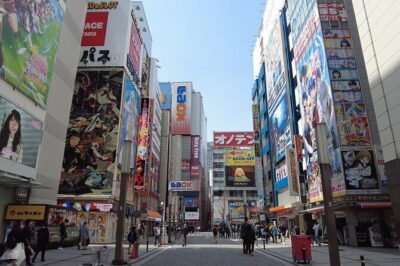
Then comes Akihabara, a neighborhood famous for changing with the times. The tour frames Akihabara’s evolution from postwar-era market roots to what it is now. Even if you’re not shopping for electronics or anime merchandise, the history-angle stop helps you understand why the area feels the way it does today: it’s built on adaptation.
You can also read our reviews of more tours and experiences in Tokyo




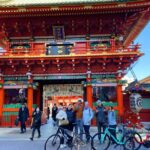
Kanda Shrine and the Festival Connection: A Calm Break in the Middle of the City

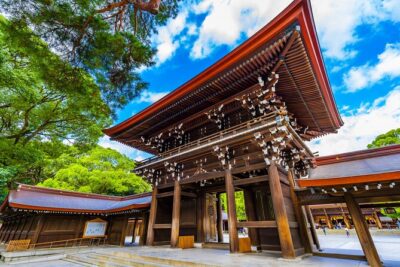
After Akihabara, you visit Kanda Shrine (Kanda Myojin). This is the major Shinto stop where the tour’s Edo focus becomes more than trivia. The guide talks about the shrine’s history and also the Kanda Festival, which is a smart pairing. Festivals are how cities remember themselves, even after the physical landscape changes.
You’ll also get a short break in the rhythm of the ride—important because you don’t want your sightseeing to blur into one long spin. I like that the tour builds in time to actually pause, look around, and take photos respectfully.
Hijiribashi Bridge Views: Student-Town Atmosphere in Ochanomizu

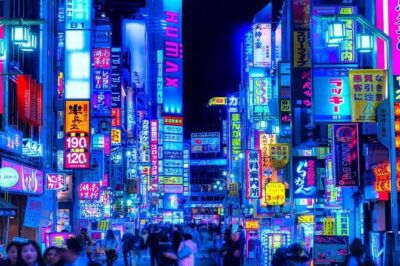
At Hijiribashi Bridge, you look down toward Ochanomizu Station. The big idea here is how this area connects to education and student life. It’s a small visual shift from the high-contrast neon vibe of Akihabara to a more grounded Tokyo atmosphere.
If you’ve only seen Tokyo as a set of attractions, this sort of viewpoint teaches you a different skill: reading the city as a place where different communities live their daily routines.
Snack Stop That’s Actually Timed Right: Taiyaki at Kanda Daruma

Then you hit the Kanda Daruma stop, which is the tour’s snack break. You’ll try taiyaki, a classic Japanese sweet shaped like a fish, with options for anko (red bean paste) or cream.
This isn’t just a random dessert. It works as a mid-tour reset. You’ve already done the “big sights” chunk, and then you get a familiar local comfort food that keeps energy up without heavy meal timing. It’s also a good moment to steady your breathing and get ready for the shrine-and-palace section later.
Jinbocho’s Secondhand Book Streets: A Different Kind of Tokyo Energy
You then pass through Kanda Jinbocho, the antiquarian bookstore district. The tour describes it as one of the largest of its kind. Even if you don’t go inside shops for long, just riding past the street layout gives you a sense of what makes Jinbocho special: book culture is the neighborhood’s atmosphere.
This stop is a nice contrast to Akihabara because it’s less about tech flash and more about browsing, collecting, and slow discovery. If you like photography, you’ll probably enjoy the street textures here—especially around shop fronts and narrow lanes.
Yasukuni Shrine Under a Big Torii: A Photo Stop With Serious Context
Next is Yasukuni Shrine, where you bike under a very large torii gate and experience the grounds. The tour gives you a guided feel for the place beyond just the landmark. You’ll also get a restroom break here, which is genuinely useful on a ride day.
This part of the tour is also a reminder that Tokyo isn’t just scenery. It’s lived culture, and shrines are where that shows up immediately.
Kitanomaru Park and Nippon Budokan: Edo Castle Grounds, Modern Ceremony
At Kitanomarukoen, you ride through the area associated with the former Edo Castle complex—specifically the Kitanomaru site. The route also includes a look at Nippon Budokan and surrounding buildings.
The time spent here is short, but the effect can be big. You go from shrine quiet to a civic-and-performance landmark zone where you can see how the city’s ceremonial and public spaces evolved from feudal-era foundations into modern institutions.
Imperial Palace Area: Why This Spot Changed Everything
The next major shift is the Imperial Palace area. The guide explains that the Imperial Palace site began as Edo Castle, and then talks about how the city and society changed—why Japanese appearance shifted away from the Edo-era look, and what happened after.
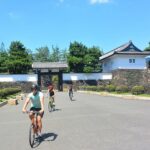
You’ll bike, then enjoy scenic perimeter views near Sakuradamon Gate, the largest gate in the Imperial Palace. This isn’t about speed; it’s about seeing the scale and the placement of power in Tokyo’s center.
One practical plus: being on an e-bike helps you cover ground around this area without feeling like you’re doing a strenuous walk. It’s a rare sightseeing zone where your feet would otherwise get tired fast if you tried to do it solo.
Marunouchi Building Finish: A Chance to Swap Streets for Art
After returning the bikes at Marunouchi Building, you walk to the floor where art is exhibited under the theme Time and Memory.
This ending is a smart palate cleanser. You’ve spent the ride linking old Edo-era street life to modern Tokyo. Then you shift into an indoor, calmer setting that reflects the same idea: time layers are everywhere, even when they’re not painted on the sidewalk.
If you like museum-style atmospheres, this can be a nice optional stretch. If you’re not an art person, you can still appreciate it as a controlled end point after several outdoor stops.
What the Guides Do Well (Names to Look Out For)
One of the best parts of this tour is the guide style. I saw this in the way different guides were praised for being friendly and informative, with safety-first cycling and a pace that works for mixed abilities.
Guides such as Micky (also referred to as Kumiko/Micki in notes) and Tussie are repeatedly described as expert at managing the ride and delivering history in a way that doesn’t feel heavy. There’s also a clear emphasis on patience and caution on the street, including adapting pace for guests who cycle less often.
And yes, it can matter: one older rider shared that even after a knee replacement, they never felt unsafe or unable. That’s a strong signal that the e-bike approach isn’t just about going faster—it’s about making Tokyo accessible when your body doesn’t want to do a 15,000-step day.
How Much Effort Will You Need?
Most people can join, and the e-bike does a lot of the work. In practice, you still need balance and comfort with cycling. You’ll also do short waits and photo stops, plus some walking stretches.
A couple practical tips for feeling good:
- Bring comfortable shoes, even if the bike does the main work
- Plan for a snack rhythm. Taiyaki helps, but don’t assume it replaces water
- If you’re sensitive to walking, mention it to the guide before you start so the group pace matches your comfort
Who This Tour Is Best For
This is a great choice if you:
- Want a first-time central Tokyo experience that mixes major landmarks with real neighborhoods
- Prefer guided history in short, understandable bites
- Want activity without the exhaustion of a long walking day
- Like seeing how Edo-era Tokyo connects to today’s Tokyo neighborhoods like Kanda and Akihabara
It also suits travelers who want a socially friendly group vibe without crowds. With a maximum of 4 people, you’re more likely to feel like the guide is working with you rather than corralling a big group.
If you hate being on a schedule, you might find the stop-and-go flow a little structured. But for most visitors, that structure is the whole point.
Should You Book This Tokyo E-Bike Tour?
I’d book it if you want a smart, efficient way to see Tokyo’s center while still understanding what you’re looking at. The price feels fair because you’re getting the bike, helmet, insurance, and snack wrapped into a guided route, and the small group size keeps the ride comfortable.
Skip it only if you strongly prefer to plan and navigate everything yourself, or if you can’t handle weather-dependent reroutes. Otherwise, this is one of the better ways to get both the old and new parts of Tokyo into a single afternoon.