Tokyo by bike feels like time travel. In this 3-hour ride, you glide from classic landmarks near Zojo-ji Temple to the energy of Shibuya Crossing, with short photo stops and real local stories that make the city feel personal. I like how the tour uses high-quality Bianchi and Fuji bikes, and I also like that the guides are fluent English-speaking locals who explain what you’re actually seeing, not just recite facts.
One thing to keep in mind: helmets cost extra if you need one—¥1,000 per unit, paid in cash on the day—so plan for that and don’t wait until the last minute.
In This Review
- Key Things I’d Focus On
- Starting at the Commodore Perry Statue: Tokyo Gets Real Fast
- Road Bike vs Cross Bike vs E-Bike: Pick the Right Effort Level
- Zojo-ji and the Temple Side of Tokyo
- Imperial Palace Photos and the Power of a Short Guided Pause
- State Guest House Akasaka Palace: A More Quiet Kind of Fascination
- New National Stadium: Modern Tokyo Shows Up
- The Route’s Most Valuable Part: Short “Hidden Gem” Time
- Minamiaoyama, Cat Street, and Miyashita Park: Tokyo in Neighborhood Mode
- Shibuya Crossing to the Bell of Peace: Where the Tour Lands
- How Guides Make This Feel Worth It (Not Just Efficient)
- Safety, Convenience, and Small Details That Add Up
- Price and Value: Is $60 for 3 Hours Fair?
- Who This Tour Is Best For
- Should You Book This Tokyo Bike Tour?
- FAQ
- How long is the Tokyo bike tour?
- Where do I meet the guide?
- Is there an e-bike option?
- Are helmets included?
- What should I bring?
- Is bike insurance included?
- Who should not book this tour?
- Is there a cancellation option for a full refund?
Key Things I’d Focus On
- Bianchi and Fuji bikes that make busy streets feel manageable
- English (and Japanese) guides who talk through the sights as you ride
- A tight 3-hour loop that pairs major icons with shorter local stops
- Options for comfort, including e-bikes if you’re not a regular cyclist
- Photo stops built into the route, so you’re not constantly juggling your phone
- Safety elements like bike insurance and a carry pouch on the bike
Starting at the Commodore Perry Statue: Tokyo Gets Real Fast
The tour begins at the statue of Commodore Perry, near Daimon Station (A6 exit, about a 3-minute walk). That’s a smart start point because you’re close to major landmarks, but you still get a feeling of Tokyo as a city with history layers stacked on top of each other.
From there, you’re not stuck in a slow bus loop or waiting for a train. You ride. And in Tokyo, riding matters—small streets and short distances mean you can actually feel how neighborhoods change block by block.
If you’re the kind of person who hates “meeting-place roulette,” give yourself a few extra minutes. One common snag: the meetup spot can be slightly tricky to locate until you’re right there by the statue.
You can also read our reviews of more cycling tours in Tokyo
Road Bike vs Cross Bike vs E-Bike: Pick the Right Effort Level
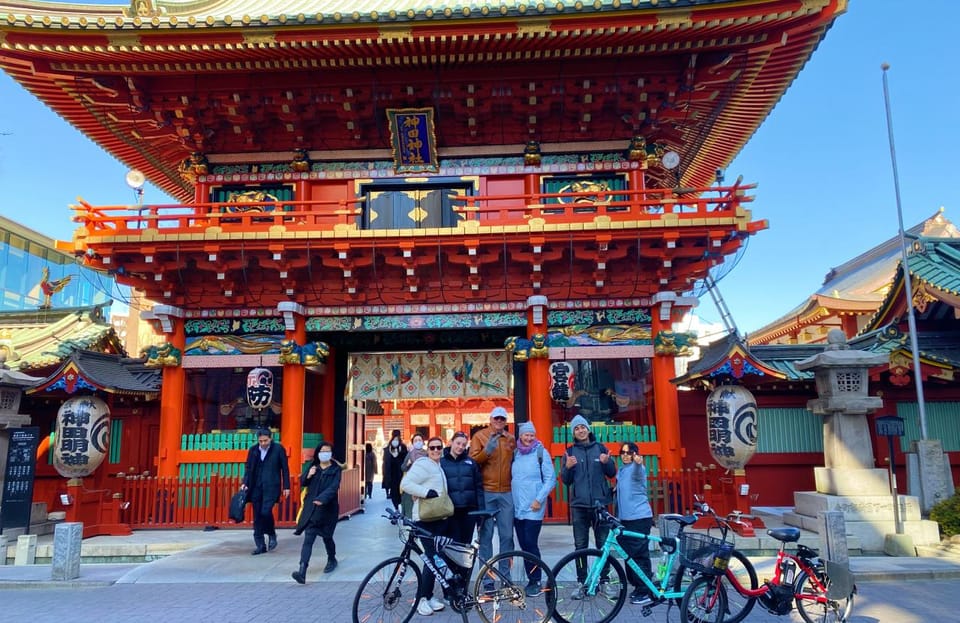
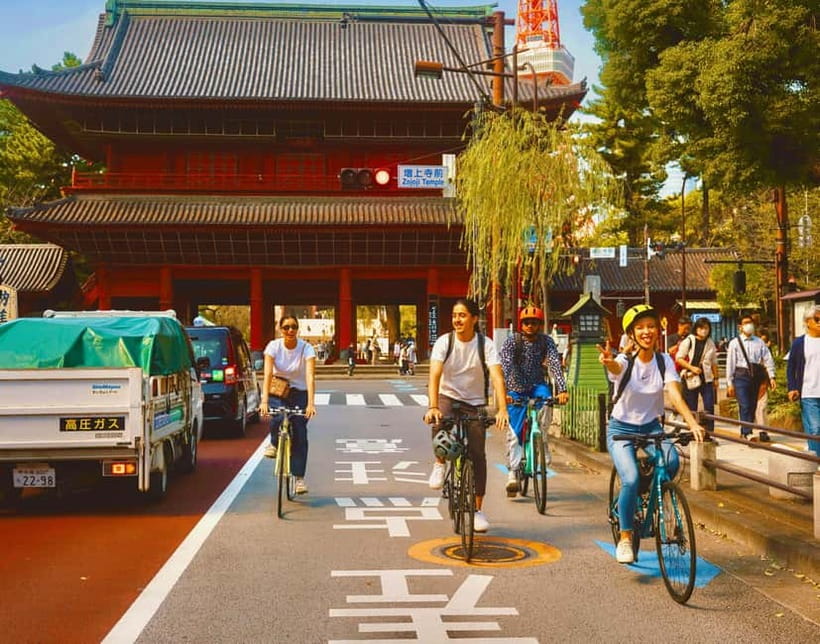
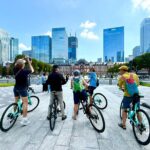
This tour gives you multiple bike styles, so you can match the ride to your comfort. You’ll have road bikes (Bianchi and Fuji) and cross bikes (Bianchi), plus there’s an e-bike option if you don’t want to push long distances or you don’t cycle often.
Here’s the practical way to choose:
- If you’re a confident rider and enjoy pedaling, a road or cross bike will feel fast and natural.
- If your stamina is limited, or you’re traveling with jet lag, the e-bike option is the easiest way to keep the ride fun instead of tiring.
Also, don’t assume your booking automatically means e-bike. If e-bike matters to you, confirm it clearly ahead of time so you don’t end up with an uncomfortable surprise on the day.
Zojo-ji and the Temple Side of Tokyo
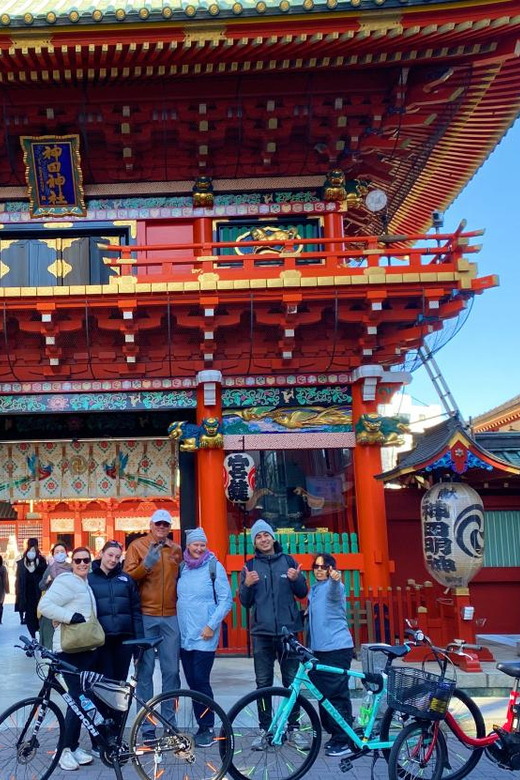
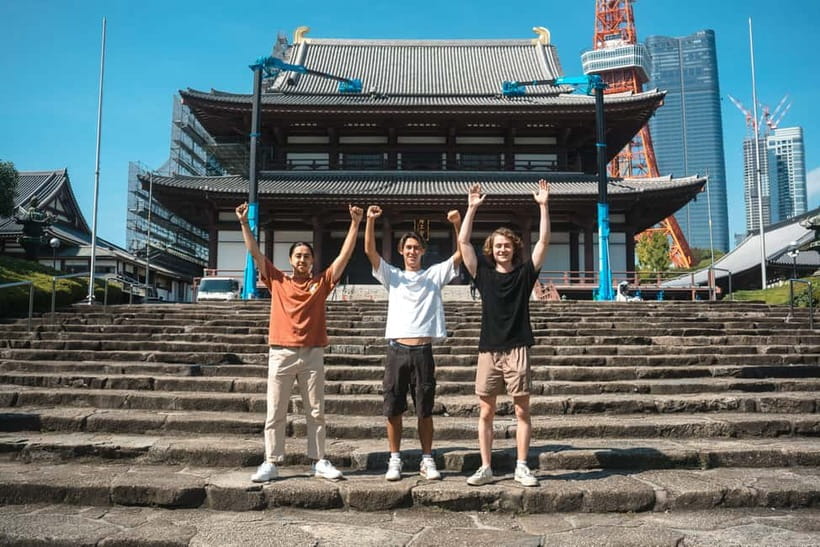
The first major stop is Zojo-ji Temple, with a photo stop plus a guided segment (about 15 minutes). Zojo-ji is one of those places that makes Tokyo’s spiritual side feel tangible—great for photos, but better when someone can point out what you’re seeing and why it’s important.
What I like about this kind of first stop is the pacing. You’re fresh, and you’re not yet worn out from traffic or cycling. You get a cultural anchor early, which makes the rest of the route more meaningful instead of just being a checklist of sights.
A small caution: this early part can set the rhythm for the whole tour. Wear comfortable clothes and shoes, because you’ll do a bit of standing and short walking between stops.
Imperial Palace Photos and the Power of a Short Guided Pause
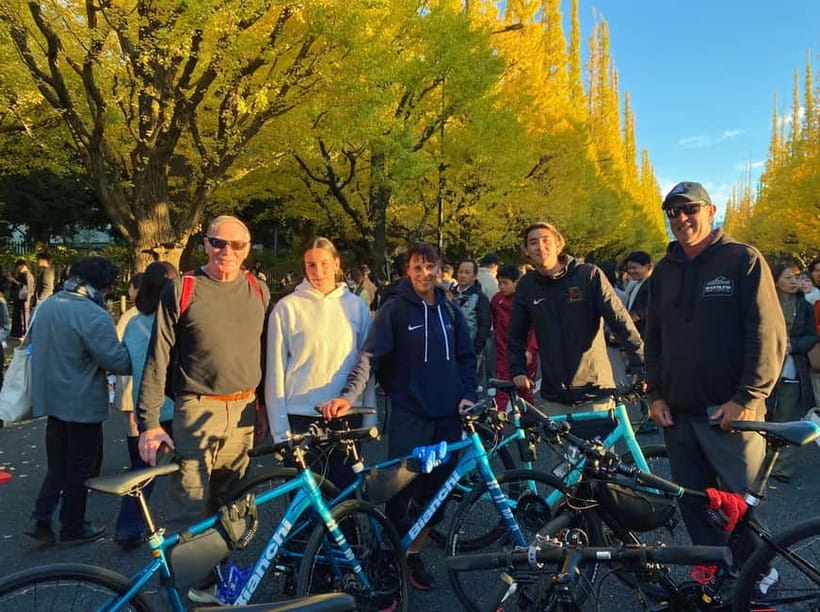
Next up is Tokyo Imperial Palace for a photo stop plus guided time (around 10 minutes). Then you’ll hit the Ōte-mon Gate with a brief photo stop and guided segment (about 5 minutes).
Why these short stops work: you don’t spend half your morning trying to understand big, confusing grounds. Instead, you get just enough guided context to read what’s in front of you, then you move on while the rest of Tokyo is still wide open.
The drawback? If you’re the type who likes to linger and really wander, this part will feel quick. That’s not a bad thing—this tour is designed for coverage—but it’s good to know what kind of pace you’re buying.
State Guest House Akasaka Palace: A More Quiet Kind of Fascination
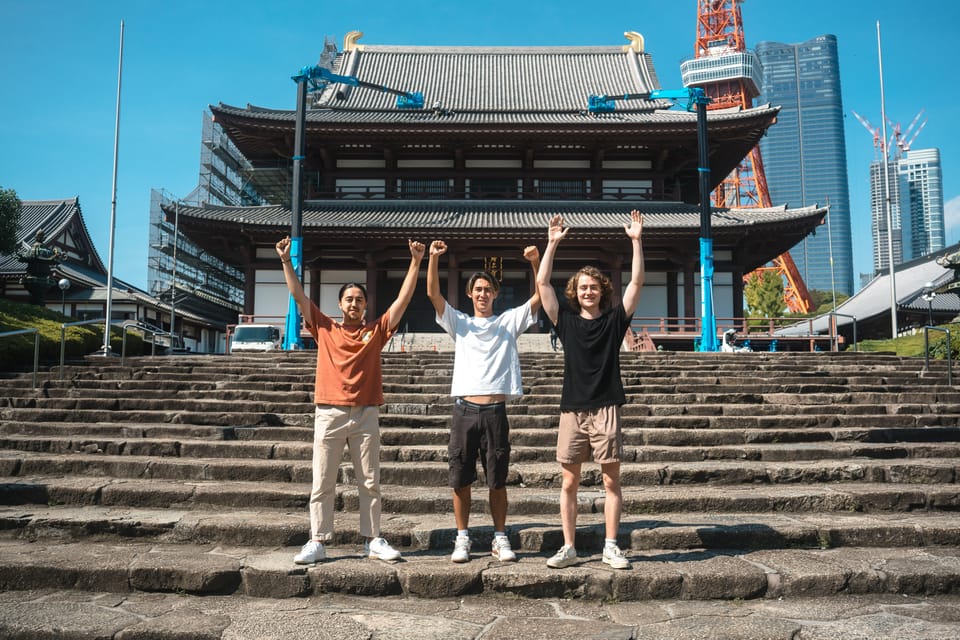
After that, you’ll make a stop at the State Guest House Akasaka Palace for a photo stop (about 10 minutes). Even if you don’t know the details ahead of time, this is the kind of place that benefits from an explanation.
This is one of the stops that helps the tour feel more than just big-name tourism. It brings in the formal side of Japan—state, ceremony, and architecture—without turning your morning into a museum schedule.
You can also read our reviews of more city tours in Tokyo


New National Stadium: Modern Tokyo Shows Up
Then you roll to the New National Stadium for another photo stop (about 10 minutes). This contrast is useful. Tokyo isn’t only temples and old streets; you also need the modern pieces to understand how the city works today.
If you’re a sports or architecture fan, you’ll likely enjoy this stop more than you expect. If not, it still gives you a clean visual marker: you’re moving between eras, and the ride makes the transition feel fast and logical.
The Route’s Most Valuable Part: Short “Hidden Gem” Time
Mid-tour, there’s a hidden gem visit (about 15 minutes). The exact place is not described in the basic outline, but the purpose is clear: you get a short window for something less obvious than the next landmark everyone photographs.
This is where the guide’s local storytelling really matters. The tour spends time at major icons, but the value often comes from what you learn about daily life—how people live around these sights, and how modern Tokyo fits next to tradition.
One practical tip: during the hidden gem moment, don’t treat it like a quick selfie stop. Use the full time to look around. That’s where the neighborhood texture shows up.
Minamiaoyama, Cat Street, and Miyashita Park: Tokyo in Neighborhood Mode
From there, the tour shifts into stylish neighborhood territory:
- 3 Chome Minamiaoyama (about 5 minutes)
- Cat Street (about 5 minutes)
- Miyashita Park (about 3 minutes)
These are brief stops, but they’re chosen for a reason. Tokyo’s identity isn’t only at the big sights—it’s also in the side streets, the shopping lanes, and the public spaces where people actually hang out.
Cat Street is the kind of place where you’ll pick up on Tokyo youth fashion energy fast, just by walking a few minutes. Miyashita Park adds a more open-air break—short, but a nice mental reset before the ride pushes you into Shibuya’s bigger atmosphere.
Because these segments are short, your best move is simple: keep your eyes up. Tokyo details hide in plain sight—signs, storefront layout, and how pedestrians flow.
Shibuya Crossing to the Bell of Peace: Where the Tour Lands
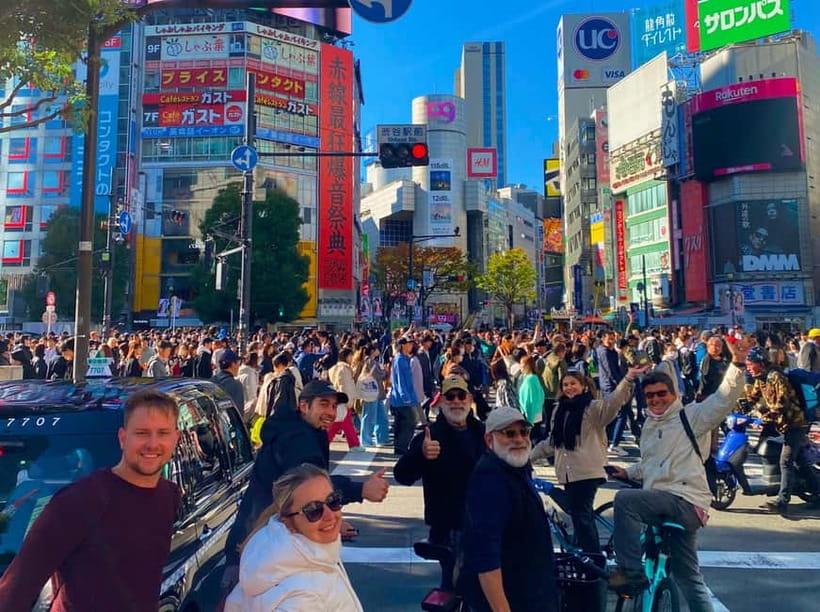
The final stretch includes Shibuya Crossing with a photo stop and visit (about 5 minutes), then the tour finishes at the Bell of Peace.
Shibuya Crossing is a must when you’re in Tokyo. Even if you’ve seen photos before, seeing it in person hits differently because of the scale and the constant motion. The photo stop keeps it manageable in a 3-hour tour, so you get the moment without losing the rest of the route.
Ending at the Bell of Peace also helps. It’s a thoughtful final note, and it gives you a clean stopping point at the end of your ride—so you’re not scrambling to figure out how to get off the loop.
How Guides Make This Feel Worth It (Not Just Efficient)
A huge reason this tour scores high is the human factor: guides who communicate well and manage the ride.
In the guide style described through past tours, people often highlight that guides like Shin are flexible and explain what you’re seeing clearly. Other names that show up in guide write-ups include Casey, Naoki, Marika, Nouchi, Georgie, and Miguel and KG, with praise for being friendly, fun, and helpful—plus taking photos for you.
That matters more than you’d think. Bike tours live or die on pacing. You want someone who:
- keeps you moving at a safe speed,
- knows where to pause,
- and talks just enough to make the sights click.
If you like photos but hate awkward posing, this tour’s built-in photo stops can make your day easier.
Safety, Convenience, and Small Details That Add Up
This is a bike tour, so you’re sharing the city with traffic. What’s reassuring is the safety-first framing and the included extras.
You get:
- Bike insurance
- A mini pouch on the bike for phone/wallet/keys
- An emphasis on feeling safe and protected throughout the ride
- Helmets are available on site, but cost extra if you need one
The mini pouch is one of those unglamorous details that makes the whole tour smoother. You don’t need to carry a bag across your back or keep stopping to manage your stuff.
One more practical point: Tokyo in summer heat can be intense. If you’re visiting during hot months, your e-bike option—or simply keeping the pace comfortable—can turn an exhausting outing into a real sightseeing win.
Price and Value: Is $60 for 3 Hours Fair?
At $60 per person for 3 hours, this sits in the “worth it if you actually use the time” category.
Here’s the value math that matters:
- You get a structured loop with multiple stops (temple, palace area, stadium, shopping streets, Shibuya).
- You get English-capable guiding so you’re not guessing what you’re looking at.
- You get high-quality bikes included, plus bike insurance.
- The tour is designed for people who want coverage without committing to a full day of walking.
Is it expensive compared to hopping on the subway? Yes, because you’re paying for guide time and a bike that keeps distances small. But it’s often cheaper than it looks once you count the time saved and the fact you’ll likely skip extra transfers and wandering.
If your goal is to see a lot in a short trip, this price starts to make sense fast.
Who This Tour Is Best For
This fits well if you:
- want an active way to see Tokyo in about half a day,
- like guided context rather than solo wandering,
- can ride a bike comfortably (it’s not suitable if you can’t).
It may feel tough if you’re dealing with limitations like back problems or if you’re pregnant—those are listed as not suitable. It also isn’t for children under 12, and there’s no child seat included.
If you’re traveling in a small group or privately, it can be a nice way to control the experience without being swallowed by a huge crowd.
Should You Book This Tokyo Bike Tour?
I’d book it if you want Tokyo in motion—temples early, modern Tokyo mid-route, and Shibuya at the end—without spending the day on your feet. The combination of quality bikes, English-speaking local guides, and a route that mixes major sights with shorter neighborhood moments makes the $60 feel like a practical trade for time.
Skip it (or choose the e-bike option) if you’re sensitive to cycling effort, hate uncertainty about gear like helmets, or you want long, slow wandering at just one place. This tour is built for short pauses and steady riding, not for deep, hour-long exploration of a single site.
If your trip includes Tokyo for only a few days, this is exactly the kind of activity that can help you get oriented fast—then you can return later by train to the spots you want to linger at.
FAQ
How long is the Tokyo bike tour?
The tour runs for 3 hours.
Where do I meet the guide?
You meet at the statue of Commodore Perry, near Daimon Station A6 exit (about a 3-minute walk).
Is there an e-bike option?
Yes. You can choose an e-bike option if you don’t feel comfortable riding long distances or you don’t have much stamina.
Are helmets included?
Helmets are not included. They are available on place for an extra ¥1,000 per unit paid in cash.
What should I bring?
Bring comfortable shoes, water, and comfortable clothes.
Is bike insurance included?
Yes. Bike insurance is included with the tour.
Who should not book this tour?
It is not suitable for children under 12, pregnant women, people with back problems, and anyone who can’t ride a bike.
Is there a cancellation option for a full refund?
Yes. You can cancel up to 24 hours in advance for a full refund.