REVIEW · TOKYO
Tokyo After 5: Local Eats, Drinks & Culture Walk
Book on GetYourGuide →Operated by Intrepid Urban Adventures - Japan · Bookable on GetYourGuide
Tokyo after 5 is when Tokyo turns delicious. This small-group evening walk is built around how locals snack and unwind, with hands-on cooking and neighborhood food stops that feel far more real than a checklist.
I love the combo of Yurakucho yakitori and Tsukishima monja-yaki: you get both the smoky skewer culture and the fun hotplate cooking. I also like that the meal stops aren’t just famous landmarks; they’re the kinds of places you’d miss without a local guide. One thing to consider: it’s a night of walking and subway stairs, and the food isn’t designed to fit every diet.
In This Review
- Key things that make this tour work
- Start in Ginza at the Mitsukoshi Lion Statue
- Depachika first: Learn how Tokyo snacks like a pro
- Yurakucho’s after-work lanes and real yakitori culture
- What to expect at the yakitori stop
- Tsukishima Monja Town: Sit by the hotplate and cook monja-yaki
- Why monja-yaki is more than a novelty
- The wagashi stop: Seasonal sweets with meaning
- Drinks and the small-group advantage (max 8)
- How $89 stacks up for 210 minutes of food culture
- The walking pace and diet limits you should know
- Practical tips so you enjoy every stop
- Should you book Tokyo After 5?
- FAQ
- What does the tour cost and how long is it?
- How big is the group?
- What food and drinks are included?
- Do I have to drink alcohol?
- Are vegetarian, vegan, or gluten-free options available?
- Where is the meeting point in Ginza?
- Is transportation included?
Key things that make this tour work
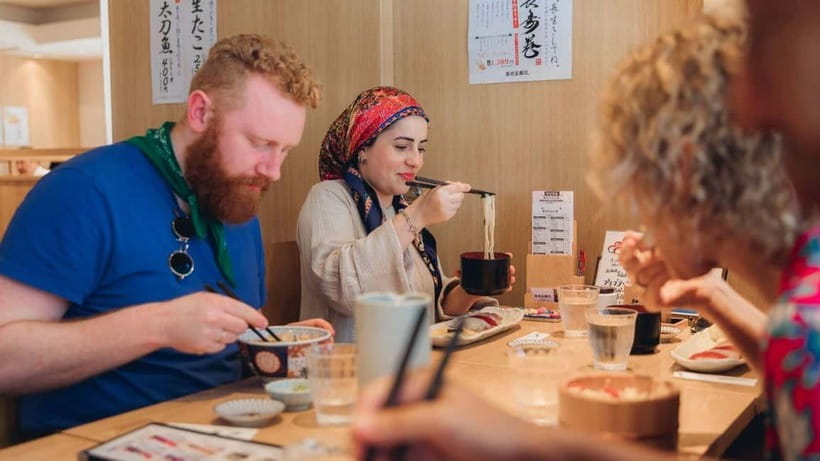
- Max 8 people means more time at each stop and better chances to ask questions.
- Depachika basement food halls give you a Tokyo etiquette crash course on how locals shop and eat.
- Yurakucho’s after-work yakitori alleys show the city’s nightlife side, not the daytime postcard version.
- Tsukishima Monja Town hotplate cooking is the hands-on highlight, not just a tasting.
- Seasonal wagashi comes with meaning, so you understand what you’re eating.
- Reviews frequently name guides by name (like Tsunematsu Hidenori, Yuki, Kirir, Meg, and Yoshi), which hints at consistent guide quality.
Start in Ginza at the Mitsukoshi Lion Statue
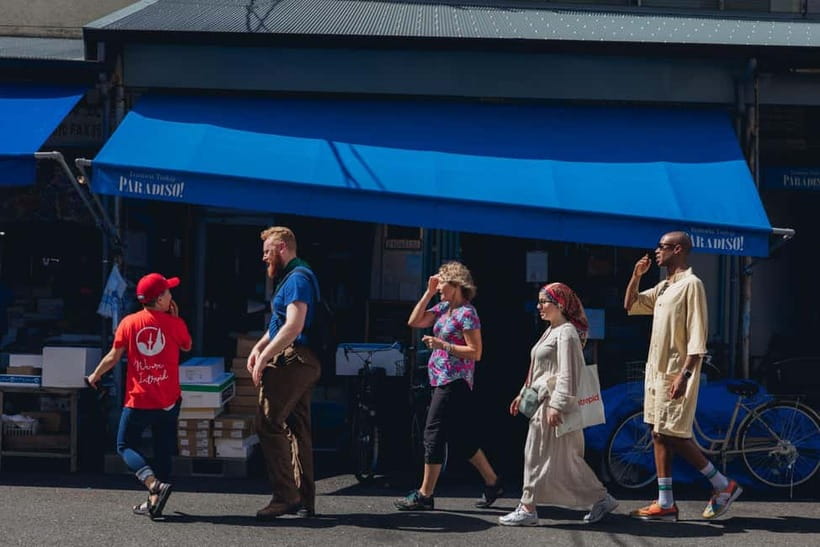
Your evening kicks off in Ginza, meeting at Mitsukoshi Ginza department store. Look for the life-size sitting Lion statue outside, and head toward the A7 exit of Ginza Station to find it.
The meet-up spot matters more than you’d think. One common complaint is that it can be a little tricky to spot the guide if you arrive late or drift around the wrong side of the storefront, so I’d build in a few minutes and take a steady look before your group scatters.
You can also read our reviews of more walking tours in Tokyo


Depachika first: Learn how Tokyo snacks like a pro
You’ll begin with a stroll through a depachika, Tokyo’s basement food hall culture. This is where you see how Japanese comfort food gets packaged, portioned, and treated like an art form. Expect your guide to point out what to look for and how people actually buy and share.
This stop is also a value win. Instead of just tasting one item and moving on, you get context for the flavors and the etiquette around them. If you’ve ever wondered why Tokyo food can look so precise, this is the place to start answering that question.
And because it’s early in the walk, it sets your taste expectations for what comes next. You’ll understand why the tour leans into seasonal sweets and small plates rather than big restaurant meals.
Yurakucho’s after-work lanes and real yakitori culture
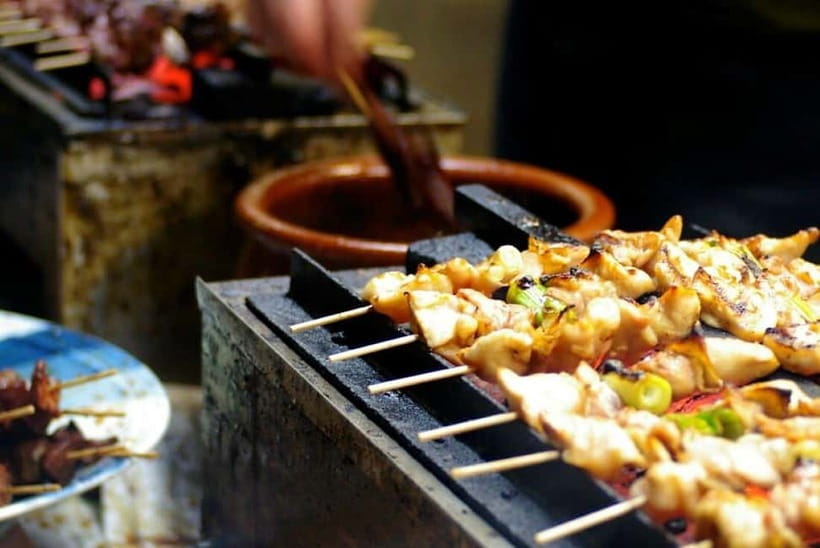
Next comes Yurakucho, famous for lantern-lit streets and the kind of eateries office workers hit after a long day. Here, you’ll try yakitori at a local spot where skewers are grilled fresh and you can feel the rhythm of the room.
What I like about this part is the lesson you get while you eat. You’ll learn how skewers are prepared and why those smoky alleys are such a central part of Tokyo evening life. It’s not just about taste; it’s about understanding the routine that keeps these places alive.
What to expect at the yakitori stop
You’ll be tasting three local food items total across the tour, and yakitori is one of them. You’ll also have time to chat with your guide and, depending on the day’s flow, you may pick up extra tips on how to order or what to watch for on the grill. Drinks are part of the plan too, since you’ll later have a choice of sake, beer, or a soft drink.
Tsukishima Monja Town: Sit by the hotplate and cook monja-yaki
If you want one moment that makes this tour feel different, it’s Tsukishima Monja Town. This is where you get to try monja-yaki, a dish strongly tied to Tsukishima’s identity, and you don’t just observe. You sit down at the hotplate and cook.
This is also where the tour earns its hands-on badge. You’ll try the technique yourself, and watching the staff cook the first round helps you understand the texture and timing you’re aiming for. Then you’ll get your turn, so you’re eating something you helped make.




Why monja-yaki is more than a novelty
Monja-yaki can be a fun introduction if you don’t want a super-formal meal. It’s also a social food: you’re gathered around the same cooking surface, watching each other’s progress, which makes conversation easier even if your Japanese is limited.
One practical note: this is still a food-and-culture tour, not a cooking class with deep technique. You’ll learn what you need to enjoy the dish, not become the next hotplate star.
The wagashi stop: Seasonal sweets with meaning
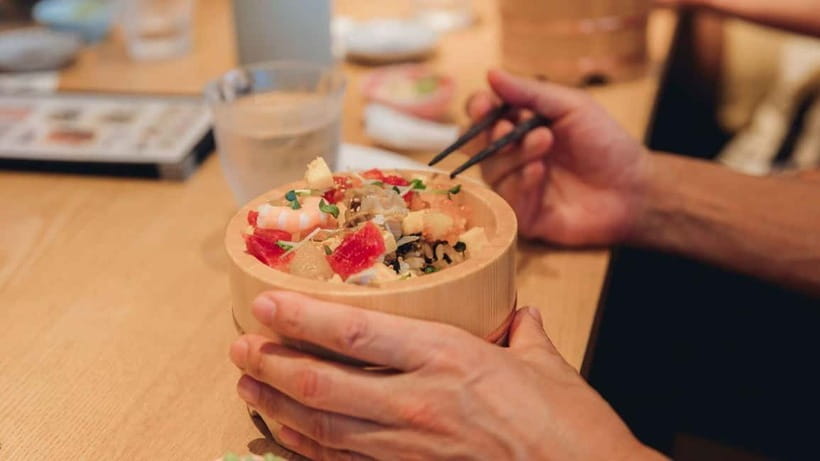
You’ll finish the savory portion of the evening with a sweet stop at a traditional wagashi shop. Your guide explains how Japan’s seasons and ingredients shape these handcrafted treats, so you taste with understanding rather than just curiosity.
Wagashi often centers on red bean paste and mochi-like textures, and not every Western palate hits every flavor. For example, one diner noted wagashi wasn’t their favorite because of a red bean paste and mochi profile. That’s not a tour flaw, but it’s a fair heads-up if you’re selective about sweets.
Still, I’d treat this stop as the cultural closer. Wagashi is one of the best ways to see how Japanese food design connects to weather, festivals, and seasonal aesthetics.
Drinks and the small-group advantage (max 8)
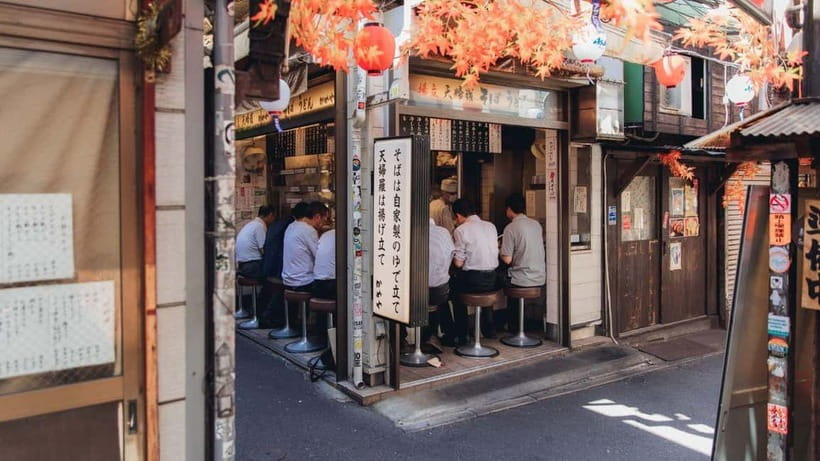
This is built for a maximum group size of 8, which changes the feel of the whole night. You’re not fighting for attention in a crowded room, and your guide can keep an eye on the pace at each stop so you don’t feel rushed through tastings.
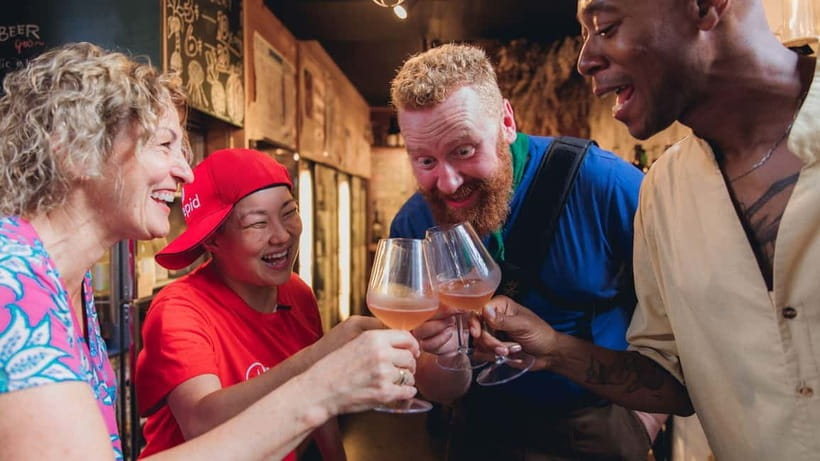
You’ll also have two local drinks included, chosen from sake, beer, or soft drink. One important rule: the tour is for ages 12 and up, but Japan’s legal drinking age is 20, so anyone under 20 will be served non-alcoholic drinks only.
I also appreciate the tour’s emphasis on local chefs and neighborhood food culture. When you meet the people behind the food, the evening stops feeling like theater and starts feeling like what it is: a regular Tokyo night out.
How $89 stacks up for 210 minutes of food culture
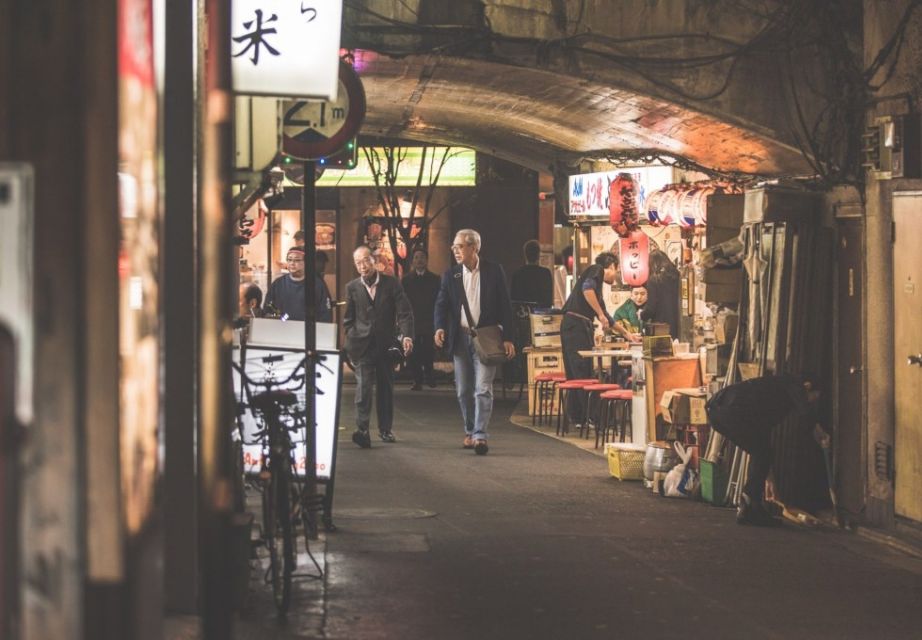
At $89 per person for about 210 minutes, this tour is aiming at one thing: giving you more than a single meal. You’re not just paying for “three tastings.” You’re paying for time with a guide plus access to places you’d likely skip if you were solo and trying to map everything.
Here’s what’s included in that price:
- Guided walk with a local English-speaking guide
- Public transportation (two subway tickets)
- Three tastings: yakitori, monja-yaki, wagashi
- Two drinks (sake, beer, or soft drink)
- Hands-on monja-yaki and yakitori experience
- Visits to neighborhood spots (including a depachika food hall)
That combination is where the value hides. Tokyo food can be surprisingly expensive if you’re piecing together your own evening, and you might still miss the “why” behind the choices. This tour gives you both the food and the explanation, plus a setup where you can ask questions without feeling awkward.
It also helps that the company behind it is described as carbon neutral and B Corp certified, which matters to some travelers who want their sightseeing to have a lighter footprint.
The walking pace and diet limits you should know
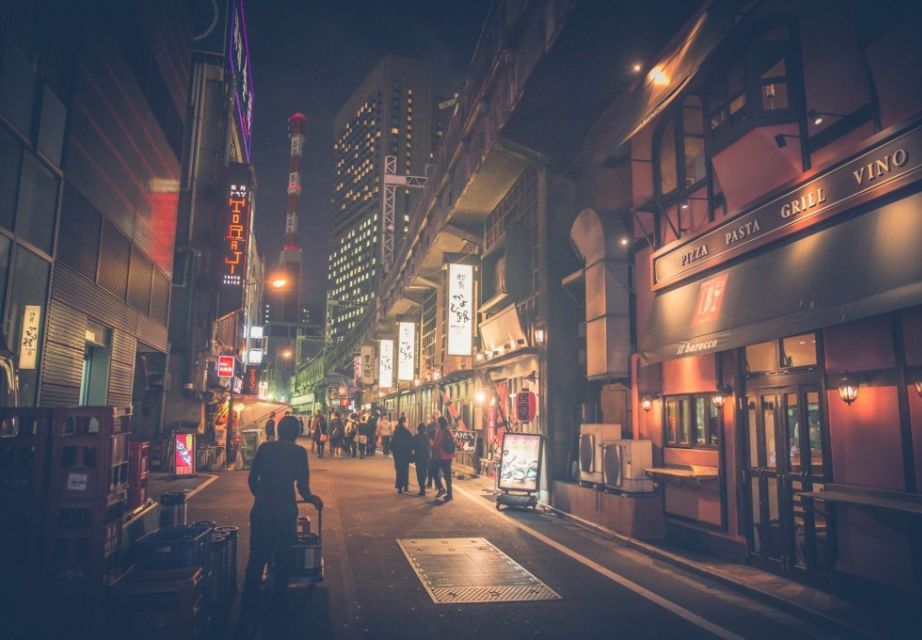
This tour is fun, but it isn’t effortless. One review mentioned trouble finishing due to too much walking, and specifically flagged subway travel with lots of stairs. If mobility is a concern, take that seriously.
Also, this is not built for special diets. The tour notes that Vegetarian, Vegan, or Gluten Free options are not available. If that affects you, you’ll want to plan an alternate food strategy for the day.
Finally, food preference matters. Even on a great evening, some dishes can be a hit or miss. Wagashi is a good example: it’s cultural and seasonal, but ingredients like red bean paste and mochi textures may not match your taste.
Practical tips so you enjoy every stop
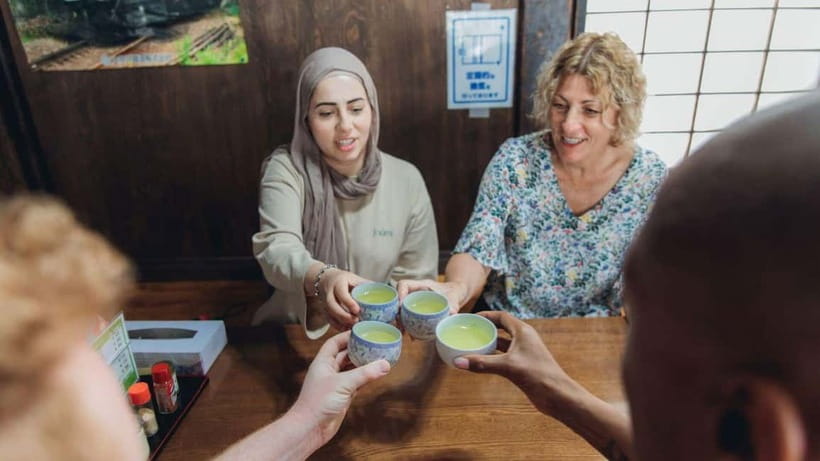
I’d go into this night with a couple of simple habits:
- Eat a light dinner earlier, or you might feel too full during monja-yaki and the sweets portion.
- Come ready to ask questions. Your guide is part of the product, and the best moments often happen when you’re curious out loud.
- Wear comfortable shoes. This is an evening food walk with real movement between neighborhoods.
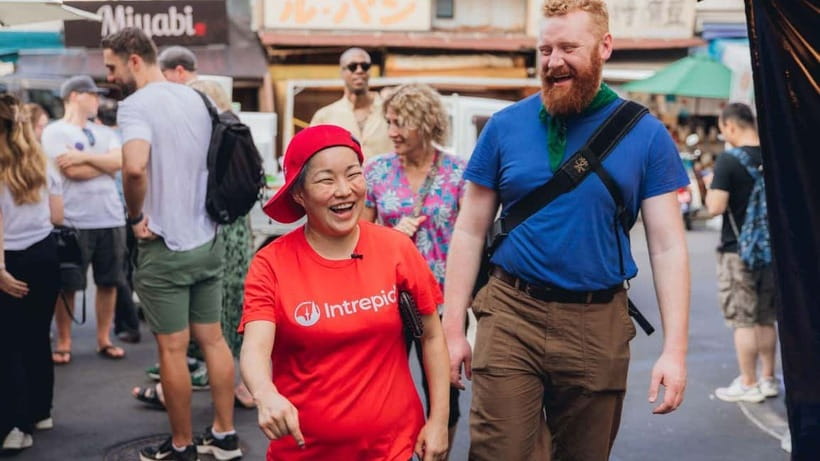
It’s also worth noting how often guide personality gets praise. Names come up in reviews like Tsunematsu Hidenori for fun conversation and cultural education, Yuki (listed as Snoopy) for knowledge and patience, and guides like Kirir and Meg for enthusiasm. That suggests you’re likely to get more than a script at each stop.
Should you book Tokyo After 5?
Book this tour if you want an easy, guided way to experience Tokyo’s after-work food culture in a single night. I think it’s especially strong for first-timers who want practical orientation: how depachika shopping works, what yakitori means in everyday life, why monja-yaki is such a community activity, and what wagashi signals about the season.
Skip it or plan carefully if you:
- Need vegetarian/vegan or gluten-free food (not available)
- Have mobility limits and want to avoid subway stairs and longer walking stretches
- Don’t enjoy sweets based on red bean paste and mochi-like textures (wagashi is a required stop)
FAQ
What does the tour cost and how long is it?
The tour is $89 per person and runs for 210 minutes.
How big is the group?
The group is limited to a maximum of 8 participants, which keeps the pace relaxed and interactive.
What food and drinks are included?
You’ll get three tastings: yakitori, monja-yaki, and wagashi, plus two local drinks (choose sake, beer, or soft drink).
Do I have to drink alcohol?
No. Alcohol is included as an option, but the tour notes Japan’s legal drinking age is 20. If you’re under 20, you’ll be served non-alcoholic drinks.
Are vegetarian, vegan, or gluten-free options available?
No. The tour explicitly states it cannot cater to vegetarian, vegan, or gluten-free requirements.
Where is the meeting point in Ginza?
Meet at Mitsukoshi Ginza department store, in front of the life-scale sitting Lion statue outside. Use the A7 exit of Ginza Station to reach the ground-level area.
Is transportation included?
Yes. You’ll use public transportation with two subway tickets included during the tour.
If you want, tell me your travel dates and what you like to eat (spicy? seafood? sweets?), and I’ll help you decide if the wagashi and monja style will suit your taste.