REVIEW · TOKYO
Tokyo: Tsukiji Fish Market Tour with 6 Stops & Seafood Lunch
Book on GetYourGuide →Operated by MagicalTrip · Bookable on GetYourGuide
Tsukiji feels like a living seafood temple. This short tour strings together old-school faith at nearby shrines with the morning market energy you came to Tokyo for. You’ll walk the outer lanes, sample multiple bites, then sit down for a seafood bowl lunch.
What I like most is the pacing and mix: you start with manners and worship traditions at Tsukiji Hongan-ji, then you’re out in the crowds with a guide who helps you pick stalls and food fast. I also love the payoff lunch—sit-down seafood donburi instead of grazing standing up the whole time.
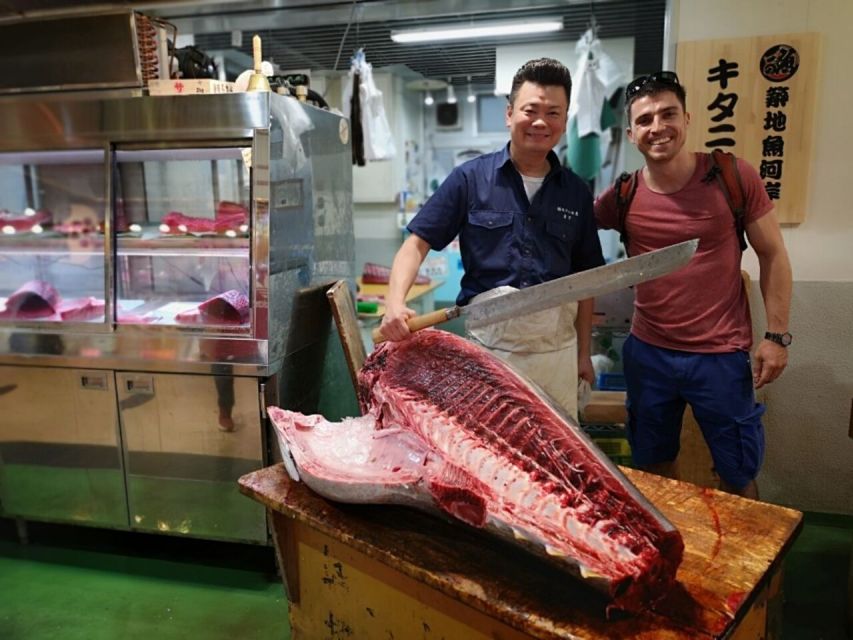
One thing to consider: Tsukiji’s big wholesale market moved to Toyosu, so don’t expect auction-floor access. Also, food expectations can be a little tricky—this tour includes tastings and lunch, but alcohol and dietary substitutions have limits.
In This Review
- Key Things You’ll Notice on This Tsukiji Tour
- Entering Tsukiji Hongan-ji: a Buddhist start that helps you read the area
- Tsukiji Outer Market with a guide: where the tastings actually help
- Namiyoke Inari Jinja: a short shrine stop that adds context
- The donburi lunch: how the included meal turns the morning into a win
- Shiodome Media Tower and the Caretta Shiodome viewpoint: a smart way to finish
- Price and value: is $94 worth it for 3 hours?
- Who should book this Tsukiji Fish Market Tour (and who should skip it)
- Practical tips for enjoying Tsukiji without stress
- Should you book this Tsukiji Fish Market Tour?
- FAQ
- How long is the Tokyo Tsukiji Fish Market Tour?
- What is the price per person?
- Where do I meet the guide?
- Are food tastings included?
- Is lunch included, and what kind of meal is it?
- Are there vegetarian options?
- Are drinks like beer or sake included?
- How big is the group?
- Is the tour wheelchair or stroller friendly?
- What’s the cancellation and refund rule?
Key Things You’ll Notice on This Tsukiji Tour
- Temple-to-market flow: faith and etiquette first, then seafood street life
- 5+ included tastings: you don’t have to guess what’s worth trying
- A proper donburi lunch: included, with a set budget (up to 1,500 yen)
- Named guide talent: people repeatedly rave about guides like Mai, Meg, Naoki, Kiyo, and Taka
- Tokyo views at the end: Shiodome Media Tower / Caretta Shiodome from above the bay area
Entering Tsukiji Hongan-ji: a Buddhist start that helps you read the area
Most Tsukiji visits jump straight to food. This one starts at 築地本願寺 (Tsukiji Honan-ji) 正門, and that small choice changes how the whole morning feels.
Tsukiji Hongan-ji is tied to worship practices in the area, and the tour’s goal is simple: help you understand what you’re seeing and how people behave. You’ll get a guided visit (about 20 minutes) focused on Japanese traditions at a 300-year-old Buddhist temple, plus practical etiquette points that make the experience smoother in the crowd.
Why this matters: when you arrive at Tsukiji already knowing what local visitors are doing and why, the market stops feel less like chaos-for-tourists and more like a place where people have routines. You’re not just eating—you’re watching daily life through a Japanese lens.
You can also read our reviews of more shopping tours in Tokyo

Tsukiji Outer Market with a guide: where the tastings actually help
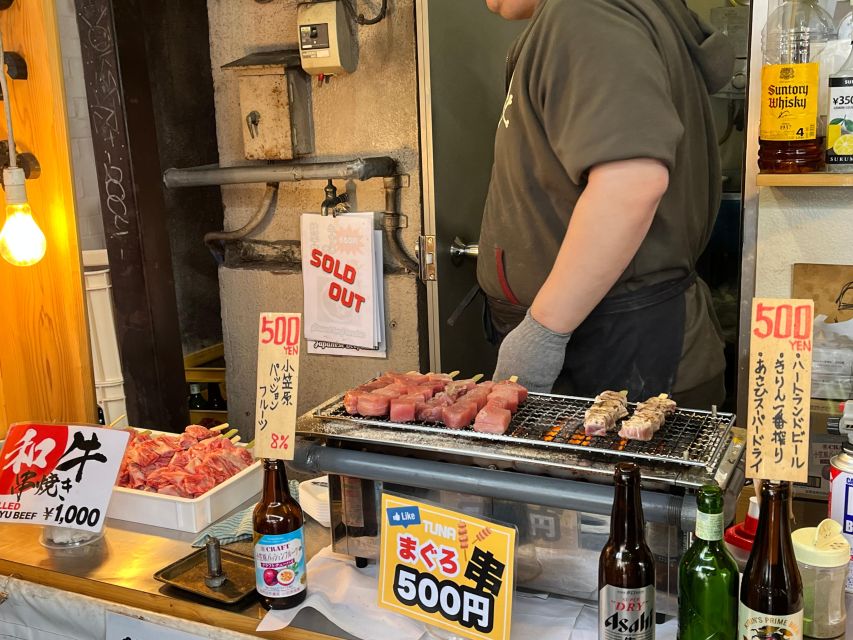
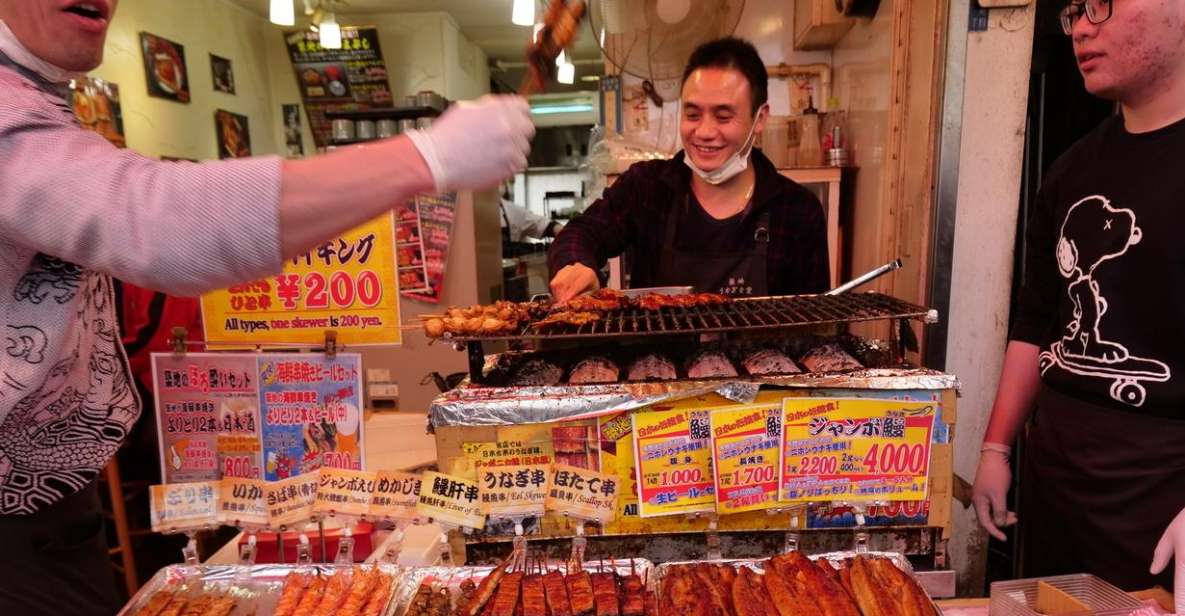
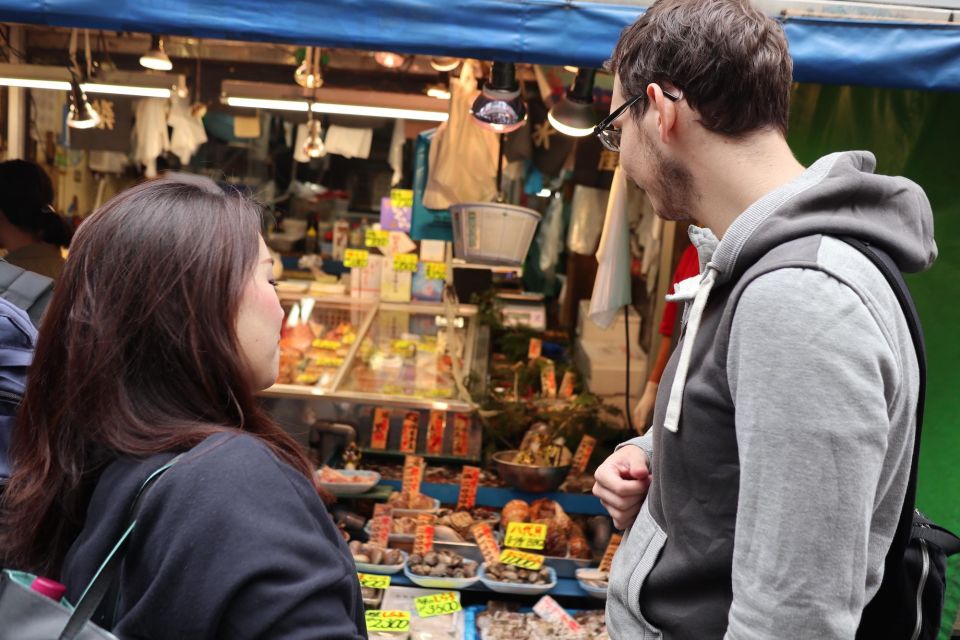
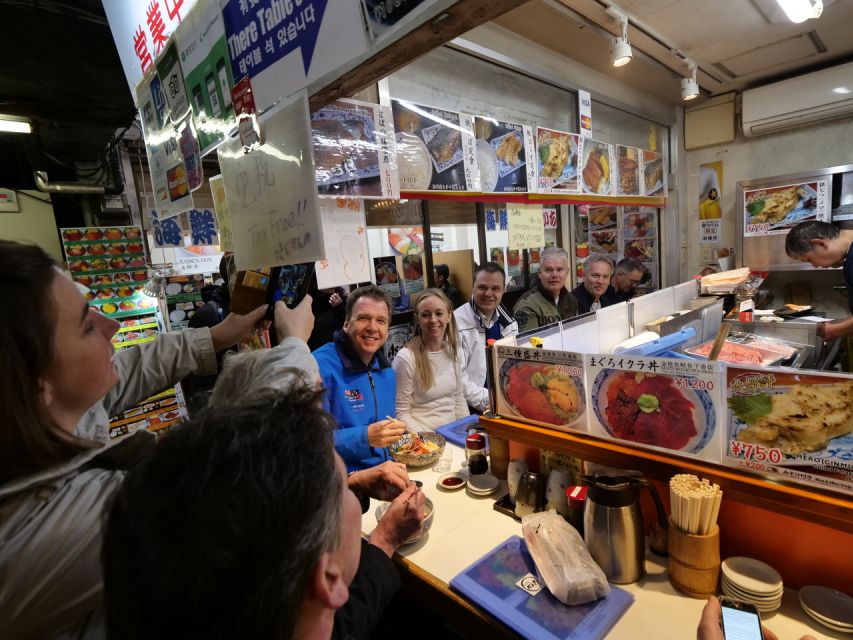
After the temple, it’s straight into Tsukiji Outer Market. This is the part most people picture: narrow lanes, loud signage, the smell of grilling and seafood, and nonstop foot traffic.
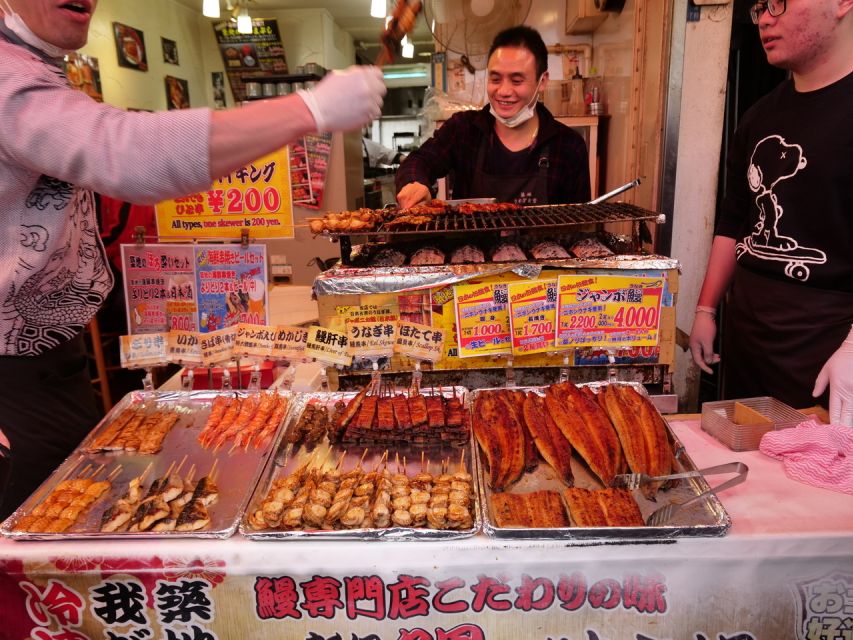
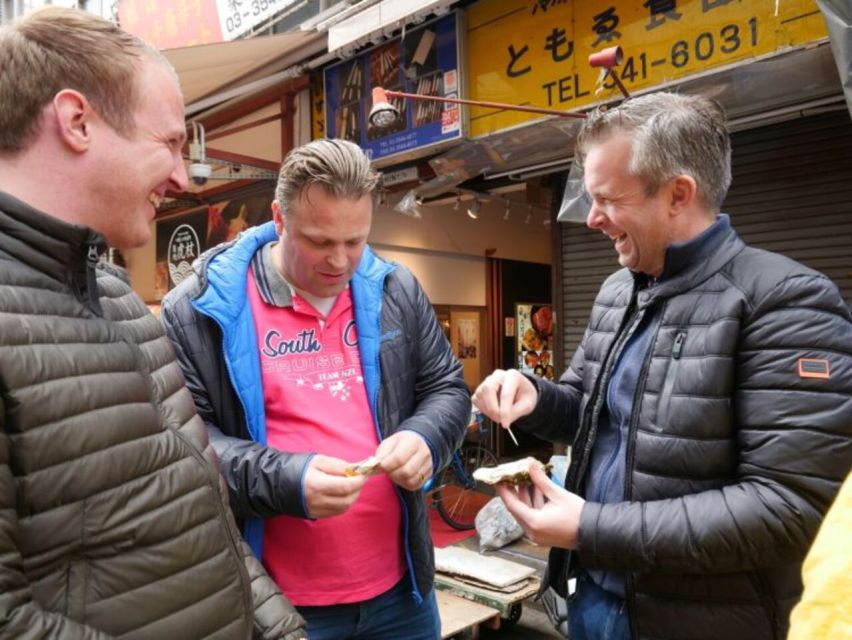
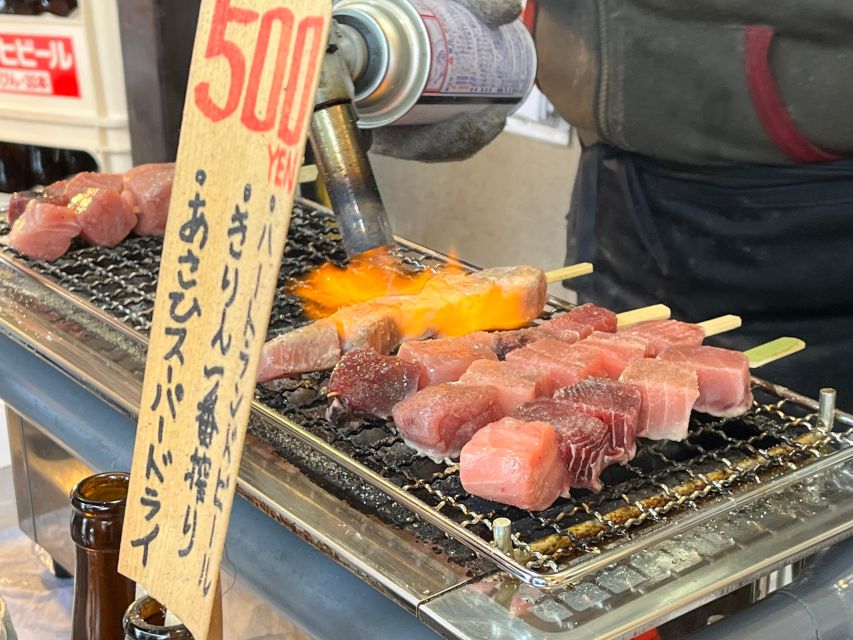
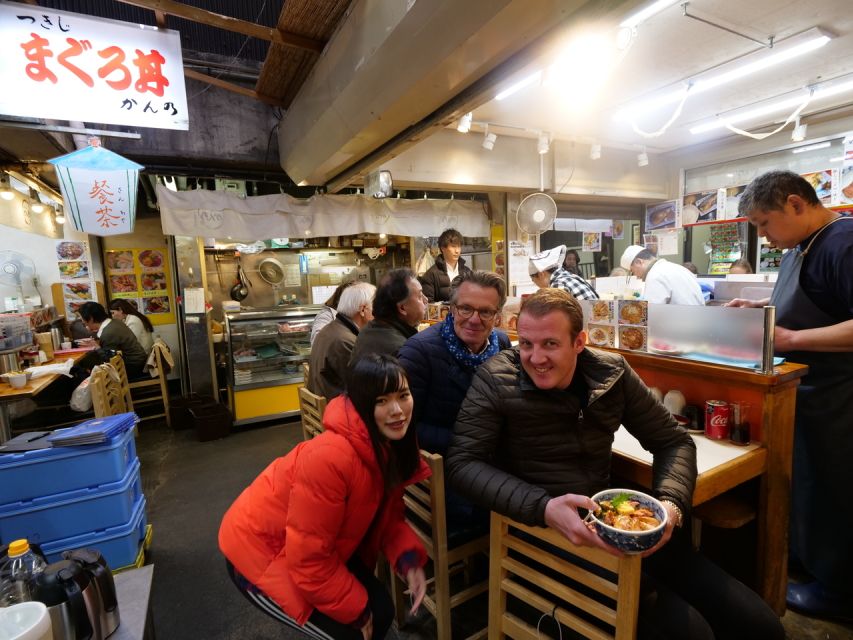
Your guide leads you through the market for shopping and at least five tastings included in the price, plus time for you to browse. In the tastings, you’ll often run into classic Tsukiji favorites. From past experiences on this tour, people mention bites like fresh raw fish (including sashimi), oysters, grilled eel skewers (unagi), tuna sushi, rolled omelet, mochi, and even fish-shaped taiyaki. You can’t count on the exact menu every day, but you can count on the guide helping you avoid the random stuff and aim for stalls that are easy to order from.
Practical win: Tsukiji is crowded enough that you can lose time quickly if you’re wandering alone. With a small group (limited to 7 people), you move as a unit and you get recommendations on what to buy, where to buy it, and how to order.
Possible downside: you’re still walking through a busy market. Some people feel the pace is brisk, especially if they want lots of extra time for photos or slow browsing. If you’re the type who likes to linger over every stall, plan to treat the tour as a “best-of + meal” experience, not a free-roam shopping day.
Namiyoke Inari Jinja: a short shrine stop that adds context
Next comes Namiyoke Inari Jinja, about 20 minutes. This isn’t long, but it’s part of the tour’s bigger idea: seafood isn’t just commerce here. It’s surrounded by spiritual practice and local customs.
What you get from this stop is a guided walkthrough of worship traditions at an Inari shrine, plus a bit of cultural context so you can interpret what’s happening around you. Think of it as cultural seasoning—small amount, big payoff later when you’re back among vendors and customers.
The other benefit is rhythm. After the temple start and the market crush, the shrine stop feels like a reset, even though you don’t spend a ton of time there.
The donburi lunch: how the included meal turns the morning into a win
The best part of Tsukiji tours is rarely the walking. It’s the moment you finally sit down.
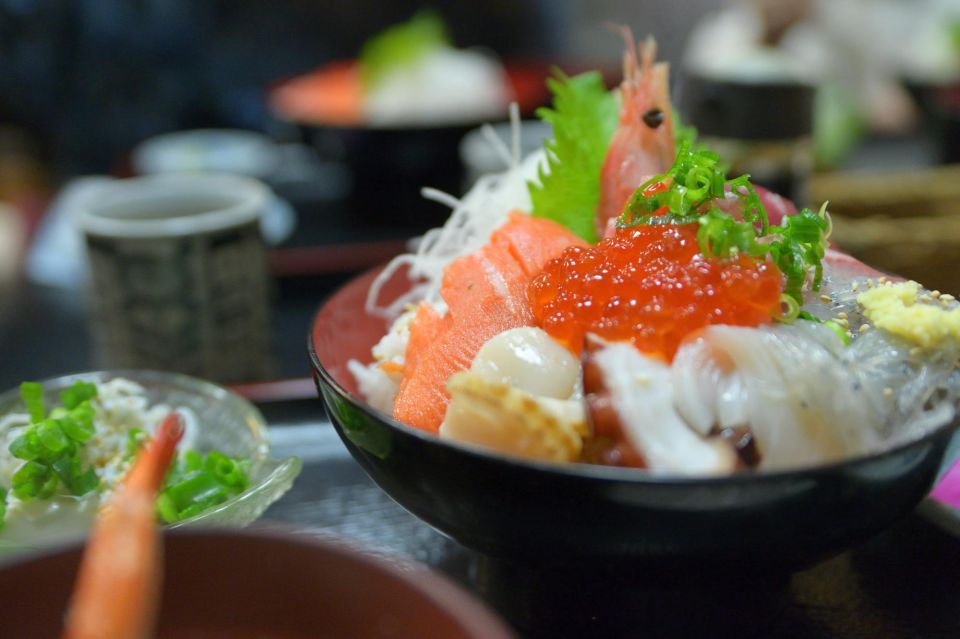
This tour ends the market section with a seafood donburi lunch at a restaurant inside the Tsukiji area. Your lunch fee is included, with a cap of up to 1,500 yen. That matters for value: it turns your ticket into a food plan, not just a tasting sampler.
About dietary needs: the tour info says vegetarian meals may be available at the donburi stop, but the “know before you go” notes also say vegan and vegetarian options are not available. That conflict is worth taking seriously. If you eat only vegetarian food, I’d message the provider in advance and ask for what’s realistically possible on your specific day.
Alcohol is another point to understand. The tour description talks about enjoying Japanese beer or sake with your seafood, but the practical note is that drinks are not included in the tour fee. So you should treat alcohol as optional add-ons you pay for yourself.
Shiodome Media Tower and the Caretta Shiodome viewpoint: a smart way to finish
You end with a guided visit to Shiodome Media Tower (about 20 minutes). Many people describe this as going up to a high observation deck—often associated with the 46th-floor Caretta Shiodome area—to see Tokyo from above.
This is a good finish for a market tour. Down below, Tsukiji is all speed and smells. Up here, you can take a breath and place the area in your mental map—harbor area and Tokyo’s scale all at once.
It also gives your group a clean landing after the walk-and-eat stretch. You’re not rushed off to another neighborhood right away. You get a view, then you’re done.
You can also read our reviews of more tours and experiences in Tokyo

Price and value: is $94 worth it for 3 hours?
At $94 per person for about 3 hours, this isn’t the cheapest thing in Tokyo—but it’s also not trying to be fancy luxury.
Here’s what you’re paying for, in real terms:
- a certified English guide
- a small group (up to 7 people)
- 5+ tastings included
- a sit-down seafood donburi lunch (up to 1,500 yen)
- tour photos added in
The value comes from compression. Without help, you’d spend time figuring out which stalls make sense, what to order, and how to avoid wasting money on awkward or hard-to-order places. With a guide, you get a planned route and a safer path through the most crowded area of Tsukiji.
Is it perfect value for everyone? If you already know Tsukiji inside out and love shopping with zero structure, you might choose to DIY. But if you want a well-paced “morning best-of” with food that actually lands, the cost starts to make sense.
Who should book this Tsukiji Fish Market Tour (and who should skip it)
I’d strongly consider this tour if you:
- want a short, efficient Tokyo food experience
- like learning cultural context, not only eating
- appreciate being led through crowds instead of negotiating on your own
- care about having an included meal instead of snack chaos
I’d be more cautious if you:
- expect access to the current wholesale auctions (Tsukiji’s wholesale operations moved to Toyosu, and this tour focuses on the Tsukiji area experience)
- need strict allergy-free handling (the tour notes that allergy-free guarantees aren’t possible)
- want vegan or vegetarian meals with certainty (the materials include conflicting statements, so you must confirm)
One more note: some past participants mention strong help with navigation—like how certain guides guided train choices and made sure people reached the right station. That’s not something you should assume every time, but it fits the overall pattern: guides aim to make your day easier, not just informative.
Practical tips for enjoying Tsukiji without stress
Here’s how to set yourself up for a great morning.
Bring cash. You’re expected to carry some cash for extra street food purchases beyond included tastings and lunch.
Meet at Tsukiji Station, not Tsukijishijo Station. The meeting point is Tsukiji Station, and the guide holds a red/orange sign for MagicalTrip. This sounds basic, but Tsukiji-area station names are easy to mix up when you’re tired or navigating underground.
Arrive on time. The tour starts promptly, and if you miss the group you won’t be able to rejoin. Markets can swallow time fast, so build in buffer.
Allergies require extra care. The tour says it can’t guarantee allergy-free meals because food comes from kitchens not run by the operator, and substitutions may not always work. If allergies are a big concern, contact the provider before booking and be ready for limits.
Think of it as a “best-of” tasting tour. Even when guides do a great job, you’re moving through a crowd. If your goal is to photograph every stall for 2 hours, this might feel rushed.
Should you book this Tsukiji Fish Market Tour?
If your priority is a first-time-friendly, structured Tsukiji seafood morning—with temple context, guided tastings, and a real donburi lunch—this is a strong choice. The guide component is a big part of why people rate it highly, and names like Mai, Meg, Naoki, Kiyo, and Taka show up repeatedly for clear explanations and helpful routing.
Just go in with the right expectations: it’s not a walk-through of auction-floor operations. And if you have food restrictions (especially vegan/vegetarian certainty or allergies), you should confirm what’s possible before you pay.
If that sounds like your style, book it and treat the tour as the easiest way to taste Tsukiji without wasting your short Tokyo time.
FAQ
How long is the Tokyo Tsukiji Fish Market Tour?
The tour lasts about 3 hours.
What is the price per person?
The price is listed as $94 per person.
Where do I meet the guide?
Meet at Tsukiji Station. The guide will be holding a red/orange sign that says MagicalTrip.
Are food tastings included?
Yes. The tour includes 5+ food tastings in the market.
Is lunch included, and what kind of meal is it?
Yes. Lunch is included and is a seafood donburi bowl. The lunch fee is included up to 1,500 yen.
Are there vegetarian options?
The description says the donburi restaurant serves meals for vegetarians, but the “know before you go” section states vegan and vegetarian options are not available. You should clarify your dietary needs with the provider before booking.
Are drinks like beer or sake included?
No. Drinks are exclusive from the tour fee, so beer or sake would be an add-on you pay for yourself.
How big is the group?
It’s a small group limited to 7 participants.
Is the tour wheelchair or stroller friendly?
No. Some included locations are not accessible by wheelchair or stroller.
What’s the cancellation and refund rule?
You can cancel up to 24 hours in advance for a full refund.