REVIEW · TOKYO
Tokyo 3 Hour E Bike Tour of the City Bayside Areas
Book on Viator →Operated by Tokyo Rental Bicycle · Bookable on Viator
Tokyo by e-bike beats the usual subway grind.
You’re whisked through major sights and local pockets along the bayside with an easy electric bike and a small group feel (max 7). What makes it interesting is how the route mixes big-name places like Ginza and Tsukiji with quieter streets where Tokyo looks less staged.
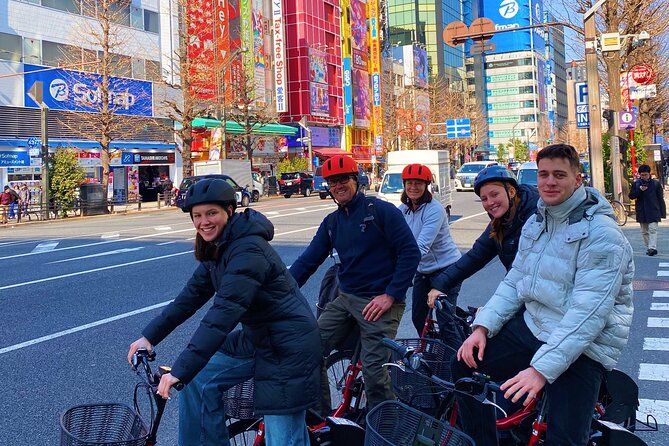
I especially like two things: the bikes are simple to ride, even when traffic gets busy, and the guide support makes the whole loop feel safe and smooth. Guides like Sho and Nao are repeatedly praised for being upbeat, informative, and good at steering you through the ride without slowing the fun.
One thing to consider: this tour needs good weather, and the pace assumes you can handle a moderate amount of cycling. Also, the optional Fukagawa temple stop has a ¥1000 entrance fee and is cash-only if you decide to go in.
In This Review
- Key highlights you’ll actually care about
- Why this 3-hour bayside ride feels like real Tokyo
- The e-bike setup: easy power, real-city riding
- A practical note on comfort
- Stop-by-stop: Ginza luxury, Kabuki-za, and Tsukiji market energy
- Stop 1: Ginza (about 10 minutes)
- Stop 2: Kabuki-za (about 10 minutes)
- Stop 3: Tsukiji Hongwanji Temple (about 15 minutes)
- Stop 4: Tsukiji Fish Market (about 20 minutes)
- Tsukishima Monja Street and Sumiyoshi Jinja: where Tokyo gets more local
- Stop 5: Tsukishima Monja Street (about 10 minutes)
- Stop 6: Sumiyoshi Jinja (about 10 minutes)
- Kiyosumi Gardens and the optional Fukagawa Fudodo temple fee
- Stop 7: Kiyosumi Gardens (about 25 minutes, entrance included)
- Stop 8: Naritasan Fukagawa Fudodo Honden (optional, about 20 minutes)
- Meeting point at Hibiyakōen and where the tour ends
- How the price stacks up for $87.96
- Who this tour fits best (and who might not)
- Should you book this Tokyo bayside e-bike tour?
- FAQ
- How long is the Tokyo 3-hour E Bike Tour?
- What is the group size limit?
- Where does the tour start?
- Where does the tour end?
- Is there an entrance fee during the tour?
- What is included in the price?
- What is not included?
- Do I need cash for anything?
- What kind of fitness level do I need?
- What if the weather is bad?
Key highlights you’ll actually care about
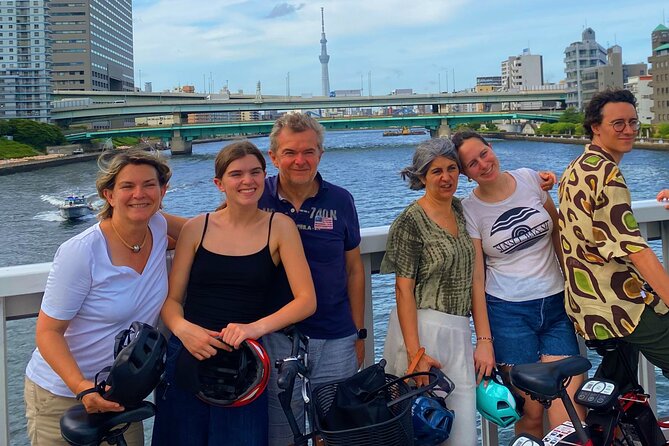
- Electric-assist riding that helps you keep the energy for photos and walking stops
- Small groups (up to 7) for easier navigation and a friendlier vibe
- Tsukiji Fish Market snack break so you’re not just looking at food stalls
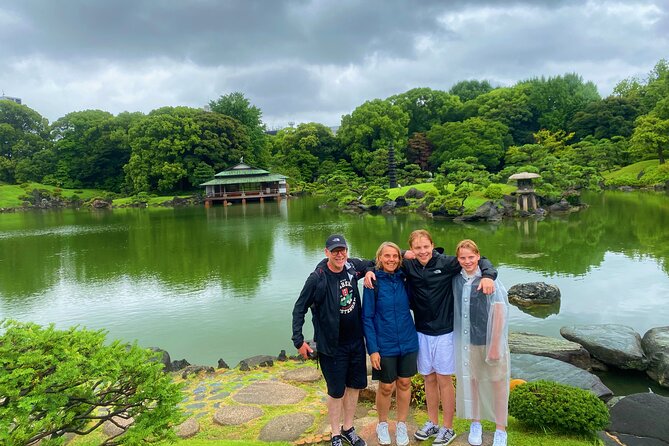
- Kiyosumi Gardens included (entrance fee covered) for a calmer reset
- A guide-led route through busy streets so you don’t have to figure it out on your own
Why this 3-hour bayside ride feels like real Tokyo
This tour is built for people who want Tokyo without cramming their whole day into transit. In about 3 hours, you cycle through “layers” of the city: polished shopping streets, classic theater-area sights, temple stops, and then back to neighborhood streets near the water.
The main value is pacing. Each stop is short enough to keep momentum, but long enough to get a feel for the place—especially at Tsukiji and Kiyosumi Gardens. The ride also helps you connect areas that are too far for a casual walking plan, but too close to ignore if you want more than one Tokyo highlight.
And because it’s guided, you’re spending time looking, not wrestling with routes. You follow the guide through traffic with the e-bike doing the heavy lift.
You can also read our reviews of more cycling tours in Tokyo
The e-bike setup: easy power, real-city riding
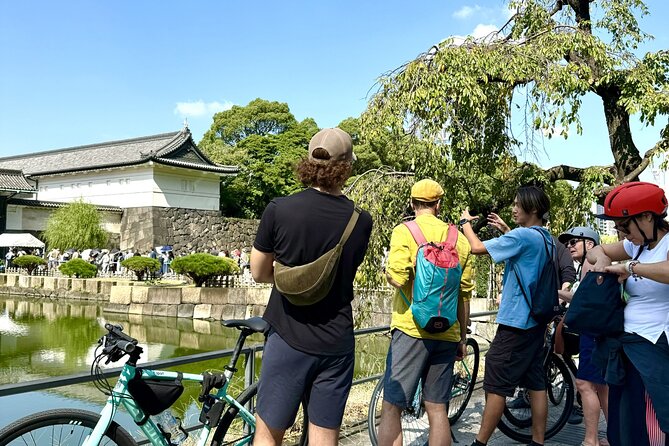
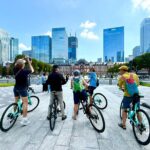
Electric bikes change the whole experience in Tokyo. Even if you’re not a “bike person,” the motor assistance helps you glide along when you’d normally feel drained. You still steer and pedal, so it’s not just a tour bus, but you’re less likely to arrive sweaty and wiped out.
The ride is also structured around safety. You’re cycling through busy streets, and the guide’s job is to keep you moving smoothly and together. That matters, because Tokyo traffic can feel chaotic if you’re on foot and constantly stopping. On an e-bike, the flow is different—and it helps to have someone guiding you so you don’t end up second-guessing every intersection.
In reviews, people call out the bikes as easy to handle, including Bianchi models. That’s a good sign for comfort, but the bigger point for you is confidence: you get through the ride feeling in control.
A practical note on comfort
This tour lists a moderate physical fitness level. That’s your cue to be ready for some cycling time, plus short walks at each stop. If you’re worried about endurance, the electric assist is exactly why this is the format to choose.
Stop-by-stop: Ginza luxury, Kabuki-za, and Tsukiji market energy
You start in the Ginza area, and the whole first stretch is about shifting your brain from sightseeing to “Tokyo-in-motion.”
Stop 1: Ginza (about 10 minutes)
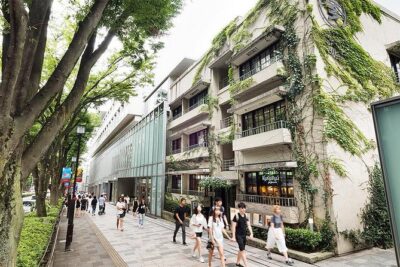
Ginza is known for upscale streets and clean lines, and this stop works as a quick mood-setter. You cycle through the district so you’re not only seeing it from the sidewalks.
What I like here: it’s fast but it helps you understand the city’s contrast—Tokyo can go from polished and bright to gritty and local within a few minutes of riding.
You can also read our reviews of more city tours in Tokyo


Stop 2: Kabuki-za (about 10 minutes)
Next is Kabuki-za, the famous venue for classical Japanese theater. Even if you’re not catching a show, the building area gives you a sense of how traditions are still part of daily city life.
This stop is short, so don’t expect a long deep read. But as a guided “check-in,” it’s a solid way to make sure you experience the place properly rather than just snapping a photo from across the street.
Stop 3: Tsukiji Hongwanji Temple (about 15 minutes)
Then you shift to the Tsukiji Hongwanji Temple area. Temples in Tokyo can feel like pauses in the middle of the city’s noise, and this timing gives you a breather before the market stop.
The benefit for you: you get a quieter moment on foot without losing the rhythm of the tour.
Stop 4: Tsukiji Fish Market (about 20 minutes)
The Tsukiji stop is where the tour turns practical and fun. You walk around the market zone and get a quick snack break.
Food isn’t included, but this is one of those parts where you can actually use the time well. Some people choose snacks like sashimi if it fits their tastes and budget. Even if you skip eating, it’s still a prime moment to see the market atmosphere up close rather than just reading about it.
Potential drawback: the market stop is time-limited, so you won’t be doing a full food crawl. If you have a “must buy” list, plan it quickly once you’re there.
Tsukishima Monja Street and Sumiyoshi Jinja: where Tokyo gets more local
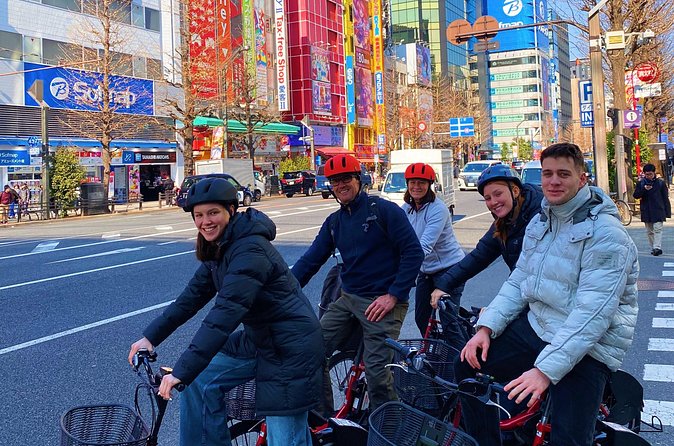
After Tsukiji, the route leans into neighborhood Tokyo. This is the part that often makes the tour feel more like a discovery than a checklist.
Stop 5: Tsukishima Monja Street (about 10 minutes)
Tsukishima Monja Street is a street name you can’t easily replicate on your own unless you already know where to look. You cycle through the area, then you get the chance to take in the vibe—more everyday, less tourist-pose.
A detail worth knowing: in reviews, people call this stretch unique, including the kind of mini-island feel you don’t get as easily from central Tokyo. It’s a reminder that Tokyo’s “bayside” isn’t just views—it’s neighborhoods with their own rhythm.
Stop 6: Sumiyoshi Jinja (about 10 minutes)
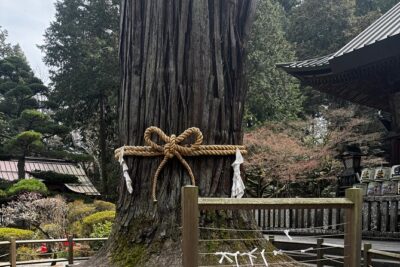
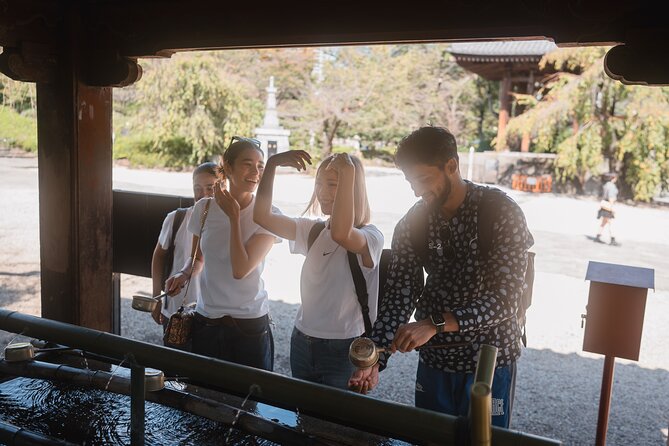
Then you stop at Sumiyoshi Jinja, a local shrine in a more traditional town-like area. This is the sort of stop that adds texture to your day, especially after the city energy of the market.
It’s short, so think of it as a respectful taste. The best move is to slow down for a few minutes, look around, and then get back on the bike without trying to do everything at once.
Kiyosumi Gardens and the optional Fukagawa Fudodo temple fee
This is where the tour gives you both calm and flexibility.
Stop 7: Kiyosumi Gardens (about 25 minutes, entrance included)
Kiyosumi Gardens is included, which is nice because you don’t have to think about tickets mid-tour. It’s also a smart break: after several neighborhood and street stops, you can walk and reset your pace.
What makes this stop work in a bike tour is the switch from movement to strolling. You can take photos without worrying about timing or where to park. And it’s long enough—25 minutes—to actually enjoy the garden instead of treating it like a quick roadside stop.
Stop 8: Naritasan Fukagawa Fudodo Honden (optional, about 20 minutes)
The final section includes an optional entrance at Naritasan Fukagawa Fudodo Honden. If you want to go in, there’s an entrance fee of ¥1000, and it’s cash-only.
If you don’t want to enter, that’s completely fine—the tour ends here anyway.
This flexibility is practical. You get to choose based on your energy level and what you want your Tokyo day to feel like at the finish line. If you’re tired from cycling, you can choose the lighter ending. If you’re still curious, you can pay in cash and see the temple interior.
Meeting point at Hibiyakōen and where the tour ends
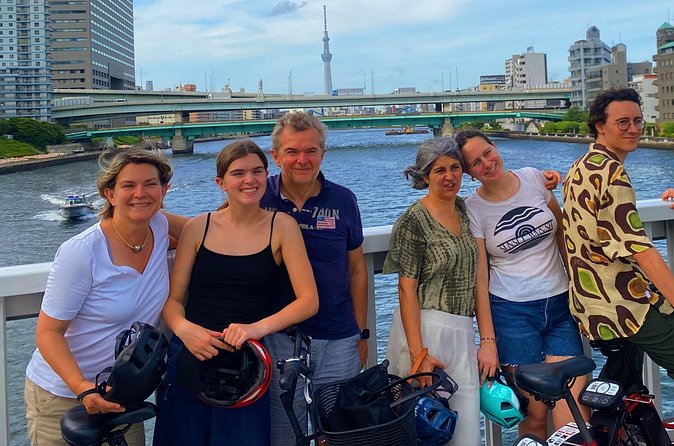
The tour starts at 1-3 Hibiyakōen, Chiyoda City, Tokyo 100-0012. It’s marked as being near public transportation, which matters because you don’t want your day to hinge on a long, complicated get-to-the-start trip.
The ride ends at Fukagawa Fudou-dō (Naritasan Tokyo branch temple), 1-chōme-17-13 Tomioka, Koto City, Tokyo 135-0047. That ending location is a big deal: you’ll finish near the water-adjacent east side of Tokyo rather than back where you started.
So if you’re planning dinner or an evening walk, think about the direction you want to go next. This tour naturally sets you up to keep exploring around the Fukagawa area.
How the price stacks up for $87.96
At about $87.96 per person, this tour sits in the “worth it if it saves you time and effort” category. You’re paying for three things: the e-bike, the English-speaking guide, and guided stops that include Kiyosumi Gardens admission.
Where the value shows up for you:
- You’re not renting an e-bike and figuring out a route.
- You get multiple cultural stops across different neighborhoods in one session.
- You’re covering ground that would be slower and more tiring on foot.
The trade-off is that entrance fees outside the included stops are on you. Kiyosumi Gardens is covered, but the optional Fukagawa temple fee is not, and food/drinks aren’t included. So if you plan to eat at Tsukiji, budget a little extra.
Still, when you add up guide time + e-bike use + included garden entry, the total feels reasonable for a first-time Tokyo day—especially if you want a guided “bayside overview” without giving up too much of your day.
Who this tour fits best (and who might not)
This is a great match if you:
- want to see several major and local spots without spending the day in transit
- like biking but don’t want a workout to dominate the trip
- prefer a guide to handle routing and group safety on busy streets
- enjoy short, focused stops and then moving on
It might not be the best fit if you:
- can’t ride a bike for a moderate amount of time, even with electric assist
- only want long museum-style time at fewer sites
- are very sensitive to weather changes, since this tour requires good weather
The short stop lengths are part of the design. It’s not a slow, lingering tour. It’s a “see Tokyo’s texture quickly” format, with enough stops to feel like you did something meaningful.
Should you book this Tokyo bayside e-bike tour?
I think you should book this if you want a smooth introduction to Tokyo’s bayside areas with minimal hassle. The e-bikes make the ride approachable, the group size stays small, and the guide-led route helps you get through busy streets without second-guessing your safety.
Two parts are especially compelling: the Tsukiji Fish Market stop for a quick snack break, and Kiyosumi Gardens with its included entrance. Add in the shrine and neighborhood streets like Tsukishima Monja Street, and you get more variety than a typical single-district tour.
If you’re traveling on a tight schedule, this is also a smart use of time. Three hours can be the perfect “day-starter” or “day-middle” activity, especially if you want to keep the rest of your day flexible.
If weather looks iffy, keep that in mind. And if you hate paying optional cash entrance fees, simply skip the Fukagawa temple entry—the tour ends there either way.
FAQ
How long is the Tokyo 3-hour E Bike Tour?
The tour runs for about 3 hours.
What is the group size limit?
The tour has a maximum of 7 travelers.
Where does the tour start?
The meeting point is 1-3 Hibiyakōen, Chiyoda City, Tokyo 100-0012, Japan.
Where does the tour end?
The tour ends at Fukagawa Fudou-dō (Naritasan Tokyo branch temple), 1-chōme-17-13 Tomioka, Koto City, Tokyo 135-0047, Japan.
Is there an entrance fee during the tour?
Kiyosumi Gardens entrance is included. There is also an optional entrance at Naritasan Fukagawa Fudodo Honden with a fee of ¥1000 cash only.
What is included in the price?
Included are use of an electric bicycle, Kiyosumi Gardens entrance fee, and an English speaking guide.
What is not included?
Food and drinks are not included. The optional ¥1000 entrance fee for Naritasan Fukagawa Fudodo Honden is not included.
Do I need cash for anything?
If you choose to enter Naritasan Fukagawa Fudodo Honden, the entrance fee is ¥1000 cash only.
What kind of fitness level do I need?
The tour states that travelers should have a moderate physical fitness level.
What if the weather is bad?
This experience requires good weather. If it is canceled due to poor weather, you’ll be offered a different date or a full refund.