REVIEW · TOKYO
Cherry Blossom Highlights, Asakusa, Ueno, Imperial Palace Garden
Book on Viator →Operated by Xperience Japan · Bookable on Viator
Cherry blossoms feel different with a local guide. I especially like how this tour helps you get around with public transportation guidance, and how it builds in Tsukiji so you can pair spring sightseeing with market-style sushi. One possible snag: the guide’s English can vary by person, so if that’s a big deal for you, choose your expectations accordingly.
This is a private 6 to 7 hour morning plan that strings together big-name cherry spots (Imperial Palace East Gardens, Senso-ji, Ueno Park) with real Tokyo street life (Tsukiji and Ameyoko). I also like that the route isn’t only about photos—it’s about knowing what you’re looking at, from temple layouts to why these areas matter in Tokyo’s story.
Since cherry season shifts fast, your itinerary may adjust based on timing. If blossoms are already starting to fade in one area, the plan can pivot to other gardens so you don’t leave with just red petals and regret.
In This Review
- Key points to know before you go
- Cherry Blossom Highlights: What This Route Gets Right (and Why It Works)
- Imperial Palace East Gardens: Edo Castle Ruins and Spring Shade
- Tsukiji: Market Energy Plus Time to Eat Sushi
- Senso-ji Temple and Nakamise Street: Cherry Trees, Old Tokyo, and Shopping You’ll Actually Use
- Ueno Park: Thousand-Tree Views and the Tokugawa Connection
- Ameyoko Shopping Street: The Local-Feel Finale in Downtown Tokyo
- Public Transportation Help: The Real Hidden Value
- Price and Value: Is $221.12 Worth It?
- What to Expect: Timing, Pace, and Comfort
- Should You Book This Cherry Blossom Highlights Tour?
- FAQ
- How long is the cherry blossom highlights tour?
- What time does the tour start?
- Is pickup offered?
- Is this tour private?
- Is lunch included?
- Are entrance fees included?
- Does the tour include a guide?
- What happens if the weather is bad?
- Is the tour suitable for all fitness levels?
Key points to know before you go
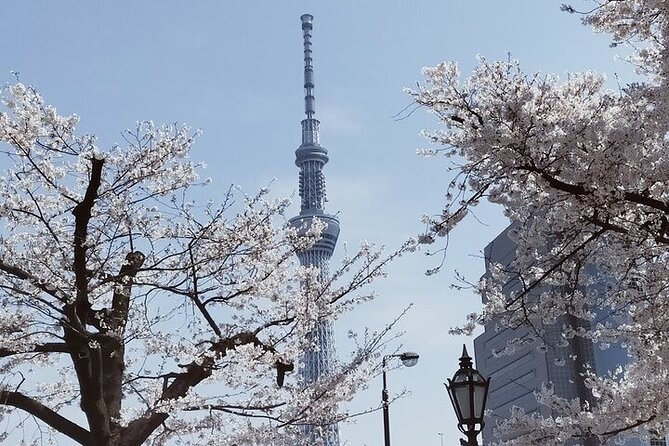
- Private cherry-blossom route across iconic neighborhoods with a licensed guide
- Tsukiji stop with sushi time, great for pairing scenery with food
- Imperial Palace East Gardens walk on the old Edo Castle grounds
- Senso-ji + Nakamise Street for classic temple sights during spring bloom
- Ueno Park and Toshogu area with Tokugawa family sites and pond scenery
- Ameyoko shopping arcade for that downtown Tokyo energy after the park
Cherry Blossom Highlights: What This Route Gets Right (and Why It Works)
Tokyo cherry blossom days are all about timing. Trees change week to week, crowds spike by the hour, and if you wing it, you can spend half your day wandering and the other half stuck behind a wall of strollers. This tour is built to reduce that stress by giving you a guided path and a practical rhythm for moving between major spots.
I like that it’s not pretending there’s one perfect garden for everyone. Instead, you cover multiple areas in a single morning window, so you have a better chance of seeing blossoms at their best. You’re also not only in “viewpoints.” You’ll spend real time at a food-focused market and a live shopping street, which makes the whole day feel like Tokyo, not a cherry-themed museum.
Also worth noting: the tour is private, so the guide can steer pacing and questions your way. In one experience, the guide Nobuko Akimoto was praised for adjusting the tour based on the traveler’s curiosity and answering cultural questions without making anyone feel silly. In another case, Hiroko was described as great for orientation around the city. That mix—structure plus flexibility—is what you want in a short, high-energy day.
You can also read our reviews of more tours and experiences in Tokyo.



Imperial Palace East Gardens: Edo Castle Ruins and Spring Shade
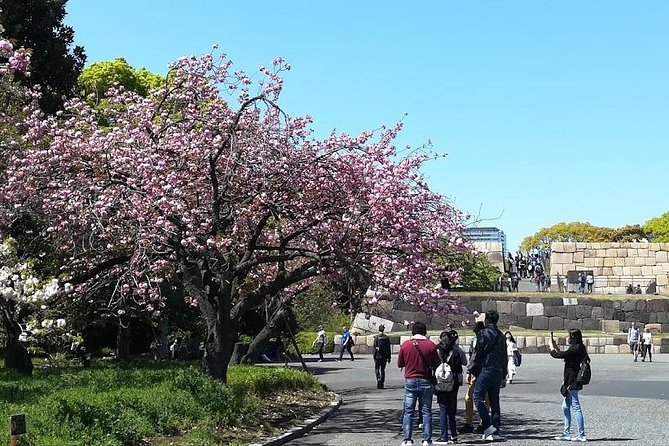
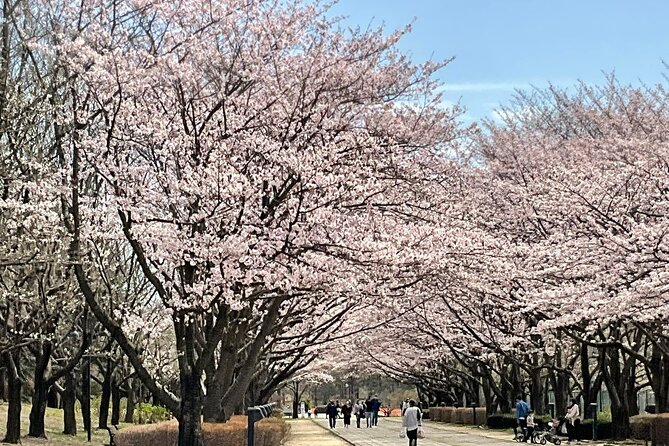
Your morning starts at the East Gardens of the Imperial Palace, on the site of the old Edo Castle. This stop matters because it gives you a different kind of cherry blossom view—more open space, calmer walking, and a sense of scale you don’t always get in temple crowds.
Plan for a relaxed stroll. You’re in a green pocket at the center of Tokyo, surrounded by moats and stone walls. It’s also described as covering 90 hectares and functioning like a lung for the city, which helps you understand why this area feels so different from the narrow streets elsewhere on the route.
Practical upside: admission is free for this stop, and it’s a strong “anchor” that keeps the day grounded before you hit the more intense crowds of markets and historic streets.
Small consideration: depending on when you go, blossoms here may already be past their prime. The operator has been known to swap plans when the timing shifts—if the Imperial Palace blooms are nearly done, your guide may pivot to another garden with later bloom potential (for example, Hama-Rikyu Garden is specifically mentioned as a late-season option).
Tsukiji: Market Energy Plus Time to Eat Sushi
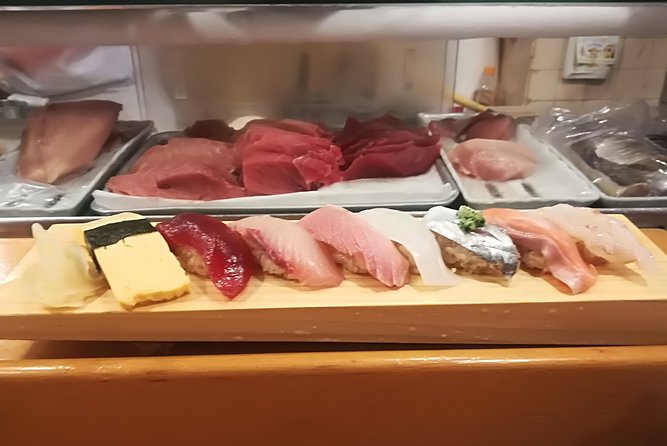
Next comes Tsukiji, and this is where the tour earns its keep if you like food as much as flowers. The vibe here is loud in a good way: narrow lanes, grills going, and the smell of seafood and street snacks mixing in the air.
You get about an hour here. That’s enough time to see the market energy and still enjoy a meal. The tour is designed for a sushi break—you’ll have options, and the stop is framed as a chance to eat as part of your experience.
Important budgeting note: lunch isn’t included, so while you’ll have time to eat sushi and other market items, you’ll want to bring cash or card for your own meal. Also, Tsukiji-style food can run the gamut from quick bite-size stuff to sit-down options, so deciding what you want early helps you avoid rushing at the end.
What I’d watch for: lines. The market is the kind of place where popular snack items can come with queues, especially in peak cherry season when everyone wants a photo and a bite. Having a guide to point you toward efficient choices can save time—especially when you’re also trying to reach the next historical stops.
Senso-ji Temple and Nakamise Street: Cherry Trees, Old Tokyo, and Shopping You’ll Actually Use
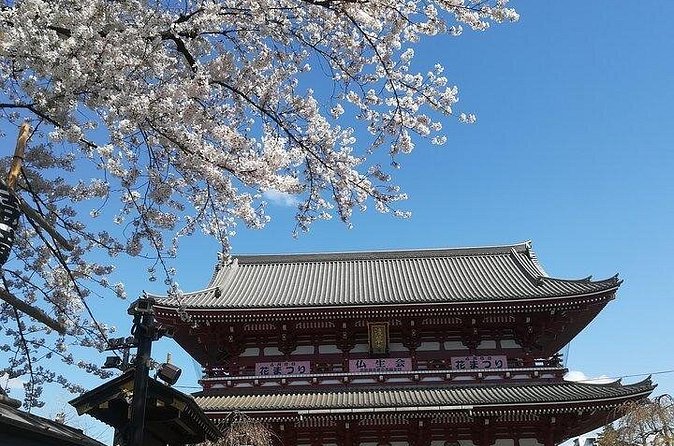
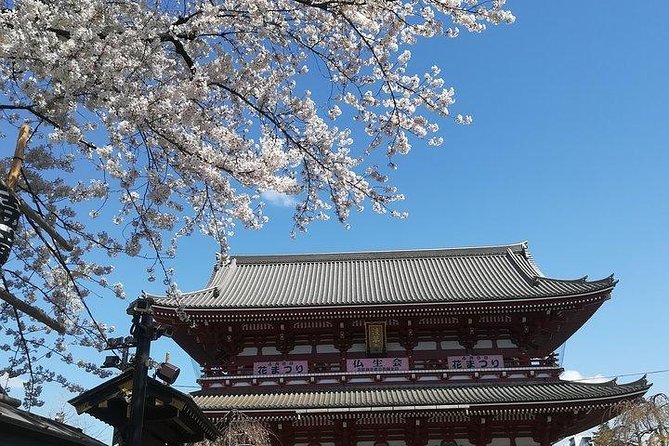
Then you move to Senso-ji Temple, one of Tokyo’s best-known old temples. Your visit is about two hours, which is a smart allotment. It gives you time to walk the grounds without feeling like you’re sprinting from one photo spot to another.
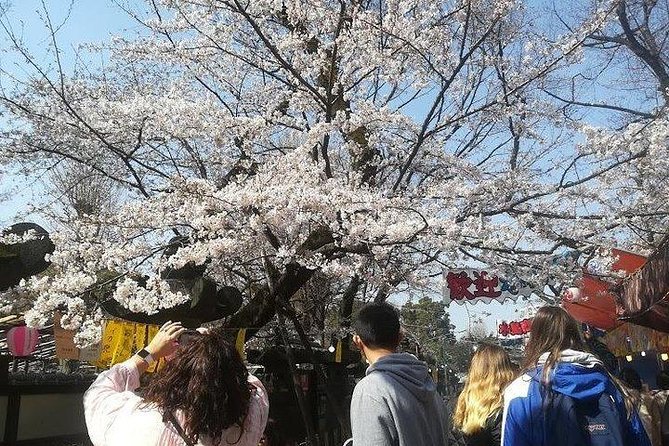
This is also the moment where cherry blossom season becomes more than a backdrop. Expect blossoms around the temple area and a classic path of movement as people filter in and out. After seeing the temple sights, you’ll head into Nakamise Street, the long shopping stretch from the Thunder Gate area. It’s famous for traditional souvenirs, snacks, and everyday Tokyo-travel buys.
This stop is a good value for you if you care about culture and not just sightseeing. Temple architecture, the rhythm of visitors, and the way the street supports the temple all help you understand how these places function in real life.
Possible drawback to keep in mind: Senso-ji is popular. If you hate crowds, you’ll want to treat this as an experience to manage, not something to “escape.” A guide helps you navigate the flow so you’re not constantly checking where to go next.
Ueno Park: Thousand-Tree Views and the Tokugawa Connection
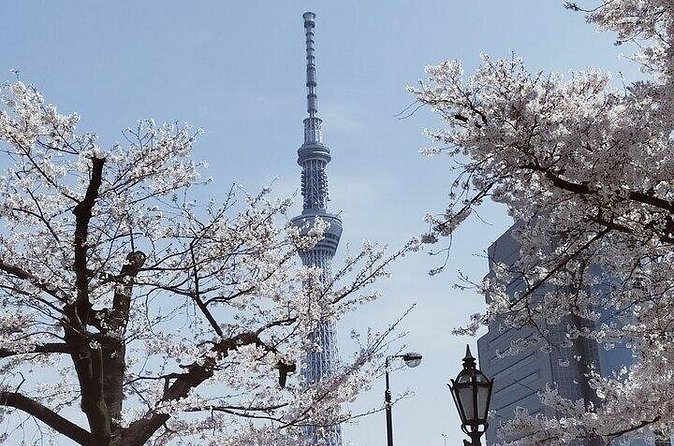
After Senso-ji, you’ll head to Ueno Park for about one hour. This is a cherry blossom star, described as lined with more than a thousand cherry blossoms. That’s the kind of scale where even a short walk feels like a full scene.
Ueno also adds structure and context. You’ll see areas tied to the Tokugawa family, including remaining sites such as Ueno Toshogu and Kiyomizu Kannnon temple, plus Shinobazu pond in the park area. That combination—big cherry views plus specific historic anchors—makes the sightseeing feel intentional.
Practical tip: if you want photos, pick a spot where people naturally flow past you. In parks like this, your best shots often come from standing where sightlines open up rather than trying to find a perfect empty frame. Your guide can help you choose a location that doesn’t require squeezing through a knot of people.
How this stop fits the day: Ueno is a breather between the intense historic street time of Asakusa and the more everyday energy of Ameyoko. If you’re the type who gets tired from constant walking, you’ll appreciate that Ueno’s open-space pace is easier to handle.






Ameyoko Shopping Street: The Local-Feel Finale in Downtown Tokyo
The last major stop is Ameyoko (Ameya Yokocho) Shopping Street, about one hour. This is not a museum. It’s downtown Tokyo in motion—an arcade with shops selling fresh fish, food, daily goods, and souvenirs.
What makes this ending feel good is contrast. You’ve spent the morning in imperial grounds, an old temple, and a big park. Here, you get the everyday side: locals and visitors eating and drinking at food stands while browsing everything from snacks to small gifts.
If you want practical souvenirs (tea, snacks, keychains, small household items), this is the kind of place where you’ll actually find stuff worth carrying home. And if you’ve still got appetite after Tsukiji, Ameyoko can fill that gap fast.
One thing to remember: arcades are tight. Wear shoes you don’t mind scuffing a bit, and keep an eye on bags in crowded sections.
Public Transportation Help: The Real Hidden Value
The tour includes help for using public transportation, plus the promise of being near transit. Even with smartphone maps, Tokyo can be confusing under pressure—especially when you’re trying to hit multiple stops before crowds peak and cherry blossoms reach full swing.
That’s why this feature is more than a checklist bullet. When you have a guide handling routes and timing, you can focus on what you’re actually there for: looking, asking questions, and moving at a pace that won’t exhaust you by late morning.
Also, you’re not stuck figuring out logistics for every transfer. And because it’s a private tour, you’re not sharing attention with strangers who might move at a different speed than you do.
Price and Value: Is $221.12 Worth It?
At $221.12 per person, this isn’t a budget tour. But for Tokyo in cherry season, you’re paying for two things that add up quickly: a licensed guide and the time-saving value of a well-timed morning route.
Here’s how I’d judge the price:
- You’re covering multiple high-demand areas in one pass, including Imperial Palace East Gardens, Tsukiji, Senso-ji, and Ueno Park, plus a lively stop in Ameyoko.
- You’re getting private attention and the chance to have your route adjusted by seasonal realities.
- You’re getting transport guidance and a structure that makes the day easier than DIY planning.
What’s not included matters too:
- Lunch isn’t included, so you’ll spend for your food at Tsukiji (and possibly again later).
- Private transportation isn’t included. Pickup may be offered, but you shouldn’t expect a car service for the whole route.
My bottom line: if you’re short on time, want cherry blossoms plus food plus historic context, and don’t want to spend your day fighting Tokyo transit, the price can be fair. If you’re traveling with low interest in guided context and you already know the neighborhoods well, you might DIY cheaper. But in peak season, the time and stress savings are real.
What to Expect: Timing, Pace, and Comfort
The tour runs about 6 to 7 hours, starting around 9:00 am. You should be ready for walking and standing. The tour lists moderate physical fitness as the expectation, which is travel-speak for: comfortable shoes, don’t plan on marathon energy, and be fine with crowds in certain areas.
Admission tickets are free for the listed stops in the itinerary, so your major costs come from food (since lunch isn’t included) and any optional purchases.
You’ll also get a mobile ticket, which is convenient if you prefer not to deal with paper confirmations. And because this is a private activity, it’s just your group.
Should You Book This Cherry Blossom Highlights Tour?
I’d recommend booking if you want:
- A fast, well-structured way to see cherry blossoms in multiple iconic Tokyo areas
- A food-friendly plan with Tsukiji and time for sushi
- Help navigating Tokyo with public transportation guidance
- A private experience where the guide can answer questions and adjust pacing
I’d think twice if:
- You’re very sensitive to language barriers and need very smooth English explanations at every stop
- You hate crowds and want mostly empty, quiet spaces (Senso-ji and market areas are busy)
- You want lunch fully handled for you (it isn’t included)
If you’re flexible and you’re traveling during cherry season, this tour is a strong way to turn a short morning into a complete Tokyo snapshot—imperial calm, market noise, temple drama, park cherry views, and downtown shopping energy.
FAQ
How long is the cherry blossom highlights tour?
It runs about 6 to 7 hours.
What time does the tour start?
The start time is 9:00 am.
Is pickup offered?
Yes, pickup is offered.
Is this tour private?
Yes. Only your group participates.
Is lunch included?
No. Lunch is not included, even though you’ll have time at Tsukiji to enjoy sushi options.
Are entrance fees included?
Admission is listed as free for the stops in the itinerary.
Does the tour include a guide?
Yes. A licensed tour guide is included.
What happens if the weather is bad?
The experience requires good weather. If it’s canceled due to poor weather, you’ll be offered a different date or a full refund.
Is the tour suitable for all fitness levels?
It calls for travelers with moderate physical fitness.