REVIEW · TOKYO
Private Car Mt Fuji and Gotemba Outlet in One Day from Tokyo
Book on Viator →Operated by Japan Star Travel Agency · Bookable on Viator
Mt. Fuji in one day is a puzzle. This tour turns it into a plan—with a private car, a local guide, and stops built around the best photo angles and easy pacing. I like that it’s fully customizable (so you’re not stuck at a cookie-cutter schedule), and I also like that you get private, stress-free transport straight from your Tokyo hotel. The only real drawback: you’ll need to choose wisely, because trying to cram too many optional stops can make the day feel rushed.
The Fuji part is strong. You’ll target the Arakura Sengen area for the classic Chureito Pagoda view, then build in Lake Kawaguchi time plus optional adds like the ropeway or 5th Station (season rules apply). The Gotemba side is just as intentional: you start with outlet shopping at Gotemba Premium Outlets and control how long you stay.
If the day is cloudy, visibility can’t be forced. The tour won’t be cancelled for weather, so your value comes from having multiple viewpoints and a guide who can shift the plan without making you scramble.
In This Review
- Key things I’d circle before you book
- A Tokyo day trip that doesn’t feel like a sprint
- Price and logistics: what $1,255.38 buys you (and why it can be worth it)
- Gotemba Premium Outlets first: shopping time that actually has a spine
- Arakura Sengen Shrine and Chureito Pagoda: the photo stop that earns its minutes
- World Heritage Center and the Mt. Fuji ropeway: easy wins when visibility shifts
- Fujisan World Heritage Center
- Mt. Fuji Panoramic Ropeway
- Lake Kawaguchi break: flowers, ice cream, and shoreline breathing room
- Fuji Oishi Hana Terrace
- Oishi Park
- Oshino Shinobi no Sato (optional)
- Oshino Hakkai
- Kitaguchi Hongu Fuji Sengen Jinja Shrine
- Lake Kawaguchiko
- Saiko Lake
- Optional adventure stops in Aokigahara: caves and forest time
- The big decision: Mt. Fuji 5th Station (toll, timing, and season limits)
- Extra seasonal options: snow and ski time on Fuji
- How guides make the day work: flexibility and real pacing
- Practical tips so your Fuji day feels good, not frantic
- Should you book this private Mt. Fuji and Gotemba day?
Key things I’d circle before you book
- Private pickup and drop-off in an air-conditioned minivan saves you from train transfers and timing stress.
- Arakura Sengen / Chureito Pagoda viewpoints are timed as quick, high-impact photo stops.
- You pick around 4 to 6 sites from a longer list, which keeps the day realistic.
- Gotemba Premium Outlets shopping with free admission gives you room for real retail time.
- Optional add-ons like the ropeway, Oshino Shinobi no Sato, and cave experiences let you dial adventure up or down.
- 5th Station is optional but time- and season-sensitive, with a toll paid on the spot.
A Tokyo day trip that doesn’t feel like a sprint
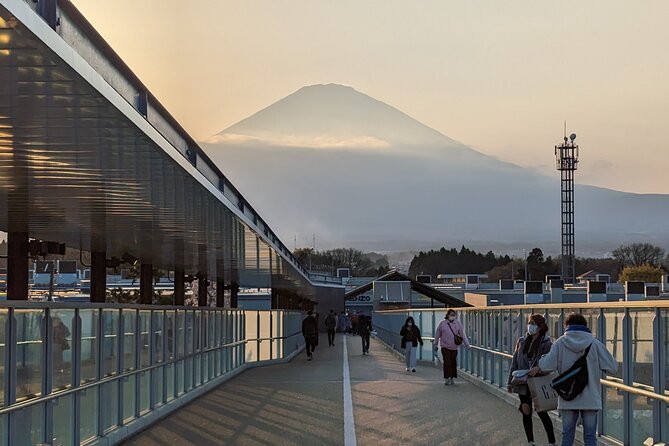
Tokyo to Mt. Fuji is one of those trips that can either feel magical or exhausting. The magic part is obvious—you’re aiming for Mt. Fuji views that are hard to get on your own in one day. The exhaustion part is also real—transport plus crowded stops can turn “quick photo” into “where did the day go?”
This is built to avoid that second scenario. You start with hotel pickup and go out with a guide and driver in a private minivan. That means you’re spending your energy on the views and the sites, not on navigation, transfers, and timing.
Also, this isn’t a one-size itinerary. The day is structured around major landmarks, but you’re meant to choose about 4 to 6 sites so it matches your pace. That’s huge if you’ve got kids, seniors, mobility needs, or you just don’t want to constantly check your watch.
You can also read our reviews of more private tours in Tokyo

Price and logistics: what $1,255.38 buys you (and why it can be worth it)
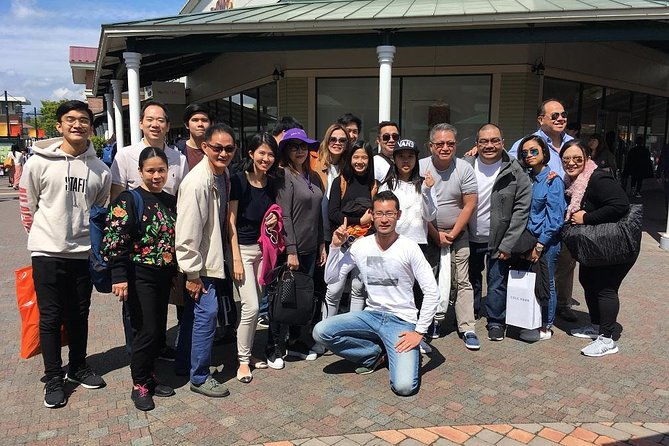
The price is listed as $1,255.38 per group (up to 8), with a tour length of about 10 to 11 hours. That’s not cheap when you think per person. But you also shouldn’t compare it to per-person bus tours, because this is a private van deal.
Here’s where the value shows up:
- Private round-trip transport: you’re paying for convenience at a level buses can’t deliver.
- A guide included: English/Japanese/French speaking local guide is included, and Chinese/Korean is available upon request.
- Small extras that reduce hassle: hotel pickup/drop-off, bottled water, and even a DVD player in the vehicle.
- Flexible stop selection: you can pick what matters to you instead of spending time on a fixed “must-see” list.
A practical way to think about it: if your group is 6 to 8 people, this private format can start to feel less like a splurge and more like paying for a smooth day that you don’t have to micro-manage.
One note on commitment: the tour won’t be cancelled or refunded if some spots aren’t fully visible due to weather, and the schedule can shift for weather or traffic. That makes planning smarter—you’re paying for access and guidance, not guaranteed clear skies.
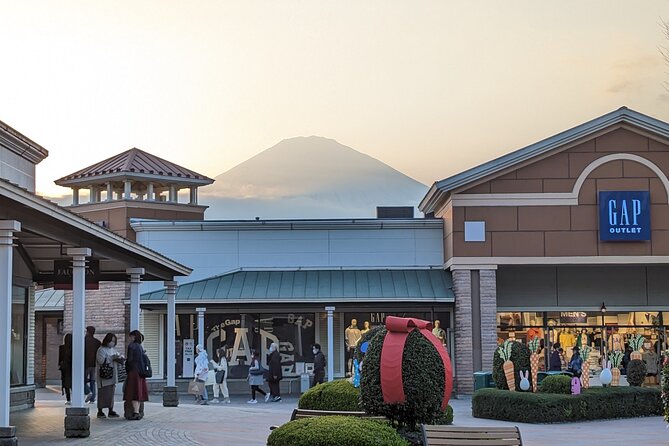
Gotemba Premium Outlets first: shopping time that actually has a spine
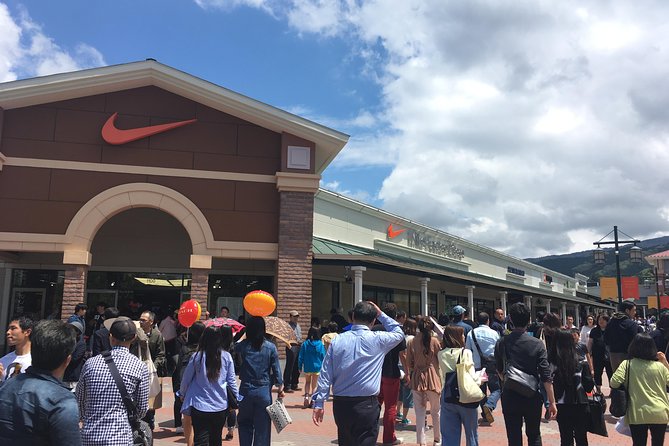
Starting with Gotemba Premium Outlets is a smart move for a couple reasons.
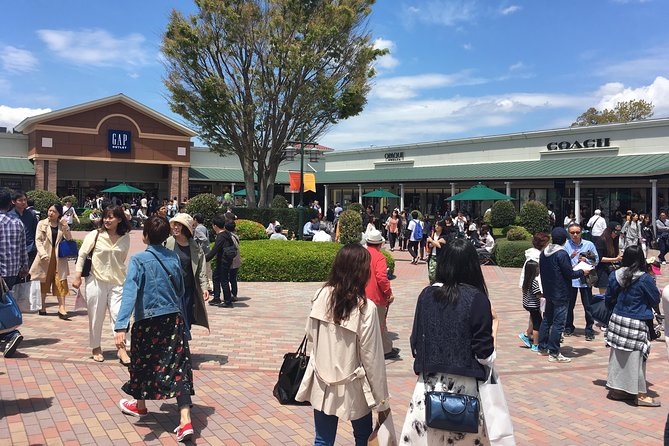
First, outlet shopping is easier when you’re fresh and arrived early-ish instead of later in the day when everyone’s tired. Second, Gotemba is huge, with 270+ stores (the listing says over 270, and it’s also described as the biggest outlet mall in Japan). If you’ve got specific brands or just want to browse, having a meaningful chunk of time matters.
The tour notes admission is free, and you tell the guide how long you want to shop. In practice, this is where your guide becomes your time manager. If you want 45 minutes for browsing and essentials, you can do that. If your group has a shopping mission, you can stretch it so you don’t feel like you’re shopping at speed.
If you’d rather prioritize Fuji photo time over shopping, you should ask early about adjusting how the day flows. This tour is described as customizable, and guides are expected to tailor the day.
Arakura Sengen Shrine and Chureito Pagoda: the photo stop that earns its minutes
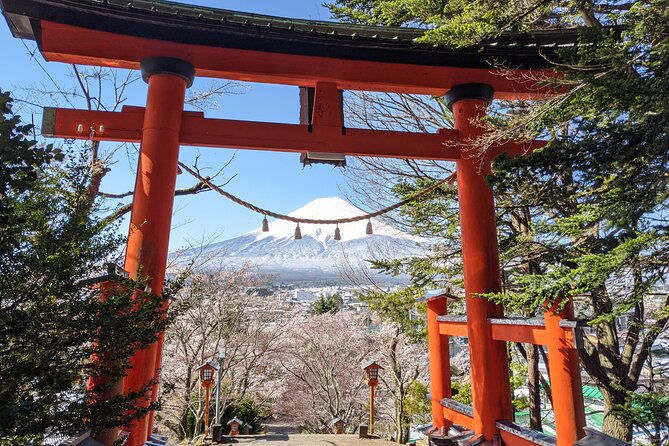
The Arakura area is where Mt. Fuji photography legends are made. You’ll hit:
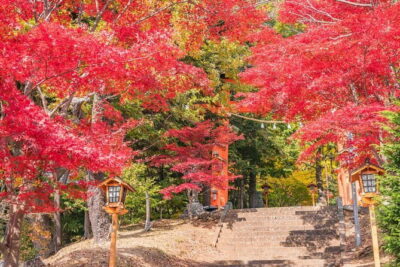
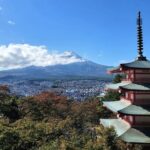
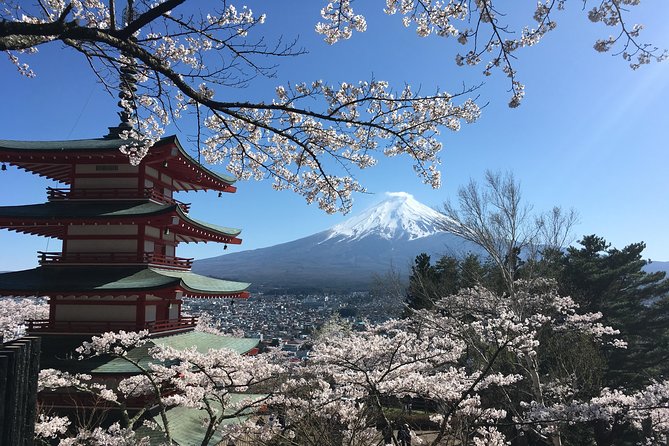
- Chureito Pagoda at Arakura Sengen Shrine
- Arakura Fuji Sengen Shrine
- Arakurayama Sengen Park (another high-demand panoramic spot)
These are short stops—think 10 minutes each for the pagoda and shrine-type points. That sounds brief until you remember the goal: clear, iconic views without wasting hours in transit. The guide helps you get oriented quickly, which is exactly what you want at a viewpoint where lines and angles can shift.
What I like about this block is the layering. You’re not seeing one view and leaving. You’re hitting multiple points that relate to the same shrine complex area, so you get variations in framing. If you get a Fuji sighting, you’ll likely spot it multiple times from slightly different angles.
The tradeoff is simple: if the weather is off, these stops can become “beautiful area, partial views.” You’re still in a meaningful religious landscape, but the wow factor depends on visibility. That’s why you want the rest of the day to include other chances at views.
World Heritage Center and the Mt. Fuji ropeway: easy wins when visibility shifts
After the shrine/pagoda sprint, the day adds softer pacing with two options:
You can also read our reviews of more tours and experiences in Tokyo




Fujisan World Heritage Center
This is a 20-minute stop (the listing allows 20 to 60 minutes). You watch a video and learn visually about Mt. Fuji and local rituals connected to the region. This kind of stop sounds optional—until you’re standing in front of a sacred mountain and you realize you’re seeing more than scenery. It helps you read the place instead of just photographing it.
Mt. Fuji Panoramic Ropeway
Then comes the payoff for views. The ropeway can take 30 to 90 minutes depending on queue times. The ropeway ticket is not included, so plan for extra spending if you add it.
If you’re the type who wants a higher vantage without hiking, this is a good fit. If you hate waiting in lines, your guide can help you decide whether the ropeway is worth it that day—especially if weather is changing.
Lake Kawaguchi break: flowers, ice cream, and shoreline breathing room
Once you move toward the lake area, the tour slows down in a good way. This is where you get breathing room and a mix of viewpoints, gardens, and relaxed stops.
Fuji Oishi Hana Terrace
A short 20 to 90 minute stop for regional crafts and souvenirs, plus ice cream and fruit-based sorbets. This is the kind of place you visit for a break, a snack, and a stroll—less “rush to the perfect shot,” more “sit, look, and enjoy.”
Oishi Park
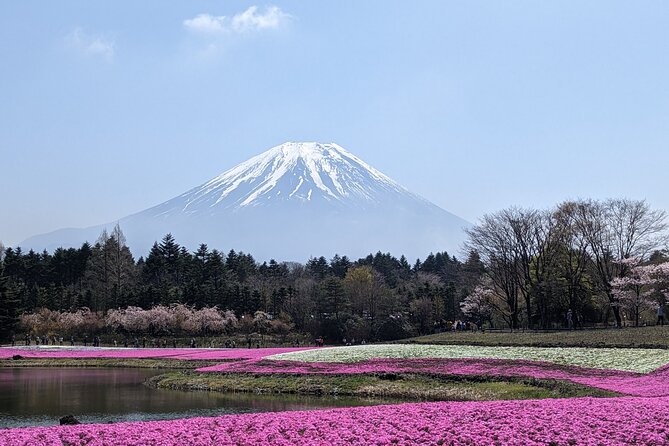
A garden stop (20 to 90 minutes) known for lavender. It’s also described as having flowers across the seasons. In plain terms: it’s another viewpoint chance that’s not tied to one single landmark angle.
Oshino Shinobi no Sato (optional)
This is 30 to 90 minutes, and tickets are not included. It’s a ninja show experience—exactly the kind of stop that can keep kids (and kid-at-heart adults) happy while you’re in a long day.
Oshino Hakkai
A quick 10-minute visit, ticket-free. Oshino Hakkai is famous for its spring-fed ponds tied to Mt. Fuji’s volcanic water system. Even if it’s crowded, it’s quick and meaningful, and it fits a “short and efficient” schedule style.
Kitaguchi Hongu Fuji Sengen Jinja Shrine
Another ticket-free stop (30 to 60 minutes). This one is described as the main shrine in the northern part of Mt. Fuji, and also noted as a first step for worship before ascending Mt. Fuji. It’s a cultural pause that adds depth without eating your day.
Lake Kawaguchiko
A 30-minute stop by the lake, ticket-free. This is your classic “stand near the water and reset” moment. If the mountain is visible, the lake area gives you a different relationship to the view than the Arakura heights.
Saiko Lake
A ticket-free 30-minute stop for Saiko, also described as the “maiden lake.” It’s another way to diversify your Fuji-view chances without repeating the exact same scenery.
Optional adventure stops in Aokigahara: caves and forest time
If you want more than viewpoints and shopping, the tour includes Aokigahara Forest and cave options. These are great for adding variety to a day that can otherwise become “photo stops.”
You may include:
- Narusawa Ice Cave (ticket not included, 15 to 30 minutes)
- Fugaku Wind Cave (ticket not included, 15 to 30 minutes)
- Aokigahara Forest hiking (ticket-free, 30 minutes)
- Saiko Bat Cave (ticket not included, 30 minutes)
The listing frames these as adventures in forest and caves with short time windows. That matters. Short windows keep it doable inside a day trip even if you move slower.
The forest walk is ticket-free, but don’t assume it’s a casual stroll. Aokigahara is known as a forest area—so it’s cooler than the city, but it’s still outdoors. Wear shoes you trust.
A fair heads-up: cave tickets are not included, so this is the part where your final day cost can increase. Your guide can help you pick which cave(s) match your group’s interest so you don’t pay for experiences you don’t use.
The big decision: Mt. Fuji 5th Station (toll, timing, and season limits)
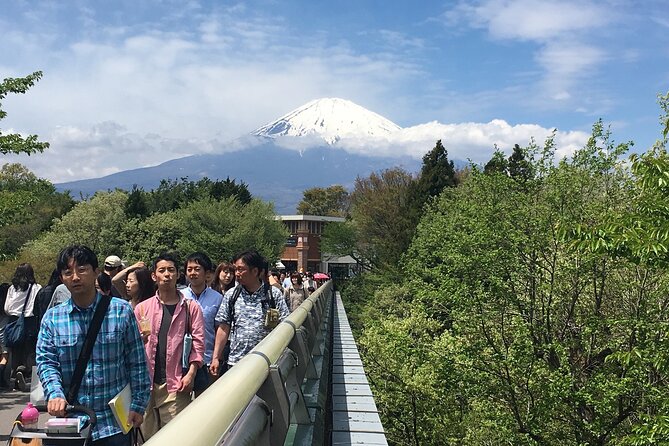
The tour includes a stop at Mt. Fuji 5th Station. It’s described as the highest point you can go by car, at 2300 meters.
Here are the key rules you should know before you assume this will happen:
- You pay a toll fee of 2100 yen on the spot.
- The stop usually takes about 2 hours.
- Access is closed from July to mid-September (climbing season) and also in winter.
In other words, if you’re booking in summer, late fall, or winter, you should treat 5th Station as an “only if the day allows it” option rather than a guarantee.
When 5th Station is open, it’s the strongest “I’m really on Fuji territory” experience in a one-day format. But even with a guide, you’ll want to plan around time. This stop is long compared to the pagoda and shrine minutes, so it will shape what you can include elsewhere.
Extra seasonal options: snow and ski time on Fuji
The itinerary also mentions winter possibilities: snow and skiing on Mt. Fuji with easy courses for beginners plus rental outfits for ski, snowboard, and sleds. It’s described as 1 to 2 hours depending on your requests.
So if you’re traveling in the colder months and want your Fuji day to be active, this is an angle worth asking about. If you’d rather stick to viewpoints and gardens, you can skip these and keep the schedule calmer.
How guides make the day work: flexibility and real pacing
This tour leans hard on the guide role. It’s described as operated by local Japanese staff, and the guide is there not just to narrate, but to manage the day.
In real-world terms, that means:
- If Mt. Fuji is clear, you lean into photo-heavy stops.
- If the weather shifts, you use the day’s variety—shrines, lake time, flowers, world heritage learning, shopping—so the trip still feels full.
- You get help adapting to your group needs, including multi-age families.
I also like that guides are reported to be patient and accommodating with different group situations. That matters on a day trip where you have to manage stairs, crowds, and timing without snapping the schedule.
If you have dietary needs, the tour notes a vegetarian option is available and you should advise in advance.
One more small but useful note: there’s no included lunch. Your guide may suggest where to eat, and the day feels much smoother when you’ve given them a basic direction like budget level and dietary preferences.
Practical tips so your Fuji day feels good, not frantic
A few things can make this trip a lot better:
- Choose your 4 to 6 sites thoughtfully. If you select too many, you’ll spend more time in the car than you want.
- For ropeway and cave stops, assume tickets aren’t included where marked. Build a little extra budget.
- Bring layers. Even on a clear day, lake and mountain areas can feel cooler than Tokyo.
- Be ready for schedule shifts due to weather or traffic. The tour isn’t designed to “freeze time”—it’s designed to keep you moving toward a good day.
Also, this is a private tour and you’ll travel as one group. That makes it easier to keep conversations flexible and to adjust when someone needs a bathroom break or a slower pace.
Finally: if you’re planning this trip, it’s booked in advance (often around 50 days ahead), so don’t wait until the last minute if Mt. Fuji is a priority.
Should you book this private Mt. Fuji and Gotemba day?
I’d book it if you want a one-day Mt. Fuji experience that’s more than a hit-and-run. The private minivan, hotel pickup/drop-off, and the chance to combine sacred Mt. Fuji viewpoints with real shopping make the day practical. I’d also book it if your group includes different ages or needs, because the tour is built around flexible stop selection and guide-led pacing.
I wouldn’t book it if you’re chasing only one thing—like a guaranteed perfect Mt. Fuji view. The day’s visibility can’t be controlled, and the tour doesn’t promise refunds if weather ruins the mountain photos. In that case, you’d be happier with a plan that allows more days in the area.
Best fit: couples, families, and small groups who want value in convenience, plus enough structure to keep a long day from falling apart.