REVIEW · TOKYO
Tokyo: 1.5-Hour Edo Kiriko Glass Cutting Workshop in Sumida
Book on GetYourGuide →Operated by Roomy's Inc · Bookable on GetYourGuide
Tokyo’s cut-glass craft is hands-on, not just museum-style.
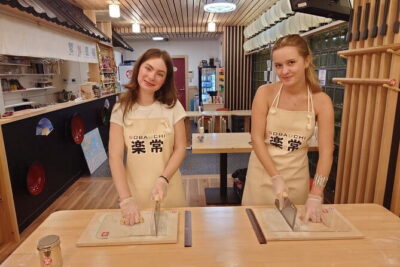
In Sumida, you’ll step into a working Edo Kiriko studio, watch artisans demonstrate, then cut your own design with pro tools under an English-speaking guide. What makes it especially fun is that you’re not only observing a tradition you’ll later read about, you’re doing the focused work that explains why Edo Kiriko costs what it does.
I love how the workshop uses a practice-first approach before you commit to your final piece. I also like the small-group feel, capped at 4 participants, which keeps the experience calm and lets explanations land.
One thing to consider: it’s not a quick one-and-done souvenir. If you’re expecting lots of step-by-step supervision for every micro-move, you may want to arrive with patience, because the format gives you freedom to experiment even while you learn safe technique.
In This Review
- Key things to know before you go
- Edo Kiriko in Sumida: what you’re making and why it’s special
- The 90-minute flow: from watching to cutting to bringing it home
- What adults cut vs. what kids make (and how supervision works)
- The studio and the guidance: English support, safety, and the right pace
- The shop after class: seeing Edo Kiriko in context
- Price and value: is $122 reasonable for what you get?
- Who this is best for (and who should skip it)
- Tips to make the most of your session
- Should you book this Edo Kiriko glass cutting workshop in Sumida?
- FAQ
- How long is the Edo Kiriko glass cutting workshop?
- Where does the workshop take place?
- What can adults make in this workshop?
- What can elementary school children make?
- What is the minimum age to join?
- Is there an English-speaking guide?
- Is the group size small?
- Is hotel pickup included?
Key things to know before you go
- Working studio energy in Sumida: you’re in an active glass-cutting space, not a staged demo room
- Practice glasses first: you get a trial run so you understand the tool feel before the real cut
- You choose from daily-changing glass: each piece is one-of-a-kind, so your results will be yours
- Age-based making assignments: adults and older kids cut drinking glasses; younger kids make lidded containers
- Small group (max 4): it’s designed to keep the class manageable and guided
- Take-home craftsmanship: you end with a finished Edo Kiriko piece, not just photos
Edo Kiriko in Sumida: what you’re making and why it’s special
Edo Kiriko is Tokyo’s cut-glass tradition, and the cool part is how physical the process feels. You’re not painting or assembling. You’re shaping a design by scoring and cutting glass with a tool, using technique and steady handwork.
In this workshop in Sumida, the craft is presented in the way it’s meant to be understood: up close. The session starts with you watching artisans at work in a real studio, so you see how experienced makers control pressure and angles. Then you practice, so you get past the first-ten-minutes panic of holding a sharp tool near something fragile.
The practical takeaway for you: by the time you finish, you’ll understand why Edo Kiriko isn’t just a pretty pattern. It’s a skill, and a lot of small choices add up.
You can also read our reviews of more tours and experiences in Tokyo


The 90-minute flow: from watching to cutting to bringing it home
The workshop runs about 90 minutes and moves in stages that make sense for beginners.
First, you observe the craft in action.
You’ll see artisans demonstrating traditional glass-cutting methods. This isn’t just visual spectacle. The point is to show the logic of the work: where cuts go, how lines are planned, and what safe technique looks like in practice.
Next comes tool practice.
Before you cut your final piece, you practice with the tools using test material. This is one of the most praised parts of the experience because it lowers the pressure. You get a feel for how the tool interacts with glass and what kind of focus the craft requires.
Then you choose your glass from the studio’s stock.
You select your own glass before you start cutting, and the available pieces change daily. That means you’re not picking from a static catalog. For you, that translates into more variety and more of a real-workshop vibe. It also means no two finished pieces will be exactly alike.
After you cut your design, you take it home.
You leave with the finished Edo Kiriko piece. That’s a big value point: you’re buying a skill-shaped souvenir, not just a mass-produced item. Even if you later decide you’re not the kind of person who wants to craft often, this is the kind of make-it-once experience that sticks.
What adults cut vs. what kids make (and how supervision works)
This workshop has clear age rules, and they matter because the making project changes.
- Adults and middle school students cut a drinking glass.
- Elementary school children work on a lidded container.
- The activity is suitable for participants from 4th grade elementary school and older, with an adult companion when children are participating.
Adults must accompany children. If you’re traveling with kids, that’s one of the simplest ways to plan your group: adults participate, and adult companions can observe without cutting if they’re not assigned to the cutting task.
There’s also a note that the workshop isn’t suitable for children under 9. So if you’re bringing younger kids, don’t just assume they’ll follow along. The tools and focus needed are part of the learning curve, and the format is built for kids who can handle that responsibility.
If you’re going as a group of friends without kids, you’ll likely enjoy the adult drinking-glass version most. It’s the classic showcase item for Edo Kiriko and feels like the most direct path to a recognizable result.
The studio and the guidance: English support, safety, and the right pace
You’ll learn safe glass-cutting techniques with Japanese and English support. That matters because glass work isn’t the place for confusion.
In practice, the workshop is guided but not overly rigid. You’re given freedom to experiment with how you make your cuts, which can feel refreshing if you’ve done classes where every move is micromanaged. At the same time, if you’re a total beginner, it can help to be ready to ask questions early rather than waiting until you hit a problem.
The tone also tends to be relaxed. Mistakes are part of the learning curve, and the workshop aims to keep you comfortable while you build control. That low-pressure vibe is a big reason the experience lands so well for first-timers.
Practical note for you: photography is allowed in designated areas. So expect a few moments where you can document what you’re doing, but don’t plan for unlimited filming everywhere.
The shop after class: seeing Edo Kiriko in context
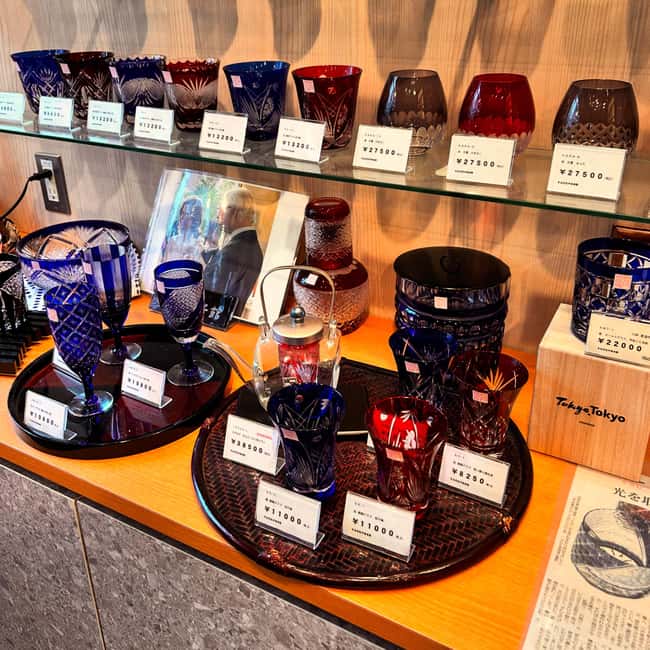
After the cutting session, you visit the on-site shop. This isn’t just a place to spend money. It’s where the craft’s visual language becomes clearer.
You’ll see Edo Kiriko items with classic motifs alongside items connected to modern branding and collaborations, including examples like Starbucks. It’s a useful reality check: Edo Kiriko isn’t stuck in the past. The design ideas stay rooted in tradition, but the visual world changes with contemporary partnerships.
If you enjoy craft culture, this part helps you put your own piece into perspective. You’ll recognize patterns and styles you’ve just handled, and you’ll understand which looks are easier and which are more work-heavy.
Also, since purchases aren’t included, you can treat the shop as inspiration. If your budget is tight, you can browse without committing. If you catch the bug, you’ll likely find items that match what you made.






Price and value: is $122 reasonable for what you get?
At $122 per person, this workshop is not a cheap activity. But it also isn’t overpriced in the way some craft tours are, where you mostly watch and leave with a tiny branded trinket.
Here’s the value math that matters:
- You get about 90 minutes of guided instruction.
- You get hands-on cutting using professional tools (with practice before the final piece).
- You choose your own glass from changing daily stock.
- You take home a finished Edo Kiriko piece.
- You have English support for the learning points.
Compared to buying a ready-made Edo Kiriko item, this workshop gives you the explanation behind the price. You’ll understand how time, accuracy, and skill shape the final look. And you’ll leave with something you can point to and say: I made that, in that studio.
If you’re the type who values experiences that produce a tangible keepsake, this cost tends to make sense. If you’re only looking for an easy photo stop, you’ll probably feel it’s too involved for the time and effort.
Who this is best for (and who should skip it)
This is a great fit if you want a craft experience that feels authentic and structured, without being intimidating.
You’ll likely love it if:
- you’re curious about Edo Kiriko and want to understand the process, not just see it
- you like small-group classes where questions actually get answered
- you want a take-home item with real meaning, not just a souvenir you’ll ignore later
It may be less ideal if:
- you’re traveling with someone who hates careful, tool-focused tasks
- you have very young kids who won’t handle the rules around age and supervision
- you’re expecting a highly controlled, step-by-step class for every movement
Tips to make the most of your session
These are the kinds of choices that usually make a difference in craft workshops, and they fit this one’s style.
Start by watching carefully during the artisan demonstration. You’re not trying to memorize every step, but you are trying to notice where the cuts begin and how the tool motion is controlled.
During the practice session, don’t rush. The practice-first design is built to help you get comfortable. If you use that time well, the final cut feels less stressful.
When you choose your glass, take a moment to think about how your design will show up on that particular piece. Because the stock is daily-changing, your starting material may not look like anything else in the shop.
Finally, if you want photo documentation, plan to ask. The workshop format allows photography in designated areas, and support staff are accustomed to helping with practical details while you work.
Should you book this Edo Kiriko glass cutting workshop in Sumida?
Book it if you want a real hands-on craft experience in Tokyo that ends with a finished piece you made yourself. The strongest reasons are the studio setting, the practice-first approach, and the fact that you’re guided in a way that keeps the mood relaxed while still teaching safe technique.
Skip it if your idea of a Tokyo activity is strictly low-effort sightseeing. This is a focused activity, and it rewards patience. It also has age rules, so families should check fit carefully for younger children.
If you’re deciding between buying Edo Kiriko and making it, I’d lean toward making it for most people. Even if you end up spending extra later in the shop, you’ll understand what you’re paying for after you’ve felt the process in your hands.
FAQ
How long is the Edo Kiriko glass cutting workshop?
It lasts about 90 minutes, in a guided session.
Where does the workshop take place?
It takes place in Sumida Ward, Tokyo, inside an Edo Kiriko glass studio.
What can adults make in this workshop?
Adults (and middle school students) cut drinking glasses.
What can elementary school children make?
Elementary school children cut lidded containers (with supervision).
What is the minimum age to join?
The workshop is suitable from 4th grade elementary school and older, with an adult companion for children. It’s also noted as not suitable for children under 9.
Is there an English-speaking guide?
Yes. The workshop includes English support, alongside Japanese.
Is the group size small?
Yes. It’s a small group limited to 4 participants.
Is hotel pickup included?
No. Hotel pickup and drop-off are not included. You’ll need to arrange your own way to the studio.