REVIEW · TOKYO
Experience Big soba knife Soba Making Class in Tokyo Kappabashi
Book on Viator →Operated by Sobagiri Rakujyo · Bookable on Viator
If you can slice, stretch, and cut noodles, you can learn this. This small-group soba-making class in Kappabashi turns a famous Japanese staple into a hands-on skill in about 50 minutes, with the best part at the end: tasting what you made. I love the clear, step-by-step flow (mix, knead, stretch, cut) and the fact you use a soba knife designed for long, thin noodles. The one thing to consider: this isn’t for anyone with a buckwheat allergy, since entry isn’t allowed.
You’ll be based in the Kappabashi Tool Specialty Store Street area in Asakusa, often called Tokyo’s kitchen town because chefs come to source real cooking gear. You’ll work at Open Kitchen Studio, where the class stays friendly and focused even if you don’t speak Japanese.
In This Review
- Key highlights that make this class worth your time
- Soba in Tokyo’s Kappabashi: what you’re actually buying
- The location game plan: Asakusa, Kappabashi, and the kitchen-tool street feel
- What happens during the soba class at Open Kitchen Studio
- Stop-by-stop: how the day moves (and why it matters)
- Asakusa start point: get situated and set your expectations
- Kappabashi Tool Specialty Street: learning in the right neighborhood
- Back to Asakusa: finish strong with your noodle snack
- The tools, the techniques, and the “I can do this” factor
- Tasting your soba: snack now, take-home later
- Extra options: matcha soba and sake pairings
- Dietary notes: vegan/no-pork and extra fees
- How the class size shapes the experience
- Value check: is this worth $51.33?
- Who should book this soba knife class (and who should skip)
- A practical way to plan this into your Tokyo day
- Should you book Sobagiri Rakujyo’s soba-making class in Kappabashi?
- FAQ
- How long is the soba making class?
- What’s the group size limit?
- Where is the class held?
- What’s included in the price?
- Are there any extra charges for dietary options?
- Can I upgrade with matcha soba or sake?
- What about allergies?
- Is a mobile ticket used?
- Is there free cancellation?
- FAQ
- Can service animals attend?
Key highlights that make this class worth your time
- Learn soba without wheat flour using buckwheat flour from Nagano Prefecture
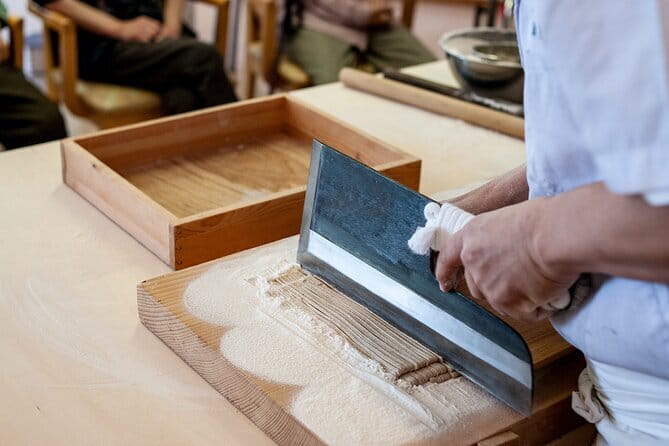
- Hands-on with proper tools, including a large knife made for soba
- 4 steps to noodle form in about 30 minutes: water, knead, stretch, cut
- Taste your noodles at the end, plus options to take them home
- Small-group feel (max 15) with aprons and gloves in different sizes
Soba in Tokyo’s Kappabashi: what you’re actually buying
For about $51.33, you’re not just watching someone cook. You’re making soba noodles yourself, then eating them soon after they’re cooked. The class runs around 50 minutes total, and it includes fees, taxes, and the snack/tasting component, plus aprons and gloves.
That price feels reasonable because it covers the whole “from scratch” experience. Many food classes in Tokyo can feel expensive once you factor in extra costs for tools, instruction, and food. Here, the core experience is bundled: you learn the process, you taste the result, and you leave with noodles you cut.
One more practical plus: this activity uses a mobile ticket. It’s simple to manage on your phone in a city where directions can change at the last minute.
You can also read our reviews of more tours and experiences in Tokyo

The location game plan: Asakusa, Kappabashi, and the kitchen-tool street feel
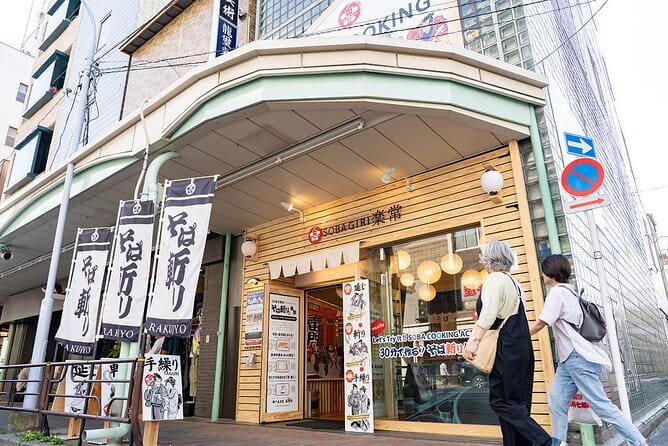
The class centers on Kappabashi, specifically the tool specialty shopping street area (Kappabashi Dogugai) in Asakusa. The studio is about 25 minutes from Sensoji Temple, so you can pair this with a classic Asakusa morning or afternoon without needing a long transit plan.
Here’s how I like to think about it. Kappabashi isn’t just “near Asakusa.” It’s a place where cooking is treated as a craft, not a hobby. Even if you only have a short time, the setting makes the training feel more real: you’re learning noodles in a neighborhood that genuinely cares about kitchen technique.
You’ll meet at Matsugaya (Taito City), at the Matsugaya Center Building address listed for this experience. After the class, the activity ends back at the same meeting point. So you’re not stuck figuring out where to go next while you’re holding a bag of noodles.
What happens during the soba class at Open Kitchen Studio
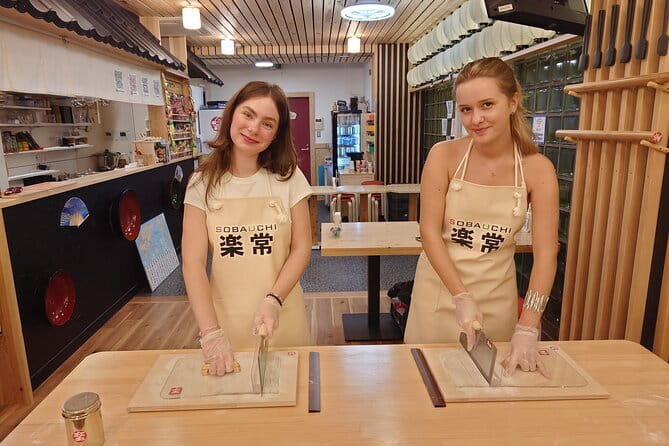
This class happens at Open Kitchen Studio in the Kappabashi area. You’ll work directly on soba-making techniques and you’ll learn the method using buckwheat flour from Nagano Prefecture.
The course is built around a 4-step workflow you can remember later:
1) add water
2) knead
3) stretch
4) cut
It’s taught in about 30 minutes, and then you’ll switch into tasting mode. That timing matters. If a class is too long, people lose attention and the noodles suffer. If it’s too short, you never get the hang of the texture. This one lands in the middle.
Also, the instruction is hands-on. You’ll be using a large soba knife designed for cutting, and that tool shapes the whole experience. Soba isn’t just “mix and boil.” Cutting is part of the texture story, and you’ll get feedback on getting the rhythm right.
Stop-by-stop: how the day moves (and why it matters)
Even though the total time is short, the class follows a simple rhythm that keeps you from feeling lost.
Asakusa start point: get situated and set your expectations
You begin in Asakusa near the meeting address in Matsugaya. In practice, this is helpful because you’re in a familiar zone for most Tokyo itineraries. It also makes the activity easy to combine with sightseeing earlier in the day.




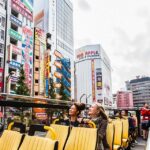
Kappabashi Tool Specialty Street: learning in the right neighborhood
Next is the Kappabashi Dogugai area. This is the “kitchen town” part of the experience. You’re not just learning soba in a random room; you’re in a food-focused setting where people treat tools as serious business. That context adds value even if you don’t spend time shopping.
The practical downside? Since the class is only about 50 minutes, you won’t have time for serious browsing. If you love buying knives and kitchen gadgets, plan a separate half-day trip to Kappabashi.
Back to Asakusa: finish strong with your noodle snack
After you cut, cook, and eat, the experience ends back at the meeting point. That keeps the day easy. You don’t have to hunt down transit with fresh noodles and a bag of leftovers.
The tools, the techniques, and the “I can do this” factor
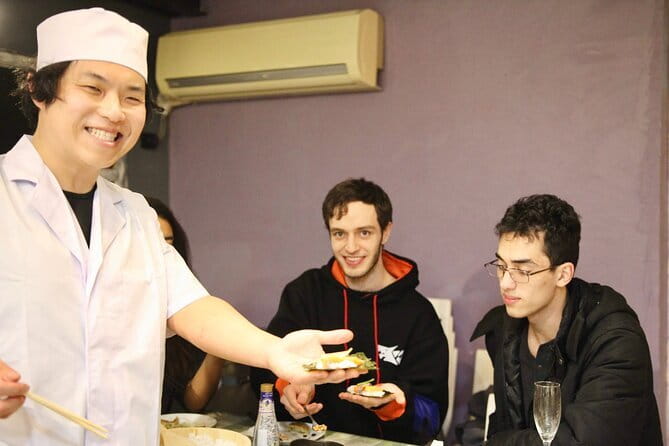
One of the most common reasons people love this class is how organized it feels. The process is clearly laid out, and you’ll practice the core steps rather than just doing one quick demo.
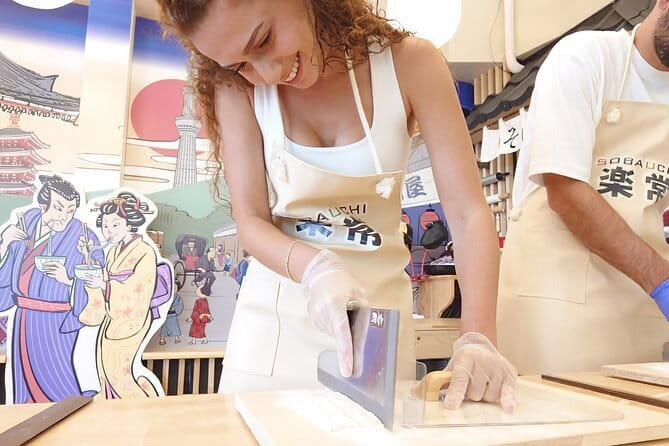
You’ll also get aprons and gloves in various sizes, which is not a small detail. Good food classes get the messy part right. Gloves and aprons help you focus on the technique instead of worrying about flour on your sleeves or hands.
The soba knife matters too. It’s specially designed for soba, and cutting long, thin noodles is a real skill. If you’ve never cut noodles before, it can feel slightly like learning calligraphy. You’re controlling pressure and speed, not just moving a blade.
Another real advantage I like: the instruction style is entertaining and easy to follow. Even when the instructor doesn’t speak English, the teaching stays practical. One thing I’d watch for is that your best learning comes from copying the instructor’s hand positions and motion, not from trying to translate every word.
Tasting your soba: snack now, take-home later
You’ll taste the soba noodles you cut. That’s a big deal because you can immediately connect technique to outcome. When your noodles cook well, you learn what “right” feels like. When they’re a bit imperfect, you still get feedback without the pressure of serving anyone else.
You can also take out the noodles you made. That means you’re not limited to one taste. If you’re traveling with a schedule, take-home noodles help you stretch the experience into a second meal later.
There’s also flexibility in flavors. You can try soba as a meal or snack in a variety of flavors. The details of every flavor aren’t listed here, but the key point is that your soba isn’t only one plain bowl.
Extra options: matcha soba and sake pairings
If you want to level it up, there are optional add-ons:
- matcha soba mixed into the soba flour for about ¥700
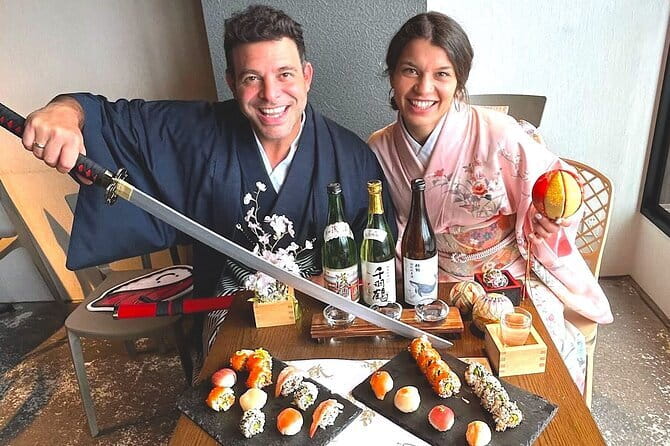
- sake for about ¥1500, with the owner selecting and comparing three types
This part is optional, so you can keep it simple if you’re on a tight budget. But if you enjoy Japanese food culture, these add-ons help turn a skill lesson into a full sensory experience.
Dietary notes: vegan/no-pork and extra fees
There’s an additional fee of 500 yen if you choose a vegan or no-pork flavor option. Plan ahead if you need that choice. It’s also wise to decide early because flavor options are part of the tasting component.
How the class size shapes the experience
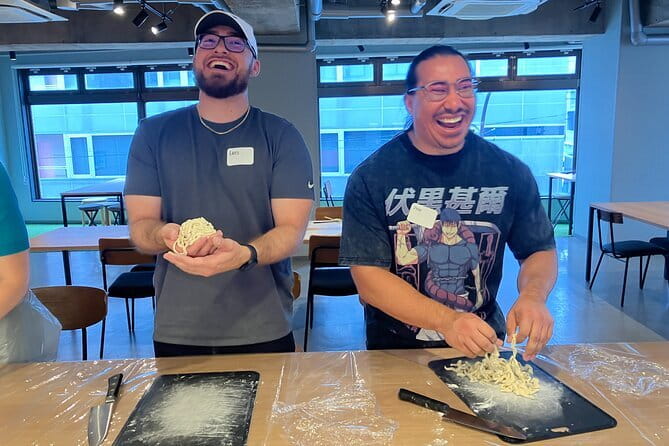
This is limited to a maximum of 15 travelers. That small group size is a practical win. It means you can get attention when you’re kneading or cutting, and you’re less likely to feel like one more person in a conveyor-belt cooking show.
The studio itself is on the spacious ground floor and can accommodate up to 30 people. That sounds contradictory until you realize it supports comfort: even with small groups, shared spaces feel less cramped. It also helps the group stay relaxed, which matters when you’re handling wet dough and sharp tools.
Value check: is this worth $51.33?
Here’s my honest value math. You’re paying for:
- instruction on authentic soba noodle technique
- hands-on practice with a soba knife
- aprons and gloves
- the tasting snack component
- and the chance to take noodles home
That’s a lot to fit into 50 minutes. If you compare this to buying ingredients and trying to learn soba from a guidebook, the class wins fast. You’re not just buying food. You’re buying technique, timing, and feedback.
The price can feel extra reasonable because the experience doesn’t load you with hidden “tool rental” or “you need to buy the ingredients separately” surprises. The only clear add-ons here are optional flavor upgrades (matcha soba, sake, and vegan/no-pork flavor choice).
So if your goal is a hands-on food memory you can repeat, it’s a solid use of your time and money in Tokyo.
Who should book this soba knife class (and who should skip)
This fits best if you want:
- a short, structured food activity with real skill practice
- something cultural but not overly fussy
- the chance to eat what you made
- a small-group vibe rather than a big crowd experience
It’s also a good family option. The store usage ranking lists couples first, families with children second, and groups of four or more friends third. That suggests the space and teaching style work across different ages and group types.
You should skip (or at least double-check rules) if you have a buckwheat allergy. Entry isn’t permitted for people with buckwheat allergies, and that’s non-negotiable since soba is buckwheat-based.
A practical way to plan this into your Tokyo day
If you’re building your own itinerary, I’d pair this with Asakusa nearby so you’re not zigzagging across the city. You’re about a 25-minute trip from Sensoji Temple, and the meeting/ending point keeps things tidy.
A good approach:
- schedule it when you’re not rushing to your next reservation
- eat light beforehand if you tend to get hungry fast, but remember you do get to taste the noodles
- bring your curiosity, not your expectations of instant noodle-perfect results
Also, if you want photos, this experience includes filming and photo-taking that gets sent to you. That helps if you’re solo or if you don’t want to spend your hands holding a phone while you’re learning to cut.
Should you book Sobagiri Rakujyo’s soba-making class in Kappabashi?
Yes, if you want a hands-on Tokyo food experience that stays focused and practical. I’d book it when you’re in Asakusa anyway or when you specifically want to learn an authentic Japanese technique in a short time window.
I’d hesitate only if you’re:
- extremely short on time and can’t spare the full 50 minutes
- sensitive to buckwheat (not allowed if you have an allergy)
- hoping for lots of free time to shop Kappabashi afterward (this is mainly a class, not a long wandering session)
If that sounds like you, this is a clean, skill-based choice with a tasty finish and real value.
FAQ
How long is the soba making class?
The class runs about 50 minutes (approx.), with the noodle-making process taught in about 30 minutes.
What’s the group size limit?
The experience has a maximum of 15 travelers.
Where is the class held?
It takes place at Open Kitchen Studio in the Kappabashi area in Asakusa. The meeting point address is in Taito City, Matsugaya (Matsugaya Center Building).
What’s included in the price?
The price includes all fees and taxes, snacks/tasting of the soba you cut yourself, and aprons and gloves in various sizes.
Are there any extra charges for dietary options?
Yes. An additional fee of 500 yen applies if you choose a vegan or no-pork flavor option.
Can I upgrade with matcha soba or sake?
Yes. Matcha soba is available as an option for about ¥700, and there is also an option for three types of sake for about ¥1500.
What about allergies?
Those with buckwheat allergies are not permitted to enter the restaurant.
Is a mobile ticket used?
Yes, the experience uses a mobile ticket.
Is there free cancellation?
Free cancellation is available. You can cancel up to 24 hours in advance for a full refund.
FAQ
Can service animals attend?
The experience allows service animals.