REVIEW · TOKYO BAY
Tokyo Bay: Traditional Japanese Yakatabune Dinner Cruise
Book on GetYourGuide →Operated by H.I.S. Co Ltd(TIC) · Bookable on GetYourGuide
Tokyo’s water-and-skyline dinner is a surprise hit. A yakatabune houseboat at night brings the Skytree and Rainbow Bridge into easy view, while unlimited drinks keep the evening laid-back. The main catch: much of the onboard talk and info can be Japanese-first, so you may miss some explanations.
You’ll get a proper multi-course Japanese dinner prepared fresh for the night, served in an air-conditioned room with table seating options. One more practical note: check in on time, because you’ll want to be settled before the cruise gets going.
In This Review
- Key things that make this cruise worth your time
- Why a yakatabune dinner cruise makes sense in Tokyo Bay
- Funasei Boat Pier and the timing that affects your whole night
- The cruise route: what you’ll see from the water (and why it feels special)
- Tokyo Bay at night
- Sumida River: Tokyo’s illuminated edges
- Rainbow Bridge and Tokyo Skytree moments
- Odaiba and the Skytree pairing effect
- Top deck views: how to get the best photos without stressing
- The dinner: what’s actually served, course by course
- Seating: chair tables or low table dining
- Unlimited drinks: the bar works fast
- The crew, service style, and the language gap you should plan for
- What you should expect about language
- Table sharing changes the social feel
- Price and value: is $108 per person a fair deal?
- Who should book this dinner cruise (and who might not love it)
- Should you book Tokyo Bay’s yakatabune dinner cruise?
- FAQ
- Where is the meeting point for the cruise?
- How long is the Tokyo Bay yakatabune dinner cruise?
- What time does the cruise depart?
- Is hotel pickup or drop-off included?
- What is included in the Japanese dinner?
- Are drinks included, and are they really unlimited?
- Can the dinner accommodate dietary requirements?
- Do I have to share a table, and is there English help onboard?
Key things that make this cruise worth your time
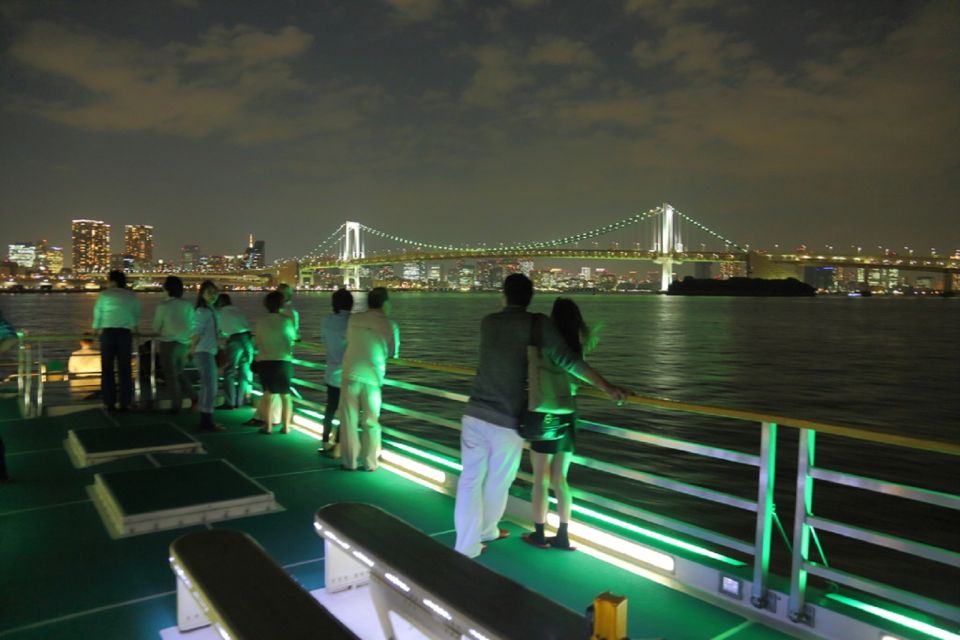
- Skytree and Rainbow Bridge photo stop access: You’re not just staring from afar. The boat makes key night-view moments.
- Real course dinner, not a buffet: Tempura and sashimi are part of a planned sequence.
- Unlimited drinks, including sake and shochu: The bar setup is fast once you know how it works.
- Air-conditioned dining room: Comfortable even when Tokyo nights feel humid or cool.
- Friendly, efficient crew: Service runs quickly through multiple rounds of food and drinks.
- Language can be hit-or-miss: Plan for Japanese commentary, even if some staff help in English.
Why a yakatabune dinner cruise makes sense in Tokyo Bay
Tokyo has dinner options for every mood. This one has a built-in setting: you’re eating on a traditional houseboat while the city glows along the water.
A yakatabune experience works because it combines three things you usually have to trade off against each other. You get night views, you get a full meal, and you get a relaxing pace without bouncing between neighborhoods. The boat also gives you that “I’m inside the scene” feeling. You’re not just watching Tokyo from a tower. You’re gliding past it.
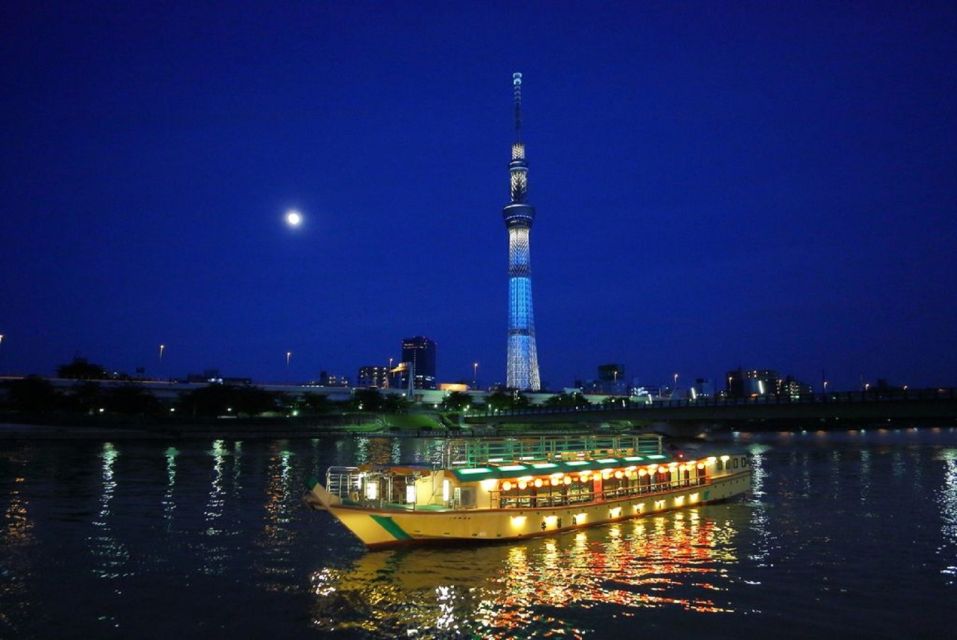
On most evenings, the route is designed to show you Tokyo’s big, recognizable lights: Skytree, Rainbow Bridge, and the Odaiba area. That matters because night photos are easier when you’re actually in the right spot instead of guessing angles from shore.
Funasei Boat Pier and the timing that affects your whole night
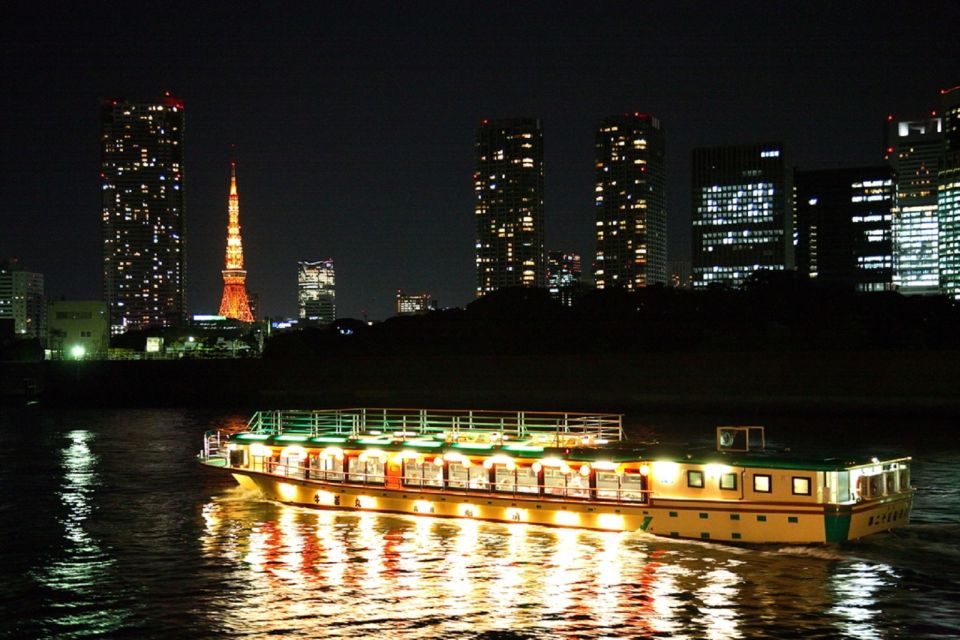
You meet at the Funasei Boat Pier in Shinagawa-Ku. There’s no hotel pickup included, so you’ll want to plan on getting there by taxi or train and short walk.
Departure is typically between 5:00 PM and 6:30 PM, depending on date and weather. You won’t be locked into a single time until confirmation by email, so set aside time to check your messages once you book.
Check in 30 minutes before departure. If you’re late, you won’t get a refund, and you don’t want to be the person sprinting toward the pier in Japanese rain gear.
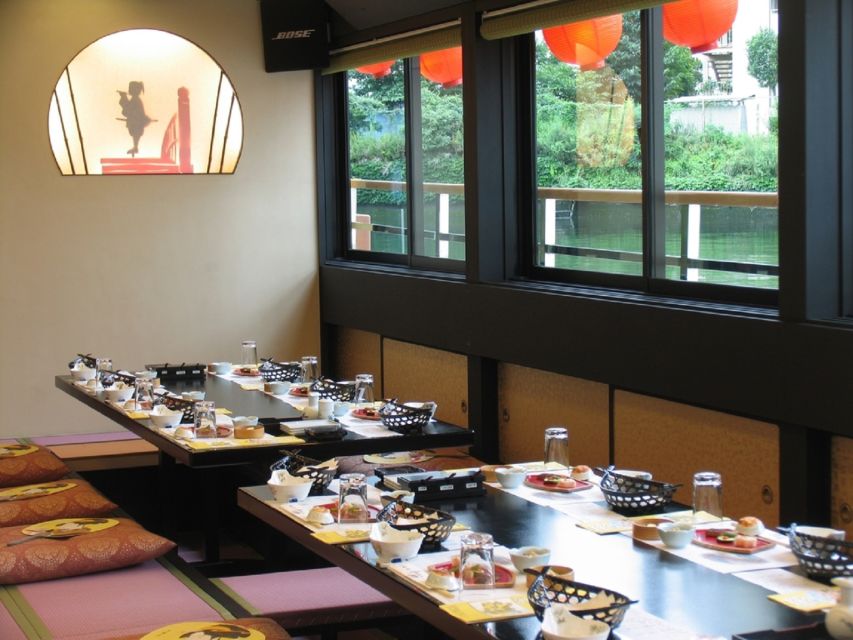
One small but important reality: you might share a table with other guests (up to 6 people). If you’re traveling with a group that wants privacy, choose your seating expectations early. If you’re solo or in a couple, it can actually make the evening more social.
The cruise route: what you’ll see from the water (and why it feels special)
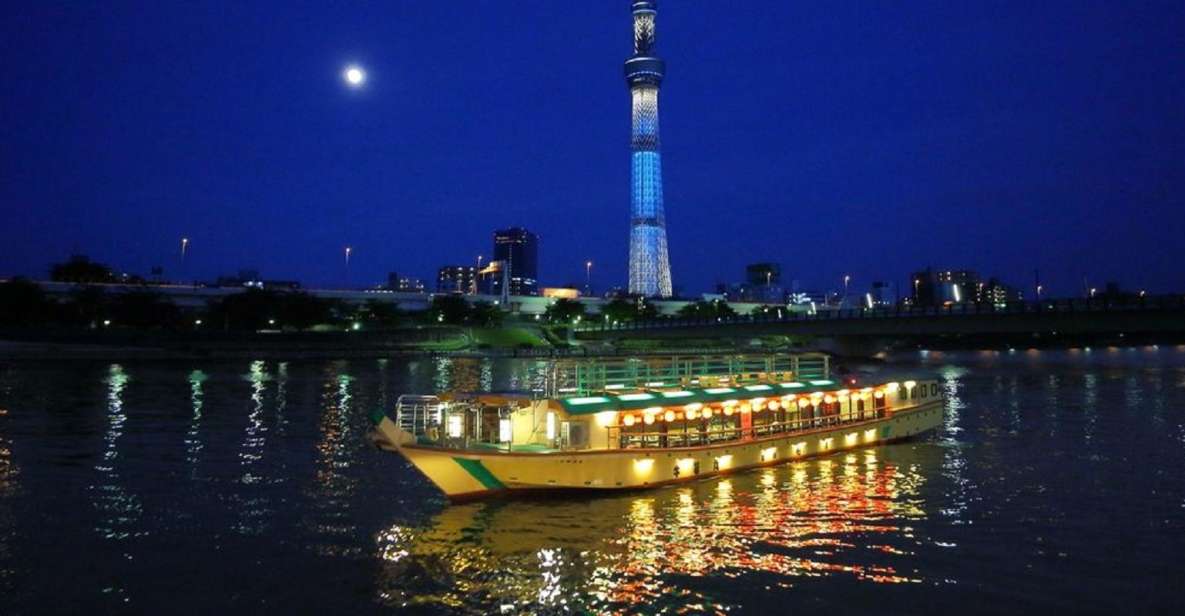
Your night is centered on the water ride itself, from Tokyo Bay into the river corridor, then back toward iconic landmarks. The route is subject to change, but it usually runs from Shinagawa to Rainbow Bridge, then through Sumida River, with passes that highlight Tokyo Skytree and Odaiba.
Tokyo Bay at night
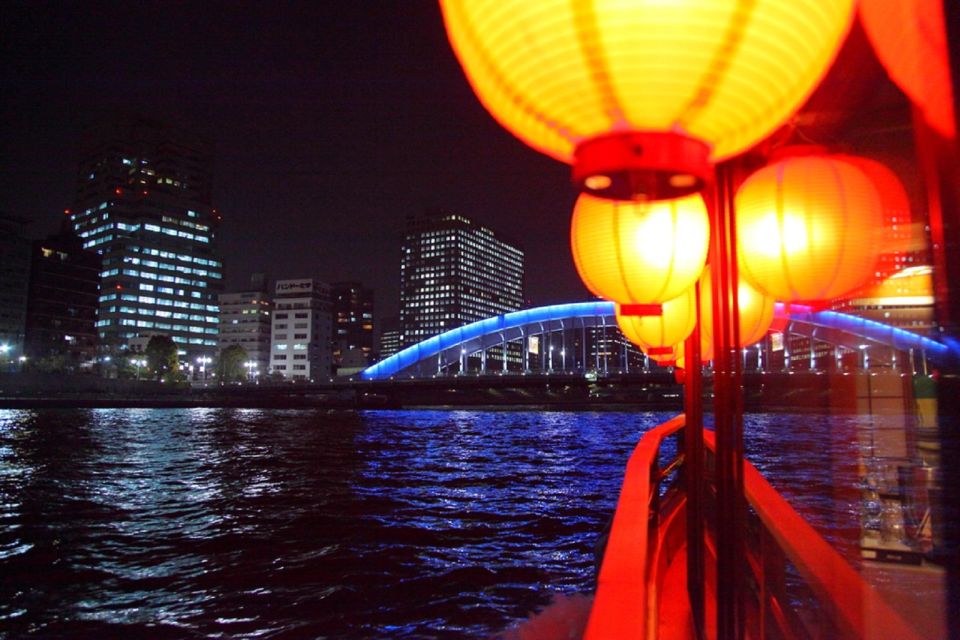
Tokyo Bay at night is all lights and reflections. From the boat, you see that layered effect: building lights on the water, bridges in silhouette, and ships and skyline shapes sliding past. This is the part that feels like Tokyo condensed into a moving postcard.
Sumida River: Tokyo’s illuminated edges
On the river sections, the feel shifts. Instead of wide-bay open water, you get a more guided corridor of buildings and bridges. It’s calmer visually, which makes photo stops and changing angles work better.
Rainbow Bridge and Tokyo Skytree moments
These are your “must-see” landmarks, and the cruise is built around them. You get a chance to admire both from the boat, and the top deck helps. The night lighting on these landmarks can look good from shore, but it’s even better when you’re moving through the sightline.
Odaiba and the Skytree pairing effect
Odaiba is one of those areas where night lighting can look extra dramatic. During the cruise, you’ll likely get views of Odaiba’s waterfront glow alongside Skytree-area night lights, depending on timing and route changes. That combination is part of why this cruise feels like more than one short sightseeing stop.
If you care about photos, time matters. The boat’s schedule, weather, and exact stops decide the best angles.
Top deck views: how to get the best photos without stressing
The dining area is inside, fully air-conditioned, but the best views usually happen when you’re on the outside/observatory areas. The boat has an observatory deck on top, and that’s where you’ll see the biggest skyline moments—especially around Tokyo Skytree and Rainbow Bridge.
Here’s the practical strategy that makes photos easier:
- Stay ready to move when the boat stops or slows down.
- Bring a light layer even in summer; river wind can be sneaky.
- If staff offer to help with photos, say yes. One of the joys on this cruise is that staff take photos of couples and small groups together.
Also, be aware of timing. You’re not standing still like at a viewpoint. You’ll want to plan quick bursts of photos during the best moments, then return inside for dinner rounds.
The dinner: what’s actually served, course by course
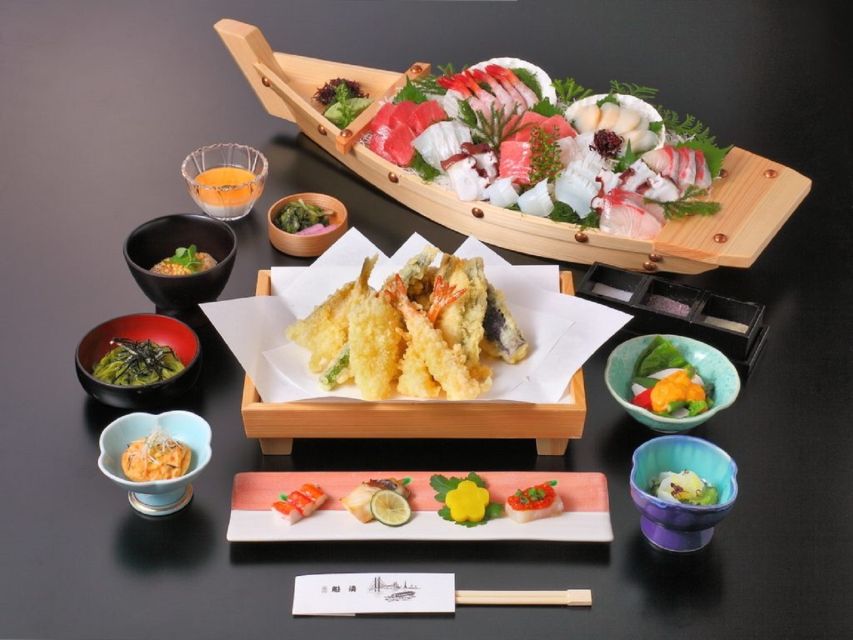
This is a course meal, and it’s described as Japanese-style dishes prepared fresh that day. You’re not eating random plates. The meal runs in a sequence, which makes the whole experience feel intentional.
A typical dinner includes:
- Appetizers: shikidashi, vegetables, and kobachi
- A sashimi component: a sashimi boat
- Fresh tempura
- A seasonal rice dish
- Vegetables (konomono)
- Salad
- Noodles (shime no men)
- Dessert
Why this matters for your night: tempura is best when it’s hot and just-fried. Reviews describe it as coming regularly and being cooked in stages, so you’re not stuck waiting too long between servings. The overall effect is a steady rhythm of food and drink rather than one long pause.
You’ll also notice the staff managing flow efficiently. Multiple food rounds arrive quickly, and that helps the cruise feel like a dining event, not a waiting game.
Seating: chair tables or low table dining
Inside, you can either sit at a table with chairs or at a low table over a hole in the floor. It’s the kind of setup that can feel very traditional right away.
If you’re not used to low-table seating, go for the chair option if available. You’ll still get the “inside a Japanese dining room” feel without stressing your knees.
Unlimited drinks: the bar works fast
Drinks are included and unlimited. The menu includes beer, shochu, Japanese sake, wine, whiskey, plum liqueur, plus soft drinks.
What makes the drinks part enjoyable isn’t only the variety. It’s the pace. People report that once they used the bar code, drinks appeared quickly—fast enough that you didn’t spend the evening waiting for refills.
One more tip: the plum liqueur can be quite sweet, and it’s popular for a reason. If you’re new to Japanese alcohol, this is often an easier entry than straight sake.
Drink responsibly, of course. You’re still on a boat with dining courses. The goal is an easy, social evening, not a sleep-on-the-deck kind of situation.
The crew, service style, and the language gap you should plan for
The vibe on this cruise is friendly and efficient. Staff are described as welcoming, helpful, and quick to keep plates moving and drinks flowing. That sounds generic, but the practical result is specific: you’re fed without long waits, and you’re guided on what to do during key moments.
What you should expect about language
Here’s the honest planning point. Many parts of the experience can be in Japanese. Some staff may speak English, and some days include extra help, but you shouldn’t assume full English translation.
That means you might miss the verbal “what you’re seeing right now” commentary. You can still enjoy the views and the dining, and you can use the visual cues. Some tables have helpful labels for using items like soy sauce for sashimi, which reduces confusion during the meal.
So, if you care most about the scenery and the food, you’re fine. If you want a detailed English narration of each landmark, you’ll likely have to accept a partial experience.
Table sharing changes the social feel
You may share a table with other guests. If you end up with strangers, it can be fine because staff keep the flow organized. Still, it’s good to know upfront so it doesn’t feel awkward later.
Price and value: is $108 per person a fair deal?
At about $108 per person for a 3-hour dinner cruise, you’re paying for four value drivers:
- The setting: Tokyo Bay views, bridges, and Skytree lighting from the water.
- A full course dinner: not just snacks, but multiple structured plates, including tempura and sashimi elements.
- Unlimited drinks: a broad list, not one or two options.
- Efficient service on a real boat: the staff pace matters on a cruise.
If you were to build this as separate activities—dinner plus a proper night-view experience with time for photos and refills—the cost tends to add up fast. Here, the meal and atmosphere are bundled.
The one time this might feel less worth it is if you don’t drink much and you’re disappointed by the language limitations. You still get the food and views, but the “unlimited drinks” portion becomes less meaningful if you’re not using it.
Who should book this dinner cruise (and who might not love it)
This fits best for you if you want:
- A night activity that includes both sightseeing and dinner
- Great photo opportunities around Tokyo Skytree and Rainbow Bridge
- A sit-down meal with multiple courses and frequent service
- A social, relaxed pace without rushing between stops
It may be less ideal if:
- You need an English-speaking guide for every sight explanation
- You have strong dietary restrictions, because dietary requirements can’t be catered
- You hate the idea of sharing a table and prefer private seating only
Should you book Tokyo Bay’s yakatabune dinner cruise?
I’d book it if you want a Tokyo night that feels genuinely different from another restaurant meal. The combination of Skytree/Rainbow Bridge views, a proper multi-course dinner, and unlimited drinks makes the $108 price feel logical for most people.
Skip or reconsider if you’re counting on a fully English, point-by-point explanation of every landmark and you don’t want any uncertainty. In that case, you may enjoy the food and the views, but the language gap could frustrate you.
If you do book: go in expecting Japanese-first flow, plan to be at the pier early, and use the top-deck moments for your photos. Then let the crew run the evening.
FAQ
Where is the meeting point for the cruise?
You meet at the Funasei Boat Pier in Shinagawa-Ku.
How long is the Tokyo Bay yakatabune dinner cruise?
The cruise duration is about 3 hours.
What time does the cruise depart?
Departure is usually between 5:00 PM and 6:30 PM, and the exact time depends on the date and weather. You’ll receive confirmation via email.
Is hotel pickup or drop-off included?
No. Hotel pickup and drop-off are not included.
What is included in the Japanese dinner?
You’ll get a course meal that includes appetizers, a sashimi boat, fresh tempura, a seasonal rice dish, vegetables, salad, noodles (shime no men), and dessert.
Are drinks included, and are they really unlimited?
Yes. Drinks are included and unlimited, including beer, shochu, Japanese sake, wine, whiskey, plum liqueur, and soft drinks.
Can the dinner accommodate dietary requirements?
No. The dinner cannot be catered for dietary requirements.
Do I have to share a table, and is there English help onboard?
There is a possibility of sharing a table with other guests up to 6. As for language, the experience can be mostly Japanese, though staff may help in English depending on the situation.