REVIEW · TOKYO
Shinjuku Golden Gai Food Tour
Book on Viator →Operated by Arigato Japan KK · Bookable on Viator
Golden Gai is better with snacks. This 3-hour Tokyo walking food tour threads through Omoide Yokocho (Memory Lane) and ends in Golden Gai, where you can taste your way through famous alleyway life. You get a local English-speaking guide, four food stops, and two included drinks while you learn what makes this part of Shinjuku tick.
I like two things right away. First, the guide style matters here, and the tour’s proven at it through English-speaking hosts such as Jacob, Giula, Ray, Alex, Osmar, Sandra, and Tommy. Second, the food variety is the point: you’ll try different Japanese favorites like yakitori, ramen, and sushi-style bites across multiple stops.
One thing to keep in mind is the setting. Golden Gai bars are tiny, and some stops can end up with tight seating or even standing-room situations, so if you hate cramped spaces, this may feel less comfortable than a sit-down dinner.
In This Review
- Key things that make this tour worth your night
- Entering Shinjuku the right way: a 5:00 pm walk that turns into nightlife
- Price and value: $217 for a guided food crawl with tastings and two drinks
- Meet-up at Tajimaya Coffee: a calm start before the streets compress
- Stop 2: Omoide Yokocho (Memory Lane) for authentic alley meals
- Through Kabukicho: context for the neon district (and a second food taste)
- Hanazono Shrine: a short pause that keeps the night balanced
- Golden Gai finish at Araku Bar: tiny bars, included drinks, and the option to karaoke
- What you actually eat: yakitori, ramen, sushi-style bites, and seasonal choices
- Two included drinks: why that small detail matters
- How the guide’s stories make the food easier to enjoy
- Practical advice: how to dress and pace yourself for Shinjuku at night
- Who this tour suits best (and who might want a different style)
- Should you book the Shinjuku Golden Gai Food Tour?
- FAQ
- How long is the Shinjuku Golden Gai Food Tour?
- How many people are on the tour?
- What’s included in the price?
- Where does the tour start and end?
- What time does the tour begin?
- Are vegetarian or pescetarian options available?
- Is karaoke included?
- What is the cancellation policy?
Key things that make this tour worth your night
- Small group size (max 10) keeps the pace human and makes it easier to hear your guide in noisy streets.
- Two drinks included means you’re not rationing your budget while you explore Tokyo nightlife.
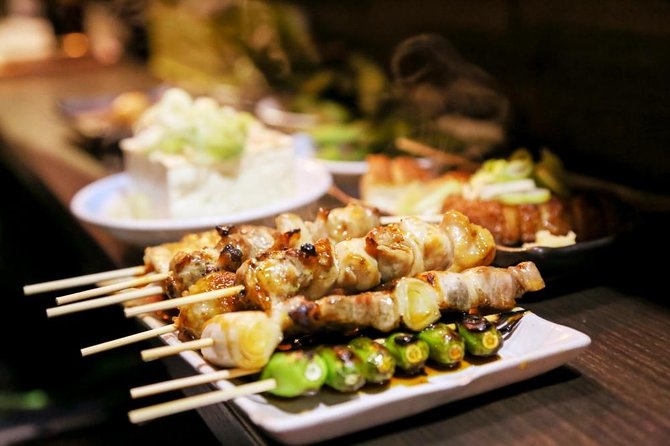
- Four food stops gives you enough variety to cover multiple flavor lanes: skewers, ramen, and sushi-type bites.
- Route connects Kabukicho and Golden Gai so you see both sides of Shinjuku’s after-dark identity in one evening.
- Diet flexibility for pescetarian and vegetarian helps you avoid the awkward “no, we can’t do that” moments.
- Karaoke after party available if you want to keep the night going after the food ends.
Entering Shinjuku the right way: a 5:00 pm walk that turns into nightlife
This tour starts in the early evening, around 5:00 pm, which is smart. You’ll catch Shinjuku as it flips from day energy to neon chaos, but you’re still early enough to move comfortably on foot before the area gets fully crowded.
The whole thing is designed as a walking route, so you’re not stuck in taxis or waiting around. Expect a moderate amount of walking (comfortable shoes matter), and plan on it being lively—Tokyo at night is loud, and Golden Gai is especially so.
The group stays small (up to 10), which changes the experience. It’s easier to ask questions, easier to hear explanations, and you’re less likely to get lost when streets narrow and signs disappear into the back-alleys.
You can also read our reviews of more food & drink experiences in Tokyo



Price and value: $217 for a guided food crawl with tastings and two drinks
At $217 per person, this is not the cheapest Tokyo meal you’ll find. But you’re paying for four things that add up: a local guide, four separate food stops, two included drinks, and a guided route through neighborhoods that can be hard to navigate at night.
In Tokyo, it’s easy to spend money just trying to find a place that takes non-Japanese speakers, has space for small groups, and isn’t a tourist trap. This tour does that searching for you by taking you to multiple spots in one organized flow—so you’re paying for convenience plus context.
Is it “fine dining” priced? No. Some people who love high-end kaiseki or big-ticket sushi may feel the portions and picks are more “tasting tour” than “celebration dinner.” But that’s also the tradeoff: you get variety, you get local atmosphere, and you get to compare flavors side by side.
Meet-up at Tajimaya Coffee: a calm start before the streets compress
You’ll meet at the Tajimaya Coffee area first. Even if you’ve never been to Shinjuku, this stop helps you get oriented before the night turns into narrow alleys and crowded nightlife blocks.
This first moment matters. A good guide uses it to set expectations—how the evening will flow, what to watch for in the neighborhoods, and what kinds of behavior are normal in each setting. Even if you already know how to use chopsticks, that cultural “how things work here” part can make the rest of the tour feel smoother.
Also, being early enough at the meet point reduces stress. One common theme from people who’ve done it: showing up and getting matched to your guide is where the night starts on the right foot.
Stop 2: Omoide Yokocho (Memory Lane) for authentic alley meals
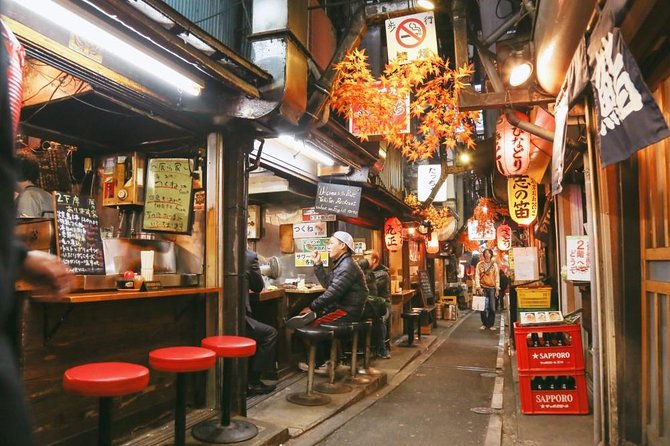
From the start, you head to Omoide Yokocho, a street people call Memory Lane. The vibe here is all about tight space and old-school atmosphere—bars that have been around since around 1950 and small dining spots where locals come to eat.
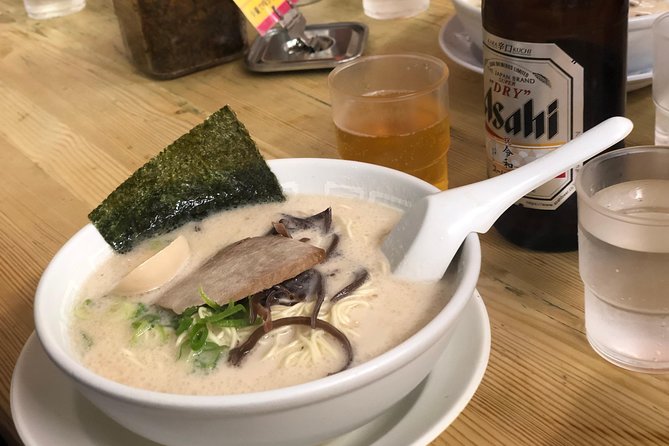
This is where you’ll taste your first round of the night, including ramen. The tour description frames this stop as a chance to dine with locals and learn why this entertainment district became one of Shinjuku’s calling cards.
The practical part: Omoide Yokocho is narrow and you move slowly. That’s not a problem—it’s the point—but it does mean you should accept that you might be shoulder-to-shoulder for a bit. If you hate close quarters, choose patience and focus on the food and the stories your guide shares while you’re waiting for the next bite.
Through Kabukicho: context for the neon district (and a second food taste)
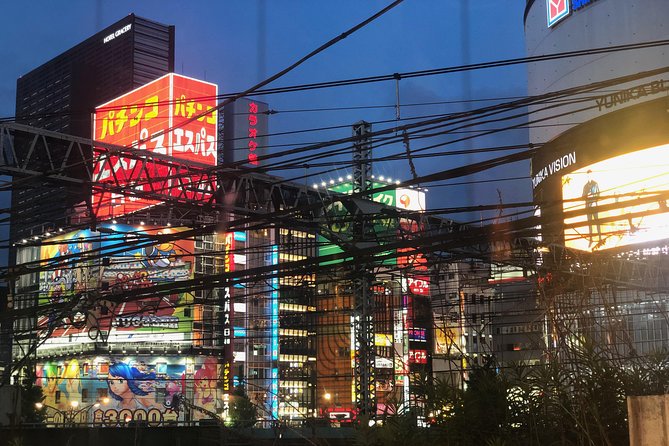
Next comes Kabukicho, which the tour positions as the largest and safest red-light district in Asia. Even if you already know Kabukicho is famous, a guided walk helps you understand how the area functions beyond the headlines.
You’ll see the neon density, the nightlife energy, and the sheer number of bars nearby. More importantly, you’ll hear the local history and cultural context—because Kabukicho is more than a name people throw around.
You also get another food stop in this stretch, including sample bites like ramen at earlier points and additional tastings as the walk continues. A guided pace helps you avoid the “we walked past everything and now we’re hungry” problem.
A fair caution: parts of Kabukicho are geared toward adult entertainment. If that theme makes you uncomfortable, you may still be okay since the tour’s focus is food and explanation, but you should know what environment you’re stepping into.
You can also read our reviews of more tours and experiences in Tokyo



Hanazono Shrine: a short pause that keeps the night balanced
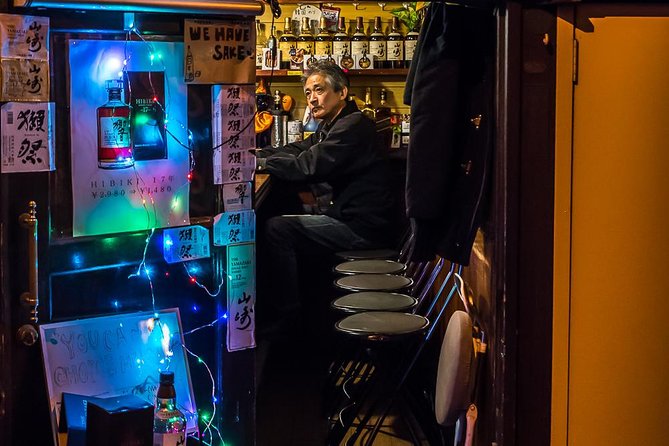
After the nightlife blocks, you’ll make a stop at Hanazono Shrine. This kind of break is underrated on food tours because it lets your senses reset between crowded eating moments.
Think of it as a rhythm change: noisy alleyway to quieter spiritual space, then back to the streets for Golden Gai. It also gives you something to look at that isn’t a menu board or a neon sign, which makes the whole evening feel less like a nonstop blur.
The tour doesn’t present this as a long sightseeing detour. It’s a short, meaningful stop that helps you keep perspective and pace.
Golden Gai finish at Araku Bar: tiny bars, included drinks, and the option to karaoke
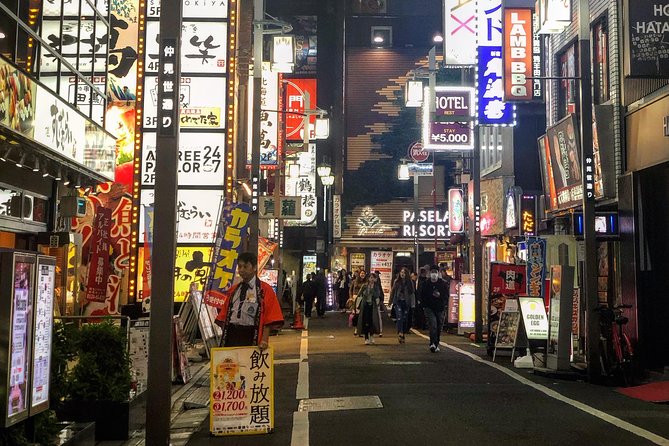
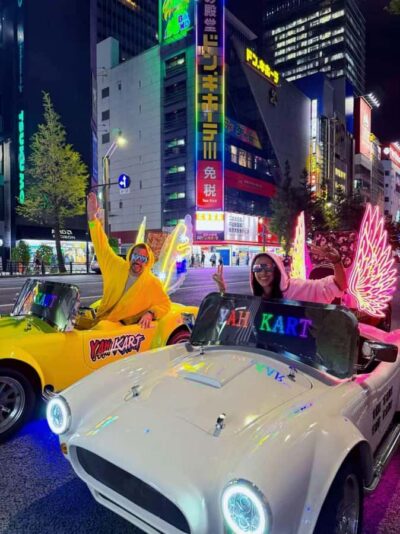
The grand finale is Shinjuku Golden Gai, famous for its dense layout of tiny pubs, stalls, and karaoke bars—over 200 venues in the area. This is the neighborhood that often makes people stop and stare because each lane feels like it belongs to a different time period.
Your tour ends around Araku Bar in Golden Gai. You’ll sip an included cool drink there, and you’ll have time to keep exploring on your own after the official tour.
This is also where the seating reality becomes most noticeable. Golden Gai venues are small, and one recent experience noted standing-room-only conditions in the last venue. That doesn’t mean it always happens, but it’s a reasonable expectation to keep in mind since the area’s character is built around tiny spaces.
If you want to stay longer, check out the karaoke option. The tour says a karaoke after party is available, and people have added karaoke at the end for a full-on Tokyo night memory.
What you actually eat: yakitori, ramen, sushi-style bites, and seasonal choices
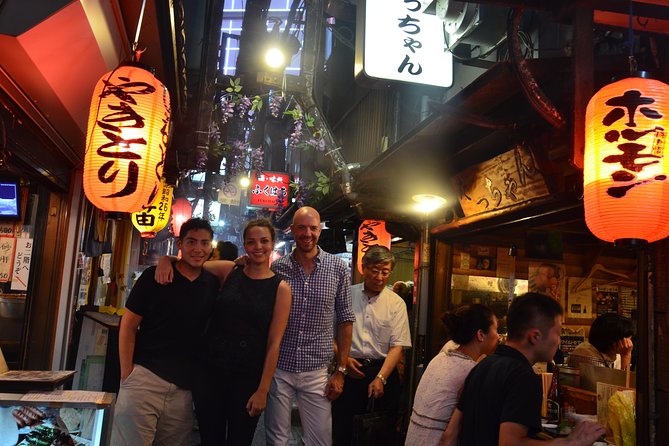
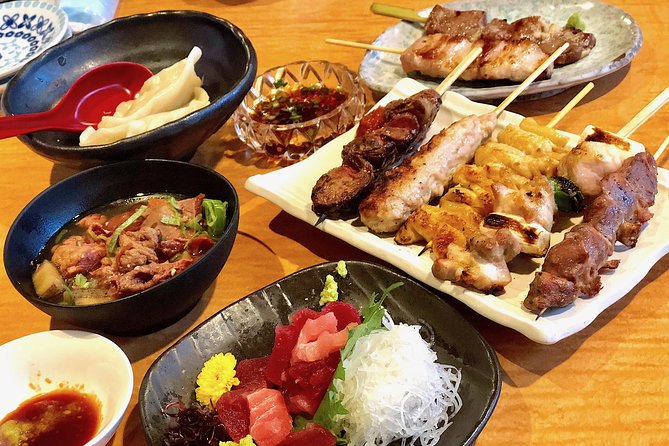
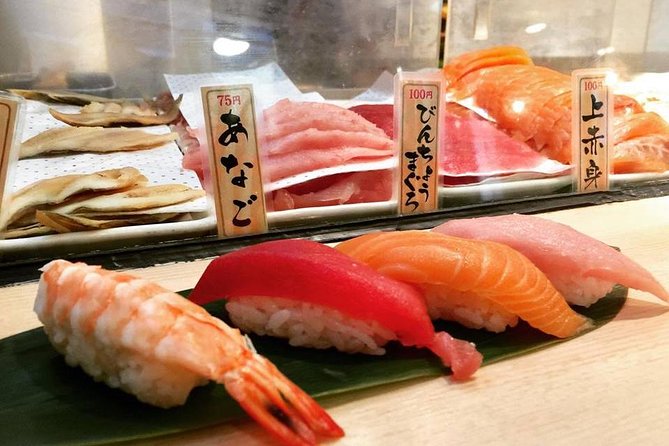
This tour is built on variety, with 4 different food stops. You can expect a mix like yakitori, ramen, and sushi (or sushi-type sashimi) alongside other local and seasonal dishes.
Ramen is part of the story from the start, and it’s a great anchor food because it’s familiar enough to compare, but Japan’s style differences are still huge. Yakitori is a smart companion too, since skewers let you sample flavors without committing to one heavy meal.
Sushi is included as well, and at least one experience specifically called out a sashimi-focused restaurant as a favorite. That matters because it tells you the tour isn’t only aiming for “street-food only.” You may get a broader spread of Japanese tastes in different settings.
Important practical tip: come hungry. More than one person pointed out not to snack beforehand because you’re getting multiple tastings. The goal is “try a lot,” not “pick one big dinner.”
A balanced caution: not every stop will match every person’s taste. Some food tours hit your exact preferences and some don’t. If you’re a hardcore foodie who wants one standout high-end meal, you might judge the tasting portions more harshly. If you want an efficient way to taste the neighborhood and learn how to order and eat like a local, this format usually lands.
Two included drinks: why that small detail matters
The tour includes two drinks. In Golden Gai, one of them is described as a cool drink served at the end.
This isn’t just a perk for alcohol lovers. Drinks help with pacing on a walking food tour. You’ll often be eating in quick jumps between stops, so having a planned drink included prevents the “do we buy another water, or do we skip it” calculation while you’re distracted by neon and menus.
If you don’t drink much, you can still treat the included beverage as part of the experience. The more important part is that the tour doesn’t force you to constantly reach into your pocket between tastings.
How the guide’s stories make the food easier to enjoy
Food tours work when the guide explains what you’re seeing and how to behave. Here, that’s a central part of the value.
People doing this tour praised guides for bringing the neighborhoods to life with history and practical culture tips. Some guides also shared how Japanese etiquette plays out in small eateries, which can make you feel less like a confused tourist and more like someone who belongs.
Even if you’re confident ordering food in Japan, you’ll still benefit from the context. Golden Gai and Omoide Yokocho are both “small-space” worlds. Knowing when to enter, how to handle the flow, and what locals consider normal turns the night from awkward to smooth.
And with English-speaking guides such as Sandra, Ray, Alex, and Tommy mentioned in the available notes, you’re likely to get explanations at a pace you can follow while moving through noisy streets.
Practical advice: how to dress and pace yourself for Shinjuku at night
This is a walking evening in a nightlife-heavy area. Dress for comfort over style. You’ll likely be standing at least part of the time, and Golden Gai streets involve more moving between tiny storefront spaces.
If you’re moderately fit, you should be fine, but don’t treat it like a slow stroll. The route is short in distance terms, yet frequent stops mean your body is always transitioning: walk, wait, eat, move again.
Also, accept that it’s lively. Several experiences highlight that guides helped keep things audible in noisy areas, which is another reason the small group size matters.
Finally: go in without a rigid plan for the rest of your night. The end in Golden Gai is your cue to decide what you want next—slow drink, karaoke, or more wandering.
Who this tour suits best (and who might want a different style)
I’d put this tour at the top of the “first Tokyo nightlife win” list. It’s ideal if you want:
- A guided way to find places in Golden Gai and the surrounding Shinjuku districts
- A taste of multiple Japanese dishes in one evening
- Cultural context alongside food, not just menu hopping
It’s less ideal if you strongly prefer only high-end plated meals. Some people look for one exceptional culinary event instead of several tastings, and that mismatch can lead to disappointment.
It can also feel like a “night out” more than a “quiet dining experience.” If you want calm, pick a different kind of Tokyo tour.
Should you book the Shinjuku Golden Gai Food Tour?
If your goal is to understand Shinjuku nightlife through food, I think it’s a smart booking. You’re buying access to areas like Omoide Yokocho and Golden Gai that are hard to navigate confidently on your own, and you get enough tastings to actually feel the neighborhood’s flavor range.
Book it if you’re okay with walking, small spaces, and the reality that bars here are tiny. Skip it (or pick a different food-focused format) if you expect guaranteed comfort seating at every stop or you only value one high-end meal.
If you do book, show up hungry, wear comfortable shoes, and lean into the guide’s cultural notes. That’s the combo that turns this from “we ate stuff” into a night you’ll remember.
FAQ
How long is the Shinjuku Golden Gai Food Tour?
The tour lasts about 3 hours.
How many people are on the tour?
The maximum group size is 10 travelers.
What’s included in the price?
The price includes a local guide, two drinks, and 4 food stops.
Where does the tour start and end?
It starts at Japan, 160-0023 Tokyo, Shinjuku City, Nishishinjuku, 1-chōme 26, 新宿水産ビル, and the tour ends in the Golden Gai area, with the ending point listed as Araku Bar.
What time does the tour begin?
The start time is 5:00 pm.
Are vegetarian or pescetarian options available?
Yes. The tour states dietary restrictions are flexible, and it is pescetarian and vegetarian friendly.
Is karaoke included?
Karaoke after party availability is noted, so you can add karaoke after the tour.
What is the cancellation policy?
Free cancellation is available up to 24 hours in advance for a full refund. If you cancel less than 24 hours before the experience, the amount paid will not be refunded.