REVIEW · TOKYO
Private Workshop to Create Paper Last for 1,000 years in Ueno
Book on Viator →Operated by 和紙ラボTOKYO · Bookable on Viator
A single afternoon, and suddenly you get it. This private washi paper workshop in Tokyo walks you through the hands-on process from kozo fibers to finished sheets, plus you make multiple paper items you can actually take home. You’re not just watching a demo, you’re doing the work step by step.
I like that the session covers the full chain of traditional papermaking, including Hyouhitor (peeling off the outer bark) and Dakai (beating the tree fibers). I also love that you’ll have time to enjoy an original break: Japanese paper tea made from kozo leaves with sweets from a local favorite shop.
One heads-up: there’s a cat in the workshop area. If you have allergies, you’ll want to flag that when you book.
In This Review
- Key highlights you’ll feel right away
- Why this washi workshop is worth your Tokyo time
- Finding the workshop near Ueno (and keeping it stress-free)
- The pace and setup: a private session that feels calm
- Kozo to paper: what Hyouhitor and Dakai actually mean
- Hyouhitor: peeling off the outer bark
- Dakai: beating the fibers
- Making the sheet: mold, deckle, and sifting for even paper
- Your take-home set: four products, not just one souvenir
- The drying break: kozo-leaf Japanese paper tea and sweets
- Teaching style: patient guidance when your hands are learning
- Weather, timing, and the one practical risk
- Who should book this washi workshop
- When it might not be the best fit
- Final call: should you book it?
- FAQ
- What will I make during the workshop?
- How long is the workshop?
- Is this a private workshop?
- What is the Japanese paper tea made from?
- Is there anything I should know about allergies?
- Where does the workshop start?
Key highlights you’ll feel right away
- Hands-on papermaking from kozo bark to deckle-edged sheet formation
- Hyouhitor + Dakai give you the full traditional texture of the process
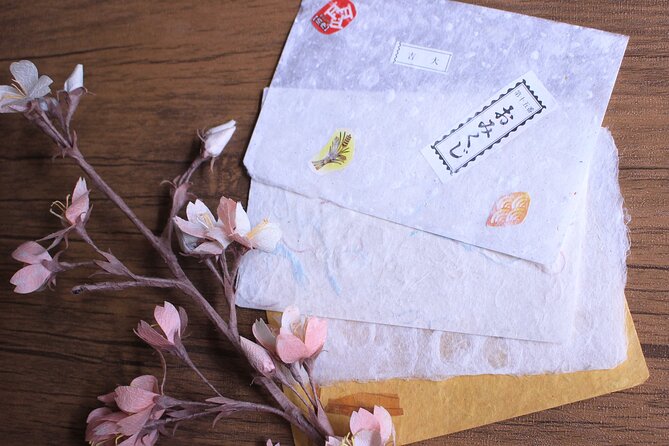
- 4 take-home products: two postcard designs, one Rakusui paper item, and A5 paper
- Kozo-leaf Japanese paper tea plus local Japanese sweets while your sheet dries
- Private group only means you won’t be rushed by a crowd
- Cat on site so plan for allergies or comfort
Why this washi workshop is worth your Tokyo time
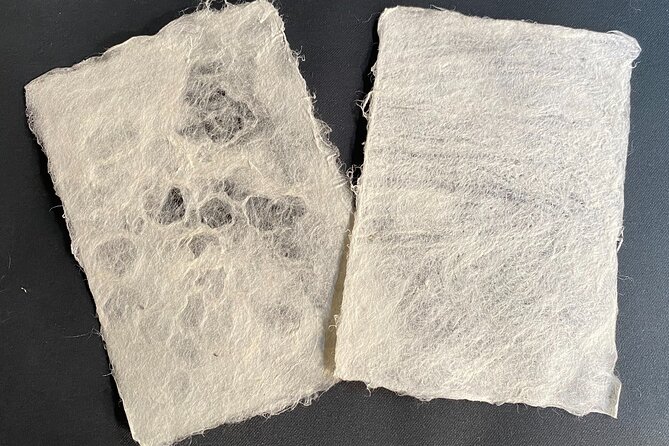
Tokyo has plenty of crafts where you leave with something pretty and take a few photos. This is different. You leave with something you made by repeating the exact kind of motions papermakers have used for a long time: soften fibers, suspend them in water, form a sheet in a mold, then let it dry into real, usable paper.
The promise here is paper made for extreme longevity. The title frames it as paper lasting for 1,000 years, and while that’s a bold claim, the workshop itself is built around traditional techniques associated with durable washi. Even if you treat the longevity statement as marketing, the practical takeaway is solid: you’ll understand what makes washi different from machine-made paper.
Value is also unusually clear. At $143.35 per person for about 2.5 hours, you’re not paying only for a craft object. You’re paying for guided instruction through multiple steps and for several finished items—four in total—so you’re getting both skills and output.
And yes, it’s in Ueno. That matters because it’s easy to pair with other Ueno-area sights without turning your day into a logistics puzzle.
You can also read our reviews of more private tours in Tokyo



Finding the workshop near Ueno (and keeping it stress-free)
The meeting point is in Taito City, with the listed address: Japan, 110-0016 Tokyo, Taito City, Taitō, 3-chōme302 市川ビル. It ends back at the same place.
What you should do to make this easy:
- Arrive a few minutes early, especially if you’re navigating from a station on foot. The address is specific, but the building number in Japanese addresses can take a moment to match on the street.
- If you’re using your phone for directions, confirm you’re following the correct city block first. Ueno is busy, and you don’t want to wander the wrong side.
- Bring the mobile-ticket confirmation with you. The tour uses a mobile ticket, so keep your confirmation accessible.
Also, the listing notes it’s near public transportation. Translation: you shouldn’t need a taxi to get there, but you may still prefer to do a quick map check before you leave your hotel.
The pace and setup: a private session that feels calm
This is a private tour/activity, meaning only your group participates. That changes the energy of a craft class. Instead of waiting for your turn in a line, you can move through the steps at a comfortable rhythm, and your instructor can adjust guidance to what your hands are doing.
The total time is about 2 hours 30 minutes. That’s a sweet spot for papermaking. It’s long enough for you to get real practice with the techniques, but not so long that your day turns into a half-day commitment with no breathing room afterward.
You’ll also do a lot of active work at first—peeling, fiber handling, mixing, sheet forming—then shift into a calmer phase while your paper dries. That’s when the tea and sweets break makes sense. You can rest, snack, and talk about what you just made without feeling like you’re sitting around waiting.
Kozo to paper: what Hyouhitor and Dakai actually mean
The workshop is built around the core traditional steps, not just the sheet-making.
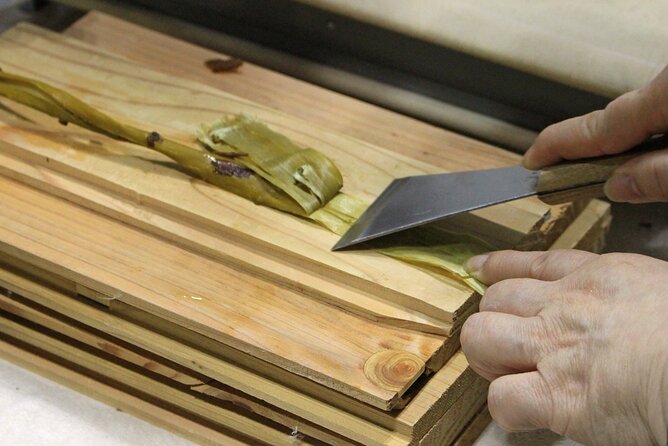
Hyouhitor: peeling off the outer bark
Hyouhitor is the peeling step. The point isn’t just to remove something; it’s to access the right plant material for papermaking. When you do this yourself, you start to understand why washi has a different feel and why kozo (often translated as mulberry) is so important in Japanese paper craft.
Even if you’ve never done anything like this before, expect guidance that breaks the motion down into manageable parts. This kind of step is also where good teaching matters, and the instructor approach here seems to be a strong point: the class is described as patient and kind.
You can also read our reviews of more tours and experiences in Tokyo



Dakai: beating the fibers
Next comes Dakai, beating the tree fibers. Beating is where the material becomes workable. It loosens and prepares the fibers so they form a strong sheet when suspended in water.
This step gives you a tangible lesson in process control. If fibers aren’t prepared well, the sheet won’t form as evenly. You’ll learn to treat this not like random smashing, but like a technique with purpose.
One reason I’d recommend this workshop to first-timers: by the time you reach the molding stage, you won’t feel lost. You’ll understand what you’re doing and why the instructor keeps emphasizing certain movements.
Making the sheet: mold, deckle, and sifting for even paper
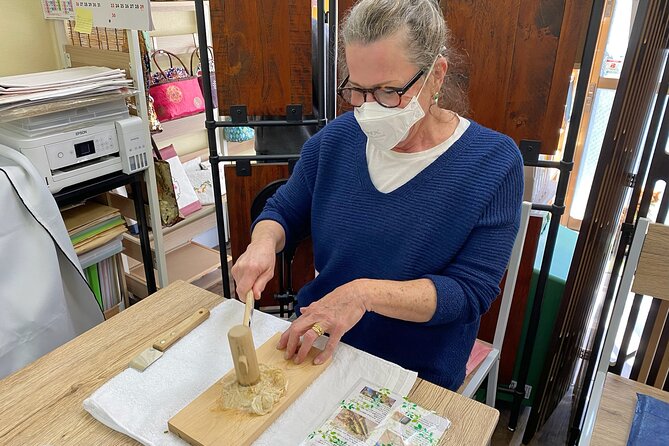
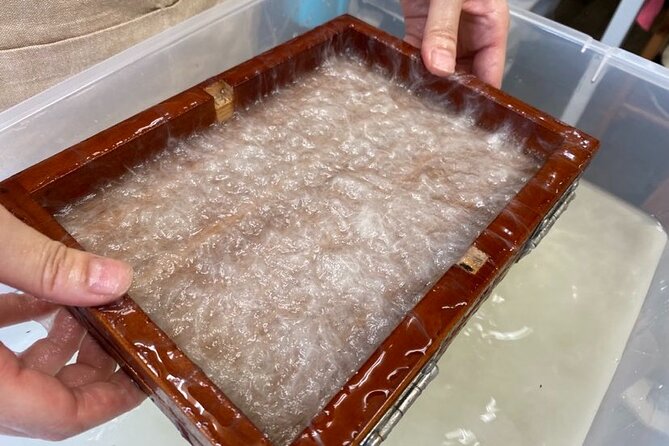
This is where you’ll do the fun part that most people picture when they think of washi: forming a sheet by hand.
Here’s the sequence you’ll experience:
- You pour the raw material into a paper-making mold.
- You add a deckle (the frame that helps define sheet edges).
- You sift or manage the solution to create an even, flat sheet.
This is not just aesthetic. The evenness you create at this step affects the final look and thickness. You’ll learn how water distribution and gentle handling help create a sheet that feels consistent rather than patchy.
You’ll also get a chance to make decisions through your technique. In many craft classes, you don’t really affect the final product. Here, your motions show up in the sheet.
Your take-home set: four products, not just one souvenir
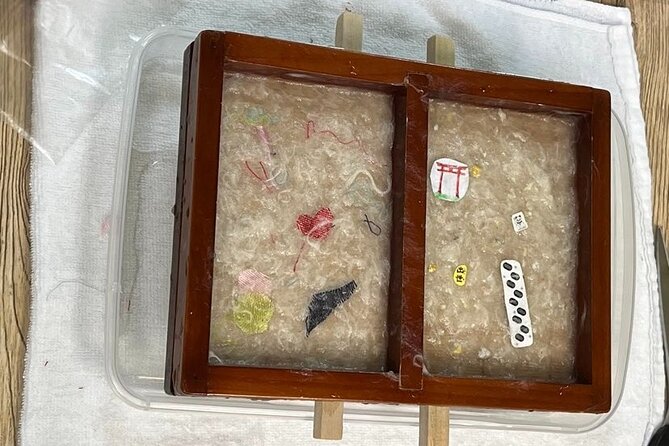
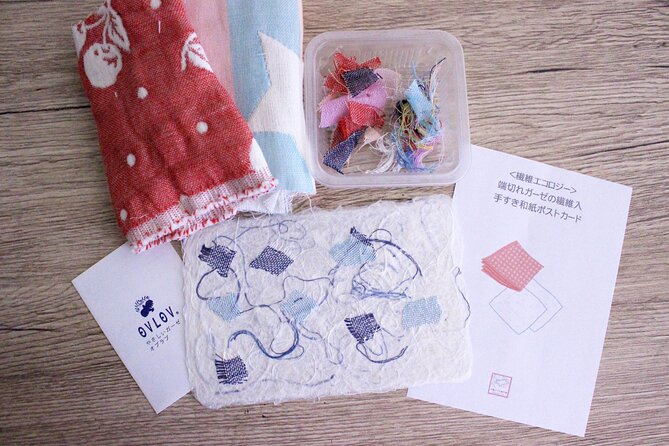
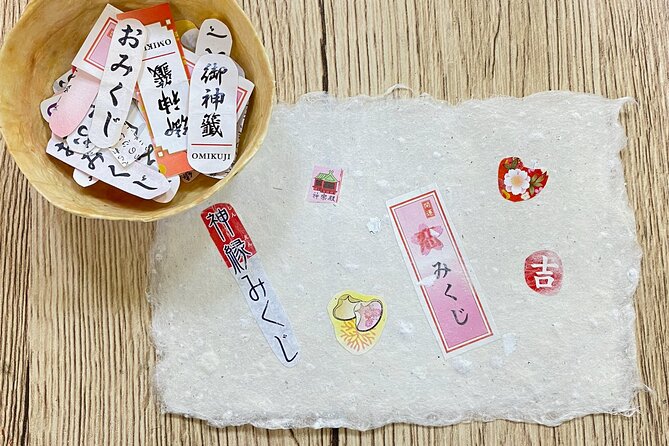
By the end of the session, you’ll create your own set of four paper items:
- Two postcard designs (you’ll have two different designs to take home)
- Rakusui paper
- A5 paper
That product mix is smart. Postcards are small and fun to use right away, while A5 gives you a more flexible paper format for writing or gifting. Rakusui paper also adds variety so you don’t leave with only one type of sheet.
And because you’re making multiple items, your time feels “worth it.” You’re not paying for a single sheet and calling it a day. You’ll leave with several pieces that reflect what you did in the workshop.
The drying break: kozo-leaf Japanese paper tea and sweets
Paper needs time to dry, and this workshop uses that downtime well.
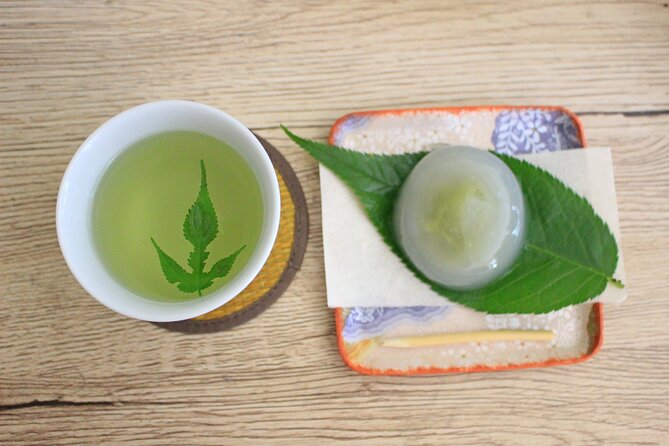
While your paper sets, you’ll get their original Japanese paper tea, made using kozo leaves—the raw material for making paper. It’s a clever idea because it creates a full-circle experience. You’re drinking the plant connection that started the whole process.
Alongside the tea, you’ll also have local Japanese sweets sourced from a beloved local shop. This is the kind of detail that makes a small workshop feel like a real cultural moment, not a generic snack break.
Based on what’s been described from past participants, this tea-and-sweets component is a highlight. The combination also works practically: it gives you something warm and pleasant while you’re waiting for the drying stage, without turning the class into a long silent wait.
Teaching style: patient guidance when your hands are learning
One of the strongest impressions from the experience is the instructor’s attitude. The workshop is described as having an excellent teacher who is patient and kind. In a craft where your hands are doing new things, that matters.
You don’t need a teacher who moves fast. You need a teacher who can correct small technique issues without making you feel clumsy. That kind of support is especially important during the peeling and beating stages, plus during molding and sifting.
So if you’re the type who worries about doing crafts “wrong,” this is the setting where that anxiety usually drops fast—because you’re guided through each step.
Weather, timing, and the one practical risk
This experience requires good weather. The details aren’t spelled out, but the important part for you is planning: if weather is poor, the workshop may be canceled and you’ll be offered a different date or a full refund.
You also want to consider that papermaking is sensitive to timing. If your schedule is tight, give yourself a bit of buffer around the appointment. A 2.5-hour activity can be easy to fit in, but you don’t want to stack it right before a train connection that you’d hate to miss.
Who should book this washi workshop
I think this workshop fits best if you want at least one of these things:
- You like learning by doing, not just watching.
- You want a meaningful Tokyo craft with a clear step-by-step process.
- You’re looking for take-home paper items that feel personal because you made them.
- You enjoy Japanese food details, especially when it connects to the craft itself (kozo tea).
It’s also a good option for people who prefer a calmer class format. Because it’s private and only your group participates, it’s less chaotic than a public workshop.
When it might not be the best fit
Consider skipping or at least asking questions first if:
- You have allergies and need to know what’s in the room. The class has a cat present, and you should inform the staff if allergies apply.
- You’re short on time. Two and a half hours is reasonable, but it’s still a dedicated block where your schedule should be flexible.
If you’re looking for something purely visual and low effort, this may feel hands-on. But if you like craft work, you’ll likely appreciate the effort.
Final call: should you book it?
Yes—if you want a real washi-making experience in Tokyo, with clear traditional steps and actual take-home results. The strongest reason to book is the blend of labor and reward: you’ll learn Hyouhitor and Dakai, form your sheets with a mold and deckle, then leave with multiple crafted papers plus kozo-leaf Japanese paper tea and local sweets.
Book it sooner rather than later if your schedule is fixed. The average booking window is about 31 days in advance, and for a private workshop, those spots can go.
Just remember the practical considerations: good weather helps, and if you have allergies, flag them because there’s a cat in the workshop.
FAQ
What will I make during the workshop?
You’ll create four paper products: two postcard designs, Rakusui paper, and A5 paper.
How long is the workshop?
It’s about 2 hours 30 minutes (approx.).
Is this a private workshop?
Yes. It’s a private tour/activity, and only your group participates.
What is the Japanese paper tea made from?
The tea is made from kozo leaves, which are also the raw material used to make Japanese paper.
Is there anything I should know about allergies?
There is a cat in the workshop. If you have allergies, you should inform the workshop staff when booking.
Where does the workshop start?
The meeting point is listed in Taito City near Ueno at 110-0016 Tokyo, Taito City, Taitō, 3-chōme302 市川ビル, and the experience ends back at the same meeting point.