REVIEW · TOKYO
Private Ueno Park Architecture Walking Tour
Book on Viator →Operated by Showcase Tokyo Architecture Tour · Bookable on Viator
Ueno Park looks like a stop on a cherry blossom route. Then you slow down and realize it’s also an architecture lesson. I love the private, architecture-first approach, and I also love that you get guided context instead of walking in blind. One thing to consider: while the tour covers Tokyo National Museum entry (1000 yen), some other museum admissions may not be bundled, so check what you’ll pay on the day for the National Museum of Western Art.
This is a 3-hour-30-minute walk that keeps moving at a human pace, with stops long enough to actually notice details. You’ll also get a short break with drinks along the way, which is underrated when you’re crossing from one campus-like building to the next. If you’re the type who likes buildings more than paintings, this tour fits your brain.
In This Review
- Key reasons this Ueno architecture tour works
- Why Ueno Park is a smarter architecture walk than it first looks
- Le Corbusier’s National Museum of Western Art: see modernism in person
- Tokyo Bunka Kaikan across from Le Corbusier: the Maekawa contrast trick
- The International Library of Children’s Literature: a 1906 structure worth pausing for
- Tokyo National Museum: architectural “chapters” in one campus
- What’s included, what’s not, and how the value adds up
- Timing, meeting points, and how to avoid feeling rushed
- Who this tour is best for (and who might want something else)
- Should you book the Ueno Park Architecture Walking Tour?
- FAQ
- How long is the Private Ueno Park Architecture Walking Tour?
- Is this tour private?
- What museums and buildings are included?
- Do I need to pay museum admission fees?
- When do tours run and can I choose morning or afternoon?
- Where do I meet the guide?
Key reasons this Ueno architecture tour works
- Private guide, just for your party so questions stay focused on architecture
- Le Corbusier’s museum is UNESCO-listed (2016), and you’ll get help seeing what makes it modern
- Kunio Maekawa’s Tokyo Bunka Kaikan sits opposite, like a built-in architectural conversation
- A 1906 landmark building (the International Library of Children’s Literature) shows how Ueno preserves and renews
- Tokyo National Museum buildings include multiple eras, not just one main hall
- Included structure time plus a cozy drinks pause so it doesn’t feel like a rushed march
Why Ueno Park is a smarter architecture walk than it first looks
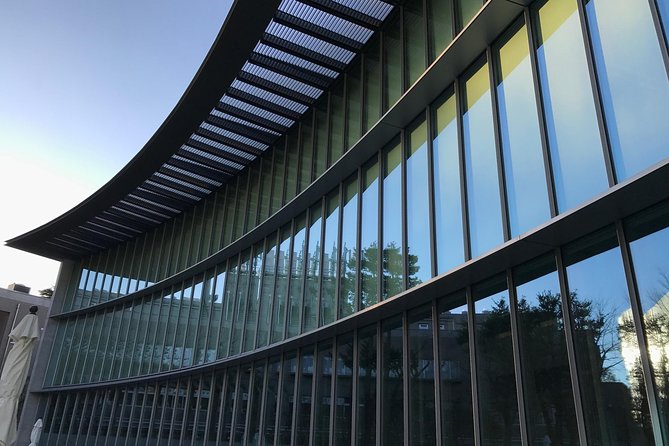
Ueno Park gets most of its fame for spring blossoms and big-name museums. But the real magic, for architecture fans, is that the park is also a mix of generations of design. You’ll see how modernism and earlier institutional building traditions sit side by side, and your guide helps you connect the dots.
What makes this tour feel worth it is the focus. This isn’t a tour about museum collections. It’s about the buildings themselves, what they were trying to do, and how they change the way you move through space. I like that the emphasis stays put: architecture, proportion, materials, and layout.
The other value point is your pacing. At 3 hours 30 minutes, you’re not trying to consume Ueno in one breath. You get enough time at each stop to notice details and compare buildings, which is where architecture tours actually click.
You can also read our reviews of more walking tours in Tokyo


Le Corbusier’s National Museum of Western Art: see modernism in person
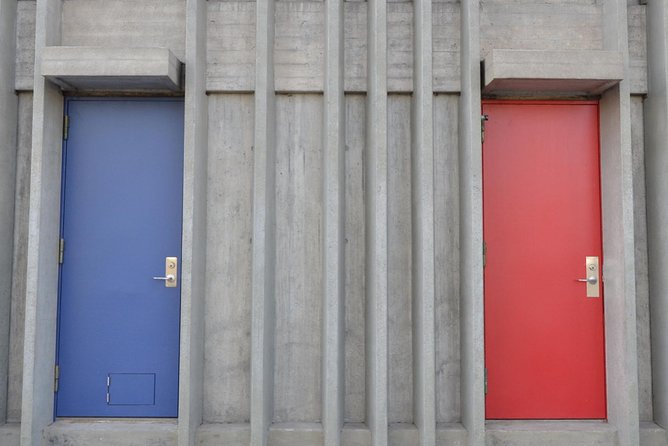
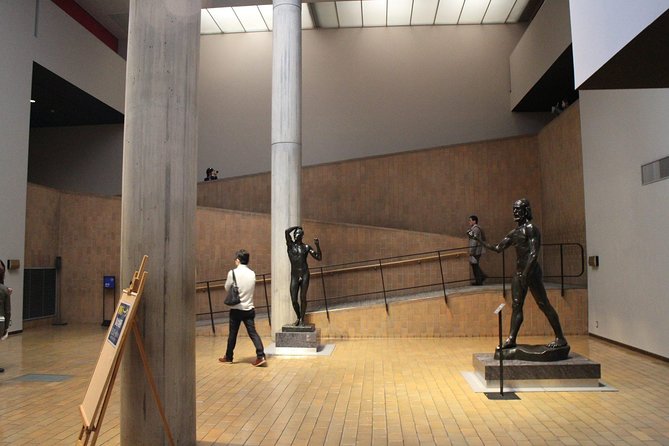
The first major stop is the National Museum of Western Art, designed by Le Corbusier. It’s UNESCO-listed for its modern architectural value (listed in 2016), and that designation matters because it tells you this building isn’t just stylish. It’s historically important as a modern statement in a very traditional museum park.
Even if you’re not a lifelong architecture nerd, you’ll be able to read this place. The museum’s character comes through in its clean geometry, its disciplined sense of form, and the way it frames the experience of entering and moving inside. The guide’s job here is to slow you down and help you notice those choices instead of only admiring from the street.
Timing is also in your favor. You’ll spend about 40 minutes here, which is a decent window to do two things: get a good exterior look and still have time to experience the building up close. One practical note: the stop details list admission as not included for this museum, even though the tour includes entrance for Tokyo National Museum. So expect that you may need to purchase the National Museum of Western Art ticket unless your booking says otherwise.
What I’d do in your shoes: arrive early enough that you’re not flustered. A museum building can feel different depending on whether you’re calm, and the architecture is easier to see when you’re not rushing toward a timed entry.
Tokyo Bunka Kaikan across from Le Corbusier: the Maekawa contrast trick
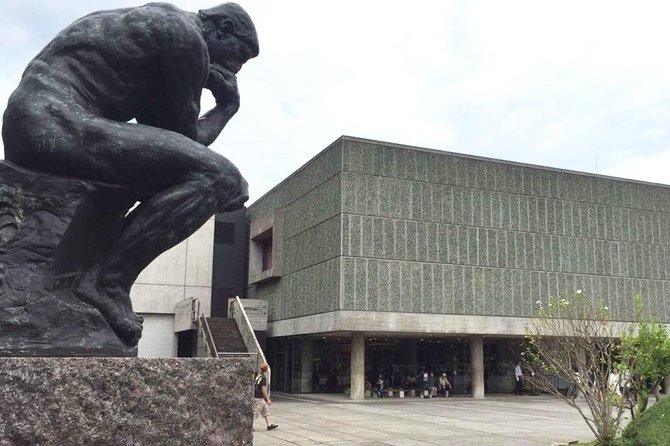
Right across the way you hit Tokyo Bunka Kaikan, designed by Kunio Maekawa. This pairing is clever because Maekawa was one of three local apprentices of Le Corbusier. So the tour doesn’t just show you two famous buildings; it sets up a built-in comparison.
You’ll get why the guide calls the relationship almost like a conversation. Even if two buildings look modern in their own ways, their personality can be different. That’s what you’re trying to spot: how influence travels, how an architect interprets a mentor’s language, and how design responds to site and function.
Your stop here is shorter—around 15 minutes—but it’s the right kind of short. This isn’t meant to be a deep museum experience. It’s meant to reset your eyes so the second building doesn’t blur into the first. You’ll likely leave this stop with a clearer sense of what you liked about Le Corbusier’s approach and what you find different in Maekawa’s.
Also, admission is listed as free for this stop. That’s a nice cost-saver, and it helps keep the day feeling more like a walk than a pile of paid tickets.
The International Library of Children’s Literature: a 1906 structure worth pausing for
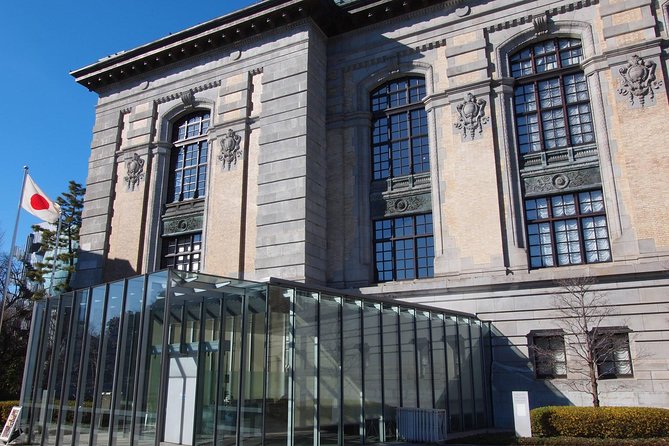
The third stop is the International Library of Children’s Literature, and the age alone is a reason to pay attention. It’s described as the oldest building in Ueno Park, constructed in 1906. When you step from modernist works into something built at the start of the 1900s, the contrast helps your brain see style more clearly.
This stop is about preservation and change. You’ll have time—about 40 minutes—to observe how the building has been preserved and renovated, and you’ll also notice newly built elements that sit with the older core. That mix is a real-world lesson in conservation: you’re not freezing a building in time, you’re keeping it alive while adapting it.
If you usually speed through older buildings, this is where the tour earns its keep. The guide’s architecture focus makes the building’s details feel practical, not dusty. You start thinking about what gets protected, what gets upgraded, and how architects and institutions handle the tension between old and new.
Admission is listed as free here too. So you can spend your money on paying attention instead of paying more tickets. For a park walk, that’s a win.
Tokyo National Museum: architectural “chapters” in one campus
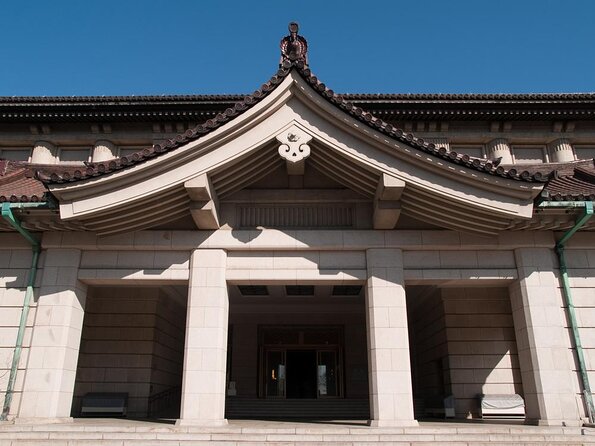
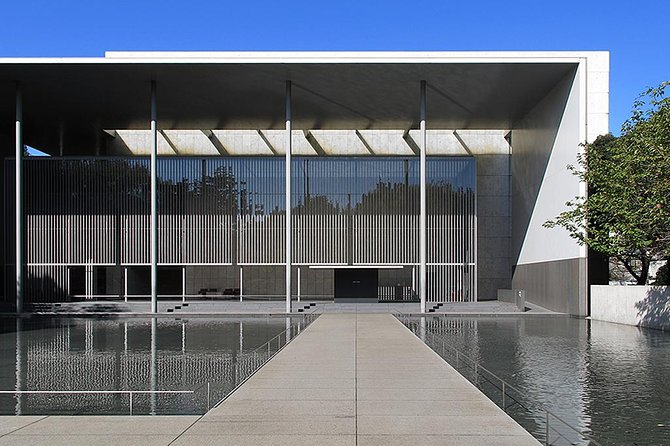
The final major stop is Tokyo National Museum. The tour highlights several specific architectural works: Hyokei-kan, Hon-kan, Toyo-kan, and the Gallery of Horyuji Treasure. You’re also told these reflect different historical backgrounds across a wide time span, from 1908 to 1999.
That range is the key. Instead of treating the museum as one building, the tour uses it like a timeline you can walk around. You’re getting architecture as history-in-space. The guide helps you connect what each building is trying to do—how it fits its era, and how the museum’s overall layout shapes your movement.
Stop time is about 30 minutes. That’s not enough to become an expert on every hall, but it is long enough to make sense of the major architectural landmarks and to understand the tour’s logic. The guide’s architecture lens is what turns a quick museum visit into a meaningful architectural snapshot.
Cost-wise, the tour includes Tokyo National Museum entrance fee (1000 yen). So compared to other parts of the day, this one feels smoother financially. One more reason to like this stop: the museum campus is easy to get “lost” in on your own, and the guide’s structure time helps you avoid aimless wandering.
Practical tip: wear shoes you trust. Even with guide pacing, museum campuses can add up to more walking than you’d expect if you’re trying to stare at details the whole time.
You can also read our reviews of more private tours in Tokyo



What’s included, what’s not, and how the value adds up
Let’s talk money and value in a realistic way.
You’re paying $146.59 per person for a private guided 3.5-hour architecture tour with modern and historic stops in Ueno Park. For a private tour, the guide time is the main cost driver, and that’s also where you get the biggest payoff. Architecture is hard to enjoy at full strength when you’re guessing what you’re looking at. This tour builds in interpretation, so you spend your attention wisely.
Included highlights from the tour details:
- Private professional guide
- Entrance fee to Tokyo National Museum (1000 yen)
- Cozy pause with drinks along the way
- Group discounts and a mobile ticket
Not included (based on the provided stop info and package info):
- Hotel pickup and drop-off
- Stop details show admission as not included for the National Museum of Western Art, even though Tokyo National Museum entry is covered
So here’s the decision point: you’re likely paying for one museum ticket yourself (most commonly the Western Art museum), but Tokyo National Museum is handled for you. That mix is fairly typical for multi-stop tours, and it can still be good value if your priority is guided architecture context.
Also, private matters. If you’re traveling as a couple, small family, or a group of architecture-minded friends, splitting the cost makes the per-person value feel more reasonable than a generic group tour. Even for solo travelers, the private setup can be a relief if you’d rather ask direct questions than wait for a big group to catch up.
One more practical value detail: the tour offers a choice of morning or afternoon departure. Picking the time that matches your energy level can make architecture feel more enjoyable than rushed.
Timing, meeting points, and how to avoid feeling rushed
You’ll spend about 3 hours 30 minutes on the walk, which means the day stays manageable even if you’re also planning other Ueno stops. The duration is short enough to keep it from feeling like a full-day project, but long enough to hit multiple architectural “chapters” instead of a quick hit list.
The meeting point is near JR Ueno Station, starting at 7-chōme-7-7 Uenokōen, Taito City. The tour ends at VIEW ALTTE 公園口券売機横7-chōme-1-1 Ueno, Taito City. Because the end point is different from the start, you’ll want to plan the rest of your day around that.
Two small tips that can save you stress:
- Bring a light layer. Museums and parks can swing temperature through the day.
- If you care about getting photos, give yourself a few minutes at the building edges. Once you’re inside, the focus is more about what the guide points out than about chasing perfect shots.
Who this tour is best for (and who might want something else)
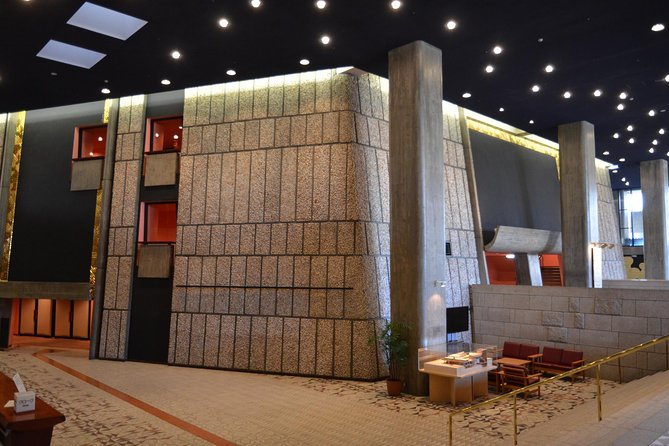
This tour is built for people who want architecture context fast.
You’ll likely love it if:
- You’re interested in modern architects like Le Corbusier and Kunio Maekawa
- You want to see more than just cherry blossoms and a single museum
- You prefer guided interpretation over self-guided “read the plaque and move on”
- You want a private format so questions stay on track
You might choose a different kind of tour if your main goal is art history or collecting deep museum knowledge. This one stays mostly on the architecture story, not the paintings, sculptures, or artifact specifics inside the halls.
There’s also a fit factor with your movement style. The tour requires moderate physical fitness, which likely means comfortable walking and some standing time around buildings. If you’re planning a day of lots of museum steps afterward, pace yourself.
One last useful data point: it averages 4.9 out of 5 from 8 reviews, and the comments emphasize how informative and well thought-out the guide experience felt, with a strong architecture focus and smooth English.
Should you book the Ueno Park Architecture Walking Tour?
Yes, I think you should book it if you want Ueno to make sense as an architecture destination. The pairing of Le Corbusier and Kunio Maekawa is the headline, but the real strength is how the tour connects buildings across different eras—modernism, early 1900s institutional design, and the long-running museum campus tradition.
Skip it (or consider a different option) if you mainly want art viewing time with lots of collection deep-dives. This tour is designed to help you look at buildings, not to turn museums into a full-blown artifact workshop.
One smart move: book earlier rather than later. The tour is described as being, on average, booked 44 days in advance, so if your schedule matters, lock in your departure time sooner.
FAQ
How long is the Private Ueno Park Architecture Walking Tour?
The tour runs for approximately 3 hours 30 minutes.
Is this tour private?
Yes. It’s a private tour, and only your group participates.
What museums and buildings are included?
The tour includes stops at the National Museum of Western Art, Tokyo Bunka Kaikan, the International Library of Children’s Literature, and Tokyo National Museum.
Do I need to pay museum admission fees?
The tour includes the entrance fee to Tokyo National Museum (1000 yen). The stop information also indicates admission may not be included for the National Museum of Western Art, so you should expect to handle any ticket that is not marked included in your booking.
When do tours run and can I choose morning or afternoon?
You can choose either a morning or afternoon departure.
Where do I meet the guide?
Meet at 7-chōme-7-7 Uenokōen, Taito City, Tokyo 110-0007, Japan, near JR Ueno Station.