REVIEW · TOKYO
Private Mount Fuji Tour in Luxury Vehicle with English Guide
Book on Viator →Operated by Mukarram Muhammad · Bookable on Viator
A day built for Fuji photos starts with one smart ride: private. You get a luxury car, an English-speaking guide/driver, and a full string of view stops that feel more relaxed than squeezed bus time. Two things I really like: Wi‑Fi in the vehicle for planning as you go, and the focus on classic photo angles like Oshino Hakkai and Kawaguchiko.
This kind of day works best when you want comfort and control. The main possible drawback is timing: if you run into traffic, your day can stretch longer than the usual 8 to 10 hours—so you’ll want an early start mindset.
In This Review
- Key points before you go
- Starting from Shibuya and riding in luxury all day
- What $650 per group buys you (and who it’s best for)
- How the day flows: Fuji Five Lakes first, then Hakone’s Owakudani
- Stop 1: Mt. Fuji Subaru Line 5th Station for the closest car view
- Lake Kawaguchiko: your Fuji “main gateway” moment
- Arakurayama Sengen Park and the Chureito Pagoda steps
- Oshino Hakkai ponds: calm water with Fuji behind it
- Oishi Park for a lake-and-mountain combo
- Kitaguchi Hongu Fuji Sengen Jinja Shrine for a spiritual Fuji angle
- A quick Fuji-famous stop: the Lawson facade photo moment
- Owaku-dani Valley: Hakone’s volcanic crater energy
- Timing, weather, and how to get the best Fuji shots
- The guide factor: why names like Mukarram and Talha matter
- What’s included vs. what to budget for
- Should you book this private Mount Fuji day tour?
- FAQ
- How long is the private Mount Fuji tour?
- Where does the tour start and end?
- Is pickup included?
- Is this tour private?
- Is Wi-Fi available during the drive?
- What’s included in the price?
- Are entrance fees included?
- Is lunch provided?
Key points before you go
- Private luxury vehicle keeps your group together (up to 6) and gives you freedom at each stop
- English-speaking guide/driver helps you get context fast, not just snapshots
- Wi‑Fi hotspot in the car makes the long ride easier and helps you coordinate photos
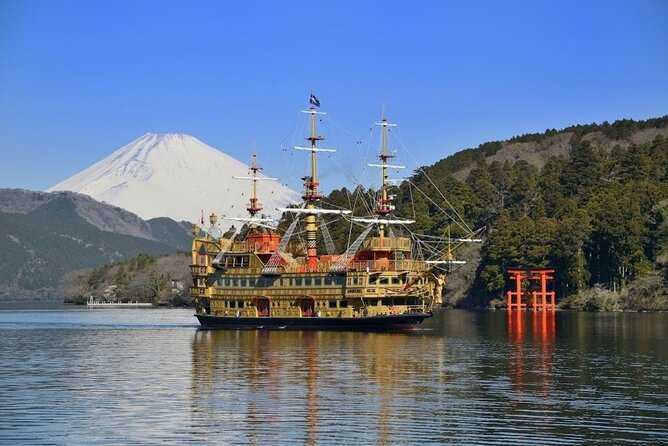
- Top Fuji photo stops include Mt. Fuji 5th Station, Arakurayama Sengen Park, and Oshino Hakkai
- Hakone add-on via Owaku-dani Valley adds real volcanic energy to your Fuji day
Starting from Shibuya and riding in luxury all day
Your day begins at Shibuya Crossing (21 Udagawacho, Shibuya). That’s a great pick-up zone because it’s central and easy to orient yourself with transit. From there, you’re in an air-conditioned luxury vehicle with a dedicated driver and English-speaking guide.
This is where the “private” part really pays off. With a shared bus, you’re often stuck waiting for everyone, and you don’t control how long you stay at the best viewpoints. Here, you’re trading that crowd rhythm for a more human pace—especially important for places where lines or timing matter.
One practical bonus: you get water bottles. It sounds small, but on a long day it helps you avoid the scramble when you’re trying to keep everyone moving.
You can also read our reviews of more guided tours in Tokyo
What $650 per group buys you (and who it’s best for)
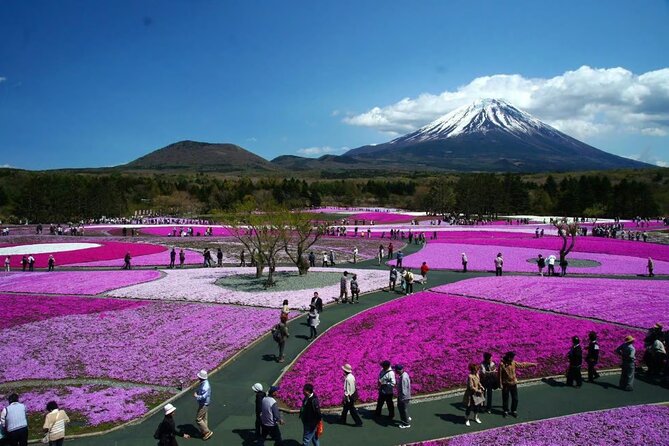
The price is $650 per group (up to 6). That can feel high compared with a basic bus tour, but you’re not just buying transportation. You’re paying for:
- a private vehicle for your group
- a guide/driver who handles route decisions
- Wi‑Fi during the trip
- time at multiple scenic stops that work better when you’re not sharing space and attention
If you fill the group cap, the per-person cost drops fast. If you’re only traveling as 2 or 3, you’ll feel the private pricing more—so it makes the most sense for families, small groups, or anyone who wants a comfortable day without the crowd squeeze.
This is also a strong match if you care about photos. Guides like Mukarram Muhammad and Talha Lakha stood out for helping with timing and taking photos while you’re in position. You’re not just rushing through dots on a map.
How the day flows: Fuji Five Lakes first, then Hakone’s Owakudani
The route is built like a visual arc. You start with the most dramatic “closest to the top” feeling at Mt. Fuji Subaru Line 5th Station. Then you work through Kawaguchiko viewpoints and surrounding areas like Arakurayama Sengen Park, Oshino Hakkai, and Oishi Park.
After that, the tone shifts slightly from lake beauty to volcanic impact when you reach Owaku-dani Valley. That’s a smart move. A lot of Fuji days feel similar—this adds texture, smells, and a different kind of scenery.
Plan to treat the day like one long photo sprint with breaks. Each stop is about an hour, so you’ll want to know what you want before you get out of the car.
Stop 1: Mt. Fuji Subaru Line 5th Station for the closest car view
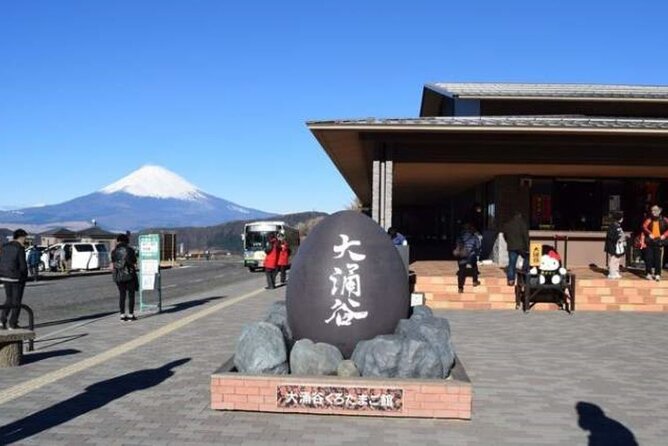
Your first major stop is Mt. Fuji Subaru Line 5th Station at around 2,200 meters. This is the closest car-accessible point to the top area, and it’s especially interesting if you like hiking or you want to understand the scale of Fuji.
You’ll typically get sweeping views toward the city when conditions are clear. This is also the place where weather really matters. If clouds cling to the mountain, you might not get the crisp top-and-town sight you’re hoping for.
Admission isn’t included here. The Mt. Fuji 5th station fee is 2,100 yen per group, so budget for that. You’ll also want to keep your timing realistic: weather plus mountain conditions can affect how comfortable it feels outside at altitude.
Lake Kawaguchiko: your Fuji “main gateway” moment
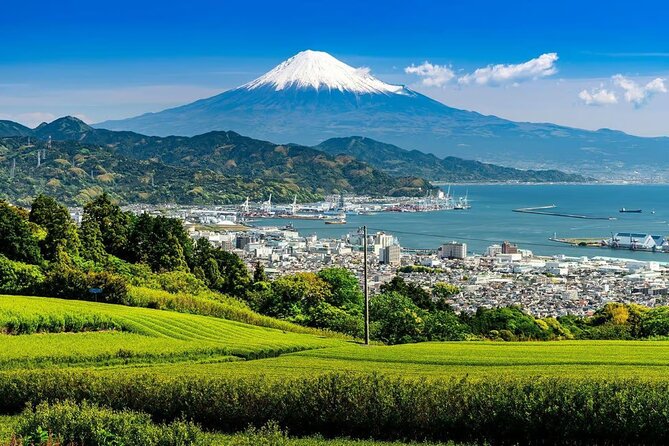
Next is Lake Kawaguchiko, the most popular of the Fuji Five Lakes. It’s a big deal because it’s set up for views. Even if you’ve seen Fuji photos before, this is where the mountain feels “present” rather than just pictured.
This stop is about 1 hour and admission is free. That one hour is usually enough for a viewpoint, a short walk, and a few different photo angles without turning the day into a marathon.
A key practical note: Fuji views can come and go as clouds shift. With a private guide, you can often position yourself for the best windows rather than locking yourself into one angle the whole hour.
You can also read our reviews of more private tours in Tokyo

Arakurayama Sengen Park and the Chureito Pagoda steps
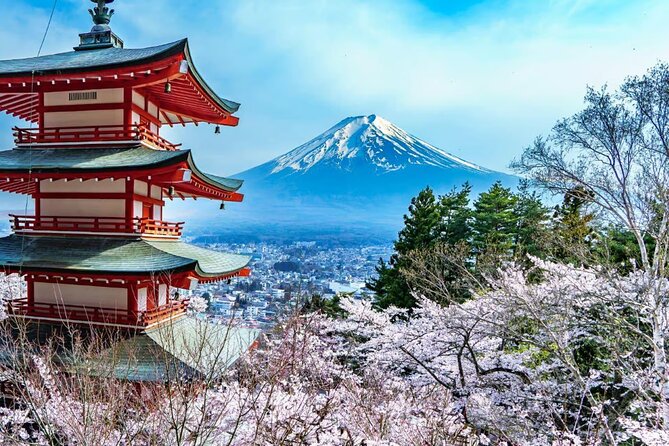
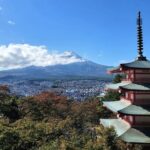
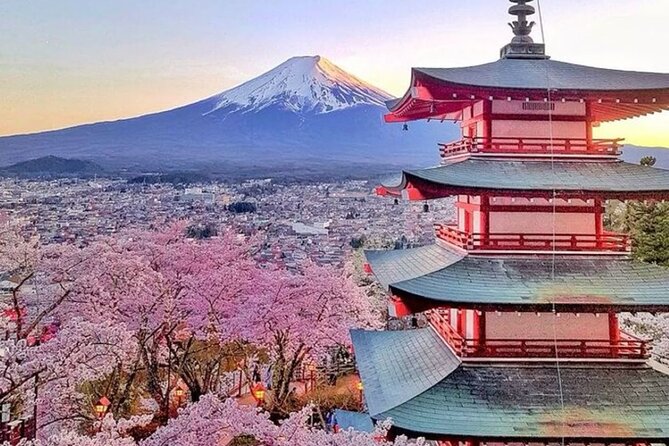
In Fujiyoshida, you’ll stop at Arakurayama Sengen Park, famous for the Chureito Pagoda. This is one of Japan’s most photographed Fuji scenes, partly because you get a structured composition: pagoda, stairs, and mountain alignment.
The practical thing to know: plan for stairs. If you want the classic angle, you should be ready to climb—expect around 400 steps. If you’re traveling with anyone who has mobility limits, this stop can become the most physically demanding part of the day.
Admission is free. The value here is the payoff: when the weather cooperates, you get that “how do they line this up so perfectly” feeling.
Oshino Hakkai ponds: calm water with Fuji behind it
Then you’ll reach Oshino Hakkai, a set of eight ponds in the Oshino village area between Lake Kawaguchiko and Lake Yamanakako. This is a quieter-feeling stop than some of the busier viewpoints, and it’s often where Fuji looks softer instead of looming.
The ponds are interesting because they’re tied to local springwater systems. You’re not just seeing a pretty view—you’re seeing a landscape shaped by how the mountain feeds the area.
This is a free stop and is timed at about 1 hour. The possible drawback: because it’s famous, it can still feel busy. With a private tour, though, you can usually keep your pace and avoid getting trapped in the slowest flow.
Oishi Park for a lake-and-mountain combo
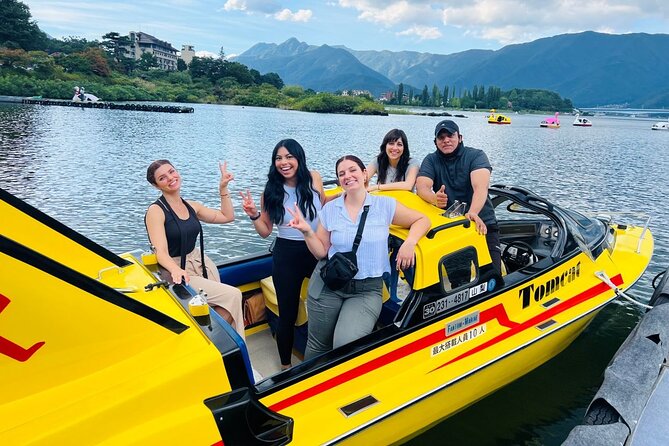
At Oishi Park, you get a north-shore view over Kawaguchiko, with Mount Fuji in the same frame. This is the kind of place where you don’t need a checklist. You just need time to look, walk a bit, and reframe.
It’s free and about 1 hour. If you go in season, you might notice flowers along the promenade. Even if you’re not there for a specific bloom, it’s still a good place to reset after the stairs and photo hotspots.
The main “consideration” here is simple: it depends on weather clarity. If Fuji is obscured, the lake still looks nice, but the magic shot may be harder.
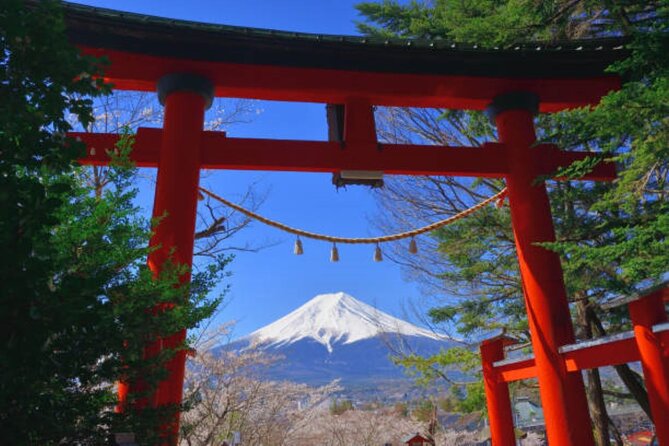
Kitaguchi Hongu Fuji Sengen Jinja Shrine for a spiritual Fuji angle
Next is Kitaguchi Hongu Fuji Sengen Jinja Shrine, one of about 1,300 Asama shrines in Japan that honor volcanoes and Mount Fuji specifically. This stop adds meaning to the trip. Fuji isn’t only a view to photograph—it’s treated as a presence in culture.
Admission is free, and your time is about an hour. A shrine stop like this works best if you can slow down for a moment. Your guide can also help you connect the dots between volcanic symbolism and how people live around Fuji.
The drawback is that it can feel like a break from the photo race. If you’re chasing every picture, you’ll still want to carve out time here for a calmer pace.
A quick Fuji-famous stop: the Lawson facade photo moment
The route includes a very specific, very modern Fuji photo target: the Lawson Fujikawaguchiko area (near the town hall), known for its striking blue facade against the mountain. It’s the kind of shot you’ve probably seen on Instagram, and it works because it’s unexpected.
Admission is free, and the stop is again timed around 1 hour. The practical approach: treat it like a quick photo breather. Get the shot, check the cloud movement, and don’t let it steal your time from the longer-view areas where Fuji may appear more fully.
Owaku-dani Valley: Hakone’s volcanic crater energy
To finish the scenic loop, you head to Owaku-dani Valley in the Hakone area. This is around an eruption zone tied to Mount Hakone from long ago. Today, you can see and experience the volcanic presence through active fumes and the general “hot earth” feeling.
This stop is about 1 hour but admission is not included. You’ll want to budget extra because the volcanic area has its own ticketing system. Also, be ready for stronger smells and steam. If you’re sensitive, you’ll want to keep your exposure short and focused on viewpoints.
In a day that’s mostly about Fuji’s beauty, Owaku-dani adds contrast. It reminds you that this region is still alive with geological action.
Timing, weather, and how to get the best Fuji shots
This tour requires good weather. If conditions are poor, the experience can be moved to another date or refunded. That matters because Fuji is a visibility-dependent star.
What I’d plan around:
- Bring layers. Even within Japan, mountain air can feel different fast.
- Assume your day may start early. In practice, traffic can make guides adjust departure times.
- If clouds move in and out, don’t panic. The route gives you multiple chances at different angles, so you’re not betting everything on one viewpoint.
One more reality check: roads between Tokyo and the Fuji/Hakone region can be slow at peak times. Some schedules can run longer than the typical 8 to 10 hours, especially if you’re coming from farther out and hit heavy traffic. Your best move is to keep your evening flexible and treat this like a full-day outing.
The guide factor: why names like Mukarram and Talha matter
In private tours, your guide isn’t just “a person in front.” They’re the one making sure your time isn’t wasted. In this case, the standout notes across different experiences were consistent:
- Mukarram Muhammad and Talha Lakha were praised for being friendly and easy to talk to.
- They helped with photo timing, including taking shots for your group while you’re positioned.
- The driving was described as smooth, which helps on a long day when you’re staring out the window and trying to stay comfortable.
That’s the kind of service that turns a “drive to viewpoints” day into a “day that feels handled.”
What’s included vs. what to budget for
Included:
- Private transportation in an air-conditioned luxury vehicle
- English-speaking professional guide & driver
- Wi‑Fi hotspot in the vehicle
- Water bottles
Not included:
- Lunch
- Mt. Fuji 5th station admission fee (2,100 yen per group)
- Owaku-dani Valley admission
My practical advice: eat before you go. You’ll likely start early, you’ll have only limited time in each stop, and lunch can become a squeeze if everyone’s hungry at the wrong moment.
Should you book this private Mount Fuji day tour?
Book it if you want a comfortable, photo-focused Fuji day without fighting crowds or bus timing. You’ll enjoy the private car, the English guide support, and the mix of iconic stops: Fuji 5th Station, Kawaguchiko, Arakurayama Sengen Park, Oshino Hakkai, Oishi Park, and Owaku-dani.
Skip it (or rethink it) if you’re very strict about a short schedule. Traffic can stretch the day, and you’ll also climb stairs at places like Arakurayama. This is a full-day plan, not a quick hit.
If your goal is to get as much Fuji as possible with less stress, this kind of private routing is exactly the right tool.
FAQ
How long is the private Mount Fuji tour?
The tour runs about 8 to 10 hours (and the total experience time is listed as 10 hours).
Where does the tour start and end?
It starts at Shibuya Crossing (21 Udagawacho, Shibuya) and ends back at the meeting point.
Is pickup included?
Yes. Pickup is offered, and the meeting point is near public transportation.
Is this tour private?
Yes. It’s a private tour/activity, and only your group participates. The group size is up to 6.
Is Wi-Fi available during the drive?
Yes. There’s a Wi‑Fi hotspot router provided in the vehicle.
What’s included in the price?
Included are the air-conditioned luxury vehicle, an English-speaking guide & driver, Wi‑Fi, and water bottles.
Are entrance fees included?
Not all of them. Mt. Fuji 5th station and Owaku-dani Valley have admission costs that are not included.
Is lunch provided?
No. Lunch is not included.