REVIEW · TOKYO
Tokyo: Maxell Aqua Park Shinagawa Direct Entry Ticket
Book on GetYourGuide →Operated by LINKTIVITY Inc. · Bookable on GetYourGuide
Shinagawa’s aquarium is pure city entertainment. With direct entry, you cut out the usual counter wait, and you step into an urban aquarium built around digital art and seasonal performances. I like that the whole experience is designed to feel current and easy to plan, even if you only have part of a day.
My other big draw is the animal lineup. You can look for the Alfredi manta ray highlight in eastern Japan and the dwarf sawfish that’s on public display worldwide, alongside a huge collection (about 20,000 creatures across 350 species). The main downside to keep in mind: this ticket covers admission and the dolphin performance, but some attractions inside may not be included, so you’ll want to check what’s covered before you arrive.
In This Review
- Key things to know before you go
- Tokyo weather doesn’t get a vote at Maxell Aqua Park Shinagawa
- Direct-entry ticket: the time savings near Shinagawa matter
- What you’ll see inside: 20,000 creatures across 350 species
- The rare highlights: Alfredi manta ray and dwarf sawfish
- Dolphin performance: included, kid-friendly, and schedule-dependent
- Rules and on-the-ground etiquette that actually help
- Price and value: is $18 worth it?
- Who this fits best (and who might want a different plan)
- Quick plan for a smooth 1-day visit
- Should you book this direct-entry ticket?
- FAQ
- Is this ticket valid for one day only?
- Do I need to wait in line at the counter?
- What is included with the ticket?
- Are all aquarium attractions included?
- Where is Maxell Aqua Park Shinagawa located?
- What are the viewing rules inside the aquarium?
- Can children enter for free?
- What time do I need to enter by?
- Do opening hours stay the same year-round?
- Until when can I make a reservation?
- What payment and cancellation options are available?
Key things to know before you go
- Skip the counter line with direct entry, right at the aquarium
- Seasonal digital art means exhibits and performances change over time
- Rare marine standouts include an Alfredi manta ray (east Japan) and the dwarf sawfish (public display)
- Indoor location makes it a smart choice for rain, heat, or cold
- Dolphin performance is included with your admission
- Last admission is 1 hour before closing, so don’t show up at the tail end of the day
Tokyo weather doesn’t get a vote at Maxell Aqua Park Shinagawa
One of the smartest things about choosing this aquarium near Shinagawa Station is that it’s fully indoors. Tokyo can throw everything from summer humidity to winter rain at you, and you’re still good to go. Instead of hunting for outdoor backups, you can spend your day in a controlled space designed for entertainment and animal viewing.
It also helps that this place is in a super convenient pocket of the city. The aquarium sits about a 2-minute walk from Shinagawa Station, so you’re not spending your limited time on trains and transfers. If your Tokyo plan includes shopping, museums, or day trips, this fits cleanly as either a start-of-day activity or a late afternoon reset.
Finally, the aquarium concept is built around show-style pacing. It’s not just tanks and signs. The park uses digital art tied to Japan’s four seasons, plus dynamic performances, so the environment keeps moving rather than feeling like a slow walk-through.
You can also read our reviews of more tours and experiences in Tokyo



Direct-entry ticket: the time savings near Shinagawa matter
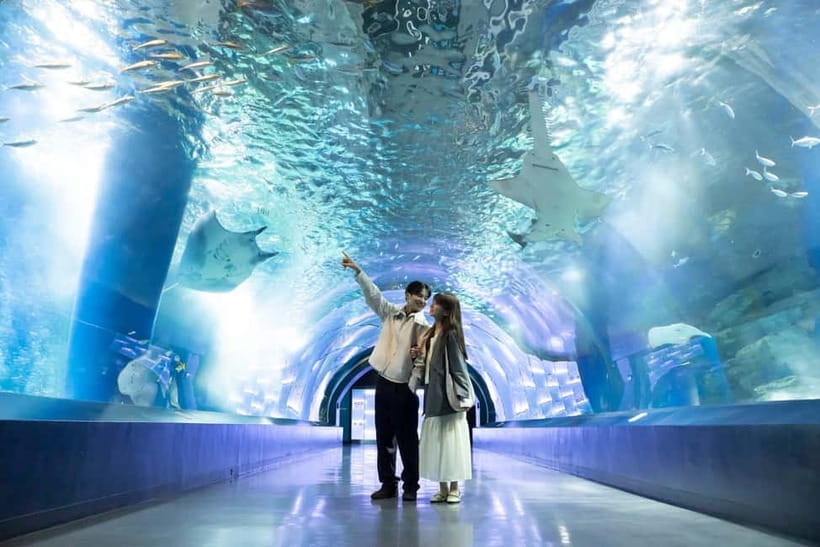
Here’s where this ticket earns its keep: it’s designed for direct access, meaning you don’t need to wait in line at the counter. In a busy station area, that can be the difference between a smooth visit and a stressful one, especially if you’re traveling with kids or trying to catch a scheduled show.
For meeting up, use the aquarium at Maxell Aqua Park Shinagawa, Shinagawa Prince Hotel (Takanawa 4-10-30), Minato City. The location is easy to orient around because it’s tied to a major hotel-and-station area, not a remote neighborhood.
Practical tip: even with direct entry, you still want to plan your arrival around the dolphin performance and your last-admission window. The ticket is valid for 1 day, but last admission is 1 hour before closing, so timing affects how much you’ll realistically fit in.
What you’ll see inside: 20,000 creatures across 350 species
The core experience here is an urban aquarium with a performance mindset. You’re looking at roughly 20,000 creatures across about 350 species, which is a lot to cover in a single day. The good news is that the design helps you flow from one area to the next without feeling like you’re wandering with no purpose.
You’ll also notice how the aquarium leans into seasonal storytelling. Digital art reflects Japan’s four seasons, and the exhibits and performances can change depending on when you visit. That matters because it turns a second visit (or a seasonal visit) into something different, not a rerun of the same route.
If you like structure, plan to prioritize:
- the big-name exhibits and rare highlights (more on those next),
- then circle back for the wider collection once you’ve hit the must-sees,
- and leave time for the dolphin performance before your day gets tight.
Because this is a fully indoor venue, you can keep moving through the day without getting slowed down by weather. You might still get “tank fatigue,” but the show elements reduce that risk.
The rare highlights: Alfredi manta ray and dwarf sawfish
If you’re coming specifically for animal wow-factor, this is where the aquarium delivers. Two standout claims are the reason many people add this to their Tokyo list.
First: the Alfredi manta ray is described as the only one exhibited in eastern Japan. Even if manta rays are already a familiar concept to you, the rarity of this specific exhibit is the point. You’re not just seeing a manta; you’re seeing a display that’s unusually hard to find in this part of Japan.
Second: the dwarf sawfish is listed as the only one on public display in the world. That’s an eye-catching statement, and it’s also a great reminder to slow down for the time you spend observing. Rare animals can be quick, and depending on where you stand, you may get a better view by waiting a few minutes rather than rushing to the next stop.
Practical way to make these highlights work for you:
- give yourself a little extra time at these exhibits,
- expect that viewing angles may change as the animals move,
- and avoid relying on flash photos (more on rules below).
If you’re an animal lover with limited time, these two highlights are a strong argument that this aquarium is more than just mainstream entertainment.
Dolphin performance: included, kid-friendly, and schedule-dependent
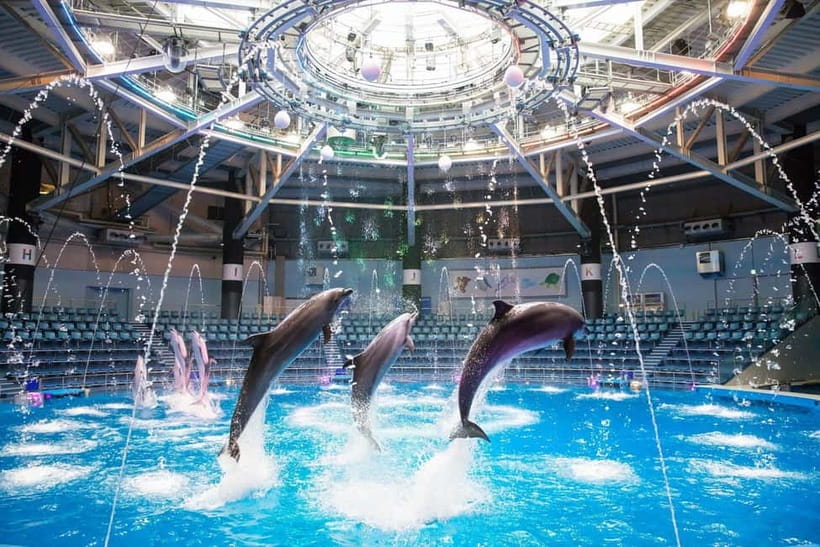
This ticket includes a dolphin performance, and it’s the kind of included activity that makes planning easier. When you’re traveling, you’re usually balancing meals, transit, and backup plans. An included show removes one decision from your day.
That said, showtimes are not listed here, and aquarium opening hours can vary by season. The safest approach is simple: check the aquarium’s official schedule when you make your plans, then build your visit around the dolphin performance and your closing cutoff.
Also, remember the timing rule: last admission is 1 hour before closing. If the dolphin show is late in the day, arriving early matters even with direct entry, because you’ll need time to see the key exhibits and not feel rushed.
One more thing: this ticket covers admission and the dolphin performance, but the aquarium also has attractions that are not available with this ticket. So if you see extra add-ons inside—photo experiences, specialty areas, or anything that looks like a separate ticket—don’t assume they’re included. Scan what’s offered on-site and decide on the spot.





Rules and on-the-ground etiquette that actually help
A few house rules shape your experience, and they’re easy to follow:
- No smoking
- No flash photography
The no-flash rule is especially relevant because many aquariums use lighting designed for animal comfort and viewing clarity. If you want photos, use normal lighting and let your phone or camera settings do the work.
The aquarium is also wheelchair accessible, which is a big plus for mixed travel groups. Since the venue is fully indoors, it’s generally easier to move around than places that require frequent outdoor walking.
Practical photo tip: take your photos during lulls when animals are moving less. With rules on flash, you’ll get better results waiting for steady moments rather than firing photos continuously.
Price and value: is $18 worth it?

At about $18 per person for direct entry, this ticket can be good value, mainly because it isn’t just admission. It includes the dolphin performance and saves time with skipping the counter line.
To judge value, I think about three things:
- Time saved: Direct entry reduces friction, which is meaningful near major stations like Shinagawa.
- Included show: If you would have paid separately for a dolphin show anyway, the ticket price looks more reasonable.
- Unique animal odds: The Alfredi manta ray and dwarf sawfish highlights aren’t guaranteed experiences across the region. If rare species are your priority, you’re paying for a specific payoff, not generic aquarium viewing.
The possible value catch is the one to watch closely: some attractions may not be included. If you plan to add extras inside the park, factor that into your total budget. But if you’re focused on core exhibits plus the dolphin show, the $18 ticket feels like a straightforward deal.
Who this fits best (and who might want a different plan)
This experience is a strong match if:
- you want an aquarium that feels like Tokyo entertainment, not only a quiet museum-style visit,
- you’re traveling with kids (the dolphin performance is included),
- you’re short on time and appreciate direct entry near a major station,
- you’re specifically interested in rare marine animals like the Alfredi manta ray and dwarf sawfish.
It may be less ideal if:
- you’re hoping this single ticket unlocks every attraction in the venue without exception (some attractions aren’t included),
- you want a long, slow day with no scheduled elements—because performances and timing rules can steer how you spend your time.
Quick plan for a smooth 1-day visit
If you only have one day, your best strategy is to treat this like a show-and-exhibits circuit.
- Arrive with enough time to enter and get oriented before the dolphin performance.
- Target the rare highlights early, when you still have full energy for standing and waiting for good viewing.
- Then work through the broad collection of tanks and species with the digital-seasonal art as your wayfinding anchor.
- Finish with whatever you missed rather than trying to do everything at once.
Keep in mind that opening hours can vary by season, and last admission is fixed relative to closing. Build your timing around that one-hour-before-close rule so you don’t end the day feeling rushed.
Should you book this direct-entry ticket?
I’d book it if you’re in the Shinagawa area and you want a Tokyo aquarium experience that’s organized, indoor-friendly, and built around animal highlights plus a dolphin performance. The combination of direct entry, a convenient station-area location, and rare exhibits like the Alfredi manta ray and dwarf sawfish makes it feel targeted rather than generic.
Skip booking only if you’re mainly after extra attractions that aren’t included with this ticket, or if you’re planning a very late arrival that risks missing last admission. If you can show up with a realistic schedule, this is one of those tickets that turns into a smooth day.
FAQ
Is this ticket valid for one day only?
Yes. The admission is valid for 1 day. You’ll want to check availability for the starting times when you book.
Do I need to wait in line at the counter?
No. This is a direct entry ticket, so you don’t need to wait in line at the counter.
What is included with the ticket?
The ticket includes admission and the dolphin performance.
Are all aquarium attractions included?
No. Some attractions are not available with this ticket.
Where is Maxell Aqua Park Shinagawa located?
It’s at Maxell Aqua Park Shinagawa, Shinagawa Prince Hotel area: 108-8611 Tokyo, Minato City, Takanawa 4 Chome-10-30.
What are the viewing rules inside the aquarium?
Smoking is not allowed, and flash photography is not allowed.
Can children enter for free?
Yes. Children under 4 years old can enter for free.
What time do I need to enter by?
Last admission is 1 hour before closing.
Do opening hours stay the same year-round?
No. Opening hours vary depending on the season, so check the official website for the latest hours.
Until when can I make a reservation?
You need to make your reservation by 18:30 on the day of your visit (with a specific earlier deadline for August 23 and 24).
What payment and cancellation options are available?
You can reserve now and pay later, and you can cancel up to 24 hours in advance for a full refund.