REVIEW · TOKYO
Private Half-Day Grand Bike Tour in Tokyo
Book on Viator →Operated by 東京下町自転車ツアー Tokyo Backstreets Bike Tour · Bookable on Viator
Tokyo looks different at bike speed.
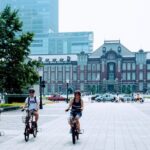
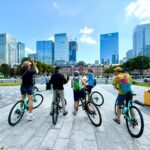
This private Tokyo bike tour is a smart way to cover a lot of ground without fighting train transfers, and I like how it’s built around straightforward cycling with stops that actually let you look, take photos, and hop off when it makes sense. You also get complimentary bottled water and helmets, so the basics are handled.
My favorite part, though, is the human side: a guide who pays attention to safety and pacing, including keeping you steady through busier areas. The main thing to consider is that you’ll be riding for several hours, and the rental bikes are folding models suited for riders 140–180 cm tall (you’re asked to inform them if you’re over 180 cm).
In This Review
- Key highlights worth your attention
- Why this private bike route is a great use of half a day
- Getting started at 11:30 in Sumida (and what the route style feels like)
- Sakura Bridge to Asakusa: Skytree photos and traditional craft breaks
- From Ryogoku’s sumo vibe to old canals at Yanagi and Nihonbashi
- Riding past Ginza, the Imperial Palace area, and Tokyo Tower without losing time
- Ginkgo season vibes, plus Fashionable Tokyo: Jingu Gaien, Aoyama, Omotesando
- Harajuku and Meiji Jingu: shopping lanes, then a slower walk into the forest mood
- Shibuya Crossing finish: the energy lands right where you end
- Price and value: what you’re really paying for
- Who this tour is best for (and who might want something else)
- Should you book this private half-day bike tour?
- FAQ
- How long is the private half-day grand bike tour?
- Where does the tour start and where does it end?
- What time does the tour begin?
- Is this tour private?
- What’s included in the price?
- Do I need tickets or pay admission fees at the stops?
- What should I know about bike size and fitness level?
- What happens if the weather is poor?
Key highlights worth your attention
- Safety-focused guiding that keeps the ride comfortable from start to finish
- Real Tokyo variety, from temple streets to palace exteriors, plus shopping areas
- Scenic bridge and canal views, especially around Yanagi Bridge and Nihonbashi
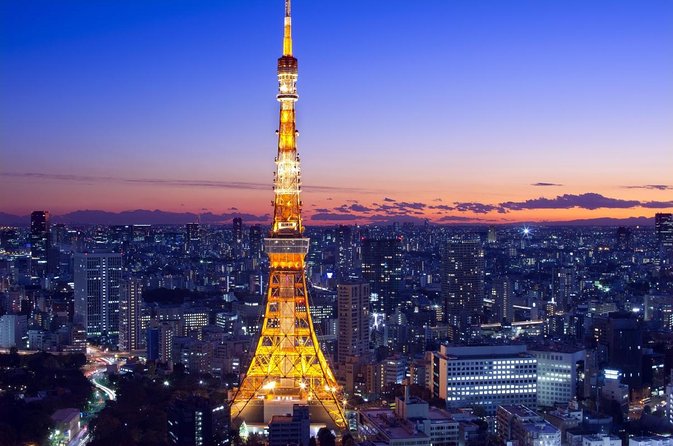
- Photo-friendly stops like Sakura Bridge with Tokyo Skytree in view and Tokyo Tower cycling past
- Hands-on Harajuku shopping time, including time at Takeshita Street
Why this private bike route is a great use of half a day
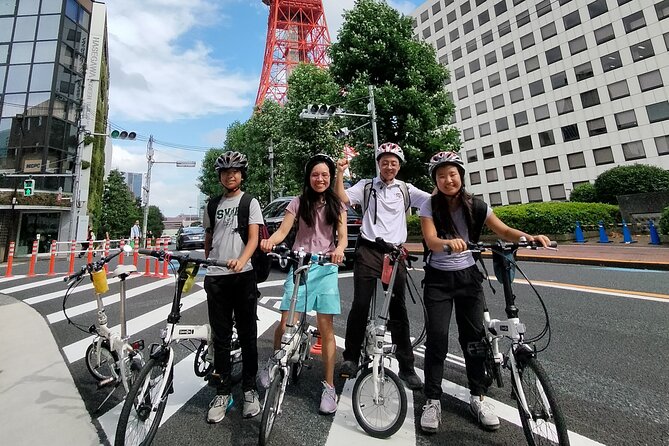
Tokyo is big, and sight-by-sight touring can turn into a transfer marathon. This kind of guided bike tour fixes that problem by letting you move efficiently between neighborhoods while still making time for iconic places.
You’ll feel the difference right away. Instead of seeing districts only from sidewalks and platforms, you glide along streets that locals use. That matters in Tokyo because the city’s character lives in the in-between blocks: side streets, bridge approaches, and the way neighborhoods connect.
And since it’s private, your group rides together and you’re not stuck matching your pace to a crowd. That makes the ride more relaxed—especially for photo stops and short walks.
You can also read our reviews of more cycling tours in Tokyo
Getting started at 11:30 in Sumida (and what the route style feels like)
The tour starts at 11:30 am at Tokyo Backstreets Bike Tour in Sumida City (Higashimukōjima), inside the share office called シェアオフィス「シナプス」. Ending at Shibuya Station near the zebra crossing is convenient if you want to keep exploring on foot or by public transport afterward.
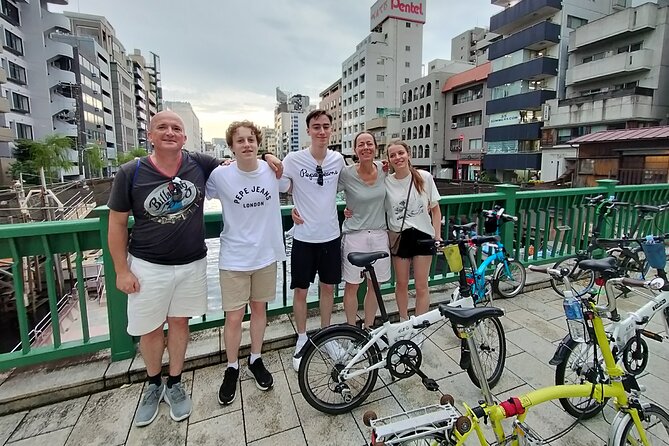
The bike style is also important. These are folding bikes with 14–20 inch wheels, suitable for heights 140–180 cm. If you’re outside that range, plan ahead so the bike fit is right—comfort affects how much you enjoy the ride.
The pacing is built for moderate physical fitness. You’re not doing a long-distance ride, but you are cycling through city traffic conditions, and you’ll want to be mentally ready for stop-and-go riding and frequent short crossings.
Sakura Bridge to Asakusa: Skytree photos and traditional craft breaks
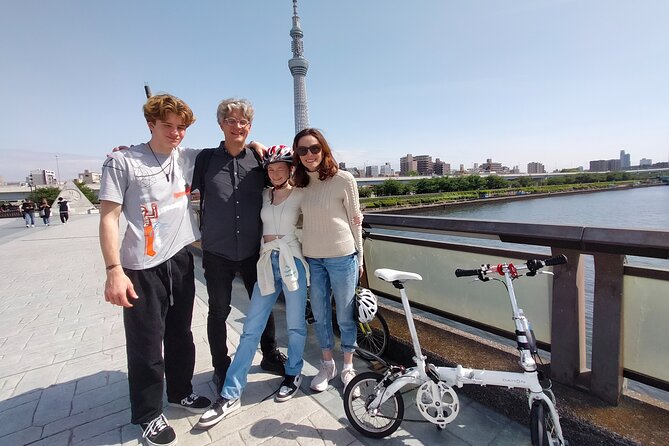
The early part of the day is set up like a greatest-hits warm-up, starting at Sakura Bridge. You’ll get a chance to take photos with Tokyo Skytree—the kind of skyline shot that looks good even when you’re not planning a full photo session.
Next comes the Edo Taito Traditional Crafts Center (also described as the Edo Shitamachi Traditional Crafts Museum). This is your chance to slow down and see Japanese traditional handicrafts in a museum setting. Admission is free, and the time here is short enough that it doesn’t drag, but long enough for you to actually notice details.
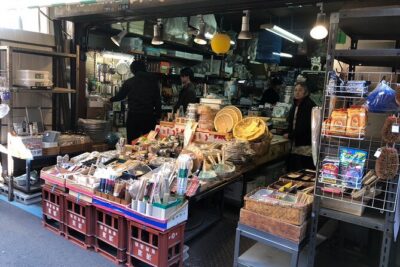
Then you roll into Senso-ji Temple, one of Tokyo’s major temple areas. What makes it work on a bike tour is the rhythm: you cycle in, park, and you can move through the temple grounds and nearby shopping streets where snack stalls and stalls are part of the atmosphere. It’s not just a landmark; it’s a place where temple and street life blend together.
Practical note: this area is busy on foot, so the value of having a guide is real. You don’t waste energy figuring out where to park or how to move through the crowds while staying on schedule.
From Ryogoku’s sumo vibe to old canals at Yanagi and Nihonbashi
After Asakusa, you’ll feel the city shift in a nice way. One quick stop is Ryogoku Kokugikan, where you cycle in front of the sumo stadium. Even if sumo isn’t the reason you’re in Tokyo, the view hits because it’s so specific and local—this is Japan’s sports culture written into the streets.
Then you head toward the water. Yanagi Bridge is a canal-side pause where you can see older waterside landscapes and the jetties for yakatabune (party boats). If you’re the type who likes atmosphere shots rather than only monuments, this is a satisfying break.
From there, Nihonbashi Bridge adds another layer. You’ll see sightseeing old waterways and the town area around them. It’s a different mood than Asakusa’s temple energy—more grounded, more “everyday Tokyo,” with the water giving you a sense of scale.
Drawback to keep in mind: bridge areas can mean more pedestrians, more activity near water, and more street-level unpredictability. That’s exactly where a safety-minded guide makes a difference—so you can focus on the views.
Riding past Ginza, the Imperial Palace area, and Tokyo Tower without losing time
Once you’re out of the older districts, the tour moves into areas most people only see on foot or after a train hop. This is where the bike format pays off.
You ride through Ginza, one of Tokyo’s main shopping streets. The tour description calls out major luxury brands along the way (examples given include Louis Vuitton and Chanel). Even if luxury shopping isn’t your thing, Ginza works well on a bike because you get the street feel and architecture at a pace that’s faster than walking.
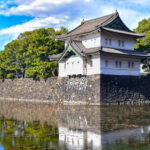
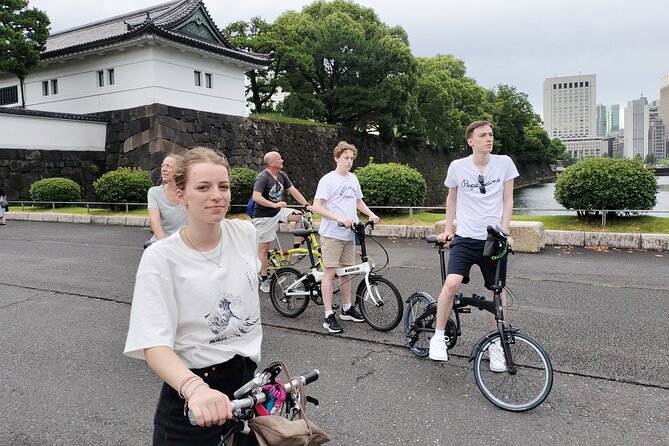
Next is the Imperial Palace, with time focused on outside viewing. The palace sits on about 115 hectares, and it’s described as built on the former Edo castle area, including the Tokugawa shogun’s residence and the center of Edo government. Even from the outside, it gives you a real sense of how Tokyo’s modern city center grew out of older power structures.
Cycling near the National Diet building adds another landmark that’s easy to miss if you’re only doing temple-and-shopping routes. It’s described as built in 1936, and you’ll ride near it rather than doing a long formal stop.
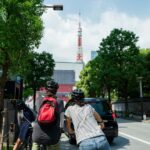
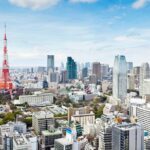
Then you hit Tokyo Tower. This tower is 333 meters tall and was opened in 1958 mainly for broadcasting. The tour has you cycling past it briefly, and it still draws attention from both foreign visitors and Japanese people—so it’s one of those “old but still relevant” Tokyo sights.
You can also read our reviews of more private tours in Tokyo

Ginkgo season vibes, plus Fashionable Tokyo: Jingu Gaien, Aoyama, Omotesando
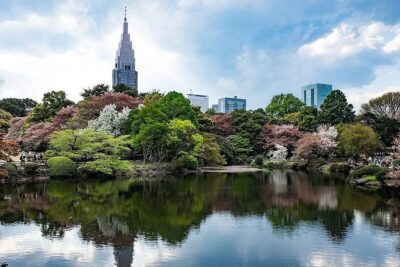
After the landmark cluster, the tour shifts into neighborhood texture. A standout stop is Jingu Gaien Ginkgo Tree-lined Street, known for ginkgo trees that turn yellow in autumn. Even outside peak season, the tree-lined road is described as beautiful on both sides, which matters because you’ll be moving slowly enough to appreciate the rhythm of the street.
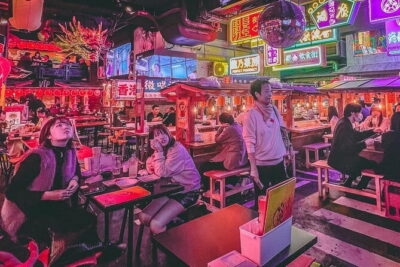
You’ll also cycle through Roppongi, described as night town. This is more about the feel of the district than any single monument—think energy, street activity, and that “Tokyo after hours” vibe, even during daylight cycling.
Then it’s Aoyama Street, known as one of the more fashionable roads in central Tokyo. After that comes Omotesando, another high street lined with luxury brand shops. On foot, these streets can feel like a long, straight walk. On bikes, they feel like a continuous corridor of city design—plus you keep your morning momentum.
Harajuku and Meiji Jingu: shopping lanes, then a slower walk into the forest mood
This tour doesn’t treat Harajuku like a one-minute stop. It includes Takeshita Street, with a fun twist: you may push bikes into the shopping area. That detail matters because it means you’re not just standing at the entrance watching people flow—you can actually navigate the shopping lane more intentionally, with time to browse.
After Harajuku, you’ll move toward Omotesando again within the day flow (matching what you’d expect from how the neighborhoods connect). Even if you skip a lot of shopping, the street-by-street changes are part of the experience here.
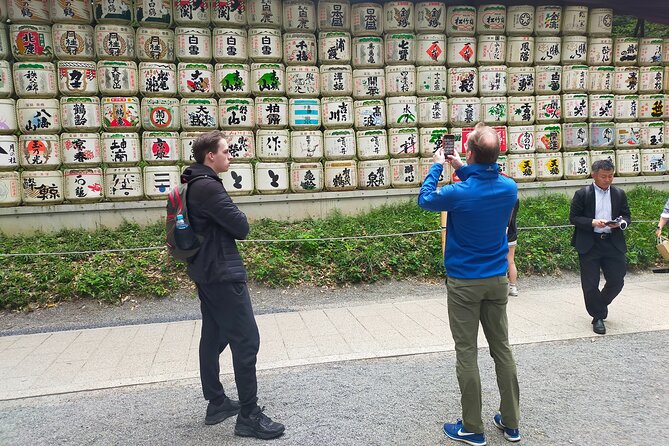
Then you reach Meiji Jingu Shrine. You park bikes and walk inside, with about one hour. The shrine is described as one of Japan’s biggest, dedicated to the former Emperor, established in 1920, and known for the sight of many sake barrels dedicated to the shrine’s purpose. This stop is a good reset after shopping zones—more quiet, more open space, and a break from the constant storefront stimulus.
Practical consideration: one hour can feel like just a taste if you love shrines and grounds. But it’s long enough to enjoy a calm walk without dragging the whole tour later than planned.
Shibuya Crossing finish: the energy lands right where you end
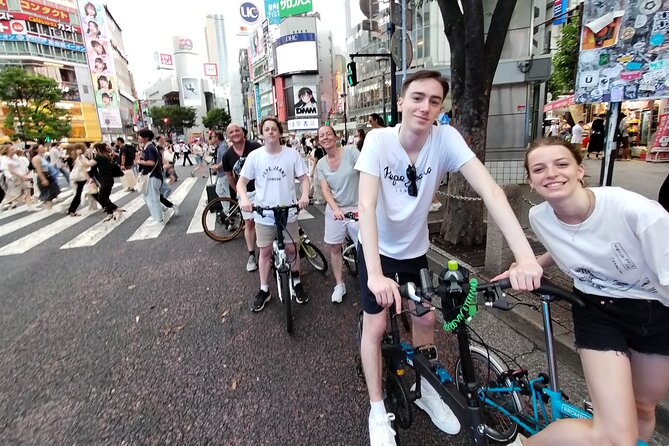
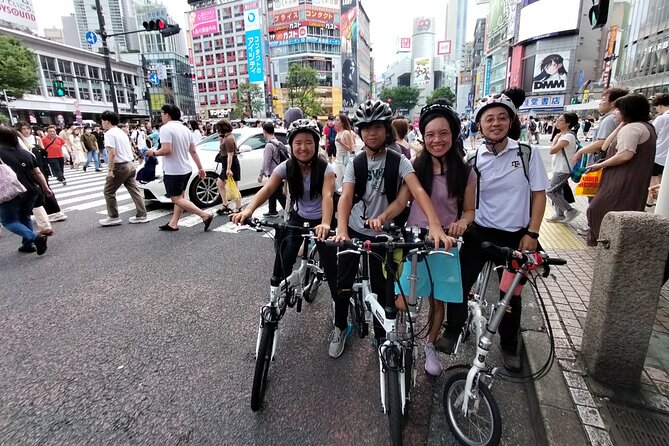
The tour ends at Shibuya Station near the zebra crossing, finishing at Shibuya Crossing itself. It’s described as the zebra crossing known for being busy all the time. That’s perfect as a finale because it’s instantly recognizable and easy to keep your evening plans flexible.
You won’t need to figure out an exact pickup point at the end—Shibuya is a major hub. If you want dinner plans later, you can pivot immediately.
Price and value: what you’re really paying for
At $130.07 per person for roughly 5–6 hours, this isn’t a bargain-basement city pass. But it can be excellent value if you want to maximize time and minimize friction.
Here’s why. You’re getting:
- A private guided experience (your group only)
- Use of a bicycle and helmets
- Bottled water
- Guided access through a route that strings together multiple major areas—Asakusa, palace exterior areas, Tokyo Tower, Harajuku/Meiji Jingu, and Shibuya
If you were to build this day yourself, you’d likely spend extra time sorting out bike logistics, route planning, and transfers. Even if you don’t love cycling, a good guide changes the day from coordination stress into smooth sightseeing.
One more detail: the tour notes that group discounts may apply and that it uses a mobile ticket. Those small conveniences add up, especially for a half-day plan.
Who this tour is best for (and who might want something else)
This is a strong fit if you:
- Want to cover big Tokyo districts in a single day
- Like photo stops but also want street-level context
- Prefer a guide who keeps you safe and on track (the tour descriptions and guide-focused praise point heavily in that direction)
- Enjoy variety: temples, bridges, palace grounds, landmark exteriors, and neighborhood shopping
You might choose a different style if you:
- Don’t feel comfortable cycling for multiple hours in a city environment
- Are outside the bike height range without confirming fit ahead of time
Should you book this private half-day bike tour?
I think it’s a yes for most first-timers—and a great choice for anyone who already knows Tokyo’s “must-sees” and wants the connecting texture between them.
Book it if you want more Tokyo per hour, guided help through busy areas, and a route that balances classic sights with street scenes you’d likely miss while stuck on foot or in transit. If you’re comfortable with moderate physical activity and the bike fit rules, this private format is exactly what makes it feel worth the price.
If you’re sensitive to crowds, plan your mindset for busy sights like Senso-ji and Shibuya Crossing, and let the guide handle the flow.
FAQ
How long is the private half-day grand bike tour?
The tour runs about 5 to 6 hours.
Where does the tour start and where does it end?
It starts at Tokyo Backstreets Bike Tour in Sumida City (Higashimukōjima) and ends at Shibuya Station near the Shibuya zebra crossing.
What time does the tour begin?
Start time is 11:30 am.
Is this tour private?
Yes. It’s a private tour, and only your group participates.
What’s included in the price?
Included are the use of a bicycle, bottled water, and helmets.
Do I need tickets or pay admission fees at the stops?
The listed stops have free admission tickets noted in the itinerary (based on the tour’s stop details).
What should I know about bike size and fitness level?
The bikes are folding bikes with 14–20 inch suitable for people between 140–180 cm tall. The tour asks for a moderate physical fitness level.
What happens if the weather is poor?
The tour requires good weather. If it’s canceled due to poor weather, you’ll be offered a different date or a full refund.