REVIEW · TOKYO
Mt. Fuji Day Trip from Tokyo with English Speaking Driver Guide
Book on Viator →Operated by NIHON HORIZON TOUR · Bookable on Viator
A private van beats Tokyo logistics, and it gives you flexible control over your Fuji day; I like that you get hotel pickup and an English-speaking driver for a stress-free countryside shift. The big drawback to plan for: the 10-hour schedule is tight, and weather can affect what you can actually see.
You’ll drive out of the city into the Fuji Five Lakes area and bounce between viewpoints, shrines, and cool nature stops. I also like that the tour is set up for customization, so you’re not locked into one rigid route.
One more thing: not every driver is equally talkative, and the tour can feel more like a guided transport than a deep narration. That matters if you want lots of commentary rather than smart stop-by-stop guidance.
In This Review
- Key points before you go
- Private van to Fuji Five Lakes: the real perk is your control
- Price and value: $497 per group can be surprisingly fair
- Timing matters: how early Tokyo traffic shapes your Fuji day
- Lake Kawaguchiko: your best first look at Fuji
- Mt. Fuji 5th Station: the photo stop at 2,300 meters
- Oshino Hakkai: calm village vibes from a dried-up lake
- Oishi Park: the quick, scenic payoff
- Kitaguchi Hongu Fuji Sengen Jinja: a shrine tied to volcano worship
- Lake Yamanaka and the swan-style boat ride option
- Narusawa Ice Cave and Fugaku Wind Cave: cold air, cool stops
- Narusawa Ice Cave
- Fugaku Wind Cave
- Saiko Iyashi no Sato Nemba: the thatched-roof village pause
- English-speaking driver-guide: big wins, mixed consistency
- Comfort and small issues that can affect your mood
- What to budget for: tickets, meals, and possible overtime
- Should you book this Mt. Fuji day trip?
- FAQ
- How many people are in a group?
- What is the total tour duration?
- Is hotel pickup and drop-off included?
- Is the Mt. Fuji 5th Station entrance fee included?
- Are meals included in the tour price?
- Are the other attraction admissions included?
- What if the weather is bad?
- Is there a charge if the trip runs longer than 10 hours?
Key points before you go
- Private group up to 7 means no crowds in your vehicle and easier pacing
- Hotel pickup and drop-off removes the biggest friction of getting to Fuji from Tokyo
- A mix of classic spots and offbeat stops (5th Station, shrines, Oshino Hakkai, plus ice/wind caves)
- Weather matters for views, especially around Mt. Fuji’s most photogenic areas
- Some sights cost extra and not all stops may fit into one day
Private van to Fuji Five Lakes: the real perk is your control
This is built as a private day trip, not a bus tour. With room for up to 7 people, you can travel at a pace that fits your group—especially helpful for families, seniors, or anyone who hates racing between stations.
The driver/guide is there to translate and manage the day, but the bigger value is control. You can customize the order and emphasis of the stops based on what you care about most, while the driver also suggests the best places in the route. That’s useful because the Fuji area can get crowded fast, and parking/viewpoint access changes by day.
Just know there’s a trade-off. Even though the itinerary lists many places, a single 10-hour day (hotel to hotel) doesn’t always let you do everything—so deciding what matters most to your group is smart.
You can also read our reviews of more guided tours in Tokyo
Price and value: $497 per group can be surprisingly fair
The price is $497.43 per group (up to 7) for about 10 hours. If you fill the van, that can work out to roughly $71 per person—often less than what you’d pay for a private transfer plus individual attraction tickets.
What you get in the bundle is meaningful:
- Air-conditioned private vehicle
- Highway tolls and gasoline
- Driver/guide
- Pickup and drop-off (you share your pickup address up front)
- Mobile ticket
What you don’t get is where the real budgeting comes in:
- Food and drinks
- The Mt. Fuji 5th Station entrance fee
- Fees for several nature/attraction stops listed later
So think of this as paying for convenience and transportation first, then budgeting for the “choose-your-own” attractions second.
Timing matters: how early Tokyo traffic shapes your Fuji day
Plan your expectations around driving time. Getting out of Tokyo can take a while depending on traffic, and the Fuji drive is the kind of journey where early departure helps your day feel less rushed.
In practice, I’d treat this trip like a day with two “clocks”:
- the clock for getting there before view conditions change, and
- the clock for keeping each stop long enough to enjoy it.
The itinerary is built around shorter visits that work in a 10-hour window, but road closures and weather can shift the day. If Mt. Fuji access is blocked or visibility isn’t great, your driver may reorganize the flow of stops. That’s why it’s smart to enter with flexibility, not a checklist mindset.
Lake Kawaguchiko: your best first look at Fuji
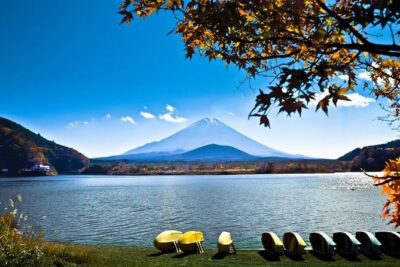
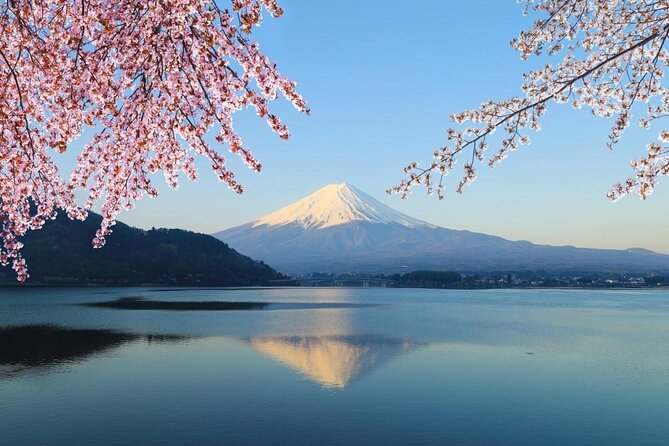
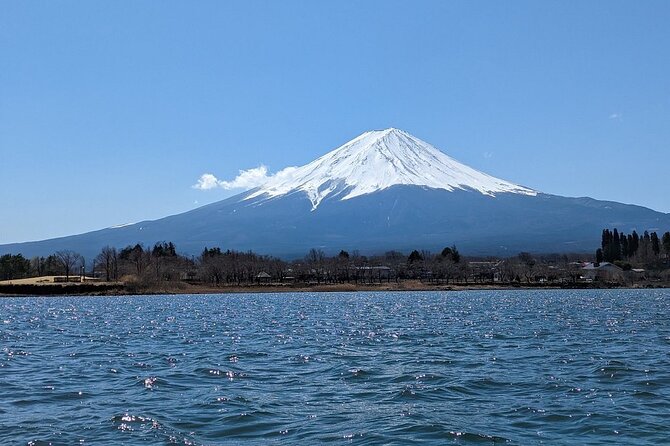
The day begins around Lake Kawaguchiko, elevation about 830 meters, which helps explain why summers can feel cooler and winters can turn icy. That setting is a big part of why this area works for photos—you’re not just staring at a mountain; you’re seeing it layered over water and town edges.
You’ll usually get about 45 minutes here, with admission free. It’s enough time to:
- find a viewpoint without stress,
- walk a little, and
- decide whether you want to spend extra time on optional water or cable-related activities.
One practical note: the itinerary hints at options like a ship cruise or rope-related choices. Those are not included as part of the base tour, so if your goal is a specific ride, budget time and ticket cost.
Mt. Fuji 5th Station: the photo stop at 2,300 meters
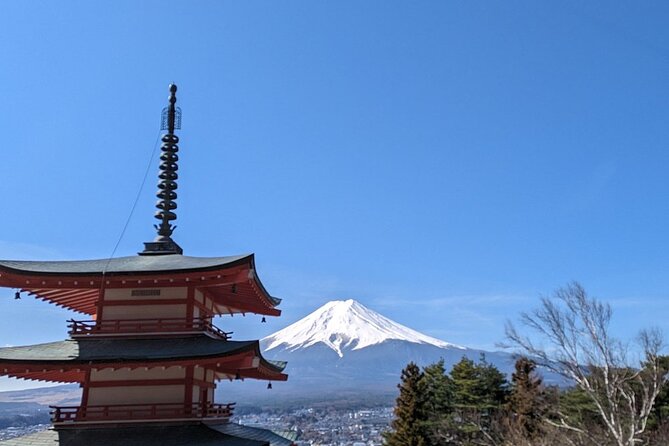
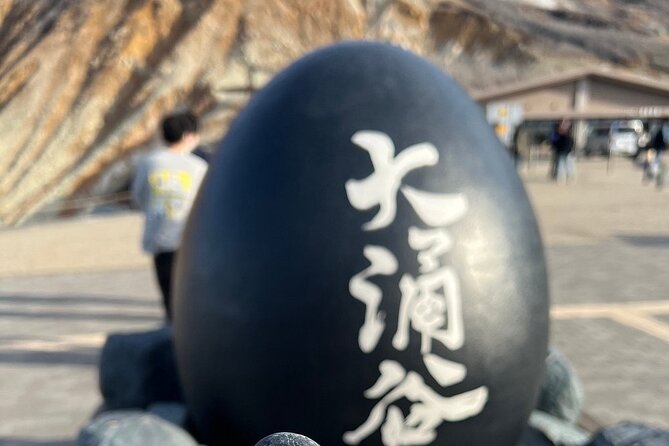
The Mt. Fuji 5th Station stop is about 1 hour. At roughly 2,300 meters, you’ll get a commanding view of the Fuji Five Lakes region below—this is the classic “I’m close to Fuji” moment, even if you’re not climbing the summit.
The 5th Station entrance fee is not included. The listed cost is 2,100 Japanese yen per group, so add that to your expectations.
Here’s how to make the most of only one hour:
- Take photos fast when the view is good.
- Don’t burn your time hunting; ask the driver where the best angles are early.
- Wear layers. Even if Tokyo feels mild, higher elevation can feel colder.
Also keep in mind that weather can steal the view. Your best chance is usually a clear window, so being ready to move the moment the sky opens helps a lot.
You can also read our reviews of more tours and experiences in Tokyo





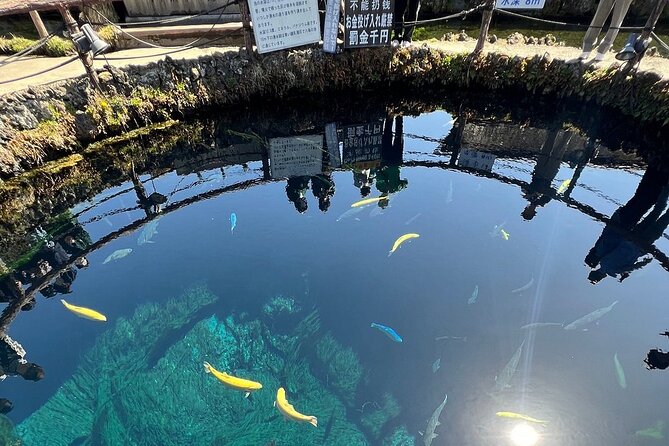
Oshino Hakkai: calm village vibes from a dried-up lake
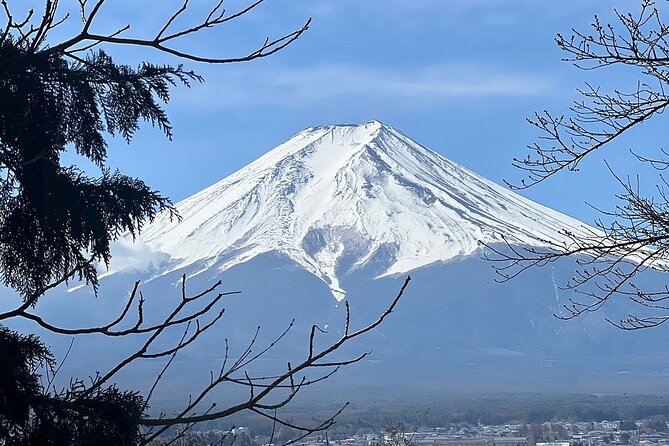
Next up is Oshino Hakkai, a small village in the Fuji Five Lakes region tied to a former sixth lake that dried up centuries ago. The “Hakkai” springs and ponds area is one of those places where the scenery feels gentle and human-scaled, not just tourist loud.
You’ll have about 45 minutes and the stop is admission free. It’s a nice contrast after driving—think stroll-and-snack energy rather than museum pacing. This is also a good spot to reset if your group wants a slower moment before the next viewpoint.
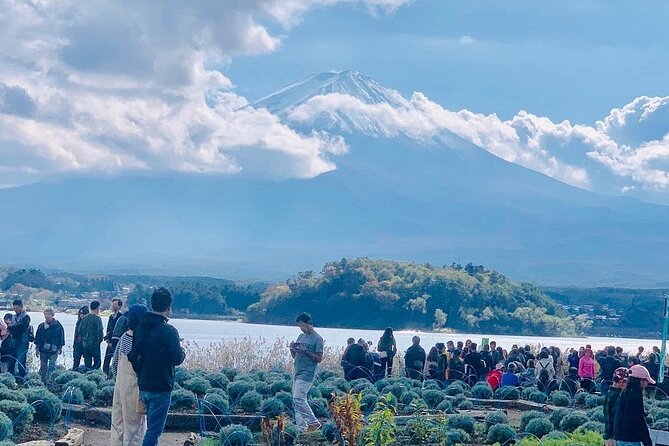
The only drawback: this kind of place can get busy. If you’re traveling at a peak time, expect lines or slower walking. In those situations, your time gets spent more on moving through the crowd than soaking in details.
Oishi Park: the quick, scenic payoff
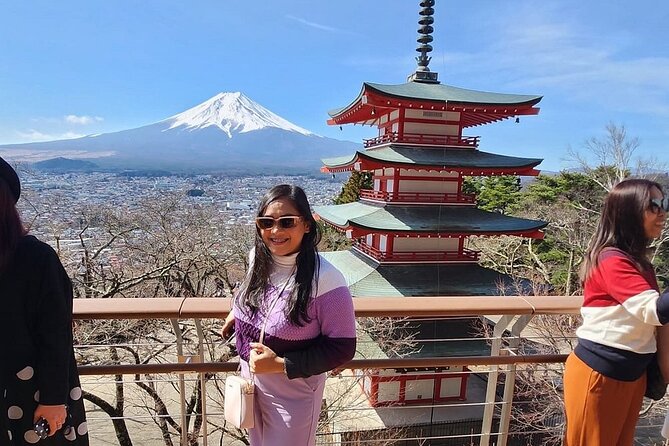
Oishi Park is about 30 minutes, admission free, and it’s timed for easy viewing. It sits on the north shore of Lake Kawaguchiko and is known for showing lake and Mt. Fuji at once.
This is a strong “photo efficiency” stop. You can spend a short time and still feel like you got the signature Fuji shot. If your group is tired, this is also a good place to aim for the viewpoints without committing to longer hikes.
Kitaguchi Hongu Fuji Sengen Jinja: a shrine tied to volcano worship
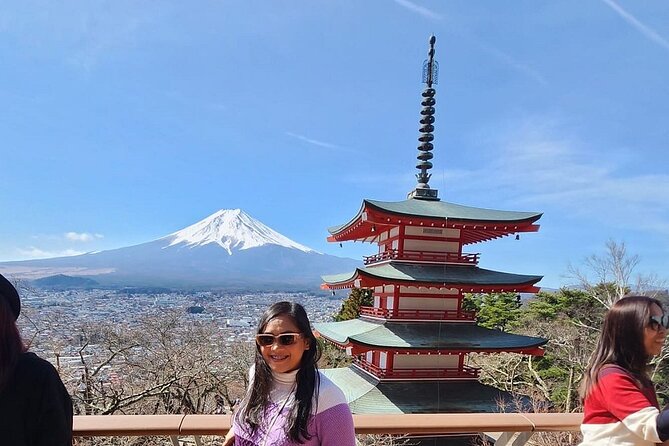
Then you hit Kitaguchi Hongu Fuji Sengen Jinja Shrine, about 30 minutes and admission free. It’s one of about 1,300 Asama shrines and focuses on volcano worship, including Mount Fuji itself. The listing also notes it’s part of the Mt. Fuji UNESCO World Heritage grouping.
This stop matters because it gives Mt. Fuji a cultural frame. You see the mountain not only as scenery but as something people have long treated as sacred—especially relevant if you’re visiting with kids or anyone who likes context.
A practical tip: keep your pace gentle here. Shrines tend to reward slower observation, and this is one of the best stops to take a breath.
Lake Yamanaka and the swan-style boat ride option
Lake Yamanaka is the largest of the Fuji Five Lakes. You’ll typically get around 30 minutes and the stop is admission free.
The listing specifically mentions a sightseeing boat experience called Swan Lake, described as a revamped boat cruise option. If your group wants a calm water moment, this can be a nice break from viewpoints.
Just be aware: time is short, and boat schedules or winter conditions can affect what’s possible. If you’re traveling in colder months, I’d treat optional rides as a maybe—not a guaranteed.
Narusawa Ice Cave and Fugaku Wind Cave: cold air, cool stops
Now you move toward more unusual nature stops, both tied to the Aokigahara Jukai forest edge.
Narusawa Ice Cave
Narusawa Hyoketsu Ice Cave is about 45 minutes and not included (admission fee not included). It’s known as one of the tourist spots accessible through the Aokigahara forest area.
Fugaku Wind Cave
Fugaku Wind Cave is about 44 minutes and also not included. The listing notes it stays pleasantly cool even in summer and averages around 3℃ once you’re inside.
This is where I’d pack for comfort. If you’re sensitive to cold, bring a light jacket even in warm months. Also, because these stops are extra-ticket and time-sensitive, your driver may skip one if the schedule tightens.
Saiko Iyashi no Sato Nemba: the thatched-roof village pause
Saiko Iyashi no Sato Nemba is a thatched-roof village revived over time, with classic seasonal scenery and Mt. Fuji views in clear conditions. The stop is about 30 minutes and not included in admission.
This is a great final “slow-down” stop. It’s less about height and more about atmosphere—wood, straw roofs, and a village feel that helps the day feel complete rather than only photo stops.
The possible drawback is simple: in poor weather or heavy crowds, your enjoyment can depend more on the village itself than on the mountain view. If visibility is good, this becomes extra satisfying.
English-speaking driver-guide: big wins, mixed consistency
The best part of this tour is when the driver is fully engaged—not just driving. Many guides reportedly do exactly that: on-time pickup, clear guidance at each stop, and smart suggestions for where to stand for the best Fuji angles.
Names that show up in positive experiences include Mukarram, Rana, Prem, Prince, Mani, Jamil, Asif, Usman, Sunn(y), and Hasan. The themes are consistent: helpful photo guidance, courteous service, safe driving, and flexibility for seniors or families.
But I’ll be honest about the risk. Some people report a chauffeur-style experience rather than a true guide, with limited commentary or focus shifting to personal phone use. Others mention operational issues like missed pickups or getting lost on the return drive, including cases where they couldn’t reach anyone quickly.
So what should you do? I’d do two things:
- set expectations early: ask how much narration you’ll get and what they’ll handle versus what you handle,
- make sure you have solid contact details for the day so pickup delays don’t turn into stress.
Comfort and small issues that can affect your mood
This is a private, air-conditioned vehicle, which is a big comfort win on a long day. Your group also gets the benefit of not wrestling with transfers or crowded platforms.
Still, comfort isn’t guaranteed in every case. Some reports describe an unpleasant odor in the van, and others point to a vehicle change due to mechanical issues mid-drive. Those situations are rare, but they are real enough that I’d advise bringing a few basics:
- water for the long drive,
- layers for temperature swings,
- something small for snacks since lunch isn’t included.
One more comfort trick: if your group wants photos, ask the driver to help you position quickly. Some drivers are clearly practiced at jumping on brief clearing in the clouds for fast shots, and that’s a huge difference maker for Fuji days.
What to budget for: tickets, meals, and possible overtime
Your base includes transport and most logistics, but not the fun extras.
Here’s what’s explicitly not included:
- Food, drink, lunch
- Fuji 5th Station entrance fee: 2,100 yen per group
- Narusawa Ice Cave admission
- Fugaku Wind Cave admission
- Saiko Iyashi no Sato Nemba admission
(These are listed as not included, and their exact prices aren’t provided here.)
There’s also a time-cost factor. The listing notes an overtime charge of 5,000¥ per extra hour after 10 hours hotel to hotel.
How this affects your decision: if you’re trying to fit in every possible stop, you may hit time strain. If you choose 3 to 5 “must-dos” and let the rest be optional, you’ll enjoy the day more.
Should you book this Mt. Fuji day trip?
Book it if you want convenience, a private vehicle, and the ability to shape the day around your group. It’s especially worth it for first-time Fuji visitors who don’t want to self-drive, and for anyone traveling with slower walkers, kids, or seniors who benefit from fewer transfers and a driver handling the logistics.
Skip or think twice if you’re expecting a highly interactive guide experience with nonstop narration. Also be extra mindful if your travel dates are tight and you can’t absorb weather-driven changes. Like any Fuji day, visibility can be fickle, and your schedule may shift.
If you do book: pick your top priorities (for most people it’s 5th Station plus one lake view and one culture stop), keep your expectations flexible, and confirm pickup details clearly so the day starts smoothly.
FAQ
How many people are in a group?
The tour is private for your group, with a maximum of up to 7 people per group.
What is the total tour duration?
The duration is listed as about 10 hours (approx.), including hotel to hotel time.
Is hotel pickup and drop-off included?
Yes. Pickup and drop-off are included, and you should provide your pickup address in the special requirements area.
Is the Mt. Fuji 5th Station entrance fee included?
No. The Mt. Fuji 5th station entrance fee is listed as 2,100 Japanese Yen per group.
Are meals included in the tour price?
No. Food, drink, and lunch are not included.
Are the other attraction admissions included?
Admissions for some stops are listed as not included, including the Narusawa Ice Cave, Fugaku Wind Cave, and Saiko Iyashi no Sato Nemba.
What if the weather is bad?
The experience requires good weather. If it’s canceled due to poor weather, you’ll be offered a different date or a full refund.
Is there a charge if the trip runs longer than 10 hours?
Yes. There is an overtime charge of 5,000¥ per extra hour after 10 hours hotel to hotel time.