REVIEW · TOKYO
Traditional Japanese Comedy, Juggling & Magic Live Show in Tokyo
Book on Viator →Operated by EDOCCO STUDIO · Bookable on Viator
Three arts, one stage, zero Japanese stress. This 90-minute performance at EDOCCO STUDIO pairs Rakugo comedy, Daikagura acrobatics, and Japanese magic with help for non-Japanese speakers. It’s held inside the Kanda Myojin Shrine complex near Akihabara, so it feels both traditional and easy to reach.
I like two things a lot: the hands-on moments where you learn (and sometimes try) what the performers do, and the fact it’s an indoor show in a real shrine setting. You’re not just watching from afar—you get a real taste of how these acts work.
One thing to consider: the show has interaction built in, so if you want totally passive sightseeing, the audience participation may feel a bit like being pulled into the moment.
In This Review
- Key highlights
- Traditional Japanese Comedy, Juggling & Magic in Tokyo: the 90-minute format that works
- Kanda Myojin Shrine meets EDOCCO STUDIO: where the vibe comes from
- The kind of audience participation you can expect
- Breaking down the three acts: Rakugo, Daikagura, and Wazuma
- Rakugo comedy: storytelling you can follow
- Daikagura: juggling and acrobatics with audience energy
- Wazuma magic: taught techniques, not just spectacle
- Timing, tickets, and getting there from Akihabara without stress
- Souvenirs you can actually use: tenugui, folding fans, and paper balloons
- Who should book this Tokyo show (and who should skip it)
- FAQ
- What’s the show duration?
- Where does the show take place?
- What types of performances are included?
- Do I need to know Japanese to enjoy it?
- What do I get as a gift?
- Is the theater session limited in size?
- Should you book this Traditional Japanese Comedy, Juggling & Magic show?
Key highlights
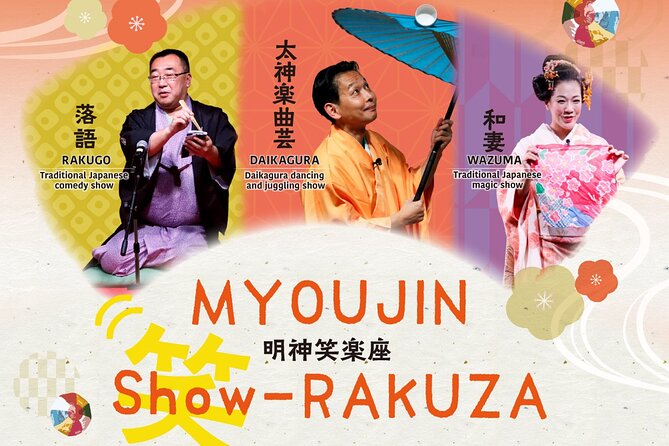
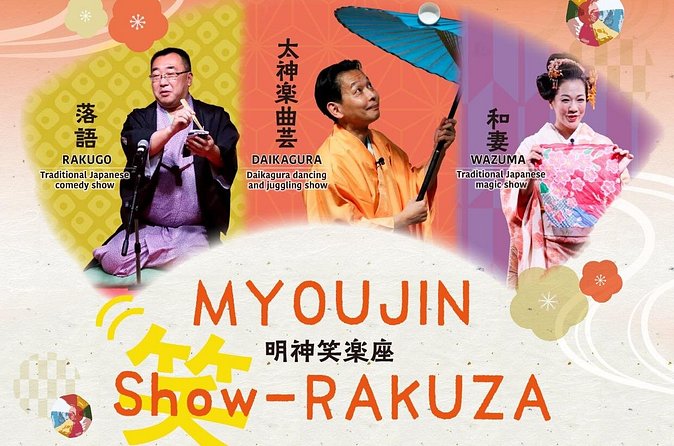
- Three traditional styles in one show: Rakugo, Daikagura, and Wazuma magic all share the same stage time.
- Audience-friendly explanations: you don’t need Japanese skills, and there is interpretation support.
- You may try the tricks: the program includes learning and hands-on participation, not just seats and silence.
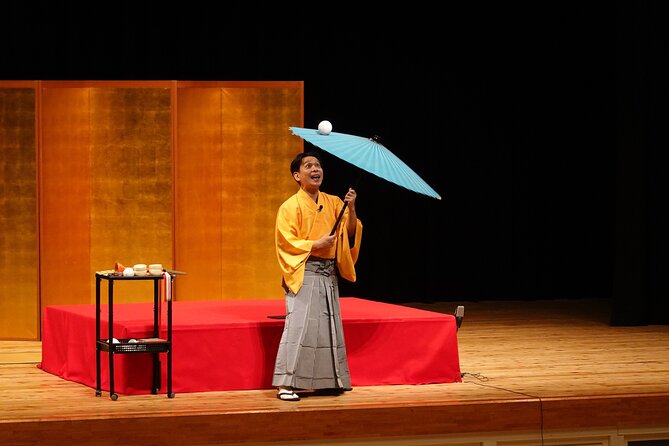
- Fun, skillful acts (including umbrella spinning): you’ll see impressive stage business built for close watching.
- Rakugo has a you-can-do-this angle: there are chances to participate in the comedic rhythm of the performance.
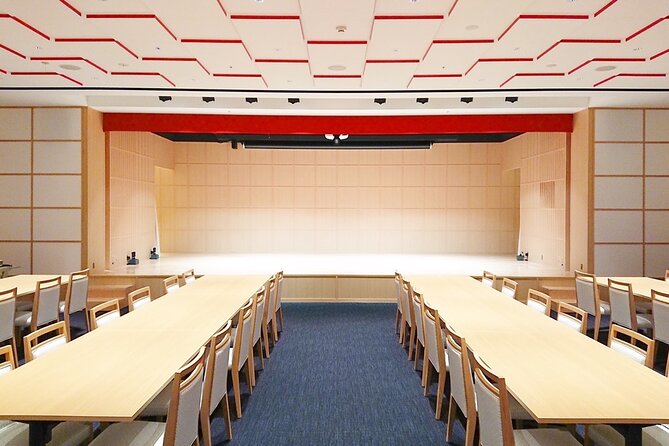
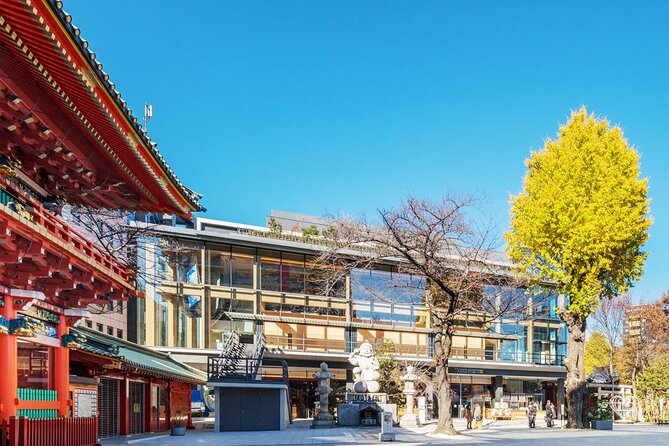
- Shrine-meets-modern studio: the venue is inside a historic shrine area, but the theater feels modern and comfortable.
Traditional Japanese Comedy, Juggling & Magic in Tokyo: the 90-minute format that works
This show is built like a compact sampler of Japanese stage entertainment. In about 1 hour 30 minutes, you get a real run through three different disciplines: Rakugo storytelling comedy, Daikagura juggling and acrobatics, and Wazuma-style magic. For first-time visitors, it’s a smart way to understand that Japanese performance isn’t one single thing—it’s multiple art forms with different timing, skills, and audience roles.
I also like the pacing. Most people can handle 90 minutes in a seated theater, and the acts naturally shift so you’re not stuck watching one style for too long. Even better, it’s designed to be understandable without Japanese, which matters in Tokyo where many cultural experiences still assume at least some language familiarity.
And yes, the experience is family friendly. That doesn’t mean it feels watered down. It means the performers know how to bring the room with them—clear cues, good energy, and audience moments that feel like part of the show, not a distraction.
You can also read our reviews of more tours and experiences in Tokyo


Kanda Myojin Shrine meets EDOCCO STUDIO: where the vibe comes from
The location is a big part of why this experience feels special. The show takes place at EDOCCO STUDIO, located within the Kanda Myojin Shrine grounds in central Tokyo. You’re basically combining two things visitors often chase separately: a historic shrine area and a modern indoor theater with clear sightlines.
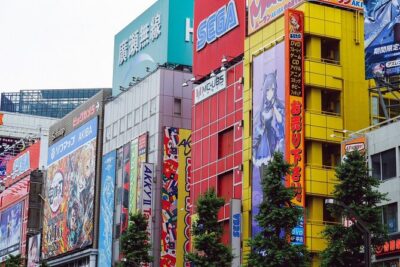
Near Akihabara, it’s also practical. You can slot this into a day that already includes electronics shops, street food, and train rides without feeling like you’re crossing the city for a single item. And because it’s indoors, you’re protected if the weather doesn’t cooperate.
There’s a meeting point listed at EDOCCO2-chome-16-2 Sotokanda, Chiyoda City, Tokyo 101-0021. From there, you’re guided to the theater area inside the shrine complex. Expect a smooth setup rather than a huge maze.
The kind of audience participation you can expect
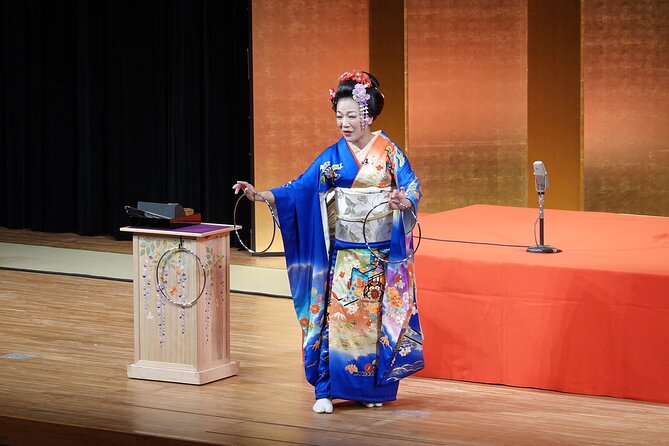
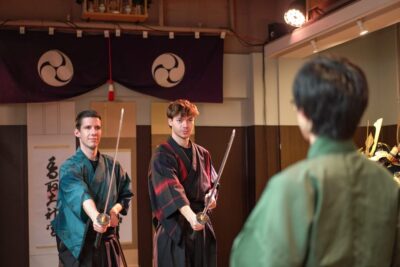
This is the show’s secret sauce. You aren’t just watching polished performances; you get little windows where you can learn how something works. The program includes moments where you try parts of Daikagura and Wazuma firsthand, plus instruction related to the comedic rhythms of Rakugo.
Based on what I’ve seen in similar Japanese stage formats, participation can go one of two ways: either it’s awkward and forced, or it’s playful and choreographed. Here, the tone is the good kind. Audience interaction is built to be fun and understandable, with staff and interpretation support.
A nice detail: people often end up leaving with mini lesson takeaways—things you can practice with friends later. That makes the show more memorable than the typical quick performance where the only souvenir is a photo.
Breaking down the three acts: Rakugo, Daikagura, and Wazuma
Rakugo comedy: storytelling you can follow
Rakugo is often called traditional Japanese storytelling comedy, and in this show you’ll see it treated like a stage craft. The comedy relies on timing, voice character, and clear delivery so even if your Japanese is limited, you can still catch the flow.
What I like about this Rakugo portion is that it doesn’t feel like a history lecture. It’s performance-first: jokes, rhythm, and stage expression. There are even moments where you can participate in the Rakugo setting—so you experience the pace and expression rather than just observing.
If you’ve never seen Rakugo before, this is a friendly entry point. You’ll pick up the basic style quickly because the program is designed for visitors who are new to these forms.





Daikagura: juggling and acrobatics with audience energy
Daikagura is the high-skill act, and it brings the excitement level up fast. Expect juggling and acrobatics built around showmanship and crowd engagement. The big win is that you’re not left wondering what you’re seeing. The experience includes instruction and at least some hands-on participation, so the act feels more understandable.
A standout stage moment is the umbrella spinning style. It’s a visual trick that plays well on stage and works even when you’re sitting close enough to watch the control and timing.
If you like performances where the artists’ athleticism is obvious, this is your act.
Wazuma magic: taught techniques, not just spectacle
Wazuma magic in this show isn’t only about shock and wonder. It includes a teaching component, meaning you get basics on how some tricks are done. You might even try parts of it, which turns the magic from passive entertainment into something you can talk about later.
This is where the show becomes especially good value for money. You’re not paying just to watch clever hands—you’re paying to learn a few practical ideas about stagecraft and audience misdirection.
The interpretation support helps too. Even if the trick itself doesn’t rely on words, the explanations do. That keeps the experience from becoming confusing in the middle.
Timing, tickets, and getting there from Akihabara without stress
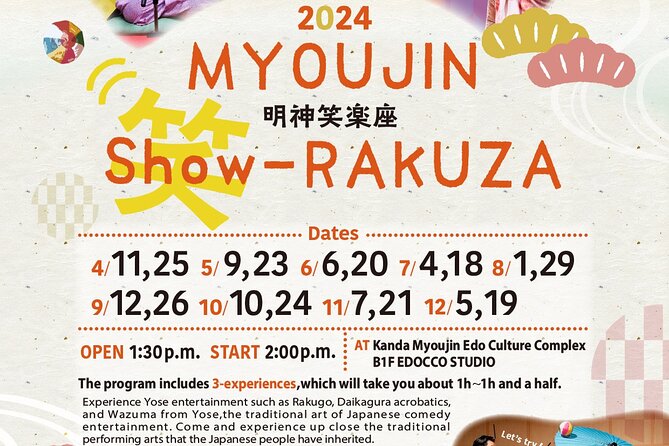
The show runs about 90 minutes. Doors open around 13:30, and the performance starts around 14:00 (specific timing may vary slightly). You’ll want to arrive early enough to get settled, especially since the venue is inside a shrine complex.
Tickets are delivered as mobile tickets, which is convenient. You won’t be dealing with paper vouchers or last-minute printing. Just keep your phone ready.
Group size is capped at 100 travelers, and the theater is described as intimate. That matters because stage comedy and close-up magic land better when you’re not too far away. You’re more likely to feel involved when the room isn’t huge.
Also, shows are limited and can fill up quickly. If this is on your Tokyo plan, I’d book it ahead rather than waiting for the last day.
If weather becomes an issue, the key point is that this is an indoor activity, and if it gets canceled due to conditions, you’ll be offered an alternate date or a refund. That’s the kind of backup that makes cultural plans less risky.
Souvenirs you can actually use: tenugui, folding fans, and paper balloons
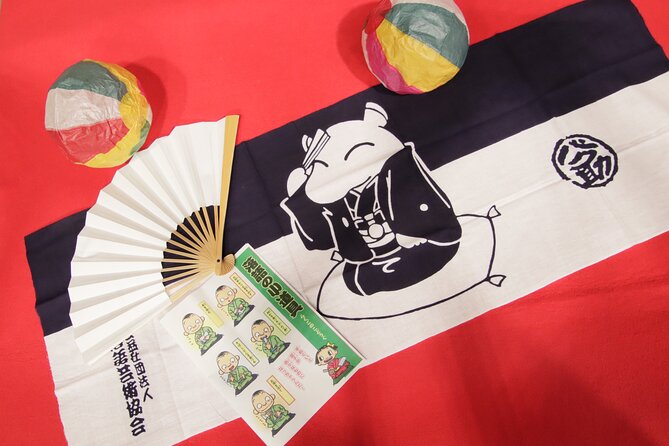
Here’s a value detail that I really appreciate: you don’t just get a generic sticker or postcard. You receive a special mini gift linked to the show. The kinds of props mentioned include tenugui hand towels, folding fans, and paper balloons—items that fit the theme of traditional stage culture.
Because these props show up in the performance, the souvenir feels connected to what you saw. It’s also practical. Fans are genuinely useful in Japan’s weather swings, and tenugui towels are easy to store in a bag and use later.
Even if you don’t end up taking a photo of everything, the gift helps you remember the style and craft of the show. It’s a small touch, but it adds up.
Who should book this Tokyo show (and who should skip it)
This experience is a great fit if:
- You want a first-timer introduction to Japanese performing arts in a single sitting.
- You like interactive shows where you can learn simple parts of the performance rather than just watch.
- You’re traveling solo or with family and want an activity that’s easy to understand without Japanese.
- You’d like a cultural stop near Akihabara that doesn’t require a long commute.
It might be less ideal if:
- You strongly prefer silent, purely observational sightseeing. Audience participation is part of the design.
- You’re expecting a long, deep historical lecture. This is performance time first, explanation second.
The good news is that the show is framed to be welcoming. Interpretation support and staff guidance help keep things smooth, especially if you don’t know the language.
FAQ
What’s the show duration?
The performance lasts about 1 hour 30 minutes (approx.).
Where does the show take place?
It happens at EDOCCO STUDIO, located within the Kanda Myojin Shrine in central Tokyo. The listed start point is EDOCCO2-chome-16-2 Sotokanda, Chiyoda City, Tokyo 101-0021, Japan.
What types of performances are included?
You’ll see a mix of traditional Rakugo comedy, Daikagura juggling and acrobatics, and Wazuma Japanese magic.
Do I need to know Japanese to enjoy it?
No. The experience is described as not requiring Japanese language skills, with interpretation support available.
What do I get as a gift?
You receive a special mini gift connected to the show, including traditional props such as tenugui hand towels, folding fans, and paper balloons.
Is the theater session limited in size?
Yes. The experience lists a maximum of 100 travelers.
Should you book this Traditional Japanese Comedy, Juggling & Magic show?
If you want one Tokyo activity that gives you variety, clarity, and interaction in a single indoor stop, I’d book it. The three-acts-in-one format is efficient, and the fact that you can learn and try parts of Daikagura and Wazuma makes it feel more like a workshop than a basic performance ticket.
Book it sooner rather than later since shows are limited. And if you’re okay with being mildly involved—like raising your game to try something in front of a friendly crowd—you’ll get a lot more out of it.
If you’d rather be completely hands-off, consider that interaction is part of the design. Otherwise, this is a practical, memorable way to experience Japanese stage entertainment near Akihabara without language stress.