REVIEW · TOKYO
Japanese Fan Painting Workshop ~ in a Tokyo Flower Shop
Book on Viator →Operated by Ruby · Bookable on Viator
Tokyo needs a quiet break. In a flower shop, you paint a Japanese fan while learning the story behind fans in Japanese culture and history. What makes this workshop work so well is the setting: warm, floral, and slow enough that you can actually focus, not just snap photos and rush back onto the street.
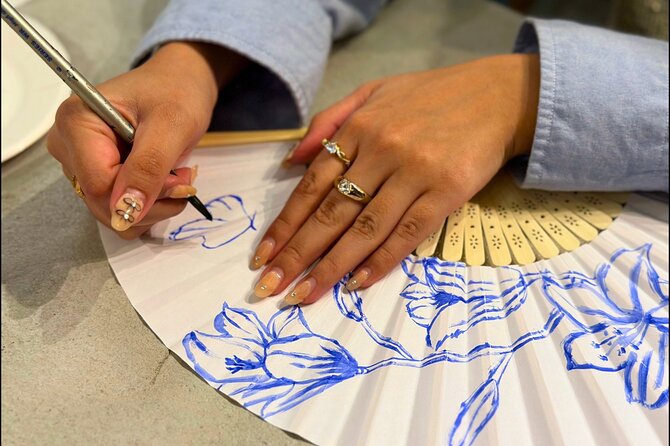
I really like how the class is friendly for beginners. Ruby and the team guide you step by step with a lot of patience, and you can follow traditional motifs or make your own design. I also love that you get practical painting advice for the real challenge here: painting on an irregular, curved surface, using acrylic and water-based paints.
One thing to consider: this is meant to feel relaxed, not intense. If you already do lots of art or want a longer, more advanced session, the short two hours may feel a bit gentle for the money.
In This Review
- Key Things You’ll Notice Right Away
- Why Fan Painting Feels Like a Tokyo Reset
- Finding Park House Chiyoda Kojimachi and Settling In
- Choosing Your Fan: Shapes, Colors, and a Real Canvas
- Ruby’s Teaching Style: Motifs, Culture, and Brushwork That Actually Helps
- The Two-Hour Flow: From Welcome to a Finished Fan (Plus Photos)
- Price and Value: Is $60 Worth It for a 2-Hour Workshop?
- Who This Workshop Suits Best
- Practical Tips Before You Go
- Should You Book This Japanese Fan Painting Workshop?
- FAQ
- How long is the Japanese fan painting workshop?
- How much does it cost?
- Where does the workshop start?
- What will I learn or do during the workshop?
- Are materials provided?
- How big is the group?
- Is there a free cancellation window?
Key Things You’ll Notice Right Away
- A tranquil flower-shop setting that makes the whole experience feel calmer than most Tokyo activities
- Fan-painting guidance for beginners, with patient coaching from Ruby and the team
- Traditional motifs plus freedom, like cherry blossoms, koi fish, and scenic scenes, or your own idea
- Technique tips for curved surfaces, including how acrylic and water-based paints behave on the fan material
- A small group vibe with a max of 20 participants, so you’re not lost in a crowd
Why Fan Painting Feels Like a Tokyo Reset
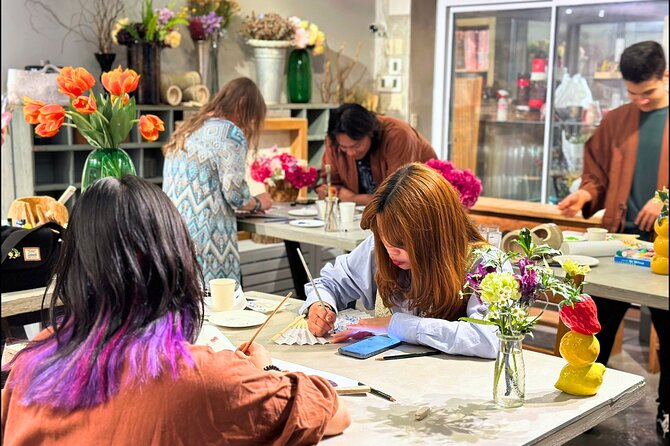
Tokyo is amazing, but it can also be nonstop. This workshop gives you a different tempo on purpose: you swap the street noise for a calm, flower-filled room where art is the only agenda for a couple of hours.
Hand fans are more than pretty objects in Japan. You’ll learn how fans connect to daily life, social moments, and historical culture, then you’ll paint one yourself. That combo matters because it turns your souvenir into something with context, not just a picture on your phone.
And yes, there’s a practical twist. Fans aren’t just decorative here—they’re also built to cool you off in warm months. So when you finish, you’ve created an object you can actually use, even after the trip ends.
You can also read our reviews of more tours and experiences in Tokyo



Finding Park House Chiyoda Kojimachi and Settling In
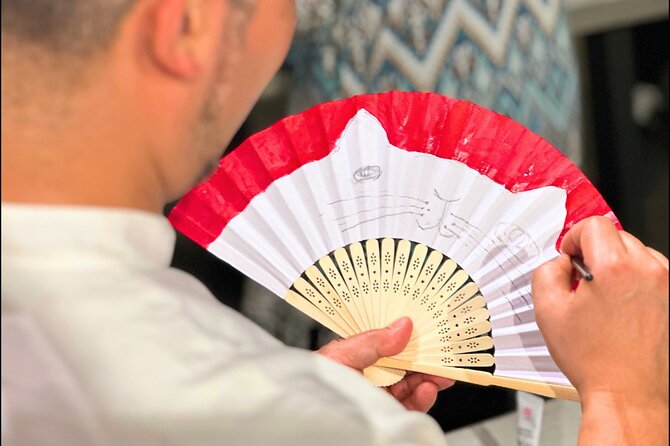
The workshop starts at Park House Chiyoda Kojimachi, in Kōjimachi (Chiyoda City). The exact address is 6-chōme46, 102-0083 Tokyo, Japan, and the activity ends back at the meeting point.
Getting there is usually straightforward because it’s near public transportation. For me, the location choice is part of the value: Chiyoda is central enough that you’re not losing half your day in transit, but the flower-shop setting helps you feel like you’ve stepped aside from the busiest parts of the city.
The workshop uses a mobile ticket, and you’ll receive confirmation when you book. If you’re traveling on a tight schedule, those details help you keep things simple—no scrambling for printouts.
Choosing Your Fan: Shapes, Colors, and a Real Canvas
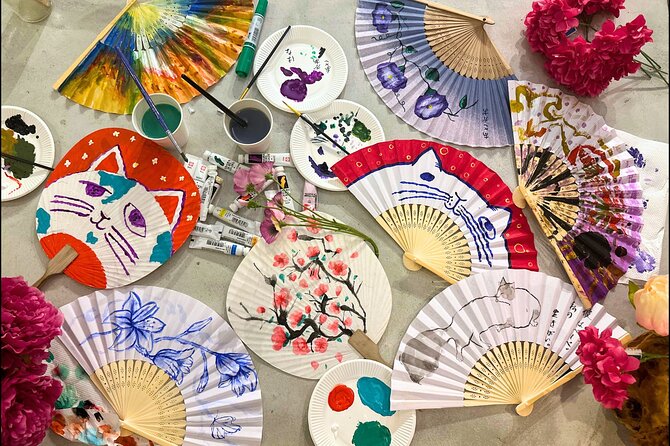
When you arrive, you’re welcomed into the flower-filled space. Then the hands-on part begins: each participant chooses from a range of fan shapes, sizes, and colors.
This is a big deal for the experience because the fan isn’t a flat canvas. The surface is irregular and curved, which changes how paint sits and how lines look. If you’ve never painted on something like that, don’t worry—you’ll get tips to help you plan for the fan’s shape instead of fighting it.
Also, picking your fan first helps you commit to a design. Cherry blossoms might look best on certain shapes. A koi fish works well when you can position it so it flows across the curve. Or, if you want freedom, you can treat it like your own mini painting project with a functional outcome.
Ruby’s Teaching Style: Motifs, Culture, and Brushwork That Actually Helps
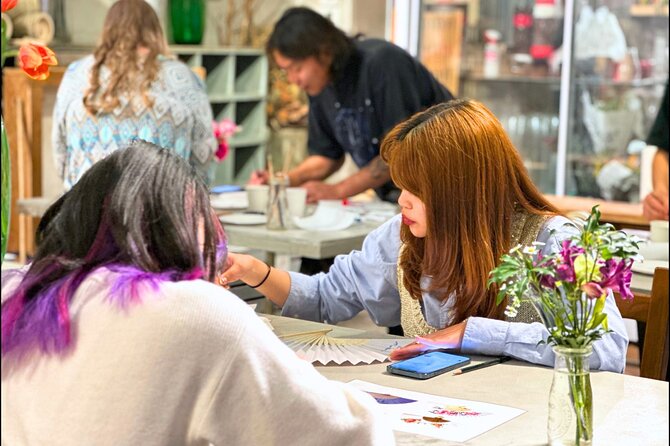
Ruby and the team don’t just hand you supplies and step back. They guide you through both the meaning and the doing. You’ll learn the history and significance of fan painting, and you’ll explore traditional motifs that show up again and again in Japanese fan art.
Common themes include:
- Cherry blossoms
- Koi fish
- Scenic scenes (think views painted to fit the fan’s shape)
The workshop also gives you room to do your own thing. That balance is what makes the class enjoyable for different personalities. If you want structure, you can follow a classic motif. If you want creative control, you can invent something that fits your taste.
The practical tips are the part you’ll feel immediately. One reviewer mentioned getting helpful advice on painting on an irregular surface using acrylic and water-based paints. That’s exactly what you need here—because the fan’s form affects edges, opacity, and line smoothness.
Materials are provided, including paints and delicate brushes. So you’re not hunting for art supplies during a Tokyo trip. It’s a small thing, but it matters. Travel already has enough friction.
The Two-Hour Flow: From Welcome to a Finished Fan (Plus Photos)
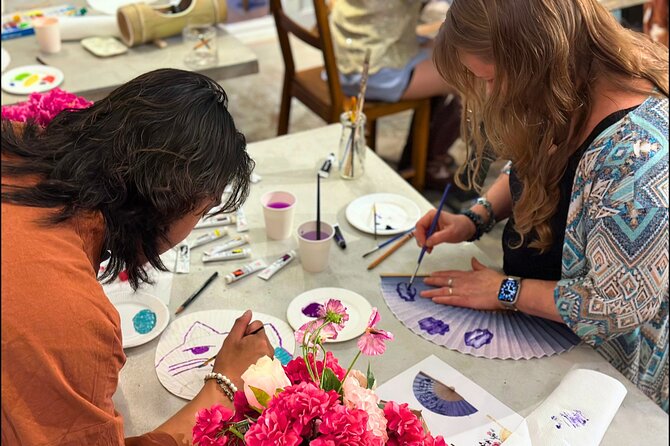
The workshop is about two hours, and it’s designed to fit into a normal day in Tokyo. You arrive, settle into the flower shop environment, pick your fan, and then you move from learning into painting.
A realistic flow looks like this:
- Warm welcome and fan selection
- Instructor guidance on motif choices and meaning
- Painting time with help as you work
- Wrap-up and time to take photos
One review described taking photos at the end, which makes sense. Your fan is the kind of souvenir that’s worth documenting, especially if you designed it yourself.
The pace stays calm. That’s a feature, not a bug. You’re learning technique, but you’re also getting a break from crowds. If you’re the type who likes quiet activities, you’ll probably love this.
If you’re the type who wants nonstop coaching the whole time, you may want to set expectations. This isn’t an all-day masterclass. It’s a guided workshop that leaves space for your own creativity while keeping you on track.






Price and Value: Is $60 Worth It for a 2-Hour Workshop?
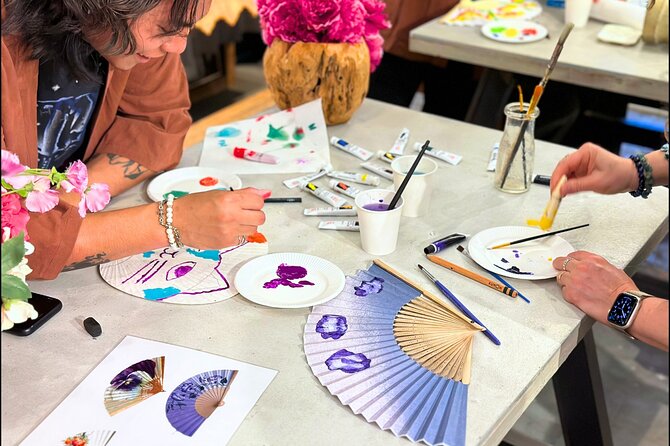
At $60 per person, this isn’t a cheap souvenir—but it also isn’t priced like a luxury experience. For me, the value comes from three things you don’t always get together in Tokyo classes: guidance, a calming setting, and a finished, functional item.
Here’s how I’d weigh it:
- Instruction + technique support
You’re not guessing how to paint on a curved fan. Tips on irregular surfaces and using acrylic or water-based paints make a difference, especially for first-timers.
- A real creative outcome
You leave with your own hand-painted fan, not just a sketchbook page.
- The setting is part of what you’re paying for
A tranquil flower shop isn’t just decoration. It changes your mood. Less stress usually means better focus, and better focus usually means a more satisfying result.
Group size is also a subtle value point. The workshop caps at 20 travelers. That usually helps you get attention when you need it, without making the room feel crowded.
One more planning note: this experience is often booked about 47 days in advance on average. If your schedule is fixed, it’s smart to plan early rather than hoping a last-minute slot appears.
Who This Workshop Suits Best
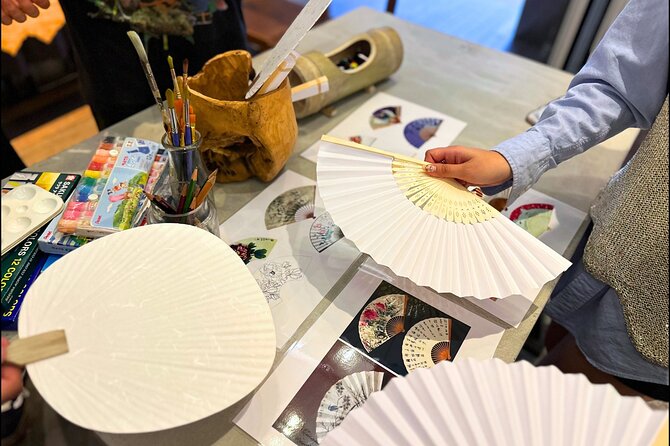
This class is a great match if you want something artistic but not exhausting. It’s also ideal if you enjoy meeting other travelers with similar interests, because the small group vibe naturally creates conversation.
I’d especially recommend it if:
- you’re a beginner and want patient coaching (Ruby and the team’s support shows up in the reviews)
- you like creative souvenirs you can use after the trip
- you want a quieter, flower-shop alternative to the usual Tokyo rush
- you’re traveling with a friend or partner and want a shared activity
It’s also a good choice for couples. One review specifically highlighted a guided, fun, original experience for two people, even when neither person is a strong painter. If you and your companion want to collaborate quietly instead of doing a typical check-box itinerary, this works nicely.
For solo travelers: you still get guidance and structure. You’ll just likely spend more time talking with the instructor and less time negotiating designs with someone else.
Practical Tips Before You Go
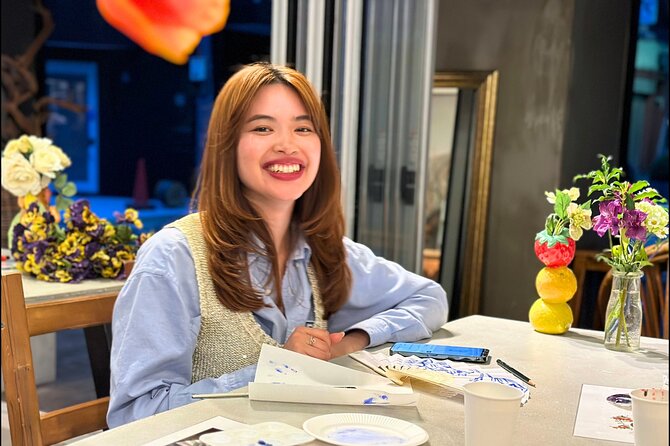
A few things that will make the day smoother:
- Plan for a relaxed, focused mindset
This workshop is meant to be calm. If you’re chasing adrenaline, you might feel a little under-stimulated. If you’re chasing a break, you’ll feel at home.
- Choose a fan shape that matches your patience level
If you’re worried about painting curves, start with a simpler composition. If you’re feeling confident, go for the more detailed motif.
- Expect to work with curved surfaces
The irregular fan shape is part of the lesson. That’s why guidance on acrylic and water-based paints helps.
- Wear clothes you don’t mind getting paint on
You’ll likely have a few moments of brushing, mixing, and careful corrections. Art days can get messy, even when you’re careful.
Also, service animals are allowed, and most participants can take part. If you have specific needs or questions, it’s worth checking with the provider when you book.
Should You Book This Japanese Fan Painting Workshop?
I think you should book it if you want a Tokyo activity that feels calm, guided, and genuinely hands-on. The combo of a tranquil flower-shop environment, beginner-friendly instruction from Ruby and the team, and practical tips for painting on an irregular surface makes it a strong value for most first-timers.
Skip it if you’re looking for something long, high-intensity, or advanced. The workshop is short by design, and the vibe stays relaxed. One reviewer even noted it felt like a quiet afternoon and that they had done quite a few works already—so if you’re an experienced artist, you may finish feeling that you wanted more structure or more time.
If you’re after a usable souvenir with real technique behind it, this is a very satisfying way to spend two hours in Tokyo.
FAQ
How long is the Japanese fan painting workshop?
It lasts about 2 hours.
How much does it cost?
The price is $60.00 per person.
Where does the workshop start?
The meeting point is Park House Chiyoda Kojimachi, in Kōjimachi, Chiyoda City, Tokyo. The activity ends back at the meeting point.
What will I learn or do during the workshop?
You’ll learn about the history and significance of fan painting in Japanese culture, and you’ll paint a fan using traditional motifs or your own design.
Are materials provided?
Yes. The workshop provides the materials you need, including paints and delicate brushes.
How big is the group?
The maximum group size is 20 travelers.
Is there a free cancellation window?
Yes, you can cancel for a full refund up to 24 hours before the experience starts.