REVIEW · TOKYO
Discover the History of Shinjuku Gyoen – Private Walking Tour
Book on Viator →Operated by Travelingal · Bookable on Viator
Tokyo hides an elegant garden story. Shinjuku Gyoen feels like a living timeline, and this private walking tour shows you how the park changed from private estate to imperial garden and then into a public place.
I especially like the expert historical commentary tied to the buildings you pass, not just generic park talk. I also like the practical photo guidance, with guides such as Mao pointing out good angles around the grounds.
One catch to plan for: the admission ticket is not included, so your final total will be a bit higher than the tour price.
In This Review
- Key highlights you will notice right away
- Shinjuku Gyoen: a garden with changing roles
- Meeting at Shinjuku Gate and getting oriented fast
- Former Imperial and Western rest houses: where power becomes architecture
- The greenhouse and tropical glass: design for seasons
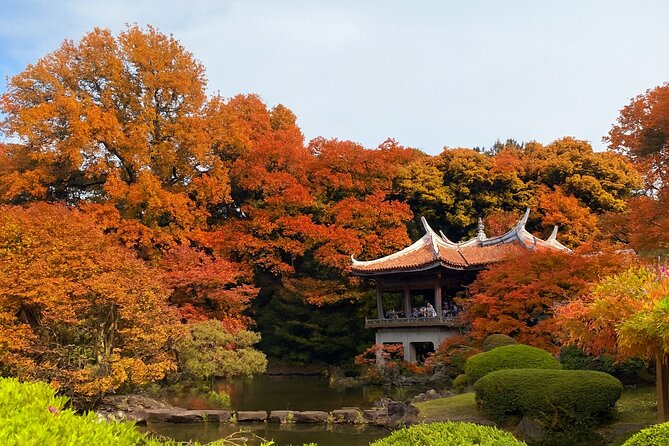
- Traditional gardens and the Goryōsho Pavilion payoff
- How the guide makes this tour feel worth $50
- Price and value: paying for guidance, not entrance
- Logistics that matter in a big city park
- Who should book this private Shinjuku Gyoen tour
- Should you book this Shinjuku Gyoen private walking tour?
- FAQ
- How much does the Discover the History of Shinjuku Gyoen private walking tour cost?
- How long is the tour?
- Is the Shinjuku Gyoen admission ticket included?
- Where do we meet for the tour?
- Is this a private tour?
- Can I cancel for a full refund?
Key highlights you will notice right away
- Imperial and Western-era rest houses are close enough to compare in a single loop
- Greenhouse focus includes the tropical side of the garden’s design
- Goryōsho Pavilion adds a scenic, memorable payoff
- Photo help from guides makes your time feel efficient
- Private group pacing keeps the tour from feeling rushed
Shinjuku Gyoen: a garden with changing roles
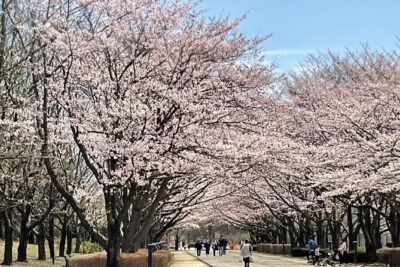
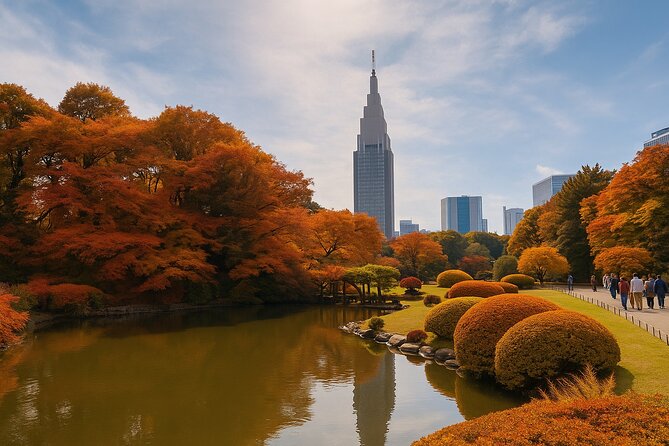
Shinjuku Gyoen National Garden can look like a classic stroll in photos. Up close, it’s more interesting than that. This park is a place where different eras left their fingerprints, and the paths guide you through those shifts without making you feel like you are studying a textbook.
What makes the experience feel rewarding is that the tour connects the visual details to the park’s purpose over time. You are not just walking by pretty scenery. You are seeing how power, taste, and public life reshaped the same grounds again and again. That is why the buildings matter here. Structures like the imperial rest house and greenhouse are not random decorations. They signal how the site was used and who it was for.
Another reason I like it: the park balances formal design with calm nature. Even if you are not a “garden person,” the route makes you slow down just enough to notice materials, shapes, and landscaping decisions you might otherwise miss. You finish the walk with a clearer sense of why these spaces were built the way they were, and why they still work for visitors today.
You can also read our reviews of more walking tours in Tokyo


Meeting at Shinjuku Gate and getting oriented fast
The tour meets at Shinjuku Gyoen Shinjuku Gate, at 11 Naitōmachi, Shinjuku City, Tokyo 160-0014. That is a helpful detail because it sets you up at the main entrance rather than starting in a random corner. It also means you can focus on the grounds instead of spending your first few minutes guessing where everything is.
Since this is a private tour/activity, the pacing is more controllable than a typical big group visit. Your guide can adapt to your group’s rhythm, and that matters in a garden. If you want more time around a particular building or pavilion, you can usually slow down without derailing the entire schedule.
Timing-wise, plan for about 2 hours. That is long enough to get meaningful context at the main historic points, but not so long that you feel worn out by the end. It is also a smart length for a first visit, because it helps you learn what you want to return to on your own after the tour ends back at the meeting point.
One practical note: the tour calls for moderate physical fitness. This does not mean anything extreme, but you should expect walking on garden paths and standing for short explanations at stops.
Former Imperial and Western rest houses: where power becomes architecture
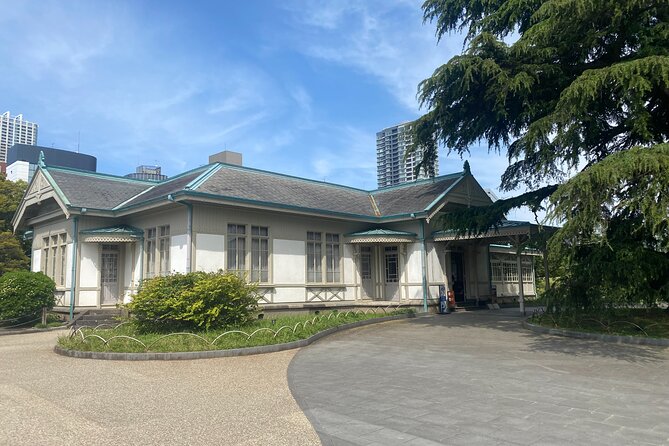
The tour’s biggest draw is that it threads several landmark buildings into one walk. The most meaningful anchor is the Former Imperial Rest House area, including Kyū Yōkan Gokyūsyo. Even if you are only seeing parts from the pathways around it, you get a strong sense of how the park functioned as an imperial retreat.
This is where the historical framing pays off. You start to see the logic behind the placement of structures and how visitors moved between landscaped areas. The guide’s commentary helps you understand what these facilities were designed to do: host, protect privacy, and create a controlled setting for seasonal beauty.
Along the way, you also visit the Former Western-style Rest House. Comparing Western-style architecture elements with the imperial facilities is one of those quiet “click” moments. You begin to recognize that Shinjuku Gyoen was shaped by changing tastes and practical needs, not just by local garden tradition. It makes the park feel less like one neat style and more like a set of chapters written by different decision-makers.
What you get here is not just a photo stop. It is a way to learn how the park’s original purpose shaped its layout. After you walk past these rest house areas, you will likely notice the grounds differently on the rest of your day in Shinjuku.
The greenhouse and tropical glass: design for seasons
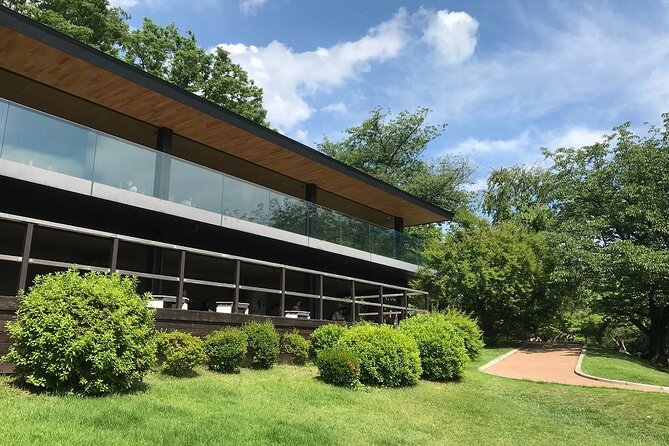
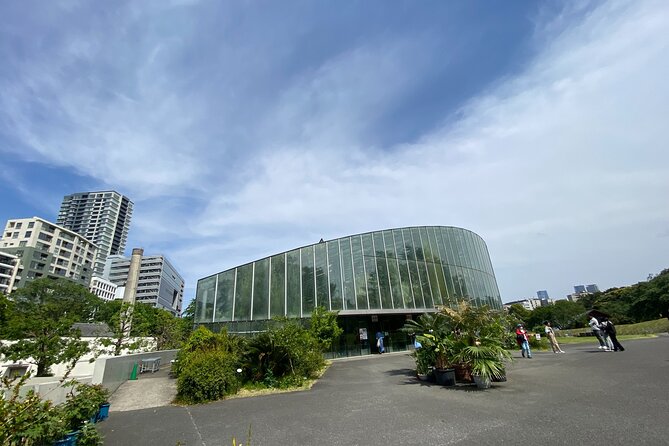
Then you move into the greenhouse area, including the tropical greenhouse focus. This is one of the most memorable stops because it changes the mood quickly. Instead of open-air garden walking, you get a sense of controlled growing conditions and planned environments.
Greenhouses are more than plant shelters. In a historic garden setting, they show how people engineered comfort and year-round viewing. Even when the outdoor world looks like a simple walkway, the greenhouse reminds you that someone planned a different kind of experience—one that could push past seasonal limits.
During the tour, the guide helps connect that greenhouse function to the broader story of the park. You start understanding the park as a system: buildings and planting work together. The greenhouse complements the outdoor gardens rather than competing with them. It is part of the same design idea: curated nature.
A nice bonus is that greenhouse zones also often offer helpful vantage points for photos, since light changes behind glass and foliage frames your view. If you like photography, you will likely appreciate how the guide points out spots where the background stays clean and the composition looks intentional.
Traditional gardens and the Goryōsho Pavilion payoff
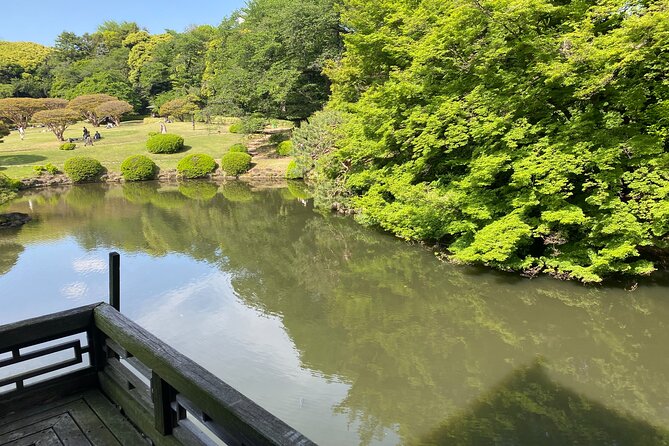
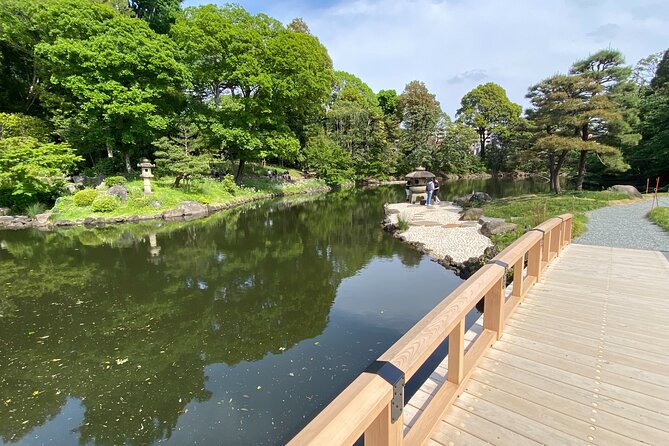
After the rest house areas and greenhouse, the tour shifts toward the park’s traditional Japanese gardens and key scenic points, including the Goryōsho Pavilion.
This is where you slow down again. Japanese garden design rewards careful walking—small changes in path direction, changes in plant grouping, and the way structures relate to what you see when you pause. If you only rush, you miss the point. With a guide, you are more likely to stop at the right times and notice the subtle choices.
The Goryōsho Pavilion adds a stronger “picture moment” feel. It helps you see the garden as a viewing space, not only a walking space. You learn to think of the pavilion as an observation point that fits the surrounding layout. That shift in how you look is the difference between seeing a garden and understanding one.
If you plan to return later on your own, this stop is especially useful. It gives you a mental map of what to revisit. You will remember where the views are best and which areas feel most designed for quiet attention.
You can also read our reviews of more private tours in Tokyo



How the guide makes this tour feel worth $50
The tour is priced at $50 per person, which can feel like a splurge until you think about what you are actually buying. You are paying for context and time. In Tokyo, you can absolutely walk Shinjuku Gyoen on your own. But you would likely miss the “why” behind the buildings and the connections between the imperial, Western, and garden elements.
In my experience with this kind of guided garden tour, the difference-maker is whether the guide helps you see and helps you move. The guides here do both. I found the strongest praise-worthy style comes through: patient pacing, clear explanations, and smart photography advice.
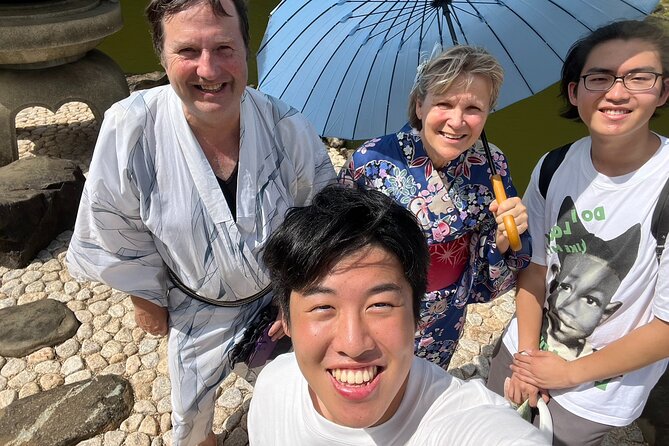
For example, Mao was highlighted for suggesting good spots around the garden for photographs and offering options depending on what you wanted to capture. Yu was highlighted for having excellent English and being very informative and adaptable with plans. Those are not minor extras. In a park, they can save you time. You spend fewer minutes guessing and more minutes looking at the right views.
This tour also works because it is private. One-on-one attention changes everything when you have questions, want a slower pace, or want help deciding where to stand for the best view. It feels like someone is guiding your eyes, not just walking you down a route.
Price and value: paying for guidance, not entrance
At $50 per person, the cost is straightforward. The important value detail is that admission tickets are not included. So you will need to budget for park entry on top of the tour fee.
That is still not automatically a deal-breaker. In many gardens, an admission ticket buys you access, but a guided tour buys you interpretation. Here, the interpretation focuses on specific facilities inside the grounds, including the rest houses and greenhouse areas. If you go on your own without a plan, you might see buildings and plants but miss the connections that make them meaningful.
Also, the tour includes a mobile ticket, which tends to reduce friction when you are moving around Tokyo. You do not have to worry as much about paper or last-minute searches.
Finally, there is mention of group discounts. If you are traveling with friends and can join as a group, you may be able to reduce the per-person impact compared to booking solo.
One more timing tip: this tour is often booked about 58 days in advance on average. If your dates are fixed, I would not treat it like a last-minute plan.
Logistics that matter in a big city park
Even the smooth tours can feel stressful if the logistics are fuzzy. Here, the basics are handled well.
You start at Shinjuku Gate, then the activity ends back at the meeting point. That is a small detail, but it matters in Shinjuku, where walking between attractions can take longer than you expect. Ending where you began helps you keep the rest of your day simple.
The tour is marked as near public transportation, which is practical. You can arrive without building a half-hour buffer just to get to the park entrance.
As for comfort, the tour notes moderate physical fitness. I’d treat that as: comfortable walking shoes, a bit of patience for garden paths, and a willingness to stand for explanations at stops. If you need step-free routes, you should check with the provider ahead of time since garden grounds can vary.
And yes, service animals are allowed, which is important if you travel with an animal you rely on.
Who should book this private Shinjuku Gyoen tour
This tour is best for people who want more than scenery. If you like learning how places worked and why they were designed a certain way, you will get a lot from the stop-by-stop emphasis on historic facilities.
It also fits well if you are:
- Visiting Tokyo for the first time and want a guided hit of culture plus nature in one place
- Short on time but still want context at major sites inside Shinjuku Gyoen
- Interested in photography and want help with angles and timing
- Traveling with a friend or family group who would rather move as a unit than follow a large group schedule
If you are the type who loves wandering with no structure, you might still enjoy the park on your own. But if you care about understanding the imperial and Western elements within the same grounds, this guide-led approach makes the experience easier to connect.
Should you book this Shinjuku Gyoen private walking tour?
I’d book it if you want your Shinjuku Gyoen visit to feel intentional. The combination of specific stops (rest houses, greenhouse areas, and the Goryōsho Pavilion) and clear guide explanations turns a pretty park into a story you can actually follow.
I would hold off only if you already know the history well and you prefer total freedom over a guided route. And because the admission ticket isn’t included, do a quick math check so you know your true budget before you commit.
If you are deciding between random park wandering and a focused two-hour guided walk, this private tour is a solid way to get value. You pay for interpretation, not just access, and that is what makes it feel different long after you leave the garden.
FAQ
How much does the Discover the History of Shinjuku Gyoen private walking tour cost?
It costs $50.00 per person.
How long is the tour?
The tour lasts about 2 hours.
Is the Shinjuku Gyoen admission ticket included?
No. The admission ticket is not included.
Where do we meet for the tour?
You meet at Shinjuku Gyoen Shinjuku Gate, 11 Naitōmachi, Shinjuku City, Tokyo 160-0014, Japan.
Is this a private tour?
Yes. It is a private tour/activity, and only your group will participate.
Can I cancel for a full refund?
Yes. There is free cancellation, and you can cancel up to 24 hours in advance for a full refund.