REVIEW · TOKYO
3-Hour Manga Drawing Workshop in Tokyo
Book on GetYourGuide →Operated by マンレボ ManRevo · Bookable on GetYourGuide
Kichijoji is a great base for creative Tokyo days. This 3-hour manga drawing workshop in a local apartment walks you step by step through making your own page, with a pro manga artist leading the way. I especially like that you leave with a finished A4 manga page you can take home, and that you learn the workflow (sketch to screen tones) instead of just copying a sample. The main thing to consider is that instruction is in Japanese, so you’ll rely on English support via slide guidance during the session.
With a small group capped at 5, the pace feels manageable and you get real attention while you’re learning techniques like dip pen work, inking, black painting, effect lines, and screen tones. It’s also good value for your time because it’s not a short demo; it’s a full production of one page. The one drawback: expect ink that can stain hands and clothes, so you need to dress for mess.
In This Review
- Key things that make this manga workshop worth your time
- Finding Room 601: Kichijoji makes the workshop feel local
- 3 hours of real page-making, not a one-way demo
- The workshop sequence: sketch to screen tones
- 1) Sketch on manga paper (A4 size)
- 2) Practice using a dip pen
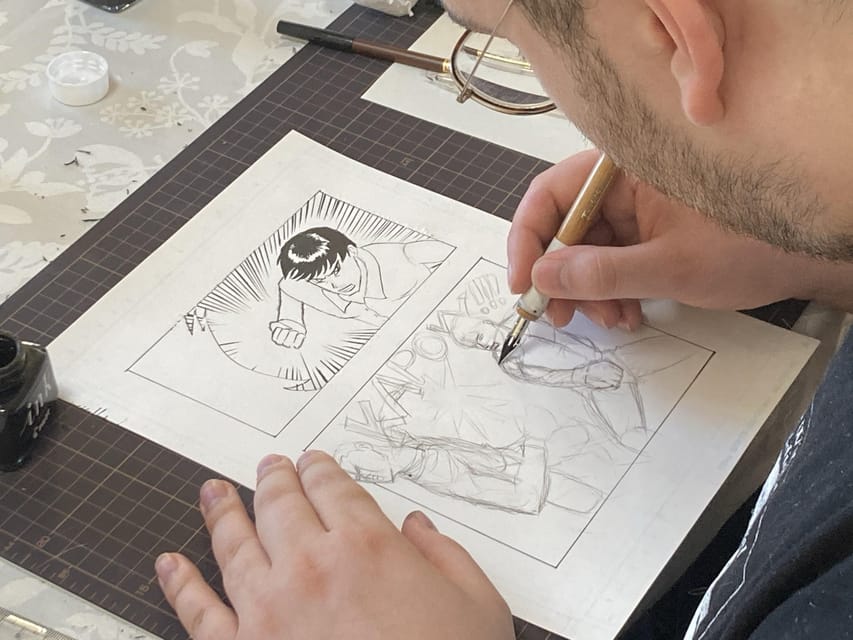
- 3) Inking
- 4) Painting black
- 5) Effect lines
- 6) Screen-tones
- What you’ll use (and the small mess factor)
- Language support that actually helps you keep up
- The value question: is $129 for 3 hours worth it?
- Where it fits in your Tokyo itinerary (Kichijoji + Ghibli day planning)
- Who this manga workshop is best for
- Should you book the 3-Hour Manga Drawing Workshop in Tokyo?
- FAQ
- What’s included in the manga workshop?
- How long is the workshop?
- Is the workshop offered in English?
- Where do I meet the group?
- Is transportation or meals included?
- What’s the group size?
- Is the workshop wheelchair accessible?
- Can I smoke during the workshop?
Key things that make this manga workshop worth your time
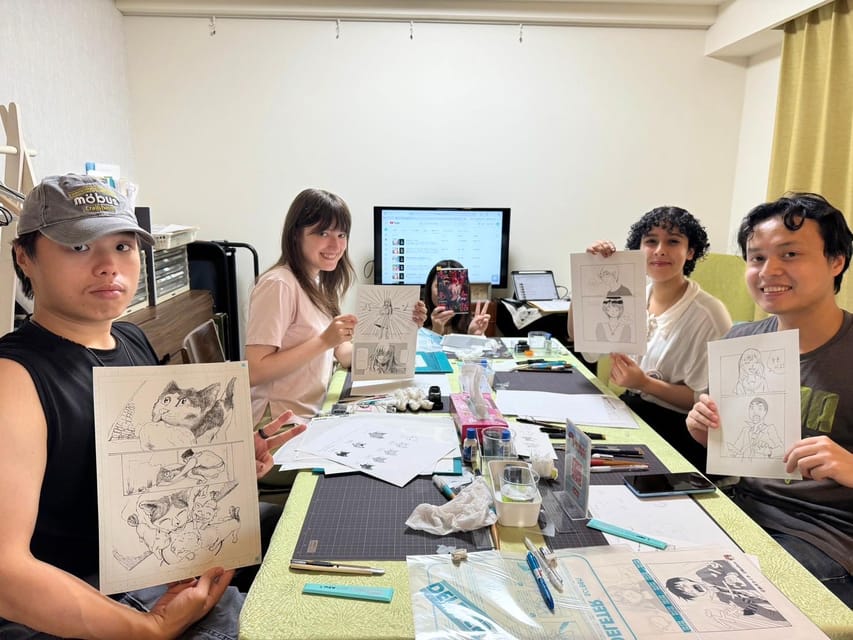
- Room 601, Kichijoji H-Square: close to the station and easy to reach if you follow the check-in instructions.
- Small group (max 5): more teacher time while you practice.
- A4 page, finished by you: you’re not just learning how, you’re producing a souvenir.
- Dip pen to screen tones: you learn the real sequence manga artists use on a page.
- Japanese instruction with English on slides: built-in help even if your Japanese is basic.
Finding Room 601: Kichijoji makes the workshop feel local
This workshop is set in Kichijoji, a neighborhood that feels more like everyday Tokyo than a postcard corridor. It’s also convenient if you’re building a day around the Ghibli area at nearby Mitaka. The meeting point is an apartment in 601 H-Square Kichijoji (Room 601).
You’ll meet it about an 8-minute walk from Kichijoji Station north exit. Look for the apartment next to Kichijoji Excel Hotel Tokyu, and a NewBalance store nearby can help you confirm you’re in the right spot. One important practical note: there’s a similarly named building, so take an extra minute to make sure you’re at 601 H-Square Kichijoji—then press 601 and the call button. The door is said to be unlocked, which helps once you’re at the right place.
If you’re arriving on foot, give yourself a little buffer. Apartment entrances can feel subtle, and you don’t want to be flustered when ink and tools come out.
You can also read our reviews of more tours and experiences in Tokyo


3 hours of real page-making, not a one-way demo
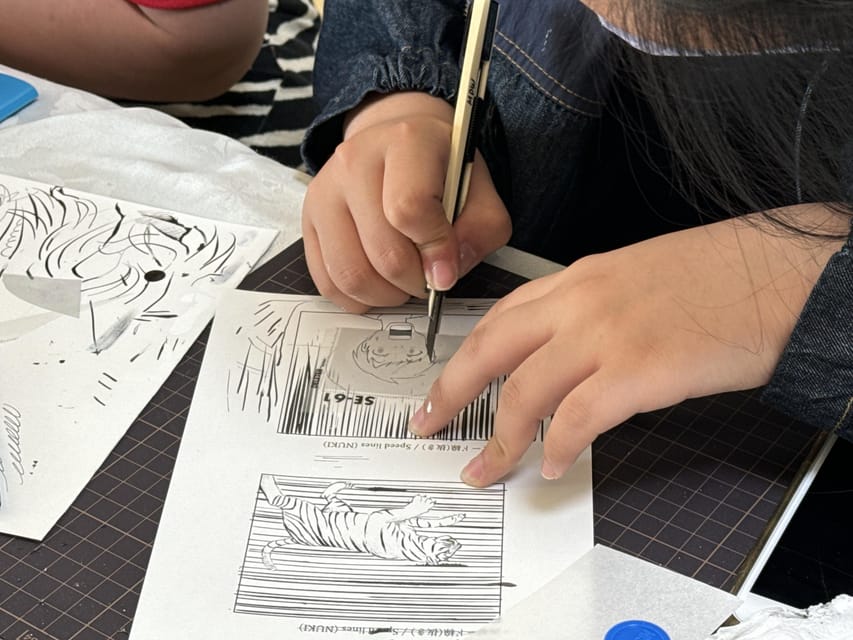
The heart of this experience is that you create a single manga page over 3 hours with guidance from a professional manga artist. The format matters: you start with sketching, then you progress through the common steps a manga page goes through (tools, linework, blacks, effects, and textures).
It’s conducted primarily in Japanese, but the instruction includes English on the slides. That mix is a big deal. It means the session isn’t just a performance you watch; you can follow along and still understand what to do next even if your Japanese is limited.
Also, it’s intentionally small. The group size is limited to 5 participants, which typically translates into faster feedback when you’re stuck—especially when you’re learning unfamiliar tools like a dip pen.
The workshop sequence: sketch to screen tones
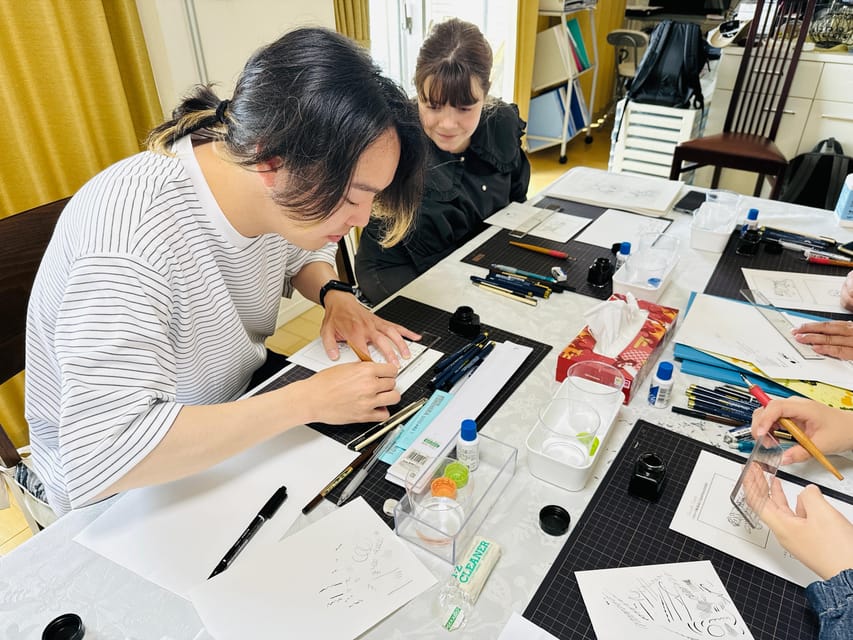
Here’s what you can expect to do during the class, in the order it’s described.
1) Sketch on manga paper (A4 size)
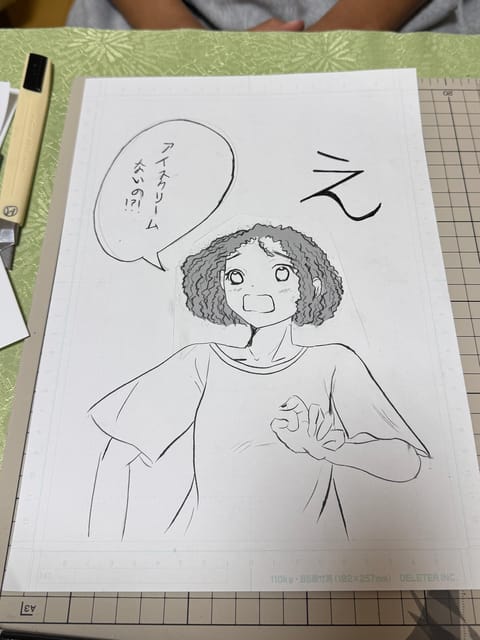
You begin by planning your page on A4 manga paper. This is where beginners often underestimate the time cost. A good sketch sets up your later linework, especially for panel layout and where your main characters or action will sit.
You’re not starting from scratch in a vacuum. The guidance is meant to get you from basic idea to a page that actually works with inking and shading later.
2) Practice using a dip pen
Next comes practice with a dip pen. This is one of those steps that instantly turns the experience from casual drawing into manga drawing. Dip pens are less forgiving than ballpoints, so you’ll likely learn how to control pressure and line consistency.
Even if your drawing skills are modest, this portion is valuable because it teaches technique you can reuse long after the class ends.
You can also read our reviews of more tours and experiences in Tokyo






3) Inking
After you’re comfortable with the pen, you move into inking. This is where manga style really shows up: crisp outlines, confident line weight, and cleaner edges. Inking often looks simple until you actually do it, so having a manga artist guiding your hand (and correcting quickly) can save you from common mistakes.
4) Painting black
Then you move to painting black. Blacks are more than decoration. They shape readability and mood on a manga page, and they help your eye separate foreground from background.
If you’ve ever wondered why some pages look high-contrast and dramatic, this is the step that explains it. You’re learning how manga artists manage value, not just outlines.
5) Effect lines
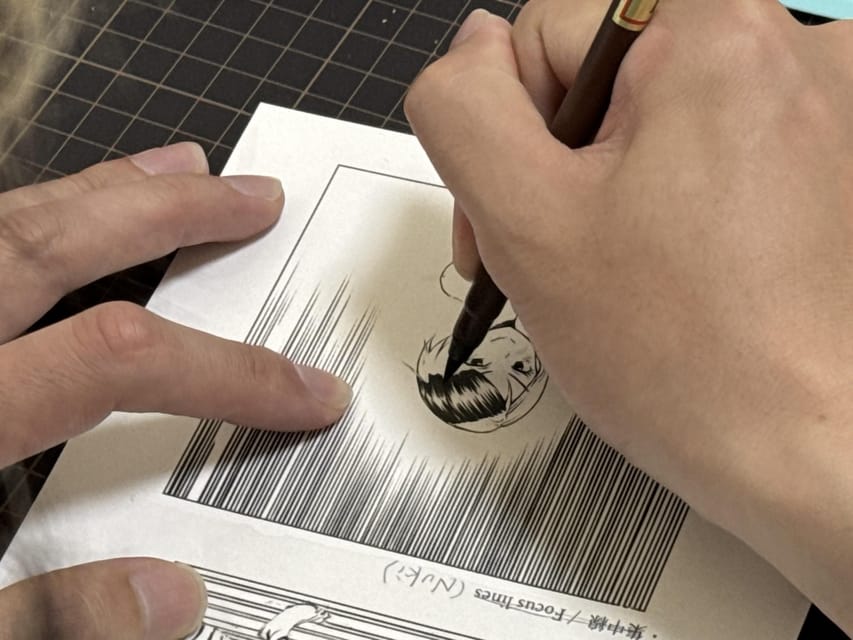
Next are effect lines—the speed lines, impact marks, and visual cues that make action feel like action. This is a favorite part for a lot of people because it instantly adds energy to the page, even if your story concept is simple.
The technique focus here matters: the teacher isn’t just telling you where to add effects. You learn what kind of effects fit the moment.
6) Screen-tones
Finally, you add screen tones. Screen tones are the texture tool of manga: they create shadows, depth, and atmosphere. It also explains why manga ink work doesn’t look flat. You’re learning how printed-style shading works, not just freehand gray.
At the end of these steps, you take home your completed page as a souvenir of your time in Tokyo.
What you’ll use (and the small mess factor)
You don’t need to bring your own art supplies. The workshop includes the necessary manga drawing materials, plus you’ll get professional guidance throughout. That’s a quality-of-life win because you can pack lighter, and you won’t waste time hunting down supplies in Tokyo.
The one downside is practical: ink may stain clothes and hands. That’s not just a warning label—it’s the reality of working with traditional-style inking tools. Dress in clothes you don’t mind getting dirty. If you’re wearing nice sneakers or a white shirt, consider changing your plan for the day of the class.
Also, plan to bring your own tissues or wipes if you’re the type who hates getting ink on your skin. The workshop data confirms staining is possible, but it doesn’t say anything about provided cleanup items—so it’s safer to be ready.
Language support that actually helps you keep up
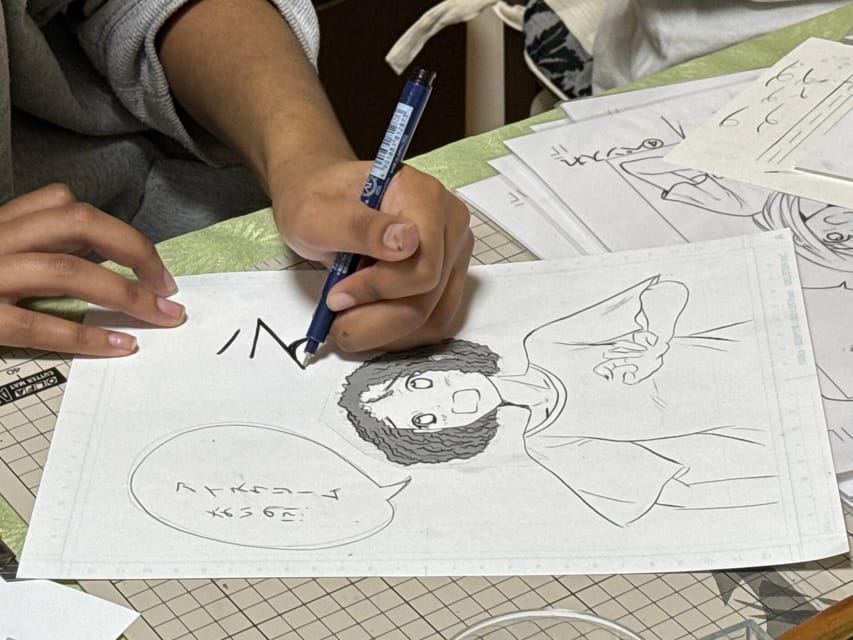
The workshop is taught in Japanese, but the class includes English on the slides during instruction. That means you can follow key steps and terminology even if you can’t hold a long conversation.
One thing I like about this setup is that it doesn’t force you to be fluent to participate. You’re mainly learning a sequence: sketch, pen, ink, blacks, effects, screen tones. Even when language is limited, the visual demonstration and slide guidance keep you on track.
If you can say a few basics, you’ll likely enjoy the interaction more. The tone from the instructors is described as warm and supportive, and the workshop encourages you to feel comfortable enough to ask questions and keep moving even if your Japanese is imperfect.
The value question: is $129 for 3 hours worth it?
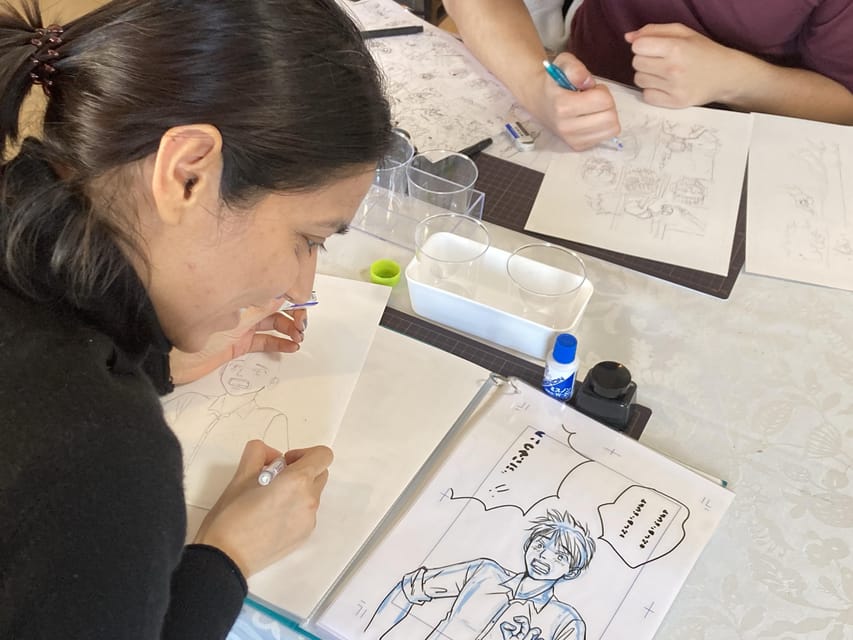
At $129 per person for 3 hours, you’re paying for three things you don’t get in casual city experiences:
1) A pro instructor’s time
You’re learning from a professional manga artist, not a general art teacher. The technique focus shows up in steps like dip pen practice and screen tone application.
2) All materials included
That lowers the hidden cost. You won’t need to buy paper, ink tools, or tones just to try it.
3) A finished takeaway
You leave with your own one-page manga page. For many people, that makes the price feel less like a class fee and more like a tangible Tokyo souvenir you made yourself.
The main value tradeoff is that it’s only 3 hours. That’s long enough to finish a page, but short enough that this isn’t a multi-day mastery program. If your goal is deep expertise in anatomy, storyboarding, or advanced manga illustration, you’ll still benefit, but you may want follow-up practice afterward.
Where it fits in your Tokyo itinerary (Kichijoji + Ghibli day planning)
Kichijoji is a smart choice for a Tokyo day with a creative theme. This workshop is near the Ghibli Museum area in Mitaka, so you can build a route that feels coherent rather than hopping across the city randomly.
If you’re visiting the Ghibli Museum, consider placing this workshop before or after that day so you’re not scrambling. The neighborhood vibe around Kichijoji also makes the rest of the day feel less rushed. You can pair it with a slow lunch and an easy stroll, then come back to the apartment and finish your page without stress.
Because the workshop is in an apartment building, it’s best to treat it like an appointment. Keep your travel plans flexible around start time. Tools come out, and once you’re in, you’ll want a calm mindset.
Who this manga workshop is best for
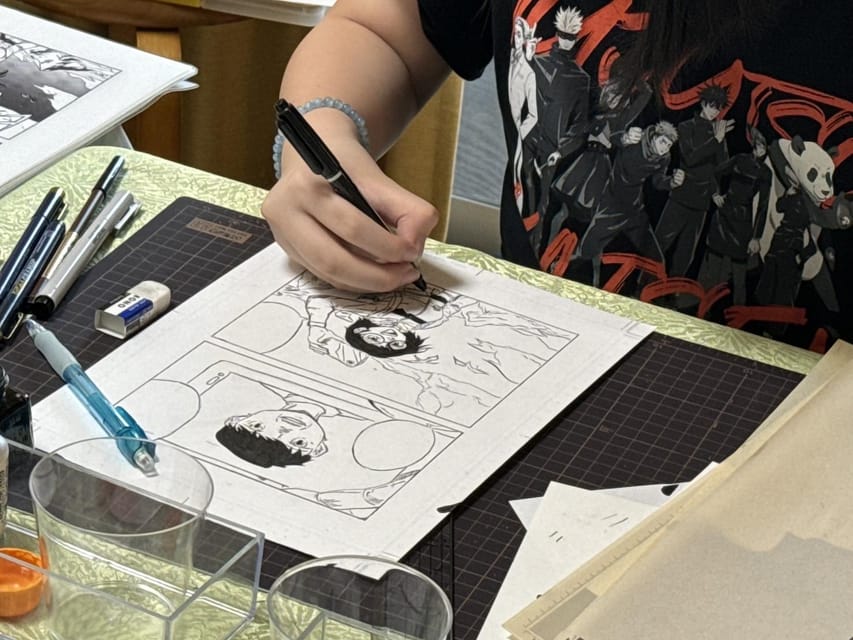
This experience fits best if you want a hands-on Tokyo activity that’s clearly about doing, not just watching.
You’ll enjoy it if:
- You like manga and want to learn the techniques behind the look
- You’re curious even if you’re not an artist yet
- You want a take-home souvenir you actually made
- You prefer a small group setting over large tours
- You’re okay following instruction in Japanese with English slide support
You might not love it if:
- You’re extremely sensitive to ink mess
- You need an all-English class format with zero Japanese at all
- You’re looking for a full story workshop rather than a single-page drawing process
Should you book the 3-Hour Manga Drawing Workshop in Tokyo?
Book it if you want a structured, pro-led creative experience and you’ll enjoy learning the manga workflow from sketch to screen tones. The small group size, materials included, and the fact that you take home a finished A4 page make it feel like a real activity, not a quick attraction.
Skip it if you’re hoping for a low-mess, zero-Japanese experience or if you don’t want to work with ink. In that case, you might prefer a simpler drawing option where cleanup and tools aren’t part of the deal.
If you’re planning a creative day near the Ghibli area, this is one of the most practical ways to turn that inspiration into something you can hold in your hands.
FAQ
What’s included in the manga workshop?
You get professional manga artist guidance, all necessary manga drawing materials, and the chance to complete a one-page manga experience.
How long is the workshop?
The workshop lasts 3 hours.
Is the workshop offered in English?
Instruction is conducted in Japanese, but English appears on the slides during instruction.
Where do I meet the group?
The meeting point is an apartment next to Kichijoji Excel Hotel Tokyu, in 601 H-Square Kichijoji. It’s Room 601, and you press 601 and the call button when you arrive.
Is transportation or meals included?
Transportation to and from the workshop and meals and drinks are not included.
What’s the group size?
The group is limited to 5 participants.
Is the workshop wheelchair accessible?
Yes, the workshop is wheelchair accessible.
Can I smoke during the workshop?
Smoking is not allowed.