REVIEW · TOKYO
Tokyo: Winter Kimono Experience in Asakusa
Book on Viator →Operated by Sunrise Adventure · Bookable on Viator
One outfit changes the whole day in Tokyo. The best part here is the professional kimono dressing plus a relaxed walk through Asakusa’s Senso-ji area, so you get photos that look intentional (not like you’re improvising). I also love that you can choose from different kimono styles and get guidance on where to shoot. One drawback to plan for: the route is very guided, but the kimono logistics (return by 17:30) can feel a bit tight if you want to linger late.
This is a winter-season kimono experience centered on one of Tokyo’s most recognizable temple districts. You’ll start at a kimono shop just a few minutes from Senso-ji, get dressed by staff (including Kazune), then spend time moving through iconic stops at an easy pace. The group size is small, capped at 5 travelers, so it tends to feel personal rather than rushed.
In This Review
- Key Points Before You Go
- Entering Asakusa by Way of Kaminarimon and Nakamise
- How the Dressing Works: Kazune in the Shop
- Senso-ji Temple Stops: Gates, Halls, and Quick Photo Decisions
- Asakusa Shrine, Azumabashi Bridge, and a Change of Scenery
- Free Time in Kimono: How to Enjoy It Without Fighting Your Outfit
- What You Get for $31.63: Value That’s More Than the Costume
- Logistics That Matter: Mobile Ticket, Meeting Point, Return Deadline
- Who This Winter Kimono Walk Suits (and Who Should Skip)
- The Call: Should You Book This Asakusa Winter Kimono Experience?
- FAQ
- Where do I meet for the Tokyo winter kimono experience?
- How far is the shop from Senso-ji Temple?
- What time should I arrive before my booking?
- Can I keep the kimono longer than the same day?
- What is the return deadline for the kimono?
- How long does the experience last?
- Is this experience a small group?
- Do I choose my own kimono style?
- Is there time to explore on my own?
- Who cannot participate in this activity?
Key Points Before You Go
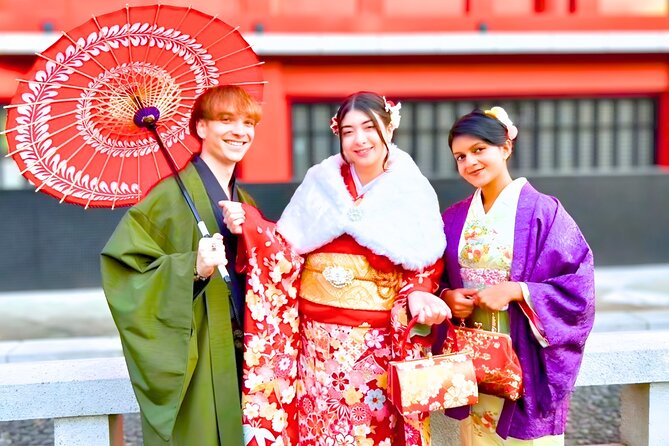
- Dressing help first, photos second: You get styled correctly so you can actually enjoy the walk.
- Kazune and certified dressers: You’ll be assisted by someone local to Asakusa and supported by a Japanese National Certified Kimono Dresser.
- Pick your look from a kimono collection: Different styles and colors mean you’re not stuck with one outfit.
- Photo spot recommendations: Staff can steer you toward angles around the temple area.
- Small-group feel: With a max of 5 travelers, you get more hands-on attention.
- Time-boxed kimono return: You’ll need to hand the kimono back by 17:30 or plan an extension.
Entering Asakusa by Way of Kaminarimon and Nakamise
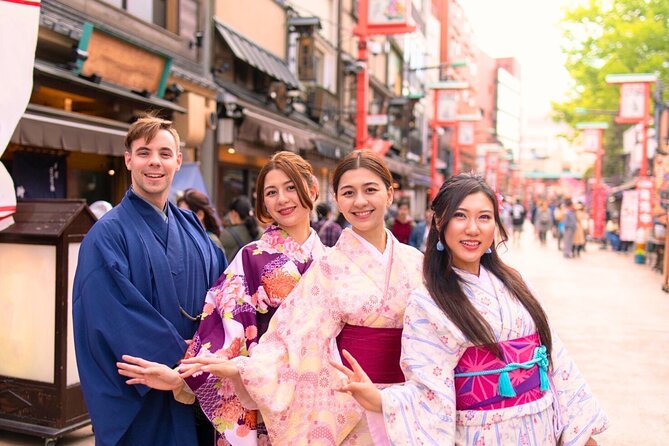
Asakusa is the kind of place where a kimono makes everything feel more “on purpose.” You start near Kaminarimon Gate, then move through Nakamise Shopping Street where the scenery is made for photos. Even if you’re not hunting souvenirs, it’s a nice warm-up: you get used to the fit, the sleeves, and the pace before you’re deep in the temple grounds.
Kaminarimon is also a smart early stop because it’s visually strong right away. Your kimono will be at its best in the beginning, before you’ve walked too much or tightened your posture from long holding. If you’re the type who worries about looking awkward, this start helps you get your bearings fast.
The main consideration here is simple: kimono can limit your stride. You’ll likely walk slower through Nakamise, and that can be good for photos—but less ideal if you’re trying to cover lots of ground like a sprint.
You can also read our reviews of more tours and experiences in Tokyo



How the Dressing Works: Kazune in the Shop
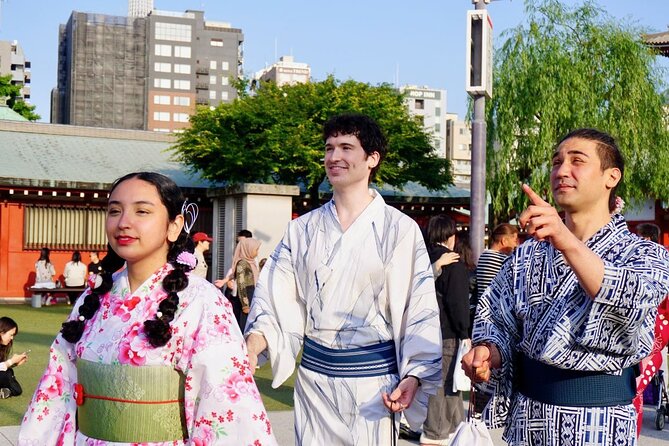
The experience begins at the kimono shop in Asakusa, about a 3-minute walk from Senso-ji Temple. Plan to arrive at least 10 minutes early. That buffer matters, because dressing takes real care, and the team needs time to fit everything comfortably.
You’ll meet Kazune, who grew up in Asakusa and helps put the kimono on with attention to fit and comfort. There’s also additional support from other staff, including a Japanese National Certified Kimono Dresser, which is exactly the kind of backup that helps if you’re unsure what goes where.
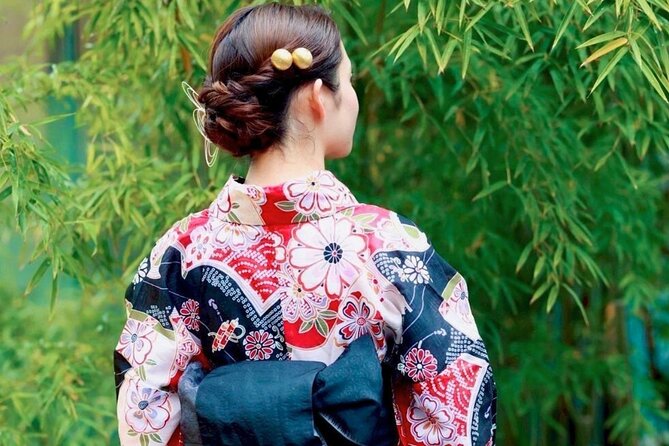
This is one of the most praised parts of the whole experience because the styling isn’t generic. People mention feeling gorgeous and looking perfectly put together, and they also talk about variety in colors and belts—the small visual differences that turn a rental outfit into something that looks tailored. Another bonus: the staff are willing to help with hair styling, so you’re not walking around with a half-finished look.
The one caution I’d keep in mind is timing. One account notes that the dresser felt a bit rushed, and another mentions confusion about meeting a photographer moment. That doesn’t mean it’s always chaotic, but it does mean you should communicate clearly and ask where the next photo moment happens.
Senso-ji Temple Stops: Gates, Halls, and Quick Photo Decisions
Once you’re dressed, the day shifts into temple-area “photo mode,” but you still get time to enjoy it. The route brings you through Senso-ji Temple and multiple key points inside the larger complex. Think of this like a guided highlights walk that saves you from guessing where the best shots are.
Here’s how the temple-area sequence typically plays out:
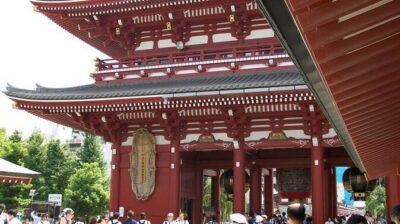
- Senso-ji Temple: This is where your kimono instantly looks most meaningful, since it’s framed by the temple setting. You’ll take in the big visuals first, then move to specific structures.
- Hozomon: A stop designed for classic perspective photos. Expect to slow down here and look for angles where the gate lines work with your outfit.
- Senso-ji Temple Yogodo: Another named focal area inside the complex. This is usually a good “second round” photo stop—after you’ve already had time to settle into the kimono walk.
- Senso-ji Temple Shinokuyama: A further viewpoint area within the temple grounds. It’s ideal if you want photos that show more of the surroundings rather than only your portrait.
- Senso-ji Temple Nitemmon Gate: Finishes the temple loop with one more strong architectural backdrop.
Why this structure is valuable: you don’t need to be a guidebook expert to get great photos. The route keeps you moving to major landmarks, and the staff can suggest photo spot recommendations so you don’t waste time trying to figure it out on your own.
The drawback to keep in mind is that you’re in a set walk sequence. If you’re hoping for total freedom to wander every inch of the temple area without any pacing, you may find the structured stops feel a bit “planned.” The upside is that it reduces stress, especially if it’s your first time in Asakusa.
Asakusa Shrine, Azumabashi Bridge, and a Change of Scenery
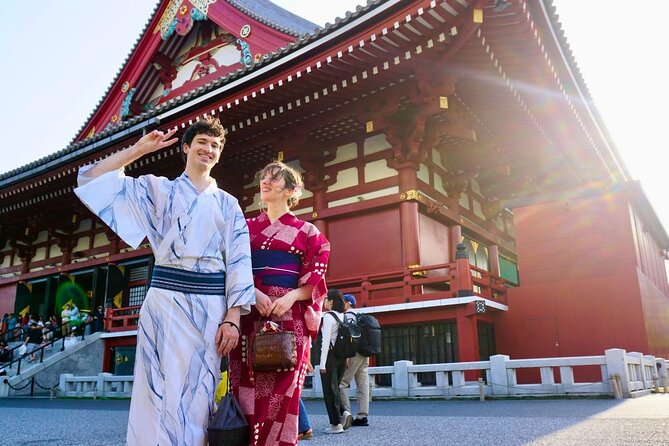
Your route isn’t only temples and gates. You also pass through Asakusa Shrine and then head toward Azumabashi Bridge. That bridge segment is a nice break because it changes the photo background from temple structures to a more open, scenic view.
After that, you’ll also stop at the Asakusa Culture Tourist Information Center, which is handy for two reasons. First, it gives you a chance to orient if you want to extend your day on your own later. Second, it’s a reminder that this experience is meant to be useful for your wider trip, not just a photo costume session.
Then you return through the temple highlight flow, including the big named gates again as you reach the end of the featured stops. Finally, you’re back in the area around Taito City as the activity concludes back at the meeting point.
One practical note: kimono and walking don’t always mix well with spontaneous detours. If you love side streets and random alley discoveries, you can still do that, but you’ll likely want to do it during your free roaming time rather than trying to swap your route at every moment.
Free Time in Kimono: How to Enjoy It Without Fighting Your Outfit
The experience includes time to explore at your own pace after the dressing and guided portions. That’s the part that makes the whole day feel like yours rather than a fixed program. You’ll be able to roam around Asakusa with plenty of photo opportunities, and the staff can point you toward spots if you ask.
I like this approach because it solves two common problems:
1) You don’t have to rush to get the “required” photos.
2) You can actually enjoy the neighborhood while wearing something that draws attention.
What helps you enjoy it: ask for direction on where to stand and what to photograph. The team is ready to recommend photo spots, and that guidance can save you from awkwardly posing where the background doesn’t work.
The downside: dressing takes time and kimono return time is real. Since the outfit must be returned by 17:30, your free wandering needs a built-in end time. If you’re hoping to do dinner nearby and take your time, plan your route so you’re not sprinting back when it’s close to the return deadline.






What You Get for $31.63: Value That’s More Than the Costume
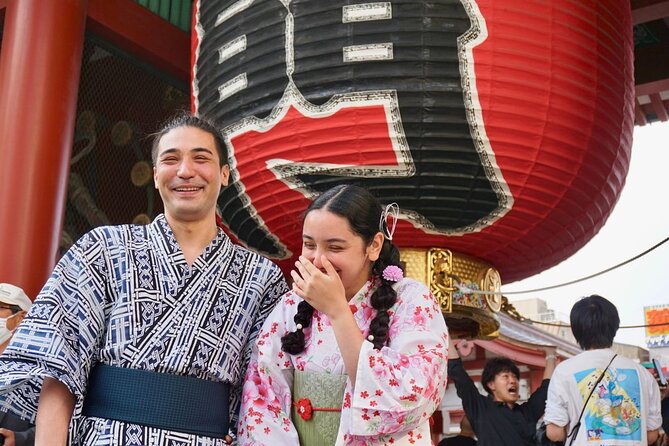
Let’s talk value, because this is priced in a way that’s easy to justify. At $31.63 per person, you’re paying for more than fabric.
Based on what’s included and what’s emphasized, your value includes:
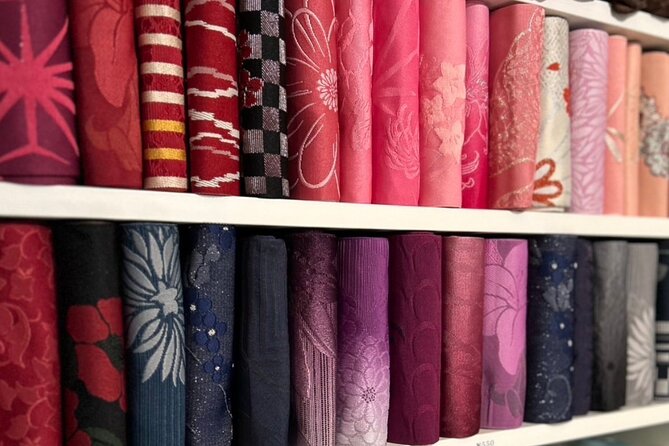
- Kimono selection from a collection of styles
- Professional dressing so it fits comfortably and looks right
- Guided stops around Asakusa’s big-name sights, especially the Senso-ji temple area
- Photo assistance via recommendations, plus a souvenir photo to take home
- A chance to roam at your own pace in the same outfit
When it’s worth it: if you want the “kimono moment” without spending an entire day managing trial-and-error dressing. If you’re the type who wants photos that look good fast, the guidance helps you get there quicker.
When it might not be worth it: if you’re already comfortable dressing yourself and you only care about taking snapshots, this can feel like you’re paying for structure. Still, the souvenir photo and the dressing help are usually the difference between a quick costume rental and an experience that feels complete.
Also, small-group size (max 5) is part of the value. It’s not a big production line. You’re more likely to get personal attention from Kazune and the certified dresser team.
Logistics That Matter: Mobile Ticket, Meeting Point, Return Deadline
Here’s what I’d treat as “non-negotiables” for a smooth experience.
Meeting point and finding it
You meet at f.2-chōme-8-10 Kaminarimon, Taito City, Tokyo 111-0034, Japan. The shop is about a 3-minute walk from Sensoji, but one account flags that the location can be tricky to find at first. My advice: use your map app before you go, and once you’re close, zoom in on the exact address and storefront number. Arrive early so you’re not hunting while in a time crunch.
Arrive early
The team asks you to arrive at least 10 minutes before your booking time. That’s not just “polite.” That’s the time that helps dressing go smoothly and keeps you on schedule for the walking portion.
Return by 17:30
The kimono must be returned by 17:30 the same day. If you want it longer, returning the next day is possible with a small extra fee arranged directly at the shop. If your day includes a late show, a long dinner plan, or a separate excursion after temple time, build your calendar around the return deadline.
Mobile ticket
This uses a mobile ticket, which usually makes entry easier. Still, keep your confirmation accessible in case you need to show it quickly.
Who This Winter Kimono Walk Suits (and Who Should Skip)
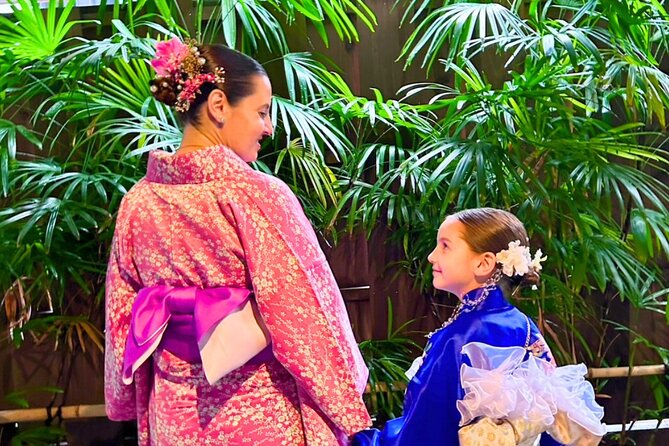
This experience is designed for most visitors, and it’s especially a good fit if you want structured guidance in a famous district. The small group size makes it less stressful than large tour groups, and the dressing support is great if you don’t know how to tie everything properly.
It’s not for everyone. The experience explicitly isn’t suitable for:
- People over 210 cm
- People over 160 kg (264 lbs)
- Pregnant women
If you’re short on time, this also helps. It’s labeled as approx. 1 day, and the route is focused on Asakusa highlights rather than spread across multiple neighborhoods.
If you love photography, you’ll probably enjoy it most. The staff can recommend photo spots, and the overall route is built around recognizable temple-area backdrops. If you care more about shopping or long wandering without any planning, you might prefer a flexible rental—but if you want the full look plus a guided photo route, this hits the sweet spot.
The Call: Should You Book This Asakusa Winter Kimono Experience?
I think this is a strong pick if you want an easy, guided kimono day anchored to Senso-ji. The best reasons to book are practical: you get professional dressing, a small-group feel, and a photo-focused route with a souvenir photo. You’re also working with Kazune, a local Asakusa helper, plus certified support, which matters when you want to look right and feel comfortable.
Before you book, make sure you can work with the return deadline (17:30) and plan how you’ll find the shop quickly. If you’re worried about navigation, arrive early and confirm the exact location in daylight if possible. And if you’re sensitive to feeling rushed, pick a time slot that gives you breathing room in your day.
If those boxes fit, this is the kind of experience that turns a temple visit into a memory you can see every time you look at your photos.
FAQ
Where do I meet for the Tokyo winter kimono experience?
You meet at f.2-chōme-8-10 Kaminarimon, Taito City, Tokyo 111-0034, Japan.
How far is the shop from Senso-ji Temple?
The shop is about a 3-minute walk from Sensoji Temple.
What time should I arrive before my booking?
You should arrive at least 10 minutes before your booking time so the team can prepare you.
Can I keep the kimono longer than the same day?
Yes. You can return it the next day for a small extra fee, arranged directly at the shop.
What is the return deadline for the kimono?
You need to return the kimono by 17:30 on the same day.
How long does the experience last?
It’s listed as approximately 1 day.
Is this experience a small group?
Yes. The group size is capped at a maximum of 5 travelers.
Do I choose my own kimono style?
Yes. You can choose from different style kimonos from the shop collection.
Is there time to explore on my own?
Yes. After dressing, you get free time to explore Asakusa at your own pace with photo opportunities.
Who cannot participate in this activity?
The activity is not for people over 210 cm, people over 160 kg (264 lbs), or pregnant women.