REVIEW · TOKYO
Mount Fuji Full Day Customized Private Tour with English Guide
Book on Viator →Operated by Al Hareem Tours · Bookable on Viator
Mount Fuji days feel special. This full-day private tour lets you reach the Fuji area without the chaos of big bus crowds, then shape the day around what you want to see most. You ride in an air-conditioned private vehicle, and since it’s just your group, you’re not stuck waiting on strangers every time the clouds shift.
What I like most is the mix of postcard stops and “how Fuji works” stops: Lake Kawaguchiko and Oshino Hakkai for scenery and geology, plus the Narusawa Ice Cave side trip if conditions and timing allow. One thing to keep in mind is the obvious-but-real drawback: this region runs on weather. If the sky stays hazy, you may trade peak Fuji views for great landscapes and viewpoints anyway.
In This Review
- Key things to know before you go
- Tokyo pickup to the Fuji region: why this private format is worth it
- Fuji 5th Station: the altitude checkpoint (and the ticket you should budget)
- Oishi Park: wide panoramas and a “wait for your moment” viewpoint
- Oshino Hakkai: the volcanic ponds that explain the landscape
- Lake Kawaguchiko: the big Fuji lake with multiple angles
- Arakurayama Sengen Park and Chureito Pagoda: the stairs view payoff
- Narusawa Ice Cave: the surprise stop that makes the day feel different
- Hakone Open-Air Museum: culture stop without the museum marathon
- Owakudani and Lake Ashinoko: volcanic drama and a water finish (optional)
- Gotemba Premium Outlets: the practical finale (and a sanity saver if it’s hot)
- English guide quality: how to set yourself up for a great day
- Weather reality: how to think about visibility before you pay
- Is it good value at $350 per group?
- Who should book this Mount Fuji private tour
- Should you book Al Hareem Tours’ Mount Fuji day trip?
Key things to know before you go
- Private, up-to-6 group comfort: hotel pickup, drop-off, and a vehicle that stays yours all day.
- English-speaking driver/guide on the road: you’re not just chauffeured; you get commentary and practical help.
- A built-in “Fuji day” route: 5th Station plus lake-and-shrine viewpoints that give multiple chances for clear sightlines.
- Oishi Park for classic photo framing: flowers in season and wide panoramas toward Fuji and the lake.
- Oshino Hakkai’s spring-fed ponds: volcanic leftovers that explain what you’re seeing as you walk.
- Optional Hakone add-ons: Open-Air Museum, Owakudani, and Lake Ashinoko can be woven in if you want more variety.
Tokyo pickup to the Fuji region: why this private format is worth it
This is a full-day private experience based out of Tokyo, with hotel pickup and drop-off in the city. You start in a calm way: you get in the car, you’re not wrestling trains or transfers, and you don’t lose time playing catch-up when the day gets late.
Because the group size is capped at up to 6, the pace feels different from shared tours. You’ll have room to spread out a bit, ask the driver to stop for photos, and generally move on your own rhythm. The bottled water helps too, because the day can add up fast when you’re stacking viewpoints.
The value math depends on your group size. At $350 per group, this is a strong deal if you’re 4 to 6 people because the cost per person drops sharply for a 10-hour private day. If it’s just 2 people, you’re paying more per head, so you’ll want to make it count: maximize your time outdoors, and pick the optional stops you truly care about.
You can also read our reviews of more guided tours in Tokyo
Fuji 5th Station: the altitude checkpoint (and the ticket you should budget)
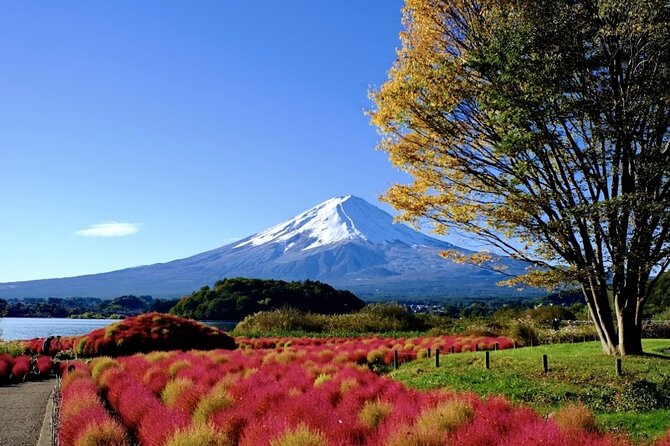
The day’s core altitude stop is Mount Fuji 5th Station, typically scheduled for about 2 hours. Even if you’re not hiking to the summit, this is the major waystation feeling: mountain air, climber energy, and the sense that you’ve actually climbed into the Fuji world.
There’s an important practical note: the 5th Station entrance fee is not included. The tour lists it as 2100 yen. Plan cash or a card you can use there, because you don’t want a small payment to slow your start.
Is it worth the time if visibility is mediocre? Yes. Even with haze, the station area helps you understand the scale of Fuji and the routes people take. And if the clouds clear briefly, you’ll be positioned for quick photo moments rather than chasing them from far away.
Oishi Park: wide panoramas and a “wait for your moment” viewpoint
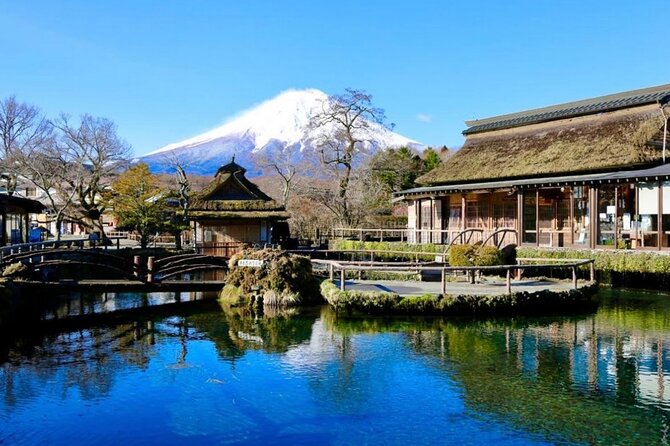
Next up is Oishi Park for about an hour. This is a classic Fuji-and-lake framing spot, and it’s also one of those places where you can use time smartly. If Fuji is hidden, you can still enjoy the lake setting and then linger when the light shifts.
The tour keeps it easy here: no paid entry listed, and you’re there long enough to walk a bit, not just snap and run. It’s also a good spot for families or anyone who doesn’t want steep stairwork right away.
My only caution: depending on season and crowd levels, it can get busy. The private format helps because you’re not stuck behind a slow-moving group bus schedule, but the area itself can still be popular.
Oshino Hakkai: the volcanic ponds that explain the landscape
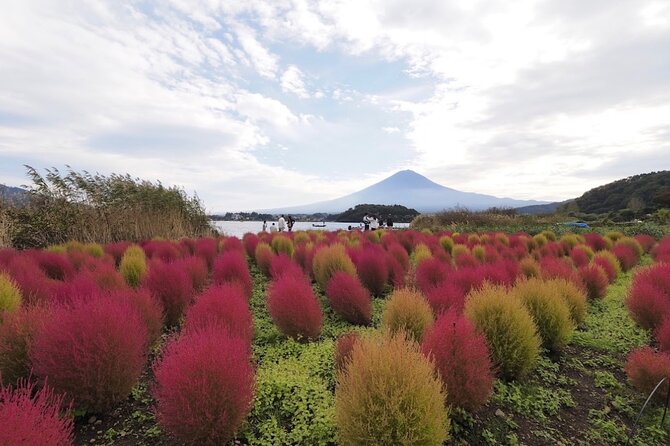
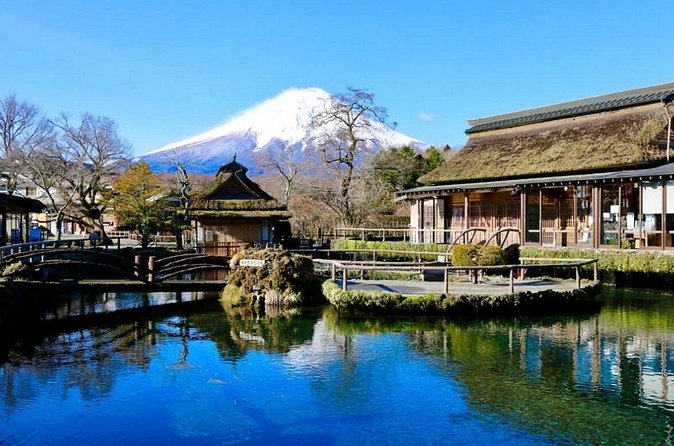
Then you head to Oshino Hakkai for about an hour. This is one of the more meaningful stops on the route because it’s not only a view. It’s also the story of what happened to the mountain over time: the eight ponds are tied to historic eruptions and intense volcanic activity, fed by an underground reservoir with mineral-rich spring water.
In real terms, this stop gives you a break from pure sightseeing into something that feels explanatory. You can look at the water, then connect it to how the area around Fuji keeps reappearing as spring-fed pockets and ponds.
The perk is the time: an hour is enough to walk the pond area at a comfortable pace without it feeling rushed. The drawback is mostly comfort-related: you’ll want sensible shoes because you’ll be moving through outdoor paths.
Lake Kawaguchiko: the big Fuji lake with multiple angles
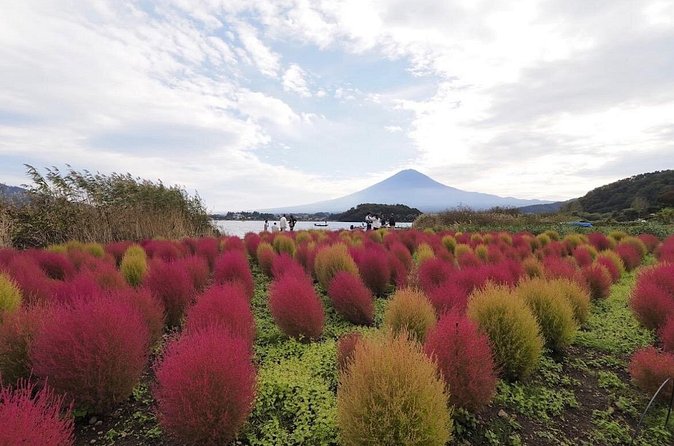
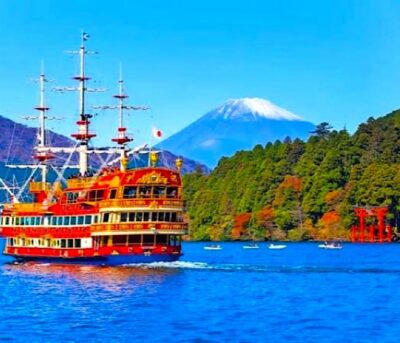
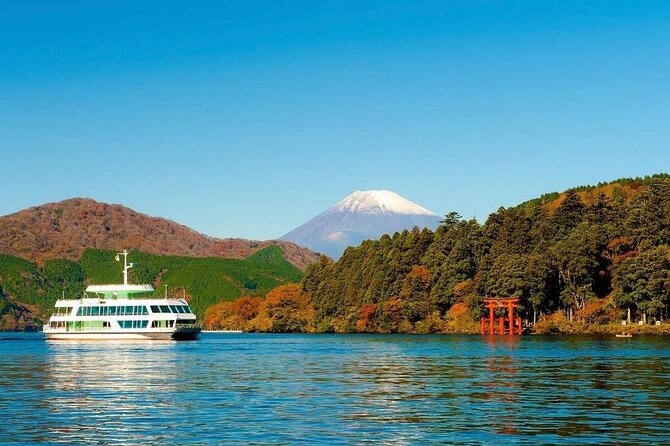
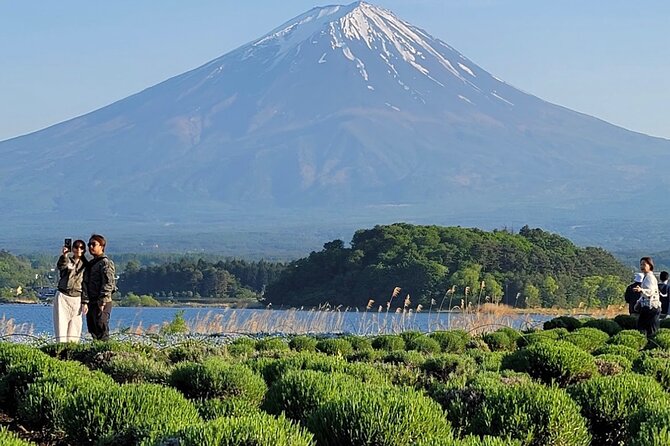
After the ponds, you’ll spend about an hour at Lake Kawaguchiko. The tour frames it as a lake shaped by volcanic debris and magma activity, and that’s part of the appeal. You’re not just seeing water—you’re seeing a landscape produced by Fuji’s past movements.
Lake Kawaguchiko is also where timing becomes everything. When Fuji is visible, it can look dramatically different depending on the angle and the moment. When it isn’t, you’ll still get a peaceful lake environment and a sense of scale.
What I like here is the pacing: it’s not a short drive-by. You get enough time to step away from the main road viewpoints and take in the lake setting in a calmer way.
You can also read our reviews of more private tours in Tokyo

Arakurayama Sengen Park and Chureito Pagoda: the stairs view payoff
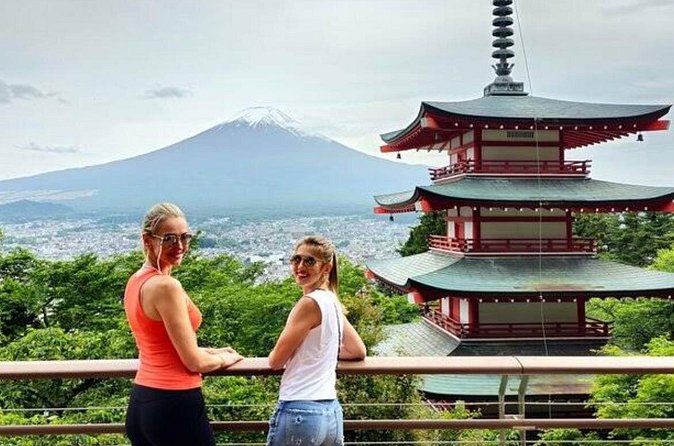
For Arakurayama Sengen Park, you’ll have about an hour. This area centers on Arakura Sengen Shrine, with origins reaching back to the 9th century and a connection to the Shinto goddess Konohanasakuya-hime. You don’t have to be a shrine expert to enjoy it—you just get a scenic hillside approach plus the atmosphere of a place locals treat seriously.
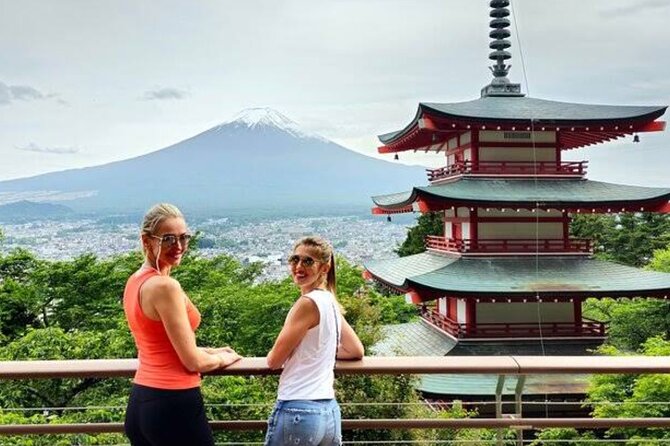
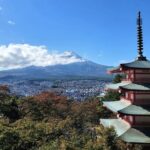
Nearby is Chureito Pagoda, listed with about an hour as well. This is the iconic five-storied pagoda overlooking Fujiyoshida City, with Fuji in the distance when visibility cooperates.
A practical point: this is where the day can involve stairs. One review detail stood out to me: the pagoda view is worth the climb for the right day, but it’s still a workout. If you’re sensitive to stairs or plan to take photos for a long time, ask your driver about the best approach and how long you want to linger.
Narusawa Ice Cave: the surprise stop that makes the day feel different
The itinerary includes Narusawa Ice Cave for about 30 minutes, and like the 5th Station, the ticket is listed as not included. This stop is the kind of thing that turns a good Fuji day into a memorable one because it’s unusual. The ice cave was formed over about 1,150 years ago by a lava flow from the 864 eruption of Mount Fuji, and it’s essentially a lava tube system where ice can persist.
If Fuji views are mediocre, this kind of stop keeps the day interesting. If Fuji views are excellent, it adds contrast: you see both the mountain above and the cold pocket below.
Timing-wise, 30 minutes is short but fair. You’ll want to keep moving because there are limited places to linger, especially if you’re waiting for photo angles.
Hakone Open-Air Museum: culture stop without the museum marathon
After the Fuji lakes and viewpoints, you may add The Hakone Open-Air Museum for about 30 minutes (optional). The tour notes that entry isn’t included, which means you should decide early if this is a must for you or a “nice-to-have.”
What’s good about this short window is that you get a taste of the museum’s outdoor format without losing half your day. The risk is straightforward: if you’re the type who hates rushing art, 30 minutes might feel too tight. If you just want a pleasant change of pace in scenic grounds, it can work well.
Owakudani and Lake Ashinoko: volcanic drama and a water finish (optional)
If you go further into Hakone, the next optional stops are:
- Owaku-dani Valley (~30 minutes, ticket not included)
This is described as volcanic terrain formed about 3,000 years ago after an explosive eruption and collapse of Hakone volcano’s central cone. You’ll be in a landscape that looks like it’s still thinking about its last big event.
- Lake Ashinoko (~30 minutes, ticket not included)
This is framed as volcanic in origin too, formed by steam explosion and lava flow that dammed the Hayakawa River, and described as a sacred site since the 8th century.
These are the stops that add variety if your Fuji day is already heavy on lakes and viewpoints. The caution is time and energy: if visibility is clear near Fuji, you may want to protect that time rather than stretch late into additional paid optional areas.
Gotemba Premium Outlets: the practical finale (and a sanity saver if it’s hot)
Finally there’s Gotemba Premium Outlets for about an hour (optional), listed as free to enter. This is the “wrap the day” option: you get a chance to shop, snack, and take a breather before heading back to Tokyo.
The tour framing mentions views of Mount Fuji in that area. In real life, it’s a bonus when you can catch it. If not, you still get a familiar setting to buy water, simple snacks, and a few comfort items before the ride back.
If your priority is pure nature over retail, skip it. If your priority is keeping the day smooth with an easier end point, it’s a helpful add-on.
English guide quality: how to set yourself up for a great day
This tour is sold with an English-speaking driver/guide, and the experience depends a lot on how your person handles the balance between driving, explaining, and photo pacing.
Some names that showed up in the guide chatter include Ali, Hassy, Mian, Khulaid, and Mr. Moon. Several comments also highlight guides who take initiative—like helping you find better vantage points, or being flexible when weather doesn’t cooperate.
At the same time, I can’t ignore that a small number of reports describe days that felt rushed or with limited English. That doesn’t mean the tour is bad every time; it means you should go in with a clear plan:
- If Fuji is your top goal, tell your driver early that you want flexibility around visibility windows.
- Ask what parts of the day can be adjusted if the weather changes.
- If you have mobility limits, flag that before you arrive at stair-heavy stops like the pagoda area.
Weather reality: how to think about visibility before you pay
This experience requires good weather. That’s not fine print fluff. Mount Fuji is the star here, and cloud cover can make the mountain look small or disappear entirely.
Here’s the smart strategy: treat this as a day with multiple chances. The route stacks viewpoints—5th Station, Oishi Park, lake areas, Arakurayama/Chureito. If one spot is blocked, another might open up. A private format makes it easier to adjust on the fly compared to fixed bus schedules.
If the weather is rough, your driver may shift the day toward other scenic areas closer to what’s accessible and safe. That flexibility is a real part of the value.
Is it good value at $350 per group?
Let’s do the practical breakdown.
For up to 6 people, you’re paying $350 total for about 10 hours with hotel pickup, private transportation, bottled water, and an English-speaking guide/driver. If you fill 4 to 6 seats, this can feel like a bargain compared with piecing together taxis and separate tickets for each leg.
If you’re only 1–2 people, it becomes more of a splurge—especially because you’re also paying extra for certain admissions like the 5th Station (2100 yen) and other optional sites. In that case, I’d only book if you strongly want:
- A private day,
- Multiple structured stops in one sweep,
- And the comfort of air-conditioning during long drives.
If you’re happy traveling by train and doing a shorter loop, you can likely spend less. But you’ll spend more time routing and coordinating, and you’ll lose some of that weather-flexibility.
Who should book this Mount Fuji private tour
This is a great fit if you:
- Want a private day with hotel pickup and minimal logistics stress,
- Care about seeing Fuji from several angles rather than betting on one,
- Prefer an air-conditioned ride and an easy pace,
- Are traveling in a small group (family, friends, or 2–4 people who can split the cost),
- Want an English-speaking guide who can help you understand what you’re looking at.
It’s less perfect if you hate paying extra for entry fees, want a strictly fixed schedule, or plan to visit regardless of visibility with zero flexibility.
Should you book Al Hareem Tours’ Mount Fuji day trip?
I think you should book it if you want a smooth, high-comfort Fuji day from Tokyo, and you’re going to take advantage of the private format. The best parts of the route are the mix: big Fuji viewpoints plus Oshino Hakkai’s volcanic pond story, and the Narusawa Ice Cave add-on that can be a surprise highlight.
Hold off if your group is only two and you’re on a tight budget, or if you want to guarantee summit-level views no matter what the weather does. Also, since quality can vary by guide on any private tour, message ahead with your top priorities and ask how the itinerary changes if clouds roll in.
If you’re flexible and you pick your group size wisely, this is the kind of day that feels worth the planning.