REVIEW · TOKYO
Tokyo: Asakusa Sightseeing Tour by Rickshaw
Book on GetYourGuide →Operated by Ebisuya Rickshaw · Bookable on GetYourGuide
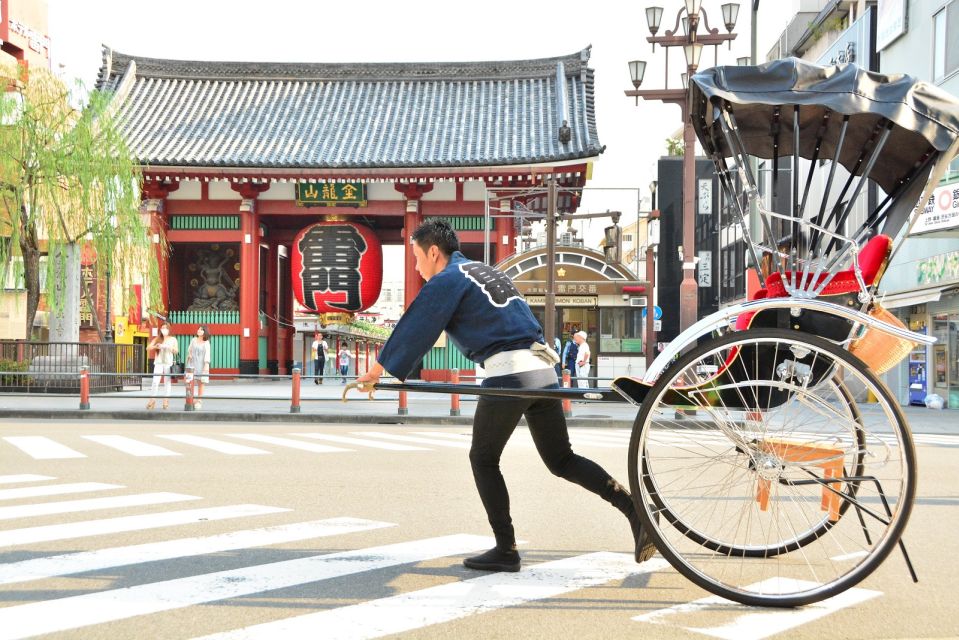
A rickshaw through old Tokyo is pure fun. I love the private chariot feel as your guide steers you through Asakusa’s sights at a human pace, and I love that the narration connects what you’re seeing to everyday rituals and neighborhood life. You get classic landmarks like Bentendo Hall plus small streets that feel unchanged.
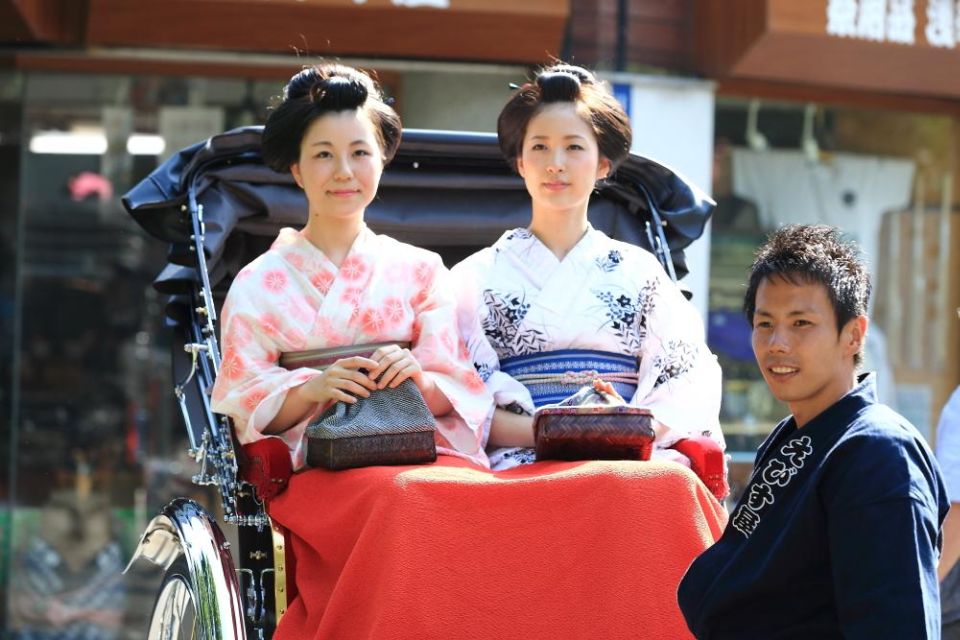
One thing to consider: the rickshaws are only 29.1 inches (74 cm) wide, and max 2 adults per rickshaw is allowed. If you’re traveling as a pair and want more room, booking individual rickshaws can be the comfier call.
If you want temples, side streets, and photo stops without stacking up a long walk, this is a smart way to spend a chunk of your Asakusa day. It’s also a fun fit for first-timers who want orientation fast.
In This Review
- Key things that make this Asakusa rickshaw tour special
- Why Asakusa clicks best from a rickshaw
- Getting to the meeting point at Asakusa Station (and avoiding the wrong station)
- Bentendo Hall and Asakusa Shrine: the start of the old-town story
- From temple lanes to Hanakawado: local life, not just landmarks
- Sumida Park and the Sumida River: scenery that earns the slow pace
- Tanuki-doori and the quirky Asakusa vibe
- Rokku Ward stops: theaters, sides streets, and adult-era Tokyo
- Hanayashiki and photo stops: the old amusement-park moment
- Denpoin Street: that post-war stillness feeling
- How long should you book? Choosing between quick and full Asakusa
- Comfort, rules, and who this tour fits (or doesn’t)
- Price and value: is $35 per person worth it?
- My practical take: should you book this Asakusa rickshaw tour?
- FAQ
- Where exactly is the meeting point?
- How long is the rickshaw tour?
- Is this a private tour?
- What languages are the guides?
- Is it wheelchair and stroller friendly?
- Are selfie sticks allowed?
- Is it suitable during pregnancy?
Key things that make this Asakusa rickshaw tour special
- A private ride with a live guide who explains what you’re passing and why it matters
- Bentendo Hall and nearby temple-shrine sights you can’t easily time on a quick walk
- Sumida Park and the Sumida River views, especially special in spring
- Rokku Ward, Tanuki-doori, and Nishi Shitamachi streets that show Asakusa’s quirky local personality
- Hanayashiki and old-street vibes on Denpoin Street, including a post-war feel along the route
- Optional longer duration that can include a souvenir choice like a Hello Kitty doll or T-shirt for the 3-hour option
Why Asakusa clicks best from a rickshaw
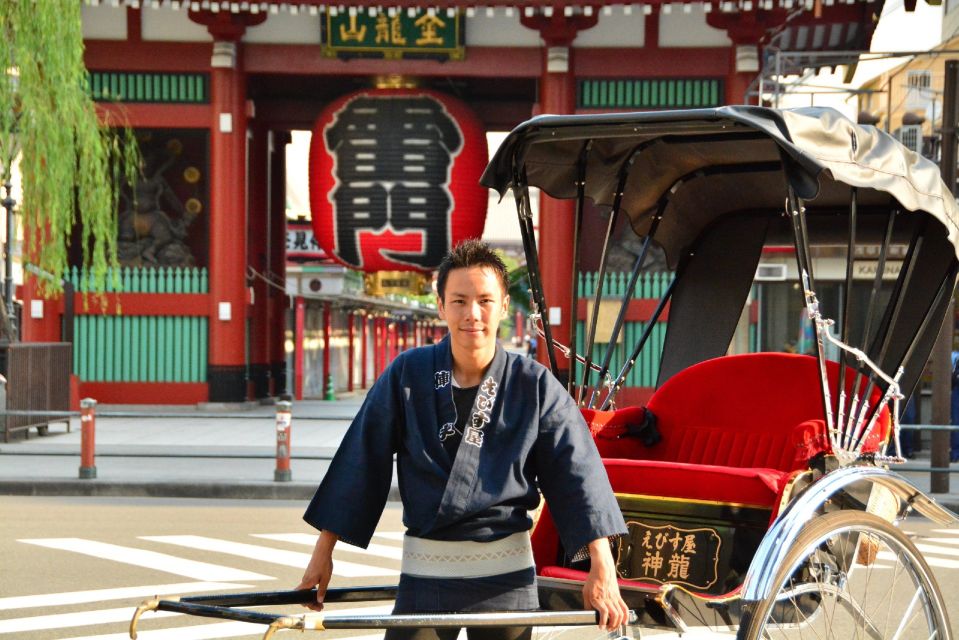
Asakusa is one of those Tokyo areas where walking is part of the charm, but it can also get tiring fast. A rickshaw ride solves that in a very Tokyo way: you get slow travel energy, plus you’re positioned to spot details at eye level.
What makes this work is the combo of mobility and context. You’re not just rolling past famous names—you’re getting a live guide to put the scenes in order: temple customs, street character, and the rhythm of the neighborhood. In the process, the ride becomes a kind of moving orientation tour, so your later self-guided exploring feels easier.
You can also read our reviews of more tours and experiences in Tokyo.



Getting to the meeting point at Asakusa Station (and avoiding the wrong station)
You meet at the rickshaw stand just outside exit #1 of Asakusa Station on the Tokyo Metro GINZA line. Important catch: there are other stations with the same name but different subway lines, so you want the Ginza line station.
From exit #1 (you can use the linked map), you still need a short walk along the street to reach the stand. If you’re cutting it close, aim to arrive a little early. Once you spot the rickshaw line outside the exit, you’re in the right place.
Bentendo Hall and Asakusa Shrine: the start of the old-town story
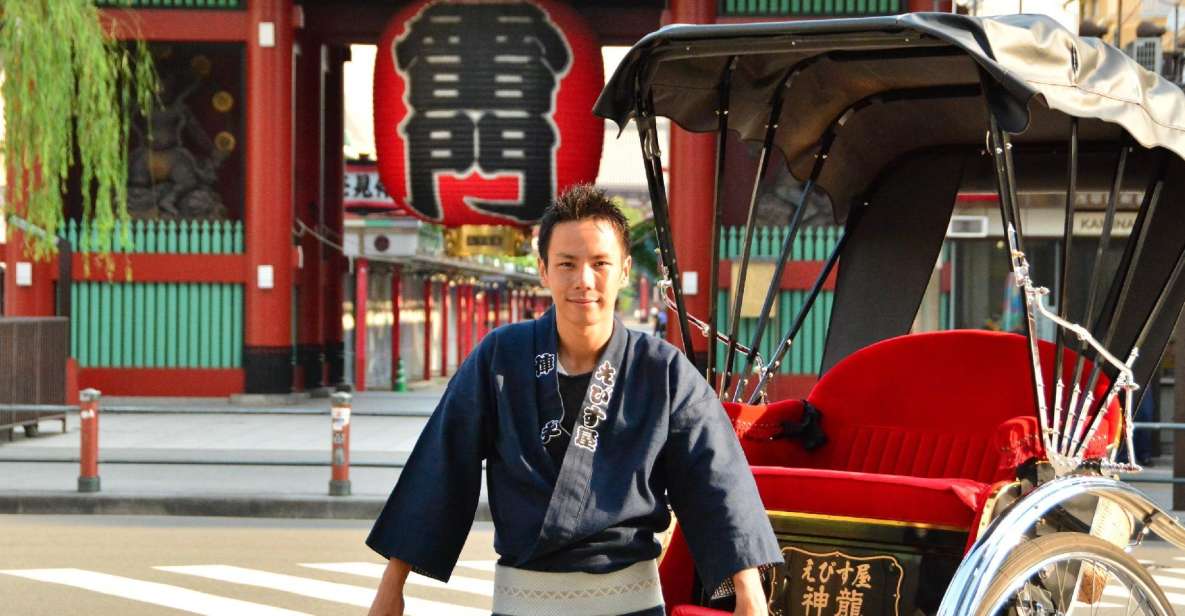
The tour’s early stretch focuses on the spiritual core of Asakusa. You’ll see Asakusa Shrine next to the area’s oldest temple, which is a great way to understand why this neighborhood draws both locals and visitors year after year.
A highlight on the route is Bentendo Hall. It’s not just a photo stop. With a guide talking you through what’s going on around you—where people gather, how the space is used—you get a better sense of how worship works in real time, not just in guidebook form.
From temple lanes to Hanakawado: local life, not just landmarks
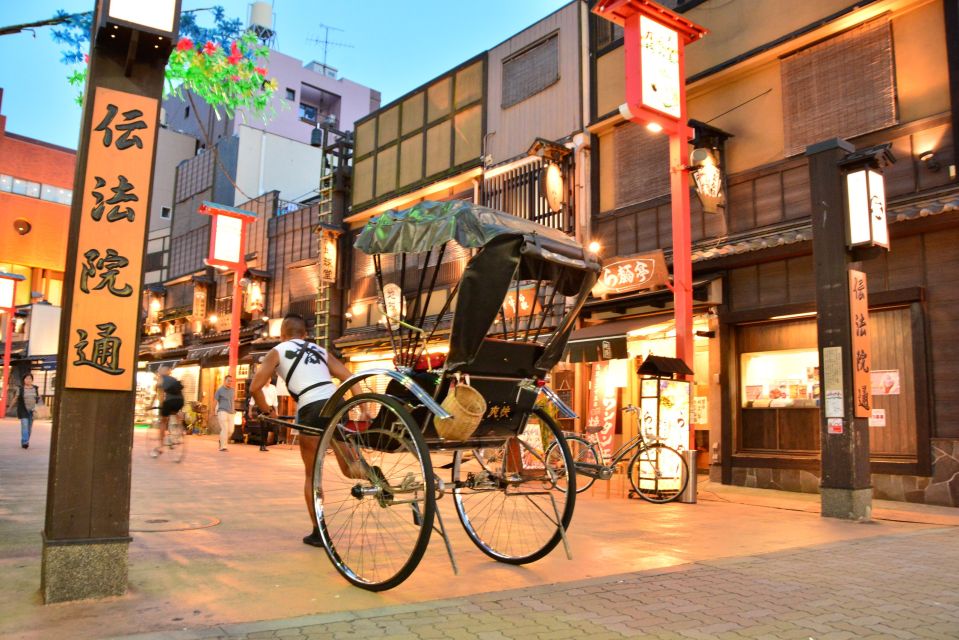
After the shrine-temple concentration, the route shifts into daily Asakusa streets. You’ll pass toward the Hanakawado shoe shopping district, which is a different side of the neighborhood than the big-ticket sights.
This is where the rickshaw helps most. Narrow streets and busy foot traffic can make it hard to slow down and look. From the rickshaw, you can take in shopfront details, signage, and the flow of people without stepping out into every crowd gap.
You’ll also get photo moments along the way, and the guide can steer you toward what’s actually interesting versus what’s merely crowded.
Sumida Park and the Sumida River: scenery that earns the slow pace
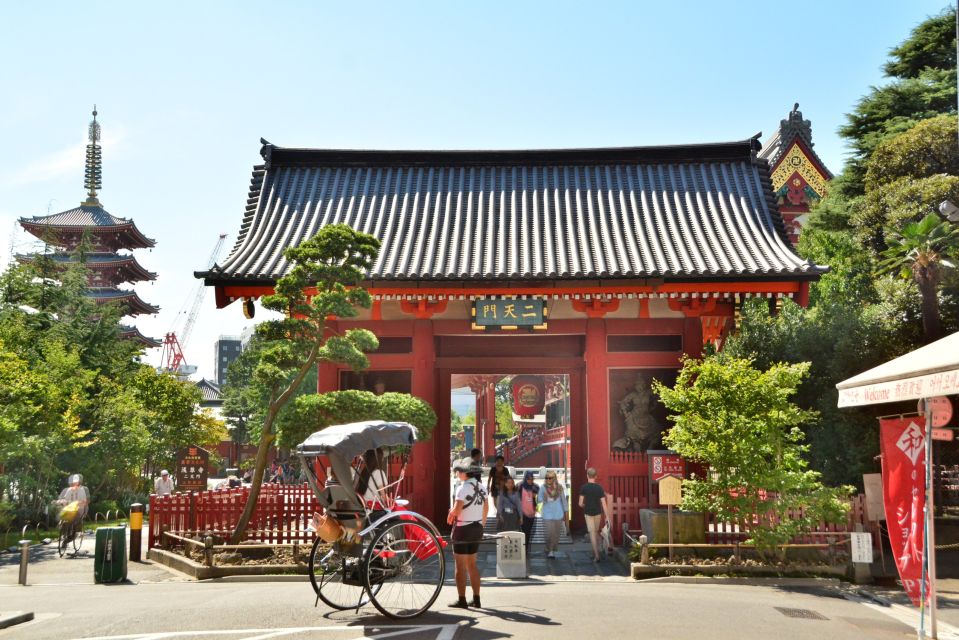
The ride includes time near Sumida Park, and it’s described as especially stunning in spring when thousands of cherry trees bloom. Even if you’re not in peak sakura season, this park-and-river stretch is a good change of pace from temple lanes.
What you’re really buying here is breathing room. Your rickshaw slows down your whole day, and Sumida Park gives you a natural place to pause and look out toward the river. If you’re the type who likes skyline and water views but doesn’t want to plan a separate viewpoint trip, this stop fits your schedule.




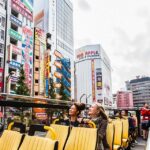
Tanuki-doori and the quirky Asakusa vibe
Asakusa isn’t only about temples. The route includes Tanuki-doori, a street known for its distinctive character.
Expect a mix of things to photograph and small moments to notice: street layout, signage, and the general feel of the neighborhood. It’s the kind of segment that works well if you like street-level Tokyo—the Tokyo you can’t fully replicate from a big bus window.
Rokku Ward stops: theaters, sides streets, and adult-era Tokyo
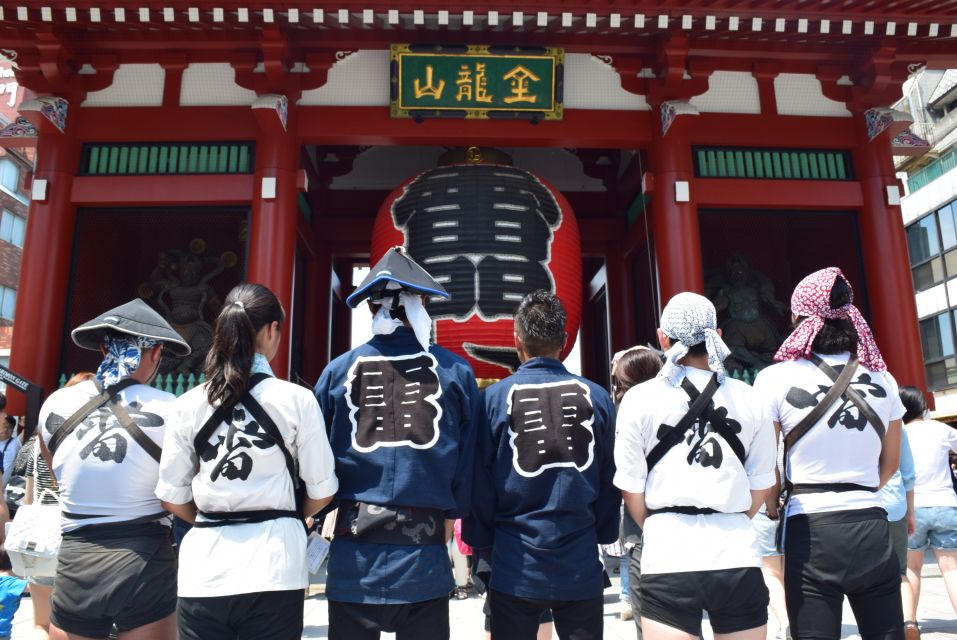
The tour also goes through the Rokku Ward area, with a mention of adult theaters. This is a real part of the area’s historic atmosphere, and having a guide there helps you interpret what you’re seeing without feeling lost or awkward about it.
If your goal is Asakusa as a living neighborhood (not a museum district), this part adds texture. Just keep in mind it’s not a kids-only vibe, so consider your comfort level and your group’s needs.
Hanayashiki and photo stops: the old amusement-park moment
You’ll take souvenir photos near Hanayashiki, noted as Japan’s oldest amusement park. Even if you don’t plan to buy tickets or rides, the presence of Hanayashiki adds a playful edge to the day.
This works especially well when you want a visual variety mix: spirituality early on, neighborhood shopping mid-ride, then something fun and nostalgic without switching to another part of Tokyo.
Denpoin Street: that post-war stillness feeling
One of the most memorable segments is Denpoin Street, described as having changed little since World War II. That statement matters. It’s what makes Asakusa feel different from newer Tokyo blocks—you get street scale, mood, and an older texture.
Because the tour is a rickshaw ride, you can slow down enough to notice that difference. And since you’re guided, you’re more likely to notice the details that connect street design to daily life.
How long should you book? Choosing between quick and full Asakusa
The tour runs from 30 to 190 minutes, so you have real control over how much you want to pack into your schedule.
If you’re short on time, the 30-minute option can work as a fast sampler: enough temple context for orientation plus a few photo stops so you can move on with a clearer mental map. If you have a half-day and want more neighborhood weaving, you’ll likely feel happier with the longer options.
There’s also a bonus for the 3-hour option: you can choose a memorial gift of either a Hello Kitty doll or an original T-shirt. That’s a small but tangible reason to go longer if you like collecting a local souvenir tied to your experience.
You can also request customization according to your interests, which is handy if you care more about street life, gardens, or temple rituals.
Comfort, rules, and who this tour fits (or doesn’t)
Let’s talk practical comfort. Rickshaws are naturally intimate, and this one has a specific physical limitation: 29.1 inches (74 cm) wide and max 2 adults per rickshaw. If you’re traveling with more than two people, you might end up splitting into multiple rickshaws, which can actually improve comfort because space becomes less of a trade-off.
Rules to know:
- Selfie sticks are not allowed.
- Adult pricing applies to anyone aged 6 and over.
- Children 5 and under can ride for free if they sit on an adult’s lap (one child per adult). If a child 5 and under gets their own seat, they must book as an adult.
- This activity is wheelchair and stroller friendly.
Pregnancy note matters here. It’s not recommended for people in their first 16 weeks of pregnancy, and pregnant women are listed as not suitable. If that describes you or someone in your group, I’d treat this as a firm warning and choose a more flexible walking or indoor option.
If you’re sensitive to crowds or prefer very quiet settings, keep expectations realistic. This is Asakusa, so you’ll be moving through areas where foot traffic and activity are part of the experience.
Price and value: is $35 per person worth it?
The price is listed at $35 per person, with time options that stretch from short to long. Your value mainly comes from two things: the private format and the live guide.
A rickshaw tour is not trying to compete with a cheap transit ride. You’re paying for:
- a guided route through multiple Asakusa sections in a short window
- the vantage point that comes from traveling by rickshaw rather than walking or bus rides
- photo stops without you hunting for them
- flexibility, since the tour can be customized
From the reviews, the guides and drivers earn big praise for being friendly, funny, and quick to capture good photos. Names show up often, like Tashi, Taisei, Shima, Taku, Ryu Buchi, Sho, Issy, shin, Matcha, Masa, KoKo, Kazu, Nene, Yusuke, and Oscar—and the recurring theme is that the guide makes the ride feel personal, not scripted.
That matters for value. A rickshaw is the vehicle. The guide is what turns it into something you’ll remember when you’re back in your hotel looking at photos.
Also, snacks and drinks are not included, so if you’re doing longer options, plan to have water and a light plan for breaks outside the tour.
My practical take: should you book this Asakusa rickshaw tour?
Book it if:
- you want temples plus real neighborhood street texture in one smooth chunk of time
- you like guided storytelling and photo stops that feel intentional
- you’d rather sit while you see more than walk yourself tired
- you’re traveling with kids old enough to appreciate the novelty (or with younger kids who can ride on an adult’s lap)
Skip it if:
- you want a fully quiet, low-traffic experience
- you’re uncomfortable with the narrow rickshaw space and plan to squeeze in more people
- pregnancy timing applies to you or your group member (the tour explicitly says not recommended for the first 16 weeks)
If your goal is to get your bearings in Asakusa fast—then go explore on your own afterward—this is a very solid way to start.
FAQ
Where exactly is the meeting point?
You meet at the rickshaw stand just outside exit #1 of Asakusa Station on the Tokyo Metro GINZA line, then walk a few meters along the street to the stand.
How long is the rickshaw tour?
The duration ranges from 30 to 190 minutes. Exact starting times depend on what’s available.
Is this a private tour?
Yes. It’s listed as a private group.
What languages are the guides?
Guides offer English and Japanese.
Is it wheelchair and stroller friendly?
Yes. The activity is listed as wheelchair accessible and stroller friendly.
Are selfie sticks allowed?
No. Selfie sticks are not allowed.
Is it suitable during pregnancy?
Pregnant women are listed as not suitable, and it’s also stated as not recommended for people in their first 16 weeks of pregnancy.
If you tell me your travel month and how many people are in your group (and ages), I can help you pick the best duration option for your schedule.