REVIEW · TOKYO
Tokyo: Tokyo Private Day Tour With Guide
Book on GetYourGuide →Operated by TheTokyoTravel · Bookable on GetYourGuide
Ten hours can feel like five neighborhoods. This private day tour strings together Tsukiji Outer Market bites and Tokyo Skytree panoramas with an English driver and guide who keep the pace fair. The one catch: Skytree admission and lunch aren’t included, so you’ll budget a bit extra.
What I like most is that the day is built for real Tokyo variety: temple incense and imperial calm in the morning, then shopping streets and neon crossings later. And because it’s private for your group size (up to 5), you’re not stuck watching a crowd move on autopilot when you want an extra photo moment or a slower lunch.
The route is also long. With a 10-hour day (including pickup and drop-off), wear shoes you can stand in and plan for a lot of walking between stops.
In This Review
- Key highlights that make this day tour work
- Why a private Tokyo day makes sense
- Tsukiji Outer Market: snack-first Tokyo education
- Imperial Palace East Gardens for calm, photos, and context
- Asakusa and Senso-ji: the red lantern moment
- Tokyo Skytree: the best big-picture tool
- Meiji Jingu: forest quiet inside the city
- Harajuku Takeshita Street: where Tokyo’s playful side shows up
- Shibuya Crossing: the iconic scramble, done efficiently
- Akihabara Electric Town: anime, manga, and gadget hunting
- Price and value: $709 for up to 5 people
- How to plan your day so you don’t feel rushed
- Should you book this Tokyo private day tour?
- FAQ
- What is the duration of the Tokyo private day tour?
- How much does the tour cost?
- Is lunch included?
- Is admission to Tokyo Skytree included?
- What’s included in the tour?
- What language is the driver/guide?
- Is pickup included, and where does pickup work?
- Is pickup available from airports or cruise terminals?
- Can the itinerary be customized?
- What should I bring?
- What should I know about rules in the vehicle?
Key highlights that make this day tour work
- Tsukiji Outer Market street food timing so you eat before lines and before heat gets intense
- Imperial Palace East Gardens for a reset: moats, stone walls, and scenic photo pauses
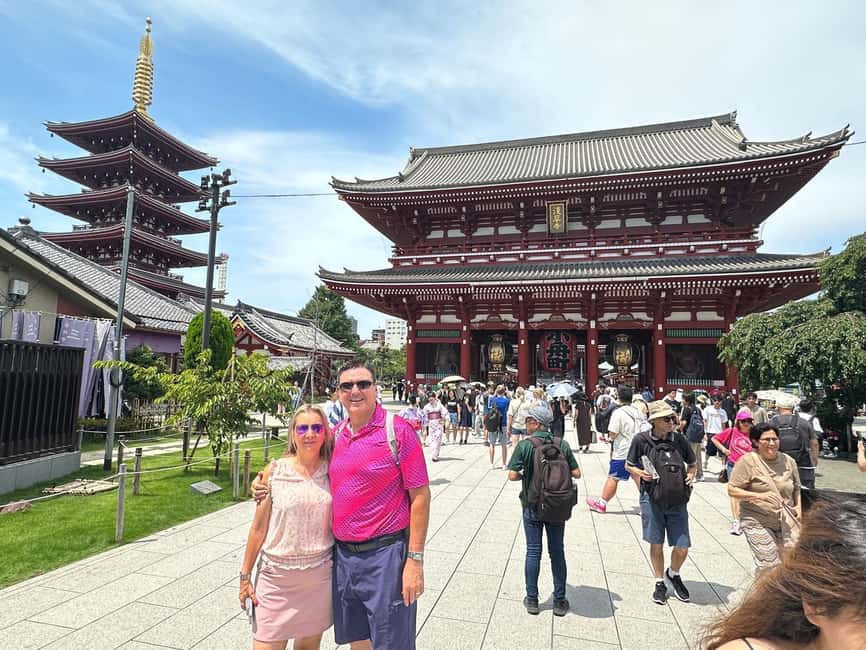
- Senso-ji and Nakamise Street in Asakusa with incense, prayer, and that classic red-lantern entry
- Harajuku Takeshita Street chaos (the fun kind) for quirky shops, snacks, and playful pet-café stops
- Shibuya Crossing at the neon peak—short, sweet, and perfect for a first Tokyo overview
- Akihabara Electric Town for anime/manga shops and gadget hunting without getting lost
Why a private Tokyo day makes sense
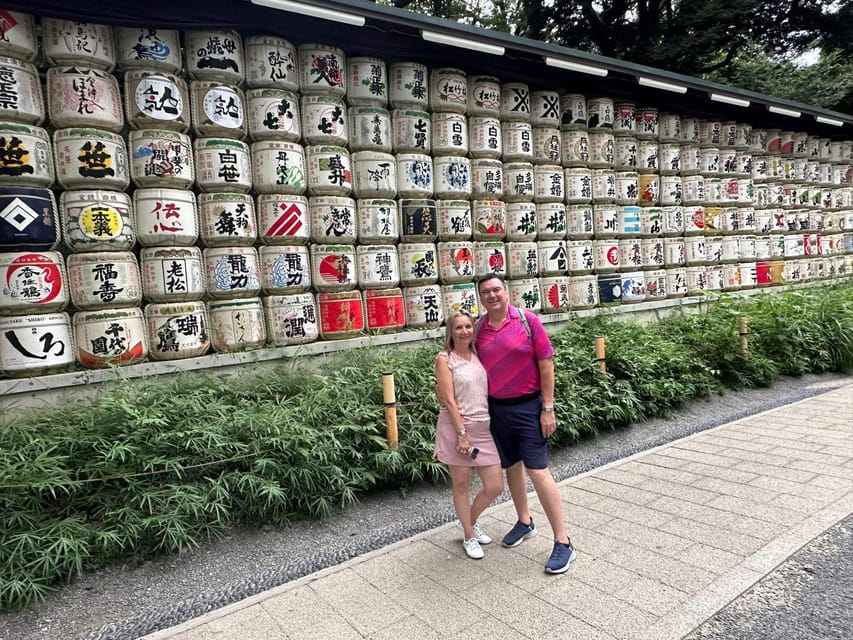
Tokyo can be fast to understand and hard to navigate. A private setup means you’re not doing the “subway math” all day or guessing which station is easiest when you’re tired. You ride in an air-conditioned vehicle with WiFi onboard and bottled water, which matters more than you’d think when the city is loud and the sidewalks are packed.
The other win is flexibility. This isn’t a theme-park checklist. You can adjust the order, slow down where you care, and skip what doesn’t. In feedback, English-speaking guides like Moon and Imran are often praised for keeping families engaged and for being willing to shift timing based on kids’ interests or group pace.
One more practical note: your day clock runs on pickup and drop-off. The whole experience is listed as 10 hours including that travel time, so it’s not a “quick stop” tour—it’s a full day designed to compress a lot of Tokyo into one smooth arc.
You can also read our reviews of more guided tours in Tokyo
Tsukiji Outer Market: snack-first Tokyo education
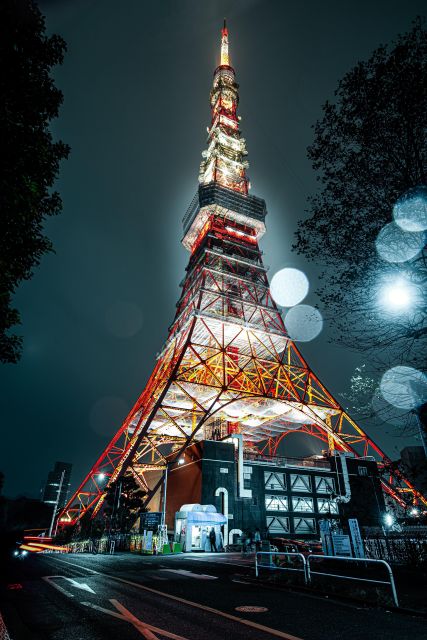
Starting at Tsukiji Outer Market is smart because it turns Tokyo cuisine into something you can sample right away. You’ll get about an hour here for street food and quick tasting, not a long sit-down meal. Think grilled seafood skewers, tamagoyaki, and other grab-and-go favorites that help you understand Japanese food culture beyond sushi restaurants.
Tsukiji is lively and sensory. There’s a rhythm to it—people flowing, vendors calling, knives and trays doing their job. For your first Tokyo morning, it’s a shortcut to the city’s food mindset: fresh ingredients, short prep, and lots of small flavors.
What to watch: because it’s a market, you’ll walk and you’ll stand. Wear comfortable clothes you don’t mind smelling slightly like grilled food by the end. And if you’re bringing cash for smaller vendors, it helps.
Imperial Palace East Gardens for calm, photos, and context
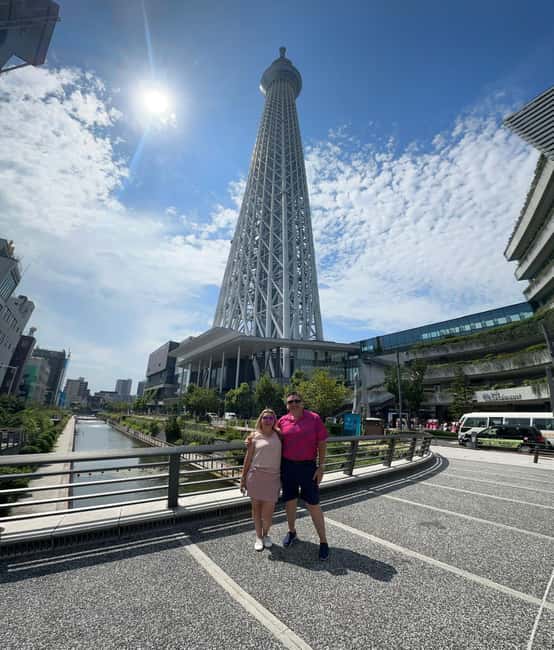
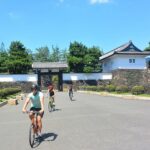
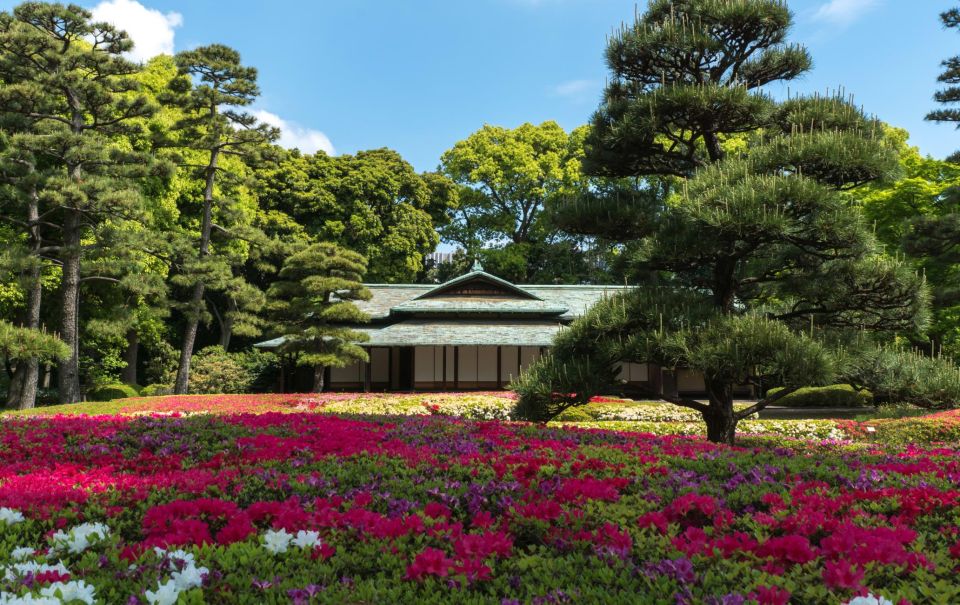
After the market energy, Imperial Palace East Gardens give you a breather. This stop is about calm scenery and meaningful layers—seasonal flowers, ancient stone walls, and peaceful moats. You’ll also get a photo pause and time to wander at an easy pace.
What makes it valuable isn’t just prettiness. It’s a chance to see how Japan’s imperial story shapes the city’s physical layout. You can spot ruins connected to Edo Castle and view the palace grounds from the garden side, which helps you connect the modern skyline you’ll see later with older structures and spaces.
Practical tip: this part is slower on your legs but good on your photo brain. If you’re into architecture or history, this is where you’ll appreciate the quiet. If you’re not, it’s still a welcome rest before temples and shopping streets.
Asakusa and Senso-ji: the red lantern moment
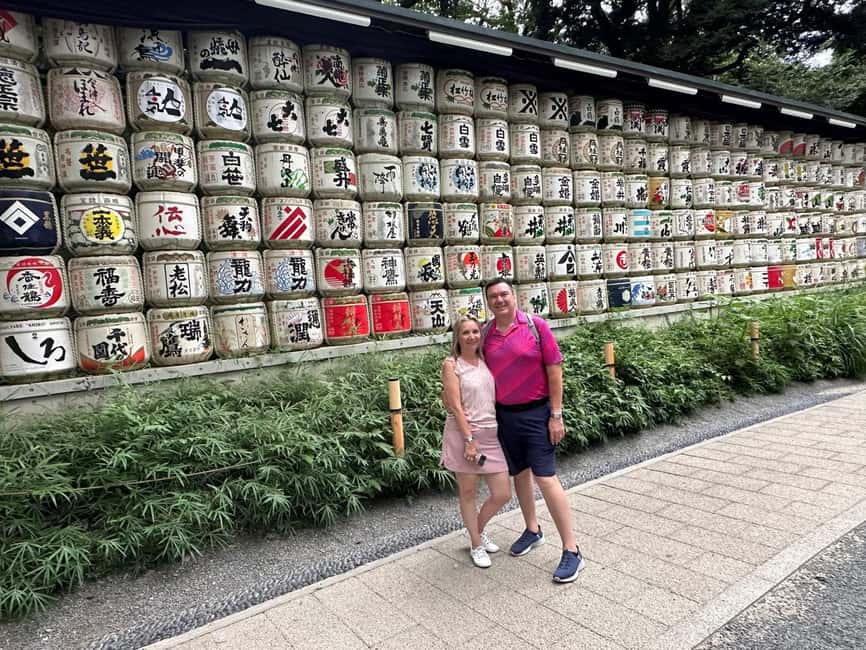
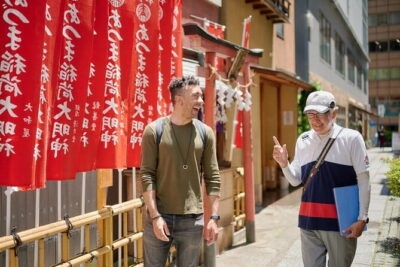
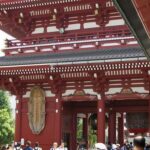
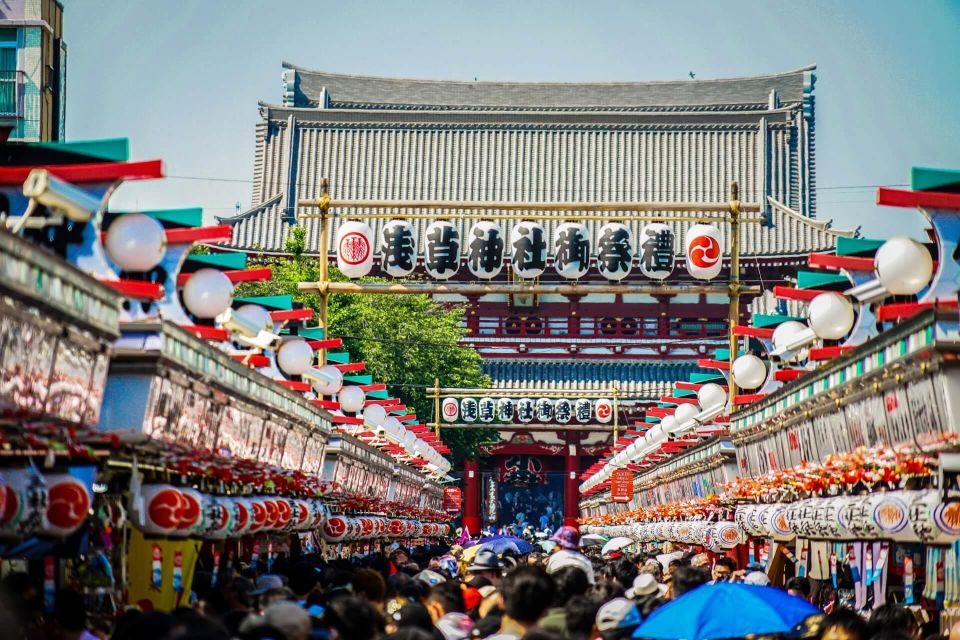
Senso-ji in Asakusa is one of those places that makes Tokyo feel instantly distinct. You enter through Kaminarimon Gate, with that iconic red lantern, then follow the flow to Nakamise Street. It’s a shopping-souvenir and snack corridor, but it also acts like a living introduction to temple-era traditions.
You’ll have time for photos and to visit, plus time that works as a break. The incense burning and prayer areas are especially worth slowing down for. Even if you don’t speak the language, you can feel what’s happening: people offering, breathing in smoke, standing in respectful silence.
Food-wise, you’ll likely want to eat here or nearby. Lunch isn’t included, but your guide can point you toward an easy option.
Small consideration: Asakusa is popular. Even with a private guide, it can get crowded. Plan for a bit of shoulder-to-shoulder time around the busiest spots.
Tokyo Skytree: the best big-picture tool
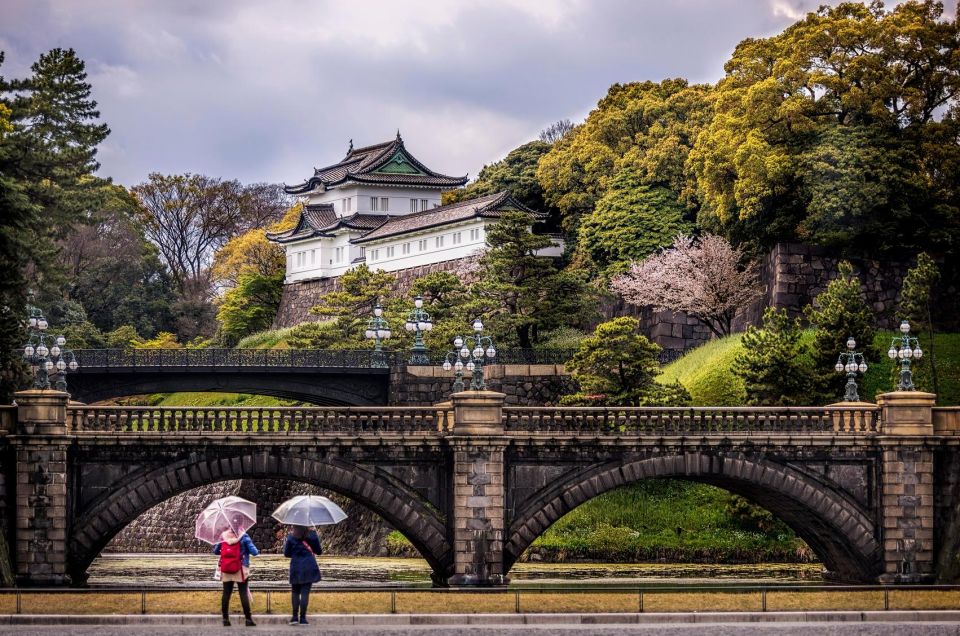
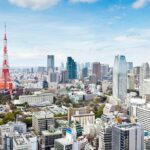
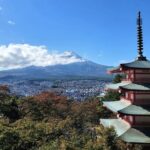
By the time you reach Tokyo Skytree, you’ve seen temple lanes, garden calm, and shopping energy. Skytree is where you get orientation—how everything connects. The tower is 634 meters tall, and on clear days you might even see Mount Fuji from the observation area.
You’ll have time for a photo stop and visit, plus time to shop and eat in the complex. That’s helpful because you can handle a lot of practical needs here: snack refills, souvenir browsing, and a lunch option if you haven’t already eaten.
Important budgeting note: admission to the observation decks (Tembo Galleria + Tembo Deck) isn’t included. So if you love heights, set aside the extra ticket cost. If you’re not feeling the climb, you can still enjoy the vibe at ground level, though you’ll miss the main reason Skytree is famous.
You can also read our reviews of more private tours in Tokyo

Meiji Jingu: forest quiet inside the city
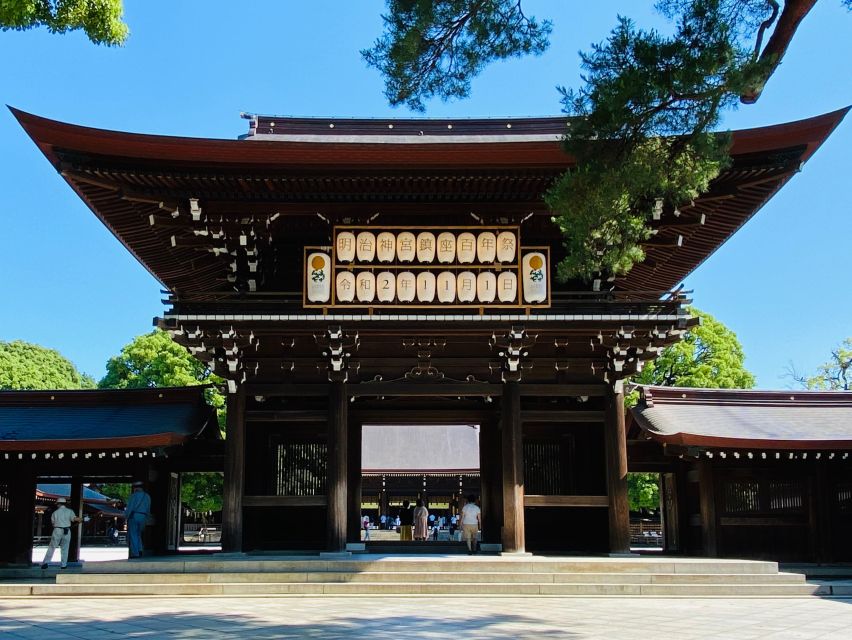
Meiji Jingu Shrine is a different Tokyo mood. Instead of crowds and shopping, you get a lush forest approach and a more grounded pace. The shrine is dedicated to Emperor Meiji and Empress Shōken, and the experience centers on traditional rituals and walking through torii gates.
This stop is about resetting your senses. After dense neighborhoods, the trees and the shrine layout help you slow down. If you’re traveling with kids, this can also be a nice break from neon and queues—something that feels calm without being boring.
Time here is about an hour, so you won’t get a long meditation session, but you will get enough to notice details like the gate sequence and the way the crowds thin out as you move inward.
Harajuku Takeshita Street: where Tokyo’s playful side shows up
Then you shift hard into Harajuku Takeshita Street. This is youth culture in motion—quirky shops, colorful fashion, and snack stands where you’ll find popular crepes. If you want the playful, camera-friendly Tokyo that most people imagine, this is the place.
There’s also the pet-café angle, where you might encounter places with animals like cats, dogs, and even hedgehogs. That kind of stop can be a huge win if you’re traveling with kids or if you just like lighthearted Tokyo moments.
Practical consideration: this area is energetic. You’ll want to keep your expectations flexible—some shops may be crowded, and you might not be able to get exactly what you want right away. The private format helps here, because your guide can help you move around without wasting time.
Shibuya Crossing: the iconic scramble, done efficiently
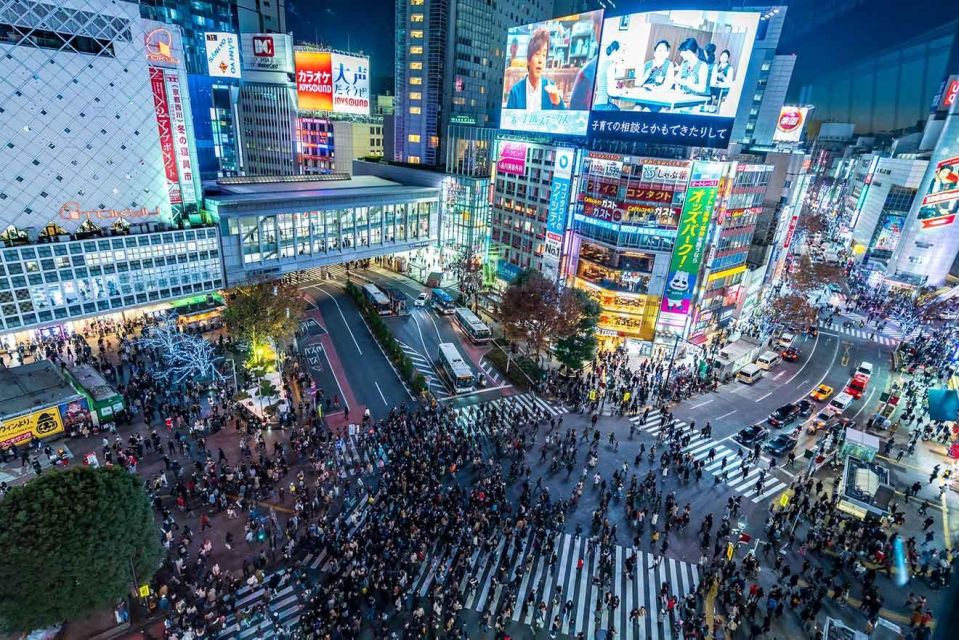
Shibuya Crossing is famous for a reason. The pedestrian scramble happens under neon billboards, with thousands moving at once. The stop here is short—about 30 minutes—so you’re basically going for the “I get it now” moment.
This is ideal for a first Tokyo visit because you don’t need an hour of wandering to understand Shibuya. A quick photo moment, a walk through the chaos, and then you’re ready to head on.
One more practical note: Shibuya is where you’ll naturally want dinner or desserts afterward. Since you have shopping and sightseeing time in the area, it’s an easy place to extend your day if you still have energy.
Akihabara Electric Town: anime, manga, and gadget hunting
Akihabara Electric Town is the final big neighborhood stop and it rounds out the day nicely. This is where electronics shops sit next to anime and manga stores, and it’s also known for themed cafés like maid cafés.
Even if you’re not deep into anime, Akihabara is fun because it’s visually different. You’ll see product displays, quirky souvenirs, and lots of niche merchandise that you just won’t find in standard shopping districts.
Time here is about an hour, with photo stop and shopping time built in. That means you can look, buy small items, and still avoid getting stuck in one store too long.
Price and value: $709 for up to 5 people
At $709 per group up to 5, the price can feel high if you’re thinking per person. But the structure matters: you’re paying for a private vehicle plus an English driver/guide service for a full 10-hour day with pickup and drop-off in Tokyo’s 23 wards.
Here’s how the value usually works best:
- If you have a group of 4–5, the per-person cost drops quickly, and the private format stops feeling “luxury” and starts feeling like smart use of time.
- If you’re traveling as a family or with mixed ages, a private route reduces the fatigue of stations and transfers.
- If this is your first full day in Tokyo, the tour helps you build a mental map. That can make the rest of your trip easier and less stressful.
What’s not included is also important. Lunch and Skytree admission are separate. So I’d think of the tour price as covering the guided day and transportation, with your meals and a couple entry costs handled by you.
On the included side, you get WiFi on board, bottled water, parking fees, fuel surcharge, and passenger insurance. That’s the kind of “small stuff” that can add up when you try to DIY it.
How to plan your day so you don’t feel rushed
This tour runs for 10 hours including pickup and drop-off, and pickup instructions say you should wait in the hotel lobby about five minutes early. Your guide or driver will contact you ahead of time on the day of pickup.
Tokyo traffic can change timing, and the provider notes that drivers could be late up to around 30 minutes due to highway conditions. So if you have a hard evening commitment, build in a buffer.
For your personal comfort:
- Bring cash for snacks and shopping.
- Wear comfortable shoes. You’ll be on your feet at markets, temples, and shopping streets.
- Dress in comfortable clothes you can move in quickly.
Also, because lunch isn’t included, you’ll want to plan where you’ll eat. The tour format gives you lunch breaks at points that make sense, and lunch options may be suggested around the Skytree/Solomachi area, near Senso-ji/Solomachi, or around Takeshita Street.
One more helpful mindset: don’t try to “win” the day by seeing everything at maximum speed. The best outcome is using the private guide to spend time where you actually care—then let the iconic spots do their job for the rest.
Should you book this Tokyo private day tour?
Book it if you want a first-day Tokyo sampler that still feels organized. It’s especially strong for groups of up to five, families, and anyone who’d rather pay for comfort and guidance than spend a day optimizing train routes.
Skip it or reconsider if you’re allergic to long days. This is a 10-hour block, and even with breaks, it’s still a full circuit of neighborhoods. Also, if you don’t care about observation decks, you should know Skytree tickets are extra, and lunch will be on your own.
If you’re trying to get Tokyo’s “old meets new” feeling in one day—temple incense, imperial gardens, pop-culture streets, and city-height views—this private format gives you that mix with less friction.
FAQ
What is the duration of the Tokyo private day tour?
The tour is 10 hours long, and that includes hotel pickup and drop-off.
How much does the tour cost?
It’s $709 per group, up to 5 people.
Is lunch included?
No. Lunch is not included in the tour price.
Is admission to Tokyo Skytree included?
No. Entry/admission to Tokyo Skytree (Tembo Galleria + Tembo Deck) is not included.
What’s included in the tour?
Included items are an air-conditioned vehicle, WiFi on board, bottled water, parking fees, fuel surcharge, private transportation, and passenger insurance.
What language is the driver/guide?
The driver is listed as English-speaking.
Is pickup included, and where does pickup work?
Pickup is included for locations in Tokyo’s 23 wards. You should wait in the hotel lobby about 5 minutes before the scheduled pickup time.
Is pickup available from airports or cruise terminals?
No. Pickup from airports or cruise terminals is not provided.
Can the itinerary be customized?
Yes. The tour is described as customizable to your interests and pace.
What should I bring?
Bring comfortable shoes and clothes, plus cash. Comfortable walking shoes are especially important for market and shopping areas.
What should I know about rules in the vehicle?
Smoking is not allowed in the vehicle, and alcohol and drugs are not allowed. The tour also notes that alcoholic drinks are not allowed in the vehicle.