REVIEW · TOKYO
Tokyo: Sumo Wrestling Show
Book on GetYourGuide →Operated by Travel Tokyo · Bookable on GetYourGuide
Sumo hits Shinjuku tonight. This show turns a centuries-old sport into something you can feel up close: you watch pro wrestlers perform shiko and salt purification, and you also get to step into a traditional sumo outfit to challenge them yourself for laughs. The one thing to watch is logistics—finding the right entrance and knowing whether to use the elevator versus stairs can be a little confusing.
I like that it’s not just standing around. You get an English live guide, clear context, and the ring energy stays front and center. One more consideration: it’s not a tournament, so if you’re chasing official tournament stakes, this is more of a curated show with demonstrations and audience interaction.
In This Review
- Key Takeaways Before You Go
- Shinjuku vs Ryōgoku: Why This Sumo Show Works
- What Actually Happens During the 1.5 Hours
- Rituals You’ll Spot: Shiko, Salt Purification, and Ring Drama
- The Hands-On Part: Outfit, Photos, and Your Turn to Challenge
- Price and Value: Why $62 Makes Sense for This Format
- Getting There at F2: Avoid the Building-Entrance Confusion
- Is It a Real Tournament? What to Expect Instead
- Who Should Book This Sumo Show (and Who Might Skip It)
- Should You Book This Tokyo Sumo Wrestling Show?
- FAQ
- FAQ
- How long is the Tokyo sumo wrestling show?
- Is this experience a tournament?
- Is there an English-speaking guide?
- Where is the meeting point?
- Do I get to wear a traditional sumo outfit?
- Can I challenge the wrestlers myself?
- Are photos included?
- What rituals and elements will I see?
- What is the cancellation policy?
- Is reserve now, pay later available?
Key Takeaways Before You Go
- You’ll see core sumo rituals up close like shiko foot stomping and salt purification, not just the fight.
- The hands-on ring moment is the highlight: outfit on, photos possible, then you try a challenge.
- Expect pro technique, not random theatrics—the wrestlers demonstrate powerful moves and rules.
- It’s short and fun at about 1.5 hours, even if it can run closer to 2 in real life.
- Logistics matter at the building entrance—double-check how to get to the meeting spot.
Shinjuku vs Ryōgoku: Why This Sumo Show Works
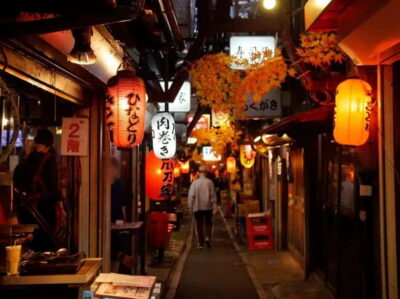
Tokyo has a couple of different sumo “vibes.” Ryōgoku is the historic magnet, the big traditional center of the sport. This experience drops you in Shinjuku instead—busy, neon, loud Tokyo—then connects it to the old world of sumo rules and ritual. That contrast is part of the fun.
I also like that it’s positioned as an “exclusive” experience, not some giant, faceless spectacle. You’re close enough to notice body language and to understand what the wrestlers are doing—especially during the formal moments like purification and the pre-bout theatrics.
One small reality check: you’re watching a show format, not an official event. Since it’s not a tournament, the focus is on education, performance, and audience participation rather than championship stakes.
You can also read our reviews of more tours and experiences in Tokyo


What Actually Happens During the 1.5 Hours
The program moves fast, and that’s a good thing. You’re there for about 1.5 hours, but at least one person clocked it closer to two hours and said it went by quickly. Translation: plan for a compact block of time where your attention stays on the ring.
Here’s the flow you can expect:
First, the guide sets the stage. You get English explanations about sumo—its history and the lifestyle and rules behind what you’re seeing. This matters because sumo can look simple until you learn what’s going on: why certain actions happen, what counts as proper technique, and what the pre-bout ritual is saying.
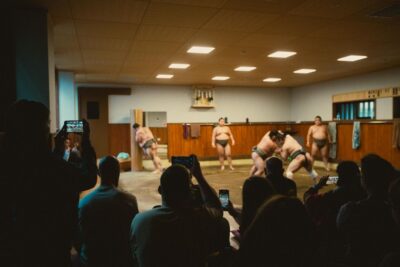
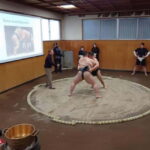
Then comes the demonstration portion. Professional wrestlers show powerful technique and the sacred-sounding traditions that frame each bout. Expect moments that feel ceremonial as well as athletic—earth-shaking stomps, dramatic gestures, and the purification ritual.
After the main matches, the tone shifts from spectator to participant. That’s when the experience turns into your chance to put on the traditional sumo outfit, step into the ring area, and challenge the wrestlers. It’s comedic in the best way—laughing while still showing respect for what those wrestlers do.
Rituals You’ll Spot: Shiko, Salt Purification, and Ring Drama
Sumo isn’t just a contest of strength. It’s also theater, ritual, and strict etiquette. This show leans into that, and I found it makes the sport easier to appreciate even if you don’t know the rules yet.
You’ll see shiko, the foot-stomping that sounds and looks dramatic. It’s one of those things you can only really understand by watching it in person, where the sound lands in your chest and the rhythm pulls your attention to the ring.
You’ll also see the salt purification element. Again, the value here is that it’s not explained at a distance. The guide connects the meaning to the action while you’re watching, so you don’t just think it’s a random quirky habit.
Then the bouts happen—live bouts that let you see technique in motion. The energy gets real fast when the wrestlers go from ceremony to combat mode.
The Hands-On Part: Outfit, Photos, and Your Turn to Challenge
This is the part people talk about because it’s genuinely different from a standard show. After the main matches, the experience becomes interactive, and you get multiple ways to join in.
You can expect:
- Traditional sumo outfit time (you step into the clothing, not just pose from the stands).
- A ring entry moment where you’re close enough to feel the difference between watching and being there.
- A challenge with the wrestlers, where the goal is less about “winning” and more about respectful fun.
- Photo opportunities. One review specifically said they even let you take pictures with the wrestlers.
The best advice I can give you is to treat it like a cultural moment, not a stunt. You’ll have a laugh, but you’ll also come away understanding why formality matters in sumo. That blend—play + respect—is exactly what turns this into value for your money.
And yes, it’s likely to feel a little surreal. You’ll be in Shinjuku, then dressed like a sumo wrestler, then facing a pro. That’s not something Tokyo hands out every day.
Price and Value: Why $62 Makes Sense for This Format
$62 per person sounds like “just a show” until you think about what you actually get. You’re paying for three big things at once:
1) A live English guide who explains what you’re seeing (history, rules, and competitor lifestyle).
2) Up-close pro demonstrations with ritual moments and live bouts.
3) A real participation component—outfit, ring time, and challenging the wrestlers.
Many Tokyo activities force you to choose: either you get instruction and context, or you get action. This one mixes both. The duration is short, which also helps value. You’re not buying a half-day commitment.
Also, sumo isn’t always accessible for casual visitors. Getting a format that’s beginner-friendly without losing the authentic rituals is part of the appeal.
If you hate interactive experiences or you want strictly spectator-only sport, you may feel less value. But if you like learning by doing, $62 can feel fair for what’s included.





Getting There at F2: Avoid the Building-Entrance Confusion
This is the practical part that can make or break your night.
Your meeting point is specific: you take the elevator to F2 and meet at the entrance. You even get coordinates: 35.7025146484375, 139.70802307128906. If you plug those into your map app, you’re already ahead of the game.
Now, here’s the caution from a real-world problem: one review described how app directions took them to the rear of the building rather than the front. Worse, the instructions said to use the elevator when they ended up using stairs in the wrong spot—so they accidentally ended up in someone’s home area and had to interrupt to fix it.
So do this instead:
- Arrive a bit early so you can locate the correct entrance calmly.
- If the building looks wrong, stop and re-check your map position.
- Follow the elevator instruction tied to the F2 meeting point, not what your instincts say once you’re inside.
This is one of those “small logistics” issues that can turn into an awkward evening if you rush. Give yourself a cushion and it should be smooth.
Is It a Real Tournament? What to Expect Instead
One key detail matters: this is not a tournament.
That doesn’t mean it’s low-quality. It means you should adjust your expectations. You’re not going to see official tournament brackets or championship stakes. Instead, you’ll see a show format built around demonstrations, ritual, and live bouts, plus the interactive audience challenge.
If you came to Tokyo hoping to catch an official tournament atmosphere, you’ll likely want to plan for the actual tournament seasons and venues. But if your goal is to experience sumo culture in a way that’s understandable and fun on a normal travel schedule, this show can fit perfectly.
Who Should Book This Sumo Show (and Who Might Skip It)
This is a great fit if you:
- Want an easy-entry introduction to sumo rules and traditions with an English guide.
- Like close-up experiences where the action and the explanations happen in the same place.
- Enjoy hands-on travel moments, especially when they’re respectful and short.
It’s less ideal if you:
- Prefer a strictly spectator-only sport setting.
- Are only interested in official tournament competition.
- Get stressed by finding a specific building entrance (because the F2 meeting point can be easy to miss if directions don’t match reality).
For most first-time Tokyo visitors, though, it hits a sweet spot: you get authenticity and participation in a compact time block.
Should You Book This Tokyo Sumo Wrestling Show?
If you want a sumo experience that doesn’t require deep prior knowledge, I’d say yes—book it. You’re getting pro wrestlers up close, core rituals like shiko and salt purification, and a chance to put on the outfit and challenge the wrestlers yourself. That combination is hard to beat for a short evening activity.
Book it especially if you enjoy cultural experiences where you learn while you play. The show format is designed for beginners, and the English guide helps you connect what you’re seeing to what it means.
Just don’t treat it like a tournament night. Treat it like a performance with serious roots—sumo as practiced, taught, and shared. And give yourself time to locate the F2 entrance properly.
FAQ
FAQ
How long is the Tokyo sumo wrestling show?
The experience lasts 1.5 hours. The start times depend on availability.
Is this experience a tournament?
No. This is not a tournament.
Is there an English-speaking guide?
Yes. There is a live tour guide in English.
Where is the meeting point?
You meet after taking the elevator to F2 and meeting at the entrance. The coordinates are 35.7025146484375, 139.70802307128906.
Do I get to wear a traditional sumo outfit?
Yes. You step into a traditional sumo outfit as part of the interactive portion.
Can I challenge the wrestlers myself?
Yes. After the main matches, you enter the ring area and challenge the wrestlers yourself.
Are photos included?
The experience includes opportunities to take pictures with the wrestlers, based on guest feedback.
What rituals and elements will I see?
You’ll see sacred rituals and live bouts, including shiko (foot stomping) and salt purification.
What is the cancellation policy?
You can cancel up to 24 hours in advance for a full refund.
Is reserve now, pay later available?
Yes. You can reserve now and pay later, with pay nothing today.