REVIEW · TOKYO
Half-Day Local Tokyo Tour in Adachi Market and Shibamata
Book on Viator →Operated by Trip Designer Inc. · Bookable on Viator
Fish, temples, and local Tokyo in one half-day. I like how this tour helps you sidestep the usual tourist pressure by focusing on the Adachi Fish Market, where the seafood scene feels active but not overrun. I also love the second act in Shibamata Taishakuten, paired with a walk through old Tokyo streets that make the area feel like a living museum.
One consideration: this is a compact, 4.5-hour walking tour, and food and drinks aren’t included, so you’ll want a snack plan if you get hungry during the market and shopping-street stretch.
In This Review
- Key Things That Make This Tour Work
- Adachi Fish Market: Seafood Up Close Without the Usual Pressure
- The Simple Train Jump from Senjuohashi to Shibamata
- Shibamata’s Old-Style Streets: River-Town Calm and Movie Lore
- Shibamata Taishakuten (Daikyoji): Wood Carvings and Lotus Sutra Detail
- Yamamototei: A Japanese-and-Western Architectural Curiosity
- Guides Matter Here: Clear Explanations and Friendly Energy
- Price and Time: What You’re Paying For (and What You’re Not)
- Who This Tour Fits Best
- Should You Book This Adachi + Shibamata Tour?
- FAQ
- How long is the tour?
- Where does the tour start and end?
- How big is the group?
- What does the price include?
- Is food or drinks included?
- What time does the tour begin?
- Can I cancel for free?
Key Things That Make This Tour Work
- Small group (max 8) for a more relaxed pace and more time to ask questions
- Adachi Fish Market: Tokyo’s only specialized marine products market, with a non-touristy feel
- Shibamata Taishakuten + Taishakuten-Sando gives you temple detail and a classic shopping street in one loop
- Train logistics are handled with a one-way fare from Senjuohashi included
- Yamamototei adds an unusual Japanese-and-Western architectural stop beyond the big sights
- Guide-led interpretation is a repeated highlight, with clear language and friendly explanations
Adachi Fish Market: Seafood Up Close Without the Usual Pressure
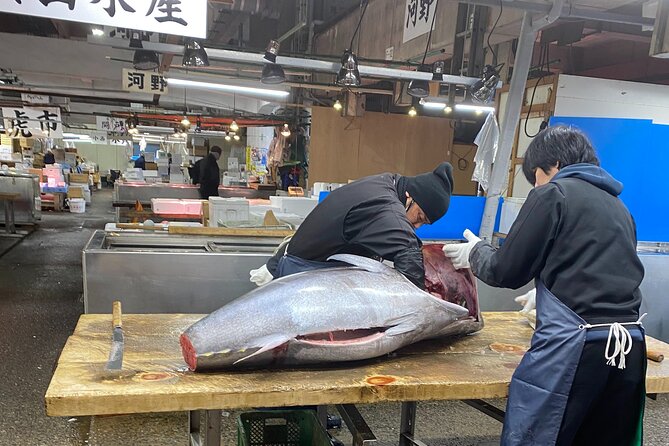
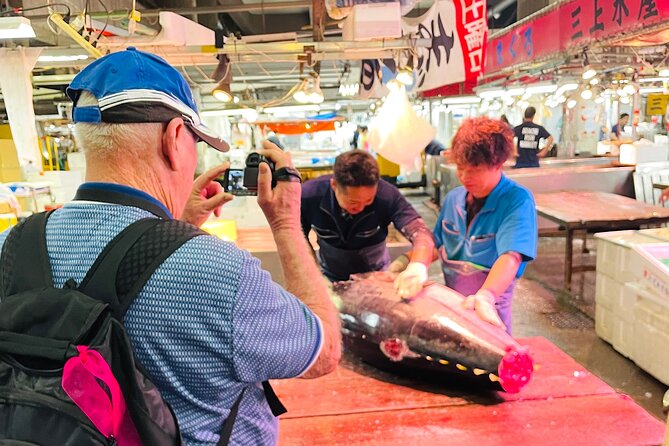
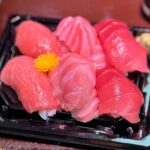
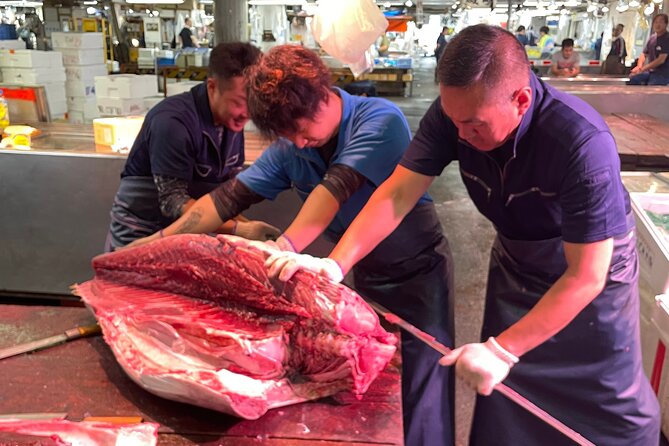
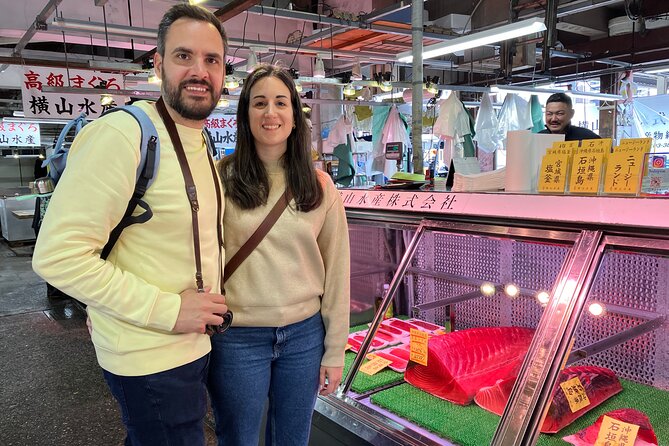
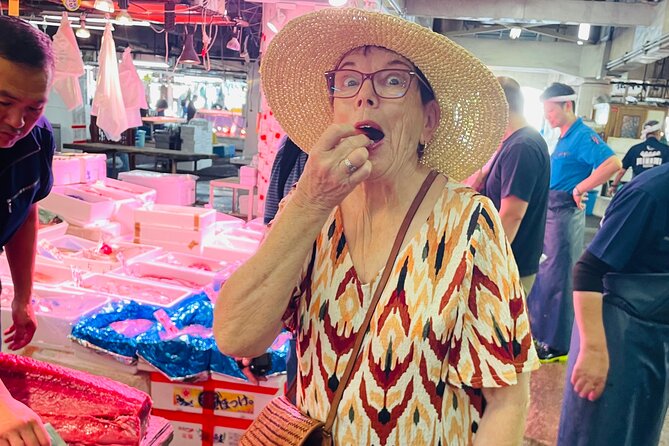
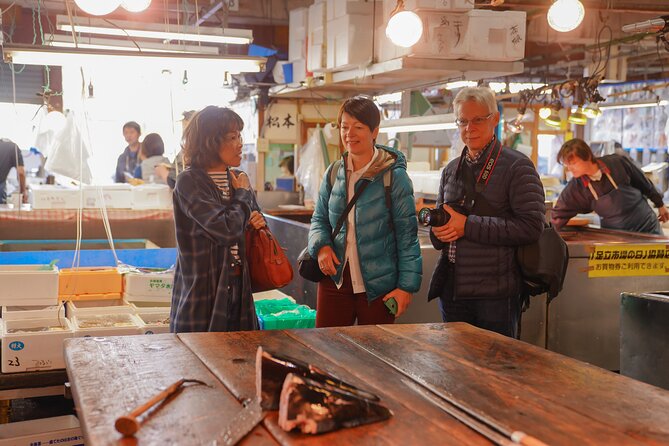
The best part of this half-day start is that it puts you where real Tokyo seafood happens, not where people go to take photos of a famous name. Adachi Fish Market is a specialized marine products market, and the vibe is built for working life: stalls, activity, and that “you’re in the middle of something” feeling. You spend about 1 hour there, which is long enough to see how vendors present products without turning the market into a blur.
I’d treat the market like a guided tasting of the senses, not a shopping stop. With a guide, you’ll get context as you browse—what you’re looking at, what kinds of seafood matter here, and how locals think about freshness. It’s also where the day’s theme clicks: instead of thinking of Tokyo as only skyscrapers and queues, you see it as a city that still runs on traditional systems.
A practical plus: admission is free for this market stop. So you’re paying for guidance and time, not extra ticket fees stacked on top of the tour cost.
What to watch for as you walk: the range of seafood and how it’s displayed, plus the rhythm of stall-to-stall movement. Even if you don’t eat seafood that day, the market is still worth it because it teaches you Tokyo’s food supply culture in a very direct way.
You can also read our reviews of more shopping tours in Tokyo


The Simple Train Jump from Senjuohashi to Shibamata
This tour starts at Senjuhashidocho, near Senjuhashidocho / Senjuohashi Station at 8:00 am and ends at Shibamata Station. The good news is that the tour includes the one-way train fare to get you from Senjuohashi to Shibamata.
Why that matters: getting to Shibamata on your own isn’t hard, but doing it “on your schedule” can turn a half-day into a navigation puzzle. Here, you can focus on the day, not the route.
Also, the overall timing is realistic. The tour is about 4 hours 30 minutes, which is perfect if you want an authentic slice of Tokyo without surrendering your whole day. You’ll still cover multiple stops—market, neighborhood streets, temple grounds, and a second architectural site—so arrive on time and keep your shoes comfortable.
Shibamata’s Old-Style Streets: River-Town Calm and Movie Lore
After the market, the tour shifts from seafood energy to old Tokyo pacing. You’ll head to Shibamata, a traditional town on the banks of the Edogawa River in northeastern Tokyo. The atmosphere is the point here: you get an area where daily life still looks distinct from the city’s busiest tourist corridors.
You’ll have about 30 minutes in Shibamata, long enough for a gentle walk and a few “wait, this is still how it looks” moments. This is also where the guide’s storytelling becomes useful—Shibamata is known for Edo-era feel, and the walking layout makes that visible instead of abstract.
There’s a quick stop for the Statue of Futen No Tora just outside Shibamata Station. It ties the area to Japanese popular culture through the character “Mr. Tora” from the Otoko wa Tsuraiyo movie series. Even if you’re not a film fan, it’s a neat reminder that Shibamata lives in more than just guidebooks.
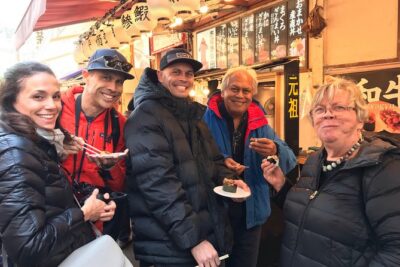
Then you move into Taishakuten-Sando, a roughly 200-meter stretch from Shibamata Station to Shibamata Taishakuten. This is where you slow down and browse. Expect the kind of old-fashioned street retail that makes the temple visit feel connected to community life—think sweets shops and noodle spots along the walk. Since this portion is about 20 minutes, it’s not a rushed pass-through. It’s enough time to pick up a snack or just enjoy the street scenes.
Shibamata Taishakuten (Daikyoji): Wood Carvings and Lotus Sutra Detail
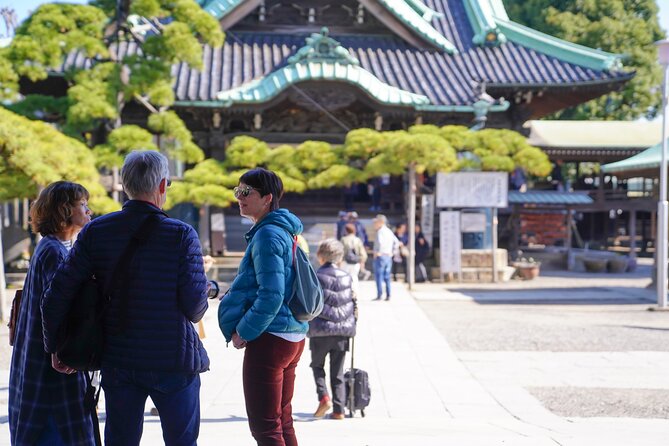
Now for the spiritual centerpiece: Shibamata Taishakuten (Daikyoji Temple). You spend about 40 minutes here, which is a comfortable amount of time to actually look at the craftsmanship instead of just standing in front of a hall and moving on.
The standout feature is the wood-carved sculptures arranged around the main hall. They depict story scenes from the Lotus Sutra, and the guide helps you notice the right details. When a temple focuses so heavily on sculpture storytelling, a few pointers can completely change what you see.
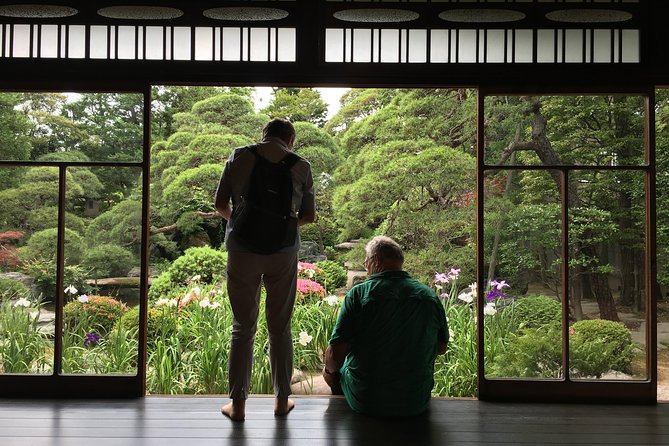
There’s also a stunning garden of ikebana—flower arrangement as art. That’s one of those details that can look simple at a glance, but it’s the kind of “small world” you appreciate more when you’re not on a tight self-guided schedule.
A reality check: temples can feel repetitive if you’ve visited a lot in Tokyo. What makes this one worth your time is the combination—Lotus Sutra wood carvings + an ikebana garden—plus the fact you’re arriving through Taishakuten-Sando, so you feel the transition from street to sacred space.
Yamamototei: A Japanese-and-Western Architectural Curiosity
The final stop is Yamamototei, and it’s here that the tour quietly proves it isn’t just about the famous names. It’s a two-story building with a blended style—Japanese architecture with Western elements integrated into a shrine-like setting. The guide points out details like the Nagayamon, described as having a unique Western-style component.
You get about 30 minutes here. That’s not a long time, but it’s enough to understand why it’s unusual and to spot the design differences that make it feel like a historical oddity rather than another standard stop.
If you enjoy architecture, this is the one that can catch you off guard—in a good way. Even if you’re more of a “food and streets” person, it adds texture to your day by showing how Tokyo’s past absorbed outside influences.
You can also read our reviews of more tours and experiences in Tokyo




Guides Matter Here: Clear Explanations and Friendly Energy
A lot of Tokyo tours sound the same on paper. This one earns praise because the guide experience is front and center. Across multiple guide names—Kaori, Mutsuko, Megumi (Meg), Masayo, Yumi, Mana, Fumiko, Rie—the pattern stays consistent: people highlight clear language, a friendly vibe, and explanations that make the sites easier to understand.
Kaori is specifically noted for language clarity, and for using an album-style presentation that helped people replay what they saw later. Mutsuko and Megumi get singled out for making the Adachi market feel like a real food experience, not just a walk past counters. Masayo and Yumi are praised for attentiveness and for explaining local culture and customs, which is the difference between seeing sights and understanding them.
This matters for you because it directly affects what you’ll do with your time. In Adachi, you might otherwise stand in front of seafood and wonder what you’re looking at. In Shibamata, you might walk a street and miss the cultural connections. A good guide turns those moments into a story you can follow.
The tour also runs as a small group (max 8), so you’re not just listening—you can actually ask questions without shouting over dozens of people.
Price and Time: What You’re Paying For (and What You’re Not)
At $91.96 per person for about 4 hours 30 minutes, this is priced for a guided “off-the-beaten” half-day with real inclusions. You’re not just paying for sightseeing—you’re paying for the guide, local taxes, and the logistics that often add friction: the one-way train fare from Senjuohashi, plus entrance coverage where applicable (market and temple-related stops are described as admission-free or included where noted).
Here’s what you should plan around:
- Food and drinks are not included, so budget for a snack during Taishakuten-Sando if you want something on the walk.
- There’s no hotel pickup/drop-off listed, so you’ll want to be ready to start at the station meeting point by 8:00 am.
- It’s built as a group walking tour, so you’ll be on your feet for most of the day.
Is it good value? For me, yes—because it bundles a guide-led seafood market visit with a temple complex plus a distinctive architectural stop, and it handles train fare. If you try to do this alone, the biggest cost isn’t money. It’s time spent figuring out the right flow and what each place is actually showing you.
Who This Tour Fits Best
This tour is a strong match if you want:
- A quieter Tokyo side than the usual big-name seafood spots and the densest central attractions
- A short, high-impact morning/early day (4.5 hours)
- A guide-led day where you don’t feel lost in the market or the temple detail
- A mix of food culture + old-street Tokyo + architecture
It may be less ideal if you:
- Want a longer, sit-down food-focused experience with built-in meals
- Only want the very top headline attractions and no detour into neighborhood Tokyo
Should You Book This Adachi + Shibamata Tour?
If you’re trying to balance Tokyo’s big sights with something more human, I think this is a smart choice. The Adachi market start sets the tone fast—seafood, activity, and less tourist noise—then Shibamata delivers the slow, old-street calm that makes the city feel layered. And the inclusion of the guide plus train fare makes it easy to say yes without planning stress.
Book it if you like guided wandering, temple details, and local food culture. Skip it if you need built-in meals or you’d rather spend your time in the city’s most famous hotspots only.
FAQ
How long is the tour?
The tour lasts approximately 4 hours 30 minutes.
Where does the tour start and end?
It starts at Senjuhashidocho / Senjuohashi Station (千住大橋駅) and ends at Shibamata Station.
How big is the group?
The group is small, with a maximum of 8 people per booking.
What does the price include?
It includes a professional guide, local taxes, small-group walking tour, and a one-way train fare from Senjuohashi Station to Shibamata Station. Entrance fees are listed as free for the market and several stops, with Yamamototei included.
Is food or drinks included?
No. Food and drinks are not included.
What time does the tour begin?
The start time is 8:00 am.
Can I cancel for free?
Yes. You can cancel for a full refund if you cancel at least 24 hours before the experience start time.