Shibuya can feel like sensory overload, in a good way. This 2-hour walk gives you a clear route through iconic spots and quieter lanes, starting with the striking Myth of Tomorrow mural and moving into the energy of Shibuya Crossing.
My favorite part: you get context, not just photos—guides such as Loc and Rio tend to explain what you’re seeing in plain English, then point you to smart spots for pictures.
I also like how the tour mixes old and new Tokyo without dragging. You’ll step into Nonbei Yokocho for that late-night alley vibe, then cut over to modern hangout zones around Miyashita Park and Center Gai. The result feels like you’re understanding Shibuya, not just checking boxes.
One thing to consider: timing and meeting location. The start is inside Mark City 3rd floor at SABON Shibuya Mark City, and it can be confusing on your first day—so don’t be late.
In This Review
- Key tour takeaways
- Getting Oriented at SABON Shibuya Mark City (Mark City 3rd Floor)
- Myth of Tomorrow: Taro Okamoto’s Hopeful Nuclear-Era Message
- Shibuya Crossing: How to See the World’s Busiest Intersection
- Nonbei Yokocho: Drunkard’s Alley and Old Tokyo Side Streets
- Miyashita Park and Center Gai: Modern Tokyo with a Human Pace
- Maruyamacho Streets and the Walk to Hachikō
- Price and Time: Is $22 Worth It for a 2-Hour Shibuya Walk?
- Who This Shibuya Tour Fits Best (and Who Might Not)
- Should You Book This Shibuya Walking Tour?
- FAQ
- Where is the meeting point for the Shibuya Crossing & Hidden Streets tour?
- What time should I arrive?
- How long is the tour?
- How much does it cost?
- What is the language of the tour?
- What are the main sights on the route?
- Is the tour guided by a live person?
- Can I cancel for a full refund?
- Can I reserve now and pay later?
- Is the tour a walking tour?
Key tour takeaways
- Myth of Tomorrow opener: Taro Okamoto’s mural starts the walk with a message about hope tied to nuclear impacts
- Crossing photos with guidance: You’ll stop at photo points around Shibuya Crossing, instead of just getting swept along
- Nonbei Yokocho back streets: Old Tokyo atmosphere in tight lanes with local-life history
- Miyashita Park pause: A multi-level urban break that’s great for watching how Shibuya moves
- End at Hachikō: A clean finish at the loyalty statue in the heart of the district
Getting Oriented at SABON Shibuya Mark City (Mark City 3rd Floor)
The tour starts at SABON Shibuya Mark City, inside the building called Mark City on the 3rd floor. If it’s your first day in Tokyo, that detail matters. Shibuya Station is huge, so I’d plan extra time and treat the first few minutes like a mini mission: get to the right building, then the right floor.
The good news: the guide is holding a sign, and that helps once you’re in the correct building. The coordinates for the meeting area are 35.6586643, 139.6999525, which is handy if you’re using a map app to triangulate the right spot.
What I like about this setup is that it filters out the usual start-of-tour chaos. You’re meeting indoors, not in the wind and noise outside, and once you spot the sign, you can relax and focus on the walk. The drawback is simply human error: being even a few minutes late here can cost you the whole start.
You can also read our reviews of more walking tours in Tokyo


Myth of Tomorrow: Taro Okamoto’s Hopeful Nuclear-Era Message
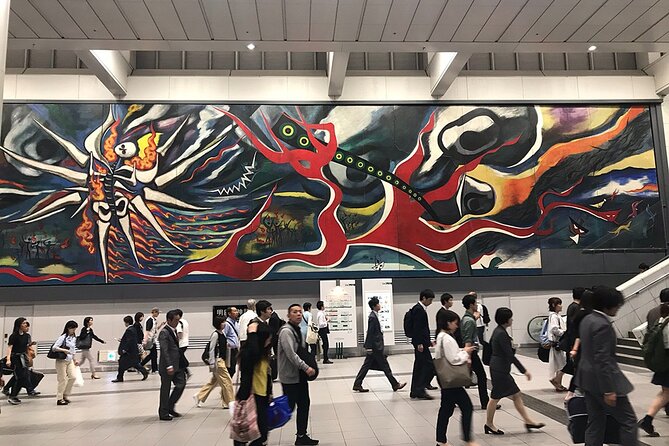
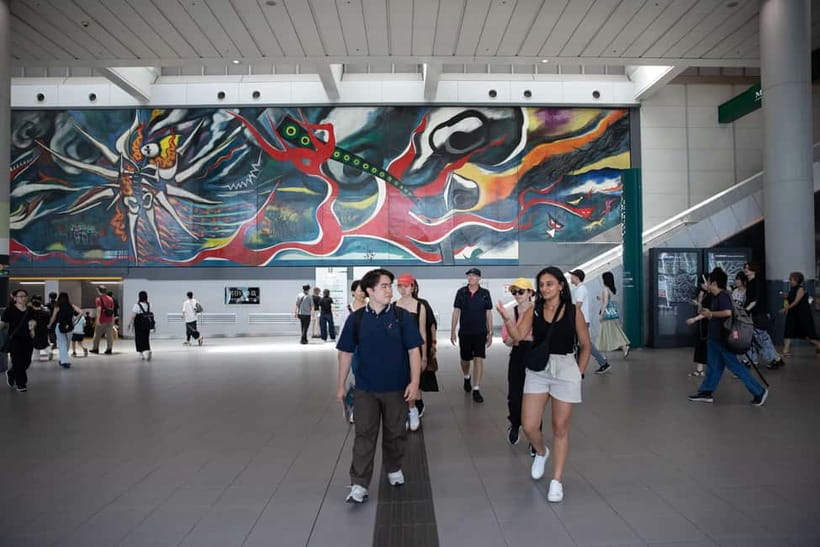
You begin with a photo stop and short guided time at The Myth of Tomorrow. This is a powerful mural by Taro Okamoto, and it doesn’t feel like typical street art filler. The message points to nuclear impacts, but it’s framed with hope, which gives Shibuya a deeper emotional tone than most first-timers expect.
This stop works because it trains your eyes for the rest of the tour. Shibuya can be loud and fast, but the mural reminds you that cities carry memory. A good guide will connect the artwork to Japan’s broader way of thinking about the future—what people fear, what they choose to do anyway.
If you’re traveling solo, this is also a great early moment to settle in. You’re not yet in the most crowded area. You can take photos, ask questions, and get a feel for how your guide will pace the walk. I’ve seen guides like Loc and Grey bring this stop alive with clear explanations and easy conversation flow.
Shibuya Crossing: How to See the World’s Busiest Intersection
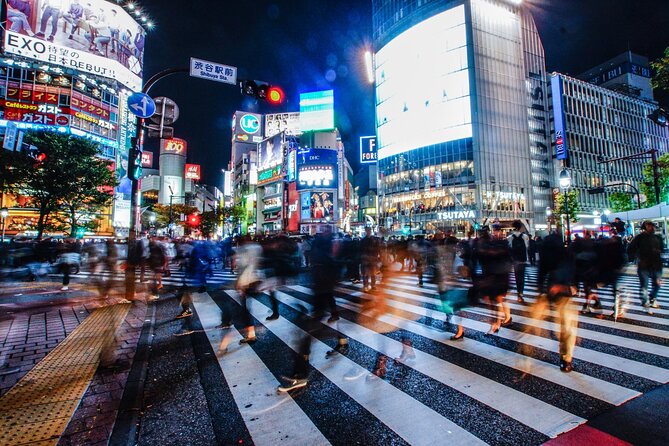
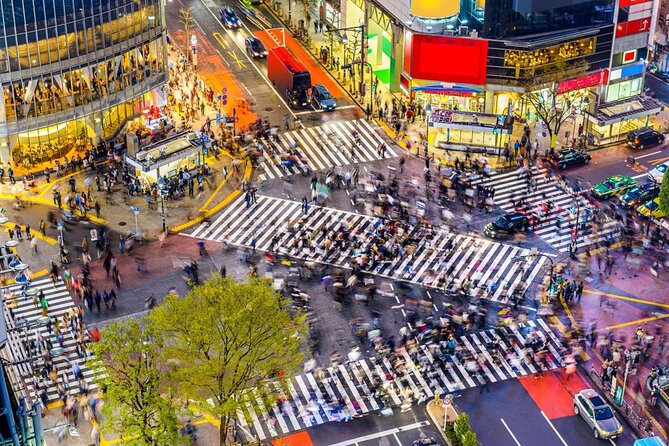
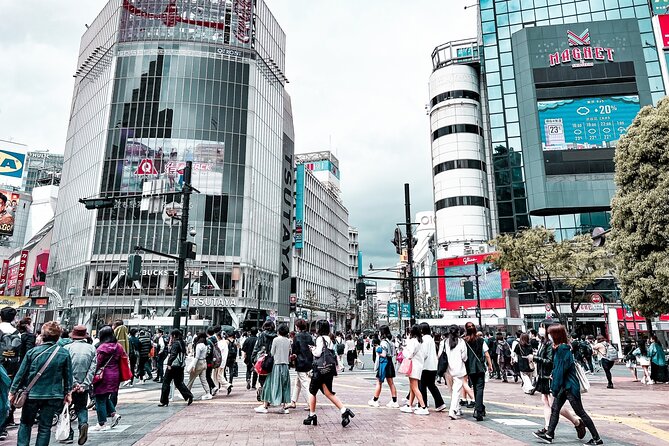
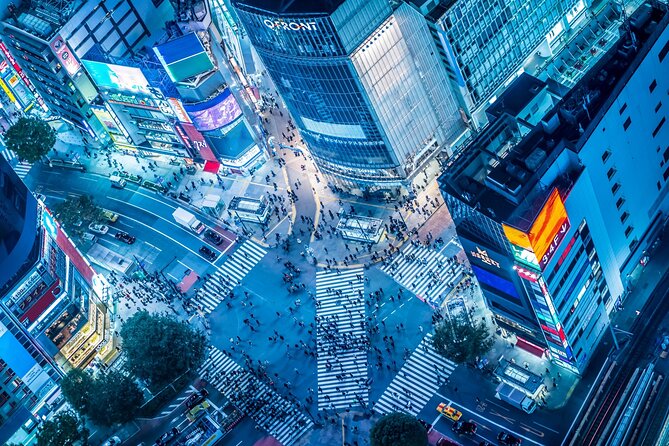
Then comes Shibuya Crossing—yes, it’s busy. But what matters is where you stand. The tour includes a guided stop with time for photos and orientation, so you’re not stuck guessing which direction to look.
Shibuya Crossing is one of those places where the first time you see it, you think: how does anyone cross safely? The guide helps you understand what’s happening, including how the crowd moves and how the intersection works as a choreography of people. You also get to step into the moment without feeling like you’re just being dragged.
Pro tip for the photo side: wear something you can move in, and bring your phone strap or keep it secure. The crossing can be photogenic, but you don’t want to spend your best shot time worrying about your gear. A guide can also help with timing—where to be for the most recognizable angles.
Nonbei Yokocho: Drunkard’s Alley and Old Tokyo Side Streets
After the big iconic moment, you’ll switch gears and head into Nonbei Yokocho, often called Drunkard’s Alley. This is where the tour earns its value for me. The lanes feel older and more intimate. Smaller streets mean more atmosphere, and the guide helps you notice details that you’d probably walk right past alone.
This stop is guided for a short visit, so it’s not one of those tours that forces you to sit through a long lecture in a cramped alley. Instead, it’s enough time to absorb the setting and get a feel for how nightlife and local culture shaped this part of Shibuya.
What’s great is the contrast. One stop you’re in an ultra-modern, full-screen intersection. Next, you’re in narrower streets where Tokyo feels lived-in. That’s the Shibuya balance: youth and tradition sharing the same neighborhood.
If you’re hoping to eat right away, keep your expectations realistic. Tight lanes mean you may have limited choice at that exact moment, but your guide can point you toward directions and areas to explore after the walk. I’ve heard guides like Rio offer practical food and shopping suggestions too.
Miyashita Park and Center Gai: Modern Tokyo with a Human Pace
Next up is Miyashita Park. This is a multi-level urban oasis, and it’s one of the best ways to slow down without leaving the action. The tour gives you time to see it with a guide, which helps you understand why this kind of space matters in a dense city.
I like Miyashita Park because it’s a breather. Instead of sprinting between landmarks, you get to watch how people use space: where they pause, where they meet, and how the park fits into Shibuya’s everyday rhythm. On a walking tour, that kind of pause makes the rest of the stroll easier to enjoy.
Then you move into Center Gai, another layer of modern Shibuya. This area is associated with the district’s youthful energy, and the guide’s job here is to translate what you’re seeing—signs, crowds, and the mix of shops—into something you can actually understand quickly.
If you’re a first-time visitor, Center Gai can be a little overwhelming on your own. With a guide, you get a mental map for what’s where and how the neighborhood is connected. That means later you can roam with confidence.




Maruyamacho Streets and the Walk to Hachikō
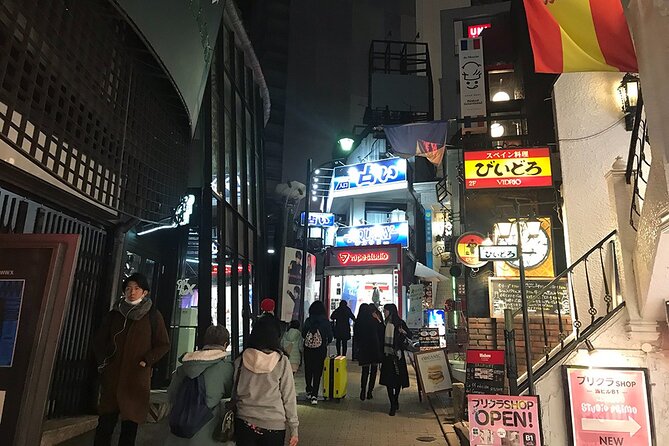
After Center Gai, the route turns toward Maruyamacho. The vibe here shifts again, leaning more into historical streets that now function as a hub for modern nightlife. The guided time is short, but it’s long enough to notice the change in street feel.
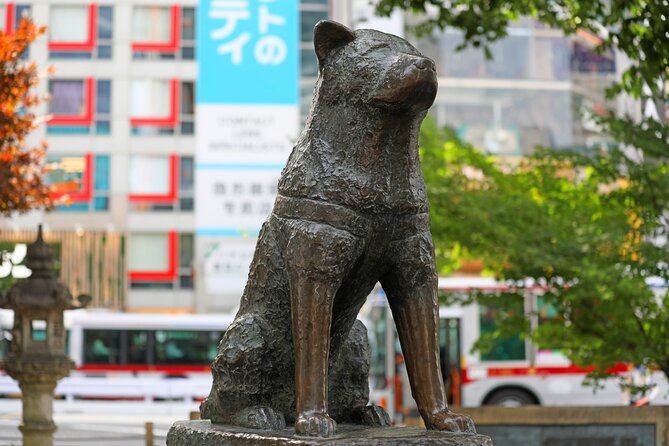
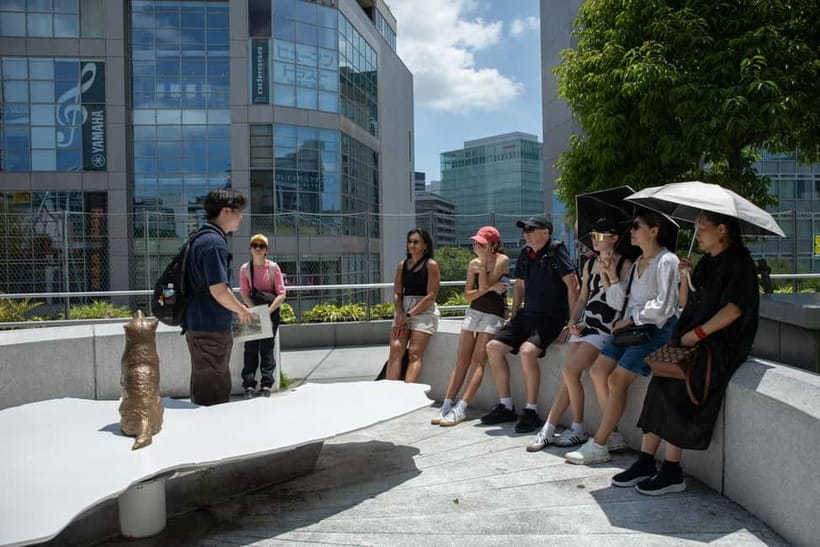
Then you finish at the Hachikō Memorial Statue. This is the iconic loyalty symbol right in the heart of Shibuya, and closing at a landmark like this is smart. It gives you a clear end point, and it’s easy to build your evening plans from there—dinner, a drink, or just a final wander.
Hachikō is also a perfect emotional landing. After mosaics of street life, parks, alleys, and neon-adjacent streets, you end with a story symbol people recognize. If you want one souvenir photo moment, it’s here.
Price and Time: Is $22 Worth It for a 2-Hour Shibuya Walk?
For $22 per person and about 2 hours, this tour is priced like a good deal, not a major splurge. The key value isn’t only that it’s cheap—it’s what’s included in that time.
You’re getting guided context across several different “faces” of Shibuya: a meaningful mural, an intersection you can’t truly learn without strategy, an old alley with a distinct atmosphere, plus modern hangout zones. On your own, you can see these spots, sure. But you’d spend more time figuring out where to stand, what matters, and what you’re actually looking at.
Also, the tour is designed for a manageable pace. It doesn’t try to swallow your whole day. That matters in Tokyo, where one wrong choice can turn your schedule into a stress test.
The only real downside for some people: it’s short. If you love slow wandering with long stops, you might want extra time after the tour to linger in Miyashita Park or keep strolling the nightlife streets at your own pace.
Who This Shibuya Tour Fits Best (and Who Might Not)
This is a strong fit if you:
- Have limited time and want a guided sense of place
- Like both modern Tokyo energy and old-street atmosphere
- Want help navigating crowds around Shibuya Crossing
- Prefer a walking plan that keeps moving but still includes breaks like Miyashita Park
It may be less ideal if you:
- Want a long, sit-down food tasting experience (this is more sightseeing and street reading)
- Get annoyed by crowds quickly and would rather avoid the crossing entirely
The vibe from guides is often friendly and flexible. People have noted guides like Loc and Kumi as especially accommodating, and there’s a pattern of good communication and willingness to answer questions. If you’re a solo traveler, that’s a big plus. One benefit you can take advantage of: ask for photo help at the crossing and around the end point. Many guides seem comfortable doing that.
Should You Book This Shibuya Walking Tour?
I’d book it if you want Shibuya in two hours with a sensible route and enough context to make your photos mean something. The combination of The Myth of Tomorrow, Nonbei Yokocho, Miyashita Park, and Hachikō gives you a full slice of the district without turning the day into a marathon.
Hold off only if you’re already an expert at Shibuya streets and intersections, or if you hate crowd scenes. Otherwise, it’s a smart way to get your bearings fast, then come back later with more confidence.
FAQ
Where is the meeting point for the Shibuya Crossing & Hidden Streets tour?
The meeting point is SABON Shibuya Mark City. It’s inside Mark City on the 3rd floor. The guide will be holding a sign.
What time should I arrive?
Don’t be late. The tour specifically notes that you should not arrive late to the meeting point.
How long is the tour?
The tour duration is 2 hours.
How much does it cost?
The price is $22 per person.
What is the language of the tour?
The tour is in English.
What are the main sights on the route?
You’ll visit Shibuya Nonbei Yokocho, The Myth of Tomorrow, Shibuya Crossing, Miyashita Park, Center Gai, and Maruyamacho, finishing at the Hachikō Memorial Statue.
Is the tour guided by a live person?
Yes. It’s a live tour guide.
Can I cancel for a full refund?
Yes. Free cancellation is available up to 24 hours in advance for a full refund.
Can I reserve now and pay later?
Yes. You can reserve now & pay later.
Is the tour a walking tour?
Yes. It’s described as a walking tour through Shibuya.