REVIEW · TOKYO
Tokyo: Shibuya and Shinjuku Streets Guided Go-Karting Tour
Book on GetYourGuide →Operated by BC support Co.,Ltd. · Bookable on GetYourGuide
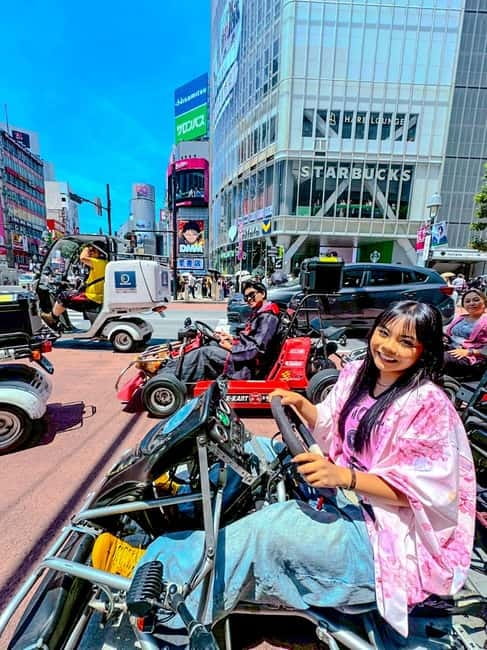
Shibuya on wheels feels unreal. This guided Tokyo go-kart tour throws you right into the city’s most famous crossroads and neon streets, with a route that ties together Shibuya Scramble and Shinjuku in one tight hour. What I like most is that your guide doubles as a photographer, so you get action shots from iconic angles instead of awkward selfie attempts.
The other big win is the small-group setup, capped at 8 people, which keeps the ride feeling personal and safer when you’re learning the kart basics. One catch to think about first: driving in Japan has strict paperwork rules, and invalid documents can mean you are turned away without a refund.
Key highlights you’ll care about
- Shibuya Scramble and other top districts, all in one guided loop
- Your guide captures photos during the ride, plus planned photo stops
- Small group (up to 8), so you’re not stuck behind a huge pack
- Free costumes and optional extra style for the photos
- An easy start point near Shinjuku Central Park, behind The Knot Tokyo Shinjuku
- A route that mixes sightseeing with real driving, not just standing around
In This Review
- Tokyo Go-Karting Through Shibuya Scramble and Shinjuku Streets in One Hour
- Meeting Point by Shinjuku Central Park: Start Easy, Then Go
- The First 15 Minutes: Safety Briefing, Costumes, and Learning the Kart
- Yoyogi Park Stop: A Quick Break Before the Iconic Intersections
- Shibuya Scramble Crossing: Why This Intersection Works on Wheels
- Harajuku Street Style and Kabukicho Energy
- Shinjuku Return Ride and Scenic Stops Before You Roll Back
- Pro Guide Photos, Costumes, and the Stuff You Can’t DIY
- Price and Value: Is $72 Worth It for a 1-Hour Ride?
- Driving in Japan: The Paperwork That Can Stop You
- Who Should Book This Shibuya and Shinjuku Go-Kart Tour
- Should You Book This Go-Kart Ride Through Shibuya and Shinjuku?
- FAQ
- How long is the Tokyo Shibuya and Shinjuku streets go-kart tour?
- Where is the meeting point for the go-kart tour?
- Is hotel pickup or drop-off included?
- What documents do I need to legally drive in Japan?
- Are all IDPs accepted for driving in Japan on this tour?
- How big is the group?
- What happens if the weather is bad?
Tokyo Go-Karting Through Shibuya Scramble and Shinjuku Streets in One Hour
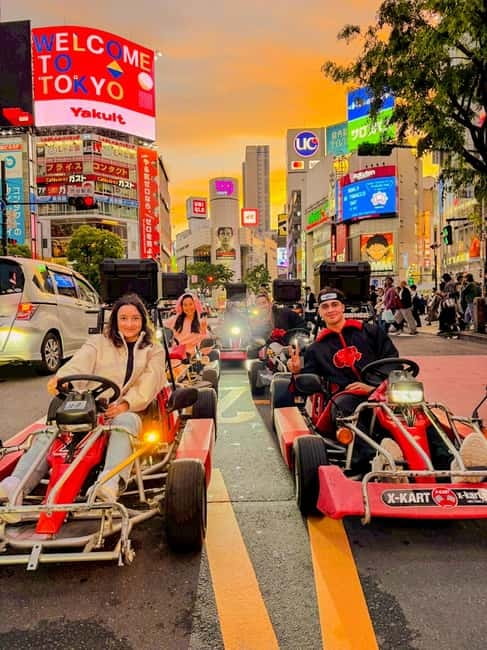
This is a short, high-energy way to see central Tokyo without spending your day hopping between stations. In about an hour, you drive through the kind of places most people only recognize from screens: Shibuya Scramble, the Harajuku area, and the Shinjuku district around Kabukicho.
You’ll be in a custom go-kart, following a professional guide who keeps the route moving and handles the photo moments. That guide-led format matters here because Tokyo streets can feel intense even if you know your way around on foot.
If you want a single “wow” activity that feels like a Tokyo movie set, this is it. Just know it’s built around driving rules first, fun second. When the paperwork checks out, you get the fun.
Meeting Point by Shinjuku Central Park: Start Easy, Then Go
You meet at the activity provider’s store near Shinjuku Central Park, behind The Knot Tokyo Shinjuku (at 4-chōme-18-2 Nishishinjuku). The tour description says it’s about a 20-minute walk from Shinjuku Station, which is convenient if you’re already planning to spend time there.
Plan to arrive a bit early so you can sign in, get oriented, and avoid stress. The timing is tight because you’ll do a safety briefing before you hit the street.
This meeting setup is also a practical choice if your hotel isn’t in Shibuya. You don’t need hotel pickup, so having a straightforward meeting point keeps the day simple.
You can also read our reviews of more guided tours in Tokyo



The First 15 Minutes: Safety Briefing, Costumes, and Learning the Kart
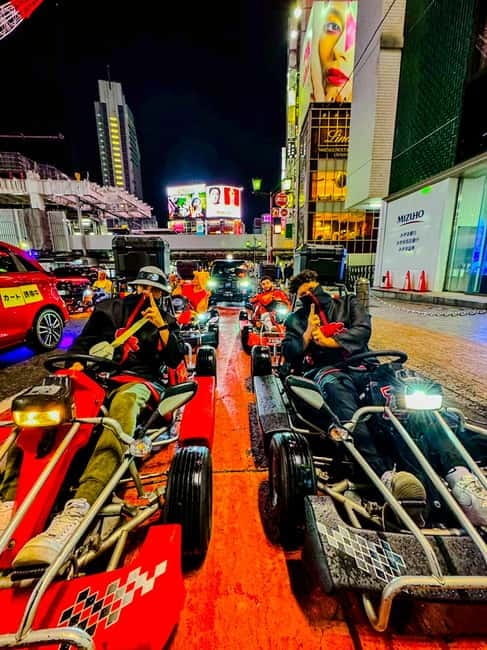
The experience starts with a safety briefing in the Shinjuku area. You’re spending about 15 minutes learning what you need to do before you roll out, and that pacing helps if you’re nervous behind the wheel.
Once you’re kitted out, you’ll be in go-kart mode: driving, stopping at photo points, and moving through neighborhoods as a group. Reviews mention the team being patient, especially for people who were initially uneasy.
One extra cold-weather detail from real experiences: gloves were provided, and people appreciated that in winter. If you’re doing this in colder months, dress like you expect wind while you’re riding.
English and Japanese support are available from the live guide, which helps if you want clear instructions before you start.
Yoyogi Park Stop: A Quick Break Before the Iconic Intersections
Your route includes Yoyogi Park right after you depart the shop. This isn’t just a random rest stop; it’s a chance to reset before you hit the busiest streets.
Expect a photo stop and a guided look, plus a scenic drive segment. That rhythm matters. It gives your brain a minute to switch from safety briefing to “okay, I’m driving in Tokyo now.”
If you like street photography, this stop is useful because it breaks up the high-density views with something more open. You’ll also get a feel for how the guide handles the group while you’re still warming up.
Shibuya Scramble Crossing: Why This Intersection Works on Wheels

The highlight you probably came for is the Shibuya Scramble crossing segment. You’ll have a photo stop and sightseeing time there, plus the guide’s direction so you don’t feel lost in the crowds.
Driving through this area is the key twist. On foot, it’s a long navigation challenge and lots of waiting. On a kart, you’re still surrounded by the same landmarks, but the experience turns kinetic, like you’re part of the scenery.
A strong theme in the feedback is how well the guides manage the pace and help people push confidently. One reviewer even noted the experience let them go fast and still hit the popular spots.
If you can plan around timing, an evening slot is worth considering. One review specifically mentioned a 6pm run that mixed day driving with Tokyo lights at night, which is the kind of contrast that makes photos look more dramatic.
Harajuku Street Style and Kabukicho Energy
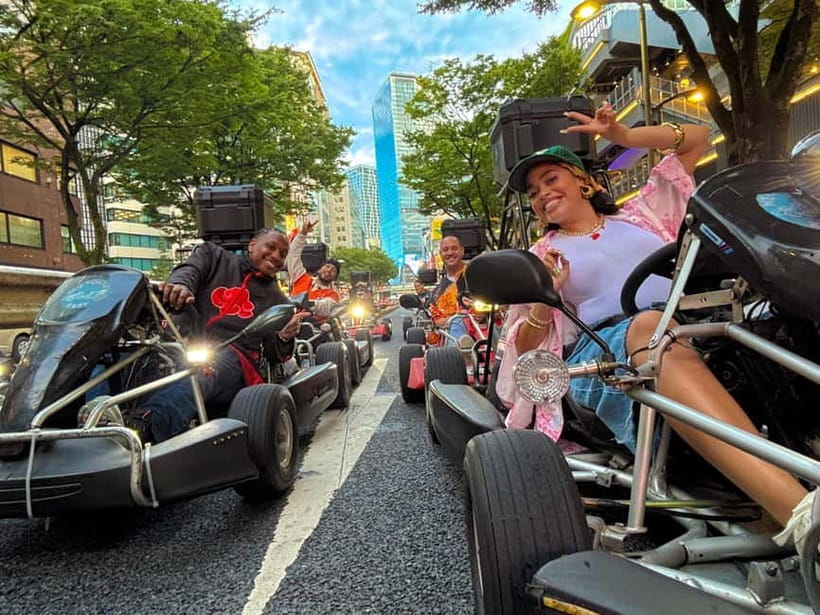
After Shibuya, your route heads through Harajuku. You’ll do another photo stop, guided tour, sightseeing, and pass-by driving. This portion is where Tokyo’s character starts to show more clearly: style, street-level details, and a different vibe than the Shibuya-Shinjuku axis.
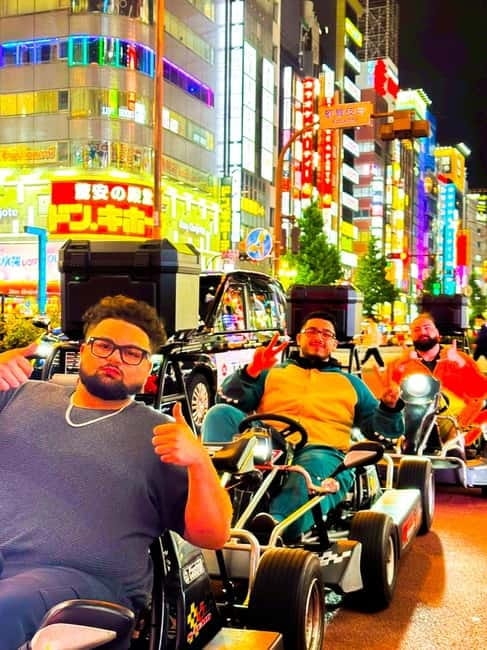
Then comes Kabukicho, which is known for its neon and late-night intensity. In this tour context, it’s another planned photo stop with scenic driving in between. Think of it like a visual “gear change,” from fashion-forward Harajuku mood to Kabukicho’s spotlight feel.
The practical benefit here is that you’re not trying to piece together these districts alone. You’re getting a route built for photo opportunities and driving flow, without the mental overhead of planning turns and crossings.





Shinjuku Return Ride and Scenic Stops Before You Roll Back
You finish back in the Shinjuku area with a final photo stop and scenic views on the way back before you arrive at the original store. This last stretch is where your brain clicks into place: you’ve already done the landmark districts, so you can focus on the ride and the last photo moments.
It’s also where the guide’s group management shows. Reviews mention the guides being attentive and patient, and the small-group size helps keep everyone synced.
If you’re the type who likes a satisfying end point, this return loop does that. You’re not dumped into Tokyo traffic and told good luck. You stay with the same team until the ride is done.
Pro Guide Photos, Costumes, and the Stuff You Can’t DIY
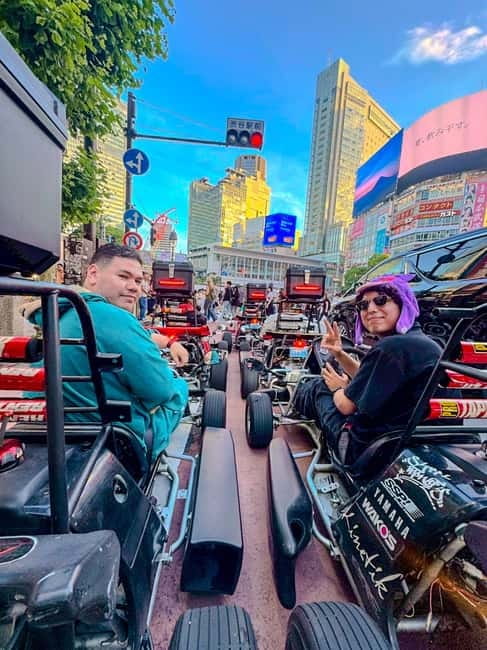
A big value driver is the photo setup. The tour includes professional guidance and photography, and the guide is described as snapping tons of action shots during the route. That means you’re not juggling your camera while also steering.
This matters more than it sounds, because good go-kart photos are hard. You’re moving, it’s busy outside, and you’ll want shots that show you with recognizable Tokyo landmarks behind you.
Costumes are included too, which adds a fun Tokyo twist. People specifically recommended grabbing a costume as part of the adventure, and that’s a smart tip for your photos: it makes you easier to spot in the frames and adds a playful element that feels very Tokyo.
Guide names came up in feedback, including Shingo, who was praised for taking lots of photos. That lines up with the tour’s core idea: you do the driving, and they help you look good doing it.
Price and Value: Is $72 Worth It for a 1-Hour Ride?
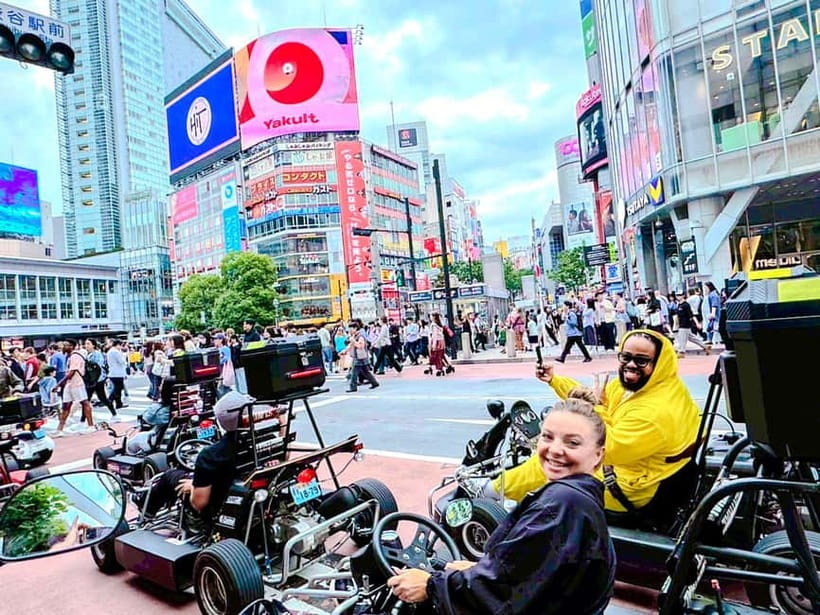
At $72 per person for one hour, you’re paying for four things bundled together: a guided route, a go-kart you can actually drive, photo stops with a photographer-guide, and free costumes. You’re also paying for organization, which is a real cost in a city like Tokyo.
If you tried to replicate this on your own, you’d likely spend time solving logistics: where to drive legally, how to navigate busy areas, how to get good photos, and how to keep the experience safe. Even if you could solve the first three, the photo component is still the hardest to recreate without a lot of luck.
The biggest “value” argument for me is that the ride focuses on iconic areas you want to see anyway: Shibuya Scramble, Harajuku, Kabukicho, and Shinjuku views. The time is short, but the density of recognizable sights is high.
One trade-off: hotel pickup isn’t included, so you’ll handle getting to the meeting point yourself. If you’re staying somewhere convenient to Shinjuku, that’s no big deal. If you’re far out, it could add time.
Driving in Japan: The Paperwork That Can Stop You
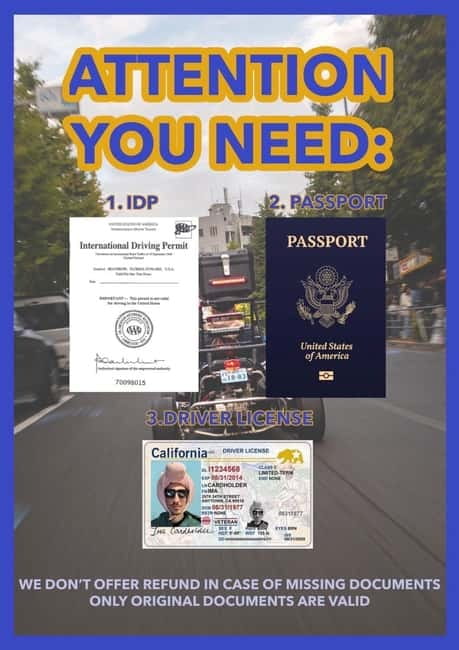
This tour is only fun if you’re legally allowed to drive. The rules are strict, and they’re clearly stated: participants must provide a valid license under the 1949 Geneva Convention. You’ll also need an International Driving Permit (IDP) that matches that convention.
There’s an important limitation list, too. The info says certain IDPs are not eligible for driving in Japan, including IDPs from China, Indonesia, Pakistan, Saudi Arabia, Bahrain, Kuwait, and Qatar.
For countries such as Switzerland, Germany, France, Belgium, Monaco, and Taiwan, the requirements are more detailed: you need your original domestic license, an official Japanese translation from an authorized organization, and your passport (all three documents are required).
This is where you should be extra careful. The tour notes that no refunds are issued if you arrive with incorrect or invalid documentation, and it’s your responsibility to confirm your IDP is valid under the 1949 convention. In practice, that means double-checking before you travel, not on the day of the ride.
Also, driving under the influence of alcohol is not allowed. Anyone found intoxicated can be denied participation without refund.
Weather matters as well. The tour requires good weather, and if it’s canceled due to poor conditions, you’ll receive a full refund or the option to reschedule.
Who Should Book This Shibuya and Shinjuku Go-Kart Tour
This is a great fit if you want a high-impact activity that blends sightseeing and hands-on driving. It’s also a good pick if you like photos and don’t want to rely on a friend to keep shooting while you navigate.
It works especially well for first-timers because the safety briefing comes first and the group size stays small (up to 8). Reviews mention the guides were patient with nervous riders, which suggests they’re used to helping people settle in.
Consider it if you’re visiting for a short time and want central Tokyo highlights packed into a single hour. If you’re a die-hard cyclist or street photographer, you might want more walking time too, but as a “Tokyo experience” it’s efficient.
The main reason to think twice is the driving paperwork requirement. If you’re not sure your license/IDP is valid for Japan under the 1949 convention, don’t gamble. Get clarity first.
Should You Book This Go-Kart Ride Through Shibuya and Shinjuku?
Yes, I’d book it if you meet the driving requirements and want an organized, photo-friendly way to experience Tokyo’s most famous districts. The combination of iconic streets, guided route flow, and real action photos (plus costumes) is what makes this feel worth your time, even at $72.
I would skip it only if driving in Japan feels like a paperwork headache for you. The rules are clear and strict, and the no-refund policy for incorrect documents means you can’t treat this as a casual day plan.
If you’re good with that, this is one of those Tokyo activities that turns sightseeing into something you can actually feel.
FAQ
How long is the Tokyo Shibuya and Shinjuku streets go-kart tour?
The tour lasts 1 hour, including the planned stops and the initial safety briefing.
Where is the meeting point for the go-kart tour?
You meet at the activity provider’s store near Shinjuku Central Park, behind The Knot Tokyo Shinjuku (4-chōme-18-2 Nishishinjuku).
Is hotel pickup or drop-off included?
No. Hotel pickup and drop-off are not included.
What documents do I need to legally drive in Japan?
You must bring a valid driving license under the 1949 Geneva Convention plus an International Driving Permit (IDP) of the type issued under that convention, and your passport. The tour notes that all three documents are required to drive.
Are all IDPs accepted for driving in Japan on this tour?
No. The information states that IDPs from China, Indonesia, Pakistan, Saudi Arabia, Bahrain, Kuwait, and Qatar are not eligible. It also lists additional documentation requirements for some countries.
How big is the group?
The tour is limited to a small group, with a maximum of 8 participants.
What happens if the weather is bad?
The tour requires good weather. If it’s canceled due to poor conditions, you’ll receive a full refund or the option to reschedule.