REVIEW · TOKYO
Tokyo Private Tour: One Day Highlights and Optional Shibuya Sky
Book on Viator →Operated by Trip Designer Inc. · Bookable on Viator
Tokyo hits different with a guide. This private, one-day tour strings together Tokyo’s biggest highlights in a smart order, using public transit so you’re not stuck figuring out trains all day. You’ll get a more personal experience with an English-speaking guide, plus a built-in plan for the areas that usually eat up most first-day energy.
What I like most is the mix of old Tokyo and modern Tokyo in one sweep. You start with Asakusa temple culture and end in Harajuku and Shibuya, where the city feels like it’s on fast-forward. The day also includes tickets for Shibuya Sky, so you don’t have to hunt for the right time slot when your feet are already tired.
One possible drawback: it’s still a one-day walking-and-commuting marathon. The tour expects moderate physical fitness, and Shibuya Sky’s outdoor viewpoints can sometimes be affected by weather conditions like high winds.
In This Review
- Key Takeaways Before You Go
- A Private Guide That Keeps Tokyo From Feeling Like a Maze
- Asakusa Culture Tourist Info Center: A Smart Start With Kengo Kuma’s Building
- Senso-ji and Nakamise Street: Where Old Tokyo Gets Loud
- Asakusa Shrine and Sumida Park: A Breather Before Shibuya
- Shibuya Sky at 230 Meters: Views, Time Saved, and Windy-Day Reality
- Shibuya Crossing and Hachiko: The Crowd Without the Panic
- Meiji Jingu and Takeshita Street: Shrine Calm Meets Trend Street Noise
- Price and Logistics: Is $178.38 Worth It?
- Practical Tips So You Enjoy Every Neighborhood
- Should You Book This One-Day Tokyo Highlights Tour?
- FAQ
- Is Shibuya Sky admission included?
- Do you offer hotel pickup and drop-off?
- How long is the tour, and what time does it start?
- What’s the maximum group size?
- Are meals included?
- Is there free cancellation?
Key Takeaways Before You Go
- Private group up to 10: smaller-than-mass-tour energy, with room to ask questions.
- Kengo Kuma-designed Asakusa info center: a useful orientation stop early in the day.
- Shibuya Sky ticket included: saves time and helps you plan the day around one iconic view.
- Asakusa to Shibuya is a real Tokyo cross-section: temple street, river views, crossing crowds, then shrine calm.
- Guide support with transit: you’ll ride trains with help, not just instructions at the start.
A Private Guide That Keeps Tokyo From Feeling Like a Maze
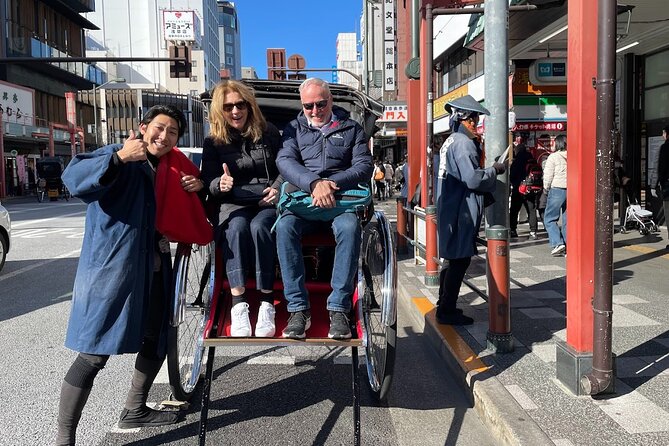
This is a private tour for your group only, sized to a maximum of 10 people. That matters in Tokyo, where crowding can turn a “quick stop” into a slow slog if you’re solo.
You also get hotel pickup and drop-off in the 23 wards of Tokyo. If it’s your first day, that alone can make the whole trip feel smoother. Your guide handles the rhythm of getting from one neighborhood to the next and keeps the day moving at a pace that fits a roughly 7-hour schedule.
Most importantly, you’re using public transportation as part of the experience. That’s a plus, because you’re not just seeing Tokyo—you’re learning how to move through it. In the day-to-day travel reality of Tokyo, that skill is the difference between “I saw a place” and “I can go back and explore.”
English-speaking guides in this program are known for being organized and practical, and I like that you can expect a real hand through transit steps, not vague “good luck” energy. Guides such as Rie, Emiko, Keita, and Eriko are specifically mentioned as flexible and clear when it comes to explaining what you’re seeing and how the day flows.
You can also read our reviews of more private tours in Tokyo


Asakusa Culture Tourist Info Center: A Smart Start With Kengo Kuma’s Building
Your morning begins at the Asakusa Culture Tourist Information Center. It’s a newer Asakusa stop designed by architect Kengo Kuma, and it’s also your early “okay, here’s how this area works” moment.
This place is an easy win because it’s a free admission stop designed specifically to help visitors orient themselves. Instead of rushing straight into the temple crowds, you get a short break to reset and understand what’s ahead.
It’s also a good photo-and-stroll pause without feeling like you’re wasting time. An 8-story building in Asakusa gives you a sense that this isn’t only about sightseeing shops—it’s also about Tokyo’s evolving public spaces.
If you enjoy structure (and most first-timers do), this start helps. You’ll know why the route moves where it does and what to pay attention to once you’re walking toward the main temple area.
Senso-ji and Nakamise Street: Where Old Tokyo Gets Loud
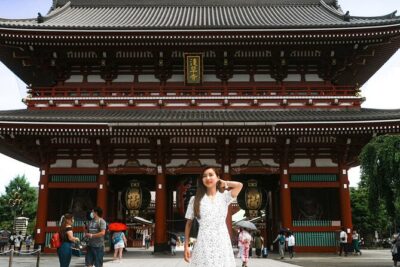
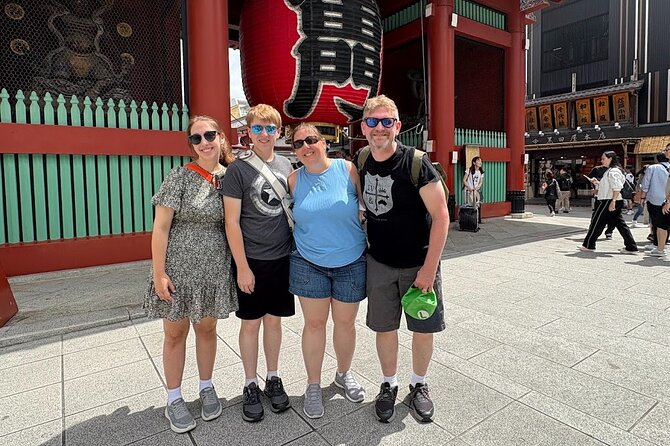
Next up is Nakamise Shopping Street leading to Kaminarimon, the Thunder Gate, the classic gateway into Senso-ji. Nakamise is free to enter and it’s built for the “arrive, smell snacks, browse souvenirs” phase of the visit.
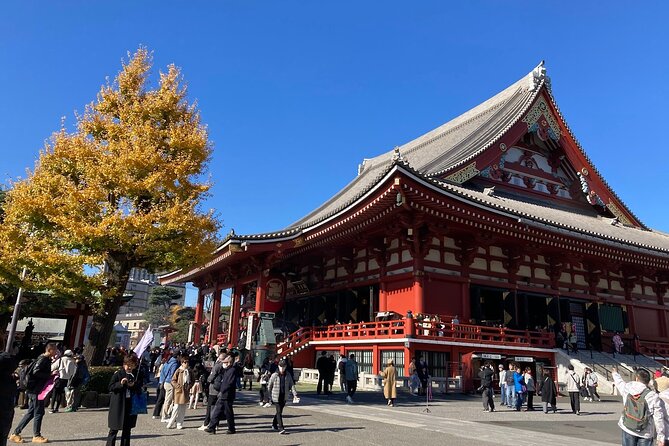
Then comes Senso-ji Temple, one of Tokyo’s most colorful and popular temple sights. The day doesn’t treat the temple like a quick checkbox. You get about 30 minutes here, which is enough time to look at the main scene, slow down, and notice details rather than just passing through.
Senso-ji’s origin story traces back to the year 628, which gives the site a deeper sense of continuity. Even if you don’t memorize every detail, you feel the age in the architecture and the way people treat the space.
What I like about this part of the tour is that it’s not pretending Tokyo is quiet. It’s temple tourism at full volume, and that’s the point. If you want the “real” experience of Asakusa, this is it.
Asakusa Shrine and Sumida Park: A Breather Before Shibuya
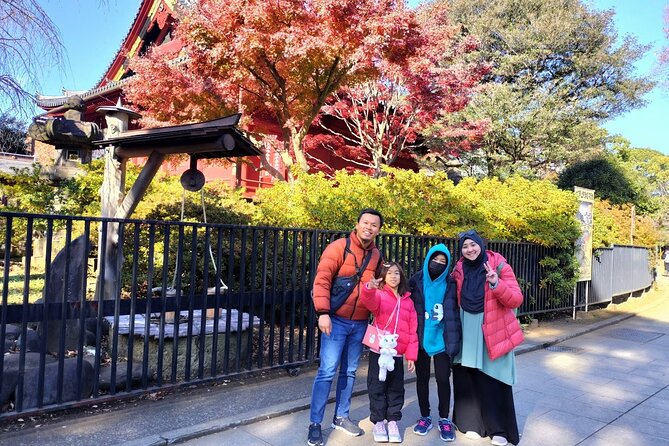
Right near Senso-ji you’ll visit Asakusa Shrine. It’s smaller than its Buddhist neighbor, and that contrast is useful. One site gives you the big, visual temple experience; the other gives you something more compact and personal.
Then the route moves toward Sumida Park, along the Sumida River. This stop is short (around 10 minutes), but the reward is clear: you can enjoy views of Tokyo Skytree without heavy obstructions while you sit and catch a river breeze.
I recommend treating this as your reset button. By this point, you’ve done temple gate, shopping street energy, and a major landmark. Sumida Park gives you a different angle on the city and a moment to breathe before the big scene changes.
It also helps that the day keeps admissions simple here. These stops are free to enter, so you’re not stacking ticket purchases while your legs are already working.
Shibuya Sky at 230 Meters: Views, Time Saved, and Windy-Day Reality
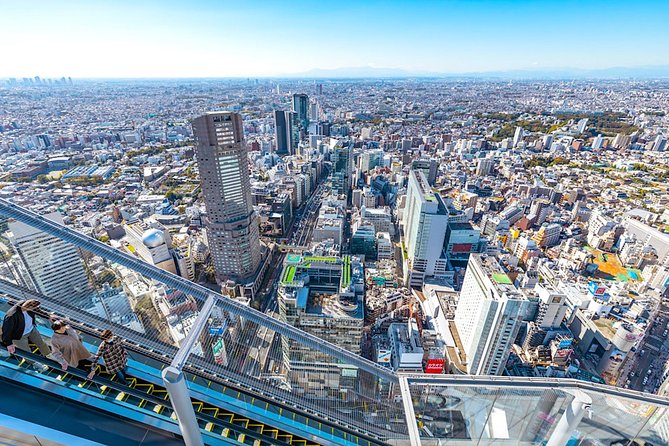
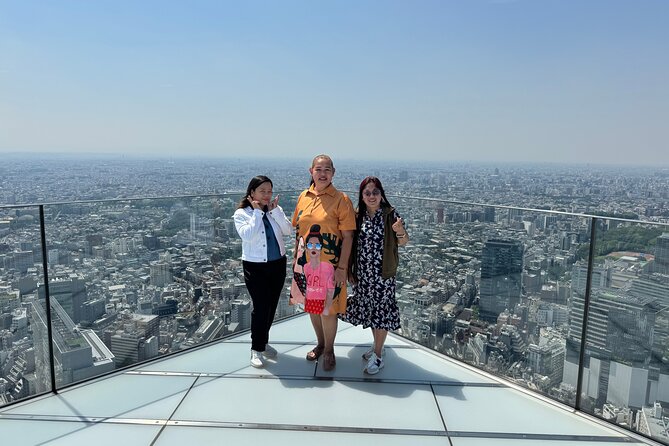
Shibuya Sky is the day’s modern centerpiece, and the tour includes your admission ticket. The building sits about 230 meters above ground, and it’s described as the highest point in the Shibuya district.
You’ll have about 30 minutes here. That’s a good amount of time because you can split it into two instincts: first, take in the panoramic view; second, slow down and watch how the streets below connect into one grid.
There’s also the Sky Edge corner, where you can look down at the cityscape. It’s the kind of viewpoint that makes you understand why Shibuya is more than a name. It’s a whole working world of trains, blocks, and constant motion.
One practical consideration: outdoor areas can be affected by conditions. In one of the shared experiences, the outdoor area at Shibuya Sky was closed due to high wind. So if your travel dates are windy, keep expectations flexible. You can still enjoy Shibuya Sky’s indoor viewpoints, but you might not get every outdoor angle.
You can also read our reviews of more tours and experiences in Tokyo




Shibuya Crossing and Hachiko: The Crowd Without the Panic
After Shibuya Sky, you head to Shibuya Crossing. This is the stop people imagine at home, and it’s still impressive in real life.
The numbers are wild: the crossing sees as many as 500,000 people per day, and during a peak green light you can see up to 3,000 people crossing at once. That’s the kind of statistic that sounds like hype until you’re standing there and realizing how choreographed it feels despite the chaos.
The tour time here is short (about 15 minutes), and that’s enough if you have a plan: one moment for a wide look, one moment for a side angle, then move before the crowd fully compresses around you.
Right nearby is Hachiko, the bronze dog statue and a standard meeting point in front of Shibuya Crossing. Even if you’re not doing a movie-scene cosplay moment, it’s a useful landmark for navigating the area. It also gives you a quick sense of how everyday Tokyo anchors pop culture in simple public spaces.
Meiji Jingu and Takeshita Street: Shrine Calm Meets Trend Street Noise
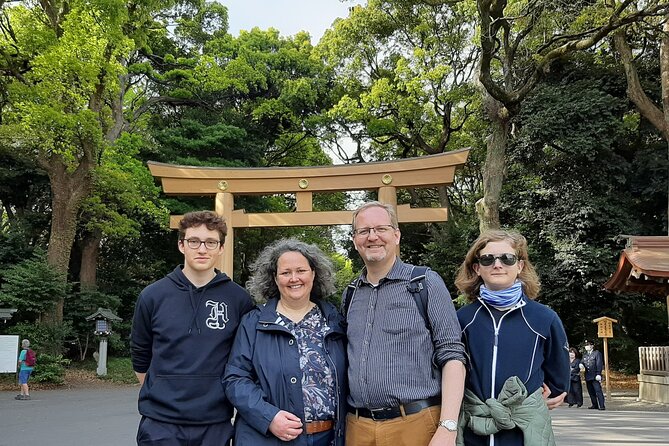
The afternoon shifts to Meiji Jingu Shrine, near Harajuku. Meiji Jingu is dedicated to the deified spirits of Emperor Meiji and his consort, Empress Shoken.
You’ll spend about 45 minutes here, which is meaningful. In contrast to the loud pace of Asakusa gates and Shibuya crossing, this is calmer, more atmospheric, and easier to experience without feeling like you’re always dodging feet.
The shrine’s location also matters: it’s right beside the JR Yamanote Line near busy Harajuku Station. That makes it a smart pairing. You can step out of transit bustle and still get a strong sense of sacred space.
Then you’ll head to Takeshita Street, the well-known Harajuku fashion and trend strip. The street is about 350 meters long, and the stop is around 30 minutes. It’s a quick hit for people-watching and street-style browsing, but you’ll want to keep moving because it’s clearly built for high foot traffic.
I like how this creates a clean contrast: you can feel the quiet of the shrine woods, then pivot back to the energetic youth fashion vibe on Takeshita.
Price and Logistics: Is $178.38 Worth It?
At $178.38 per person, this tour isn’t the cheapest way to see Tokyo. But it’s also not paying just for sightseeing. You’re paying for a guided day that bundles several time-consuming parts.
Here’s what’s included that you’d otherwise have to manage:
- English-speaking guide
- Hotel pickup and drop-off in Tokyo’s 23 wards
- Public transportation
- Shibuya Sky ticket
- All fees and taxes
- Mobile ticket
- Photos of tour participants
What’s not included is also important: food and drinks. So you’ll budget for lunch and snacks on your own, which also means you can choose what you actually want to eat rather than being locked into a set meal.
When you compare value, the biggest savings is time and mental energy. Tokyo’s transit can be very doable, but doing it confidently the first day is the trick. A guide who can handle the flow and explain what you’re doing makes the whole schedule feel less stressful.
Group discounts are also listed as a feature. If you’re traveling as a couple or small group and can book together, that can further improve value.
Practical Tips So You Enjoy Every Neighborhood
Wear comfortable shoes. You’ll do a full day of walking, plus train time between areas. The itinerary includes major “stand and look” moments like Shibuya, so foot comfort is not optional.
Bring a bit of flexibility for weather around Shibuya Sky. If wind shuts down outdoor viewpoints, your guide can still help you make the most of indoor panoramas.
Plan for food on your own. Since food and drinks aren’t included, I’d treat lunch like part of the experience, not an afterthought. If you have dietary needs, it’s worth mentioning them ahead of time because guides in this program are described as being attentive to requirements and helping with practical choices.
If you’re sensitive to crowds, know that Shibuya Crossing and the Harajuku street area will feel busy. The tour’s value is that you’re not trying to time everything alone—you’re seeing it with a plan.
Service animals are allowed, and the tour is described as being near public transportation, which is reassuring if you prefer not to rely entirely on taxis.
Should You Book This One-Day Tokyo Highlights Tour?
Book it if:
- You want a first-time-friendly Tokyo route that combines Asakusa, Shibuya, Harajuku, and Meiji Jingu in one day.
- You like structure and prefer private, small-group attention rather than bouncing between stops on your own.
- You care about saving time on Shibuya Sky since the ticket is included.
Consider skipping (or switching to a more flexible plan) if:
- You hate walking and train commutes and would rather move at your own pace.
- You’re planning to spend long, deep hours in just one neighborhood. This tour is broad by design, and the day moves.
My take: this is a strong “see the icons, learn the logic” tour. The combination of a private guide, included transit, and a ticket to Shibuya Sky makes it feel like money spent on reducing friction, not just buying entrances.
FAQ
Is Shibuya Sky admission included?
Yes. Shibuya Sky is included in the tour, and you’ll have about 30 minutes at the observatory.
Do you offer hotel pickup and drop-off?
Yes, hotel pickup and drop-off are offered in the 23 wards of Tokyo. The tour also uses public transportation during the day.
How long is the tour, and what time does it start?
The start time is 9:30 am, and the duration is listed as about 7 hours.
What’s the maximum group size?
The tour is described as private, with a maximum of 10 people per booking, and only your group participates.
Are meals included?
No. Food and drinks are not included, so you’ll need to plan lunch and snacks on your own.
Is there free cancellation?
Yes, free cancellation is offered up to 24 hours in advance of the experience start time for a full refund.
If you tell me your travel dates and whether you’re doing Tokyo for the first time, I can also suggest the best way to schedule this kind of day so it doesn’t fight with jet lag.