REVIEW · TOKYO
Hakone Full-Day Private Tour(Tokyo DEP.) with Government-Licensed Guide
Book on Viator →Operated by Japan Guide Agency · Bookable on Viator
A guide makes Hakone feel easy. This full-day private tour pairs you with a government-licensed English guide and lets you shape a custom itinerary around your interests. It’s also a day where the logistics can get messy fast—especially with trains, transfers, and museum admissions—so it’s worth knowing up front that meals, public transport tickets, and entrance fees aren’t included and you’ll be walking.
What I like most is how smoothly your plan turns into real movement through Hakone. Guides like Michio and Yoshi (and others named in customer notes, such as Taka and Nobu) are praised for organization and for getting people onto the right trains inside the region without turning the day into a guessing game.
The one real drawback to consider: you’re picking only about 3–4 stops, so you have to choose wisely. If you cram in too much, you’ll spend more time moving between sights than actually enjoying them.
In This Review
- Key takeaways before you go
- Why a government-licensed English guide changes your whole Hakone day
- Price and logistics: what $279.17 includes (and what you still pay)
- Building your day: choosing 3–4 Hakone sights in the right order
- Lake Ashinoko and Hakone Shrine: the Fuji-and-calm combo
- Ropeway to Owakudani: volcanic power and the long-life egg
- Art museums in Gora and Sengokuhara: choosing between big and small
- Gardens, glass, and quirky museums: how to finish Hakone your way
- Who this private Hakone tour is best for
- Should you book this Hakone private tour?
- FAQ
- How long is the Hakone tour?
- Is this tour private?
- How many Hakone sights can I choose?
- Where do I meet the guide?
- What does the price include?
- What is not included?
- Do I need to pay for museum tickets and the ropeway?
- Is Owakudani Nature Study Path included?
- Can I cancel for free?
Key takeaways before you go
- Private, government-licensed guide: You’re not relying on apps for every decision.
- Pick 3–4 sights: You get flexibility without trying to do the entire Hakone Round Course.
- Volcano views and calm lake time: Hakone’s two big moods are both easy to include.
- Public transport over a car: Expect transfers, not a private vehicle.
- Admissions and meals are on you: The guide helps you plan, but you still pay for tickets.
Why a government-licensed English guide changes your whole Hakone day
Hakone is one of those places that looks straightforward on a map, then turns tricky in real life. Stations have Japanese names that look similar. Trains and cable cars connect in ways that make sense once you’ve done it a few times. And if you’re not fluent, even a “simple” plan can turn into waiting around with no clear next step.
That’s where the licensed local guide earns their keep. In customer notes tied to guides like Michio and Yoshi, people specifically call out how organized the day felt and how well trains and in-area transport were handled. I love that practical focus. You’re not just getting facts. You’re getting help getting where you want to go, with fewer wrong turns and less time lost to figuring out what’s next.
This tour is also truly private. You’re with your group only. That matters in Hakone because pacing changes everything. Some people want a slow photo walk at a viewpoint. Others want to move quickly and hit key sights. With a guide, you can steer the day without disrupting strangers.
You can also read our reviews of more guided tours in Tokyo
Price and logistics: what $279.17 includes (and what you still pay)
This costs $279.17 per person for a 10-hour private tour with a government-licensed English guide. On the value side, the price is buying you three things: personalization, expert routing inside Hakone, and a guide who can meet you at your Tokyo location (hotel, airport, or port area). There’s also a mention of group discounts and a mobile ticket.
On the cost side, you should plan your budget around what’s not included:
- Round-trip Tokyo–Hakone train for you: about 5,000 JPY (approx.)
- Meals and personal expenses
- Transportation inside Hakone
- Entrance fees (these vary by stop)
- A Hakone Freepass is not included
You also won’t be in a private vehicle. The tour description notes it’s a walking tour, and pick-up is on foot within a designated meeting area. So you’re paying for guidance, not for driver service or a ticket bundle.
My take: the price makes sense if you value a stress-free day and want to customize instead of following a rigid group schedule. If you’re totally comfortable planning Hakone on your own and you’re already good with Japanese transit, you might prefer a cheaper DIY approach. But if you want your time used for scenery and museums, the guide can be worth it.
Building your day: choosing 3–4 Hakone sights in the right order
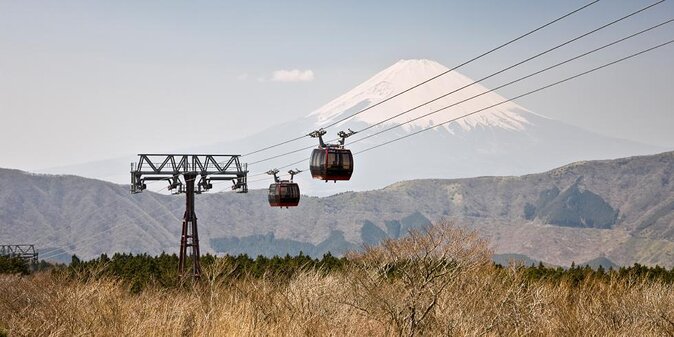
Your itinerary is designed around choosing about 3–4 stops from a list of strong options: Lake Ashinoko, Hakone Shrine, Hakone Ropeway, Owakudani, major art museums, Zen temples, gardens, and small niche museums.
Because it’s a full day, order matters. Here’s the logic I recommend so you don’t burn hours:
- Start with something scenic and open-air: Lake Ashinoko is a great first anchor.
- Add a calm heritage stop nearby: Hakone Shrine (short time, peaceful vibe).
- Then shift to Hakone’s geothermal centerpiece: Owakudani (easy to pair with the ropeway/cable connections).
- Save longer indoor time for the big art stops: Hakone Open-Air Museum is the time eater at about 2 hours.
If you include a lot of shorter “quick hit” stops (museums that are 10–30 minutes), you’ll still feel rushed. If you include one longer stop plus one or two viewpoints, the day feels balanced.
Also remember: several stops have admission not included. Your guide can help you decide what fits your interests, but you’re still the one paying the ticket price for many museums and the ropeway.
Lake Ashinoko and Hakone Shrine: the Fuji-and-calm combo
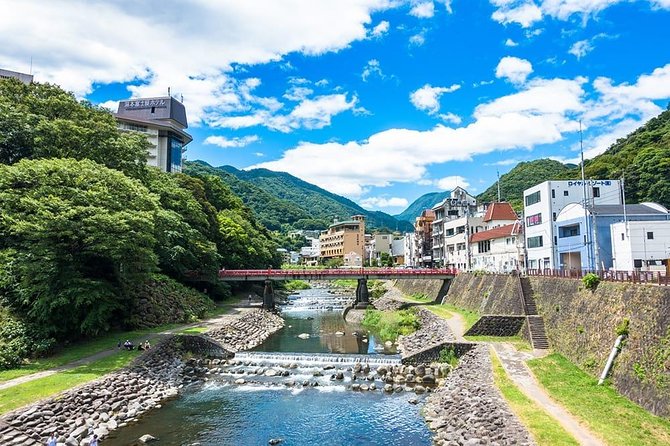
Stop 1: Lake Ashinoko
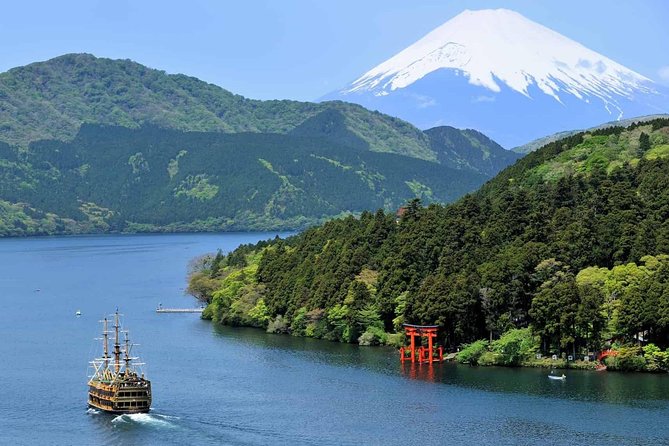
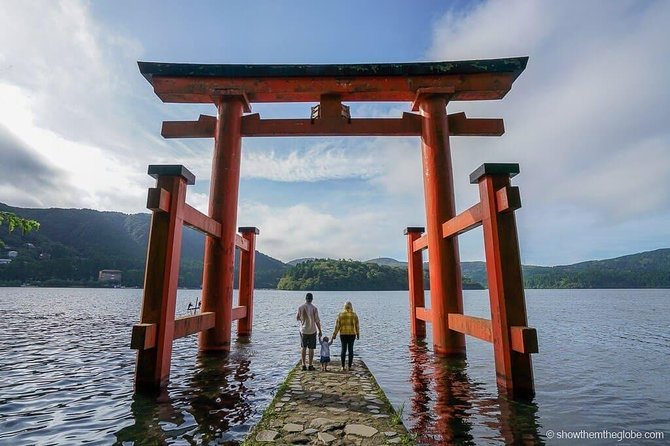
Lake Ashinoko sits in the caldera of Mount Hakone’s last eruption about 3,000 years ago. It’s Hakone’s classic “postcard frame”: the lake with Mount Fuji in the background when conditions are right. Even when Fuji is hidden, the lake view still gives you that Hakone sense of scale—water, mist, and mountains pulling your eyes outward.
Time-wise, this is listed as a short stop (about 10 minutes), with free admission. The practicality here is huge: you can use it as a photo and orientation moment before the day gets more complicated.
Stop 2: Hakone Shrine
Hakone-jinja Shrine is tranquil and historically deep, with roots stretching more than 12 centuries. It’s been rebuilt after fires over time, so you’ll see layers of restoration in the surrounding grounds.
This stop is about 30 minutes and also free. I like that it balances the volcanic energy you’ll likely see later. It’s a good place to slow down, breathe, and reset before you ride ropes and cable systems.
One consideration: Lake Ashinoko and the shrine are both listed as free-admission, which helps your budget. But weather can affect how satisfying the Fuji view is, so don’t treat Fuji as guaranteed—treat it as a bonus.
Ropeway to Owakudani: volcanic power and the long-life egg
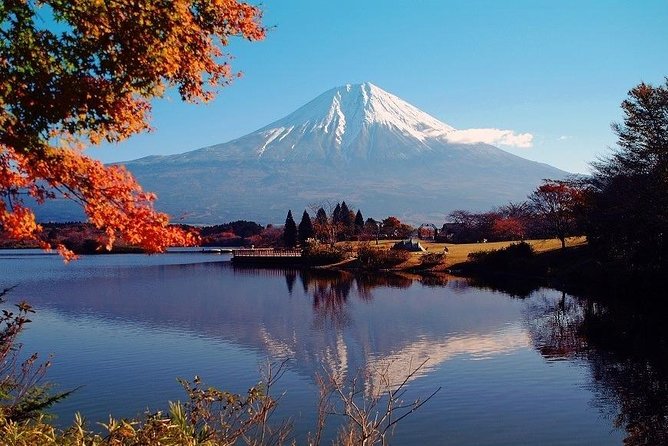
Stop 3: Hakone Ropeway
The Hakone Ropeway connects Sounzan Station to Togendai Station, part of the Hakone Round Course route. The stop duration is about 30 minutes, but the ropeway admission is not included, so you’ll pay separately.
Why I think it’s worth it: it’s one of the cleanest ways to get sweeping views in a day trip. You also reduce the time spent figuring out connections because your guide can line it up with your next stop.
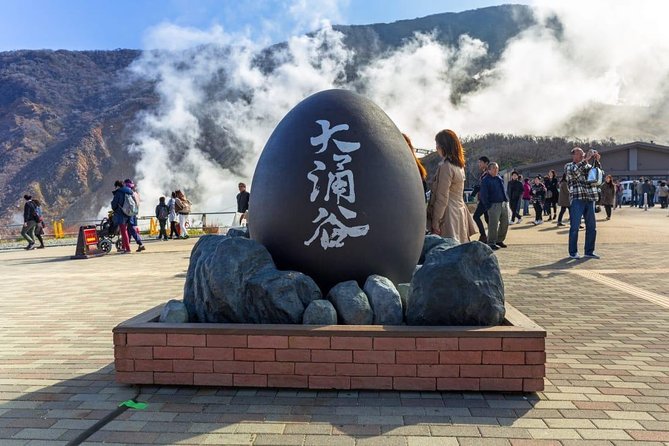
Stop 4: Owaku-dani Valley
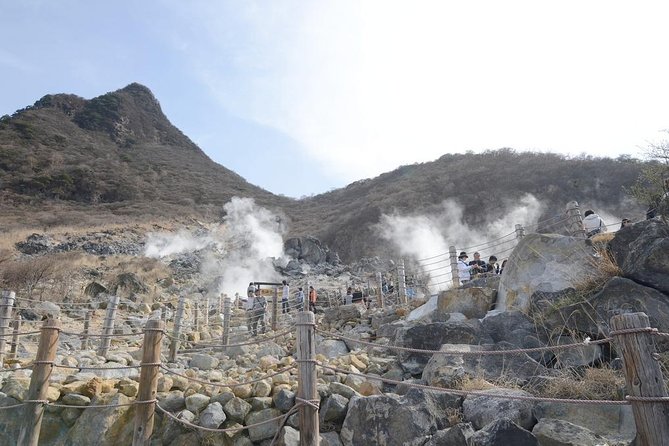
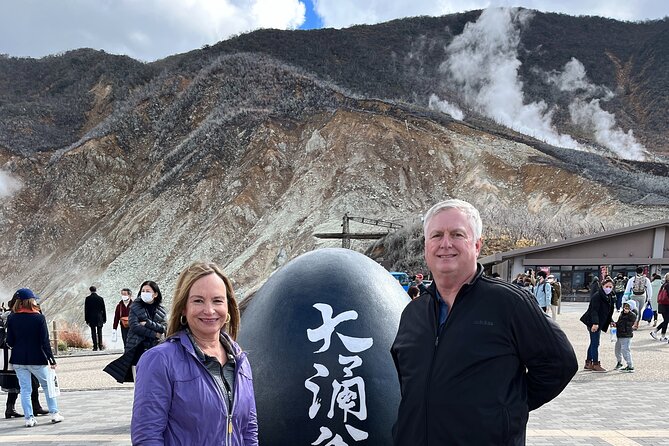
Owakudani is an active volcanic area that powers many of the hot springs in Hakone. The big local draw is the famous black boiled eggs, often said to bring long life.
This stop is listed as about 45 minutes and free admission. It’s a great contrast to the lake: instead of calm water and distant views, you get geothermal drama and steam.
Stop 8: Owakudani Nature Research Trail (advance reservation required)
If your group wants more than the main valley viewpoints, there’s also the Owakudani Nature Study Path. It’s described as close-up walking through active volcanic territory. The tour notes that advance reservation is required, and there’s an 800 yen entrance fee. Even though the stop listing says admission ticket free, the fee and reservation requirement are explicitly stated, so plan for that.
Practical tip: if you’re going to include the trail, don’t plan to add too many other stops that day. The logistics and walking time can eat into your flexibility.
You can also read our reviews of more private tours in Tokyo

Art museums in Gora and Sengokuhara: choosing between big and small
Hakone’s art scene is a real reason to visit, especially if you like collections that feel intentionally placed in a scenic setting.
Here are the art-related stops you can choose from, with what to expect:
Stop 5: Pola Museum of Art
The POLA group opened the Pola Museum of Art in 2002 to showcase the company’s private art collection. This is about 30 minutes, and admission is not included.
Good fit if you want a compact indoor stop that feels curated, without needing a full museum day.
Stop 6: Okada Museum of Art
Opened in 2013, the Okada Museum of Art is privately owned and focuses on works spanning from antiquity to modern eras. Also about 30 minutes with admission not included.
This is another good “pairing” choice when you want art but don’t want to commit to a long museum block.
Stop 7: Sengokuhara pampas grass field
Sengokuhara is famous for long pampas grass, with the description noting it’s most beautiful in the fall. This is about 30 minutes, admission not included.
If you’re visiting during another season, don’t assume the same wow factor. But the area can still work as a scenic breather between heavier stops.
Stop 8: Hakone Open-Air Museum (the long stop)
This is the big one. It’s about 2 hours, and admission is not included. The highlight called out is a stained glass staircase, which gives the museum a very specific visual identity.
If you include only one art stop, I’d usually choose this one—because the setting itself feels part of the experience, not just the collection.
Stop 10: Hakone Museum of Art
Located in Gora, this museum was founded by Okada Mokichi in 1952. The description also notes its sister museum, MOA Museum of Art, later built in Atami on the Izu Peninsula. It’s about 30 minutes, admission not included.
This can work well if you want something more classic in tone, without needing a full-day commitment.
Stop 9: Choanji Temple (Zen calm, short and free)
Choanji Temple is a Soto Zen temple established in 1356. It’s in the Sengokuhara area, set quietly at the base of a hill. The stop is about 30 minutes, and admission is free.
I love this kind of “soft landing” between museums. It’s also budget-friendly.
Gardens, glass, and quirky museums: how to finish Hakone your way
If you want your day to feel less like a checklist, these stops help you shape the mood—quiet, scenic, or just plain fun.
Stop 11: Hakone Shisseikaen (wetlands botanical garden)
Hakone Shisseikaen is a botanical garden in the highlands of Fuji Hakone Izu National Park. It was founded in 1976 to preserve plants. Time is listed at about 30 minutes, admission not included.
This is a good pick if you like nature walks but don’t want a long hike.
Stop 12: Dollhouse Museum Hakone
If miniature details make you happy, this is your stop. It’s about 1 hour, admission not included. Great for a slower pace and for families (even if you don’t think you’ll be interested).
Stop 13: Gora Park
Gora Park is described as a western-style landscape park above Gora Station, designed for relaxing and taking in scenery and views of Hakone. Time is about 30 minutes, admission not included.
This can be a “views and sit-down” option when you want to rest your legs before heading back.
Stop 14: Hakone Venetian Glass Museum (Hakone Glass no Mori)
This museum and shop area features Italian-styled buildings and a strolling garden around a canal-like pond. Time is about 30 minutes, admission not included.
If you like design-heavy places, it’s a fun change from temple and museum buildings.
Stop 15: Narukawa Art Museum
Narukawa Museum of Art is dedicated to nihonga, meaning Japanese-style painting. It’s a short stop—about 10 minutes—admission not included.
This is best as a quick interest add-on, not as your main art hour.
Who this private Hakone tour is best for
This tour is a strong match for:
- You want a full day that feels planned, not improvised.
- You care about customizing 3–4 sights instead of following a fixed circuit.
- You prefer getting help with trains and transfers inside Hakone.
- Your group includes people with mixed interests: lake and shrine for calm, Owakudani for drama, museums for culture.
It’s less ideal if:
- You want to check off as many stops as possible. With only 3–4, you’ll need to pick favorites.
- You’re on a very tight budget that can’t handle train costs plus separate admissions.
Should you book this Hakone private tour?
Yes, book it if you want your Hakone day to run on rails—meet your guide, choose 3–4 stops, and spend your energy on scenery and art instead of figuring out the route. The best value shows up when you’re willing to pay for guidance and when your priorities match the mix: Lake Ashinoko, Owakudani, and one standout art or museum stop.
Before you book, do one quick planning step: decide what you want most—Fuji views, volcano geothermal activity, or art time. Then tell your guide to build around that. If you do, you’ll end up with a day that feels like Hakone, not like transportation.
FAQ
How long is the Hakone tour?
The tour is about 10 hours.
Is this tour private?
Yes. It’s a private tour/activity with only your group participating.
How many Hakone sights can I choose?
You can customize your itinerary and choose around 3–4 sights from the listed options.
Where do I meet the guide?
You meet your guide at the port, airport, or your Tokyo hotel area. The tour notes the pick up is on foot within a designated meeting area in Tokyo.
What does the price include?
The included items are a licensed local English-speaking guide, a customizable tour of 3–4 sights, and meeting up within the designated Tokyo area.
What is not included?
Not included: round-trip Tokyo–Hakone train ticket for you (about 5,000 JPY approx.), transportation fees, entrance fees, lunch, and other personal expenses. A private vehicle is also not included.
Do I need to pay for museum tickets and the ropeway?
Many stops list admission as not included, including the Hakone Ropeway and several museums. Some sights listed as free include Lake Ashinoko, Hakone Shrine, Owaku-dani Valley, and Choanji Temple.
Is Owakudani Nature Study Path included?
It’s listed as a special walking trail with a note that advance reservation is required and there is an 800 yen entrance fee.
Can I cancel for free?
You can cancel up to 24 hours in advance for a full refund. If you cancel less than 24 hours before the start time, the amount paid is not refunded.