REVIEW · TOKYO
Tokyo Private Guided 1/2-Day Walking Subway Tour English guide
Book on Viator →Operated by Japan Gray Line · Bookable on Viator
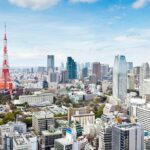
Tokyo has a way of confusing you fast. This private walking-and-subway tour is a smart way to get your bearings while ticking off major sights in a tight 4.5-hour window. I like that you start with hotel pickup and you’re not stuck figuring out the train puzzle alone. I also like that the route connects big-name neighborhoods—Meiji Jingu, Shibuya Crossing, Asakusa, and ends at Tsukiji—so you leave with context, not just photos.
The main trade-off is simple: it’s a lot of walking outdoors in a short span, so comfy sneakers and a moderate fitness level really matter. If rain is heavy, you’ll want a raincoat or umbrella, because the schedule can shift and some visits might be swapped if conditions make it necessary.
In This Review
- Quick hits you’ll care about
- Price and what you’re actually buying
- Hotel pickup and the Metro pass: how this tour keeps moving
- Stop 1: Meiji Jingu Shrine and why it’s the calm opener
- Stop 2: Shibuya Crossing without the getting-lost stress
- Stop 3: Asakusa streets and shopping time (before Senso-ji)
- Stop 4: Senso-ji Temple and the best kind of photo timing
- Stop 5: Tsukiji Outer Market finish (and what changed at Toyosu)
- The pacing: short stops, real walking, plan your energy
- What you learn: subway know-how plus cultural context
- Who this tour suits best
- Should you book this Tokyo private guided subway-and-walking tour?
- FAQ
- How long is the Tokyo private guided 1/2-day walking subway tour?
- Is this a private tour?
- What stops are included?
- Are admission tickets included?
- Does the tour include lunch?
- What’s included in the price besides the guide?
- How does transit work during the tour?
- Where does the tour end?
- What should I bring for the day?
- What if the weather is bad?
- What’s the cancellation policy?
Quick hits you’ll care about
- Private, half-day format: 4 hours 30 minutes focused on Tokyo highlights without a full day commitment
- Hotel pickup + Metro day pass: fewer logistics headaches, and you ride efficiently between areas
- Real Tokyo routing: the plan uses the subway between stops, not random taxis or long detours
- Temple + city-energy combo: Meiji Jingu calm, Shibuya chaos, then Asakusa and Senso-ji
- Tsukiji Outer Market finish: you end near the popular outer-area market, not the Toyosu wholesale move
Price and what you’re actually buying
At $136.82 per person for a private tour, this isn’t the cheapest way to see Tokyo. But it’s also not paying for “just transportation” or “just a guide with no structure.” You’re paying for three big things that add real value in Tokyo: hotel pickup, an English-speaking guide, and a one-day Metro pass that covers transit tied to the day’s plan.
There’s also the hidden cost most people don’t think about: time. Tokyo’s transit is good, but it’s not always intuitive when you’re jet-lagged or when platforms are crowded. The point of having a local guide isn’t that you can’t use the subway—everyone can. The point is that you can avoid wasting hours on wrong turns, wrong exits, or trains that look close on a map but aren’t practical with walking.
One more detail that helps value: admission tickets for each major stop are free as part of the plan (as listed for Meiji Jingu, Shibuya Crossing, Asakusa, Senso-ji, and the Tsukiji market area). Lunch is not included, so factor that into your day budget.
Booking timing is another practical note. It averages about 22 days in advance, which usually means this tour style stays popular. If you have fixed dates, I’d book earlier rather than later.
You can also read our reviews of more walking tours in Tokyo



Hotel pickup and the Metro pass: how this tour keeps moving
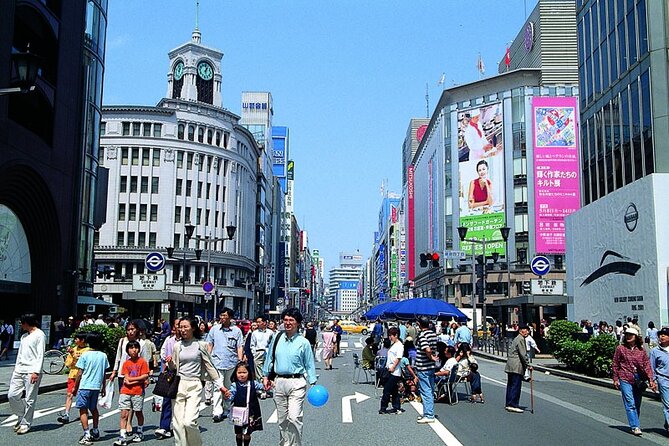
The day works because it’s designed around transit, not around long sightseeing standstills. You’re picked up from your hotel (within the designated pickup range), then you use a Metro pass for travel between stops.
Why this matters: Tokyo’s “major sights” are spread out. When you plan them alone, you end up doing extra walking to reach the right station entrance, or you bounce between lines and wait times. With this setup, you’re basically outsourcing the routing. Several guides on this type of tour—like Yoshi, Izumi, and Hiromi—are specifically praised for helping people get around fast and asking/answering questions along the way.
One caution: the tour notes that if your hotel is outside the pickup range, you may need alternative transportation. In that case, you’d cover the fare so the guide can travel to the first stop and return from the last stop to your hotel. That’s not rare in Tokyo, but it’s worth checking before you lock in your lodging.
Stop 1: Meiji Jingu Shrine and why it’s the calm opener
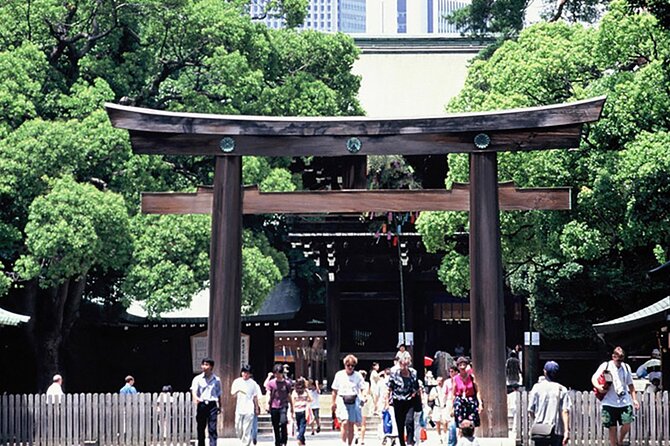
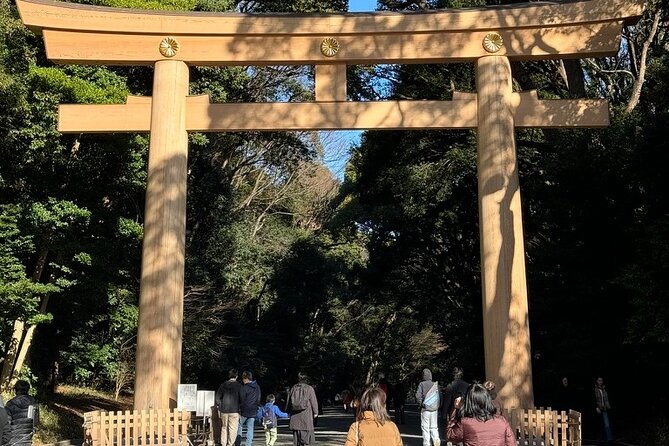
Meiji Jingu is a great start because it doesn’t feel like the rest of Tokyo. You’ll head there via the subway from near your hotel, then spend about 50 minutes on site. The shrine is dedicated to Emperor Meiji, and it was completed in 1920—a date that gives the place a more modern edge than you might expect from a “traditional” setting.
A good guide here does more than point and say “this is pretty.” You’ll get cultural context tied to why this shrine matters in Japan’s modern story, not just its appearance. The overall vibe is quiet and focused compared with what comes next later—Shibuya Crossing.
Practical tip: arrive ready for a bit of walking inside the shrine grounds. Wear shoes you can trust on paths that can be slick after rain.
Stop 2: Shibuya Crossing without the getting-lost stress
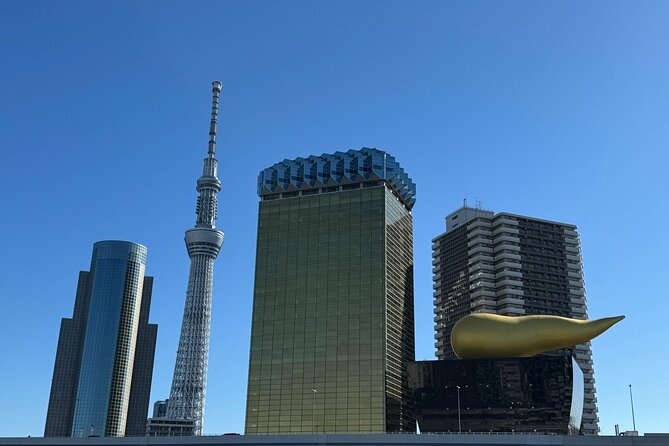
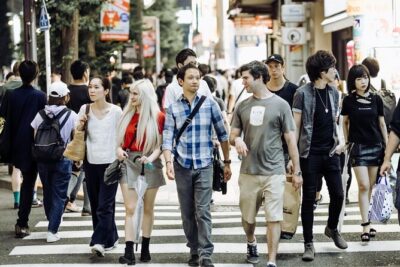
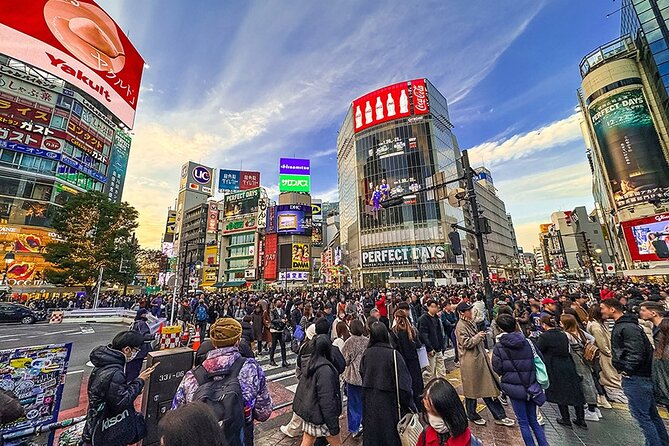
After Meiji Jingu, the plan moves you to Shibuya Station, described as only a short subway ride away. You then get around 20 minutes at Shibuya Crossing.
This stop is short on purpose. Shibuya Crossing is where people come to see Tokyo’s street-level energy: crowds, lights, crossing streams, and constant motion. If you’ve ever tried to find the right camera angle alone, you know it can take forever. A guide keeps the focus on timing and routes so you can actually enjoy the moment instead of wrestling with station exits and foot traffic.
The itinerary also frames Shibuya City as one of Tokyo’s 23 wards—helpful context if you’re trying to understand how Tokyo is organized beyond “one big city.”
Practical tip: Shibuya is crowded. If your group includes slower walkers, having a guide who’s willing to adjust pacing makes a difference. One highlight from past guests: guides have been described as patient and accommodating with slower travelers.
Stop 3: Asakusa streets and shopping time (before Senso-ji)
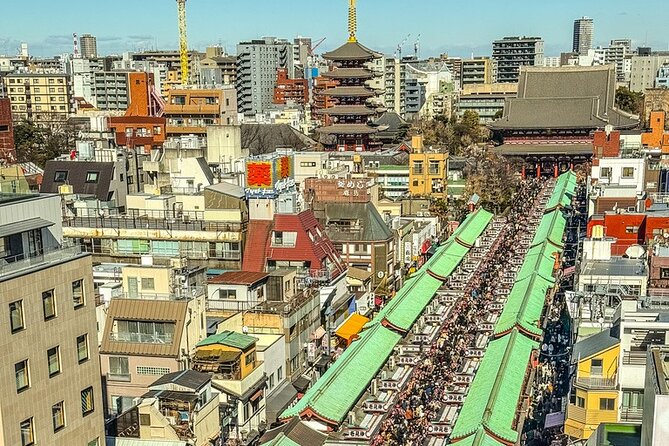
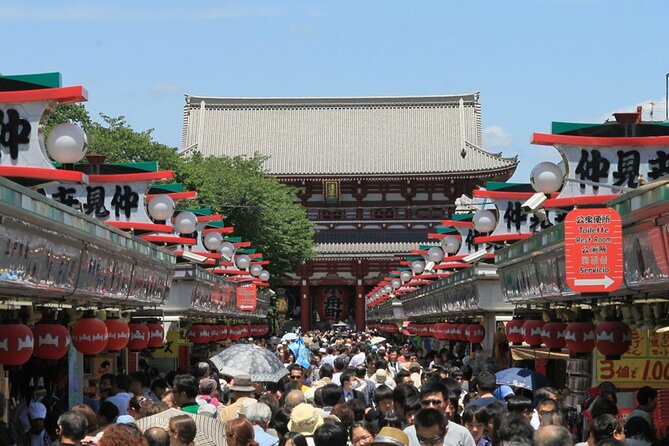
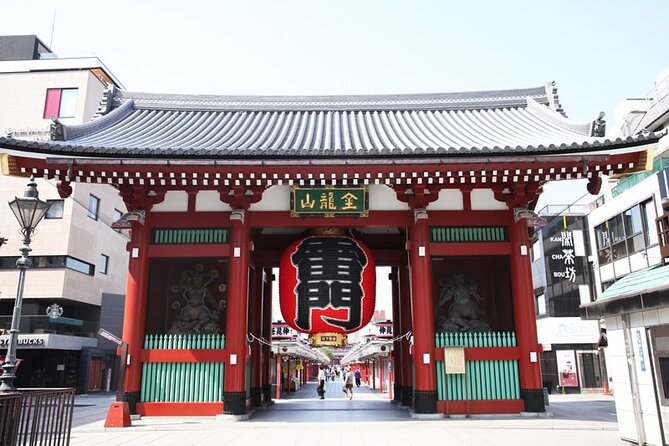
Asakusa is your “traditional Tokyo” break. You get about 20 minutes here, aimed at the neighborhood feel—shops with traditional crafts, souvenirs, and also the kind of street food and snacks that pop up around tourist areas.
I like this placement in the itinerary: you’ve already seen modern Tokyo energy in Shibuya, and now you shift to a side of the city where the street experience is part of the point. Even if you don’t buy anything, you’ll get a better sense of what people mean when they talk about classic Tokyo shopping districts.
One thing to keep in mind: 20 minutes goes fast in Asakusa because the streets are fun to browse. If you’re the type who likes to linger, decide ahead of time whether you’ll do quick looking or focused shopping.
You can also read our reviews of more guided tours in Tokyo



Stop 4: Senso-ji Temple and the best kind of photo timing
Next comes Senso-ji Temple, with about 40 minutes allotted. It’s described as one of Tokyo’s oldest and largest Buddhist temples, established in 645. That long timeline matters because it explains why this site pulls people in every day—it’s not just a “pretty temple,” it’s a centuries-long anchor of the neighborhood.
This stop is also where a guide earns their pay. At Senso-ji, you’ll deal with crowds and bottlenecks. A good guide helps you move efficiently without rushing you through. Past guests praised guides for making it easy to navigate crowded sights and for answering questions about Japanese culture and history.
Practical tip: treat this as both a sightseeing stop and a reset. The walking rhythm from Meiji Jingu to Shibuya to Asakusa can wear you down, so use your 40 minutes at Senso-ji to slow down for a moment.
Stop 5: Tsukiji Outer Market finish (and what changed at Toyosu)
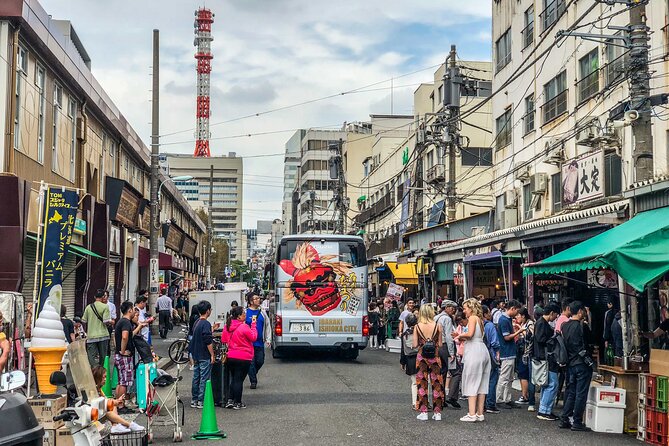
The tour ends around 2:00 pm at Tsukiji Fish Market. After 2018, the wholesale fish market moved to Toyosu, but the Outer Market stayed in the same location. So when the tour says Tsukiji, what you’re really doing is visiting the area that still draws big crowds for browsing and atmosphere.
You’ll have about 30 minutes here. That time is enough to get the vibe, snack, or shop for small items if you’re into that, but it’s not a full deep-food day. If you want a longer Tsukiji-style food crawl, you’d plan extra time after the tour.
Practical tip: even though the tour ends in Tsukiji, you’re still ending at a very walk-friendly area. Put your energy into comfortable shoes, and don’t schedule a complicated appointment right after.
The pacing: short stops, real walking, plan your energy
The overall duration is about 4 hours 30 minutes, and the tour notes a good amount of walking outdoors with moderate physical fitness as a guideline. That’s not “museum walking.” It’s city walking. You’ll be moving between stations, crossing areas with crowds, and spending time outdoors at each highlight.
A smart move before you book: don’t schedule this for the day you’ve overstuffed your itinerary. One of the best practical takeaways from guest experiences is: get your rest beforehand. If you show up tired, the walking can feel longer than it is on paper.
Also, weather matters. The tour explicitly suggests rain gear, like an umbrella or raincoat, and notes that itinerary changes may happen based on weather or operational reasons. When that happens, it may not be canceled and the tour fee may not be refunded—so treat it as a flexible day built around “best possible routes.”
What you learn: subway know-how plus cultural context
This is marketed as a walking tour with subway routing, and that combination is the real value. A subway card helps, but it doesn’t teach you how to get out at the right exit, how to avoid dead ends, or which transfers work fastest during peak crowd conditions.
Past guest notes are consistent on this point: guides—such as Yoshi, Izumi, and Hiromi—are praised for helping people maneuver the train and subway system quickly. That kind of “how to get there” knowledge is what makes the tour feel like an orientation course for Tokyo.
On the cultural side, the tour focuses on history and context at the big anchors: Meiji Jingu connected to Emperor Meiji and Japan’s modern era, plus temple background at Senso-ji. You’re not just collecting landmarks—you’re learning why those places matter and how Tokyo expresses different layers of its identity across neighborhoods.
Who this tour suits best
This private half-day tour is a good fit if you:
- want to see Meiji Jingu, Shibuya Crossing, Asakusa, Senso-ji, and Tsukiji Outer Market without building the plan yourself
- like the idea of a guide who can help with subway routing and station-to-street navigation
- want an easy day structure when it’s your first time in Tokyo
- prefer a private group setting over joining a larger group schedule
It may be less ideal if you:
- dislike walking outdoors or struggle with moderate mobility demands
- want a super slow pace or lots of free time at each stop
- need a fully guaranteed plan regardless of weather (the itinerary may change if conditions require it)
Should you book this Tokyo private guided subway-and-walking tour?
I think this tour is worth booking if your priority is efficiency plus context. It’s not trying to do everything in Tokyo. It’s trying to do the right anchors in the right order, using the subway to connect them, and ending in Tsukiji at a natural midday point.
If you’re the kind of traveler who wants a first taste of Tokyo that also teaches you how to get around, this private format is a smart move. And if you care about avoiding crowd frustration, the “navigation help” aspect is a major part of the value—especially with guides known for routing and accommodating different walking speeds.
On the fence? Check two things before you commit: (1) that you can handle the outdoors walking for about 4.5 hours, and (2) that your hotel is within the pickup range so you don’t end up paying extra for alternative transport.
FAQ
How long is the Tokyo private guided 1/2-day walking subway tour?
It’s about 4 hours 30 minutes.
Is this a private tour?
Yes. It’s private, and only your group participates.
What stops are included?
You’ll visit Meiji Jingu Shrine, Shibuya Crossing, Asakusa, Senso-ji Temple, and Tsukiji Fish Market (the Outer Market area).
Are admission tickets included?
Admission tickets are listed as free for the stops included in the tour.
Does the tour include lunch?
No. Lunch is not included.
What’s included in the price besides the guide?
Included items are hotel pick-up, an English-speaking guide, and transportation fee covered by a one-day Metro pass.
How does transit work during the tour?
You use the Metro system with a one-day Metro pass for travel tied to the day’s route.
Where does the tour end?
It concludes at Tsukiji Fish Market around 2:00 pm.
What should I bring for the day?
Wear comfortable sneakers or shoes, and bring rain gear such as an umbrella or raincoat in case of bad weather.
What if the weather is bad?
The tour requires good weather. If it’s canceled due to poor weather, you’ll be offered a different date or a full refund. The itinerary may also be subject to changes or certain visits omitted or substituted due to weather or operational reasons.
What’s the cancellation policy?
You can cancel for a full refund up to 24 hours in advance of the experience start time.