REVIEW · TOKYO
Tailored Tokyo private Tour with a Local Guide (10:00〜)
Book on Viator →Operated by New Adventure@Tokyo · Bookable on Viator
Tokyo clicks fast once you have a plan. This private tour with local guide Itsuko helps you feel confident using public transport confidence on your first day, with a route through Ueno’s shrines and Ameyoko’s food street. I like that the guide checks your interests ahead of time and adjusts the pace so it doesn’t feel like a rushed group scramble. One possible drawback: parts of Ueno are hilly, and some stops have stairs, so it’s not a zero-walking plan.
In about 2.5 to 3 hours, you connect several iconic stops in a way that makes sense on foot and by transit: Ueno Toshogu to Ameyoko. I also like the practical tour pamphlet the guide prepares, since it gives you a quick memory of what you saw and what to look for next. If you want only skyscrapers or modern-only Tokyo, this route may feel a bit temple-and-street focused—but it’s a solid start.
In This Review
- Key things I’d zero in on
- Getting Your Bearings: Tokyo by public transport, not chaos
- Price and value: what $48.77 per person buys you
- What the route really covers (and why it works)
- Stop by stop: what you’ll do and what to watch for
- Ueno Toshogu Shrine: shrine manners first, photos second
- Ueno Zoo area / Ueno Daibutsu: a quick Great Buddha moment
- Hanazono Inari Shrine: small shrine, iconic red gate photos
- Kiyomizu Kannon-dō: the stage-like temple vibe
- Ameyoko Shopping Street: street food focus and a long eating window
- Lunch, Kamakura add-on, and tailoring to your interests
- Practical tips that make the tour smoother
- Who should book this private Tokyo introduction?
- The guide experience: more than directions
- Should You Book This Private Tokyo Primer?
- FAQ
- How long is the Tailored Tokyo private tour?
- What stops are included on this tour?
- Is admission free for the stops?
- Is pickup included?
- Is lunch included?
- Can I add a trip to Kamakura?
- Do I need a mobile ticket?
- Are credit cards always usable for food and shops?
- Is the tour private?
- Is the tour weather-dependent?
Key things I’d zero in on
- Itsuko tailors the day before you meet: you share what you like, and the plan adjusts to match.
- You get real public-transport guidance: it’s not just sightseeing, it’s learning how to move with confidence.
- A shrine etiquette mini-lesson at the start: you’re set up to visit respectfully without guessing.
- Short shrine stops, then a longer food-focus window: you get both culture and time to eat.
- A tour pamphlet made for your group: useful during and after the walk.
- Kid-friendly pacing is possible: the guide can adapt for families when requested.
Getting Your Bearings: Tokyo by public transport, not chaos
Tokyo can feel like a test you did not study for. Trains run on time, stations look similar, and you’re never sure which exit leads to the right street unless someone shows you how. This tour is built for that moment—your early trip when you’re trying to get around as much as trying to see sights.
The experience is private, so you’re not stuck matching the pace of strangers. And you’re not wandering solo with only your phone map. The guide’s job is to move you between stops and explain what you’re looking at along the way. That’s the real value here: you’re learning how to navigate, not just ticking off landmarks.
I also like that it’s designed for a relaxed pace compared with big-group tours. The total time is about 2 hours 30 minutes to 3 hours, which means you can do it on a first day without needing recovery time afterward.
You can also read our reviews of more guided tours in Tokyo
Price and value: what $48.77 per person buys you
At $48.77 per person, this is not a bargain “solo-attempt” tour. It’s a paid guide service. The good news: you’re paying for concentrated time where the guide does three useful things at once—customizes the day, helps you use public transport, and gives context at each stop.
Two details help the math feel fair:
- Several shrine/temple visits are listed as free admission (so you’re not paying entry fees on top of the tour price).
- You also get a tour pamphlet made by the guide, which can be handy later when you’re trying to remember places you saw.
Lunch is not included in the base price. That keeps the tour flexible, but it means your total day cost depends on what you choose at Ameyoko or whether you add lunch with your guide. If you travel as a small group, a private format can become very good value because the guide time is still shared across your party.
What the route really covers (and why it works)
This isn’t a “Tokyo greatest hits from every era” tour. It’s a smart sampler with a theme: shrines + neighborhood culture + street food life, mostly around Ueno and then out toward Kiyomizu Kannon-dō and Ameyoko.
The order matters. You start in the Ueno area, where you can learn basic temple/shrine etiquette and get oriented in a part of Tokyo that’s active and walkable. Then you move to smaller shrines and a famous Buddhist temple. Finally, you end with Ameyoko Shopping Street, where the energy shifts from quiet worship to casual eating and browsing.
That arc is great for first-timers because it shows you Tokyo’s day-and-night rhythm in a single half-day: calm and reverent at the shrines, then food, chatter, and shopping in the street market zone.
Stop by stop: what you’ll do and what to watch for
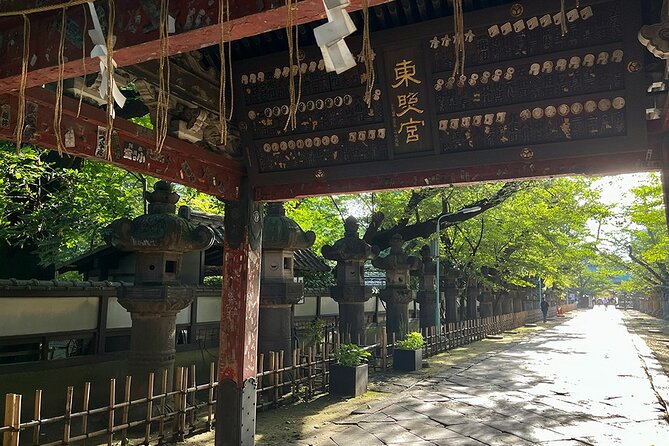
Ueno Toshogu Shrine: shrine manners first, photos second
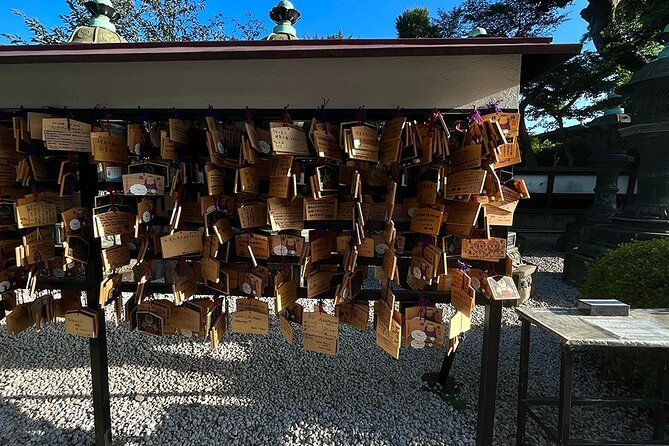
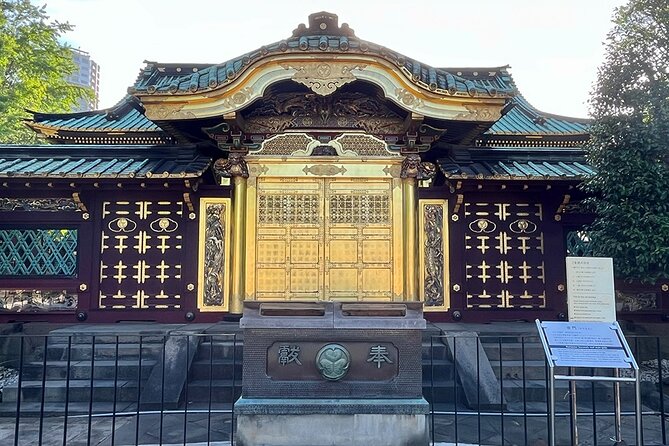
You begin at Ueno Toshogu Shrine for about 20 minutes. Before you start walking around, the guide explains manners for shrines and temples. That’s more useful than it sounds. A lot of visitors stand where they shouldn’t, or they do the ritual steps in the wrong order because nobody told them what’s expected.
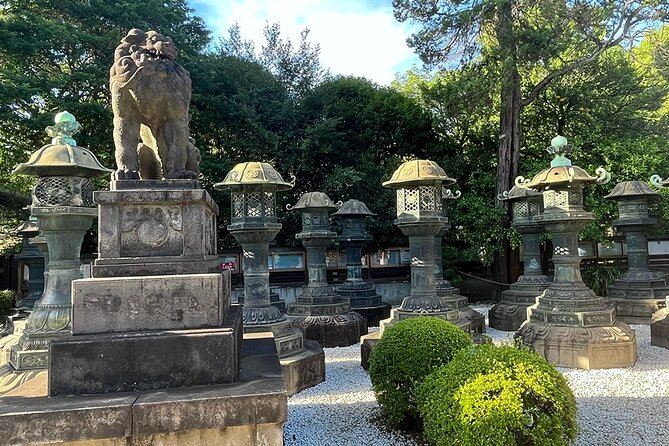
Ueno Toshogu is gorgeously decorated, and the guide’s context helps you look beyond the obvious wow-factor. Even in a short stop, you should leave knowing what you’re seeing and why it matters.
Practical note: shrine areas often involve stairs and changes in elevation, so wear shoes that can handle uneven ground.
You can also read our reviews of more private tours in Tokyo

Ueno Zoo area / Ueno Daibutsu: a quick Great Buddha moment
Next comes a shorter stop that mixes the Ueno area with Ueno Daibutsu (the Great Buddha). This part is brief—around 10 minutes—and it’s more of a “look, understand, move on” stop.
Even if you’re not doing the zoo itself, seeing the preserved Great Buddha in this context gives you another angle on religious and cultural life in the Ueno district. It’s not the deepest stop on the route, but it fits the flow and keeps the total tour time manageable.
Hanazono Inari Shrine: small shrine, iconic red gate photos
Hanazono Inari Shrine is another short stop (about 10 minutes). The highlight is the small but popular red torii gate—an easy photo spot.
This is the kind of place where the guide’s explanation matters. Inari shrines are connected to fox imagery and local belief, and even a quick stop becomes more interesting when you know what you’re looking at and how to interpret the setting.
If you love photos, this is a good time to pause and take your shot. If you hate photo stops, you can still treat it like a quick orientation break before moving on.
Kiyomizu Kannon-dō: the stage-like temple vibe
Then you reach Kiyomizu Kannon-dō Temple, about 10 minutes on the clock. This stop is known for having a stage-like feature that people compare to the famous Kiyomizu temple in Kyoto.
You’re not spending hours here, but you are getting the core visual and cultural idea in a tight time window. It’s a nice contrast after the smaller Inari shrine—different style, different feel, and another religious lens on the city.
Ameyoko Shopping Street: street food focus and a long eating window
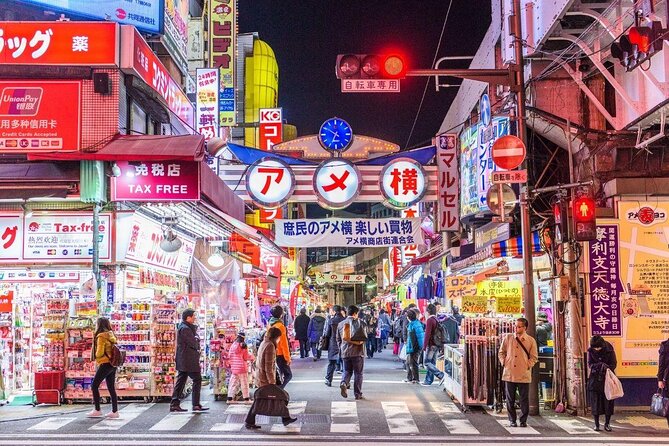
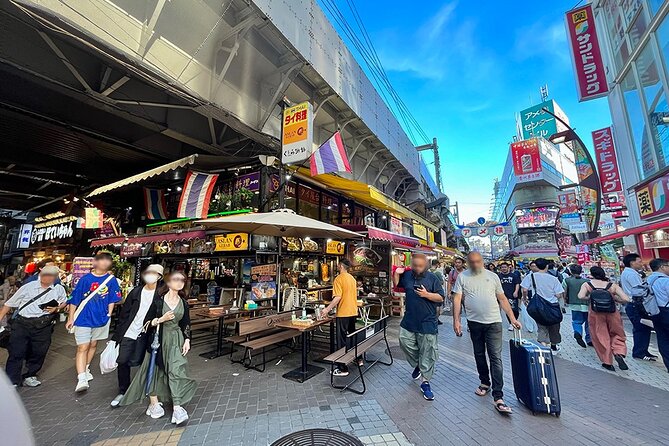
The biggest time chunk is Ameyoko Shopping Street—about 1 hour 40 minutes. Here, the tour shifts into neighborhood life. The guide walks you toward Ameyoko, and you get time for street food.
What you can do here depends on your group:
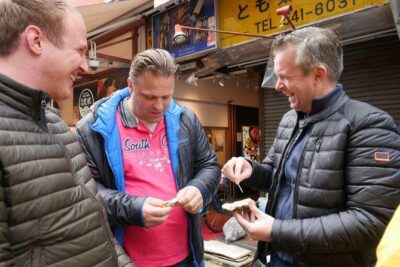
- You can eat various street foods, including options like kebabu and other casual Asian foods.
- If everyone prefers, the guide can take you to casual restaurants for lunch instead of doing street-stall eating.
This is also where a private tour shines. In a group tour, you often get limited choice and a fixed schedule. Here, you can slow down if you want to browse, or speed up if your only goal is food.
One thing to note: some places in and around Ueno Park can make card payment tricky, so be ready with cash. It’s not always guaranteed that credit cards work everywhere in the area.
Lunch, Kamakura add-on, and tailoring to your interests
The tour is built around flexibility. There’s an option to include lunch with your guide. And there’s also an add-on for a half-day trip to Kamakura if you want to extend your day beyond central Tokyo.
In practice, tailoring works best when you go in with a few clear priorities:
- Are you more interested in shrines and temples, or do you want the food part to lead?
- Do you want lots of walking photos, or less time stopping?
- Is anyone in your group traveling with kids and needing shorter segments?
Based on how this tour is run, your guide will use your answers to adjust pace and stops. One family example even highlighted careful planning to help avoid harsh heat, which is the kind of real-world detail that makes Tokyo more comfortable.
Practical tips that make the tour smoother
- Plan your footwear like it’s a walking day. Even when stops are short, you’ll be on your feet between them.
- Bring some cash for food stalls. The area can be card-unfriendly in places, especially for casual snacks.
- Expect stairs and uneven ground in at least some locations. Ueno’s terrain can be hilly, and some facilities have stairs.
- Use the pamphlet during your day. It helps you remember what you just saw and where you might go again later.
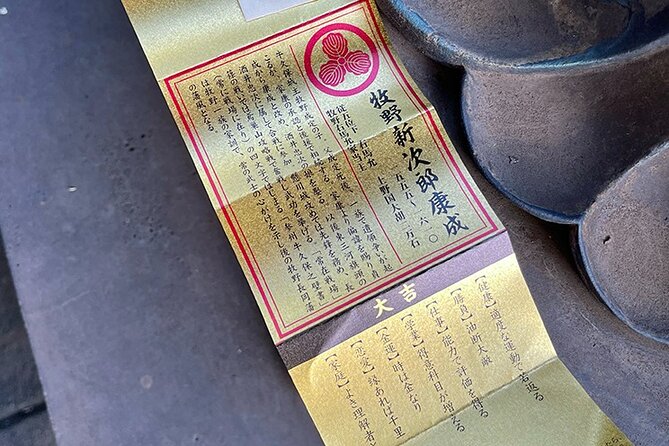
Also, there’s a small “souvenir ritual” option. A fortune slip (¥200) and shrine/temple amulets are not included. If you’re the type who likes to bring home one meaningful item from a shrine visit, you’ll know what to budget.
Who should book this private Tokyo introduction?
This is a strong fit if:
- You’re in Tokyo for the first time and want an easier entry to public transport with a guide.
- You like religious sites but also want real street-life time at the end.
- You travel with kids or need a pace that isn’t geared to strangers.
- You want a short half-day option that doesn’t steal an entire day from your bigger plans.
You might reconsider if:
- Your group has limited mobility and can’t handle stairs or uneven ground. Some stops include stairs, and the overall Ueno area isn’t flat.
- You want a deep, museum-heavy Tokyo day. This tour is built around shrines, temples, and neighborhood street culture.
The guide experience: more than directions
A private guide can be either “explanation-only” or “hands-on support.” This one leans toward support.
In real cases, the guide (often named Itsuko) has been described as focused on giving the best first-day experience, with communication before the tour to learn interests and expectations. Families have also noted that the guide was good at working with a child and making the experience feel friendly, not like a checklist.
That matters because Tokyo navigation isn’t just about route maps. It’s about knowing what to pay attention to and how to behave so you feel confident in the space.
Should You Book This Private Tokyo Primer?
If you’re starting Tokyo and you want your first day to feel calmer, safer, and easier to repeat on your own later, this is a smart buy. The combination of a private pace, public-transport confidence, and a finishing stretch at Ameyoko makes it a well-rounded introduction without eating up your whole day.
I’d book it if you:
- want a guide to help you move around Tokyo, not just talk at you
- are open to shrine/temple stops and casual street food
- value customization (especially if you’re traveling with kids)
I’d skip it (or ask very pointed questions beforehand) if your group can’t handle stairs or uneven walking, because this route does include parts of Ueno and temple areas where steps are common.
If you want, tell me your travel dates and whether you want more temples or more food, and I can help you map a good first-day plan around this tour’s timing.
FAQ
How long is the Tailored Tokyo private tour?
The tour runs about 2 hours 30 minutes to 3 hours.
What stops are included on this tour?
The route includes Ueno Toshogu Shrine, an Ueno area stop associated with Ueno Daibutsu, Hanazono Inari Shrine, Kiyomizu Kannon-dō Temple, and Ameyoko Shopping Street.
Is admission free for the stops?
Admission tickets for the listed stops are shown as free.
Is pickup included?
Pickup is offered, and the tour ends back at the meeting point.
Is lunch included?
Lunch and all food and drink costs are not included. There is an option to include lunch with your guide.
Can I add a trip to Kamakura?
Yes, there’s an option to add a half-day trip to Kamakura.
Do I need a mobile ticket?
Yes, the tour includes a mobile ticket.
Are credit cards always usable for food and shops?
The info notes it might be impossible to pay by credit card in some facilities and shops in Ueno Park, so having cash can help.
Is the tour private?
Yes. It’s a private tour/activity, and only your group participates.
Is the tour weather-dependent?
Yes. It requires good weather. If it’s canceled due to poor weather, you’ll be offered a different date or a full refund.