REVIEW · TOKYO
Tokyo: Sanctuary Authentic Grand Sumo Experience & Training
Book on GetYourGuide →Operated by Amita Sumo Dojo · Bookable on GetYourGuide
Sumo training feels unreal—until you lace up. At Amita Sumo Dojo in Heiwanomori Park, you don’t just watch sumo. You practice in the clay ring (dohyo) and wear a real sumo mawashi as part of a guided keiko class.
I like that the session is built for beginners: you’ll learn stretches, warm-ups, and even the traditional rituals and ring rules before you wrestle. One heads-up: it’s sweaty and physical, and there’s no food served, so you’ll want to show up ready with water and towels.
In This Review
- Key things that make this sumo class special
- Entering Heiwanomori Park’s Sumo-jo (and finding the small office)
- The 2-hour keiko flow: warm-ups, rituals, rules, then wrestling
- Real dohyo and a real mawashi: why it beats watching from the stands
- Instruction style: bilingual coaching that keeps it beginner-safe
- What you’ll do in the ring (and what you can control)
- Practical tips: towels, drinks, and the 5-minute shower option
- Price and value at about $199 per person
- Who should book this sumo experience in Tokyo?
- Should you book Amita Sumo Dojo?
- FAQ
- How long is the sumo training experience?
- Where is the meeting point?
- Do I need any sumo experience?
- Do I get a mawashi (sumo belt)?
- Do you train on a real dohyo (clay sumo ring)?
- What languages are the instructors?
- What should I bring?
- Is there a shower available?
- Is food included?
- What are the rules for photos and videos?
- Can children join?
Key things that make this sumo class special
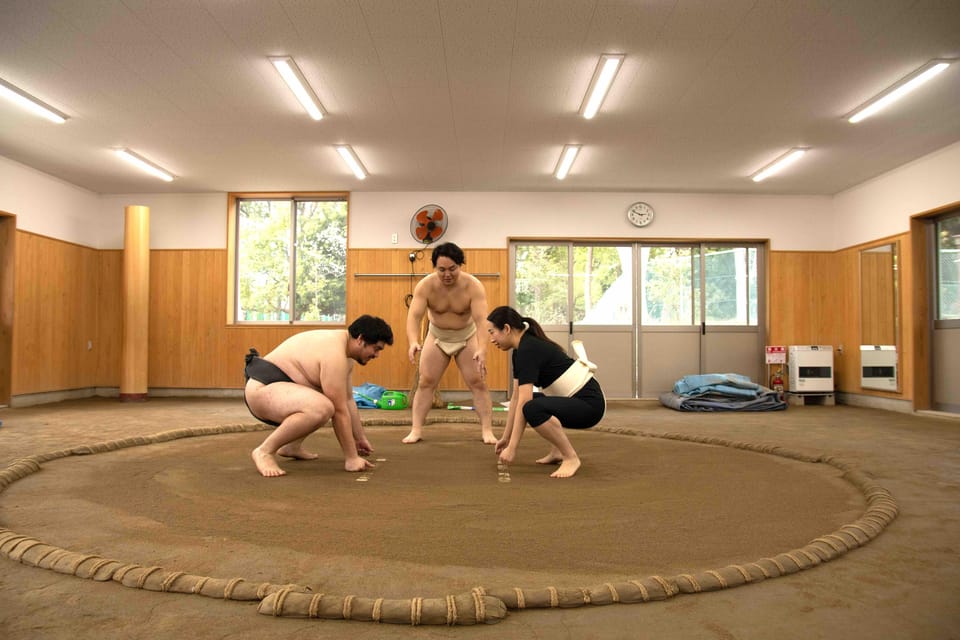
- Real dohyo and real mawashi: you train like the sport actually works
- Shinto-flavored rituals: you’ll learn what happens and why, not just how to grapple
- English support in a Japanese-led class: instruction happens in both languages
- Beginner-friendly format: no experience needed, and the training adjusts to your level
- After training, you wrestle: you’ll spar with friends and potentially with the coaches
Entering Heiwanomori Park’s Sumo-jo (and finding the small office)
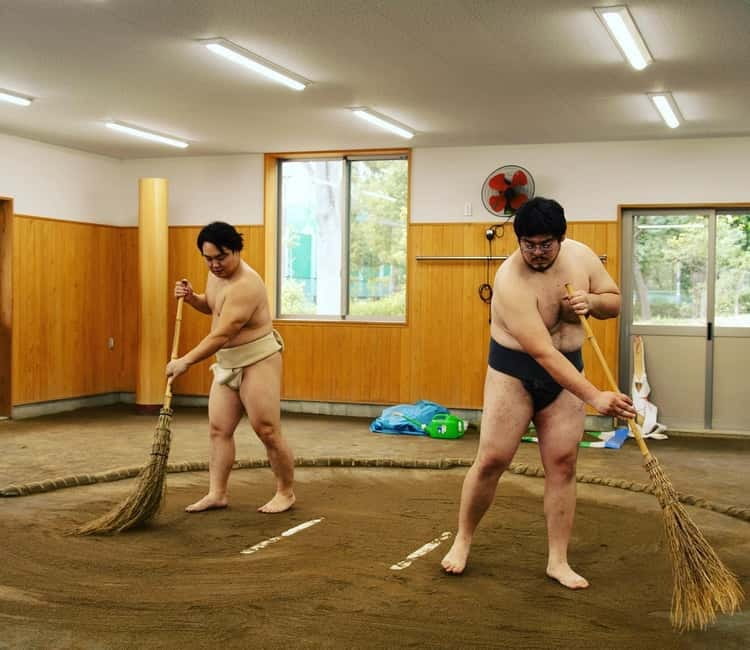
This experience takes place at Heiwanomori Park Sumo-jo in Ota City, Tokyo. The meeting point is a small office at the same address: 2-1 Heiwanomorikoen, Ota City, Tokyo, 143-0005. If you like arriving early to get your bearings, do it. This is a park area, and walking in with time means you’ll start calm instead of rushed.
If you’re walking, it’s a short, straightforward route from Heiwajima Station on the Keikyu Main Line (about 10 minutes). If you plan to taxi, keep this in mind: taxis won’t come to the location unless you arrange one yourself, so plan around that.
Once you’re there, the vibe is simple and direct. This is not a costume show. It’s a working martial arts training space, with the ring and gear treated like the main event.
You can also read our reviews of more tours and experiences in Tokyo.



The 2-hour keiko flow: warm-ups, rituals, rules, then wrestling
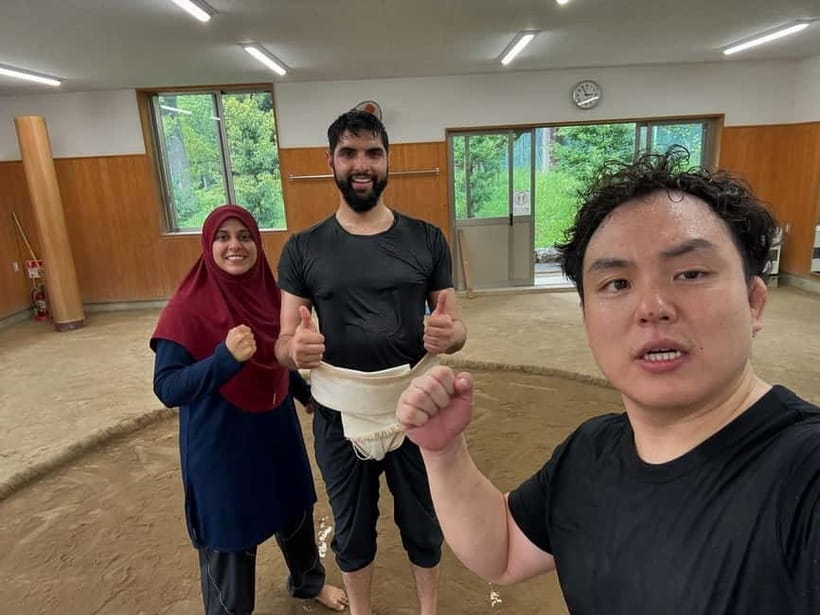
Your session lasts 2 hours, and it follows a clear rhythm. First comes the physical prep: stretches and warm-ups so your body understands what it’s about to do. Even if you’re fit, don’t skip this part mentally. In sumo, posture and movement matter, and the class starts by setting your body up for the ring.
Next is the part that makes this feel authentic: traditional sumo and Shinto rituals. You’ll get a demonstration and learn what those steps mean in the context of the sport. It’s the difference between doing actions and understanding the culture behind them. If you’ve ever wondered why sumo seems ceremonial even while it’s also violent-looking, this is where you get the answers.
After the warm-up and ritual section, you’ll learn the rules for wrestling in the dohyo using a mawashi (the belt). Expect the basics: how to handle stance, how to engage, and how the ring works so you’re not just flailing for two hours.
Then you move into the pay-off: at the end of training, you’ll be able to wrestle with your friends. If you’re brave (and you’re not too sore), you may also wrestle with your coaches.
Real dohyo and a real mawashi: why it beats watching from the stands
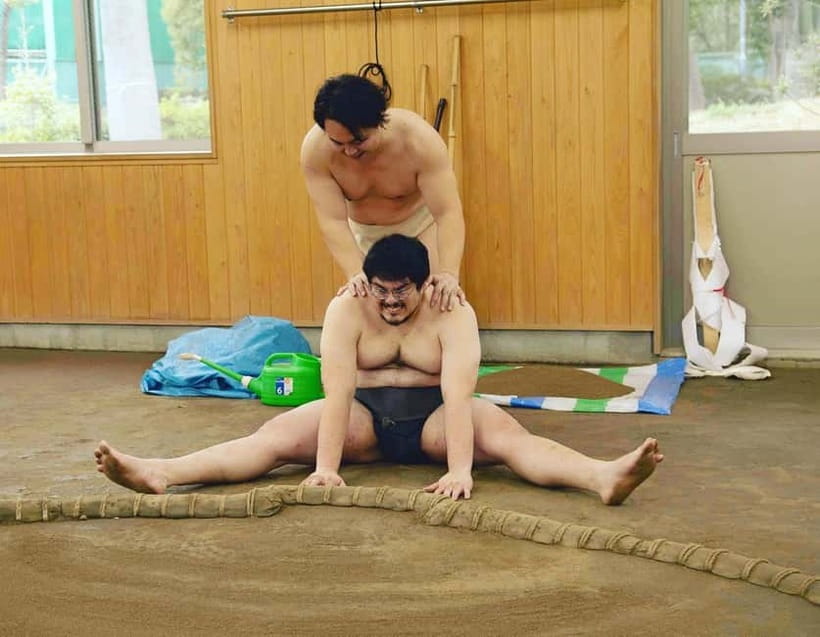
Plenty of Tokyo sumo experiences focus on viewing. This one flips the script. You train in a real clay sumo ring, and you wear the real sumo belt—a mawashi—during the session.
That matters because sumo isn’t just about arm strength. The belt changes your grip and your balance. Clay changes your footing. Even small details change how your body learns. When you feel the ring under you and you can actually move with the belt, you stop thinking about sumo as a spectator sport and start understanding it as a martial art.
Good news: you don’t need to bring gear. They provide the mawashi at no extra cost. You also can wear regular clothes if you prefer, which makes this much easier than training sessions where you’re expected to arrive fully equipped.
Instruction style: bilingual coaching that keeps it beginner-safe
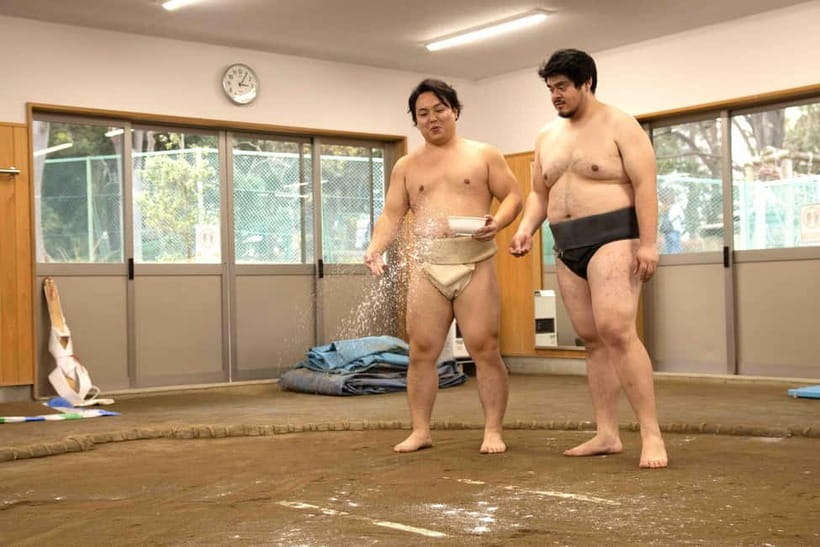
The class is led by an experienced Japanese sumo coach, and instruction is available in Japanese and English. That bilingual setup is huge if you don’t read Japanese. You can actually follow what the coach is asking for and correct your form while it’s still fresh.
From the experience details and session descriptions, the coaching covers both technique and context. You’re not only learning moves; you’re learning how wrestlers think once they’re in the ring. That’s why the rituals and rules come early.
In terms of tone, the program is friendly and approachable. One of the best parts of this kind of class is that it makes room for different body types and experience levels. The training is practical—sweaty, yes, but also structured—so you’re not left to figure everything out alone.
What you’ll do in the ring (and what you can control)
Your wrestling time is the moment most people are hoping for, and you’ll earn it through the warm-ups, rules, and practice steps. You’ll start with the fundamentals, then move into rounds where you wrestle with other participants.
A key detail: you’re not locked into one rigid version of wrestling. The session is designed to match what you can do in the ring during a beginner-friendly training format. That means you’ll get a real workout without needing to already understand sumo technique.
If you’re going with a group, it’s a fun way to compare styles. One person’s challenge will be footwork. Another will be posture. Another will be just not losing the basic rhythm of contact. You leave understanding that sumo is more like controlled grappling than random pushing.
And yes, it’s physical. Expect sweat. Expect contact. Come in with a towel plan.




Practical tips: towels, drinks, and the 5-minute shower option
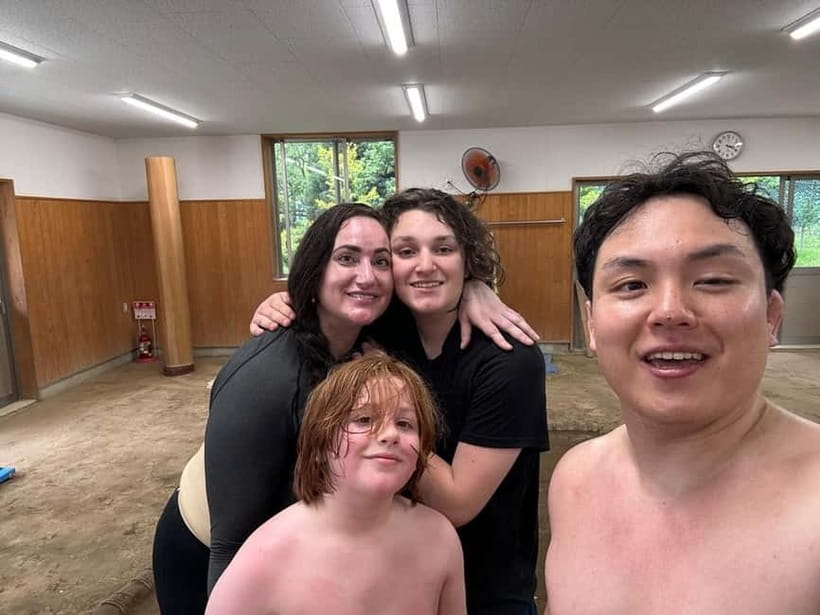
Bring a towel and drinks. I strongly recommend more than the minimum. You’ll sweat a lot, and you’ll want one towel for the training and another for wiping off afterward.
There’s also a shower room near the place, and it costs ¥100 for 5 minutes. If you’re heading out afterward in Tokyo, that little shower time can be the difference between feeling human and feeling like you just ran through a kiln.
If you get easily dehydrated, bring a lot of water. The program is 2 hours, it’s physical, and the dohyo work adds up.
No food is served. So if you’re coming straight from sightseeing or you’ll be going somewhere after, plan a meal stop before or after. Keep it simple and easy to digest.
Last practical note: there’s a statement that they’re not responsible for injuries or accidents. That’s standard in training activities, but it’s also a reminder to take warm-up seriously and follow the coach’s guidance.
Price and value at about $199 per person
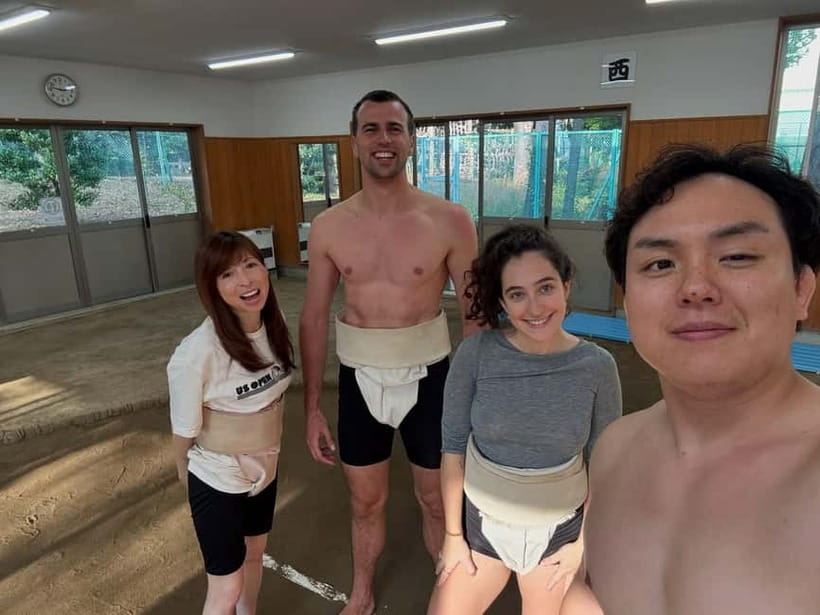
At $199 per person, this isn’t the cheapest activity in Tokyo. But it’s also not a generic show.
You’re paying for:
- Real training in a clay dohyo
- A real mawashi provided to you
- A coach leading keiko (including warm-ups and ritual learning)
- The chance to wrestle, not just watch
When you compare it to paid classes where you only get instruction or only get a short demo, the value here is the full package: gear + ring + coaching + sparring time, all within a tight 2-hour session.
If you want sumo as performance entertainment only, there are other options. But if you want to understand how sumo feels in your body, this class is a strong deal for what you actually get to do.
Who should book this sumo experience in Tokyo?
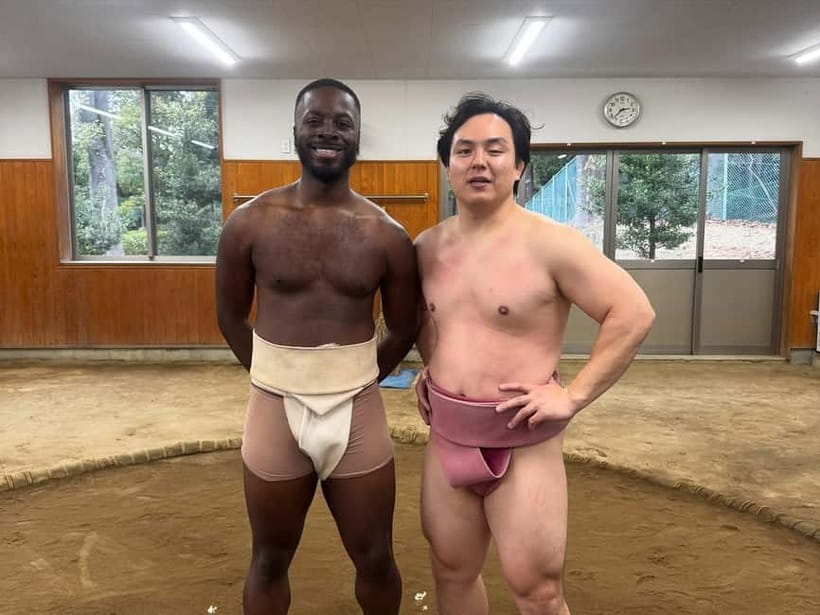
This one fits best if you want an active, hands-on introduction to sumo. It’s a good choice for:
- People who are curious about traditional sports culture, not just highlights
- Couples and families who want a memorable Tokyo activity that’s different from food tours
- Beginners who don’t know what to expect but want a guided start
- Anyone comfortable with sweat, basic wrestling contact, and physical coaching
Children can participate too, with rules. Children under 4 may accompany but only observe the session. Children aged 5 and older can observe for free, and if they want to participate, they need an order placed for each child taking part.
If you’re the type who hates feeling out of place in a new sport, the beginner-friendly structure helps. If you’re looking for something calm and quiet, this is not it.
Should you book Amita Sumo Dojo?
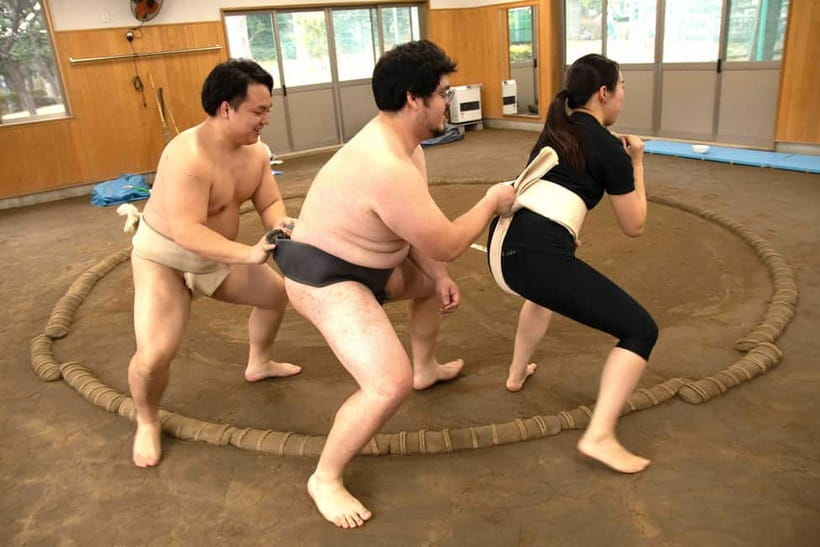
I’d book it if you want a true sumo training experience in Tokyo: real dohyo, real mawashi, and a coach-guided flow that includes rituals and ring rules. The $199 price makes sense when you compare it to the cost of getting a trained instructor plus the ring-and-belt experience in one 2-hour session.
Skip it if you’re dealing with injuries that limit your ability to do contact grappling, or if you hate physical workouts and sweat. Also, plan ahead for logistics like water, towels, and the fact that there’s no food served.
If you want one Tokyo activity that feels like you’re actually stepping into the sport, this is the one to consider first.
FAQ
How long is the sumo training experience?
The experience lasts 2 hours.
Where is the meeting point?
Meet at the small office at Heiwanomori Park Sumo-jo, 2-1 Heiwanomorikoen, Ota City, Tokyo, 143-0005.
Do I need any sumo experience?
No experience is needed. Everyone is welcome.
Do I get a mawashi (sumo belt)?
Yes. They provide the mawashi at no extra cost.
Do you train on a real dohyo (clay sumo ring)?
Yes. You train on a real clay sumo ring called a dohyo.
What languages are the instructors?
The instructor provides guidance in English and Japanese.
What should I bring?
Bring a towel and drinks. The organizers also recommend bringing extra water and towels since you will sweat.
Is there a shower available?
Yes. There is a shower room near the place, and it costs ¥100 for 5 minutes.
Is food included?
No food will be served.
What are the rules for photos and videos?
You can take photos and videos to share on social media during the experience, as long as you do not interfere with others. You should also avoid filming participants who have not given permission to be recorded, and follow any filming rules provided by the organizers.
Can children join?
Children under 4 may accompany but may only observe. Children aged 5 and older can observe for free, and if they want to participate, you need to place an order for each child who will take part.