REVIEW · TOKYO
Tokyo Off the Beaten Path 6hr Private Tour with Licensed Guide
Book on Viator →Operated by Japan Guide Agency · Bookable on Viator
This is Tokyo for people who like side streets. The big win here is a licensed local guide plus a flexible plan where you pick three or four sites from classic-but-offbeat areas like Yanesen, Shibamata, and Asakusa. You’ll spend the day moving through real neighborhoods, not just postcard stops.
I especially like the way the guide can meet you at your hotel to reduce hassle, and I like that the itinerary is built around choosing what you want to see. One thing to plan for: it’s a walking-heavy tour, and transport and entrance fees are not included, so your total day budget will depend on how you travel and what you choose.
In This Review
- Key Highlights Worth Knowing
- The Real Appeal of Tokyo Off the Beaten Path: Old Neighborhoods With Story
- Price and Value: What You’re Really Paying For
- Customizing Your 3-4 Stops Without Getting Lost in Options
- The Licensed Guide Advantage: City Tips You’ll Use Again
- A Practical Game Plan: Where These Stops Group Naturally
- Yanesen / Shitamachi (Yanaka + Nezu + Sendagi)
- Shibamata (east Tokyo old-school charm)
- Fukagawa (Edo-era Tokyo recreated feel)
- Asakusa + tools streets + temple-side streets
- Stop-by-Stop Breakdown: What Each Place Feels Like
- Nezu (Free, about 15 minutes)
- Nezu Shrine (Free, about 15 minutes)
- Yanaka Ginza Shopping Street (Free, about 15 minutes)
- SCAI The Bathhouse (Ticketed, about 15 minutes)
- Yanaka Cemetery (Free, about 15 minutes)
- Sendagi (Free, about 15 minutes)
- Shibamata (Free, about 15 minutes)
- Taishakuten-sando (Free, about 15 minutes)
- Shibamata Taishakuten (Free, about 15 minutes)
- Fukagawa Edo Museum (Ticketed, about 15 minutes)
- Fukagawa Fudō-dō (Ticketed, about 15 minutes)
- Tomioka Hachimangu (Free, about 15 minutes)
- Kiyosumi Teien (Ticketed, about 15 minutes)
- Basho Memorial Museum (Ticketed, about 1 hour)
- Asakusa (Free, about 15 minutes)
- Kappabashi Street (Free, about 15 minutes)
- Asakusa Hanayashiki (Ticketed, about 15 minutes)
- Asakusa Nishisando (Free, about 15 minutes)
- Tsukiji Fish Market (Free, about 15 minutes)
- Gotokuji Temple (Free, about 10 minutes)
- Transportation and Walking: How to Keep the Day Enjoyable
- What a Great Day Looks Like With This Tour
- Who Should Book This Tour (And Who Might Not)
- Should You Book Tokyo Off the Beaten Path Private Tour?
- FAQ
- How long is the Tokyo Off the Beaten Path private tour?
- What is the price per person?
- Is this tour private or shared?
- Can I customize which places we visit?
- Are hotel pickups included?
- What’s included in the tour price?
- What isn’t included?
- How does transportation work during the tour?
- Are admission tickets required for each stop?
- What is the cancellation policy?
Key Highlights Worth Knowing
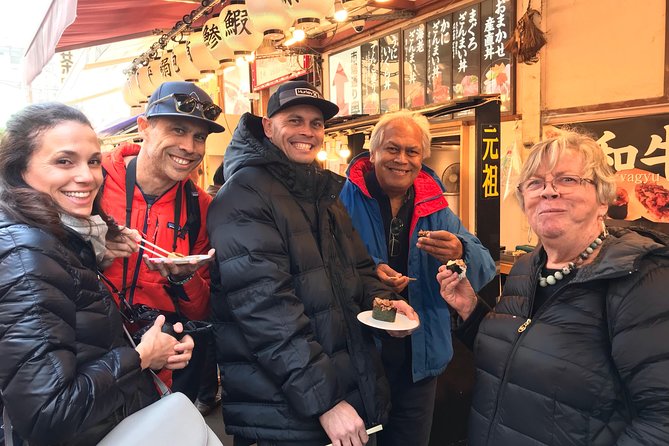
- Choose 3-4 stops: You’re not stuck with a rigid checklist.
- Licensed guide, local style: Expect neighborhood context and practical routing.
- Meet near your hotel: Less time hunting for your group.
- Yanesen and Shitamachi focus: Old-down-warmth areas that survived major damage.
- Temple + museum + shopping mix: Temples, gardens, old cemeteries, and tools streets can all fit.
- Walking pace with smart breaks: Many stops are short, so you’ll get variety fast.
The Real Appeal of Tokyo Off the Beaten Path: Old Neighborhoods With Story
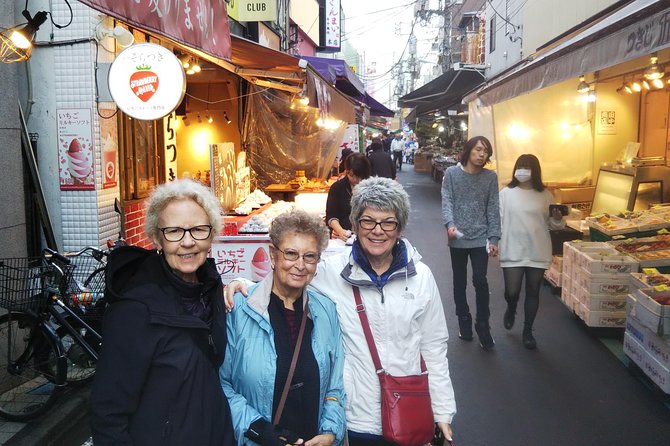
Tokyo has plenty of famous sites. What this kind of private day does is swap “famous” for “lived-in.” The heart of the tour’s spirit is Tokyo’s older downtown areas—especially places tied to shitamachi (old downtown) and neighborhoods that retained their last-century feel after major shocks.
You’ll notice it fast when you move through areas like Yanaka and Nezu (often grouped under Yanesen). These places are known for surviving the big historical disruptions, so the streets can feel like they kept their memory. That’s the tone you’re buying here: quieter blocks, local rhythm, and a guide who knows where the calm is.
Two other practical reasons this works well:
- You get guided navigation through neighborhoods that aren’t hard, but can be confusing for first-timers.
- You can build a day around what you actually like: shrines, gardens, art spaces, old shopping streets, or even the “what is that building?” museum stops.
You can also read our reviews of more guided tours in Tokyo
Price and Value: What You’re Really Paying For
At $155.22 per person for about 6 hours, this price is mainly paying for your private, licensed guide and the time they spend shaping a workable route. What you’re not paying for: transportation costs and entrance tickets.
Here’s how to think about the value in real terms:
- If you’re the type who hates being rushed through crowded sights, this private format helps a lot. You can choose calmer areas and control your own pace.
- If you want multiple neighborhood changes in one day, a guide can reduce wasted time. You won’t be figuring out everything from scratch.
- If you choose mostly free stops, your day can stay closer to the base price. If you pick several ticketed sites, your total cost rises.
Also: the tour includes a guide who can arrange taxi or public transport during the day, but you’ll cover the transportation fees. So if you plan to cross neighborhoods quickly, budget for it. If you’re comfortable with trains/subways, you can keep it leaner.
Customizing Your 3-4 Stops Without Getting Lost in Options
This tour is built around a simple idea: pick the parts of Tokyo that match your interests. From the site list, you’ll select three or four stops. Many stops are designed to be around 15 minutes, with one longer option (Basho Memorial Museum) at about one hour.
That short timing is a feature, not a flaw—if you choose well. It’s perfect for:
- First visits when you want variety fast
- People who like seeing streets and atmosphere, not just buildings
- Travelers who want one day to connect “old Tokyo” dots
But it does mean you should decide what you care about most. If you pick four stops that each require ticket lines or quiet reflection time, you may feel time-pressure. A smart strategy is:
- Choose one longer stop you genuinely want to linger at (like Basho Memorial Museum or a garden).
- Pair it with two or three quick hits (shrines, cemeteries, covered shopping streets).
The Licensed Guide Advantage: City Tips You’ll Use Again
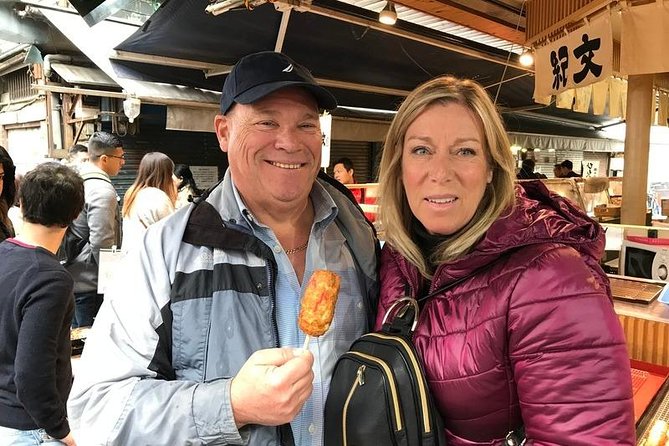
The guide isn’t just moving you from A to B. The strongest pattern in real tour feedback is how guides help with the stuff that makes Tokyo easier the next day too: neighborhood orientation and subway navigation tips.
Some guides have been praised for:
- Perfectly timed meet-ups and logistics planning
- Helping guests use the subway system with less confusion
- Sharing cultural pointers that make small interactions smoother
- Being flexible when a plan needs adjustment
You’ll also get the human part: if you’re traveling with kids or you want a slower rhythm, it’s the guide who can adapt. One traveler even pointed out patience with family needs and help with getting around by subway.
One caution from past experience: a couple of tours were described as too fast paced, with end time feeling tight. If that matters to you, say it early. Ask the guide to protect time for lunch, and clarify what “done” means for your day. Tokyo rewards slow walking. You’re paying for a private day—make it yours.
A Practical Game Plan: Where These Stops Group Naturally
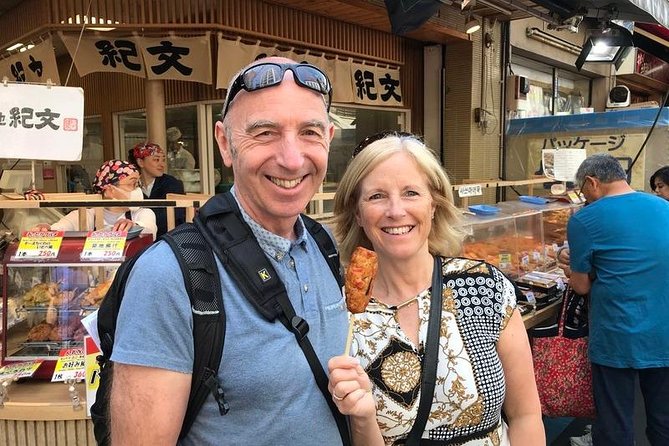
The stop list in this tour isn’t random. It clusters into real neighborhood themes. You can mix and match, but you’ll enjoy it more if you build a loop.
You can also read our reviews of more private tours in Tokyo

Yanesen / Shitamachi (Yanaka + Nezu + Sendagi)
If you want old-town calm, this is the cluster to lean on. It’s where the tour’s “off the beaten path” promise feels most real: streets that still carry that quiet, last-century vibe.
Best picks here include:
- Nezu and Nezu Shrine
- Yanaka Ginza (a calm shopping street)
- Yanaka Cemetery (a big, scenic graveyard setting)
- Sendagi (another Yanesen piece with a nostalgic feel)
- SCAI The Bathhouse for an art stop in a historic building
Shibamata (east Tokyo old-school charm)
If you like traditional neighborhoods and want a change of scenery, Shibamata is a great choice. The area keeps an older tone, helped by its location near the Edogawa River area.
Best picks include:
- Shibamata
- Taishakuten-sando (a short street with snacks and small shops)
- Shibamata Taishakuten (a temple with wood carvings and a notable gate)
Fukagawa (Edo-era Tokyo recreated feel)
If you want “old Tokyo” as something you can see and walk through, the Fukagawa options lean historical and architectural. They’re a strong choice when you want museums/gardens/temples rather than shopping streets.
Best picks include:
- Fukagawa Edo Museum
- Fukagawa Fudō-dō
- Tomioka Hachimangu (linked to sumo tournaments and big festivals)
- Kiyosumi Teien (Edo-linked garden)
- Basho Memorial Museum (Edo poet Matsuo Bashō context)
Asakusa + tools streets + temple-side streets
Asakusa works well if you want classic sightseeing but with room for side streets and shopping.
Best picks include:
- Asakusa
- Kappabashi Street (kitchen tools)
- Asakusa Nishisando (covered shopping street near Sensoji)
- Asakusa Hanayashiki (one of the oldest amusement parks)
- If you want to add a “market flavor” stop: Tsukiji Fish Market
- For something odd and fun: Gotokuji Temple (maneki-neko origin story)
Stop-by-Stop Breakdown: What Each Place Feels Like
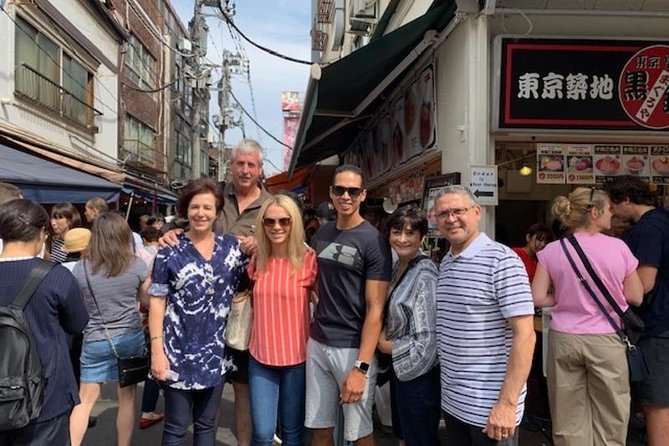
Below is what each listed stop offers, plus the practical “why choose it” guidance. Remember, you’ll pick only three or four.
Nezu (Free, about 15 minutes)
Nezu is the kind of neighborhood you enjoy by walking slowly. It’s tied to Yanaka and often described as part of shitamachi, old downtown. A key detail is that these areas are known for avoiding major damage during world wars and natural disasters, which helps explain why the neighborhood still feels old.
Choose Nezu if you want atmosphere. Don’t choose it if you’re chasing only big-ticket sights.
Nezu Shrine (Free, about 15 minutes)
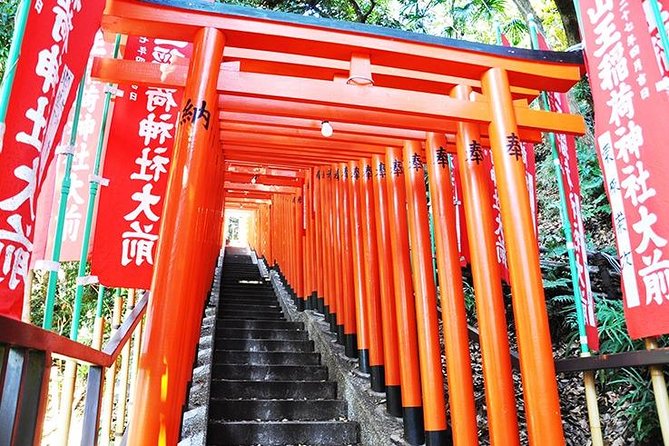
Nezu Shrine dates to 1706, and it’s known for large-scale Edo-era shrine architecture. The visual signature is the mix of vermilion and gold lacquered buildings in the gongen-zukuri style.
Choose it if you like traditional architecture details. It’s short here, so aim to enjoy the main features rather than expecting a long exploration.
Yanaka Ginza Shopping Street (Free, about 15 minutes)
Yanaka Ginza is a calm shopping street. It’s less central than places like Shinjuku or Shibuya, which is exactly why it works: fewer crowds, more local texture.
Choose this if you like browsing and want a gentle contrast to Tokyo’s major hubs.
SCAI The Bathhouse (Ticketed, about 15 minutes)
This is a converted bathhouse—over 200 years old—with a high-ceilinged space for art. It’s associated with contemporary Japanese artists (Tatsuo Miyajima is named in the tour info).
Choose it if you want “old building + modern art” in one stop. If you’re not into galleries, you can swap it for something more street-based.
Yanaka Cemetery (Free, about 15 minutes)
Yanaka Cemetery is described as one of Tokyo’s largest graveyards and also one of the most picturesque. Even if you’re not a cemetery person, it’s often a calm walk-and-look kind of place.
Choose it if you want a quiet break and a real sense of place. If you’re short on time, it’s still manageable in the tour’s typical short stop.
Sendagi (Free, about 15 minutes)
Sendagi is another Yanesen area. The big point for your visit: Yanesen survived the Great Kanto Earthquake and World Wars, which helps explain why you can still feel nostalgia in the streets.
Choose it if you want the “old Tokyo fabric” feeling to continue after Yanaka/Nezu.
Shibamata (Free, about 15 minutes)
Shibamata sits on Tokyo’s eastern end near the Edogawa River area. It’s known for keeping old-school charm.
Choose it if you want a different vibe than central Tokyo.
Taishakuten-sando (Free, about 15 minutes)
A short 200-meter road leads up to Shibamata Taishakuten Temple. It’s filled with street food stalls and little shops, with traditional wooden signboards.
Choose it if you like snack-style walking. It’s quick, so it’s best as a mood stop rather than a deep food tour.
Shibamata Taishakuten (Free, about 15 minutes)
This is a Nichiren temple with an impressive Nitenmon Gate and a wood carvings gallery. Those carvings depict the lotus sutra and were made between 1922 and 1934.
Choose it if you want a temple stop with a specific visual feature (the carvings) you can focus on.
Fukagawa Edo Museum (Ticketed, about 15 minutes)
Think of this as a replica village from late Edo (1603-1868). It includes different house types, plus a canal and a fire watchtower.
Choose it if you want history you can walk through, not just read about.
Fukagawa Fudō-dō (Ticketed, about 15 minutes)
This one is described as a bit of a mishmash temple, not the most beautiful, but with nice wood carvings on the main building. It’s connected to the Chisan group in the Shingon school of Buddhism.
Choose it if you’re already into temple architecture. If you’re only chasing major highlights, you may treat it as optional.
Tomioka Hachimangu (Free, about 15 minutes)
Tomioka Hachimangu is tied to sumo history: it’s listed as the birthplace of sumo tournaments. It’s also home to one of the largest Shinto festivals in Tokyo. The shrine was bombed in World War II, and the current building dates from 1956.
Choose it if you like culture links—sports history tied to places you can stand in.
Kiyosumi Teien (Ticketed, about 15 minutes)
This garden is linked to Kinokuniya Bunzaemon (1669–1734), a merchant described as specializing in citrus, lumber, and salmon. If you want a planned, designed nature break in a historical setting, this fits.
Choose it if you want somewhere calmer for photos and slow looking.
Basho Memorial Museum (Ticketed, about 1 hour)
Matsuo Bashō (1644–1694), the most famous Edo-period poet, is central here. Fukagawa is described as the place where he wrote many masterpieces and also the starting point for travels.
Choose it if you want one stop to feel substantial. One hour gives you breathing room versus the short 15-minute rhythm of many other stops.
Asakusa (Free, about 15 minutes)
Asakusa is here as an overall area visit, designed to help you explore Tokyo efficiently in one day. It also functions as a launching point for nearby streets.
Choose it if you want to anchor your day around central old Tokyo atmosphere.
Kappabashi Street (Free, about 15 minutes)
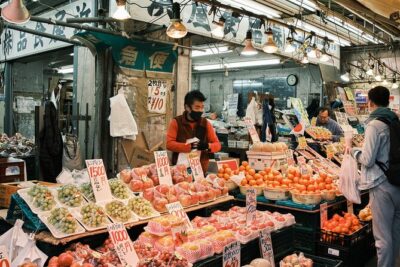
Kappabashi is known for kitchen supplies sold by many vendors—knives, chopsticks, dishes, and related tools. It’s the kind of shopping street where your eyes keep finding new details.
Choose it if you like practical shopping and visual browsing. Even if you don’t buy, it’s fun to look.
Asakusa Hanayashiki (Ticketed, about 15 minutes)
Hanayashiki was founded in 1853 and is described as one of the oldest amusement parks. It has about twenty-five attractions.
Choose it if you want a quick dose of classic amusement alongside temple-area sightseeing.
Asakusa Nishisando (Free, about 15 minutes)
Nishisando is a covered shopping street you reach by turning left from Sensoji Temple. It’s described as looking like something you’d see in a movie—wooden, sheltered, and atmospheric.
Choose it if you like “streets you can walk through” rather than only point landmarks.
Tsukiji Fish Market (Free, about 15 minutes)
Tsukiji is included as a short stop and marketed as a way to explore Tokyo efficiently in one day. Since the tour duration is tight, this is best treated as a flavor stop rather than an all-day market immersion.
Choose it if you want market-energy without losing half your afternoon.
Gotokuji Temple (Free, about 10 minutes)
Gotokuji Temple is described as the Buddhist temple linked to the maneki-neko, the luck-inviting cat figurine. The stop is short—about ten minutes—so it’s an ideal “quick odd stop” between bigger things.
Choose it if you like legends and small, specific cultural stories.
Transportation and Walking: How to Keep the Day Enjoyable
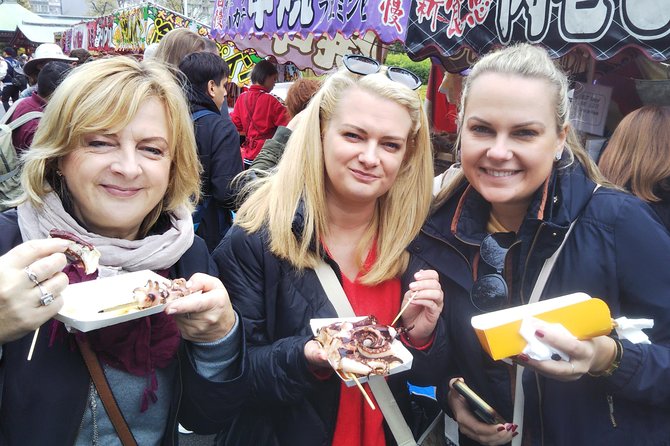
This is a walking tour, and pick-up is on foot near your starting point. That’s great when you want street life, but it can become a problem if you show up with stiff shoes or a heavy bag.
A few practical moves:
- Wear comfortable shoes. You’ll likely cover a lot more ground than you think, even with short stop times.
- Keep water handy. Lunch can be optional depending on your pacing, and one past experience was described as hurried around food.
- If you care about a relaxed pace, tell your guide at the start. Protect time for lunch and for lingering at one or two places you care about.
When it comes to transport: the guide can organize taxi or public transport, but you pay the transportation fees. If you’re mixing far-apart areas like Shibamata with Fukagawa or Tsukiji/Asakusa in one day, expect the transit choice to matter.
What a Great Day Looks Like With This Tour
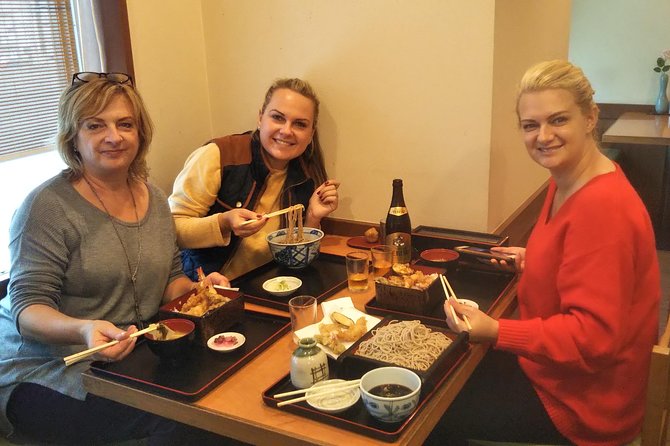
The best versions of this tour are when you treat it like a guided street sampler:
- Start with old downtown calm (Yanesen or Shibamata).
- Add one bigger “look closely” place (Nezu Shrine, Shibamata Taishakuten, or a garden).
- Finish near shopping streets so you can breathe and snack.
This format also pairs well with first-time Tokyo visits. You can get a feel for how neighborhoods work and even learn practical tips for the subway system—help that makes your later days less stressful.
And it’s private. Only your group participates. That matters when you want control, not a “follow the leader” vibe.
Who Should Book This Tour (And Who Might Not)
Book it if:
- You want off-the-main-road Tokyo and calmer neighborhoods
- You like mixing temples, gardens, and street shopping
- You want a guide to help you navigate efficiently in about six hours
- You’re comfortable with walking and short stop times
You might choose something else if:
- You prefer all-day museum deep dives rather than 15-minute stop visits
- You want a fully pre-paid day with no extra transport/entrance costs
- You get easily frustrated by tight schedules and crowd-adjacent timing
Should You Book Tokyo Off the Beaten Path Private Tour?
If your goal is authentic neighborhood Tokyo—Yanesen’s calm streets, Shibamata’s old-school charm, temple and garden moments, and shopping that feels local—this tour makes a lot of sense. The private licensed guide and the chance to pick three or four sites is the core value, especially for travelers who don’t want to waste time crisscrossing without a plan.
My only real “think twice” point is pacing. Ask for the day rhythm you want. If you protect lunch time and keep your shoe situation under control, you’ll likely leave with the kind of Tokyo memory that doesn’t fade: streets you can picture, not just photos you can scroll past.
FAQ
How long is the Tokyo Off the Beaten Path private tour?
The tour is approximately 6 hours.
What is the price per person?
The price is listed as $155.22 per person.
Is this tour private or shared?
This is a private tour/activity. Only your group will participate.
Can I customize which places we visit?
Yes. You can customize your itinerary and choose three or four sites from the provided options.
Are hotel pickups included?
Pickup is offered, and the guide will meet you at your hotel for ease.
What’s included in the tour price?
A licensed local English-speaking guide is included, along with a customizable tour of your choice of 3-4 sites. Meet-up is on foot within a designated area of Tokyo.
What isn’t included?
Transportation fees, entrance fees, lunch, and other personal expenses are not included. Private vehicle use is not included.
How does transportation work during the tour?
The guide can travel by taxi or public transport, but transportation fees are extra.
Are admission tickets required for each stop?
Some stops list admission as free, while others list admission as not included. You’ll pay entrance fees for the ticketed stops.
What is the cancellation policy?
Free cancellation is available up to 24 hours in advance for a full refund.