REVIEW · TOKYO
Tokyo Imperial Palace:Guided Walking Tour of East Gardens
Book on Viator →Operated by YURAGI · Bookable on Viator
Step into the Emperor’s world, minus the fuss. This small-group walking tour takes you through the East Gardens inside the Tokyo Imperial Palace grounds, where Edo Castle pieces, stone ruins, and major landmarks help you understand how Japan’s political center shifted over time. It’s timed for about 2 hours, so you get real context without turning your day into a long slog.
What I love most is the way the guide turns scenery into story, including the role of the palace through centuries of emperors and samurai politics. I also like that the tour stays practical: it’s built around free-to-enter spots within the grounds (so you’re not blindsided by extra admission costs). One thing to consider is the weather. One guide-led outing included a noticeably hot day, and you’ll be walking outdoors.
In This Review
- What you’ll notice right away
- Key highlights to look for
- Imperial Palace Grounds Without The Big-City Maze (East Gardens in 2 Hours)
- Getting There: The Starbucks Start at Kōkyogaien Wadakura Fountain Park
- Stop 1: Sakurada Tatsumi Yagura Watchtower (Edo-Era Structure You Can Feel)
- Stop 2: Imperial Palace Focus Points (Why It’s Still the Center)
- Stop 3: East Gardens and Edo Castle Ruins You Can Actually Walk Past
- The Guide Makes or Breaks It (Taro’s Hot-Day History)
- Price and Ticket Reality: Why This One Feels Like Value
- How This Tour Fits Your Day (And Who Will Enjoy It Most)
- Tips to Get the Most From a Hot Day in Palace Gardens
- Should You Book Tokyo Imperial Palace: Guided Walking Tour of East Gardens?
- FAQ
- How long is the Tokyo Imperial Palace East Gardens walking tour?
- How many people are in the group?
- Is there an admission fee for the stops on the route?
- What is the tour starting meeting point?
- Where does the tour end?
- Do I need a paper ticket?
- When will I receive confirmation after booking?
- Can I cancel and get a refund?
What you’ll notice right away

The tour is capped at 8 travelers, which makes it feel calmer than the typical big-city crowd scene. Led by English-speaking guides from YURAGI, you’ll get a guided flow through three highlight stops, each around 30 minutes, with a mobile ticket for smoother check-in. Still, note that palace-area access can be restricted at times; even when access was limited, the guides worked around it with other worthwhile viewing spots inside the grounds.
Key highlights to look for

- Sakurada Tatsumi Yagura: an Edo-period watchtower structure tied to the palace’s defensive past
- Imperial Palace viewpoints: clear explanations of why the palace matters in Tokyo’s modern identity
- East Gardens + Edo Castle ruin sites: stone walls, gates, and remnants you can actually walk past
- Small group pacing: up to 8 people means more chance to ask questions
- Strong guide storytelling: Taro’s style turned even a hot day into a history lesson
- Mobile ticket ease: you’re not hunting for paper confirmations
You can also read our reviews of more walking tours in Tokyo


Imperial Palace Grounds Without The Big-City Maze (East Gardens in 2 Hours)
Tokyo Imperial Palace can sound intimidating. Big gates, official buildings, and security lines. The trick with this tour is that you’re not trying to “power through” the site on your own. You follow a guided walking route through the East Gardens, which are part of the inner palace area and are open to the public.
The East Gardens are special because they’re not a museum room. You’re moving through space that connects directly to the former Edo Castle footprint. That’s what makes the walking format so helpful: it gives you a sense of scale. You can see how structures and walls relate to one another, which is hard to grasp from photos.
At about 2 hours, it also fits nicely into a sightseeing day. If you like your tours focused and not all-day, this one is built for that. And since it’s a small group, you’re not stuck listening to audio guides while people stream past you.
Getting There: The Starbucks Start at Kōkyogaien Wadakura Fountain Park

Your meeting point is easy to remember: Starbucks Coffee – Kokyo Gaien Wadakura Fountain Park, at 3-1 Kōkyogaien, Chiyoda City, Tokyo 100-0002. The tour ends back at the same place, which is a small comfort in a city where directions can get weird fast.
Because the meeting point is near public transportation, you can plan around your other stops without guessing too much. I like that the tour is designed so you don’t need a long commute just to reach the start.
Practical tip: plan on arriving a bit early so you’re not rushing when you’re already in the palace-area neighborhood. Your headspace matters here. You want to look around and tune in before the first explanation starts.
Stop 1: Sakurada Tatsumi Yagura Watchtower (Edo-Era Structure You Can Feel)

The first stop is Sakurada Tatsumi Yagura, also known as the Sakurada Nijū Yagura. This is a historic watchtower within the Imperial Palace grounds, built during the Edo period. The value of this stop isn’t only the name. It’s what the watchtower represents.
A watchtower makes you think about visibility, control, and security. That’s a different angle than most palace sightseeing. Instead of treating the palace like a postcard, you start seeing it like a system: who could see what, who controlled access, and how power was protected.
Even if you’re not a history person, this is where the tour begins to feel real. Stones and structure don’t “talk” on their own. The guide helps you read the setting: why this location mattered, and how Edo-era design philosophy shaped what survived into later eras.
Admission for this stop is listed as free, so you’re not paying extra just to get oriented. That’s a quiet win in a city where even “small” attractions can add up.
Stop 2: Imperial Palace Focus Points (Why It’s Still the Center)

Next comes the Imperial Palace, described as the primary residence of the Emperor of Japan and one of Tokyo’s best-known landmarks. You’ll spend about 30 minutes here, and the point is not to turn it into a checklist.
The palace matters because it’s both symbolic and practical. The guide’s explanations connect what you’re seeing now to how authority moved through time. The tour frames the palace in the context of emperors, samurai warriors, and shifting political power. That’s an effective approach because it links everyday viewing (walls, gardens, gates) with the bigger question: why this place kept being important.
One detail to keep in mind: access can be restricted. In one guide-led experience, the palace was closed, yet the guides still managed to deliver a satisfying tour with other good places to take in and discuss. That tells you something useful as a visitor: if you arrive expecting every view to be identical to the photos online, you might be disappointed. But a good guide can still point you toward meaningful sightlines and explanations within the available areas.
If you want the best experience, bring curiosity rather than certainty. When things are limited, pay attention to what the guide chooses to emphasize. That’s usually where the most thoughtful storytelling happens.
You can also read our reviews of more guided tours in Tokyo

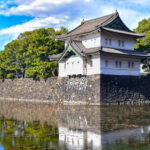


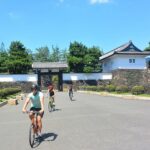

Stop 3: East Gardens and Edo Castle Ruins You Can Actually Walk Past

The final stop is the East Gardens of the Imperial Palace, part of the inner palace area and open to the public. This area is tied to the former site of Edo Castle, and the gardens include historical ruins, stone walls, gates, and landscaped paths.
What I like here is that you get to “see the layers.” Edo Castle is the backdrop for modern Imperial Palace grounds, and the tour helps you notice the physical remnants of that past. Stone walls and gates do more than look pretty. They anchor the story in material reality, especially when you’re walking past them rather than stopping for one photo.
You’ll also appreciate the pacing. Each stop is about 30 minutes, so you’re not overloaded with information at one location. By the time you reach the East Gardens, the earlier landmarks give you reference points. You can better understand what you’re seeing and why the guide is pointing things out.
Also, because admission for these stops is listed as free, your cost stays predictable. For a tour at this price point, that matters. You’re spending your budget on the guide and time, not entry fees.
The Guide Makes or Breaks It (Taro’s Hot-Day History)

This experience is only as good as the storytelling. The good news is that the guiding is repeatedly praised for being engaging and educational, even in tough conditions.
One highlight from an earlier outing was a guide named Taro handling an incredibly hot day while keeping the tour interesting and meaningful. That matters to you for two reasons:
- You’ll likely be outside and moving, so you want explanations that don’t feel like a lecture.
- When conditions get uncomfortable, you want a guide who can shift tone and keep the group engaged.
The reviews also mention that even when the palace was closed, the guides still showed visitors really nice places and gave good context. That’s what you should look for in a palace-area tour: flexibility and competence, not just a rigid script.
The tour is led in English, which is a huge practical benefit if your Japanese is limited. You’ll get enough detail to understand what you’re looking at, rather than relying on signage that may not match the exact angle the tour focuses on.
Price and Ticket Reality: Why This One Feels Like Value

The price listed is $0.39 per person. Even if you treat that as a promotional fare, it’s still a useful reality check: you’re getting a guided walk through major palace-area highlights with mobile ticket support and a small group limit.
Here’s how I think about value for this kind of experience:
- You’re paying for interpretation. Without a guide, palace grounds can feel like a beautiful but abstract place.
- You’re paying for time structure. Three stops over about 2 hours keeps you from wandering randomly.
- You’re paying for group control. Up to 8 travelers means you’re not competing for attention.
- You’re saving on admissions, since the stops listed show free entry.
In other words, the “cheap” part isn’t the point. The point is that the tour is built to be a low-friction way to understand what you’re seeing. If you like guided history in a walkable format, this is the rare deal where the guide effort is the main cost driver.
How This Tour Fits Your Day (And Who Will Enjoy It Most)
This tour is best for you if:
- You want a palace experience but don’t want to spend your whole day navigating on your own
- You like stories that connect places to centuries of power shifts
- You appreciate small groups and a guide-led pace
- You want English explanations focused on specific landmarks
It also suits people who want a calm reset in the middle of Tokyo. You’re in the heart of a busy city, but you’re walking through grounds designed for quiet, space, and perspective.
Who might find it less ideal? If you’re chasing maximum access or every possible interior area, remember the tour is built around the East Gardens and key palace-adjacent landmarks, and access can sometimes be restricted. This is a guided experience of what’s available and meaningful, not a guarantee of every closed-and-openable door.
Tips to Get the Most From a Hot Day in Palace Gardens
Based on what actually happened during a past outing, I’d plan for heat. Tokyo heat can be real. Even if the tour sounds scenic and calm, you’re still walking outdoors.
Here’s what helps:
- Wear light, breathable layers and shoes you can walk in comfortably
- Bring water and use breaks when your guide suggests them
- Have sunscreen and a hat if you’re going on a sunny day
- Take the guide’s lead on where to stand and look; it speeds up “understanding,” not just sightseeing
You’ll also get more from the tour if you treat it like a walking conversation. Ask a quick question if something clicks but you want more detail. With a small group, you’re more likely to get a real answer rather than a rushed one.
Should You Book Tokyo Imperial Palace: Guided Walking Tour of East Gardens?
If your goal is to understand the Imperial Palace grounds without getting lost in guesswork, I’d say yes. The big reasons are the small group size, the English-speaking guidance, and the focus on specific places like Sakurada Tatsumi Yagura and the East Gardens/Edo Castle ruin areas. The value is also hard to ignore at the listed price, especially since the stops you’ll cover are free to access.
Book this tour if you want:
- Guided context for major landmarks
- A structured 2-hour plan
- An easier way to connect Edo-era remnants to the present-day palace setting
I’d hesitate only if you’re solely chasing maximum access to closed-off palace interiors. This is designed around the East Gardens experience and the interpretation of key points within the grounds.
FAQ
How long is the Tokyo Imperial Palace East Gardens walking tour?
The tour runs for about 2 hours (approx.).
How many people are in the group?
This activity has a maximum of 8 travelers.
Is there an admission fee for the stops on the route?
The stops listed include free admission tickets.
What is the tour starting meeting point?
You meet at Starbucks Coffee – Kokyo Gaien Wadakura Fountain Park, 3-1 Kōkyogaien, Chiyoda City, Tokyo 100-0002.
Where does the tour end?
The activity ends back at the meeting point.
Do I need a paper ticket?
You can use a mobile ticket.
When will I receive confirmation after booking?
Confirmation is received within 48 hours of booking, subject to availability.
Can I cancel and get a refund?
Free cancellation is available. You can cancel up to 24 hours in advance for a full refund.