REVIEW · TOKYO
Tokyo Ikebana, Japanese Traditional Flower Arrangement Experience
Book on Viator →Operated by Attractive JAPAN · Bookable on Viator
Flowers become geometry in this Tokyo class. I love how beginner-friendly the teaching is, and I love that you work with seasonal local flowers instead of generic stems.
In about an hour, you learn the core ideas behind ikebana, then make your own arrangement with a teacher checking your work. One thing to consider: this is a tight 1 hour 10 minutes session, so you’ll finish one arrangement (not a whole day of flower practice).
In This Review
- Quick hits before you go to 一葉式いけ花本部
- Ikebana basics in plain terms: charms, angles, and style
- From lesson to your arrangement: a hands-on build with feedback
- What happens at the meeting point in Nakano (and how to not stress)
- Teachers and teaching style: patient coaching for your first try
- Price and time: does $67.28 feel worth it?
- What to wear, do, and ask during your class
- Should you book Tokyo Ikebana? (My practical take)
- FAQ
- How long is the Ikebana experience?
- Where do I meet for the class?
- Do I need to bring flowers or equipment?
- Is this experience suitable for beginners?
- What is the maximum group size?
- What are the age requirements?
- Can I cancel or change the booking?
- Can the instructor come to my hotel?
Quick hits before you go to 一葉式いけ花本部
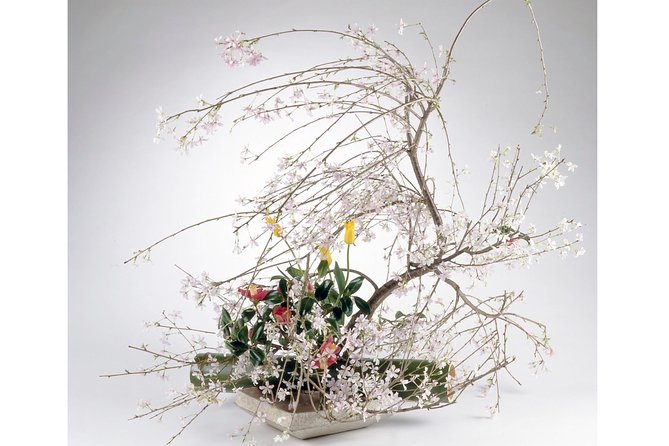
- Beginner-focused instruction that meets you where you are, even if it’s your first time
- Hands-on making after a clear basics lesson, not just watching
- Seasonal local flowers used in the class, so your arrangement feels current
- Small group size with a maximum of 10 people, which keeps it personal
- Plenty of photos during and after you finish, so you can remember the process
Ikebana basics in plain terms: charms, angles, and style
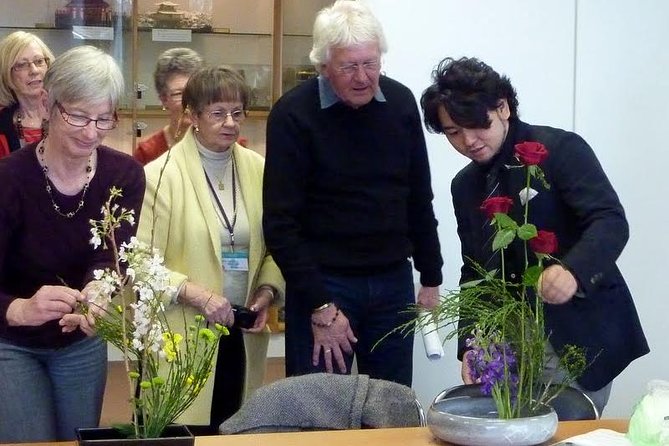
Ikebana can sound fancy, but the class approach is refreshingly practical. You’ll start with the idea that the most important part is not filling space with flowers. It’s bringing out the beauty of each material—flowers, plants, and the vase—so everything looks intentional.
The teacher explains how different styles create different effects. You learn what angles tend to look attractive and how to combine materials so the arrangement reads well from different directions. This is one of the reasons the class feels like more than a craft. It’s design thinking with plant materials.
From the instruction you’ll get, the big takeaway is that arrangement is about control. You’re shaping lines and movement. You’re making choices that feel balanced. And you’re learning why small adjustments matter—like where a stem leans, or how height changes the mood.
There’s also a history thread woven in. You’ll hear that ikebana was part of Japanese culture going back to samurai-era participation. That context helps the lesson feel less like a souvenir workshop and more like a living tradition.
You can also read our reviews of more tours and experiences in Tokyo.



From lesson to your arrangement: a hands-on build with feedback
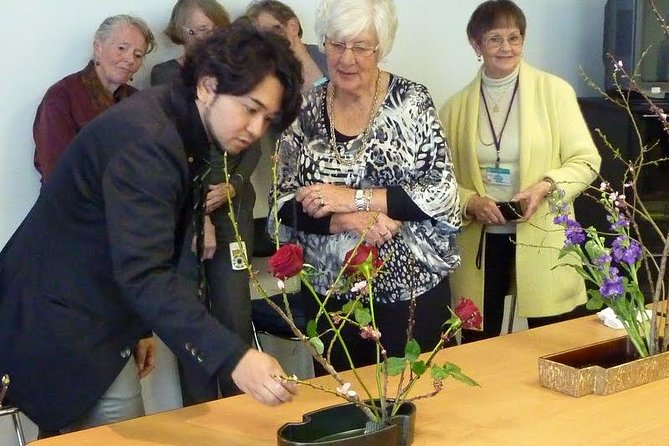
After the basics, you switch from listening to doing. You craft your own creation using what the class provides. The teacher guides you as you work, so it doesn’t become a stressful free-for-all.
You’ll also get a moment of quality control at the end. The instructor looks at your arrangement and gives advice on how to improve it. That feedback is a big deal for beginners. Instead of guessing whether your choices look right, you get direction while it’s still easy to fix.
One of my favorite parts of the setup is the material choice. The flowers used are local and in season. That means you’re not just copying generic “pretty bouquet” rules. Your arrangement reflects what’s actually growing and available at that time—so the result tends to look more natural and more special.
When you’re finished, you’ll have time for photos. This matters more than it sounds. Ikebana is about form—lines, negative space, and balance. A few good pictures help you remember what you aimed for, and what you’d adjust next time you practice at home.
Then you get to take the learning with you. Ikebana can be made with flowers from all over the world, and that’s part of why people outside Japan keep practicing it. You can use the same principles even when the ingredients change.
What happens at the meeting point in Nakano (and how to not stress)
Your class starts at 一葉式いけ花本部 at 4-chōme-20-5 Nakano, Nakano City, Tokyo 164-0001. The good news: it’s near public transportation. So you’re not trapped in a location that requires a complicated taxi plan.
In the practical world, where things get easier is timing and group size. This experience is capped at 10 travelers, so you’re less likely to feel like you’re sharing the teacher’s attention with a crowd. Reviews also point to the venue being easy to find, which is a nice change from the usual Tokyo “walk around for 30 minutes with your map app” game.
You’ll use a mobile ticket, which keeps things simple on arrival. You also get confirmation within 48 hours of booking, subject to availability, so you’re not left in limbo the whole time.
One helpful detail: the instructor can be sent to any hotel you stay in Tokyo. If you’re staying in a place that’s easy to reach by car or is just more convenient for you, this can save energy. It’s not always something you want, but it’s a real option if you’d rather start the experience without navigating the city first.
Small school etiquette matters here. You should keep your valuables and belongings by yourself. And you’re responsible for any accident or injury during the experience. That doesn’t mean you should be scared—it just means treat it like a real hands-on class, not a casual photo stop.
Teachers and teaching style: patient coaching for your first try
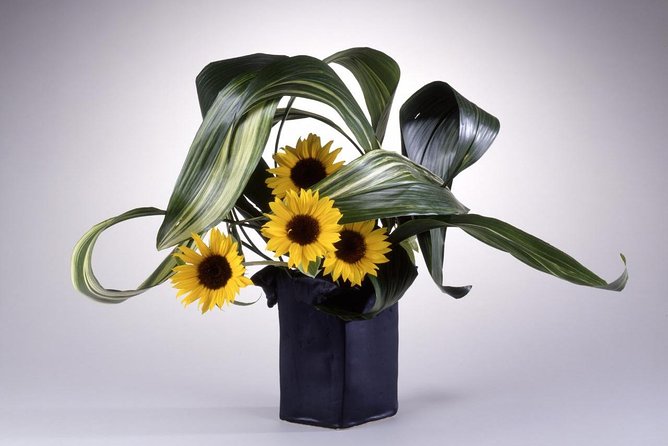
One of the most praised parts is how the teacher blends explanation with making. You’re not just handed stems and told to go. You get history and philosophy, but you also get geometric and practical guidance about shape and movement.
Depending on the class day, you may learn with instructors who include names like Naohiro Kasuya (often mentioned) and Mrs. Shimakawa. Regardless of who’s teaching, the tone that shows up in the feedback is consistent: patient, supportive, and enthusiastic.
If you’re worried about language, don’t overthink it. You might find the instructor’s English varies (there’s at least one example of an instructor apologizing for English), but the teaching is hands-on and the guidance is clear enough to follow.
Also, don’t be surprised if the teacher helps you connect the lesson to Tokyo events. One class included pointers about an ikebana show the next day, and that kind of recommendation is gold. It’s a simple way to keep your experience from ending when you leave the building.
Price and time: does $67.28 feel worth it?
At $67.28 per person, this isn’t the kind of bargain workshop where you pay cheap and get a half-finished craft. You’re paying for guided learning plus the materials that would normally cost money on their own.
The biggest value driver is that flowers and equipment are provided, and you use seasonal local flowers. That changes the feel. You’re not building something with whatever scraps are available. You’re working with what the class is designed to teach with.
Duration matters, too. At about 1 hour 10 minutes, you get a complete cycle: basics, arrangement creation, instructor feedback, and photos. It’s enough time to learn something you can repeat, without dragging into a longer commitment that competes with sightseeing plans.
One more practical note: on average, this is booked about 16 days in advance. In other words, it’s not “wait until the last minute and hope.” If you want a specific time window, it’s smarter to book earlier rather than gambling on walk-in availability.
Who gets the best outcome? Beginners, first-timers in Japan, and people who love hands-on culture that isn’t just a demo. It also works well as a focused solo activity. Some classes have an intimate feel, even if they’re designed for small groups.




What to wear, do, and ask during your class
This is not a class where you need special supplies. You should, however, show up ready to move a bit and focus on details.
Here’s what I’d do to get the most out of the hour:
- Wear comfortable clothes so you can sit and adjust without fuss.
- Bring your phone, and plan to take photos during the time you’re encouraged to shoot. Ikebana looks better in pictures when you capture angles from different sides.
- Ask one clear question early. Something like what angle the teacher thinks will improve your line. Getting that answer while you’re still building saves time later.
- Watch how the instructor adjusts stems, even if you’re nervous. The corrections teach you the logic behind the style.
- Take in the small design rules, not just the final look. The goal is that you’ll be able to repeat the approach when you’re back home.
If you’re the type who loves structure, you’ll probably appreciate the blend of history, philosophy, and geometry. If you’re the type who just wants to make something pretty, you’ll still leave with an arrangement that looks intentional—not random.
Should you book Tokyo Ikebana? (My practical take)
Book it if you want a short, meaningful cultural activity in Tokyo that stays hands-on the whole time. This class is set up for beginners, uses seasonal local flowers, and gives you real feedback while you’re working. For $67.28, you’re paying for instruction plus materials, not just a seat.
Skip it or rethink it if you’re hoping for a long, multi-arrangement course. This is one arrangement in one session. Also, if you need flexible change options, note that the booking is not treated like a casual appointment. You’re making a commitment.
If you’re choosing between “another museum” and “a skill you’ll remember,” I’d lean skill. An ikebana lesson doesn’t just fill time in Tokyo. It gives you a practice you can actually take home.
FAQ
How long is the Ikebana experience?
The class runs for about 1 hour 10 minutes.
Where do I meet for the class?
You’ll meet at 一葉式いけ花本部, 4-chōme-20-5 Nakano, Nakano City, Tokyo 164-0001, Japan.
Do I need to bring flowers or equipment?
No. Flowers and equipment/materials are provided, and the experience is designed so you don’t need to bring anything.
Is this experience suitable for beginners?
Yes. It’s designed for people who are 6 years old and over and focuses on learning the basics of ikebana. The instructor teaches according to your level.
What is the maximum group size?
The experience has a maximum of 10 travelers.
What are the age requirements?
The program is for people 6 years of age and over. Children aged 12 years and younger must be accompanied by a parent.
Can I cancel or change the booking?
No. The experience is non-refundable and cannot be changed for any reason.
Can the instructor come to my hotel?
Yes. The instructor can be sent to any hotel you stay in Tokyo.