REVIEW · TOKYO
Tokyo GINZA: KONPARU Japanese Cabaret Show with Drink
Book on GetYourGuide →Operated by FORREST FOODING · Bookable on GetYourGuide
Ginza goes full cabaret after dark. KONPARU in Japan’s top nightlife area turns a luxury storefront neighborhood into a stylish stage night, with dancers who mingle for photo time before the show and an all-you-can-drink setup that keeps things relaxed. One thing to think about: the experience is fun, but the quality of food/drinks can be hit-or-miss depending on what you order.
I like that the show isn’t performed in Japanese, so you’re not stuck decoding language while the lighting and stage effects do the heavy lifting. Dancers of different genders also help make the evening feel open and welcoming, and the overall vibe is clearly audience-friendly.
If you’re aiming for a quiet, seated dinner with predictable pacing, this isn’t that. It’s a nightlife performance first, with food and drinks as the supporting cast.
In This Review
- Key things to know before you go
- Ginza at night: why this location actually matters
- Finding KONPARU: the basement floor setup
- Door open and photo time: the best part starts immediately
- The evening flow: how 2 hours usually feels
- The KONPARU cabaret show: costumes, story, and stage lighting
- Drinks and snacks: what the all-you-can-drink really means
- The a la carte menu: fun add-ons, not guaranteed perfection
- Showtimes in Tokyo: picking the slot that fits your night
- Who this is best for (and who should skip it)
- Practical rules: what to expect inside the room
- Price and value: is $50 worth it?
- Should you book KONPARU in Ginza?
- FAQ
- FAQ
- Where is the meeting point for Tokyo GINZA: KONPARU?
- How long is the experience?
- What is included in the price?
- Are meals like dinner included?
- What time do I need to arrive?
- What showtimes are available?
- What language is the show performed in?
- Is this suitable for kids?
- Are there restrictions on recording?
Key things to know before you go
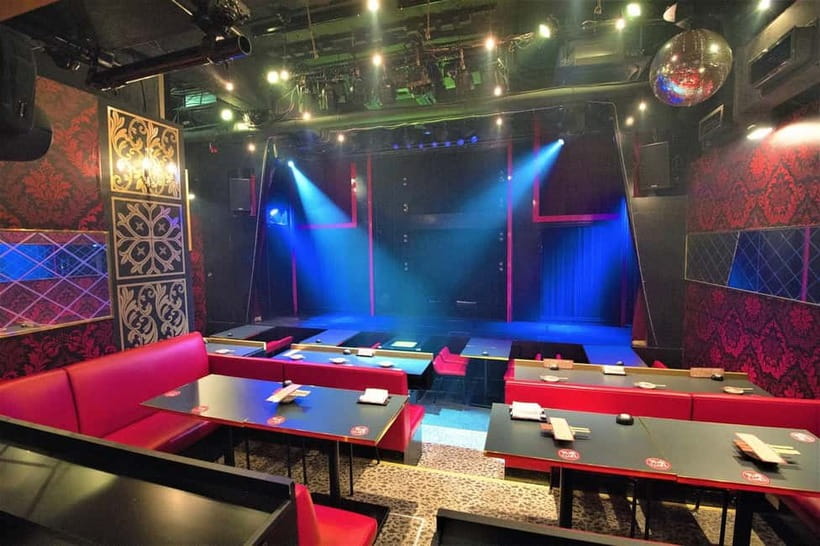
- Dancers mingle early: You can take pictures with them from the moment you enter until the show begins.
- Small group feel: Limited to 6 participants, so the room doesn’t feel huge or impersonal.
- Show is non-Japanese: The performance is not in Japanese, which makes it easier to enjoy regardless of language.
- 50 minutes of stage performance: The cabaret runs about 50 minutes with a mix of traditional costume scenes and story bits.
- Two daily showtimes plus limited runs: Choose from evening slots, or a limited-time earlier performance on select days.
- Add-on dining is optional: Snacks are included, but the wider menu is a la carte.
Ginza at night: why this location actually matters

Ginza is one of those parts of Tokyo where daytime is all glass-and-brand-store polish. Then evening hits and the area becomes a major nightlife hub. That contrast is part of the appeal here: you’re trading a designer shopping street for a theater night that feels like a different world, but without leaving central Tokyo.
Also, because Ginza is so well-known, you’re less likely to wonder where you are. Even if you’re navigating Tokyo for the first time, you can anchor yourself to Ginza and plan the rest of your evening around it.
You can also read our reviews of more tours and experiences in Tokyo


Finding KONPARU: the basement floor setup
This experience is in the basement floor of a flower shop called Organic Market Fleur. You’ll go down the stairs from a private entrance, then check in at the front desk.
That detail matters because basement venues can feel tricky if you arrive late. The guidance is to arrive at least 30 minutes before the show start time you picked, since door open is your check-in and food/drink window. If you show up right at the start time, you’ll miss the part that makes this night special: getting settled, ordering drinks/snacks, and being ready for photos with the performers.
Door open and photo time: the best part starts immediately
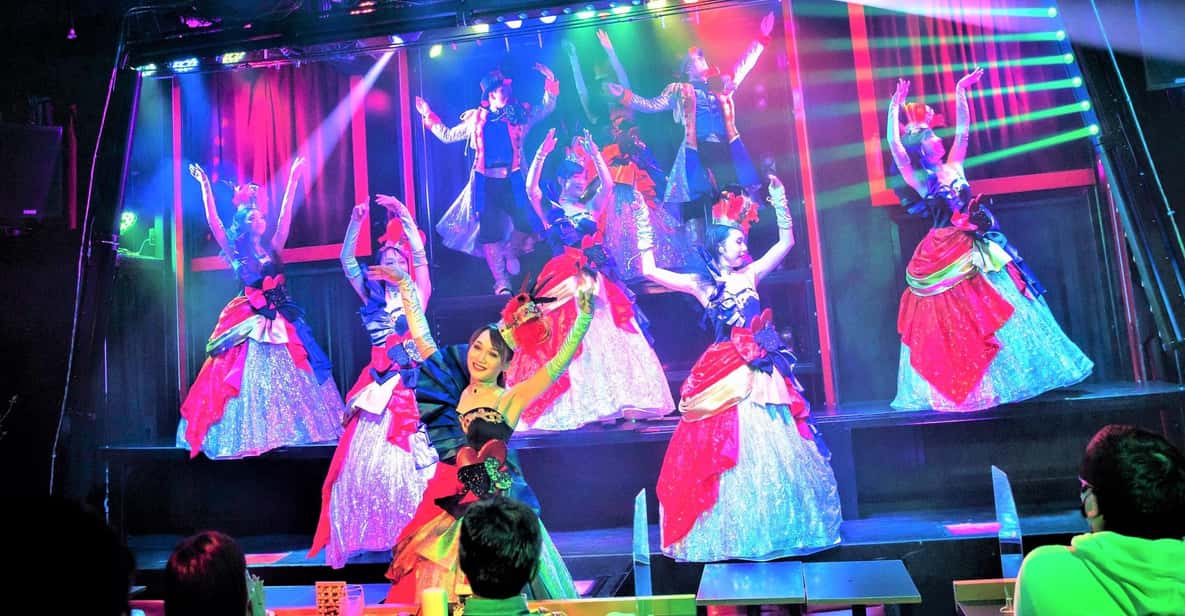
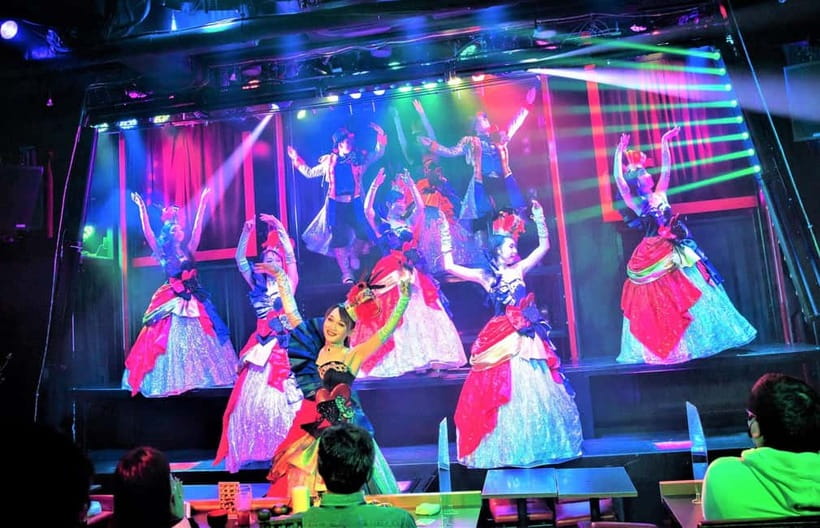
Once the doors open, the night shifts gears fast. From admission until the show starts, dancers are in the audience area, not hidden behind a curtain. You can take pictures with them during this pre-show window.
This is a big deal for value and vibe. Many shows make you wait until the performance starts, and you never really connect with the performers. Here, the early access turns it into a more personal night out—less “watch and leave,” more “spend time with the cast before the lights go down.”
You also get time for drinks and snacks during this window, so you’re not stuck rushing through your ordering while the show is already happening.
The evening flow: how 2 hours usually feels
The total experience length is listed as 2 hours, but the performance itself is about 50 minutes. So you’re really booking an evening rhythm:
- Door open → drinks/snacks → photos
- 50-minute cabaret show
- Greetings from the performers
- You still have time to settle in without feeling frantic
The pacing is built around that pre-show access. If you’re the kind of person who likes to know what’s coming next, you’ll appreciate this structure: it’s not just a show ticket, it’s an evening.
The KONPARU cabaret show: costumes, story, and stage lighting
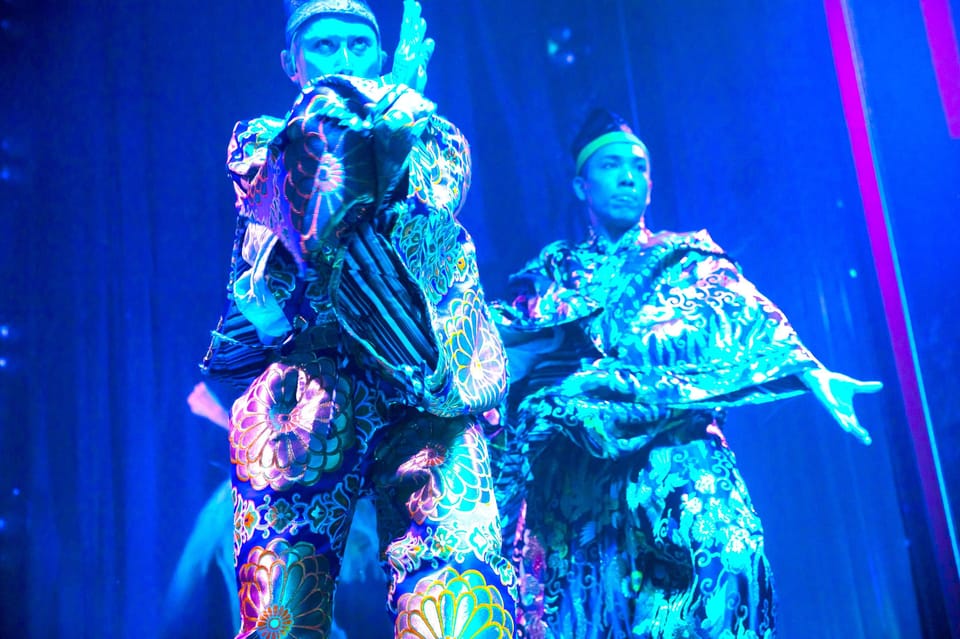
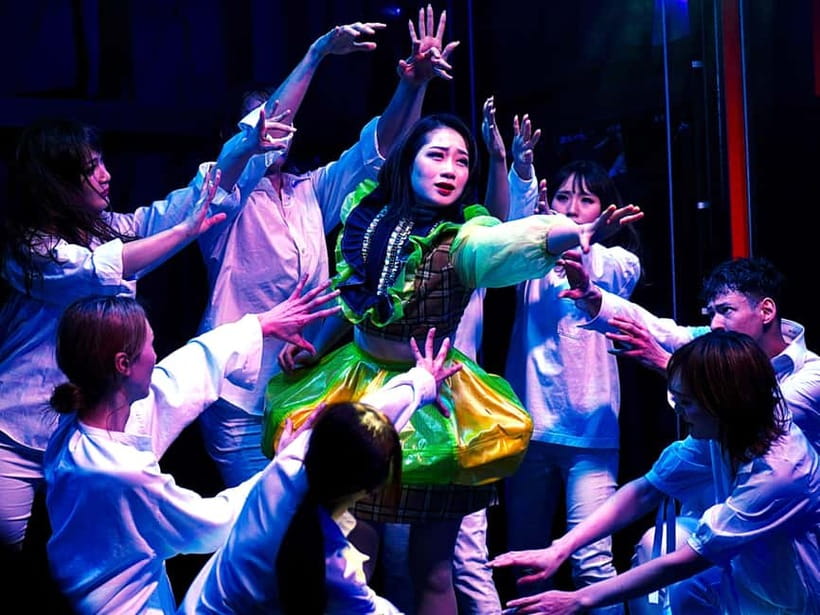
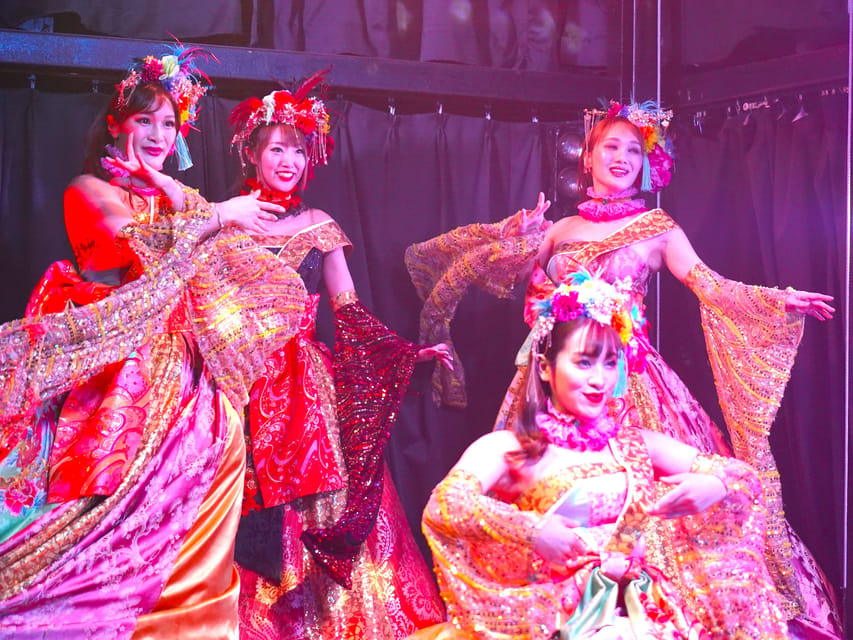
The show features professional Japanese dancers performing a Japanese-style cabaret with a moving stage and well-planned lighting. Even though the performance isn’t in Japanese, the content spans from traditional costume dance to scenes that tell a story.
That combination is what makes it worth your time. Traditional costumes give you cultural texture, while the story scenes give the performance momentum. The lighting and staging do a lot of the communication, so even if you don’t follow every beat in words, you can still follow the mood and transitions.
Dancers of various genders perform, and that variety is part of what makes the show feel modern and inclusive, not like a single-note revue.
One practical note: there are mixed comments about pacing and perceived time. The official performance is 50 minutes, but one comment mentioned it felt closer to 30 minutes (while still praising the friendliness). To protect your expectations, plan for the show to take the full time listed, and treat any shorter feeling as an audience-room timing issue rather than a guarantee your night will run short.





Drinks and snacks: what the all-you-can-drink really means
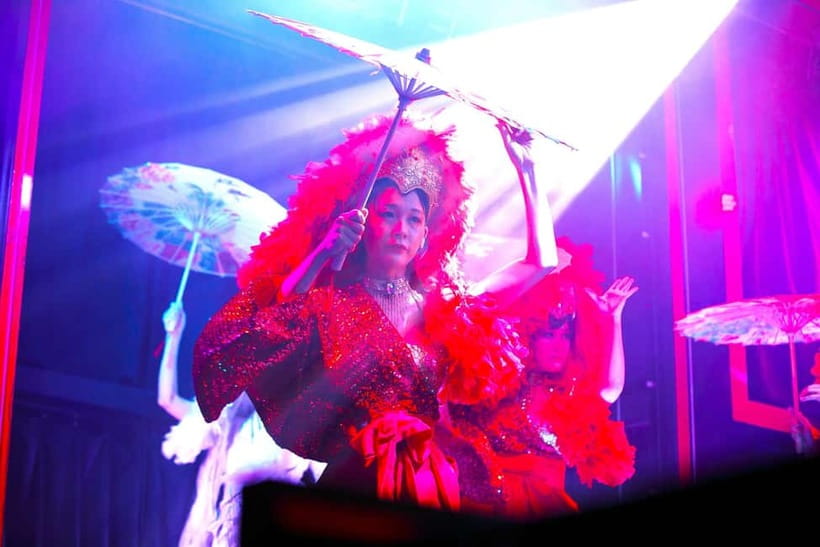
You get all-you-can-drink during the time included, plus snacks. The appeal is obvious: you can focus on the show without repeatedly requesting refills.
From a value standpoint, this matters because Ginza nights can get expensive quickly once you start adding drinks à la carte. Here, the drinks are bundled into your evening package, so you can control your budget.
What you should do:
- Stick to included snacks and take your time during the pre-show period.
- If you want to experiment, treat extra food as optional rather than essential.
- If you’re sensitive to food/drink quality, keep your expectations flexible—there’s at least one note that the food and drinks weren’t impressive.
The a la carte menu: fun add-ons, not guaranteed perfection
You can order additional food from the restaurant, but those charges aren’t included in your ticket.
That’s perfect for people who like options. If you’re hungry before the show, you’ll have a way to top up without leaving the venue. If you’re already full or prefer light bites, you can stay with the included snacks and keep the evening simple.
Just keep in mind: one experience note pointed to food quality concerns. That doesn’t mean the whole menu is bad, but it does mean you shouldn’t plan your night around expecting a high-end dining masterpiece. The core product here is the show and atmosphere.
Also, if you have gluten intolerance, this experience isn’t suitable. Plan your evening around a different meal choice if gluten is an issue for you.
Showtimes in Tokyo: picking the slot that fits your night
There are two main showtimes each day, plus a limited-time earlier show on some days.
Common options:
- Door open 6:00 pm, show starts 7:30 pm
- Door open 9:00 pm, show starts 10:00 pm
There’s also:
- Limited-time show: door open 3:00 pm (food and drink time), show starts 4:30 pm (on limited days only)
Which one should you choose?
- If you want an easy dinner-and-a-show plan in Ginza, the 7:30 start tends to fit better.
- If you want a late-night performance after other Tokyo wandering, the 10:00 start works well.
- If you catch the limited-time earlier slot, it can be a great way to get a “Tokyo night” feeling without staying up super late.
Who this is best for (and who should skip it)
This is built for adults—children under 18 aren’t suitable. It’s also not a good fit for gluten intolerance, and there are limits mentioned for weight (over 309 lbs / 140 kg) and age (over 95 years).
It also isn’t an event for people who need audio recording, since audio recording isn’t allowed.
Who it suits:
- You want a fun, stylish performance in central Tokyo without complicated logistics.
- You like the idea of meeting the performers for photos before the show starts.
- You’re open to cabaret-style storytelling and costume changes.
- You want something LGBTQ friendly and comfortable for international visitors.
Practical rules: what to expect inside the room
No pets are allowed, and electric wheelchairs are not permitted. Audio recording is also not allowed.
You’ll be in a theater restaurant setup, so plan on being seated for the show, then mingling during the pre-show photo window. And because door open is your reservation time, treat it like part of the event, not just check-in.
Price and value: is $50 worth it?
At about $50 per person, you’re buying an evening package: admission, a 50-minute cabaret show, time with all-you-can-drink, snacks, performer greetings, and photo time with dancers.
That’s good value if you factor in how expensive drinks can get in Ginza and how many shows in Tokyo are purely performance-only. Here, the pre-show access and included drinks make the ticket feel more like a complete night out than a simple show entry.
The main “value risk” is food quality variability, since some cost is tied up in drinks/snacks and add-ons cost extra. So think of the food as secondary. The real reason to book is the performance and the early photo time.
Should you book KONPARU in Ginza?
Book it if you want:
- A compact evening (about 2 hours) in a prime Tokyo nightlife area
- A cabaret show with story scenes and traditional costume moments
- A chance to take photos with dancers before the show starts
- An all-you-can-drink package included with admission
Skip it if:
- You need gluten-friendly dining or you can’t follow the stated suitability limits
- You’re only interested in a top-tier meal and you’d be unhappy if food is just okay
- You’re looking for a quiet, family-style activity (this isn’t built for that)
If you can handle the adult, performance-first vibe, this is the kind of Tokyo night that feels different from the usual museum-and-temple routine.
FAQ
FAQ
Where is the meeting point for Tokyo GINZA: KONPARU?
It’s on the basement floor of the flower shop Organic Market Fleur. Go down the stairs from the private entrance and check in at the front desk.
How long is the experience?
The total duration is about 2 hours. The cabaret show itself lasts about 50 minutes.
What is included in the price?
Included are entrance to KONPARU, the 50-minute Japanese-style cabaret show, all-you-can-drink during the included time, snacks, performer greetings, and you can take pictures with the performers.
Are meals like dinner included?
Snacks are included, but additional foods on the restaurant a la carte menu are not included and cost extra.
What time do I need to arrive?
Your reservation time is the door open time. You should arrive at least 30 minutes before your chosen show start time.
What showtimes are available?
There are two daily showtimes: door open 6:00 pm with a 7:30 pm start, and door open 9:00 pm with a 10:00 pm start. There’s also a limited-time earlier show on limited days: door open 3:00 pm with a 4:30 pm start.
What language is the show performed in?
The show is not in Japanese, so it’s designed to be enjoyable for people from all over the world.
Is this suitable for kids?
No. Children under 18 years are not suitable.
Are there restrictions on recording?
Yes. Audio recording is not allowed.