REVIEW · TOKYO
Tokyo: Calligraphy on Kanji Fan & Scroll with Drink
Book on GetYourGuide →Operated by Shodocafe7557 – Kanji & Calligraphy Tokyo · Bookable on GetYourGuide
Tokyo calligraphy sounds fancy, but this class is simple and hands-on. In Roppongi, you’ll learn shodō at an easy pace, with your drink in hand and your own kanji artwork in progress.
What I like most is how the lesson turns brushwork into something you can actually do: basic strokes first, then real characters. I also love that you create multiple take-home pieces, including a personalized hanko stamp, not just one worksheet. The only drawback to keep in mind is that calligraphy does take practice, so you’ll want a little patience with yourself as the brush movements click.
In This Review
- Key things to know before you go
- Tokyo Calligraphy at Shodo Cafe 7557: why 80 minutes feels just right
- Getting to the studio from Roppongi Station (and not losing time)
- Your first lesson: brush strokes that actually make sense
- Choosing your kanji: your name, a favorite word, and the meaning behind it
- Making the uchiwa fan: turning a blank surface into a personal signature
- Making the kakejiku hanging scroll: the character you’ll want to frame
- The hanko stamp: a small object with a real Japanese purpose
- The matcha latte (or your drink): why the drink fits the activity
- All the take-home souvenirs: a bag of calligraphy you’ll actually use
- Price and value: what $53 really buys in Tokyo
- Who should book Shodo Cafe 7557, and who might not love it
- Should you book this Tokyo calligraphy workshop?
- FAQ
- Where is Shodo Cafe 7557, and how do I get there?
- How long does the workshop take?
- What’s included in the price?
- What can I write during the workshop?
- Can beginners take the class if they don’t know much kanji?
- Is the instruction in English?
- What drink options are available?
- What take-home items will I receive?
- If I book, can I get an animated video of my name in kanji?
- Is there free cancellation?
Key things to know before you go
- Roppongi location: just a few minutes from Roppongi Station, Exit 7, near the National Art Center area.
- 80 minutes, active learning: you’ll practice brush strokes and apply them right away.
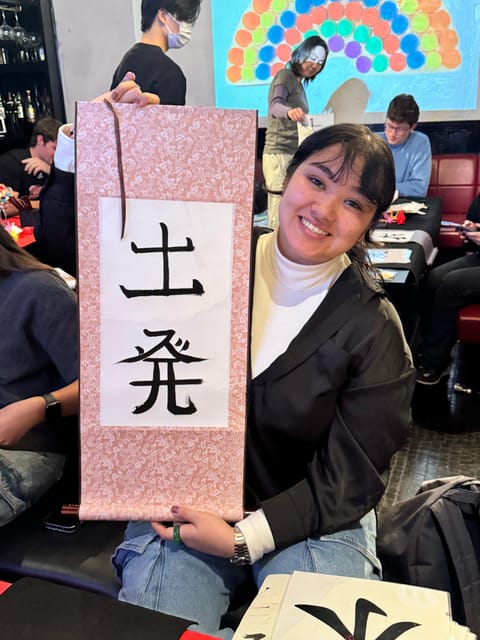
- Two main art projects: you’ll make a kanji fan (uchiwa) and a hanging scroll (kakejiku).
- Personal hanko stamp: you take home a hiragana stamp of your name.
- More than one souvenir: you also get extra calligraphy items like a keychain, coaster, pouch, and tote bag.
- English instruction: guidance is available in English, with support that helps beginners catch on fast.
Tokyo Calligraphy at Shodo Cafe 7557: why 80 minutes feels just right
If you want a Tokyo activity that’s calm, creative, and not crowded, this is one of those rare workshop formats that stays focused. You’re not rushing through “see and pose.” You’re making something—then taking it home—while you learn what makes Japanese brushwork look the way it does.
The session runs about 80 minutes, though it can vary between 60 minutes and 2 hours. That range matters because you’re not just watching: you’re practicing enough to feel your own strokes improving, even if kanji isn’t your strength right now.
You’ll also get the calligraphy mindset. Shodō isn’t only about accuracy. It’s about control, pressure, and rhythm. With a drink like matcha latte included, the pace stays relaxed instead of intense.
You can also read our reviews of more tours and experiences in Tokyo.



Getting to the studio from Roppongi Station (and not losing time)
This is one of the easiest creative workshops to reach in central Tokyo. From Roppongi Station (Toei Oedo Line, Exit 7), you’ll cross the street toward FamilyMart, turn right, and head in the direction of the National Art Center.
Keep an eye out for a large crane sign on your left. The studio is on the 2nd floor of the Crest Roppongi Building, and it’s along Bijutsukan Dori (museum street). If you prefer to work smart, search for Shodocafe7557 in Google Maps and follow the on-screen route.
Taxi use is also straightforward: you can show the driver Shodo Cafe 7557 in Crest Roppongi building, near the National Art Center Tokyo.
Why this matters: when a workshop is short, transportation should be the easy part. Here, the directions are direct, and you’re not dealing with transfers or long walks.
Your first lesson: brush strokes that actually make sense
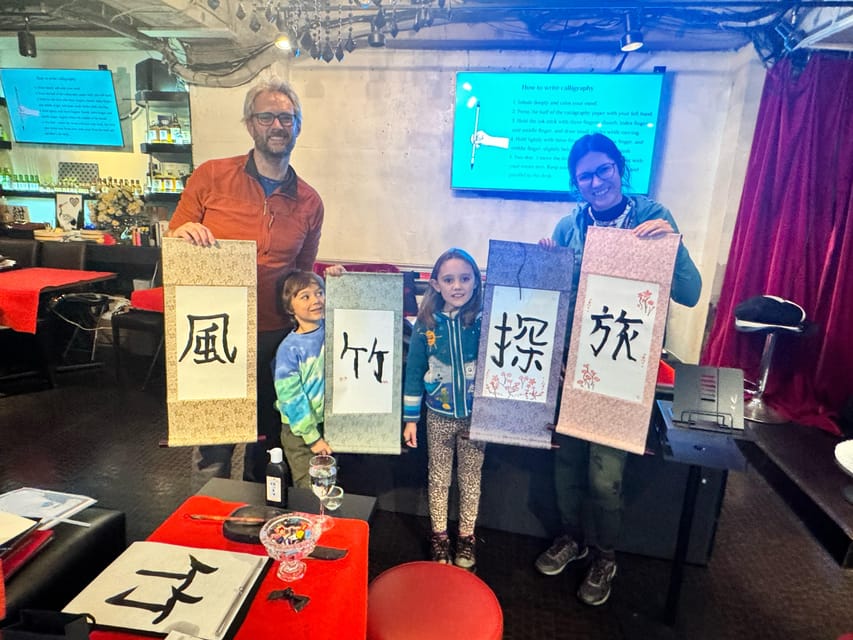
Most calligraphy classes jump straight into finished characters. This one starts with the pieces that help you succeed: basic brush strokes and how to control them.
Expect instruction in English, plus guidance on the tools and how to hold the brush. The focus isn’t on being perfect on the first try. It’s on learning how to shape each stroke—because a character is built from stroke behavior, not magic.
A big theme here is meaning. You’ll learn that each character connects to how it’s written. That’s why the class works well even if you can’t read kanji yet. You’re building the physical skill and then attaching it to the character you chose.
The tone from the instructors is consistently described as patient and encouraging, which is a big deal if your handwriting is usually better on a keyboard than on paper. When you’re allowed multiple practice attempts, your confidence improves fast.
Choosing your kanji: your name, a favorite word, and the meaning behind it
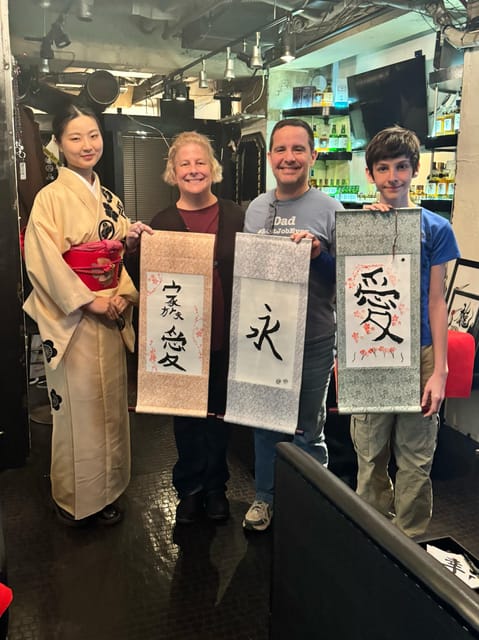
Before the finished artwork appears, you’ll choose what you want to write. The class can include writing your favorite word in kanji or your translated name. That flexibility helps because it changes the motivation: writing a meaningful word is less stressful than trying to copy something random.
There’s also an extra layer if you share names in English during booking. The studio prepares a special souvenir: an animated video of your name in kanji. You’ll receive it during the workshop or afterwards.
One practical tip: if you have multiple people in your group, make sure you send the names for everyone. There’s an emphasis on preparing personalized sheets, including name meaning, so giving clean spellings upfront helps.
Making the uchiwa fan: turning a blank surface into a personal signature
Your first major creation is the uchiwa, a traditional paper fan. This is a surprisingly good canvas for beginners because it’s bold and forgiving: you’re writing a character or chosen kanji on a visible surface that rewards good stroke shape.
The instructor guidance matters here. Brushwork changes depending on pressure and angle, and those two details are exactly what beginners need to see in action. After the basics, you’ll practice and then produce your final fan writing.
What you’ll feel: calligraphy looks delicate, but it’s actually physical. When you get the hang of one stroke, the rest starts to feel more consistent. And because the fan is one of the most “Japan” objects you can carry, it becomes a souvenir you’ll actually remember when you open your suitcase.






Making the kakejiku hanging scroll: the character you’ll want to frame
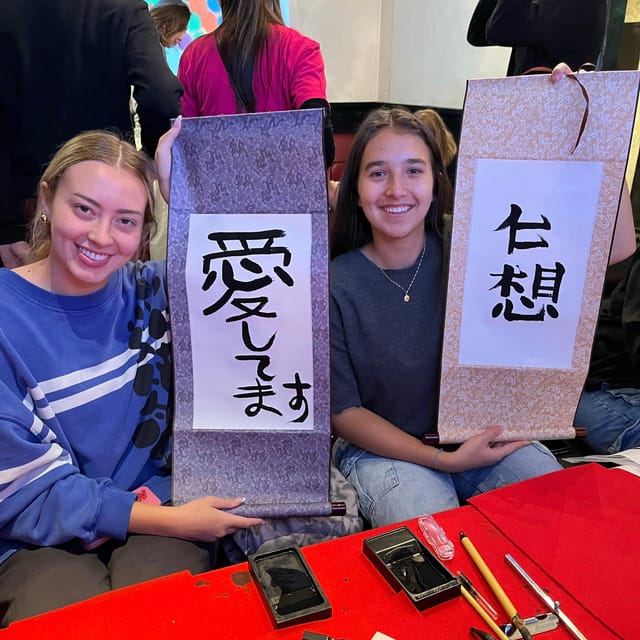
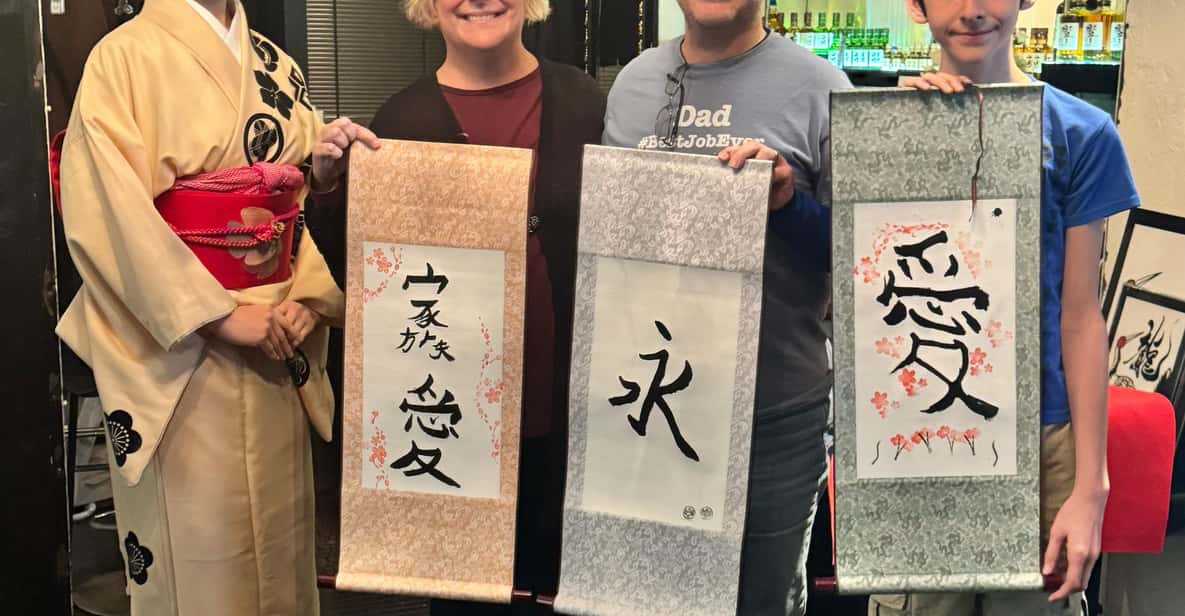
Next up is the kakejiku, the hanging scroll. This is where brush strokes show themselves at full height, and your character ends up looking like a finished artwork instead of a practice piece.
The scroll project usually includes guided practice before you commit to the final writing. That matters because a scroll character needs balance. One heavy stroke or shaky line can throw off the feel.
If you’re a kanji lover, you’ll probably enjoy this part the most. You’re not only copying. You’re shaping. And because you’re learning the meaning behind the character, it’s easier to appreciate the result beyond decoration.
Practical note: treat the scroll gently afterward. You’ll have multiple items in your take-home bag, and this one is the largest “final” piece you’ll want protected on the way back to your hotel.
The hanko stamp: a small object with a real Japanese purpose
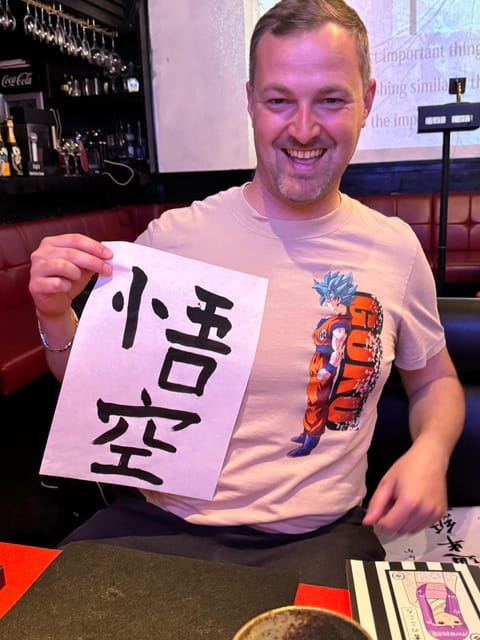
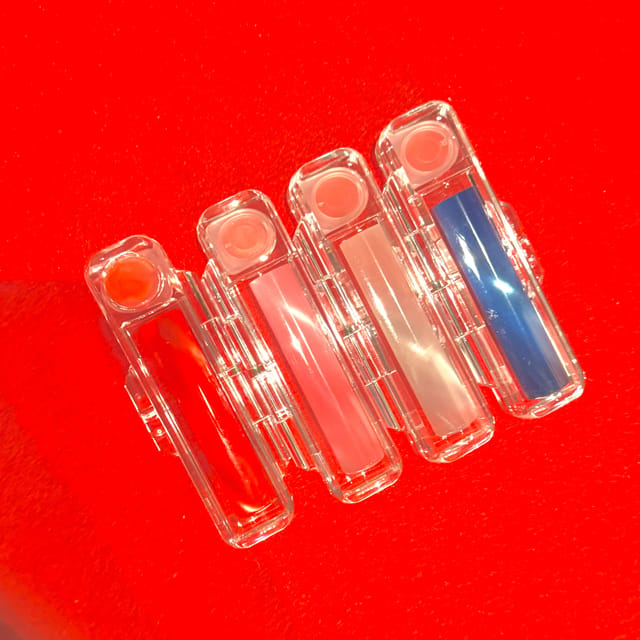
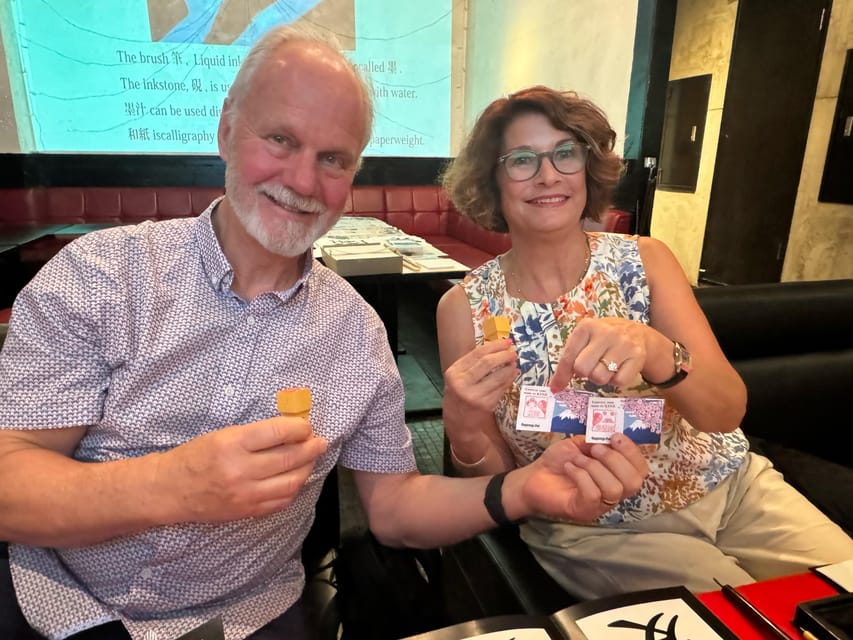
Then there’s the star practical souvenir: your own hanko stamp, made as a hiragana stamp of your name. This isn’t just a craft token. A hanko is deeply connected to Japanese identity and documentation culture, so it feels more meaningful than a generic keychain.
You’ll create it during the workshop. The stamp gives you something you can use, not just hang up. Even if you just use it for fun on postcards or gifts, it becomes a conversation starter.
One reason this is a strong value: you’re getting both the aesthetic (fan and scroll) and the functional (stamp), so the workshop doesn’t end when you leave the studio.
The matcha latte (or your drink): why the drink fits the activity
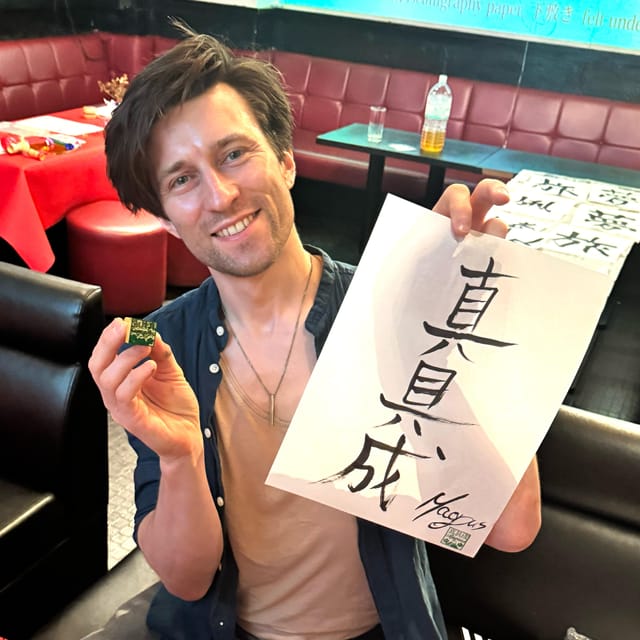
Your class includes a drink such as matcha latte, green tea, coffee, soda, or beer. It’s not just a free beverage. The drink helps set the right mood for shodō, which is meant to be meditative and slow.
Matcha is the obvious pairing because it matches the calm focus of the brushwork. Still, the menu flexibility is smart: if you don’t want matcha, you can choose a different included drink and keep the experience comfortable.
Also, the workshop rhythm stays more human when you’re not hungry. You can sit, practice, pause, and adjust without feeling like the schedule is “eat then rush.”
All the take-home souvenirs: a bag of calligraphy you’ll actually use
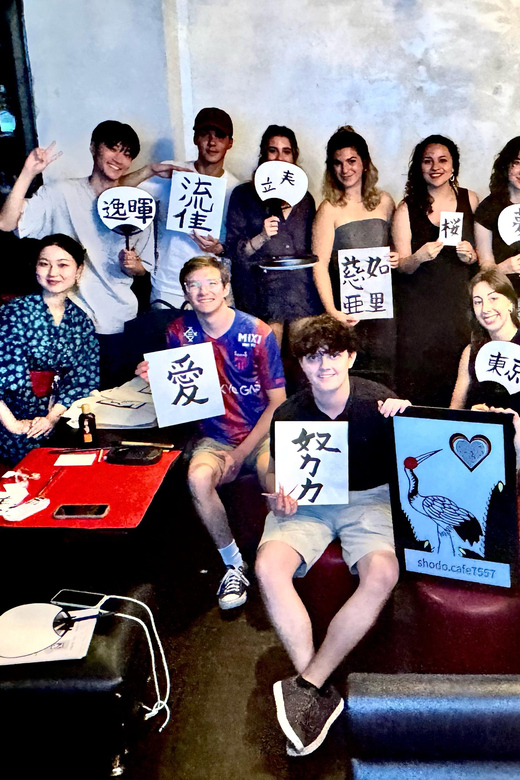
The workshop doesn’t end with one finished piece. You’ll take home the main projects plus several extras. Expect items like:
- Your original kakejiku (hanging scroll)
- Your original uchiwa (paper fan)
- A personalized hiragana hanko stamp
- Calligraphy extras such as a kanji tote bag, kanji keychain, kanji coaster, and a kanji pouch
There’s a pattern in the feedback: people often come away impressed by the sheer amount of usable items. That’s not just marketing fluff. For a short class at this price, getting multiple physical souvenirs is what makes it feel complete.
Why it’s good value for you: you’re not trying to “justify” one tiny piece of paper. You leave with objects that fit different parts of your travel life—something to carry, something to write with, and something to display at home.
Price and value: what $53 really buys in Tokyo
At about $53 per person for a roughly 80-minute workshop, the question is: is it worth it for what you get?
Here’s the honest way to think about it. This isn’t a museum ticket where you pay for passive viewing. You’re paying for:
- instruction in English
- practice time with guidance
- multiple finished art items
- included drinks
- a personalized hanko stamp
- additional calligraphy goods (keychain, coaster, pouch, tote bag)
So you’re not only paying for the lesson. You’re paying for the finished souvenirs and for someone to help you produce them without guessing.
If you’re the type who values “one strong activity” over doing five quick ones, this has a good cost-to-memory ratio. You’ll likely remember it longer than another indoor activity that just gives you photos.
Who should book Shodo Cafe 7557, and who might not love it
This workshop suits a wide range of people. If you’re traveling with kids, it’s a creative, structured activity that doesn’t require advanced reading skills. If you love kanji, it gives you a chance to work with characters in a guided way instead of just admiring them.
Beginners often find it easier than they expect because you start with basic brush strokes and build from there. You’re also not limited to one character. You can pick a favorite word or your name, which keeps you engaged.
One caution: calligraphy isn’t instant. You’ll need a little patience while you find control with the brush. If you only want quick, low-effort crafts, you might feel the practice phase is too real.
There’s also one clearly stated limit: it’s not suitable for people over 95 years.
Should you book this Tokyo calligraphy workshop?
If you want a Tokyo workshop that combines calm learning, hands-on craft, and souvenirs with real meaning, I’d book it. The best reasons are practical: English support, short duration, a drink included, and multiple take-home items including a personalized hanko stamp.
You should pass if you dislike practicing anything physical with your hands, or if you only want something you can finish in minutes. But if you’re open to learning a skill you can build on, this is a great use of time in Roppongi—central, easy to find, and satisfying when you walk out holding your own kanji.
FAQ
Where is Shodo Cafe 7557, and how do I get there?
It’s in the Crest Roppongi Building, 2nd floor. From Roppongi Station on the Toei Oedo Line (Exit 7), cross toward FamilyMart, turn right to National Art Center, enter Bijutsukan Dori, and look for a large crane sign on your left.
How long does the workshop take?
The experience lasts about 80 minutes. It’s stated that the activity can range from 60 minutes to 2 hours.
What’s included in the price?
You’ll get the calligraphy lesson, calligraphy tools, an included drink (matcha latte, green tea, coffee, soda, or beer), and supplies for your projects. Souvenirs include a hiragana hanko stamp of your name plus kanji-themed items like a keychain, coaster, pouch, and tote bag, along with your original fan and hanging scroll.
What can I write during the workshop?
You can write your name (or a translated version of your name) or a favorite word in kanji, depending on what you choose.
Can beginners take the class if they don’t know much kanji?
Yes. It’s designed for beginners and also welcomed by people who love kanji. You’ll learn basic brush strokes first, then write your chosen character.
Is the instruction in English?
Yes. The instructor provides guidance in English.
What drink options are available?
Included options are matcha latte, green tea, coffee, soda, or beer.
What take-home items will I receive?
You’ll take home your original kakejiku (hanging scroll) and uchiwa (fan). You’ll also receive a personalized hiragana hanko stamp of your name and additional kanji items such as a keychain, coaster, pouch, and tote bag.
If I book, can I get an animated video of my name in kanji?
Yes. If you provide the names of all participants in English when booking, the studio can prepare an animated video of your names in kanji, delivered during the workshop or afterwards.
Is there free cancellation?
Yes. You can cancel up to 24 hours in advance for a full refund.