REVIEW · TOKYO
Tokyo: Asakusa Temple & Shrine Walking Tour with Local Guide
Book on GetYourGuide →Operated by Sunrise Adventure · Bookable on GetYourGuide
Temple smoke and river views in one walk. This Asakusa Temple & Shrine tour in Tokyo’s old district is interesting because you go beyond sightseeing and practice real Shinto and Buddhist customs with a friendly local guide. I especially like the small-group size (up to 8), which makes it easy to ask questions, and the hands-on rituals like temizu, omikuji, and incense offerings that help you understand what you’re seeing. One consideration: the route is not suitable for wheelchair users or people with mobility impairments, and it involves steady walking.
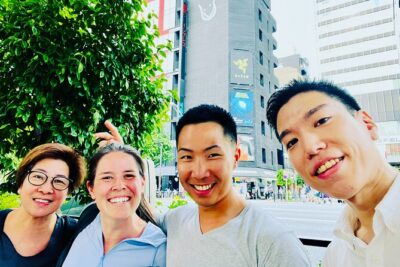
You’ll start with big, easy landmarks and then get guided toward the quieter, spiritual corners that most first-time visitors miss. Guides such as Nico/Nicolas, Erik, Joe, Lino, Nana, and Ayaka are repeatedly praised for clear English explanations and patience, including for families and kids. If your main goal is a strict checklist of photo ops only, this may feel a bit more “culture and etiquette” than “fast tourism.”
In This Review
- Key highlights worth showing up for
- Asakusa in 2 hours: what you gain beyond photos
- Where you meet and how the walking feels
- Azuma Bridge: Tokyo Skytree views and the famous gold detail
- The hidden viewpoint at Asakusa’s Tourist Information Center
- Kaminarimon and the 700kg Thunder Gate lesson
- Nakamise shopping street: souvenirs with context
- Through Hōzōmon Gate: where the slower pace shows up
- The rituals: temizu, omikuji, and incense smoke
- Temizu (hand washing)
- Omikuji (fortune telling)
- Incense smoke for physical and mental healing
- Sensō-ji vs Asakusa Shrine: bowing, sides, and religion in practice
- What you learn at Sensō-ji
- What you learn at Asakusa Shrine
- Photo spots: why asking your guide matters
- Small-group value: up to 8, and guides who answer real questions
- Price and value: what $30 buys you here
- Practical tips so your tour feels smooth
- Kimono rental near the meeting point (if you want it)
- Who should book this tour, and who should not
- Should you book Sunrise Adventure’s Asakusa Temple & Shrine tour?
- FAQ
- How long is the Asakusa Temple & Shrine Walking Tour?
- What group size is this tour, and what languages do you offer?
- Where do I meet the guide, and where does the tour end?
- Which places will we visit during the tour?
- Do we do any rituals or prayer activities during the tour?
- Can I rent a kimono for this tour?
- Is there a dress code, and are tattoos allowed?
- What should I bring, and is the tour suitable for wheelchair users?
Key highlights worth showing up for
- Sensoji + Asakusa Shrine in one walk with real contrasts between Buddhism and Shinto
- Viewpoints that frame the whole temple area, including a higher spot at the Asakusa Tourist Information Center
- Ritual practice, not just explanations (temizu hand washing, omikuji fortune slips, incense smoke)
- Kaminarimon’s 700kg lantern story and why the gate is called the Thunder Gate
- Photo guidance throughout so you’re not stuck guessing where to stand
- Local shopping street know-how along Nakamise, with help finding better buys
Asakusa in 2 hours: what you gain beyond photos
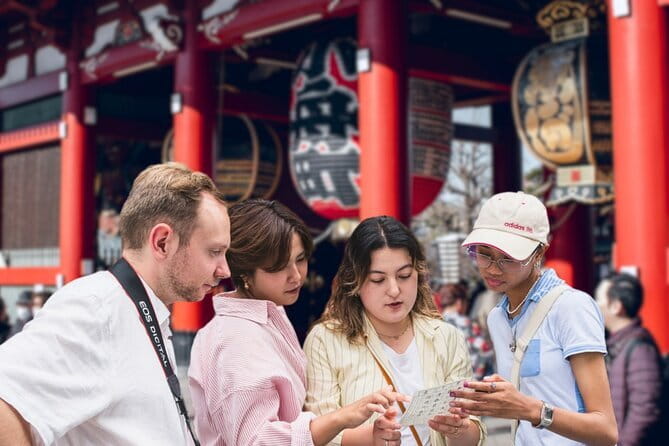
Asakusa can feel like sensory overload at first: crowds, incense, shutter clicks, and snack smells all at once. This tour helps you make sense of it fast. Instead of treating Sensoji and Asakusa Shrine as two separate attractions, you learn how the neighborhood holds both religions side by side, with rituals that show up in daily life.
The biggest value here is the “how to do it” part. You don’t just read about prayer etiquette in guidebooks. You get taught how to bow correctly, where to walk around gates, and what to expect when you see people washing hands, drawing fortunes, and offering incense smoke. That turns a chaotic temple day into a calm, understandable one.
You can also read our reviews of more walking tours in Tokyo

Where you meet and how the walking feels
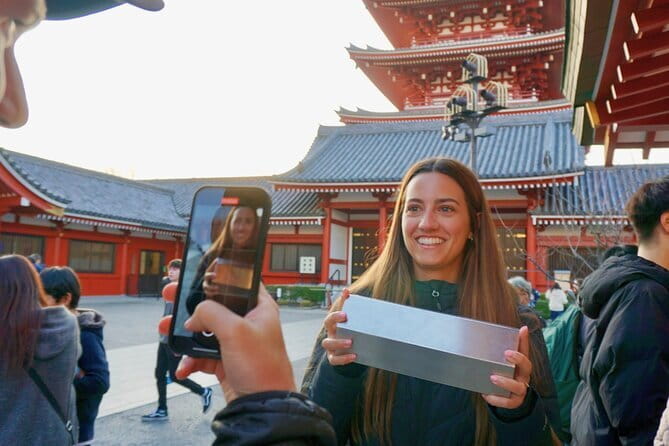
The starting point can vary depending on the booking, with options near Burger King Asakusa Azumabashi. You’ll finish at one of the same Burger King locations, so you’re not hopping all over the city. The tour is timed for about two hours, which matters because Asakusa’s busiest stretches can slow down long group tours.
Even at two hours, you’ll be on your feet most of the time. The provider also flags that the experience isn’t ideal for wheelchair users or people with mobility impairments, and it’s better for visitors with a decent fitness level. If you’re prone to taking frequent breaks, plan for that in your own pace.
Azuma Bridge: Tokyo Skytree views and the famous gold detail
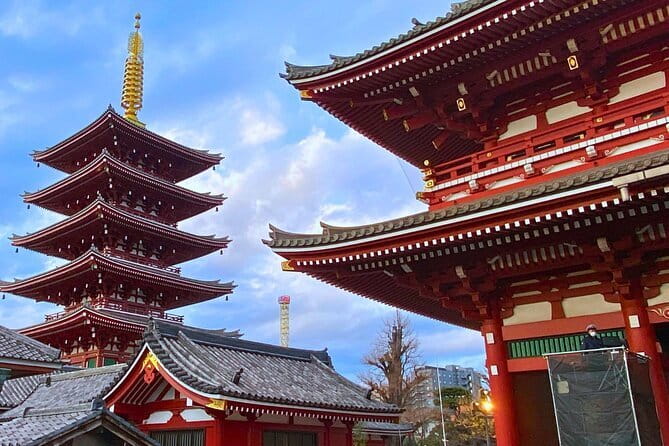
You begin at Azuma Bridge, where you get riverside views and a clearer sense of where you are in Tokyo. It’s a strong opening because it gives you orientation before you dive into temple streets. You’ll also spot the Tokyo Skytree from the area, which helps you frame how modern Tokyo sits next to old Asakusa.
Then comes the humor that locals use to keep temple visits human: the guide points out what people call the golden poop detail near the temple grounds. It’s a small moment, but it sets the tone. You’re learning, yes, but you’re also allowed to be curious and not too serious.
The hidden viewpoint at Asakusa’s Tourist Information Center
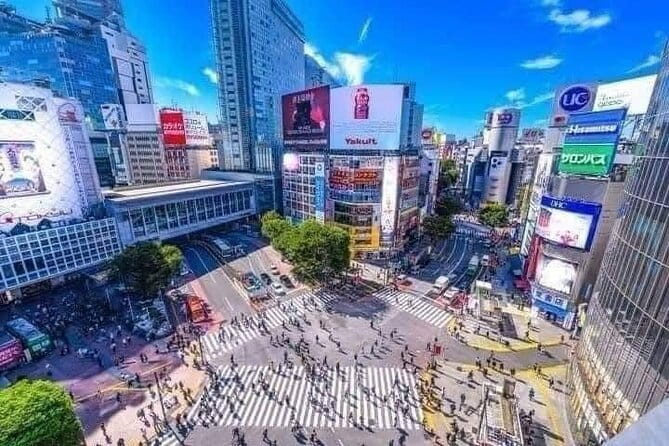
Next, you head to a higher viewpoint near the Asakusa Culture Tourist Information Center. This stop is one of the most practical parts of the day because it’s a map in the sky. From above, you can see how the main temple area lines up, where the gates sit, and how the streets feed into the religious precinct.
Even if you’re already seeing the main structures later, the viewpoint helps you understand the layout once you’re back on the ground. And since Asakusa can be crowded, this is a good “reset” moment to orient yourself before the gates and shopping street begin.
Kaminarimon and the 700kg Thunder Gate lesson
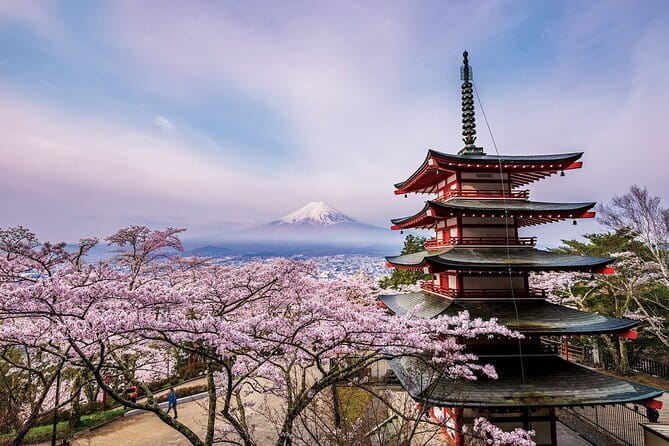
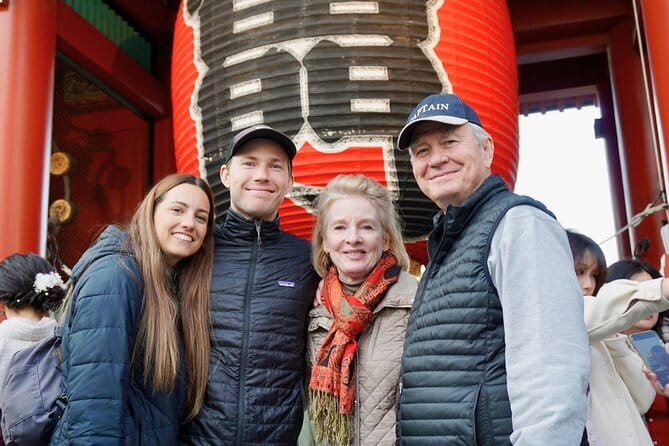
As you approach Kaminarimon Gate, you’re not just taking in the photo. The guide shares the story behind the massive 700kg red lantern and explains what the name Thunder Gate refers to. That kind of detail sounds small until you’re standing right under it and realize why everyone stops there.
This is also where etiquette starts to matter. Crowds funnel through the same path, and having someone explain what’s going on reduces awkwardness. You’ll learn how to move with respect so the ritual space doesn’t feel like a theme park.
You can also read our reviews of more guided tours in Tokyo

Nakamise shopping street: souvenirs with context
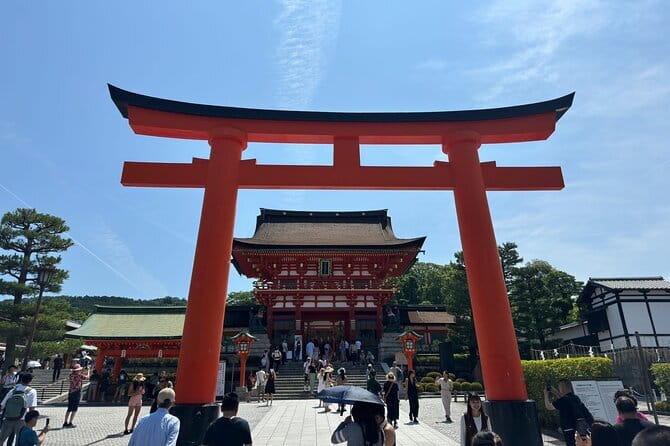
Nakamise is the famous approach street to Sensoji, and it’s popular for a reason: it’s compact, photogenic, and full of snack and souvenir stalls. The tour keeps it from becoming random browsing by adding two things you’ll thank yourself for later: cultural meaning and practical shopping advice.
You’ll learn why certain treats and souvenirs matter, and you’ll get pointed toward where to find good quality instead of the first storefront you see. If you want to bring home something that feels connected to the area (not just cheap clutter), this is the part to focus on.
And if you need translation help, the guide is there. One big theme from guide performances is how willing they are to answer questions, even when they go beyond temple etiquette.
Through Hōzōmon Gate: where the slower pace shows up
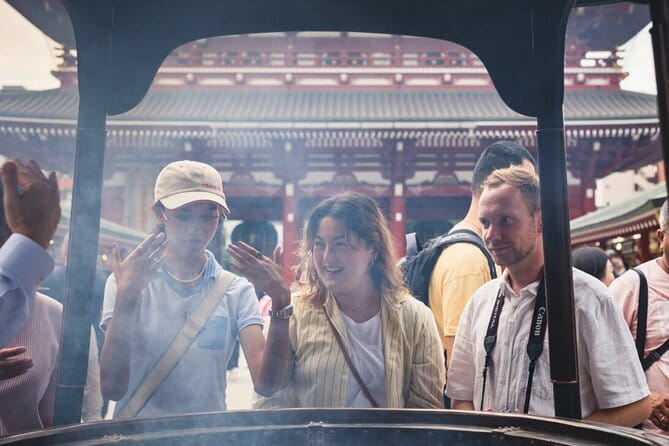
Passing Hōzōmon Gate is like crossing from “street Tokyo” into “temple focus.” The tour takes time here, not just to see the main structures, but to notice the smaller elements that people often walk right past.
This is where you start seeing the point of the tour’s “you’ll also find smaller local sites” promise. The guide helps you spot tucked-away shrines and secondary temple corners that reveal the neighborhood’s real spiritual rhythm. Instead of only staring at the biggest things, you learn how the complex religious life actually works on the ground.
The rituals: temizu, omikuji, and incense smoke
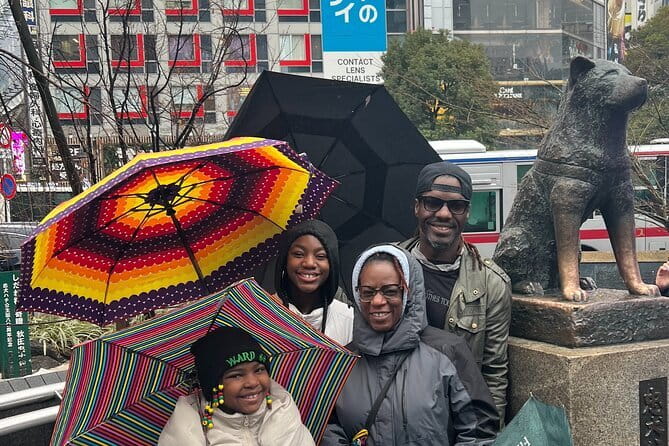
This is the heart of the experience, and it’s more useful than you might expect. The tour includes interactive rituals designed to teach proper behavior and the meaning behind what people are doing.
Temizu (hand washing)
You’ll participate in temizu, the hand-washing ritual. You’re not just getting wet for fun. The idea is to start a visit in a mindful state. Once you’ve done it once with guidance, you’ll recognize the ritual when you see it anywhere in Japan.
Omikuji (fortune telling)
You’ll also do omikuji, drawing a fortune slip. The guide explains the process so you don’t feel lost at a table of paper and people. It’s a small activity, but it adds a personal element to a temple visit that otherwise feels entirely observational.
Incense smoke for physical and mental healing
Another guided moment is how incense smoke is used for healing, both physically and mentally. This part helps you understand why incense isn’t just a smell. It’s part of a shared way of thinking and caring.
In the stronger guide-led moments, I’ve seen people mention that the guide even explains what to do with offerings and how to be courteous. So if you want a smoother first-time experience at Japanese religious sites, this tour’s ritual structure is a big reason to choose it.
Sensō-ji vs Asakusa Shrine: bowing, sides, and religion in practice
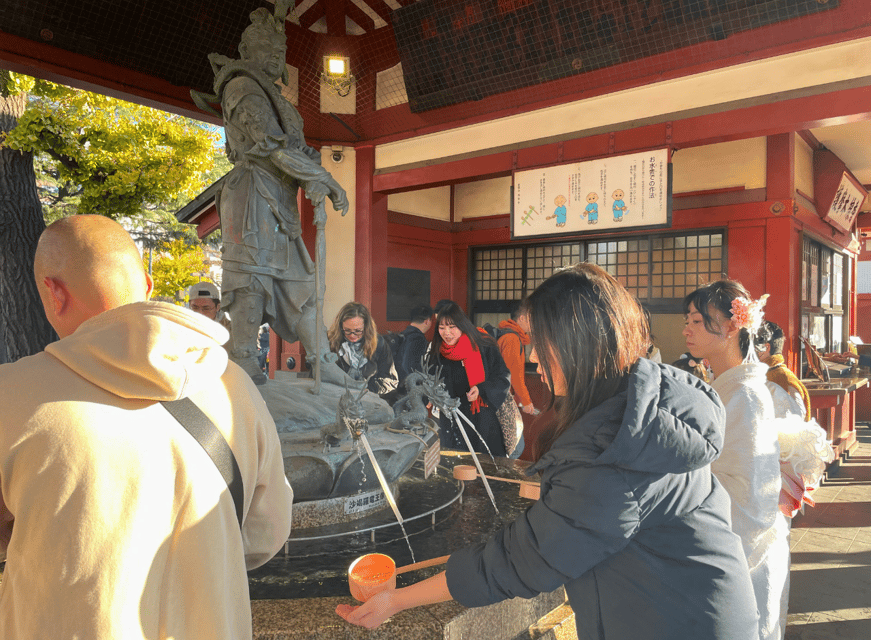
One of the best pieces of the tour is the comparison. Sensoji Temple is Buddhist, and Asakusa Shrine is Shinto. You’ll learn that the two religions don’t look identical, even if they share the same neighborhood air.
What you learn at Sensō-ji
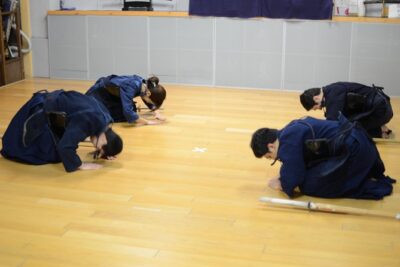
Inside Sensō-ji Temple, the guide explains how to pray in the Buddhist style. You’ll also learn how to bow correctly, and what different actions mean so you’re not copying gestures blindly.
What you learn at Asakusa Shrine
At Asakusa Shrine, you’ll see a different process, and the tour explains how to handle the change in customs. Even small details matter here, like which side to walk on through torii gates. A guide can make this feel much less confusing, especially when crowds are pressing in from multiple directions.
Several guides named in past participants’ experiences, including Nicolas/Nico and Nicolas’ peers like Erik and Joe, are noted for taking time to explain these differences in plain English or French. That’s a rare comfort when you’re standing in the middle of a place that locals treat as meaningful, not just scenic.
Photo spots: why asking your guide matters
Asakusa’s best photos can be surprisingly hard to get on your own because the angles are built around flow: where people naturally stop, where the street bends, and where the temple layout lines up. This tour makes it easier because you’re guided to photo spots and told where to stand.
What makes this practical is the “just ask your guide” style. If you’re with a partner, traveling solo, or trying to keep kids engaged, it helps to have someone point the camera in the right direction without turning your visit into a negotiation.
Small-group value: up to 8, and guides who answer real questions
Small group tours are often sold as cozy. Here’s the real payoff: limited to 8 participants, so you’re not stuck waiting your turn. That means you can ask questions that don’t fit into a scripted tour script, like how rituals work, what you’re seeing, or how to behave around worshippers.
From guide names highlighted in participants’ experiences, I’d pay attention if your guide is Nicolas (often called Nico), Erik, Joe, Lino, Nana, Diane, Arief, or Ariel. The common praise is that these guides don’t rush. They can handle kids, answer follow-ups, and keep the pace relaxed even when Asakusa is packed.
And on at least some days, guides have offered helpful extras like small offerings and coaching on temple manners. You shouldn’t expect every guide to do the exact same thing, but it’s a sign of how seriously they treat teaching, not just transporting.
Price and value: what $30 buys you here
At $30 per person for about two hours, this isn’t a bargain “just walk with us” tour. You’re paying for a local guide who can explain the meaning behind gestures, rituals, and religious differences.
If you’re the type who will visit temples anyway but might otherwise miss the etiquette and context, this is where the money returns to you. Without guidance, you can absolutely see Sensoji and Asakusa Shrine. With guidance, you understand why incense smoke matters, why certain prayers differ, and how to behave without awkward uncertainty.
Also, a small-group format often costs more than mass tours, and here it’s capped at 8. That’s part of the value: you get time, attention, and translation help (English and French) instead of standing in a crowd listening from the back.
Practical tips so your tour feels smooth
A few basics make a big difference in Asakusa. Wear comfortable shoes since you’ll be walking and standing for multiple temple gates and streets. Bring water, especially in heat; vending machines are available during the tour.
Come dressed for the weather. The tour runs rain or shine, and it’s not presented as a delicate outfit event. Tattoos are welcome, and there’s no dress code, so you can focus on comfort.
On the rules side: no smoking, no drones, and no alcohol or drugs during the tour. If you’re photographing, keep it respectful around worshippers and avoid anything that interrupts the flow.
Kimono rental near the meeting point (if you want it)
If you want the kimono experience, the provider says they partner with a local kimono store about two minutes from the meeting point. You’ll need to ask in advance or right away about your options, but it’s an easy way to add a classic Asakusa look without turning your schedule into a separate planning project.
Who should book this tour, and who should not
This is a great fit if you:
- Want Sensoji Temple and Asakusa Shrine, plus the smaller nearby sites, in one managed walk
- Care about understanding rituals like temizu and omikuji
- Prefer a small group where you can ask questions and get answers
- Travel as a couple, family, or solo visitor and want a guided cultural start to Tokyo
It may not fit if you:
- Use a wheelchair or have mobility limitations that make temple walking difficult
- Have a low fitness level and expect minimal walking
- Want only quick sightseeing with no attention to etiquette or religious context
Should you book Sunrise Adventure’s Asakusa Temple & Shrine tour?
I’d book it if you want your Asakusa day to feel understandable, not random. The combination of viewpoints, gates, shopping street context, and guided ritual practice is the difference between seeing temple buildings and learning how people actually worship.
If your budget is tight, you can still see Asakusa for free. But if you’re worried you’ll miss the etiquette, the Shinto-Buddhist differences, or the calmer side streets, this tour is the safest way to get it right in two hours.
FAQ
How long is the Asakusa Temple & Shrine Walking Tour?
It lasts about 2 hours.
What group size is this tour, and what languages do you offer?
It’s a small group limited to 8 participants, and the live guide is available in English and French.
Where do I meet the guide, and where does the tour end?
The meeting point may vary depending on the option booked. Drop-off locations are also listed as the Burger King Asakusa Azumabashi area.
Which places will we visit during the tour?
You’ll visit Sensoji Temple and Asakusa Shrine, plus other smaller temples/shrines. You’ll also stop at major gates and viewpoints along the way, including Kaminarimon and the Nakamise shopping street.
Do we do any rituals or prayer activities during the tour?
Yes. The tour includes interactive rituals such as temizu (hand washing) and omikuji (fortune telling), and you’ll also experience incense smoke for healing with guidance.
Can I rent a kimono for this tour?
There is kimono rental available via a partner store about 2 minutes from the meeting point. You should ask if you’re interested.
Is there a dress code, and are tattoos allowed?
There is no dress code, and tattoos are welcome.
What should I bring, and is the tour suitable for wheelchair users?
Wear comfortable shoes and bring water. Smoking, drones, alcohol, and drugs aren’t allowed. The tour is not suitable for wheelchair users or people with mobility impairments, and it’s also not aimed at people with low fitness levels.