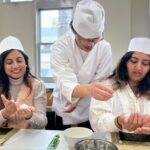
Sushi skills in 90 minutes, in English. I loved the small-group vibe with Chef Ken and the fact you use fresh sushi ingredients selected daily by the chef. One thing to consider: it moves fast for a hands-on class, so if you want extra time to practice at your own pace, you may feel slightly rushed in the 1 hour 30 minutes.
This is a former HYATT hotel sushi chef teaching in English, with a maximum of 6 people and a minimum of 2. You’ll learn sushi rice, ingredient prep, and multiple styles—Nigiri, Maki, Temaki, and Gunkan—and you’ll also get Japanese sake and green tea as part of the experience.
In This Review
- Key reasons this sushi class is worth your time
- Chef Ken’s Shibuya setup: small class, real instruction
- Fresh fish and daily ingredient selection: why it changes the lesson
- The core skills you’ll learn: sushi rice plus four classic styles
- Nigiri (hand-pressed): learning the feel
- Maki (roll): timing and tight shaping
- Temaki (hand-roll): fast, casual, and skill-building
- Gunkan (battleship): shaping that holds
- What the 90 minutes feels like in real life
- English-friendly teaching from a chef with Japan and California experience
- Sake, green tea, and the lunch payoff you’ll remember
- Where the class fits in your Tokyo day plan
- Price and value: what $107.26 gets you in a small group
- Who should book this sushi making class (and who should think twice)
- Should you book Chef Ken’s sushi making class?
- FAQ
- What’s the duration of the sushi making class?
- Is the class taught in English?
- How many people can join the class?
- What’s included in the class price?
- Do I need to bring sushi ingredients or tools?
- Where does the class meet in Tokyo?
- Is there a mobile ticket?
- What’s the class schedule?
- How soon will I receive confirmation after booking?
- Can I cancel for a full refund?
Key reasons this sushi class is worth your time
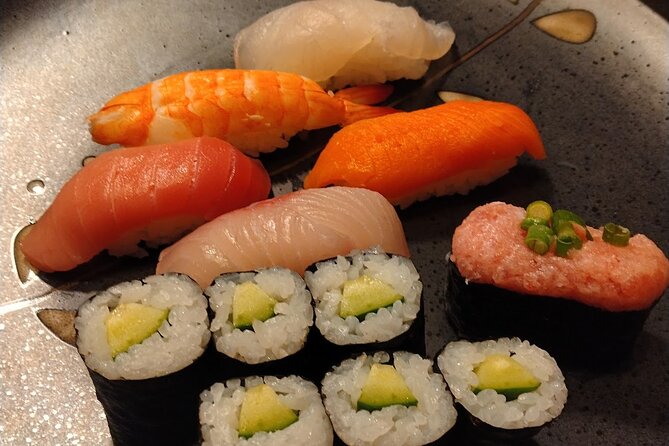
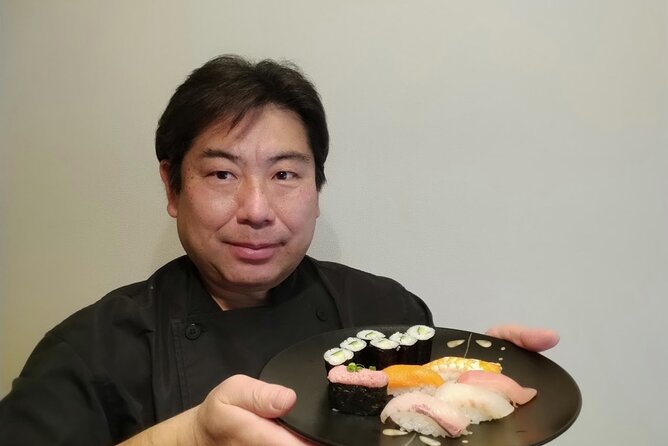
- Former HYATT hotel sushi chef, English lessons: Chef Ken has experience in Japan and California and teaches in English.
- Fresh ingredients chosen daily: You’re not learning with leftovers or pre-made shortcuts.
- You make four sushi styles: Nigiri, Maki, Temaki, and Gunkan—so you get more than one technique.
- Small group, max 6 travelers: More personal attention and less waiting around.
- Equipment and ingredients included: No last-minute shopping or gear hunting.
Chef Ken’s Shibuya setup: small class, real instruction
The class runs in Tokyo’s Shibuya area at 15-17 Sakuragaokachō, Shibuya, Tokyo 150-0031. The session ends back at the same meeting point, so it’s simple: arrive, learn, eat what you make, and go back out.
What makes this feel different from the bigger, more production-line style experiences is the size. With a maximum of 6 people, you’re not competing for attention. In a sushi class, that matters, because the small stuff—how you handle ingredients, how you form pieces—changes everything.
Chef Ken is the key here. He’s a former HYATT hotel sushi chef and he has experience both in Japan and California. That combination often shows up in how he explains things: you get traditional methods, but also teaching that works for an English-speaking group.
You can also read our reviews of more tours and experiences in Tokyo



Fresh fish and daily ingredient selection: why it changes the lesson
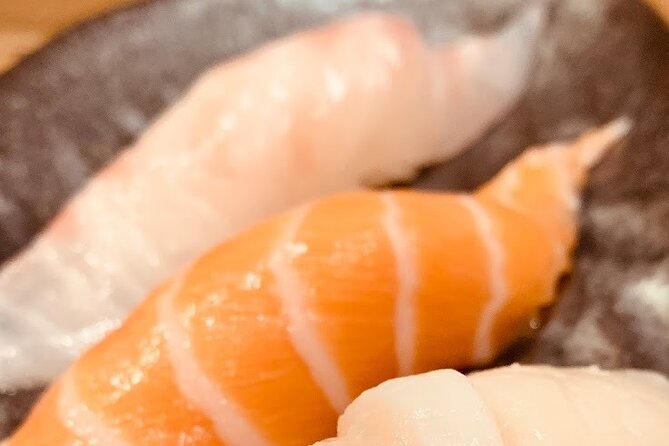
This class uses sushi ingredients that are purchased on the day and selected carefully. You’ll also work with fresh fish, which is a big deal in sushi. Even if you’ve eaten sushi in Tokyo a dozen times, making it yourself with quality ingredients helps you understand the logic behind the basics.
You also don’t have to bring anything. Equipment and ingredients are included, so you’re free to focus on the steps you’re learning. For value, this is important: sushi making isn’t something you can half-do with random supermarket items and expect the same results.
And because the ingredients are handled as part of a chef-led workflow, you’ll likely come away thinking less like a tourist and more like a cook. That’s what turns a fun activity into a skill you can actually use later at home.
The core skills you’ll learn: sushi rice plus four classic styles
The class is built around the process, not just the final look. You’ll learn how to make sushi rice, how to prepare ingredients, and then how to create different styles of sushi.
Here’s what that usually means in practice over a 1 hour 30 minute session: you spend time learning the “base” (the rice and prep) and then you apply it repeatedly while shaping and assembling multiple types. That’s why this class feels like more than one lesson stitched together.
Nigiri (hand-pressed): learning the feel
Nigiri is where sushi becomes very hands-on. You’ll learn the method for hand-pressed sushi, which is less about rolling and more about proportion and touch. If you’ve only ever eaten nigiri with chopsticks, making it teaches you how much comes down to consistency and how you position everything.
Maki (roll): timing and tight shaping
Maki sushi is the roll. You’ll learn how to form it as a roll rather than as scattered ingredients. The trick with maki is getting everything aligned and held together, so that when you cut or serve it, it still looks like sushi and not like a pile that decided to cooperate.





Temaki (hand-roll): fast, casual, and skill-building
Temaki is the hand-roll. It’s more flexible than maki, but that doesn’t mean it’s easy. You’ll learn the hand-roll style and how it should hold its shape. You also tend to enjoy temaki more because it feels immediate—like you’re building your own piece and not waiting for a perfect roll.
Gunkan (battleship): shaping that holds
Gunkan (battleship) is a fun one because it looks dramatic. You’ll learn how to make this style, which is all about making a form that can carry the topping. This is a great way to understand sushi structure: you’re learning not just to assemble, but to build something that stays intact.
What the 90 minutes feels like in real life
The timing is about 1 hour 30 minutes (approx.). That’s enough time to learn the fundamentals and then produce multiple styles, but not enough time to perfect everything. You’ll probably start out a bit slow, then speed up as you get the rhythm.
Because the class is small and led by Chef Ken, you can ask questions as you go. You’ll be guided through making the sushi, and you’ll get feedback based on what you’re doing—not just generic tips.
One reviewer highlighted that time flew by and the class stayed very personal and non commercial. That matches the structure here: fewer people, more direct coaching, and the lesson is built around doing.
English-friendly teaching from a chef with Japan and California experience
This class is taught in English, and Chef Ken has experience satisfying both Japanese and foreign customers. In other words, he’s used to explaining sushi in a way that’s clear for non-Japanese speakers, without dumbing it down.
That English clarity is a big plus because sushi technique can be picky. If you’re unclear on a basic step, the finished piece will show it immediately. A chef who can explain the process clearly helps you avoid that frustration.
One of the top strengths from the experience is that Chef Ken’s instruction makes the class feel manageable. People come in thinking sushi is too precise, then realize it’s learnable with the right guidance—and the right ingredients.
Sake, green tea, and the lunch payoff you’ll remember

The experience includes Japanese sake and green tea, which adds a nice cultural flavor beyond just the cooking. Even if you only have a small amount, it makes the class feel like a full Japanese meal experience rather than a cooking demo.
And yes, there’s a lunch payoff. Reviews specifically call out that the experience includes lunch and that the lunch is delicious. That makes sense: once you’ve made nigiri, maki, temaki, and gunkan, you’re not walking away hungry.
The “value” part here is psychological. A lot of activities are basically paid practice with no reward. This one ends with food you built yourself, using fresh ingredients and multiple styles. You get both the skill and the satisfaction.
Where the class fits in your Tokyo day plan
You’ll meet at the Shibuya address, and the activity ends back at the meeting point. The opening hours are 12:00 PM to 7:00 PM (Monday through Sunday). With that window, you can slot the class around lunch or in the afternoon without needing to plan a complicated schedule.
Also, on average, it’s booked about 10 days in advance, so don’t wait until the last minute—especially if you have a tight Tokyo itinerary.
If you’re planning this alongside other Shibuya-area stops, keep buffer time for the walk from your train stop. The class is near public transportation, but Shibuya can be busy and signage can still test your patience.
Price and value: what $107.26 gets you in a small group
The price is $107.26 per person for about 1 hour 30 minutes. On paper, it’s not the cheapest thing you can do in Tokyo. But sushi making classes tend to cost more when they include what matters: chef-led instruction, and high-quality ingredients rather than low-grade substitutes.
Here, equipment and ingredients are included and the ingredients are selected daily. You’re also learning multiple sushi styles, not just one. Plus the class maxes at 6 people, which usually means more coaching time per person.
Put simply: you’re paying for access to the process, the quality ingredients, and the chance to make a real meal. For many people, that’s worth it.
That said, if you’re the type who prefers very slow, step-by-step repetition, you might find the 90 minutes brief. The upside is that you’ll still walk away with a working sense of how sushi pieces come together.
Who should book this sushi making class (and who should think twice)
This class is a great match if you:
- Want hands-on cooking rather than watching someone else do everything
- Prefer English instruction while learning a Japanese skill
- Like the idea of making four sushi styles in one go
- Enjoy experiences with a personal, small-group feel
It may be less ideal if:
- You want an unhurried class with lots of free practice time
- You’re traveling solo and you prefer classes that won’t be limited by a minimum group size of 2
- You have strict dietary limits, since the class uses fresh fish for sushi ingredients
If you’re unsure, it’s worth asking before you book, especially if your diet doesn’t include fish.
Should you book Chef Ken’s sushi making class?
I think you should book this class if you want a chef-led, small-group sushi lesson that results in a real lunch and real technique. The biggest strengths are Chef Ken’s English teaching, the fact that you work with fresh ingredients chosen on the day, and the variety—Nigiri, Maki, Temaki, and Gunkan—all within 1 hour 30 minutes.
If you’re looking for a casual foodie activity, this can be fun. If you’re looking for something with enough instruction to help you repeat at home, this is also a strong choice.
FAQ
What’s the duration of the sushi making class?
The class runs for about 1 hour 30 minutes.
Is the class taught in English?
Yes. It’s taught in English by Chef Ken.
How many people can join the class?
There is a minimum of 2 participants, and the maximum is 6 travelers.
What’s included in the class price?
All equipment and ingredients are included, and you don’t need to bring anything on the day.
Do I need to bring sushi ingredients or tools?
No. Equipment and ingredients are included.
Where does the class meet in Tokyo?
The meeting point is 15-17 Sakuragaokachō, Shibuya, Tokyo 150-0031, Japan.
Is there a mobile ticket?
Yes, the tour includes a mobile ticket.
What’s the class schedule?
It’s available daily from 12:00 PM to 7:00 PM (Monday through Sunday) during the listed operating period.
How soon will I receive confirmation after booking?
Confirmation is received within 48 hours of booking, subject to availability.
Can I cancel for a full refund?
Yes. You can cancel up to 24 hours in advance for a full refund.