REVIEW · TOKYO
Small Group Japanese Calligraphy Workshop Experience
Book on Viator →Operated by nomuno · Bookable on Viator
One hour. One brush. Real Japanese calligraphy.
This Shodo workshop in Tokyo puts you face-to-face with a certified master calligrapher, not a generic demo. You’ll learn to write Japanese characters the traditional way, and the lesson happens in an actual Japanese restaurant setting, so the whole experience feels calm and very grounded in real local life.
I like two things a lot. First, the guidance from the master calligrapher is hands-on and focused. Second, the class is designed for you to show up light: all necessary equipment is included, and the group is capped at seven so you’re not just watching from the sidelines. The only real consideration is that food and drinks are not included, and the restaurant setting can feel quiet if you were hoping for a lively, party-style activity.
In This Review
- Key highlights you’ll care about
- Shodo in a Tokyo restaurant: calm, focused, and honestly fun
- The small 7-person group and the real value of personal feedback
- What you’ll write in your lesson: name, nickname, and one word
- Step-by-step: your 1-hour Shodo flow from first brush to finished work
- Price and value: why $55.52 feels fair (and often better than DIY)
- Location: where Monja Kurya Restaurant fits into your Tokyo day
- Practical tips so your first brush strokes look better
- Who should book this Shodo workshop in Tokyo
- Should you book this Japanese calligraphy (Shodo) workshop?
- FAQ
- How long is the Japanese calligraphy workshop?
- How many people are in the group?
- Do I need to bring calligraphy supplies?
- What will I write during the lesson?
- Where does the class take place?
- Is food or drinks included?
- Is there English help during the workshop?
- Can I get a full refund if I cancel?
Key highlights you’ll care about
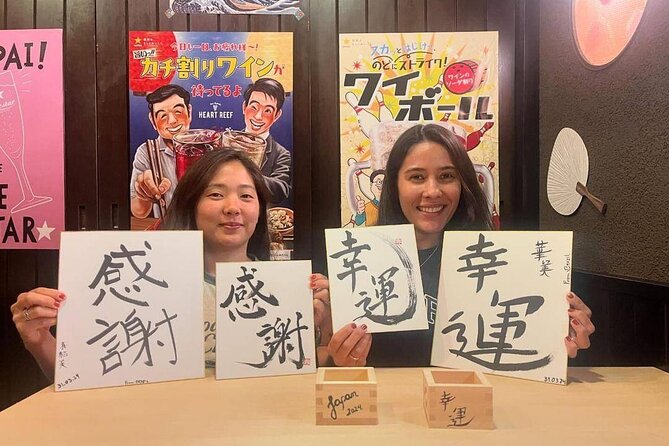
- Master-led instruction on traditional Shodo technique, with an experienced teacher guiding your strokes
- Max 7 participants, which keeps the class personal instead of crowded
- All equipment provided, so you don’t need to buy or pack anything
- Write your name (or nickname) + one Japanese word, plus a favorite word option if you want
- Your artwork may be displayed on the restaurant wall, like an autograph—if you’re okay with that
Shodo in a Tokyo restaurant: calm, focused, and honestly fun
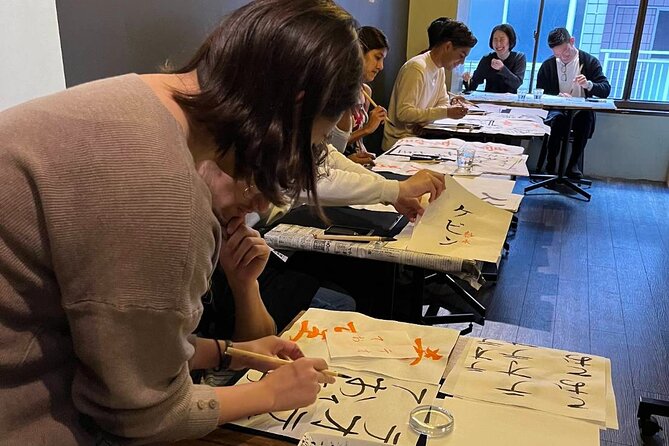
Tokyo has plenty of “hands-on” things to do, but this one has a quieter rhythm. The lesson takes place in a Japanese restaurant (Monja Kurya Restaurant), and that changes the tone. Instead of a classroom vibe or a craft stall, you’re learning art in a place where Japanese food culture is already part of the environment.
That atmosphere matters because Shodo is mostly about control—how you hold the brush, how you start a stroke, and how you finish it. When the setting is low-key and respectful, you’ll usually pay closer attention. And because your time is about an hour, that focus helps you actually leave with something you can look at later and feel proud of.
You can also read our reviews of more tours and experiences in Tokyo



The small 7-person group and the real value of personal feedback
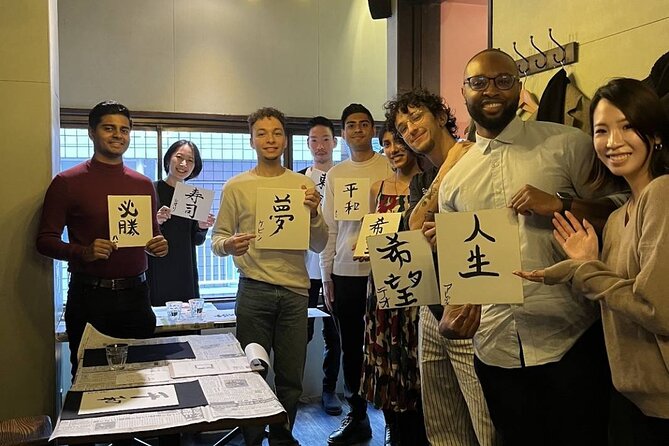
This workshop limits the group to seven people, which is a big deal for calligraphy. With only a handful of learners, your instructor can spot the tiny issues that make characters look off—things like stroke direction and the shape formed by the brush. You’re not waiting your turn while others get help first.
You’ll also have English guidance, which helps a lot at the beginning. Even if you know zero Japanese, the lesson is structured around practical outcomes: writing specific words and building confidence with the brush. This is one of those experiences where you can leave knowing what to do next time you try at home.
What you’ll write in your lesson: name, nickname, and one word
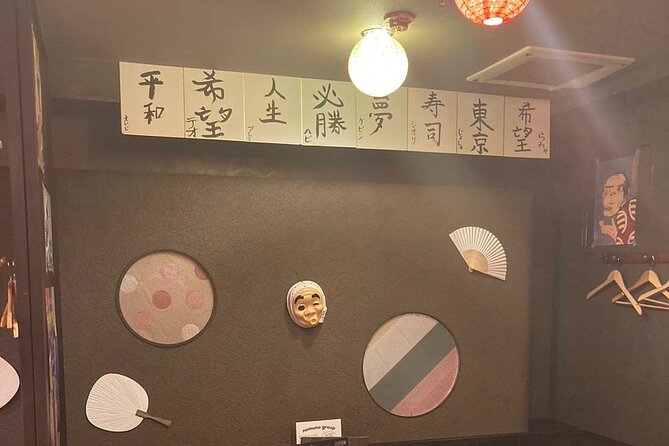
You’ll practice Japanese brush calligraphy using the tools provided. The core assignments are simple and satisfying:
- Your name (or nickname) written in Japanese characters
- One Japanese word, or a favorite word you want to express
That choice is where this becomes personal. A name-based character set feels like a souvenir, not a craft project. And having a second word gives you a chance to make it meaningful—something you’ll want to remember, not just something that fills the time.
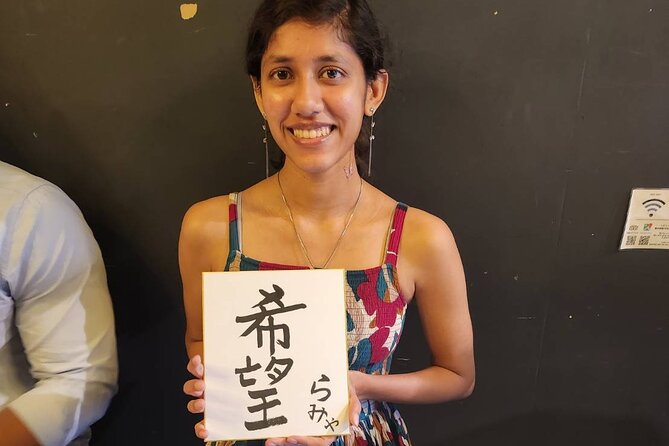
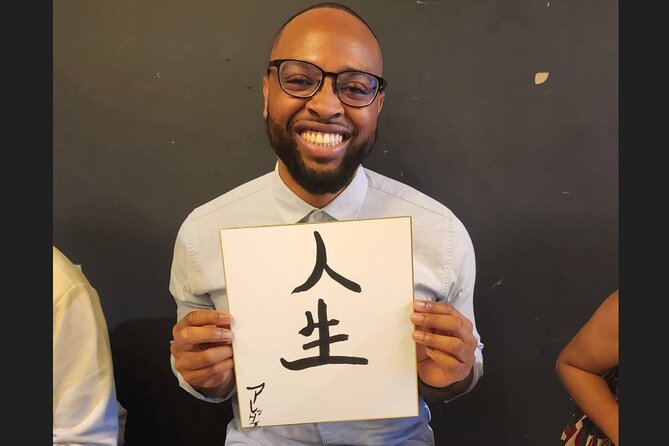
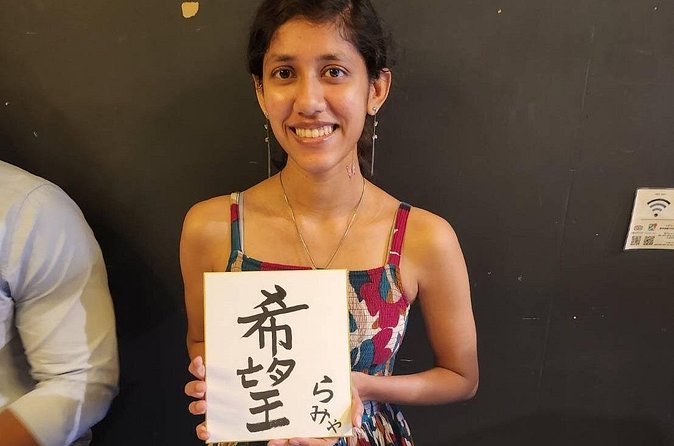
One extra perk: if you’d like, one of your finished pieces can be displayed on the restaurant wall, like an autograph. That’s a fun, low-pressure way to turn your practice into something shared locally, even if you only visit once.
Step-by-step: your 1-hour Shodo flow from first brush to finished work
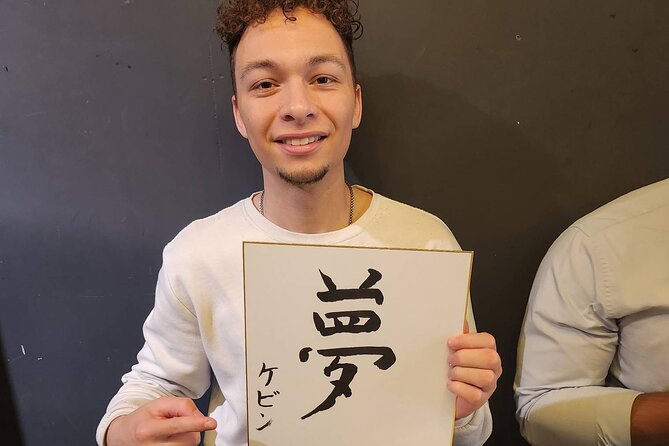
The duration is about one hour, so the experience is paced to move you from explanation to your own strokes without dragging. Here’s the typical flow you should expect based on how the workshop is structured.
You’ll start with Shodo instruction. The goal is to understand the traditional way letters are written, not just copy a pretty image. Your instructor will guide you as you learn how the brush behaves—because with calligraphy, the brush is the tool and the lesson is really about controlling it.
Next, you’ll begin practicing with the brush. You’ll work on your name (or nickname) in Japanese. This is usually where people relax, because names are familiar—even if the Japanese spelling is new. After that, you’ll write one additional word: either a Japanese word you choose or a favorite word you want rendered.
Then comes the part that makes the difference: your instructor’s expert eye. You’ll be watched and guided as you make your strokes. That kind of feedback is the difference between a character that looks like a drawing and one that looks like real calligraphy.
Finally, you’ll wrap up with the finished artwork(s). If you’re comfortable with it, one piece can be posted on the restaurant’s wall. It’s not a heavy ceremony—more like a casual sign-off that says you were here and you learned something.
Price and value: why $55.52 feels fair (and often better than DIY)
At $55.52 per person for about an hour, this isn’t a bargain in the “cheap activity” sense. But it is good value when you zoom out.
Here’s why: the class includes all necessary equipment and an English guide, and it’s taught in a small group with a certified master calligrapher. If you tried to do this on your own in Tokyo, you’d spend time and money figuring out materials, learning the basics without guidance, and paying for a workspace or supplies.
You’re also paying for technique feedback. With calligraphy, the learning curve is steep enough that a guided hour can save you weeks of frustration. For most first-timers, that’s the real bargain: you leave knowing what to do next.
Finally, note the demand signal. This experience is commonly booked well in advance (on average 104 days). That tells you it’s not a “whatever, I’ll do it later” kind of class—slots can go fast when people plan their Tokyo schedule.






Location: where Monja Kurya Restaurant fits into your Tokyo day
The meeting point is Monja Kurya Restaurant in Higashiikebukuro, Toshima City, Tokyo. It’s listed at Japan, 170-0013 Tokyo, Toshima City, Higashiikebukuro, 1-chōme 25 東輝ビル 2F3F. The activity ends back at the meeting point.
It’s also near public transportation, which is what you want for a short workshop. Because the class is about an hour, you don’t want a trek across town. Instead, think of this as a smart “in the middle of your day” activity: you can do it before dinner or after a neighborhood walk.
And yes, there’s a detail that matters: the restaurant can feel a little quiet when you arrive, and that’s normal. If it seems calm and low-key, you’re probably in the right place.
Practical tips so your first brush strokes look better
You don’t have to bring calligraphy tools—equipment is included—so you can travel light. Still, a little prep will help you get more out of that one hour.
First, decide what you want for your name or nickname. If you’re choosing a nickname, think about how you want it represented in Japanese. The smoother your choice, the faster you’ll move into actual writing.
Second, pick your second word ahead of time if you can. Having a clear favorite word (or Japanese word) means you won’t lose time debating what to write while your instructor is ready to guide your strokes.
Third, lean into the pace. Shodo rewards patience more than speed. Let the guidance guide you. This isn’t a “finish fast” workshop—it’s about making controlled strokes while you learn the traditional feel.
Who should book this Shodo workshop in Tokyo
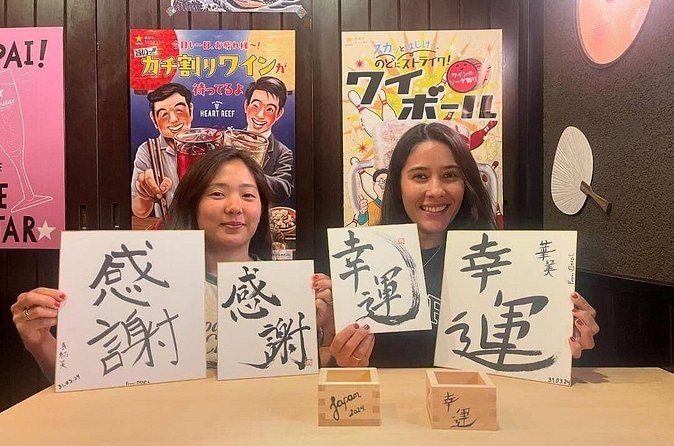
This workshop is a strong fit if you:
- Want a hands-on cultural activity that isn’t just watching
- Prefer a small group class where you can actually get help
- Like leaving with a personal souvenir made by your own hand
- Are curious about Japanese writing and want a skill you can try again later
It’s also a good option if you’re traveling solo or with friends who want a shared activity that produces something visual. The finished piece (and the optional wall display) makes it easy to talk about later.
You might want to pick something else if you’re expecting a longer, multi-session art course, or if you want the workshop to include a full meal. Food and drinks are not included, so you’ll need to plan dinner or snacks around it.
Should you book this Japanese calligraphy (Shodo) workshop?
If you want a short Tokyo activity that feels authentic and personal, I’d book it. The biggest strengths are practical: master calligraphy instruction, a small seven-person group, and everything you need is provided. You get an experience that’s not complicated to join and not generic once you’re in the room.
Book it especially if you like the idea of writing your name in Japanese and taking home the result. Even in one hour, the combination of structured practice and expert feedback is exactly the kind of value you look for on a first trip to Japan.
FAQ
How long is the Japanese calligraphy workshop?
It lasts about 1 hour.
How many people are in the group?
The workshop has a maximum of 7 travelers.
Do I need to bring calligraphy supplies?
No. All necessary equipment is included.
What will I write during the lesson?
You’ll practice writing your name (or nickname) in Japanese and one Japanese word (or a favorite word).
Where does the class take place?
The lesson takes place in a Japanese restaurant at Monja Kurya Restaurant in Higashiikebukuro, Tokyo.
Is food or drinks included?
No. Food and drinks are not included.
Is there English help during the workshop?
Yes. An English guide is included.
Can I get a full refund if I cancel?
Yes. Free cancellation is available up to 24 hours before the experience’s start time for a full refund.