REVIEW · TOKYO
Shibuya Tokyo: Modern Kintsugi Workshop in Shibuya
Book on GetYourGuide →Operated by mon cadeau · Bookable on GetYourGuide
Gold seams meet Tokyo practicality. In a two-hour modern kintsugi workshop at mon cadeau, you repair a chosen piece and take it home in a gift box, and I really liked the calming matcha start plus the patient, hands-on teaching from Michiko and her team. One thing to plan for: you can’t join if you’re more than 15 minutes late.
This is the kind of activity that fits Shibuya without feeling like a production. It’s held up the hill from Shibuya Crossing in a small group of up to 6, the instruction is in English, and you don’t need to bring anything. Only caution: video recording isn’t allowed, so come ready to focus.
In This Review
- Key things I’d watch for
- Why Kintsugi feels different in Shibuya
- Finding mon cadeau near Shibuya Crossing (without the wrong turn)
- The 2-hour flow: matcha start to finished crockery
- Choosing your souvenir: small object, big meaning
- Modern kintsugi materials: what you actually learn
- The instructor attention you get in a group of 6
- Price and value: what $141 buys in real terms
- Who this workshop suits best
- Quick, practical tips before you go
- Should you book this Shibuya kintsugi workshop?
- FAQ
- How long is the modern kintsugi workshop in Shibuya?
- Where do I meet the instructor?
- What’s the group size?
- Is the workshop taught in English?
- Do I need to bring anything with me?
- What’s included in the price?
- Can I record video during the workshop?
- Is there a cancellation option?
Key things I’d watch for
- Up the hill from Shibuya Crossing: you trade crowds for a quiet studio setting.
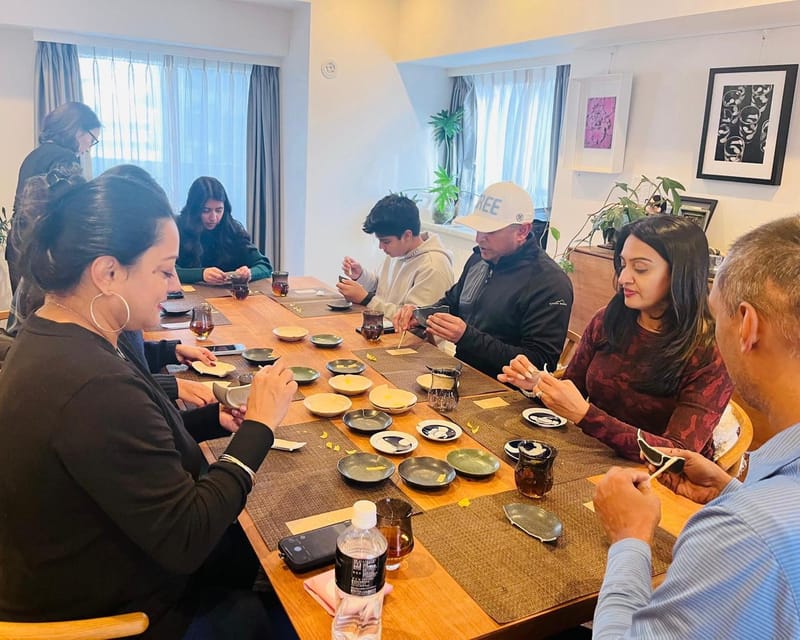
- Matcha tea and seasonal sweets: you start with a gentle Japanese rhythm before tools come out.
- Small group, real coaching: with up to 6 people, your instructor can correct your hands as you work.
- Modern materials for faster, safer repairs: the process aims to be more accessible than older methods.
- A take-home piece in a gift box: your finished crockery becomes a ready-to-display souvenir.
Why Kintsugi feels different in Shibuya
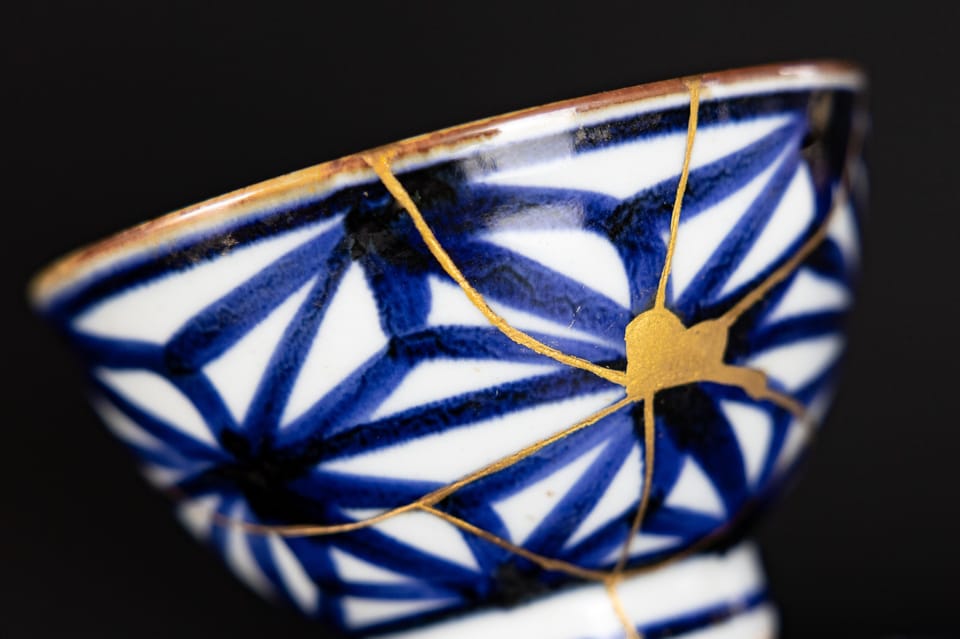
Kintsugi is usually described like a philosophy—breakage becomes part of the story. In this workshop, you feel that idea through your own hands. The repairs aren’t just about making something look whole again; you’re learning how Japanese culture treats imperfections with respect, not shame.
I also like the tone of this experience in Shibuya. You’re in one of Tokyo’s busiest zones, yet the workshop starts as a reset. The studio begins with matcha tea and seasonal sweets, which keeps the mood calm and practical at the same time. Then you get to the work: reassembly, repair, and restoration, step by step.
And the best “why it matters” part? You leave with a physical object that carries the idea of wabi-sabi—not a photo, not a generic souvenir. It’s a piece of craft you can show at home and remember as a moment you actually did.
You can also read our reviews of more tours and experiences in Tokyo



Finding mon cadeau near Shibuya Crossing (without the wrong turn)
The meeting point is specific, and it helps to treat it like a mini scavenger hunt. You meet outside the mon cadeau studio about 5 minutes before your lesson. The studio is next door to the Central Hospital Annex building, at the top of Bunkamura-dori on Shoto 2-chome Crossing. It’s up the hill from Shibuya Crossing, so plan extra time if you’re arriving on foot.
Here’s a practical tip that can save you stress: maps apps may route you into a side alley. The studio entrance is on the main street. Look for the tiled façade and a large brown double door with a narrow glass panel.
If you’re the type who likes to arrive early (smart), you’ll do great here. There’s also a firm rule: you won’t be able to join if you arrive more than 15 minutes after your reserved start time. That’s not meant to be unfriendly—it’s how they keep the class moving and the materials organized.
The 2-hour flow: matcha start to finished crockery
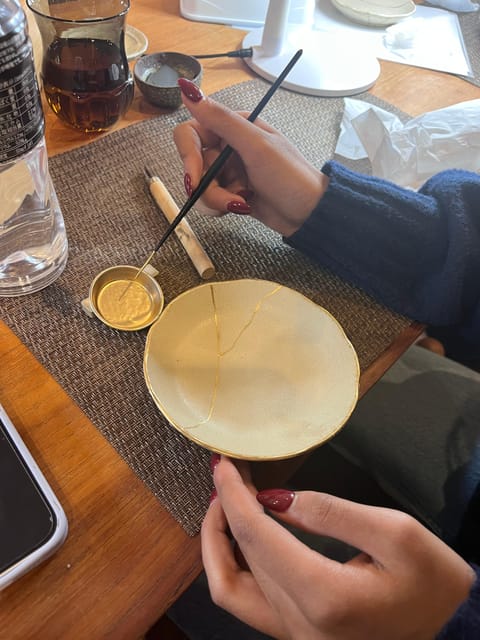
This class runs for 2 hours, and the structure is clear enough that you won’t feel lost even if you’ve never touched kintsugi tools before.
1) Calm start: matcha and seasonal sweets
Before you pick anything, you settle in with tea and seasonal snacks. It’s not just a nice gesture; it sets a slower pace so you can focus once the repair work begins.
2) Choose your piece from their collection
You select a crockery item you’d like to repair. The workshop provides the piece, so you’re not bringing anything broken from home. That keeps the class simple, and it also means the items are prepped for the kind of restoration you’ll be learning.
3) Instructor demo: each step shown first
Your teacher demonstrates the reassembly, repair, and restoration steps. Watch for the details—how they handle alignment, timing, and how materials are applied. This is where you start learning the craft logic, not just copying motions.
4) Hands-on practice, step by step
After the demonstration, you repeat the steps yourself. The class is built so you move from one part to the next while the instructor supervises. With a small group, you’re not waiting your turn while someone else gets help.
5) Take home the restored piece
When you finish, you pack your repaired crockery in a special gift box. You walk out with a finished souvenir that looks like it belongs in your life, not a rushed craft kit.
And yes, the class includes an explanation sheet. That’s helpful later when you want to remember what you did and why it matters.
Choosing your souvenir: small object, big meaning
Kintsugi works best when you care about the object. Here, that’s easy because you get to pick from the studio’s crockery collection rather than arriving with your own item.
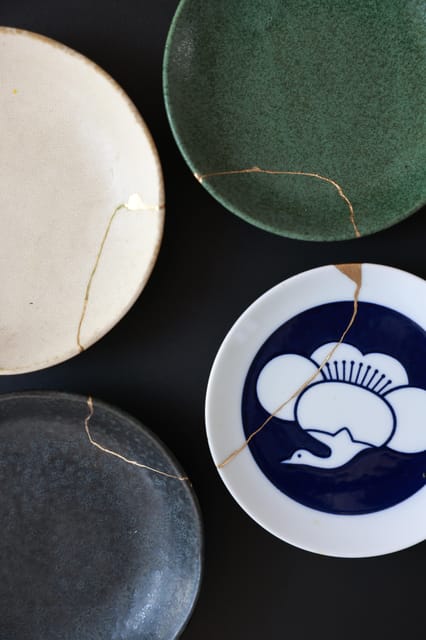
What I love about this format is that your final piece becomes personal without requiring you to guess what you’ll like. If you like plates, you can choose something plate-shaped. If you prefer a cup or bowl style look, you’ll usually have choices. The key is that it’s still guided: your instructor knows what type of repair the selected item will need, and you’ll do the process that matches that piece.
It also makes a strong souvenir choice. A repaired crockery piece is practical as well as meaningful. Even if you don’t use it daily, it’s display-worthy. And the gift box gives you a safe way to transport it back to your hotel and home.
Modern kintsugi materials: what you actually learn
This is where the workshop earns its “modern” label. Instead of relying only on the traditional approach, the process uses contemporary materials. In practical terms, that tends to make the workshop more accessible: the steps can be faster and safer, and you get a technique-focused result without needing expert-level patience or specialized equipment.
During the class, you’ll be guided through:
- reassembly (getting the broken parts lined up)
- repair (working the joint and restoring structure)
- restoration (finishing the piece so it looks intentional, not like a quick fix)
Even if the class is using modern materials, you still learn the core spirit behind kintsugi: the idea that breakage is part of an object’s history. The gold-toned repair lines aren’t treated like an error to hide. They’re treated like an honest record.
Also, you get teaching support from more than one person. Michiko is the main host and instructor, and her team includes people like Yuki, Koto, and Rita. That matters because if you get stuck, you don’t just hear one voice; you get help from the workshop rhythm they’ve built for small groups.






The instructor attention you get in a group of 6
A good workshop doesn’t just teach. It corrects. This one is set up for that.
Classes are limited to 6 participants, and that size is what makes the difference between learning and struggling alone. You’re not hovering over your project while someone else gets all the instruction. Your teacher can watch your technique and nudge you through the next step.
The vibe also feels warm and calm. Multiple classes are described as cozy and family-like, and the hosts are known for being friendly and attentive. The result: even if your hands are shaky at first, you still finish with a piece you’re proud to take home.
What to wear? Keep it simple. Wear comfortable clothes so you can sit, lean in, and work steadily for two hours. Tools and materials are provided, so you won’t be hunting for supplies or worrying about what you brought.
One more “real world” note: no video recording is allowed. You’ll be focused anyway, but if you’re hoping to film your process for friends, plan to rely on photos instead (the rules provided only mention video recording, not photography).
Price and value: what $141 buys in real terms
The listed price is $141 per person for a 2-hour workshop. That can sound high at first, especially if you’re comparing it to mass-market activities.
But here’s the value math that matters:
- You get matcha tea and seasonal sweets, included.
- You receive an introduction explanation sheet.
- The studio supplies all materials needed for the restoration and repair.
- You get a piece of crockery to repair.
- You keep your finished crockery, packed in a special gift box.
So you’re paying for guided instruction, materials, and the object itself—not just the lesson. And because the group is small, the coaching time per person is high. For a craft souvenir that has meaning and a “you did this” factor, that’s strong value.
If you’re building an itinerary around cultural experiences, this is also a smart slot. It’s not long. It doesn’t require a full day. And it doesn’t need advance craft skills.
Who this workshop suits best
This workshop is a great match if you want one of your Tokyo days to feel hands-on and reflective. You’ll like it if:
- you’re into Japanese culture, especially wabi-sabi themes
- you want a souvenir that isn’t generic
- you enjoy crafts where process matters, not just results
It also fits well with families who can handle a guided activity. One of the experiences shared included a 10-year-old and 13-year-old enjoying the class, plus a 16-year-old who loved it. That said, the workshop notes it is not suitable for children under 5, so younger kids may not be a good fit.
If you hate sitting still, this might be too focused for you. If you love craft and attention to detail, you’ll probably be the person who asks questions mid-step.
Quick, practical tips before you go
A few things that’ll make the class smoother:
- Arrive early and meet your instructor outside the studio about 5 minutes before start.
- Plan for the hill up from Shibuya Crossing, especially if you’re juggling train timing.
- Keep your outfit comfortable; you’ll be working with your hands.
- Leave your video recording plans at home—it’s not allowed in class.
- Go in with a clear expectation: you’ll be doing the work, not just watching.
Should you book this Shibuya kintsugi workshop?
I’d book it if you want a Tokyo experience that feels calmer than the streets, but still deeply local. The setting up the hill helps, the small group size makes it personal, and the modern materials keep the process approachable without removing the craft seriousness.
If you’re on the fence, use this test: do you want a souvenir with meaning and a story you can tell without sounding like you bought it at a kiosk? If yes, this workshop delivers.
One last honest caution: the timing rule is strict. If you’re the type who frequently runs late, pick a session with extra buffer in your schedule. Otherwise, you’ll miss out on the full experience.
FAQ
How long is the modern kintsugi workshop in Shibuya?
It lasts 2 hours.
Where do I meet the instructor?
You meet outside the mon cadeau studio at the top of Bunkamura-dori on Shoto 2-chome Crossing, next door to the Central Hospital Annex building. They ask you to be there 5 minutes before your lesson starts.
What’s the group size?
The class is limited to 6 participants.
Is the workshop taught in English?
Yes, the instructor teaches in English.
Do I need to bring anything with me?
No. You don’t need to bring anything because everything required is provided. You will also repair a crockery piece provided by the studio.
What’s included in the price?
Matcha tea, seasonal sweets, an introduction explanation sheet, all materials for the restoration and repair, and a piece of crockery to repair.
Can I record video during the workshop?
No. Video recording is not allowed.
Is there a cancellation option?
Yes. Free cancellation is available up to 24 hours in advance for a full refund.